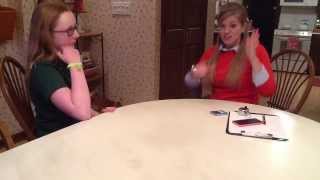
Sasha from TheAutismHelper.com teaches how to build fluency in motor imitation for autistic children using short timed sessions. She shows how to count correct responses with hand-counters or clickers during 10-30 second drills, then reward after. Daily practice with aides produces consistent data and helps children develop faster, more functional imitation skills.
Chapters
Hi, this is Sasha from TheAutismHelper.com, and this is a video tutorial of gross and fine motor imitation fluencies. So motor imitation is so important. We really want to teach our kids the skill of imitation because that's essential in everyday life. That's something that we do constantly. When we see our peers sitting down, we sit down. When we see that our peers are talking, we stop talking. Even when you go to the post office, if you're not sure where to stand, you copy everyone else and stand in line after them. So imitation is something we need to be teaching right away to some of our lowest kids. When we're in a meltdown situation and we want to teach our kid, you know, "Hands down," that language is not going to be helpful, but teaching them to copy you and put your hands together is what they're going to respond to. So after you've taught imitation in discrete trials, so you've taught it one-on-one, Providing reinforcement for each correct response. Then we want to build that skill. We want to make sure that skill is fast and fluent. So we want to make it really functional. Right when we're doing something, they're responding immediately. This is going to work on building attention and cooperation in general. So I'm going to show how to do gross motor, which are bigger movements, and fine motor, smaller movement, imitation fluency timings. I'm just going to do a 15-second to show. You could do 15, 20, 30 seconds. Um, doesn't really matter. And I'm going to show a few different ways to keep data on this. Because you are moving the whole time, this is going to be a trickier type of data to take. You could use a counter. I got these on Amazon for maybe only $2, so they're pretty cheap. They're kind of what people have outside restaurants to count how many people coming in. It's quick and easy. If you don't have a counter, you can count out loud as you're doing the movements. So I'll show both ways right now. So you're going to sit down facing your student because you want them to be mimicking you. And you're not going to provide reinforcement during that fluency timing. You're going to only provide reinforcement after. So maybe she's working for the iPod. I'm going to give that to her when she's done. It's great to use a high-powered reinforcer to really keep them on task as well. So I'm going to get started with the timing. So you're going to do what I do right as I do it. Ready? Go! 1, 2, 3, 4, 5, 6, 7, 8, 9, 10, 11, 12, 13, 14. Quick and easy, takes only 20 seconds, and I can easily give her the iPad and then I can take down the data. While the student's using a reinforcer is a great time to take your data so I can mark down how long my timing was, how many she got correct. So you counting during it is a great way— you're not going to keep track of how many movements she did. So it's a great way to kind of do it. So I'm going to show how to use the counter also. If maybe that's too much noise for your student or you think the counting is throwing them off, you can also use this clicker. So just as they get it correct, you count. Hopefully they're not getting too many incorrect, so you can maybe keep track of those in your head. They might only have 1 or 2 errors. Alright, let's do one more. Awesome. Alright, so I'm going to do— I'm just going to do a 10-second timing just to show how this will look. Alright, so you're gonna do the movements as I do them. Ready? Go! Great, so you're just gonna click as she gets them right. And again, give the reinforcer, mark it down. She got 7, I can easily mark it down. So once students have mastered these gross movements, these bigger motor imitation movements, It's also great to work on fine motor. So fine motor are going to be things, small movements related to their hands. Discrimination is really tricky here because this is very different than this, which is very different than this. Even looking at can they imitate movements that are fast versus movements that are slow. A great place to look for ideas for the motor imitation is the Assessment of Basic Language and Learning Skills, the ABLS. They have a huge appendix that's full of gross motor and fine motor imitations that gives you a ton a ton of ideas. So I'll show briefly what the fine motor timing looks like. So again, it'll be tricky, you won't be able to use the counter because you are using your hands more, but you can do the counting in it. So I'm gonna get started, right? Ready? 1, 2, 3, 4, 5, 6, 7, 8, 9. Awesome! So you just counted while she did it, and then I can mark down the number easily. So again, with your students that are lower cognitively, these are awesome skills to be working on. And getting— doing a fluency timing each day will really show their growth. It will show that they're getting faster and more functional with these skills. This is a great program for an aide to run. They can get really consistent data, take it every day. The timings are easy to run because they're going to have only a set amount of time to collect data during. So again, this was a fluence— this was a video tutorial of fine and gross motor fluency timings. From theautismhelper.com.