In this instructional video, Gina from The Autism Helper walks educators and parents through a set of language development resources she uses with her own students and recommends for home use. She first outlines typical communication milestones for children ages 18‑42 months, linking these milestones to the progression of WH (who, what, where, why, how) questioning skills. She then reviews Sarah’s 108‑card WH set, explaining how to introduce the cards—starting with labeling basic nouns, then moving to where and what questions, and eventually to who/whose and short‑story answering. Gina also highlights a complementary Receptive Category Card pack, describing how it can be used with real objects to practice finding and categorizing items. Practical tips are provided for sending the materials home: emailing PDFs, printing, or displaying cards on an iPad, and covering cards that are not yet targeted. Finally, she previews the Autism Helper Boom Card set that builds on these concepts. Throughout, she emphasizes alignment with IEP goals and early Pre‑K/kindergarten standards.
Chapters
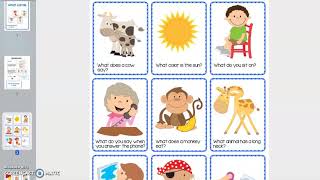
Hi everyone, this is Gina from The Autism Helper. I'm so excited to highlight some of these cards that I've been using and I've been using with my parents. A lot of you have asked for tips on resources to send home to your families. You can obviously also use these whenever we get back to school or if you're doing live sessions depending on your student. So, um, I've been digging really deep into the communication milestones of children. I've been updating a lot of IEPs lately and getting my kids ready for Pre-K 4 and kindergarten, so I'm upping all their goals. They've mastered, you know, some labeling goals, and now we're moving on to some WH things. And so, um, I really like these WH cards by Sarah. Um, obviously you want to make sure that your student can either expressively or receptively identify, um, common things. So around 18 to 24 months, we would expect that maybe typically developing child would point to 15 or more pictures of common objects when they are named. And then around 24 to 30 months, we would expect them to maybe identify common objects described by their uses. So say, for example, "Show me what you eat with." Of course, these are not all-inclusive, and all children are different, and they might develop later or earlier. So this is just a broad range. Around 30 to 36 months, we would expect them to respond to who and whose questions, ask what or where, and then around 36 to 42 months, answer questions when told a short story. So that's pretty young if you think about our Common Core standards, if that's what your state uses. And as they get older into kindergarten and first and second grade, and they're into the more difficult standards such as, you know, identify and describe the character in the story and how they change over time, this is where it starts. So I'm really big on WH, especially when they're little. So this WH card set by Sarah is really awesome. It comes with, I think, over 108 cards. So if your parents are able to, you could either just email them this PDF, um, or if you're prepping materials, you could print them out and send them home. Um, a parent, if they don't have a printer capability, they could just put these up on an iPad or screen. They could cover up the ones that they're not working on. So all these WH questions, and I would suggest obviously starting with where and what questions. What does a cat say? What do you sleep on at night? So again, you want to make sure that your student or your child can label these items first. So, you know, bed, cat, pumpkin, spoon, and so on. So this is just a great example of WH cards you can use. There's a ton tons and tons and tons of them. And then I also like her receptive language cards. This is a great pack, Receptive Category Cards. This is obviously a little bit harder. They have to know, have a little bit larger of a skill set. But I also like it because even if the parents can't print this off, they can use it as a reference to help guide them at home. So maybe they want to work on Finding toys, they can start with actual objects in a pile, maybe 3 objects or 2 objects, and they can say, find the toy. So obviously, you know, on this one they would touch the princess, or if they were working with objects at home, they would find the doll baby in the pile. Lots of modeling in the beginning, trying to work with categories, but also a great, great activity. And she has Lots and lots and lots of these cards. Very, very cool. Next up, I am going to show you the WH Boom Card Set because of course Autism Helper has created a Boom Card Set.