Why I Teach Children to Advocate for Themselves
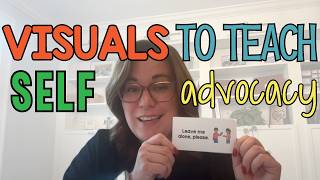
A classroom teacher shares visual supports and scripts to help pre-verbal children and those using AAC advocate for themselves. She demonstrates specific tools like "Leave me alone" cards and break-activity lists, arguing that self-advocacy is a human right that improves emotional regulation and transfers to life beyond school.
Chapters
One of my favorite things to teach in the classroom is to teach kids how to advocate for themselves. We as adults advocate for ourselves all of the time, and it's important that we teach kids to be able to communicate their wants and their needs, especially when it comes to them being frustrated or possibly needing a break. Maybe they need space. So let's talk about some ways that we can teach kids to advocate for themselves. One of my goals when I was in the classroom was that I wanted my kids to be able to tell me what they wanted, tell me what they didn't want, and tell me when they need help. I think that is such an important skill for our students to have. In fact, my favorite visual is "Leave me alone, please," and I used this all the time in the classroom. I, as an adult, can tell somebody else, "Hey, I need a minute, back up." I have the verbal skills to be able to do this, but the students in my classroom were still learning. A lot of them were pre-verbal. They were not yet able to speak, or they used AAC devices. And so if they used AAC, we would actually put, "Move away from me," or "Leave me alone," or "Get away." We needed to give that language and give students the opportunity to protest because, well, they have feelings too. They get to say these things too. That is a right. I also want students to be able to say, "No, I don't want that. I don't like that." or, hey, I need a break. I don't, I can't focus on this. I need a minute. And so I love some of the products that The Autism Helper has for learners and the visuals that they have that can help support literally anyone in your classroom who are learning these skills. The first one that I love is this, When Should You Take a Break? I would actually teach this. I would have this at my centers or when I was doing direct instruction. And when I would notice one of my students getting upset or start showing that they were dysregulated and maybe they needed a break, I would be like, "Remember, we might need a break when we feel frustrated. Are you feeling frustrated? Do you need a break?" So I would actually teach this skill. Now the thing is, is that if we don't give visuals and we don't teach kids what this is, they're not gonna know. So we have to have the visuals to be able to teach this. So that's why this is so important. I also love this one, especially for older kiddos. I love the older clip art here. I can ask for a break. I can ask for that, that moment when I feel angry, when it's too loud, when my body can't moving. We are giving kids the ability to tell us what's happening to them and ask for a solution. And this is life-changing for them. They have to be able to advocate for their own wants and needs. And I can help clue them in. I can say, oh wow, You look really frustrated. Hmm, you can ask for a break when you're frustrated, or you can ask for a break when you're feeling angry or overwhelmed. Wow, you know what, your body's moving a lot. Do you need a minute? Do you need a break? That's okay. Um, are you having a hard time paying attention? That's okay. Maybe you need to go and get a drink for a minute. Why don't you take a break and do that? The other thing that I love teaching kids is not only asking for a break but doing it independently. So these are some visuals that I would have on student desks, and these were students who I had taught taking a break, and they knew how to do that when I prompted them, but they were working on doing it independently. So I would give them step by step what to do, and these come from one of our products here at The Autism Helper, and these are so So great. And not only would I tell them how to ask for a break, I would give them ways or things that they could do while taking a break. And these were customized for each student, but this is just a generic one that you can use. And I love this because it's taking a deep drink of water, daydream, use a fidget, take deep breaths, bounce on a ball, put your head down for a minute. These are really high-impact things that students can do that cost very little money. No money, honestly, except bouncing a ball or using a fidget. And if you don't have those, you could cut those off, right, like that, and then it looks like this. So as a teacher, this is really functional to use. For students who can read aloud, we would give them the script, especially for my Gestalt learners, they love to have scripts. So we would say, when you need help, you can raise your hand, and this is what you would say, excuse me, I need help please. And so we would give that script, and then we would give the visuals of that script. Right, along with teaching kids that they can take a break, we need to teach kids how to ask for help. So much like what we did before, we have two things to do. We've got how to ask for help and steps for asking for help, and then also ways we should ask for help. Um, I really like this because oftentimes when kids ask for help, they are already moving to like crisis zone in their brain, right? So they are already upset and we want to stop that. We want to have the students be able to have the skill to ask for help well before they get frustrated or upset, which is why it's so important to teach kids how to take a break. So we want to teach kids, hey, we can ask for help, this is what it looks like. And so we give them steps for asking for help and then we give them a yes and no, like, hey, this is what it should like— would look like when we ask for help, and this is These are ways that we don't want to ask for help. We don't want to yell, you know, we don't want to whine, we don't want to shout out. But here are the things that we do want to do to get help. Again, not only do I have the "leave me alone" visual, but I also have an "I need help" visual. And these are great to tape on desks or just hand to kids to be able to pull off and then hand to a teacher. And the other ones that I wanted to show you are these. So, you know, the "I need help, please." You can put these on a desk. You can have these in a classroom. If you are pushing a kiddo into gen ed and they have trouble communicating with the teacher in a larger environment, this is a great one to use. You can have a clue to the teacher, "Hey, when you see a blue card up, we know that the student needs help." And then there's the visual, "I need help, please." But also for those students who maybe use like a TouchChat or an AAC device, and we want something "Maybe in a bathroom," or "I want help," then they can be able to touch it. Or this is just a great one to remain consistent in your classroom and have these on a desk too. Finally, as a classroom teacher or as a parent, I want you to be able to teach your child to protest. I know this sounds wild, but really it's a human right. It's a human right to be able to say, "I don't want to, I need space, leave me alone, I don't wanna do that." It's really important that students have those skills because they may be in a situation to where they need to say, "No, stop." So we need to think about that as teachers. And one of the ways to do that is to start doing this when students are frustrated or students need a break or students need help. We can start adding some of that protesting language of, "Leave me alone," or, "I need space." That is really functional and great to be able to use. So having visuals is a great way to be able to do this. Oftentimes we put this language into students' AACs so they could instantly tell us what they were thinking and they could use this in social situations out on the playground or with peers. But if a child is verbal and just needs a visual cue, we can definitely use these too. Also, just having these as options on the table for students to be able to communicate with you, that's really functional and great to use. Remember, language is harder when we're frustrated. Language is harder for adults when we're frustrated. If I feel frustrated or upset, it's harder for me to communicate my thoughts and my feelings. The same thing goes for our learners, and oftentimes our learners already struggle with communication. So let's make this as easy as possible and give them the language that they need to be able to communicate. I'm so excited to see how you use these things in your classroom, teaching kids to ask for help, ask for breaks, and be able to protest and say things like, "I need space." or "I don't want to" is such an important skill that'll transfer not just from the classroom to academics, but throughout their life. And it is such an amazing skill to be able to see grow. I'm excited to see how you're using these. So if you use these in your classroom, definitely show us, let us know how it's going. I cannot wait to hear from you. Definitely check in in the comments.










