Sasha from theautismhelper.com walks through a winter vocabulary unit for special education covering December through February. It includes matching, spelling with Velcro pieces, writing, and tracing worksheets organized around Christmas, Winter, Valentine's Day, and New Year's. The consistent format reduces reteaching and works well for students with autism who need routine.
Chapters
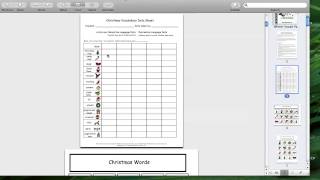
Hi, this is Sasha from theautismhelper.com, and this is a product preview of my winter vocabulary unit for special education or early childhood. I probably say this at the start of every video, but I'm really, really excited about this unit. I just printed it out for my class, and I cannot wait to use it. I already had some of these materials going in my class, and I got a lot of requests to put them on here, but I kind of expanded it to make it even more amazing, so I'm excited to show you everything. So this unit has Christmas, Winter, Valentine's Day, and New Year's. So it'll pretty much take you from early December through to February, and then you can use those winter ones wherever you want. So each section has a vocabulary sheet, a data sheet, spelling worksheets, writing worksheets, and tracing worksheets. I really like keeping the format of things the same for my kids and changing the content because this really saves us the time of having to reteach the format of an activity, and you can go right to the new content. Kids with autism can be really rigid, and just having that same structure to something is really helpful. So first up, for each unit you're gonna have this vocabulary worksheet. I laminate these and keep these near my Direct Instruction center, and I get— this is what I got a lot of requests for. I use these all the time just when I have downtime to work on expressive language learning and receptive language learning. So expressive would be me pointing, saying, "What's this? What's this?" and the students saying, "Christmas tree, jingle bells." Receptive language will be, "Where's the reindeer? Where's the present?" And the student has to point. So the thing I'm most excited about in this unit is this really amazing data sheet because I added visuals to it. Because let's face it, we need visuals also. When your day is crazy busy, it can be really confusing to look for the exact word you're looking for. Oh, where's the Santa Claus thing? I was testing these out. These are so easy to use. So this data sheet can be for one student. You'll write the name, Whoever's taking data, and then either circle receptive language or expressive language and how many trials you want for each word. So just throw the date on top and then just do plus-minuses. I usually do about 3 to 4 trials per word on one day if I have time, so I'll just do plus-minuses in here. And it's so fast when I say touch wreath, I see them touch wreath, I can find wreath so easily because of the visuals on the data sheet. And I want to add visuals to all my data sheets, but this has been so helpful. So this is for the Christmas Um, first up is a matching Christmas words. So there's 2 different ways to do it. Here is with just the pictures, here is with the words, and here are the pieces. So you can have students match pictures to words or pictures to pictures depending on your level of learners. Next up are spelling Christmas words. So there's 4 different pages, and then here are the spelling pieces. So I laminate these, put hard Velcro in each little box, and put soft Velcro on the back. Depending on your level of students, you can either organize the spelling pieces by one page, so put all the letters for this page in one baggie, all the letters for this page in one baggie, or you can mix it up. That's really challenging, can take a long time. This is great for your non-writers and your lower-level kids to work on those academic skills in a meaningful way. You can show them this and give them the prompt and have them match the picture— the letters accordingly. That's a really great way to work on this. Next up are writing Christmas words. So I'm laminating these and we're gonna write on these with dry erase markers. The little box really helps show students how much to space their words so they're not writing stocking all over the page. Um, is really helpful. Next is tracing, so kind of adding in one more prompt. So the same words just with tracing. Again, I really like keeping that same structure. So the routine of all of these is gonna follow the same thing. So this is the New Year's words, again the data sheet, the 3 different types of matching, then spelling, writing and tracing. Here's the winter. The winter has a big set as well, just like Christmas, because you'll probably be using this for a lot of January, maybe the end of February. Again, my awesome data sheet, which I'm really excited about. The matching winter words, matching words to pictures, spelling, writing, and tracing. And then Valentine's Day, so the same thing. So this is really just gonna get you through a lot of the winter and is so great for those lower-level learners. I sometimes have a hard time incorporating incorporating fun thematic and seasonal things into their curriculum because I still really want to be focusing on those basic skills and IEP goals, but this is such a perfect way to incorporate seasonal activities but still making it structured and fun. Um, again, this is a product preview of my winter vocabulary unit by theautismhelper.com.