0:35

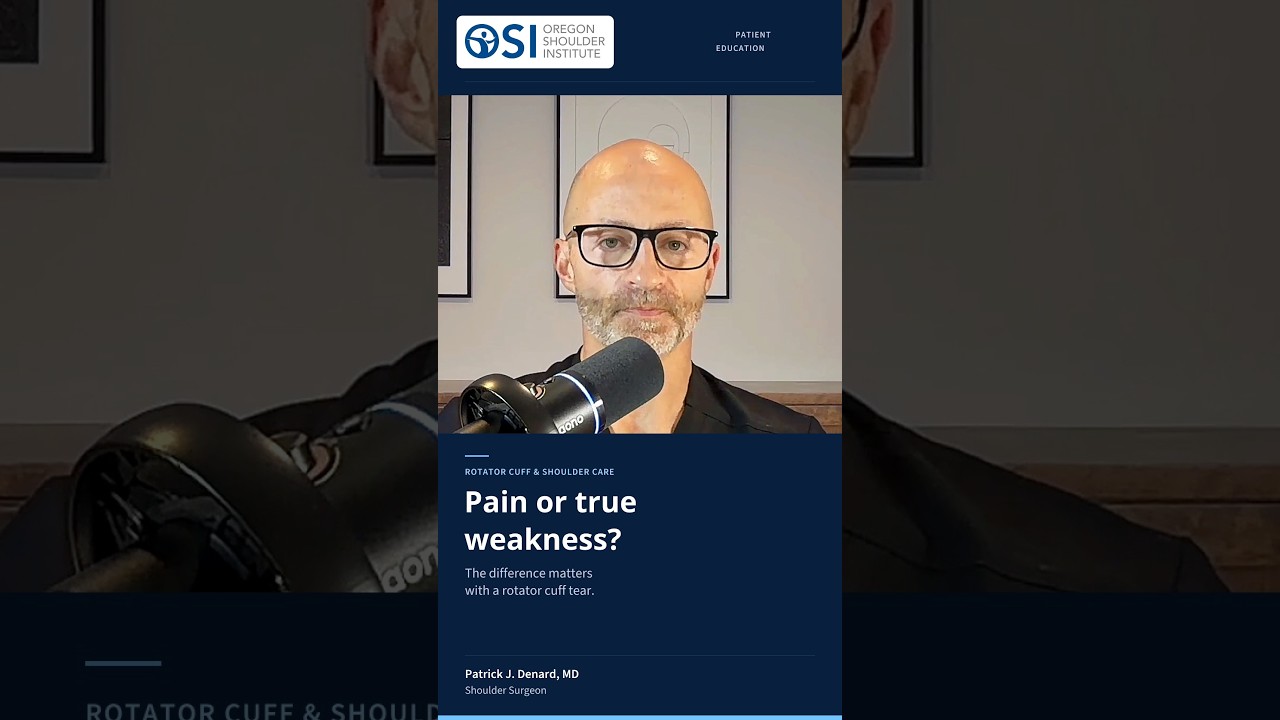
In this segment, Patrick Denard explains how clinicians can differentiate between shoulder weakness caused primarily by pain and true muscular weakness, such as that from rotator cuff pathology. He describes a simple bedside maneuver: the patient attempts to raise the affected arm with assistance from the opposite side while a weight is added. If the patient can eventually hold the arm at the raised position despite initial difficulty, the limitation is likely pain‑related. Conversely, if the patient cannot actively raise the arm at all, this suggests genuine rotator cuff injury and true weakness.
Chapters

More from Patrick

0:37
youtube.com

Rotator Cuff Tears: Why Rehab Often Comes First

1d ago
0:39
youtube.com

Rotator Cuff Tears: 2 Out of 3 Don't Hurt

3d ago
0:20
youtube.com

Cortisone Shots: Pain Relief Is Not Tendon Healing

4d ago
10:35
youtube.com

How to Know If You Have a Rotator Cuff Tear (A Surgeon's 5 Signs)

4d ago
0:24
youtube.com

Why Shoulder Pain Is Worse at Night

1w ago
0:29
youtube.com

PRP for Rotator Cuff Tear: Not Magic, Not Useless

2w ago
19:21
youtube.com

Sleeping With Shoulder Pain: A Shoulder Surgeon's Guide

2w ago
0:26
youtube.com

BPC-157 and Cancer Risk: A Surgeon's Safety Concerns

3w ago
0:27
youtube.com

Ignoring a Rotator Cuff Tear? It Doesn’t Mean Nothing is Happening

4w ago
1:24
youtube.com

What Shoulder Arthritis Is

1mo ago
0:39
youtube.com

Why Some Rotator Cuff Tears Never Need Surgery

1mo ago
See all content