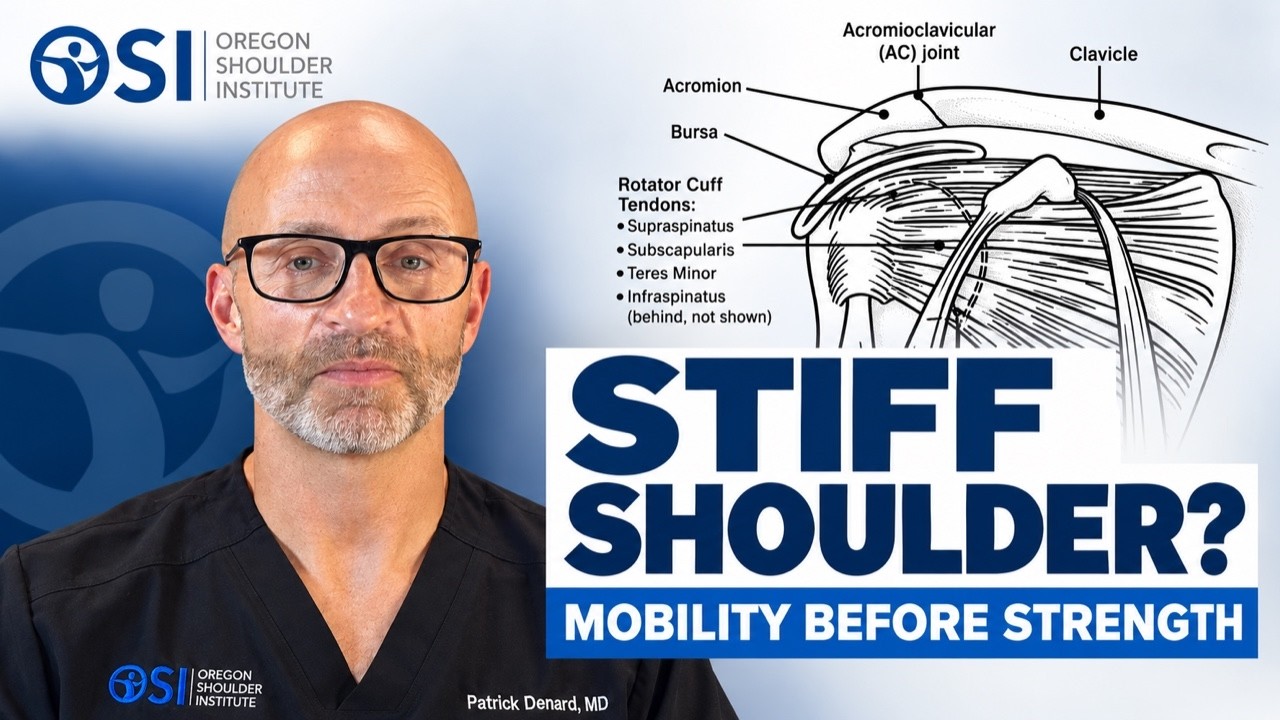
Patrick Denard explains that rotator cuff tear location determines whether you need surgery. Tears in the anterior cable, like a corner support on a suspension bridge, tend to progress and usually require surgery. Tears in the central portion stay stable and can often be managed without it.
Chapters
So some rotator cuff tears never need surgery. The problem is knowing which kind you have. And particularly what I'm really emphasizing here is tear location. Shoulder surgeons like to talk about the rotator cuff as a suspension bridge model. There are important attachments. You can have the corner structural support beam. If you take that down, that's a big impact. If you take down kind of the middle support beams in the middle, it's not such a big deal. You still have a stable wall. It's the same thing in the rotator cuff. If you affect the anterior cable of rotator cuff, you have a much higher risk of that tear progressing. Whereas if it's in the center, aspect or central aspect of the rotator cuff, it's more likely to be protected. It has a slower risk of progression.