Interview with Browserbase Founder Paul Klein

Podcast interview (Mar 21, 2025) with Paul Klein, founder & CEO of Browser Base, on Eric Newcomer’s show. Klein recounts his career (Twilio intern, Mux, Stream Club), explains headless browsers and how Browser Base provides scalable headless-browser infrastructure for AI agents, and describes Stagehand—an open-source SDK that uses LLMs to generate robust browser automation code. He reports rapid growth (0→~20 employees in a year), >700 customers, three funding rounds in 2024 with investors including Kleiner Perkins (Bucky Moore), CRV (Reed Christian), and Basecase Capital (Alana Goyle), and highlights diverse customer use cases (e.g., Benny, Perplexity) and partnerships around authentication and anti-bot work.
Questions this video answers
January 2024
Over 700 customers
About 20 ("0 to 20 something people in a year")
Three rounds (including a Series A)
Kleiner Perkins (Bucky Moore), CRV (Reed Christian), Basecase Capital (Alana Goyle)
Chapters
I'm here with Paul Klein, the founder and CEO of Browser Base. This is, we're meeting on the podcast. Hey, Paul, how's it going?
It's the first time. Yeah, great to. Great to meet you virtually and excited to be here.
I guess that's what happens when you have a rocket ship company. We're, we're having you on the podcast because you're one of the top companies on our, the ET30 list that we're partnering with Wing to publish on Tuesday. And so we wanted to dig in to a company and you guys stood out. I think it's both a sort of category that's interesting and one that's sort of. And your company has clearly caught a lot of investor attention. So excited to talk about Browser Base. You want to just start off, you know. Yeah, I mean we're all, we're meeting you, your company has come onto the scene. Give us a little bit of context of what got you to founding a company in the first place.
Yeah, you know, it's, it's been a pretty crazy year for Browserbase. We actually started a little over a year ago in January 2024. But the journey of Browser Base has really been one that's threaded through my entire career. So maybe I can kind of give a quick synopsis of that and then show you how all signs pointed to Browser Base. You know, I actually started my career as an intern at Twilio during their ipo, which is a pretty crazy time, you know, to turn 21. You're going into your first all hands. And then Jeff Lawson is saying, hey, here's our S1. We're going to go public this summer. Really kind of baptized into the final stage of, you know, dev tools, an API company and seeing them at the one yard line and cross it and then grow to be this, you know, multi billion dollar revenue company. After I stayed for three years. It was just a really fundamental part of my career where I learned a lot about how to build these great developer tools, infrastructure companies. How do you sell to developers, how do you build developer products, especially these primitives that every developer uses. In that case it was text and seduce and phone calls.
You ended up going to Twilio full time, right?
I did, yeah. Well, I think the conversion rate on that one was a pretty high intern class, you know, and I will say a lot of those interns are now founders and they're good friends of mine since. What role? What did you do? Yeah, it's the Twilio intern mafia of 2016. But I did end up staying. I stayed for three years. I was actually working on login identity products. So I was kind of building the API that authenticated all the APIs, and then also the login page and authentication. We'll come back to that later. It's had a lot of experience. It's important for that reason. But after three years, I said, hey, this was great. I'm ready to try my hand at it. I started my first company. It was called Stream Club. We were building Canva, but for live streaming. It was during COVID of course, and we saw a lot of people wanted to live stream. The streaming software wasn't very good, actually. Kind of similar to what we're using right now, Riverside, in terms of making it easier to create video in a web browser. That company did okay. It was a hard market to play in. But what we learned about was this interesting technology called a headless browser, which is a web browser that you and I run on our computers, but running in the cloud and.
All right, yeah, I've seen this term during research for you. Okay. Headless browser is clearly a term I need to understand. Explain it one more time. I want to make sure I understand.
Yeah. So we were both novices to it, too. At Streamfall, I was a cto, and I was like, okay, I need to use this thing called a headless browser. And what does that mean? So you imagine the browser you're running on your computer. Maybe it's Chrome, maybe it's Safari. You need to run that on a server somewhere. But it's probably not going to look the same way that our browser looks on our computer. It's in a server environment. There's no display. It's in a data center somewhere. So a headless browser is a web browser. It's the same as we have on our desktop environments, but running without the display, without the ui. It's just the browser that can be controlled by code. So you think about a headless browser. It's a browser that's controlled by code, not by mouse and keyboard or input.
And there are. There are a lot of these already. Or this is sort of a product that exists or. No.
Yeah, Always been a bit of a hack. It's always been something you kind of need to do for. At Stream Club, we used it because we're doing some really interesting. Basically modifying video display or video overlays with HTML and css. The browser is incredible at reading and writing and handling HTML and CSS and JavaScript. And it's always been used for things like testing of software. So if you're building, you know, software, you want to test that your login button works. You're running that in your cloud saying, go to the login page, click the button. Does it work? That headless browser is what's used there. People have been using it for things like RPA for a long time. Hey, we have to integrate with some mender. Here's this hard coded script that's going to go to this page, find this button using a kind of thing I call a selector. It's a very brittle way of like saying it's the fifth dom, it's the fifth div on the page, it's the tenth button down, click that button. So this headless browser has always been a way to control a web browser programmatically. And developers have used that for a bunch of different use cases. And people been using it for a long time, but it's always kind of been a hacky thing. So at StreamCloud I spent much time on this like hacky thing as headless browser. And it was so painful. It sucked building on top of this type of infrastructure. And what I realized was like, man, this thing sucks to work with. We ended up selling streamclub to Mux, a video API company. In part because of a lot of the headless browser stuff that we built. We really pushed that space forward. I gave a bunch of talks about it. I felt really alone. There weren't many stack overflow answers for headless browser questions I had. The source of truth was this guy Peter's blog. He was the expert. It wasn't like docs on, you know, the Chrome website that were that good. So it was a really tiny, small part of the Internet. But I knew a lot about it. We, I stayed at Mux for two years. One building the headless browser stuff, the second year doing Mux is a video API company. So they kind of you think of like, Twilio is for telephony, MUX is for everything. Video live, streaming video upload, video download. Really killer company. I've learned a lot from that team. But while we were there, this whole AI thing happened. And GPT ChatGPT came out, GPT 3.5 came out and I started getting a lot of messages from people. People were like, hey, you've put out a couple talks on headless browsers. You have some stuff out here about headless browsers. We're using headless browsers in this new way where we're having a LLM try and interact with a web page. On a headless browser programmatically. And can you help us? Because it's really hard to run this thing in production. People were hitting me up there saying, hey, like, yeah, we kind of get it working, but do you have any advice on how to run thousands of these? And what that kind of turned into was Browser Base. Browser Base is a infrastructure company to run many headless browsers at scale to make it easier to interact with headless browsers. We power web browsing capabilities for AI applications and AI agents. And if you have this kind of new AI application that needs to go out and maybe it's getting, getting data from the web or clicking buttons on a website, you're going to need your AI application to have a headless web browser. And that's what Browser Base provides. It's in the name. It's a base for your browsers.
The, you know, like Adept, right? My sense was they were like training a computer with a sense like you're all, you're going to operate the browser and we're going to learn to sort of like go through the human browser. Is that still a strategy that people are considering or do you think most of the interaction or are people settled on your solution, which is sort of an abstracted browser, not as a human. Would it interact with it?
Yeah, that's a good question. So Adept is one of the earliest players in the space. Now most of that team's at Amazon, but they really were cutting it. I mean, they were, they're training models really for UI control with the Transformer model. So they were saying, hey, given this screenshot of a page, where am I going to click? What do I do? They were actually pretty early to this idea of a computer use model or computer use agent. We know that OpenAI just launched their computer use agent a week ago. Browser Base was alongside for that launch. We actually co launched with them to be the browser infrastructure that a computer use model can control. So when you think about computer use models, they're models that can look at a screenshot and say, you're going to want to click right here, you're going to want to type in this, you're going to want to send these key presses. So computer use models actually really need the infrastructure, which is often a browser or desktop environment, to, you know, take actions, right? And this is part of this future where AI is becoming more than just a chatbot. It's AI is using tools that's calling APIs, and sometimes if the tool calls unavailable, it might be using primitives like a Web browser or a file system or maybe even a native display. So more and more AI is getting more sophisticated, more capable and more. A browser is just one of those primitives that AI is going to use to complete work on your behalf. And we've spent a bunch of time figuring out how to run browsers at scale because it's not an easy task. It's not like running an API. It's a, it's a pretty complex, stateful, distributed system.
So are you, you're only focused on the headless browser right now or you're also doing this sort of computer use interface?
Yeah, it's a good. So we are, we have a core product which is browser based, that is headless browser infrastructure. And what's great about that is that you can run many browsers in many different regions. You can actually get replays of what happens in the browser. So let's say your agent is going and you know, submitting a form on your behalf. You can watch the replay and say, did it do the right thing? We get observability. Is it text?
Like what are you watching? Or it's code or you're watching some.
It's a full on. So even though it's a headless browser with no ui, we actually have a way to capture what happens on the page and show you, like replay, like it was running on your desktop. So we can say, interesting. Okay, here's where the mouse went. Yeah, so it's, it's headless because it's just in a server environment, but it's not headless like it's a blind browser.
It's still sort of. There is like a physics to it. Like in a mouse had to sort of move in the computer's mind. Okay, okay.
Yeah, it's still clicking, it's still typing. It's just not running in a server somewhere. It's much more lightweight because it's headless.
Right.
So that's our core infrastructure product a lot around running headless browsers at scale. And then we also have a framework. Our framework is called Stagehand. It's an open source framework. And what Stagehand does is that it gives developers better SDKs to control headless browsers. So in our world, there's been several existing frameworks. One's called Puppeteer, one's called Playwright, one's called Selenium, and we have Stagehand. These are all browser automation frameworks. The ones I listed, Puppeteer, Playwright, Selenium, they're more old school, they've been around for a long time. And they're more deterministic, hard coded. You say, I want this specific button and it's going to be the fifth button on the page underneath this other button. And if the page changes, that script breaks. They're really built deterministically. But the web is non deterministic. It's changing all the time. Right. So Stagehand, our framework, seeks to make that much more robust where instead of saying I want the fifth button on the page, I want the submit form button. And the way we do this is by giving the developer natural language. They describe their workflow in natural language and then we use an LLM to generate that code and to take an action on the webpage. And let's say the button moves from the left side of the page to the right side of the page or the sign in button changes to the login button. Your script is still going to work because we're dynamically generating that code to control the browser on the fly. Stagehand, Open source. It's like to us, if an analogy Stagehand is to Next JS browser base is to Vercel. You know, we are, it's the framework that we recommend using to control ahead of this browser. But you can use any framework you want, you can use any browser you.
Want and you want to provide the language model instead. Or they can sort of develop a great language model and you're sort of the tool to get it to hook up to a browser.
Yeah, we're just the tool. We don't do any models here.
Okay.
Okay.
Yeah, I'm like, that would be too much to take on, right? Exactly.
We're the only company in AI Grant that I think has never spent money on models. So we're, we, we definitely don't do any model training here. We leave that to the pros. We leave that to, you know, the OpenAI, the anthropic cool team. To us, like infrastructure as a category. Developers want to move between models a lot. You know, they want to try out the latest model, they want to maybe try Deepseek, maybe they're back on computer use from OpenAI. And we seek to kind of stand outside of the models and let the developers bring their own model, but provide all the scaffolding and infrastructure around that. So if they switch models, they don't have to change any of their code. So that's kind of what Stagehand has done a lot about. It's been model agnostic the whole time. You just plug in what you want. Now some models work better than others on Stagehand. And we've seen what's doing the best. You know I think I'd have to double check with the team. I think we've been doing some interesting stuff. Computer use that's been useful in some situations. It really does depend on the workflow. You know if you have super simple websites you might need a super simple model. If you're automating a very complex website with just it's a very large page or it's very confusing page you might need a more complex model. So it does depend. Right now I think the best thing on our evals might still be Claude 35 Sonic. So it's especially because it's doing a lot of code gen and 3/2 silence. Just really good at code gen. Right.
Give us a snapshot of the business or whatever you can say. We're in this moment where I don't know people are bragging about revenue growth in small teams. Are you trying to keep the team small? Just give us whatever snapshots you can share about how the business is doing.
Yeah, first things first, it's been a pretty exciting year for us. We went from 0 to 20 something people in a year. That's a lot of growth. You know I do think I look at the, I look at the 0 to 100 million revenue milestones from cursor I'm like damn it like what should we be doing that. But it's a different type of business here. We're an infrastructure company. I'm really proud that we have you know, over 700 customers using browser base from the smallest little startup to you know, publicly traded companies. We actually had an interesting customer sign up. It's a 54 year old milk dairy supply company and their first technical engineer they've ever hired. They're like hey, we're really interested in this, this AI stuff. We're going to try and automate the way that we go check fuel prices from different vendors and pull it into our spreadsheet so that our team doesn't have to go to the fuel supplier website every single day and check. It's just going to automatically get pulled in. And I think that's pretty cool to see the variety of customers we have across. You know there's customers like the 11X you know, doing the ASDR stuff but. But then there's customers that are doing compliance automation. So it's really vast in terms of use cases and shows the horizontal capability of the team and from you know of course a lot of customers, some great revenue traction as well. We ended up raising three rounds in 2024. You know, we did our C Series A and then I got married. So it was a crazy year.
I love it.
Good. That really capped it all off. And I'm lucky to have some great investors around the table. Kleiner Perkins, who's the biggest?
Who's on the board or yeah, it's.
Bucky Moore from Kleiner Perkins, Reed Christian from crv, Alana Goyle at Basecase Capital did our pre seed. It really feels like 2024 really laid the basis for browser base. You know, got us the right investors around the cap table, got the right people on the team, saw a lot of early adopters and in 2025 we're really seeing kind of the Agentix software stack. Mature people are using it in production. The model capabilities are getting better and we've seen that downstream. We've had our best month ever, every single month for the past four months. Well, so it's going to keep. I, I, I, I'm kind of terrified for the first non best month ever whenever that happens because I don't know how the team's gonna take it. Right.
It's a great stat. You know you're attached to it now.
It, it is interesting though, I think that browser base has become quite obvious of like browser infrastructure as a category that's needed for AI.
Yeah.
But I certainly, I certainly remember maybe a year and a half ago I got a lot of passes for my pre seed. So I don't know. I, I appreciate that people are waking up and seeing this a little more. I think it's become a lot more obvious and as a founder one of the things that I really, it sits on my shoulders is that for me browser based wins or loses based on execution at this point, you know, it's not, it's not market validation, it's not is this going to be a thing for us now? It's all execution and we got to go run.
Let's hit on that. Yeah. Isn't there, isn't there an extent to which you hinge on like how smart AI gets and how capable these models are or how much do you think if we just sort of sat where we are there'd be plenty for browser based to do versus you're still counting on these models continuing to.
That's what's pretty, pretty exciting about the business is that like there's actually a very huge non AI market. Like every Fortune 500 company uses headless browsers probably for testing or some sort of like lightweight automation already. So even if you if AI disappears tomorrow, if Trump bans AI, there's still a great market here that we're excited about. Of course, though, the big, big vision opportunity is this idea of services as software, where there's going to be many new vertical AI companies that are automating certain professions or augmenting certain professions and the ability to kind of work where people do, which is often in a web browser. That is really core to that vertical AI software category. And we think we're building the picks and shovels for vertical AI software. And we see that in our customer base. We see that in, like, the interesting categories that pop up. If, if you're building a procurement AI tool, you probably need to go to a bunch of websites and figure out, hey, what inventory is available? What are the quotes? Can I submit a quote? Can I submit a bid? Can I aggregate information about the inventory and then put that back into my model and like, do some interesting reasoning on top of that. So for us, we think that AI is going to get better. I'm an AI maximalist. I have to be. That's my, that's my space, right? It's going to get better, faster, cheaper. And that just really creates a lot more demand for the infrastructure like browser base that gives AI better capabilities.
How much is, you know, the headless browser, like a flawed interim step? Right. Like, it's people sort of underestimating what computers can do.
Right.
If you knew what the machines were capable of, you'd build an API and say, oh, we're, we're here, we're ready for you to interact with us. And the reason you need the headless browser is there's this company that doesn't realize, oh, it's probably a machine that's going to want to harvest this information instead of a human. Or how do you, how do you think about that? Because you're obviously watching, you know, on the other end, there are going to be people just building for, for the AI to consume it directly instead of using the old human ways of consuming information on.
Yeah, I don't, I don't think it's black or white. Like, it's not going to be just headless browsers. It's not going to be, you know, computer use. It's not going to be just APIs. I actually think it's very clear and necessary that we're going to need to have APIs for the most common use cases. Booking a flight should not go through the website. It should go through the Delta API because it's going to be Faster, more reliable, that's, that's going to be the better approach. Though I do believe that humans are going to have to use the Internet for a very long time. And if people are still using the Internet, why do we need to rebuild the Internet for AI when AI is going to be just as capable and smart as we can? Like, do I really need to build a second version of my website for AI when AI can actually use the same version of my website I have to build for people anyways. So to me it feels like if you want to expand internationally, if you want to work with applications or websites that are in countries that aren't, you know, San Francisco based startups, they're not probably not going to have an MCP protocol for, you know, the Nigerian Employment Bureau. Right. That's going to be something that's probably a website, a web forum that you have to interact with. And I really do think that yes, in the longest term, maybe 20, 30 years from now, are we still going to have websites? I don't know, it might be neuralink just talking to software. So at that point maybe you might not be relevant. But I think until then I always like look back to Jeff Lawson, one of our angels, and when he was talking about Twilio long ago he was like, people are like, text messages are going to go away. You don't want to build this company. He's like, yeah, maybe. And look where we are now. I still get text messages, you know, 10, 10 years later, $5 billion revenue later. So I think it is a long bridge and I guarantee that browser base won't just be a browser base or browser company for 10 years. I'm sure there's going to be areas of expansion up into additional agentic infrastructure, but for now we think this is just a super hot button issue that's really limiting the capabilities of what you can build with AI and we want to make that really easy.
What's, what's your read on sort of, I don't know, no machines here or like we built this website for humans and we don't want your AI sort of interacting. How much are you seeing that? How much do you honor? Like can people say like, don't come here with a, I don't know, computer?
Yeah.
How do you, how do you think about that?
Yeah, the whole world of bots, bots and anti bots is a tricky one right now because I actually think that AI has outpaced the Internet on this where there used to be pretty much only bad bots and now there's bad bots and good bots and traditionally like captchas, like anti bot, they really don't know how to tell the difference between a good bot and a bad bot. And this is, this is troublesome for the Internet. You know, the Internet dynamics are going to change at this point. The cat is out of the bag though. AI is going to be using the Internet. We've seen this with major AI companies scraping with, doing everything. It's something that we can't just put our head in the sand and say, don't come here. But what we can do is think about ways to allow bots to identify themselves and say, hey, I'm a good bot. And I'm really excited about some of the stuff that these authentication companies like Okta, Stytch, Lurk are doing and we partner with them. They're all investors and browser based. We think that the future is going to be a more authenticated Internet where your agent is going to be able to log in as you and say, hey, I'm, I'm Eric Spot, I'm Eric's agent, I'm here to go check his email for you. Don't block me, please, Eric, give permission. He's going to, you know, maybe when you log in you're going to get a push notification saying, hey, Eric's agent is trying to log into your email. You're going to say, yes, I approve that.
Can they just politely block you right now? Or like if they just say please don't come, you won't, or you're like, oh no, we're trying to figure out.
That'S on our customers, you know, and for us we have a TOS saying if you're breaking downstream toss, it's just, we're not going to allow that. So our customers need to honor how they use the Internet. And if we get someone knocking on our door saying, hey, Eric's using browser base for some bad stuff, you're out of here. You know, so we really want to be, we want to be a good Internet citizen because we're building partnerships with the cloudflares, with the H captures of the world to really try and be a trusted browser. Our goal long term is that browser base can be an arbiter of good bots. We want to be able to say, hey, we checked out Eric, he's good. This use case is legit, we think you guys should let him through. And then maybe there's customers who we haven't been able to verify yet and they're saying we don't know about this ones yet but just flagging for you. This is a browser based browser. We hope that we can kind of build those partnerships.
So you're a standard, you're, you have a brand and then people say oh okay, we trust there's a company.
Well I hope, I hope I'm a trusted guy. You know I'm, I'm pretty easy to talk to you. I'm, I'm in San Francisco if anyone wants to come by our office, 166 Geary Street. You know where we live. I mean I think about people.
That's the beauty of a small company right now.
Yeah, exactly. Yeah, I take my, my mailbox off the company page. No, I think at this point what we try and do that others in our space haven't is really just be super candid about where we're at, come talk to us, come meet us. If you're curious about the space. We're going to give you honest answers and that's how you kind of can build that trust. When you think about Stripe and Twilio like you go to telecoms or payment companies, those counterparties, you have to build those trusted partnerships to build these great businesses. Unfortunately our counterparties are the entire Internet. So I have to kind of go wide and talk to maybe these kind of more common like web application firewalls. These WAFs is capture providers and try and build relationships there but also just advocate for there are going to be good bots. There are going to be agents that are going to go really create value on your website. They're going to actually say hey, we're going to make sure more people see your inventory that's available and hopefully bids on and then buys it. Or we're going to say hey show more customers that you have the best cash prices and, and we're gonna make sure we send truckers your way because that's being put into a system.
What, what are some fun customer use cases or who are, who are the early customers that you think are really getting the most out of browser base?
Yeah, we, we have a bunch of case studies on our website. Some that I think are kind of really unique. This is one company called Benny and what Benny is and they actually don't use any AI at all but they use headless browsers. If you are getting food stamps like ebt Snap and you maybe buy something you can actually get a rebate on that. If it's a certain category of food I think it's incentivize people to eat, maybe a little healthier but that process of, you know, listen, you're dealing with the state at that point. The process of submitting that rebate, not very fun, right? So what Benny has built is this really nice consumer app where you can kind of take a picture of your receipt that you use your EBT for, your food stamps for and they're going to go ahead and help you process that rebate back using a headless browser to do all the automation of the form submission. I think that's a really neat use case where it's like, hey, you're helping someone do some work, you're, you're saving them time and Benny's able to kind of monetize that a little bit. So because they're charging for the value, I really like that use case because what you really want to think about when you think about the future of agents and the future of software, it's software doing work on your behalf. And most of the work that we do is in a web browser on a website. So if software is going to work on our behalf and we work in a website, software is going to need a web browser control. And that's what Browser Base brings to the table. It's that web browser that can be programmatically controlled to automate anything. And that really opens up just a ton of interesting use cases. You know, the world is our oyster. If you look, anything anyone does in a web browser can be automated with AI. And that's just going to keep getting more cost effective over time in terms of the company growing. I'm really excited for Browser Base to continue to power these really interesting AI applications. You know, we see customers like Perplexity using browserbase and I'm just really interested to see like who's going to be next, who's building the next great AI company. We have this thing at Browserbase, we say the next billion dollar company is going to be built on Browser Base. And that's exciting to see not only like these kind of bigger customers using us, but also kind of these up and coming startups. We've had startups that use browse space, that raise their seed round and now they're raising Series Bs and I just really excited to see those ones succeed too because I think there's gonna be a lot of new unicorns coming out of the 2024 vintage and we hope that we can be powering them and helping being a core part of their work.
Paul, super exciting, always fun to meet a company early in its journey and yeah, glad we get to meet each other on the podcast. Hopefully first of many.
Yeah. Eric, thanks so much, man.
All right.
More from Paul

From 500 Rejections to a $300M Company: Paul Klein IV on Solo Founding Browserbase
Interview: Paul Klein (Browserbase) on how AI agents using the web is unlocking new automation
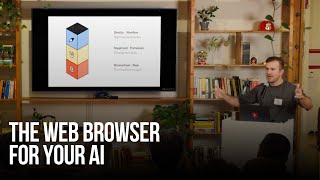
Building the Browser Infrastructure for AI Agents with the Founder of Browserbase
The Browser MCP is all you need | Paul Klein IV | Browserbase | WorkOS MCP Night
BrowserBase Founder on Why Headless Browsers are the Future of AI - Paul Klein IV