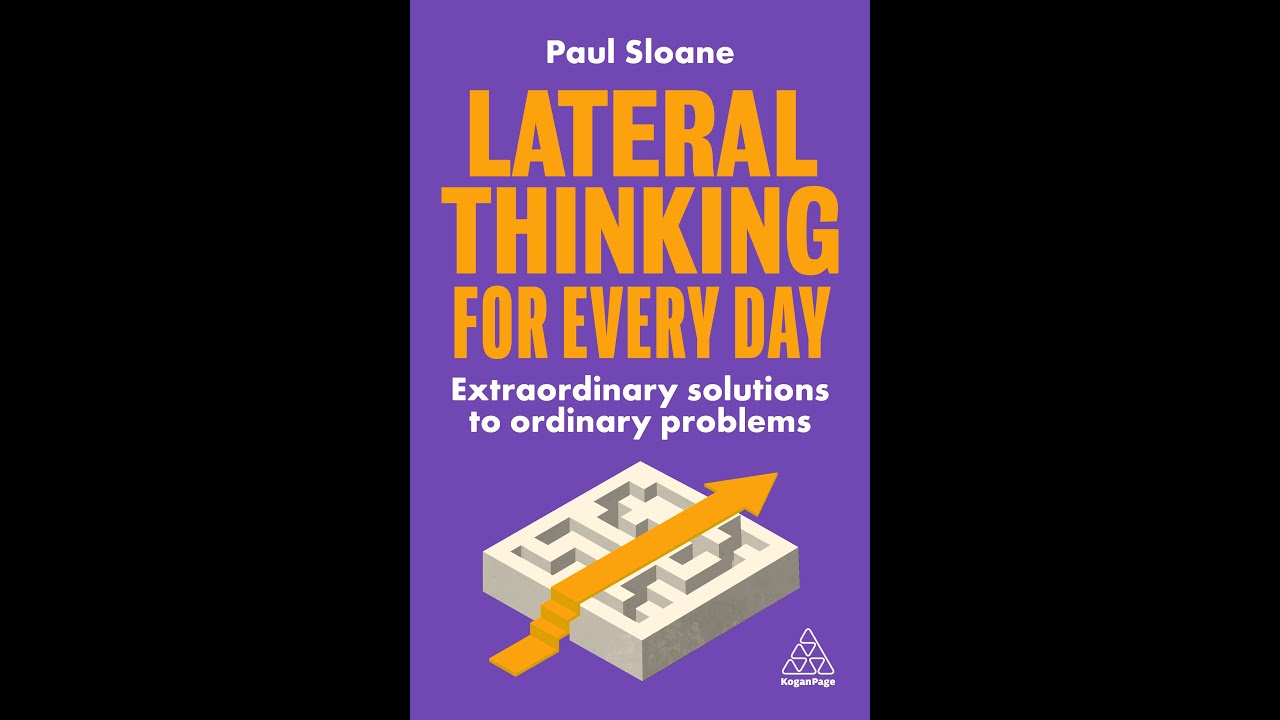
Paul Sloane introduces lateral thinking through a story about a subway engineer who stopped light-bulb theft by reversing the bulb fittings so thieves would tighten them instead. His book collects real-world examples from business, art, and history showing how sideways thinking solves everyday problems, plus exercises to build the skill.
Chapters
Hi, I'm Paul Sloane, and I'm the author of this new book, Lateral Thinking for Everyday. Let me tell you a story. There was a city which had a problem with its subways, the walkways underneath the main roads that people used. And the problem was that vandals kept stealing the light bulbs. They'd go up to the fittings and unscrew the bulbs, run off with them, leaving the subways dark and dangerous at night. And they gave this problem to a municipal engineer and they said, come up with a solution, but there's no room to move the location of the light fittings and they're very low ceilings and you've got very little budget. And what he came up with was what I think is a very creative idea. He changed all the fittings from being a clockwise fitting where you screw in the bulb like this to an anti-clockwise fitting where you screw in the bulb in the other direction, which meant if a thief went up and tried to unscrew the light bulb, they were actually tightening it. And that's an example of lateral thinking in action, taking a different approach in order to solve a problem. And all of the challenges we face in life, from the very big challenges with climate change, pollution, everything else, right down to everyday problems that we have, there's an obvious approach, there's a straightforward approach, there's an approach we've always used, and very often there's a lateral approach where we sidestep the obvious and we come at the problem from a different direction and therefore come up with a better and fresh solution. And this book is packed with examples and stories from music, business, art, history, crime, warfare, all sorts of examples which show the best principles of lateral thinking, the best examples of it in action. And we look at how you can consider the opposite, how you can challenge assumptions, how you can ask better questions, how you can harness chance and random activities to be more lateral. It is packed with techniques, exercises, puzzles, and challenges, and it's aimed at anyone who wants to think of fresh ideas. So if you take this book and read it, I think it will help you to think differently and act differently, and I am sure that you will enjoy it.