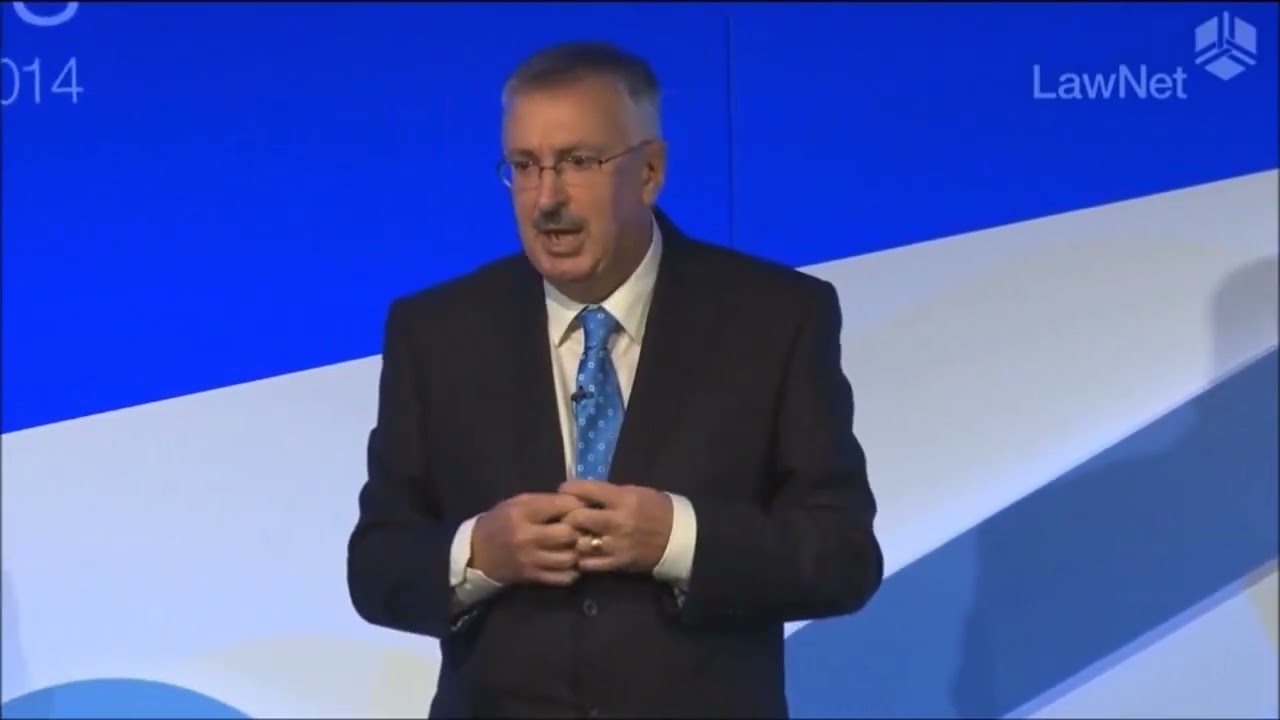
Paul Sloane, an executive and bestselling author, argues that mistakes and failures are essential for creative work. He uses the analogy of a tennis player deliberately serving double faults to show why playing it safe kills innovation. Mark Twain said what we think we know for sure is most dangerous.
Chapters
Paul Sloane is an entertaining and provocative speaker on lateral thinking and the leadership of innovation. His talks draw on his experiences as marketing director, vice president international, and chief executive officer of software companies. He is the author of bestselling business books, including The Leader's Guide to Lateral Thinking Skills and Think Like an Innovator. He will challenge you, and your audience to confront conventions, to become more adventurous, and to try more radical ideas.
Thank you. Now, if your hands are separated like yours, you have a powerful imagination. All right? If your hands are still together like yours, then you're more of a realist. You're a bit of a hard-bitten lawyer, aren't you? The point is that that champion, Roger Federer, has determined that it's worth serving some double faults because he wants to push his second serve as far and as fast as he can so as to not make it easy for his opponent. And he's prepared to accept a certain number of double faults. There's an optimum number of double faults that should be served in a professional tennis match, and it is not zero. And there's an optimum number of mistakes and failures you should be making every month, and it's not zero. If you never make a mistake, you're not trying new things. If everything you try works, you're not being bold enough. And we do it all the time. We go in to see a new client in a new situation, we assume that it's like something else we've seen before. Mark Twain said this. He said, it's not what we don't know that gets us into trouble. It's what we think we know for sure. The things we think— the things we're certain of are the most dangerous things. The things we don't know, we can ask about. The things we're sure of, we don't ask about, because we're certain of them. And sometimes they're just downright wrong.