Paul Sloane explains lateral thinking as solving problems from unexpected angles. He uses examples like the car-park number puzzle, the invention of zero, Dick Fosbury's backwards high jump, and Uber to show how lateral thinking breaks conventional approaches and creates breakthroughs.
Chapters
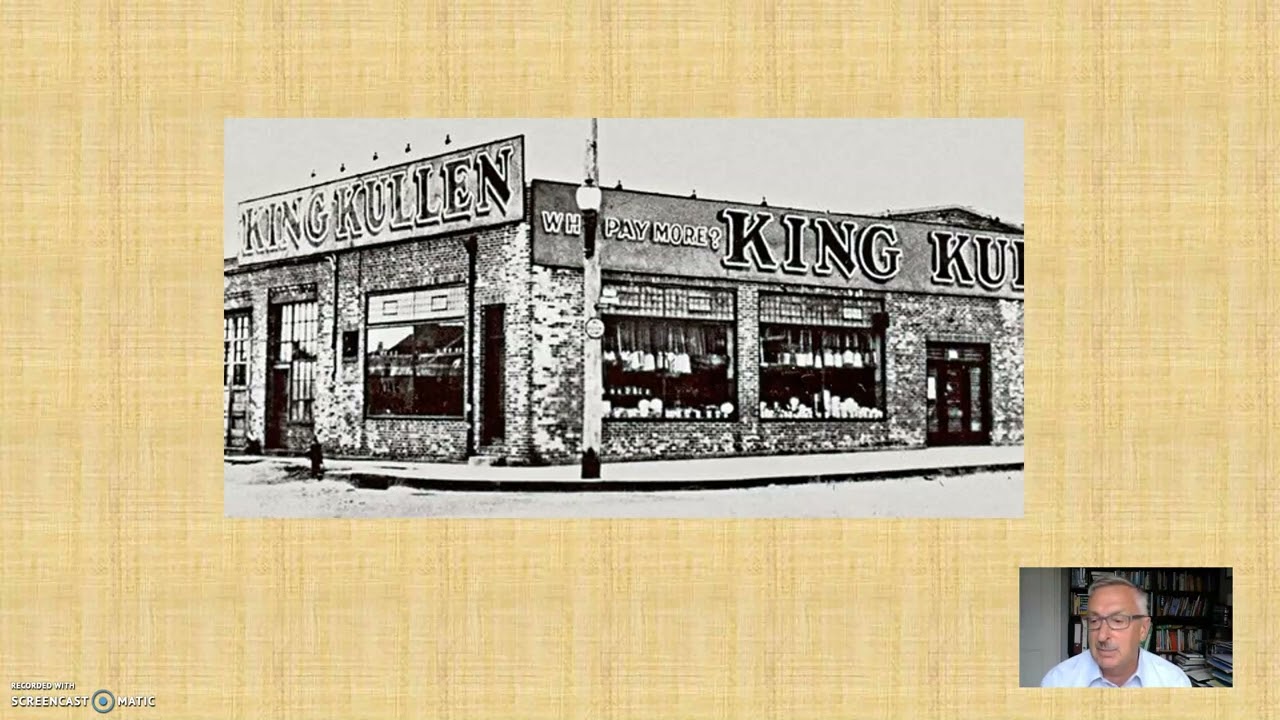
Well, welcome to this lecture in which I'm going to ask the question, what is lateral thinking? And I'm going to answer it, and I'll give you the definitions, but I'll also give you a lot of examples to show what lateral thinking is and how it's been used throughout history right up to the modern day. But let's start with a little puzzle because I love puzzles and they illustrate the point quite well. So here you go, try this little problem. What is the number of the space occupied by the car in this picture? Have a look, see if you can figure it out. This puzzle was given to 10-year-olds in Singapore, and most of them got it right! Can you work out the number of the space that the car occupies? 1. I'll give you another moment. Did you get it? Well, many children do get it, but many adults struggle with this because they look for a mathematical relationship between 16, 6, 68, 88, 98. They're looking all over the place for some clever relationship for this particular space, but they've started in the wrong place because the card doesn't approach the space from this side, the car approaches the space from this side. So the driver sees 86, 87, 88, 89, 90, and 91, and the car is parked in space number 87. And it's an example of lateral thinking. Conventional thinking means you come at the problem straight on. Lateral thinking means you take a different approach, you deliberately approach the problem from a different perspective. And that's what you've got to do here in order to solve this little puzzle. Let's go way back in history. You know, the very early civilizations used pictograms, so if they wanted to represent, tell a story, communicate something in a block of clay, they would draw pictures. Here's an example of ancient Egyptian hieroglyphics. The Chinese used pictograms and the Japanese, many other ancient civilizations, if they developed writing, it was first of all in the form of pictures. And this is okay up to a point, but you need thousands of pictures to represent all the thousands of words. Each single picture represents a single word, therefore, to cover a normal vocabulary of a couple of thousand words, you'd need 2,000 different pictures. You have to remember what they mean, and if somebody sees a a hieroglyph they've never seen before, they don't know how to pronounce it. So say you were trying to describe the city of Tawnes in the middle of the desert in Egypt, you could do a symbol for Tawnes, but how would anyone know how to pronounce it unless they heard somebody tell them it? And then someone somewhere came along with a brilliant idea, a lateral idea, one of mankind's greatest ideas, I believe, the alphabet. And the Phoenicians had the alphabet and then the Greeks and our alphabet, the Latin alphabet that we use in the Western world. Is based on the Greek alphabet, which is shown here. So you see alpha, beta, gamma, delta, epsilon became A, B, C, D, E in the Latin alphabet. And with this, with these symbols, these little icons, you can represent the different sounds and you can write any new word. So you hear a new word, you spell it out and you can write it and somebody else reading that word would know how to pronounce it. And they'd say, I've read about this new city, Taunus, in the middle of the desert. They'd know how to communicate it to people who couldn't write. So, it was a tremendous step forward in enabling concise and effective communication, and it's an example of lateral thinking, a different approach in order to solve the problem. You can't develop pictograms into an alphabet, you have to start again and think of an entirely new and better way to solve the problem. The ancient Greeks had marvellous temples as well as a good alphabet. Here's the Parthenon from Athens. If you've been there, it's a marvellous, marvellous building, and you can see many other brilliant ancient Greek temples, but you know you'll never see an arch because the Greeks didn't have the arch, and neither did the Egyptians or the Aztecs or the Incas or many other ancient civilizations. They thought the best way to develop bigger buildings was with bigger columns and lintels, crosspieces, and then some unknown stonemason in the ancient world thought perhaps there's a better way to do this and he came up with a different approach, an arch, and with the arch you can support a greater weight in a greater space and you'll get more light into the structure. And this is an example from an ancient Roman aqueduct in the south of France, and the arch enabled the development of much more brilliant architecture including the Gothic cathedrals throughout Europe. And it's an example of lateral thinking in architecture, a different approach. So the Romans had the arch, the Romans also had Roman numerals and the Roman numbering system you're familiar with, so this is 109, C, 1 away from X, take the 10, take 1 away from it, and this is 50 plus 10 plus 4, 50— 64. This is 10 plus 5 plus 1, 16, and this is 11. Now I want you to add these numbers together using just the Roman numerals. And it's pretty tricky! It's not an easy calculation to do because this is a sort of positive 1 and this is a negative 1. You take this 1 away, whereas you add this 1 on, and the different positions aren't consistent. So this 1 is something you take away from here. So manipulating this is quite tricky. And the system which replaced it, which we use in the Western world, came to us from the Indians. and the Arabs, and they used a decimal system. And in the decimal system, each— the position of each number is consistent. On the right is always the units, and then the tens, and then the hundreds and thousands and ten thousands. If you use decimal points, the tenths and the hundredths and so on, which makes it much more consistent and rational and logical. But the ancient Indian mathematicians added something quite lateral, a symbol for zero. The Romans and the Greeks did not have a symbol for zero, and consequently they couldn't leave a placeholder that was empty for calculations, and this placeholder says there are no tens here; there's 1 lot of hundreds, 0 tens, and 9 units. And the addition of the zero was a very, very important step forward in mathematics, and I believe a lateral step forward. Let's move much further forward. You know, Victorian shops, in a Victorian shop you'd go in and you'd ask the assistant for some butter or some eggs or some bacon, and the assistant would go away and get each of the items you wanted and then return to the counter and serve you piece by piece for each of your items. And then when you were finished, she would serve the next person in the, in the line. And then in the 1920s, a man called Michael Cullen said, what would happen if we turned the shop around and instead of the assistant serving the customer, the customer wandered around the store, helped themselves to all the items they wanted in a basket, and then paid at the end? And I'll bet the retail experts of the day said, that's a really silly idea. Customers will want service. They'll get confused. You'll have to put prices on everything. But he created the world's first supermarket, the King Cullen store in New Jersey. And it became a massively successful concept. He had a lot of low-priced items, a big selection, customers could wander around and help themselves and then pay and not have to wait in line for each single item to be collected for them by an assistant. And it's changed not just the way we shop, it's changed the whole layouts of our towns and out-of-town shopping centres and things are all based on the supermarket. And it's an example of lateral thinking in business. Finding a new approach, a different way to do things by approaching the problem from a different direction. So the person who came up with the concept of lateral thinking is Dr. Edward de Bono, who's a Maltese physician and psychologist, lecturer, academic. And in 1967, he wrote a book called The Use of Lateral Thinking, in which he proposed this concept. And he defined lateral thinking as containing these main elements: the challenging of assumptions and dominant ideas. So if the dominant idea was hieroglyphics or was upright, you would challenge it with something new such as an alphabet or an arch. Deliberately adopting a different point of view, coming at the problem from a different direction, just like the car in the car park, you have to think of the problem from a different point of view. Displacement is a means of doing that. We use techniques to actually displace yourself from your normal approach to a new, a fresh approach, and many lateral thinking techniques which I will teach on this course do just that. And finally, the use of chance, the use of random input to displace you and to incentivize you to come at the problem from an entirely random and therefore different perspective. Here's somebody who did some lateral thinking. You know, visitors to the 1968 Olympics in Mexico City were amazed to see a man go over the high jump bar with his back to the bar. No one had ever done that before. They'd all gone over with their stomachs to the bar using the Western roll or the straddle method. But Dick Fosbury said, is there just a different way to do this? Can I use a completely different approach? And he set a new world record and changed the way in which everyone else from then on did high jumps. And it's an example of lateral thinking in sport where you come at the problem from a fresh direction to do something completely different. Even more up to date, in 2009, this man Travis Kalanick was at a conference in Paris and he couldn't get a taxi. Taxis are very difficult to get in Paris. I don't know whether you've ever been there. but there just aren't enough of them. Now, the conventional approach would just be to say, well, I'll wait for a taxi to come along, I'll catch a bus, I'll catch the metro, I'll walk. But he said, no, perhaps there's a different solution here. What if I could tap into all the capacity of the drivers in Paris who'd be quite happy to give me a lift for a small fee? And he created the concept of Uber. And Uber is a different approach. You can't develop a taxi company into Uber. It's a different concept. And very often lateral thinking involves coming up with an entirely different concept by starting from a fresh perspective, by coming at the problem from an entirely different direction. And that is what lateral thinking is. And in the subsequent lectures, we're going to go into this in more detail. And I'll give you tips and techniques and methods in order to enable you to do some lateral thinking.
More from Paul








What is different about your business? #lateralthinking #marketing #leadership

Two important questions for CEOs and Marketing Chiefs. #1 Why do people buy our products?

Questions leaders should ask to assess the level of #innovation in their business. #leadership
