AI and the next gen of businesses w/ Paul Yacoubian & Chris Lu @ Copy.ai - - Out of the Woods Ep 10

In this episode of the Out of the Woods podcast, host Michael Martocci interviews Paul Yacoubian and Chris Liu, co‑founders of Copy.ai. The conversation weaves through several themes: the rationale behind building in public on Twitter, the historical tipping points that made generative AI mainstream (from IBM Watson to DALL‑E), and the technical evolution from GPT‑2 to GPT‑3, including the misconception that model size alone drives performance. Paul and Chris explain how Copy.ai started by experimenting with early GPT models, built a simple, demo‑first product, and iterated on a freemium model that offers 2,000 words per month for free. They discuss the heavy R&D partnership with OpenAI, the decision to stay model‑agnostic, and why they have not yet pursued their own proprietary models or a public API. The founders articulate a long‑term vision of empowering a “billion entrepreneurs” by making AI‑driven copy generation a human‑centric productivity tool, arguing that AI should augment rather than replace jobs. They touch on macro‑economic considerations such as the deflationary cost of compute, the importance of capital efficiency (their $9.1 M ARR with 26 employees), and the challenges of scaling a SaaS business in a volatile funding environment. The episode also explores practical use cases (SEO blog posts, email drafting, social media captions), the role of gamified onboarding, and the broader societal implications of AI on education, population trends, and wealth inequality. Finally, Paul offers blunt advice to struggling founders about runway management, the inevitability of failure, and the need to keep dreaming big and building.
Chapters
All right, awesome. Well, welcome back to the Out of the Woods podcast. It's the first time that we've had 3 people— well, 2 guests, but 3 people total. So this is going to be either a shit show or pretty amazing and fun. So we'll figure it out. We'll probably talk over each other a few different times. We have Chris Liu and Paul Yacoubian. I think I said it right. He just told me and I probably still messed it
up. Yeah, that's close enough.
Close enough. From Copy.ai. Awesome. Been following the journey on Twitter for a while. You're very big on the build in public ethos. Why do you share everything on Twitter? What's the idea there?
Well, we, you know, Elon Musk does it and it worked really well for him. So we thought we'd—
is that causation or correlation?
For Elon, he shared his vision for everything he does. And when you share the vision, that's how you actually motivate people to like assess whether anyone thinks it's interesting, whether anyone's going to want to work for you, and whether anyone's going to want to invest in the project. So you end up with this insane growth flywheel that helps you get any dumb idea, any idea at all really off the ground very quickly. And you get traction that way. And he's done it over and over and over again. And that's what makes people want to follow him. He's actually doing stuff that's interesting.
So is the CopyAI vision interesting enough to get that same result?
I think so. I think it's a little bit, if you're going to get to Mars, that's a more concrete vision of what the mission is. It's a little bit harder when you're starting out with like self-service SaaS to like have that same level of excitement around the vision. But I think in general, like even, I think AI is continuing to get more impressive. And I think that that's where you're going to get a lot of the excitement and just in terms of the raw practical usefulness of the technologies. So that's where we're building.
I think like DALL-E has kind of been a bit of a tipping point because it's so visual. Like everyone finally sees like, oh my gosh, like AI is finally getting to a point where it's really useful and interesting. Whereas, you know, we've talked about AI for so long. Do you feel kind of the same way that like the— you were at a tipping point where it's starting to become kind of a mass market thing that people realize is like here now?
Yeah, we've hit that moment. A couple of times. So the first time was with IBM Watson, and IBM's like, hey, it can do Jeopardy or whatever better than these contestants. But it was like a very negative way of, like a very pessimistic view of the future where computers just outsmart humans at every turn and you can't beat them. That was one reason why we never really cared about AI in general. Because of the way that IBM marketed Watson. As it turns out, Watson doesn't have— like, they haven't been able to actually showcase all that value that they were promising.
That's kind of like IBM's different track record, right, in general? No,
they— you can, you can create models to do specific tasks. It's just really hard to scale that out across, you know, millions of people. And they, they were able to like generate revenue you know, enterprise revenue constantly with that model, but it's really more services than product revenue. What changed was, uh, the transformer model architecture that was, uh, released in a paper by researchers from Google in 2017 that outlined a path to, um, really like increasingly powerful text generation models and language prediction models that That got the OpenAI team really interested in turning those into kind of open source models. They ended up creating GPT-2, open sourced that. And that was our first taste, like Chris and I's first taste of actually getting our hands on these text gen models. And when it came out, it could just autocomplete. And so I would just sit in front of my computer, write out some sci-fi product story thing, and then just get it to generate ideas for me. And I was just clicking it.
Is that kind of like the Gmail, like where you start typing something, you know, like say, hey, did you mean to like say this basically?
Yeah. So Gmail, like they're intentionally very conservative and they're gonna, you know, just kind of autocomplete that sentence. But what was great about this was it was so open-ended, it could just go off the rails. And that was this creative aspect that was way underappreciated. Now the problem with GPT-2 is like it was the first model that could kind of make sense, but it can only make sense like 10% of the time. The other 90% is like a word jumble and you're like, I'm trying to understand what's going on, but I don't really understand it. And that little taste, that 10% taste was enough of value for me to want to continue to use the product. But then there was like a 1 in 100 result that was a total gem and you're like, this is better than any person could ever imagine. Like, I've never even— like, it's just so mind-blowing to me. I was like, this is mind-expanding in its creative capacity.
Yep.
And that's— so once I saw that, and once, you know, Chris saw that, we were like, hey, what's this going to look like in 10 years from now? Like, if we're on some kind of trend line of improvement in these core models, what will this look like in 10 years? Fast forward 6 months and they released GPT-3, which was 100 times the size.
Michael, what does it mean, 100 times the size? Like just the processing power, just the capabilities?
Chris can speak to this. It's like the number of parameters in the neural network.
Yeah, it's a, uh, well, actually, I think it was a little more than 6 months, Paul. Uh, the talk to transformer stuff
from the time that we— yeah, from the time that we were using GPT-2. It might have
been longer
than that.
It might have been a year and a half, actually. But that's digressing. Basically, the model size is basically how many parameters is this model tracking, right? And there was a big belief when GPT-3 launched that it's like, wow, this is a 175 billion parameter. It just means it's like a proxy for the size of the model. And it was 100 times bigger than GPT-2. Since that period of time, we've learned that size actually isn't the end-all be-all and having more data might be, but we can go into that a little later.
So is Chris kind of the highly technical part of the partnership and Paul, you're like the go-to-market?
He's a little bit. Yeah, Chris built out like our whole first version of the app. I play a small role in all this. You're just the tweeter, right? We chat strategy. I've handled fundraising, kind of divide it up a little
bit. How'd you guys meet initially? And then how'd you come about OpenAI? And then how'd you decide this is something worth pursuing?
Great question. So we met at a venture fund that we worked at together. together. So we had been working together for 5 years and the fund we were at helped employees exercise their stock options. So for Chris and I, we got to invest in hundreds of venture-backed startups and we got to see the entire ecosystem, basically every company post like Series B all the way to IPO. And you would end up helping the employee base exercise their options. get equity in the companies that they were working at. So we got to see every business model. You got to see all these great companies. You got to figure out where the frontiers of technology were based on the early stages. And then you got a really good sense of like, all right, where are things headed? What's the next big wave of innovation? And you had seen the mobile wave roll through. You'd seen SaaS, cloud-based software as a service, roll through. The crypto kind of wave was rolling through while we were working together and we were really looking at how much value could you create in crypto. It does some things well, some things not maybe as well as traditional technologies. And so the value creation part was a little bit of a question in our minds. But then when we saw GPT-3 launch, it was very clear that You would have infinite amounts of upside from the creativity of text generation. So when you ask the question, what's the value of all potential text that could be written? It's infinite. It's literally an infinite amount. So where you want to be positioned as a company that turns these text generators into real value for real-world use cases, if you can position your company in front of as much of that tailwind as possible, on the AI model improvement side, you could build a nice little business. So we started testing different product hooks to try to figure out what is the right interface for people to use that makes it easy for them to adopt it, figure out how to use it, and figure out how to
get value. How much work needs to be done on top of the OpenAI models to be able to do what you all do? Because to me, when I first saw Copy.ai, I was like, oh, Is this just an interface on top of GPT-3, or is there some sort of magic on top of GPT-3 that allows people to get the actual outputs that you're, you know, promising? Basically, like, how much work went into adapting the models to meet the kind of, you know, strategy of the business?
I can share a bit about that, actually. So, um, when we first started, it wasn't too much. There was some work that could be done. There was like, you know, understanding and following the latest and improvements on how to even talk to the AI models. Like, you know, you could have just— Yeah. Basically, there was some initial improvements at that stage. Since then, we've invested heavily into R&D, and turns out we were barely scratching the surface of what's possible. And so today, you know, we work really closely with OpenAI and we're really excited. And there's like certain things that we discover that we can still share with them and it's new to them. So, you know, this is a completely greenfield opportunity for discovering what's possible. And it's hilarious because it just takes a little bit of creativity.
I see like a lot of different companies popping up now too. And maybe they're just popping up because they're becoming popular, but they have their own models. Like there's, you know, there's a DALL-E basically competitor that's doing some really interesting stuff. Are there, do you see yourselves leveraging a lot of these partners? Do you see yourself, creating some of your own models? Like, is it— what does the future kind of look like?
Yeah,
I can talk about that.
You want to go?
Yeah, so you have, you have like base model providers and base model creators, and that lives in like the core of this entire ecosystem. And then you have applications that are built on top. So in some cases you might say, okay, it's worth our time to invest money into building our own like totally proprietary models. Um, that would— you probably, like, if that happens, it's like, we're not doing that yet. Um, maybe down the road, but right now you just need to leverage like the latest and greatest, and you want to be, um, using the best models. So it's, it's not like, like this whole quality-cost trade-off. Like, you really need to go after the quality. So we, we've worked really close with OpenAI, have helped them improve their models. And it's been a great kind of enterprise partnership with them. What's nice, we're built in a way that's really agnostic, so it doesn't— we can use another provider's models if those are better. But they have very different problems that they need to solve, and we have very different problems we need to solve as an application. So I don't really see a lot of change in that. framework. Um, you mentioned DALL-E, that's like an image generation model. Um, there is a lot of— yeah, there are a lot of different image generation models floating out around out there right now. So it's gonna be interesting to see how that, the image side plays out.
And, you know, I saw recently that GPT-3, like the cost per, you know, API call or processing has started to come down. It seems like to be pretty deflationary. Is that, is that what you expect over the next several years, just the cost of compute and the model utilization is just going to keep going down and down and down.
The cost of computing will drop. That's a Moore's Law issue. But the actual usage amount will go way up with each cycle that you see drop.
And how do you think about that in the framework of your business model at all?
I could share a little bit, and I actually want to start with a question. How many times do you think AWS have I
think I've seen something. It's in the hundreds or thousands. Like, they do it like every year, like, you know, 50, 100 times or something, right? I mean, there's so many products.
Yeah, I think since last year it was 107 times since it launched in 2006. Like, we expect something similar. I don't know if it's gonna be that drastic, but on our end, you know, Moore's Law is on the right side here. I was listening to a podcast, I think it was the All In podcast, and they were saying that what people haven't realized is that Moore's Law hasn't ended. It just shifted to GPUs. And, you know, so now we are really benefiting from those laws. And then the latest research that has come out, I think from Google, basically stated, oh, you actually don't need more computation power, you just need more data. And that means that, oh, you get really, really good models without having to have ridiculous hardware. And even one of the DALL-E competitors, according to Twitter, was trained for about $600,000, which is like insane.
Yeah.
Insanely cheap.
Insanely cheap.
Yeah, it's really cheap. Just to give the rest of context.
You've both talked about vision. Paul, you said it when you first got on. Chris, I saw you had a LinkedIn post about how important long-term vision is. You're in a space that's very kind of open-ended. You focus in right now on copy generation. Even that is a big opportunity. I just saw, I don't know if you saw Adept, it's like ACT-1, and basically text prompts can actually provide, like take action in multiple different online platforms and do your work for you and stuff. Like, what are the bounds of your vision? Like, where does this go over the next 5 to 10 years? What problem do you guys specifically solve versus what the rest of the world of AI is gonna solve?
I'll let Chris take this one.
Awesome. Yeah, it's fascinating, right? Adept, their Action Transformer, great stuff. The speed of this industry is going crazy. But
can you explain what that demo showcased?
Yeah, I could do a quick demo of that. Basically, they, from what I understand, trained a massive model on a lot of specific data. Oh no. Specifically for doing actions on a browser. So the demo that they released shows them on Redfin and they type, hey, give me houses in Houston that are under $600K and I have a family of 4. And basically Adept knew which boxes to click, which buttons to click, what to type into the boxes to fit your search for this interface. And that's like mind-blowing stuff, right? Paul and I like to approach this problem in particular from a, where should the world be in 10 years? What's not going to change versus—
Very Amazonian.
Yeah, I guess it's like a working backwards thing. We definitely got that mental model from Jeff Bezos. But for us, it's like, okay, What is the future you don't want to build and what is the future you do want to build? And in Paul and my eye, it's like, wait, we want to make sure that the future is human-centric. If it's not human-centric, it is a scary, scary future. But then how do you really resolve this conflict that these AI models are getting so good? You know, like businesses are going to start reducing headcount, right? They're going to potentially try their best to reduce as much headcount much as possible. Yeah. as possible just from a pure economic standpoint. And then the realization was, okay, well, if that's true, then it means the corollary is true. We need to build the best human tools that allows anybody to be able to launch their own business, to be able to accomplish their own goals at a really high rate, at an extremely high level. And so we have an unofficial vision of a billion new entrepreneurs over the next decade, right? What would it take? What's the platform that needs to get built for that to happen globally? And that would be the true entrepreneurial explosion, right? There needs to be— there are going to be societal shifts. There's going to be massive things that will need to change. And we want to build the tools that keep it human-centric, that keep it so then there's not going to be a huge wealth inequality and Instead, it's going to be almost like the world's greatest meritocracy in a way where it's like the best ideas will come to life, they will go more viral, they will work, and then people will just constantly be able to express their ideas. Another way of framing this is given a 10% chance of success, how many times do you have to try to start a company before you have a 90-some percent chance of success? chance of success across the board. I forgot the exact number, but it's like high. It's like 30 times or something along those lines. And so it's like, okay, well then there's 2 ways of attacking this problem. One is to just try more. And it's a try more. That means you need to be able to increase your velocity of testing, right? And then the second one is to increase your chances and probability of success. Per try. And if you can do both, then you can turn like any idea into some sort of reality that can potentially work as a standalone business, you know, with as little time and effort as necessary. And it's just the true exercise of your creativity, right? You have an idea, it's like, wouldn't it be cool if, and then it can become reality.
That we could try one of those.
Yeah.
You try one of those, Michael.
Which one?
Michael, how have you ever wanted to own an island?
Have I ever wanted to own one? Yeah. Yeah. Why not? Seems like a fun thing. Richard Branson has fun.
How does— exactly, how does the Earth make islands?
I guess it's, you know, matter coming out from underneath and, you know, it hardens into rock formations and it keeps pushing itself up.
Yeah. Volcanoes. Yeah. Where's this going? If you wanted to build your own island, you would need to use volcanoes and pipe lava from a volcano.
Yep, right, 100%.
That's just an engineering problem.
But somebody's got to own the land too. But yeah.
I mean, if you're out in the middle of the ocean, you know, you just—
Can you just claim that land? Up for free grabs.
Yeah, yeah.
Damn, it's interesting,
right? So that's an idea Elon Musk would be like, somebody should, you know, create islands out of lava. Like, I'm gonna do it, you know? And then everybody wants to invest and his company's worth a billion dollars the next day, right?
100%.
And then you have to break— you break down the engineering task and you're saying, okay, well, what does it actually take? Do I need to sell something on the front end? to actually fund this business? Can I fundraise? What is it? So when Musk says, okay, I'm going to need tunnels on Mars because we're going to need an underground civilization, let's test that out on Earth. And if I'm going to do it, what's the bottleneck to actually doing it really cheaply? And that's usually the bottleneck to every kind of real-world thing. So as it turns out, it's just the machine is not very efficient. And so his engineering task is just make a more efficient tunneling machine, right? Just look at that problem, break it down from first principles and rebuild it from the ground up and get a 10x savings. So even that strategy of how do you actually approach a problem and how do you actually build a solution, people are not good at that. And so even if you wanted to do it, if you have the wrong approach, you're going to spend a few years of your life in agony because you had the wrong— you took the wrong approach to get to the, like, the thing that you wanted to do, and then you end up failing at it. So I can't, I can't tell you how many founders are out there, they just fail, like, constantly, just constantly, you know, maybe they fail once, maybe they fail twice. But if, you know, if you ask them, well, what was the— how did you approach the problem? How did you think about what you would do first and sequence it? If that's wrong, you're just setting yourself up for failure.
So if you're trying to empower a billion entrepreneurs in the next 10, 20, 50 years, dude, and you break it down to the first principles, does it somehow start with copy generation and AI? Like, how does it— why is that the starting point?
You need a good plan, right? What's your plan? Did you think through it? Do you have like your key assumptions laid out? Are they good assumptions to make? Right. If I'm going to— let's say we're going to start this island company. Where do you start first? Well, you might want like a website that explains the project, right? You might use like DALL-E to generate an image of
some— Some volcano factories in the middle of the ocean.
Yeah. In the old days, you had to find someone to do like concept art, but it was like kind of hokey, right? It was like an illustration. But now you can literally generate unlimited shots on goal here until you find something that's actually really compelling to people.
Isn't it interesting that the prompt creativity becomes the new kind of creativity? It's like the creativity has just shifted.
It's still text. Yeah, it's still text though. So now with the image generation side, that's gone. So I could show you 10 renders and you'd be like, oh my God, The vision, vision is a very— it's a visual thing and how you communicate. If I communicate in words, you're like, oh, that's kind of interesting, but what's in your head is not what's in my head. And so the purpose of these renders is actually to make it very, a lot more concrete for you. And a big component that I really did not appreciate, especially on the text generation side, was if you have a dumb idea, And then you write out a plan, it actually makes it not as dumb at all. And the idea had some nugget of something that was interesting enough for you to think about it and want to express it. But when you actually build a plan, you can make the idea great. So I did this test on Twitter. I asked people to reply with a dumb idea, and then I used our tools to actually create a viable business around it. like a viable business plan around what they were talking about. And then, you'd see it. It's like, okay, the thing that was in my head, this creativity got trapped because I could not express it. I could not express it to other people and I could not express it to myself. And, that barrier is this— I see a lot of similarities between adults not being as creative as kids. when it comes to like painting, artwork, just imagination, storytelling. Like, kids are really amazing at that. And then at some point, you just stop being creative. I don't know if it's because school like pounds that out of you because you're penalized for being creative.
Just get numbed by the world. Right answer.
You get numb. Exactly. You got numbed by the world. You got slapped down, whatever, you know, by uncreative people. And then you get to the end of it and then you're constantly being rewarded for creativity. Like in the workforce, if you have a role and you go create something new, you improve a process, you do something that wasn't asked of you that creates value and impact, you get rewarded all day long for that. And at the most creative, the most creation or creative potential that you have is when You find something you're really passionate about where you can express that creativity and become kind of hyperproductive behind it. And this is the point that Chris mentioned around a billion entrepreneurs. Not only are people going to be able to create things easier, but they're going to be able to create more things that they want to create, and they'll spend less time doing the stuff that they don't want to do. that you didn't want to do or you didn't know how to do, and you'll be able to get those ideas out there much faster.
And have you found that the models help you unlock stuff that's stuck in your brain that you can't articulate? You're saying, okay, I have this really big vision, but I can't really articulate it well. Here's some of my thoughts around it, and AI can help draw that out and amplify it.
Yeah, and we have a new product feature we're building now that's going to Put that on steroids too.
And what are the bounds of like these types of things? If I said, hey, here's all the parameters of my business, we're this, we're that, we're this, SwagUp does this, this is our business model, can you provide me things that we should be doing, strategies that we should be building out? You know, you can—
yeah, it'll suggest— it can suggest all that stuff for you.
And does that, at a point, does that become commoditized because everybody has access to these same models, or Or can you find kind of differentiation and opportunity?
Yeah, the differentiation is like what— it's where you want to take your product and where you think value can be created. So there are many businesses where the model is very standard. You end up with multiple companies trying to do the same thing, right? And then somebody will niche down and differentiate over here. Somebody will differentiate over there. I think that the better way to frame it is like who Who has the most compelling vision to unlock the most value? And if you do that, then each thing you build unlocks more value. And that's really the secret of road mapping and exploration because this whole area is brand new. So like you said, maybe you want somebody to brainstorm with that has infinite knowledge and infinite wisdom. about business models, right? That's not going to be a person. It would be a computer that already has trained on a lot of this information that's public.
And do you find that you guys fit that gap? That's where you want to continue to spend time? I feel like copy—
That's a byproduct. That is not our core, how we make money today, but that's actually a byproduct of a lot How do
you feel about positioning? Because obviously when you build a business from 0 to 1, niching down, going after a specific problem, people know what you do. I mean, that's what allowed you to get so many customers so quickly, but it's also limiting in a way. Like copy.ai doesn't fully encapsulate what your vision is and where you're trying to go. Do you find that to be a challenge? Is it just a natural progression where the company's gonna evolve?
Yeah, I mean, every company evolves and does more than where they start.
Yep.
We have a pretty simple product heuristic, I guess, for this, which is build really cool stuff. Demos take care of itself, right? Like, you just show what's possible. You just show it off in the demo. It has to be simple to use, easy to understand. And then, you know, people will want to sign up. They'll want to sign up. And if first software is set up where they don't need to watch a training, they don't need to read documentation and they can use it and get value out of it. That's the ultimate, you know, value.
Yeah, we've learned a lot from Google. Their search, you know, interface is a text box and a search button. It's like, great, right?
It's like 80% of their revenue, right?
Yeah. Yeah. And that's, that's how like they built their platform off of that, and it's worked really well for them. So I think as our product matures, you're going to see more of that platform effect take hold across the board. We get a lot of questions about like, what's your moat? This, that. I'm like, well, there are a lot of moats that you build on every time you do something. A great moat is having customers. That's an awesome moat. Having, for us, like we're really very focused on distributing the product as widely and as globally as possible. That reinforces this quality of AI models where the more diverse your training set is, both in terms of use case and user, like let's say professionals, amateurs, like students, whatever. Yeah. The more variety you get in your training.
And the benefits of that are mostly accruing to you all or to OpenAI as well?
Yeah, OpenAI has— they have a different piece that they're optimizing for, but a lot of this, all this training dataset that comes to us, and we use that to fine-tune their models. So we improve on their models for our use cases.
Gotcha. From Micah, you know, you talk about getting it in the hands of as many people as possible. Do you see kind of a platform orientation for you all in the future where it's very kind of API-centric embedded throughout products across the internet and other people are leveraging your models to, let's say I'm a book publisher and I want OpenAI's models natively in there so entrepreneurs can start book companies. Are you going to help them start the book company or is it through APIs where you guys are powering those experiences that are more niched down to specific business models?
Yeah, we don't have any APIs right now. APIs are They're interesting, so we're intrigued, but that's not our current business model. We have a lot of work to do on the product, just the core product first, before you get into like real API play.
Yep, it makes sense. I think, you know— And
it's not, it's not right now, it's not that easy for like, you know, an end user to use an API. So if you're going to go do an API, that's going to be more of an enterprise kind of
Can a billion people in the world use an API? That's like another way of thinking about it.
That's a great question. Not maybe, you know.
Well, to me, APIs are one-to-many things. I mean, they're leveraged for almost in a B2B sense of like, hey, I'm going to enable my users to get power from this capability, but I'm not going to expose the API to them. You know, they're just, you know, leveraging the capabilities of it. Um, but yeah.
Yeah, we haven't— we have one more assumption, which is Most, pretty much every product will adopt AI as a feature. It's a core part of the product.
I mean, we're thinking about it, you know, how can we automate product mockups in real time leveraging AI and, you know, image processing based on prompts that people are providing? Like, hey, I want to see the Copy.ai logo, you know, repeating in a really modern pattern on this box. You know, show me that right now. You know, I think there's a lot of opportunity just in our business for that. But, you know, that's just one random use case. And we're paying tens of thousands of dollars a month for design fees for our team. What happens if the product, the experience becomes instantaneous for the customer and we eliminate that cost? It's a win-win for everybody across the board.
Except for the designers.
Yeah, or they can become prompt writers or something. I don't know. I think Chris's point about the abundance of AIs could potentially rise the boats of everybody involved. You know, if you're an individual designer, maybe you can build a massive business on top of these capabilities versus employing a bunch of designers and having a service business or something. So I think the abundance and growth ultimately is really good for people in general, for health and the wellness of a country and poverty and all these different things. Especially when you have a declining age of population. Yeah. You know, like everybody talks about how, you know,
Increase, even increasing age.
Yeah, yeah, increasing age. But I mean, less babies are being had. We're going to see a population decline in general. But doesn't AI maybe have—
Not if Elon Musk has anything to do with that.
Yeah, his family tree is just
single-handedly repopulating the planet.
But don't you feel that AI has the inverse effect of population decline because it also creates just like leverage? For the lower amount of people that you do have?
I don't know.
I would say so. Productivity leverage, that kind of makes sense to me if you think about humans. I
don't think so. Hard disagree on that.
Why is that?
Population is different. Population is like, it's a function of the people's optimism about the future. And if they think there's going to be more abundance and if they think they can afford the lifestyle they want today. So AI may be able to improve the lifestyle people have today, but it's unclear how.
But people talk about how population decline decreases aggregate demand, decreases growth rates. But don't you think that AI could have the inverse impact or at least offset some of the lack of productivity and growth and demand?
A lot of the— well, Yeah, the issue is that if you look at, let's just take the AI stuff we're doing, that can improve productivity of white-collar office work. But so much of the economies are services-based where you have teachers and nurses, and that is never going to increase their productivity in any meaningful way because it's human-to-human work. And so when you look at the entire You break down the entire GDP of economies, it's not going to— I know some people on Twitter are predicting like 20% GDP growth.
But we don't even have enough teachers and we don't have standardized education. What if AI comes in and teaches at the highest levels to the students of the world and drives education at a much more equal level?
I don't know. Someone's got to watch your kids, Michael.
Not really. I mean, people were home doing homeschooling while their parents were working in the other room, not even paying attention to them. So who knows?
I don't know how much the kids learned. We're gonna find out. But according to every standardized—
Yeah, they're down like 20, 30% from—
And according to IQ test scores, you're having huge drops. And that has massive knock-on effects because you can't just like, you can't just make that up. You can't make up what was lost. So I think we definitely need more tooling around that. But
No.
Uh, that, that's a disaster.
So we can go on forever on that. That's like more of a Joe Rogan podcast type of conversation. Um, but as a user of, of your platform, especially like when it was first starting, it seemed like gamification was one of the biggest reasons that it kind of took off so quickly. Because for me, I was like, shit, I just want to download this and use it because— or not even download it, but just use it. Because it's just fun. It's like a game. I'm gonna go in, I'm gonna type shit. The same thing on DALL-E. I'm typing stuff, I'm sharing it. How much was that like helpful in terms of acquiring customers and getting them kind of bought in first? And then, you know, how do you then take that, you know, light interest and turn it into like, hey, actual paying customers? I know you've done a lot of like free trials, like, hey, we're free on the weekend, like come in. You really push on that as a strategy?
We have a totally free plan now, so you can use it up to, I think, 2,000 words a month for free every single month. And so that helped kind of promote the product as well. There is a big aha moment when you use generative AI for the first time. You're like, oh, I can actually expand out and it knows something about what I'm trying to do. That is an aha moment. That's like a mental shift for our users. And that's like a huge aha moment, like one of the best in the business. DALL-E is great too. You have some idea in your head, you type it in and boom, there's an image.
Did you see the LinkedIn shitposting generator?
Yeah, that was great. Right? Just like, yeah, the shitpost generator. Solid stuff, right? Like viral post generator. But the problem is How much value can you create off an image? How much value can you create off text? And then is that a frequent repeatable need that you have in your day-to-day kind of workflow? For some people that are writing a lot, yeah, that's like a big need. And then a lot of other people, no, it's not. So they'll come in, test it out, but maybe that's not a need that they have at any given time.
Yet.
So it's really our job. Yeah, exactly. Yet. It's our job to actually increase the value to all users. And then long-term, especially the long tail of people that are not really writing or creating anything on a day-to-day basis.
Chris, are you going to say something?
No, I just added yet. People are going to be writing a lot more. I think people don't write as much because it's just hard to express yourself in And when people start learning, wow, it's actually really easy to express myself. If I can just put down raw thoughts and get out a really coherent post, that is exactly what I'm trying to say. You know, that will share a lot of knowledge. It makes it a lot easier to share knowledge. It makes it a lot easier to, you know, share your experiences. And that unlocks a lot more of the internet, the power of the internet.
For the people that shift to like a paid plan and it's like, not like, hey, I'm just fucking around with this tool because it's fun. What are the use cases? What are the major things that they're doing to build their business, make money, provide value and impact? What are the most sticky use cases?
Yeah, so it's a lot of organic marketing for your business. So you're selling some product online, maybe you want Google, rank higher on Google, right? So you need to put up blog posts, you need content that Google will lift up the rankings. So it's like one use case. Web pages. A lot of companies don't even have a web page on their site that explains all their products, all their services and what they do. So that's really easy. People use our tools like our Freestyle tool to write emails. So all you have to do is just describe like, who's this email to? What do you need to cover? And then you click generate and you get like a completed email out of the end of it that sounds great. And you're like, oh, this is awesome. I don't have to spend any time writing that. I can just send it. And it's this amazing enablement thing for human communication, human-to-human communication. So those are the main ones right now. We have a lot of people that do need help rewriting things, maybe social media posts, that they need, like Instagram captions, for example, and they want to build out a better—
Is it mostly individuals? Is it teams and companies?
Yeah, we have a mix of both. Because we're freemium, we have a lot of individuals on the platform. Writing is often a very individual thing that they're doing. And then we also have collaborative functionality as well, like if you're on a team. I think
one of the things too with writing is just like, it's so hard to get from off the starting block. You know, like you have that writer's block and, and, you know, in a way, you know, maybe you don't use the exact prompt, but you use it as like a starting point to figure out what should I be thinking about? What should I be writing? And kind of unblock people and unblock that creativity. Do you see people kind of leveraging it that way too, as like a catalyst? Yeah, I think it's a catalyst.
Yes. Yeah. So it does 0 to 1 writing way better than it does like 0.8 to 1. So you really, it is, that's where the products really shine.
It makes sense. And then what about inputting external data sources? If I'm writing copy for my website or for my ad copy or whatever, there's external data sources that say this performed better than something else? Is that something that the operator kind of has to just come back and make tweaks based on what they're seeing? Or do you foresee kind of bringing in external data to make it more powerful and impactful for that user?
Yeah, over time we'll see. You'll see that.
Yeah,
for
sure. Makes sense. What about the next— I
also thought Facebook would do that and they haven't. I thought Google would do that as a feature. But they haven't. So I don't know what's taking—
There's probably like 3 Google teams working on it and they all don't know that each other's working on it.
Maybe 30. I don't know. Like when it's, you know, we're 2 years out from like GPT-3, over 2 years out and we still have no feature that helps you like—
But they're probably having a meeting about it probably at Google and then they're going to meet about it next month to think if they should ever release
it. I don't know. It's, and so people, yeah, people keep asking me that. I'm like, I'm I don't know. I thought they'd do it. I don't know what to tell you. It's so core to their business. That's literally how they make money is they optimize content. So like, yeah, I'm at a loss. I can't—
They should just pay you guys like $10 million to figure it out for them.
I wouldn't take it. But yeah, I don't want to— I don't care about optimizing ads that badly.
Makes sense. Well, Looking ahead, like kind of like the economic environment that we're in as an entrepreneur, do you look, do you guys look at what's going on externally in the funding environments and the equity markets? Does it matter at all to your execution on a daily basis if your employees care about those things or stock valuations and employee stock options? Is that stuff that you kind of have in the back of your mind as you're operating or do you have to kind of just drown out the noise and just stay focused?
Dude, we thought we were in a tech bubble when we left our jobs and started the company. So we thought the good times were going to end almost immediately.
I think everybody thought that for so long. You know, it was like a house of cards just waiting to collapse to a degree.
Yeah. So we've kept the team super lean. We're at 26 people. We're at $9.1 million in ARR. Like that's way, that's probably way—
It's like almost $500,000 per person. And revenue per employee.
It's stout. So we've been really disciplined. We've burned less than 1x our ARR since inception. So we care a lot about capital efficiency. And the whole point of AI is that it should make companies more efficient. So I'm not sure how companies can bloat up and adopt AI natively. It's really unfathomable. So a lot of the talent that got brought onto teams, like a lot of teams across the venture startup landscape, they were unable to unlock the 10x value from those investments. And a lot of those folks unfortunately had gotten laid off. Some people now are sensing more layoffs that are like second layoff, third layoff. And so it's really a crazy time to be in the talent market on the startup side. So yeah, it's something we've thought about a lot. I think the funding market will probably turn around some, but you should always operate your business with some discipline financially. I was
going to say, it doesn't seem like it's had to have been a big shift for you all because you kind of went into it with that mentality already. Does that come from the time observing all those other startups and how they're running them, how they're spending money, and also kind of the financial background that you had as well?
No, I lost a lot of money in the first tech bubble when I was in middle school day trading stocks.
Middle school, nice. You're calling your broker at lunch or something?
No, they had E-Trade. So I was day trading with my dad on E-Trade. We made all this money buying all these stocks like AOL and whatnot, and then lost all of So you have the
scar tissue.
Dude, I got layers of it, layers of it. So then I was like, okay, why don't I just be an accountant? So I went and became a CPA, got a degree in economics and accounting, started my career in accounting. Then it was like, cool, I understand how to read a financial statement, but I don't know what value is. So I went into the hedge fund industry, learned about value investing and growth investing. And then I was like, cool, I understand what increases the value of a company. And you know what it is, Michael?
What? Free cash flow?
Sales? Sales. Cash flow is the output of more sales, right?
Yes.
So the question is, well, how do you grow sales? Talk to a CPA, they have no idea. Talk to a financial analyst at an investment bank, how do you grow sales? They don't know. And those are the people that manage and run a lot of companies, especially big ones, and they have no idea how to grow.
How do you grow?
Well, it comes down to the— like, you need a great product that's adding value, and then you need to market the shit out of
it. It's easier said than done, right?
Yeah, but you actually have to learn how to do it, and you got to try it. And, you know, no amount of book reading can get you there.
Well, no amount of marketing too can market a shit product to scale, no?
I disagree with that. There are a lot of shitty products that have been marketed well.
Are they marketed well or do they just have like distribution and lock-in?
That's valuable too, right? If you're building it, that's pretty valuable too. It's
like Microsoft Teams being like 5 to 10 times bigger than Slack. It's definitely not the better product.
That's a whole separate— yeah.
The better product is the one that's available that is actually functional. Like it does function. It's not it's not that bad, and over time you improve it and whatnot.
So, yep.
I don't know. Michael, drop. Can you just continue this with Paul?
I gotta run.
All good.
What? We have we have jobs, Michael.
We all got jobs. We all got jobs.
Well, we all got jobs.
We'll wrap it up. Last question for you: If if you're if you were talking to another startup founder that came up to you and said, "Hey, you know Paul and Chris." I made a lot of bad decisions, I overhired, we spent too much money, we're running out, I don't know if my customers love the product, whatever it might be. And now they're facing like existential threat. What would be your words of wisdom for them about how to navigate the next few weeks and months and to the end of the year?
They have money left or what kind of situation?
They have like 1 to 2 months of runway, but they have a business that generates revenue.
Well, you asked the question, can I cut everything down and get to break even? And then what does that look like? Like, can you grow it? Do you want to grow it? Whatever. A month left, that's not much time. So you're going to have to like, at least like, you're going to have to let your team go and give them the month's severance. That's what I'm
doing. I mean, there's a lot of companies in that position right now. They just, you know, they don't make it public, but there's a lot of these types of conversations happening.
Well, the clock, yeah, the clock ran out. That's That's what we all sign up for. There is a death rate to this stuff. Yeah. The great thing about startups though is everybody's adaptable. If you have skills that you've worked on and built over time, you can apply those skills at another company. If you're a founder, it's easier to raise money for your next thing. I would encourage everybody to dream big. Don't give up hope on really big ideas. It's way easier to fundraise for those big ideas. It's way easier to hire talent. It's way easier to get customers interested in what you're doing if it's a big thing. And I think that, yeah, my main takeaway is we had Marc Andreessen say it's time to build. And then I'm looking out here 2 years later and no one's built the volcano piping islands into existence.
We had all this free money and all we did was build a bunch of NFTs.
That's pretty disappointing. Now it's on everyone to actually go build that future, right? So we can't just sit back and like make fun of other people. Like literally, if you had a better idea, you know, you gotta go pursue that. So I'd say keep dreaming big and make it like the more ambitious, the bolder you make it, the more interesting it is to everybody else.
Sweet. Awesome. Well, we'll end there. Tons of fun. Thanks for coming on.
Thank you.
Appreciate you guys. Thanks for listening to the Out of the Woods podcast. Don't forget to subscribe if you haven't already. More episodes are on the way. If you want to keep the conversation going, suggest questions, or nominate guests for future episodes, you can reach me on Twitter @MichaelMartocci. Good luck and see you next time.
More from Paul
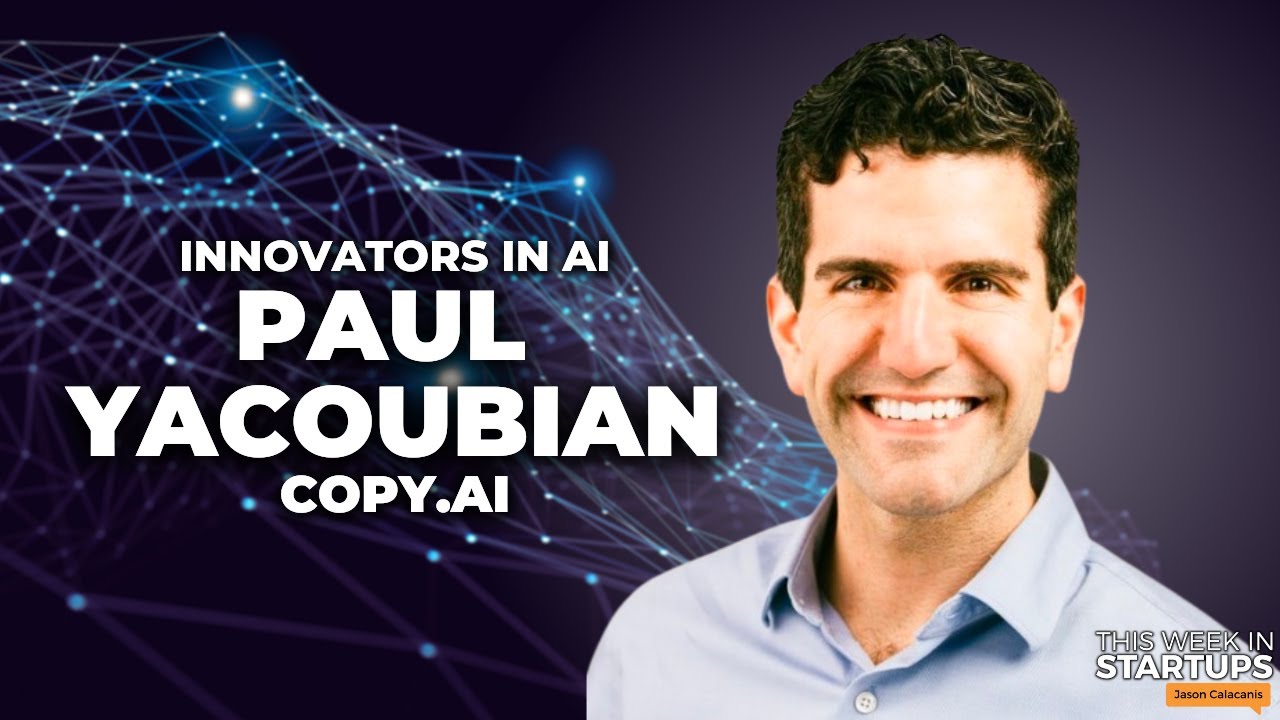
Copy.ai CEO Paul Yacoubian on keeping up with GPT’s rapid evolution & AI’s potential impact | E1719

Copy.ai Founder Reveals His SECRETS to AI Startup Success | Founder Chat w/ Paul Yacoubian