
ACT and Grow Rich Part 5 of 13
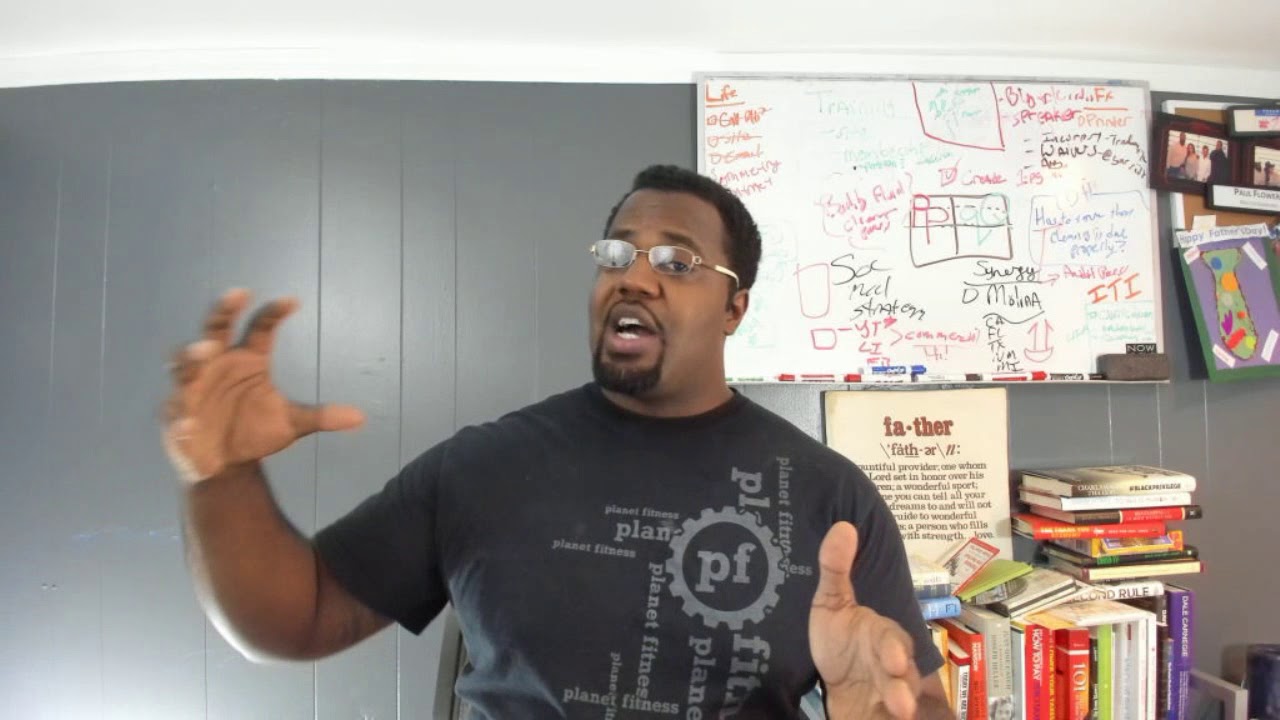
In this weekly motivational monologue, Paul H. Flowers Jr. explores the fifth principle of Napoleon Hill’s Think and Grow Rich—Imagination. He frames imagination as the “workshop of the mind,” the engine that turns desire into concrete plans. Flowers distinguishes two forms of imagination: synthetic (re‑combining existing ideas) and creative (generating entirely new concepts). He illustrates each with vivid examples—a teacher who creates unique handshakes for every student, architects who reinvent house designs, Jack Canfield’s breakthrough using the National Enquirer after a flash of insight, and Will Smith’s treadmill commitment. The speaker recommends practical tools such as mind‑mapping and encourages viewers to write down their goals, read them aloud twice daily, and reinforce them with autosuggestion. The talk ends with a strong call to action to apply imagination, maintain definite desire, and persist until the desired outcome is achieved, while also urging viewers to like, comment, share, and subscribe.
Chapters
Good evening, Paul H. Flowers Jr. here with this Wednesday's Weekly Words of Wisdom. We are still covering Think and Grow Rich by Napoleon Hill. This is now the 5th step towards riches, which is imagination. Actually one of my favorite steps. Because with imagination, it actually allows you to just get in that creative space, to get in that place where most people actually don't like to go because we're not taught to go. So let's talk about how we use imagination, how we use that next step towards riches to obtain the things that we want. So I'll back up to go forward. We started off with step 1, which was desire, right? Step 2, which was faith. You got to have some sort of faith or belief in the thing that you're aiming to obtain. Next, there was the auto-suggestion. How you acquire faith is through auto-suggestion. Now, that's talking about the things that you're talking about, kind of repeating things back to yourself over and over. Last week, we actually covered specialized knowledge. So what is it that you're good at? What is it that you'll know better than anyone else will know? What is it that you've been training yourself to do? What's that special place, that special thing that you've got that knowledge on that people will pay you for? What is that? That's specialized knowledge. So now it turns into imagination. So how do we actually get the things that we want to kind of come into fruition? Aside from the steps that we're taking, how do we actually put the plans in place? How do we actually make the dreams come true? How do we go about taking these actions? Well, that's using your imagination. There isn't always a roadmap for every single thing that a person wants to do. Sure, if you know that you wanna be a teacher, for instance, that you need to go to high school, you need to get your degree, you need to go to college, you need to master in, excuse me, major in some sort of educational program, and then maybe go and get your master's for that educational program. For those things, there's typically a roadmap, right, in terms of how to acquire the end result, which is to be able to teach. Now, there's one thing to just sit in front of a classroom, let's use that teacher example for a moment, There's one thing to just use that example of teaching, that initial roadmap that you're given, to just go and teach. And there's another thing to bring a new level of creativity into the classroom, bringing a new way of learning into the minds of tomorrow. So how do you do that? You use your imagination. I watched a video once where a teacher will come up with special handshakes to engage every single student that walked into his class. So every student that walked in had a different type of handshake. Something was different with every single one. And he used his imagination because he said, "Well, how can I further engage the students in learning? How can I get them to want to come to class? Not just to get the book knowledge, but to actually wanna be physically and mentally and emotionally present in the classroom so that they can actually receive the lesson." And this teacher came up with that method of having a special handshake for every single student that came into the class. Look it up on YouTube or just Google special handshakes by teacher, and I'm sure that video will be pretty close to the top. That's a teacher that used their imagination. So with imagination, Napoleon Hill considers that the workshop to actually give shape to desires. So it's the workshop of the mind. It's where the pieces start to get put together. Yes, you've got the desire in place. You know that you want a certain amount of money by a certain amount of time, but you say, "Well, maybe this one way isn't the only way to get it." That's where your imagination starts coming into play. When we talk about the workshop, imagination being the workshop of the mind, think about, for instance, Santa's workshop. Everyone as a child at some point watched the Christmas special, whether you believe in it or not, you know, it's not the concern here. But you would see all the elves in there working on something, bringing these toys which were ideas at some point, and then giving them form. So I like this chapter specifically because it allows people to get into a space and a place where you can essentially think and be more childlike. It's, it's not necessarily something that's promoted in many type of work environments as adults, and definitely as children growing up You're typically taught under one method in terms of how to think, how you should think about solving problems, but the reality of it is, as the old saying goes, there's more than one way to skin a cat, which brings me to another book that I'll just mention quickly, a book called Cracking Creativity, right? Cracking Creativity. If you have not read it, I can actually send a digital copy of it, a sample copy if you will, for sake of not wanting to do any sort of infringement or anything like that. But it's an excellent book that gives different methods of being able to break into the mind and open up and unlock those creative resources that we all have, but we have yet to essentially be taught how to use, and having that usage promoted and praised such that it becomes a habit. So you think about how you think, and you'll think in a certain way for so long that that's the only way that it's done, such that anything else that comes in and interrupts or distracts that way of thinking that you previously used is almost like taboo. It's almost like something that is wrong right off the bat. But essentially what we're doing is looking at it through a lens, right? And that lens says that, well, this is the only way that it can be done and it can't be done any other way, so that way it's got to be wrong. Well, if you were to use your imagination and imagine the perfect scenario for something, let's just say building a house, right? Now, does that house have to just have 4 walls, or can it have 5? Well, to the person that initially may have started building houses, that saw that houses were always built this way, that may have learned in a particular school of architecture that this is the way that houses are built— 4 sides, flat roof or pitched roof— right? That's it. Then you have somebody that comes along and says, hey, I think that they can be a little different. I think a fifth wall might bring another, another dimension to the home, another bit of character to the home. Somebody came up with a pentagon shape, right? Somebody came up with a spiral staircase. Someone came up with having glass roofs and retractable walls. All of these things were ideas in someone's imagination before they ever became installations into the homes of the rich and famous, if you will. If you've never seen Homes of the Rich and Famous, I urge you to take a look. Google, Instagram, YouTube, whatever you have to do, but take a look at these things to see just how, at least in an architectural sense, people have let their minds and imaginations go wild in terms of just what types of places and surroundings they can put themselves in. Now, whatever it took for them to get there also was the, the product of their imagination. So if you're not using this tool called imagination, you're basically, you're missing the boat at this point. You've gotta think bigger, right? You gotta think more broadly. You gotta be able to think in a more interconnected way of how things can work for you. And one of the tools that you can use is something called mind mapping. I'll just show a quick picture of it. If you can see, it's the idea of taking things and drawing them out and just having little diagrams off of it, right? That's mind mapping, a really interesting tool that again comes out of this Cracking Creativity book, where you can email me and I can send you a sample of it, where it actually helped me. It's one of the tools that I've used to help me to think more creatively. So with imagination There are a couple of forms. There's one that's synthetic, right, and that's where you're just taking old things and just trying to find new configurations for them. A different example of that would be using an old chair that was broken down and turning it into a candlestand, right, maybe by flipping it on the bottom and putting candles on each one of the four legs. And that's kind of repurposing. That's a synthetic form of imagination. Excuse me. The other form of imagination is what's considered a creative form of imagination. So now we're not talking about candlesticks, just putting them on a chair. We're talking about floating candles in the air. Alright, now how it could happen, I don't know. It's just something that popped into the imagination. So if you get an idea and make a floating candle, by all means, just cut me a small percent. But that idea of creative imagination is where you essentially get that hunch. Right there, there's an idea that you have, there's something that you want to acquire or obtain. You don't necessarily know how you'll do it, but you get that hunch to say, hey, maybe this is it. A great movie called The Secret, some of you might have seen it, by Rhonda Byrne. It's also a multi-million copy selling book all around the world, multiple languages, where in that book there's a story of a gentleman named Jack Canfield, I believe, Jack says, "Well, I wanna make a million dollars." And at the time he was an author, right? So, oh, excuse me, he wants to sell $100,000. This is the first part of the story. He wants to make $100,000. Well, he had this book, this little book that he wrote, and he said, "Well, if I sell X amount of copies of this book at this particular amount, then this would be a great way to sell the book." And he said, "Well, how could I sell it?" And all of a sudden it hit him. Boom, he sees a copy of the National Enquirer. Realizing that people purchase this National Enquirer magazine on a repetitious basis, they purchase them by the droves. People just want to see, even though it's a gossip magazine, they want to see what's going on. And when he saw that book, he thought, I can get X amount of people to actually, if they were to read something that I wrote in here, they would go and purchase the book. So some time went by and he kind of tried to make some contacts in there and nothing really panned out. Well, all of a sudden, just a few weeks later, he goes to an event And at this event, he bumps into someone, and surely enough, they say, well, they're a freelance writer after seeing him speak, and they wanted to learn some more about him. The young lady comes up to him and says, well, she's a freelance writer, but she sells most of her work to guess where? The National Enquirer, right? That's where he had a desire to have this writing come through the National Enquirer, and it ended up getting inside that book because he had a strong amount of faith He let himself know that this is what and how that I want to do, and surely enough, the forces that be brought that directly into his life. So if that wasn't just one of the better examples of seeing how you can take that creative faculty of how to get yourself, how to get your words, how to get your ideas out there and have it actually happen, you know, I don't know what is. Again, that's within the movie The Secret. So that's another form of creative imagination, but that only comes about when your desire is strong. You can't have a weak desire. You can't, uh, maybe, maybe I just wanna do this, maybe I wanna do that. There can't be any maybes. It has to be a definite, right? This is what I wanna do, and that's it. This is where I wanna go, and that's it. This is the desired result that I wanna have, and that's it. Reminds me of a motivational video I saw with Will Smith. He says that with this video— excuse me— on this video, Will Smith says that when he gets on the treadmill, one of two things are going to happen, right? If he's with somebody else on the treadmill, kind of running side by side, he said one of two things are going to happen when we get on this treadmill. Either you're going to get off first or I'm going to die. It's really that simple. Right, so he had a commitment made up in his mind, and if you ever notice that a lot of the movies that Will Smith has appeared in, he's been running, right? Think about MIB, think about Enemy of the State, right? Will Smith can run if he can do nothing else. Well, how does he train to run so well? He made it up in his mind that when he gets on that treadmill, especially in a competitive sense, that either that person's gonna get off first, in other words, they'll lose and he'll win, or he's going to die, right? That's that type of commitment. That's that type of desire that's definite, that brings about the creative faculties of the mind whereby you can actually use the imagination that's been given to you, right? We, we most of the time will stifle ourselves by just looking at how another person's doing it and thinking that that's the way. Well, you have all sorts of ways inside of you that have yet to be utilized or even invented or thought about But you like to just look at other people and say, well, if that's working for them, or if that's not working for them, then that must be the way to do it or not do it. I challenge you, I challenge you, I challenge you. Whatever it is that you endeavor upon at this point, whatever it is that you— your goals, your dreams, whatever it is that you want to have, do, or be— take that, write it down, right? So this is the what to do now. When it comes to imagination, you have to have that strong desire behind it. So what do you do? You write it down, make a circle diagram, do the mind mapping if you like, but find different ways that people have achieved in these areas and then think of ways that, that they haven't thought of, right? Sometimes you look at what people have done for inspiration on another way of how to do it. That happens too. But don't just take the way that someone has done it as the only way that it can be done. There's more than one way to skin a cat. There's more than one way to build a business. There's more than one way to do just about anything that you can imagine, and it's up to you to use your imagination to actually find that way. So I'm just kind of wrapping up here. Think about every building that you've ever seen built, every song you've ever heard sung, every piece of electronic— the phone that you're on right now, the iPads, the cameras, right? All of these things, these were all tools— excuse me, these are all products of someone's imagination that at some point said, I can see wirelessly transmitting pictures from this piece of plastic and silicone and electrodes and whatever through some wireless device, i.e., the modem, all the way across the country to the people that are in Houston watching this now, in California watching this now. These were products of someone's imagination. And if you don't get just how much of a— pah! An amazing thing that is, then I don't know, you know, I gotta check your pulse or something, but that's absolutely fascinating. So take that same degree of desire to see something come into fruition, take that same degree of desire to have, do, or again, be whatever it is that you want, and use your imagination until it's done, until you find the way that's gonna work for you. Because again, every way may not be for everybody,, but everybody can absolutely find a way. So again, this has been Wednesday's Weekly Words of Wisdom. This was chapter— excuse me, this was the 5th step towards riches of Napoleon Hill's Think and Grow Rich, my take on it, which is Act and Grow Rich. And again, for this week, take the time, imagine how it is you want to be, where it is you want to go, what it is that you want to do, and put it on paper Read it aloud twice daily, mix it with faith through autosuggestion, and don't stop until it's absolutely done. Ladies and gentlemen, it's been an absolute pleasure. Enjoy the rest of your evening, your weeks, and make it a great day. Remember to like, comment, share, and subscribe this video, and I'll talk to you soon. Take care.
More from Paul




Term vs Whole Life Insurance, Explained Plain — Which One Your Family Actually Needs


The Cheapest Claim Is the One That Never Happens | Claims Deflection Explained




