
Code, Care & Courage: Hans Kullberg’s Avocado Health Is Revolutionizing Equity in Healthcare w/ AI
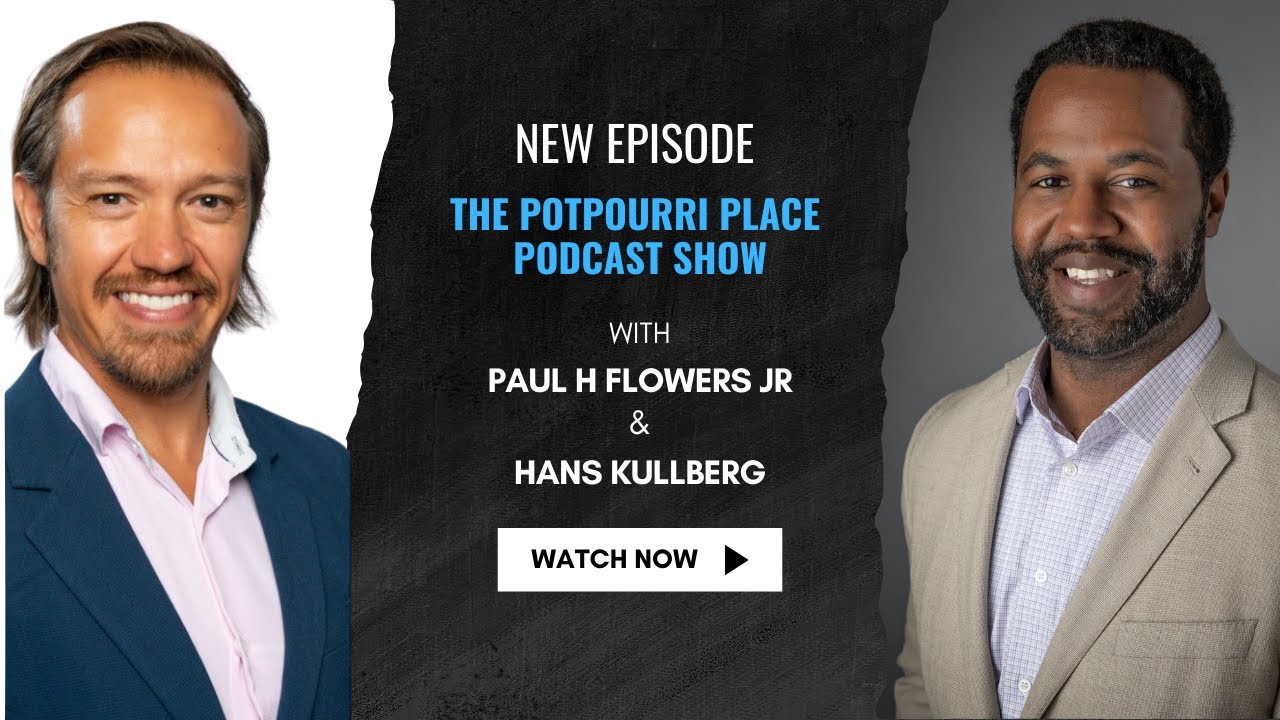
Hans Kohlberg built Avocado Health, an AI chatbot that texts parents medical advice from pregnancy through elder care. His daughter's medical crisis inspired it. The company targets employers as a benefits offering to cut ER visits and help working parents get quick answers via text.
Chapters
Welcome everybody to another episode of The Everyday Entrepreneur. I'm your host, Paul H. Flowers Jr. And this is the Pulper Replace Podcast Show. I'm here with a phenomenal guest, a gentleman by the name of Mr. Hans Kohlberg. He is the CEO and founder of Avocado Health. Actually one of my favorite foods. So I was more than excited to have connected with him and actually become a user of the platform. And I was so impressed that I wanted to make sure that we had him on the show. Hans, say hello to the audience and welcome, my friend.
Nice to be on your show, Paul, and thanks for the invite. Um, it's great to meet everyone virtually, whoever is listening in.
Excellent, excellent. Well, Hans, this is going to be a lot about you Yes, it's going to be about avocado health as well, because of course we want to dive into things that make a difference as far as the product itself, but also the process that it took for you to bring this idea to life. And again, I'm going to let you share your, your story. I don't want to put too much of it out there. Again, not coming from, as they say, the proverbial horse's mouth. Now, but Hans, if you would, let's just start there with avocado health, and then we'll kind of, or organically move through a few things from there. If you would, kind of tell us about the inspiration for Avocado Health, where it's been and where it's going.
Yeah, absolutely, Paul. That's, that's definitely 3 questions right off the bat, but I'll try to keep it short. In terms of the inspiration, it really, you know, comes down to, you know, my why. And my why is to really help parents answer and address any kind of questions, concerns, challenges that they have in the moment with the right information at the right time. And you're a parent, Paul H. Flowers Jr., of 3, and I'm a parent of 5. And I know that, you know, it takes a village to raise a child, right? There's that whole adage. But oftentimes that village isn't there. And oftentimes we need that information when we have it. And so if you ask any parent or 1,000 parents out there, they would say most parents actually go to Dr. Google for that information, which is a scary thought. After that, it's influencers on Instagram or TikTok or even Facebook or YouTube. But then, you know, ideally most parents would love to actually go to their pediatrician, but as you and I know, it's really hard to get that appointment. We know pediatricians are doing God's work, but oftentimes they're just stressed and they, they don't have that time in the day to fit in another appointment. Sometimes takes days or weeks. But there's a lot of other questions, you know, medical is just one thing, you know, there's a lot of other things that parents really have, different stressors or different like sources of challenges. And so The inspiration with Avocado is really to bring that information, you know, with the right place, right time, at a parent's fingertips in the most accessible format possible, which is text message. And so it's a text messaging service. It's a platform. We call it the parent coach in your pocket, you know, because it's just that, you know, supporting, guiding through that whole life journey, whether you're family planning or the child's in utero or they're 3 months old, 3 years old, 13 or 30 years old. We know those challenges are tough and questions are many. And so, you know, that's the inspiration for what we're doing and to help, you know, one parent is really, you know, the absolute goal. And that's the predecessor to actually helping a billion parents, which is our long-term vision with empowering, accessible, and really informative support. So where is it right now? We are live. We have a number of different users, although, having started literally in January of this year, um, still young and growing. Um, but I would say that it's an accumulation of the last 4 years of work that I've done in the early childhood developmental, uh, space, developmental behavioral health space. Um, as the head of a product of a company called Pathfinder Health, um, really helping address the question, how is my child developing in those first 5 years? Definitely a very salient question that a lot of parents have, um, that, you know, we're taking them through screeners and milestones and activities and different lessons, but we know that about 20% of parents are kind of concerned with that or should be concerned with that. Um, however, we were left with this 80% of, well, what are we doing for them? And, and so Avocado Health was really the kind of, um, the brainchild really from that and, and really, um, being able to kind of extract you know, what parents really want. And 100% of parents, you know, want their questions answered, um, whether they have concern, they don't have concern. It could be as simple as how, you know, how to calm my child during a temper tantrum, or how do I get my 2-year-old to sleep at night, or, you know, how do I talk to my teenager about the things that you talk to teenagers about, right? Um, there's tons of different questions, and, um, that's really what we're, we're all about.
Yeah, absolutely, absolutely. Well, Hans, you gave us so much to unpack there. Let's kind of go back to go forward. You mentioned one of my favorite phrases. And I say favorite kind of tongue-in-cheek, as clearly I'd used that particular what we call Dr. Google prior to. And again, shameless promotion, I'm actually a user of Avocado Health, though this is not a sponsorship post. I wasn't paid to bring them on or anything like that. I genuinely love the software— excuse me, the, the, the backend piece. I'm kind of a techie at heart, but I love the platform and being able to have, like you call it, that parent coach in your pocket, or in my pocket, I'll say. And with that, let's talk about the, the range that it actually covers. As again, you'd mentioned, I'm a father of 3, and at the time of this recording, let's say they're 12, 2, and 1. And, you know, years down the line, people will be listening to this, and they'll be like a 20-year-old, right? And you're, you're a parent of 5. If you would, let's talk about the range that it covers. In terms of children? What are the starts and stops with avocado health?
Yeah, so one of the things that, you know, our perspective is that, you know, if you're even family planning, you're thinking about becoming a parent, and, you know, that's— you're already having questions, lots of different questions at that stage. And so that's really where we start. In utero is a big one. So a lot of our information comes from, you know, very validated sources. So whether that's American College of Obstetricians and Gynecologists or American Academy of Pediatrics, you know, Healthy Children. There's a lot of really great validated sources, and the answers are out there most of the time, not all the time, right? We're not going to answer every single question, but, you know, that's kind of where it starts. And then that newborn phase, certainly, especially for first-time parents, tons of different questions— diaper changing, how to get them to sleep at night, feeding, lactation, right? But in terms of, you know, the toddler phase, through the teenager. But even, you know, we don't want to be exclusive to, you know, just parents with younger children. And we know that there's some parents with 25-year-olds that might be living in the basement or might, you know, have, have different mental health challenges, right? You know, how do we actually meet the needs there? And, and that's what we think about holistically. Um, you know, there's definitely a future from a caregiver standpoint, maybe even extending, you know, how do you care for your elder, um, you know, parents or, you know, elder people in your lives because we know that there is this sandwich generation, you know, roughly 20 to 50 years old, where they're caring for, you know, both ends of the spectrum. And so, yeah, that's, that's, that's what we are. And the adage, one of the things that we, we kind of also believe is, you know, parents know best, in many cases, mama knows best. But a lot of times they have these inklings, like, is there something that is wrong, right? Should I ask this to my, you know, to my doctor? A lot of times there's a lot of stigma and shame about, you know, even doing that, especially when it comes to developmental delays. And so what we're doing is giving that parent that level of advocacy to be the best advocate for their child. Hence the name Avocado, playing words, dad joke, right? Avocado Advocate. But But in terms of, you know, making sure that they have that information, you know, that's where it starts. Knowledge is power. And, you know, getting that knowledge at their fingertips via text message is huge.
And again, you give so much value in each response and there's such a massive amount that I want to just dive into several areas of your response. So first and foremost, again, I didn't even think about that in terms of this being something that a person in a caregiver capacity could also use. So it's not like— and again, my own perspective, your perspective being parents, we're thinking about our children. Also have a mother who's getting ready to turn 70. Right. And a gentleman that I recently had on the show works in the senior space, talks about the baby boomers who have parents in their 80s and 90s. So realistically, Avocado Health isn't just a tool for parents. It's a tool for people to actually learn and utilize at whatever stage of life they're going through. And it almost seems like you can ask questions about yourself then too, I guess. Is that—
Absolutely. Absolutely. It's, it's really, you know, we're starting with the biggest, what we believe is the biggest pain point with parenting and that parent is informed. But with every, you know, with every user, with every member on our platform, they're able to add two other, you know, phone numbers. So whether that's a babysitter, whether that's even a grandmother, or a partner, you know, they're able to— we believe again in the village and that holistic level of care. And so it's not just one person doing caregiving, usually, you know, and props to you if you are the only caregiver, that's amazing. But But, you know, there is a natural extension in terms of really helping people. And so when we're talking about what questions you can ask, certainly lots of questions about your child, but there's also this mental health component where even asking questions about yourself, how do I actually, you know, take care of myself, which is probably the first thing I would say as a parent, you really need to be doing, you know, whether that's finding time for yourself or finding time for exercise or sleep. We know that a lot of stress comes from not actually, you know, kind of giving, almost giving too much, or giving, you know, everything to your kids and kind of negating what you're doing. And so we're not, we're not a mental health therapist. We won't say that we're a provider in that capacity, but there's different, you know, tips and things that we can actually reinforce. But also, you know, not just a repository to answer your questions, but in the future, we're building out a more engaging platform that you can, that will be actually checking in. And in a proactive way, making sure that you're supported and being taken care of.
You know, that makes a lot of sense. And you bring up some really interesting points that, of course, Avocado Health is not meant to entirely substitute the need for going to an actual physician, and nor is it there to actually replace any sort of mental health providers. And the point you made was really strong that— and I'll paraphrase it— that you can't pour from an empty cup, basically. So prior to actually, uh, pointing out and wondering how you can reach out and help another and all that, you want to make sure that you're good and, and do some self-check-ins. And if I'm gathering this correctly, that you can use Avocado Health for that first and take it outward into your family, whether it be down to the children or up to those you're caring for.
Yeah, absolutely. I mean, there's, there's that You know, what does a pilot say when you're on a plane with your child? You kind of put your own mask on first, right? To be able to help your child, you have to help yourself. And I think sometimes that's a lot of times parents actually, you know, forget about that or kind of it's in the back of the mind, but it just gets buried within that. And so really even checking in, you know, hey, mom, you know, how are you doing? Or hey, dad, we know that parenting is tough. We've got your back. You know, a small little affirmation can go a long way towards that mindset change, that behavior change. And we know how powerful that is. But that really is the future. That's the evolution of it. It's really being that sidekick along that journey to make you feel like you're not alone, which no parent really should be. I certainly know a lot of single parents out there, and I know the struggle is real. And I know, you know, single parenthood is actually increasing overall. Where do they get their support from? Where do they get their, their pause? Maybe they can't afford a therapist or they don't have that from, you know, a benefit from the employers. But in terms of, you know, a simple, you know, mindset kind of check-in, you know, that can go a long way.
So let's talk about that in terms of support and single parenting. Again, the origins of Avocado Health coming out of a need not greed. And it seems like it's something that's really able to help a number of people from both the individual to the employee, as you mentioned, uh, employees as a beneficiary of this technology as well. If you would talk to me somewhat about the personal inspiration for, again, getting Avocado Health out to the masses, like, what does this mean to you to have this type of access inside a person's pocket?
Yeah, it means, you know, it means everything for me. I'm, I've been a serial entrepreneur. I've done a lot of different businesses in, you know, tech, you know, fintech, education space. I began my journey in economics, but I've never been more inspired in my life for this. And, you know, the, the mission is very personal. So my third child, Aviva, was born in January of 2020. At 9 days old, she had a— she woke up from a nap cold to the touch, very lethargic, trouble eating, and, and she was 95 degrees. And so we immediately knew that this, this was something wrong. We took her to the NICU immediately, and they really did a lot of different tests on her over the next 7 7 days, they realized she has a condition called bradycardia. So that means a slow heart rate where her heart rate was about 60 beats a minute. In reality, it should be about 150 at that age, 2 weeks old. And, you know, every single diagnostic workup under the sun, we're talking about genetics, metabolic pokes and prods and everything else, and doctors couldn't figure out that in that you know, what was the underlying cause. They couldn't figure out the diagnosis. And so after 7 days, we left with more questions than answers. And over the next, you know, 10 days— or sorry, the 10 months of her life, um, she had 5 other hospitalizations, each, you know, 4 to 6 days at a time, um, that kept us wondering, that kept us worrying, um, but also kept us guessing, um. I was working at a Fortune 500 company at that time. And luckily, they were supportive. They let me take some time off here and there. But even when I was on the job, as a parent, as a concerned parent, my mindset wasn't there. My mind was on my number one job, which, Paul, as you and I know, most parents would agree that their number one job is really taking care of their family and taking care of the kids. And what does that mean? You can ask lots of different people, but it's some combination of keeping them happy, healthy, and safe. And for me, that was paramount. So really, it was through that experience and actually not getting her answers to— yes, it was a serious medical condition. And I'm not saying that we're going to uncover unknown diagnoses, but I think where we can really start is really by empowering parents to, to address and really answer any question, starting with, you know, the most simple and basic ones, how to get my kid to eat vegetables, right, to the more, more serious and time-pressing one, like, does my child have autism, right? You know, all of that can be done in a similar format. And the implications can be huge, not just for mom and dad and child, for their development and their potential, but also from a cost perspective, from any, you know, payer that actually, you know, wants to actually be proactive, preventative, this value-based care, this movement that we're going through in healthcare, you know, there's a lot financially at stake from making sure that that parent is informed. And so for me, this is a, you know, it's certainly more than money. It really What gives me a lot of satisfaction is really the impact that I can have on, on a human being.
So absolutely, absolutely. And again, such a beautiful response and so many ways to go with this one. And like we share, you know, with the Pope Replace, we're organic. It's not a canned scripted thing. So I want to touch on a few pieces and I got to make sure to circle back to it because of course there's the employee-employer relationship. Where employee presence is a huge thing. And if you've got some numbers, fantastic. But you alluded to the fact that, of course, if an employee is having an issue with their child, then their presence mentally is not there, which, you know, now you're talking my language. I love the insurance side of things, right? That can lead to all sorts of things, especially in certain industries like manufacturing, where you're having to physically touch things and maneuver large items at times, boxes, tools, steel comes to mind. How do you feel that having a parent coach in your pocket, a resource like Avocado Health, can actually help to improve employee presence?
Yeah. You know, we really start with the fundamentals of, you know, an employee's mindset or person's mindset really impacts their productivity. And how do you really change your mindset when there's a lot of stress, anxiety, worries, questions that parents have? And I think employers, by and large, many employers have done a really fantastic job about supplementing their primary health insurance with a lot of different benefits that proactively address, you know, chronic conditions across the board, whether it's obesity or diabetes or even cancer, you know, being able to be in front of it. And for us, the other thing that they're doing is actually being very proactive on supporting early families, especially if you talk about IVF treatments or fertility care or prenatal or even maternity leave, right? But we know that, you know, that's all fantastic, but when mom comes back to work, in many cases it is mom, 40% of the time they leave the workforce just from wanting to take care of the number one responsibility. It varies certainly by industry, but we know that if a parent does have a concern at home, whether that's developmental related or medical related or anything else related, that percentage goes up. Significantly. We're talking about 60-70% of the time they actually leave. And so a lot of times employers, not realizing it, they are providing a lot of great support to empower these early families, but they're kind of leaving them empty-handed when they return back to work. And so for us, our message to a lot of employers is really, let's help protect that investment that you've already made, and really preventing that attrition. And so that's on the retention side, but Your question, Paul, was really more on the presenteeism side and really, you know, are employees present? You know, and that is a really big, you know, concern. There's about $250 billion of lost productivity in the workplace due to presenteeism alone. And that's bigger problem than attrition. That's bigger problem than absenteeism, right? Those are things that you can measure. Those are things that you can kind of put, you know, figures around. But is that employee actually, on the job, being productive, you know, being mindfully aware, you know, being in that, in that, call it that, that work meeting, being able to collaborate with their partners or think creatively when they have this concern of, hey, does my child have autism? Or, hey, I didn't get a lot of sleep last night. And so I'm really groggy and tired and can't think, right? You know, lots of other different situations and implications of that. But where it really fundamentally starts and talking about like going right to the bullseye is, you know, making sure that that parent has the answer they need. And that's not a hard thing to do just fundamentally. But a lot of times, if it's, you know, if it's about asking their pediatrician, that's days or weeks, or maybe going to a therapist, that's a long time, or maybe, you know, talking to a family member about some concern. You know, there's, there's a lot of friction that's in there. And what we're trying to do is just really lower that bar, lower that barrier so that working parent is able to show up on a day-to-day basis, whether it's manufacturing, they're handling large equipment where an accident could actually have a serious implication, or if they're just there mindfully. I think it's a much overlooked problem, but what we're really hitting, and when we talk to a lot of HR directors, one of their top problems that they want to solve is this employee engagement, as well as presenteeism issue. I was just at a forum last week, and one of the biggest topics was really making sure that that employee is intrinsically motivated, especially with the newer millennials and Gen Z even, you know, are they intrinsically motivated to really do a great job on the job? You know, they're much more motivated when they feel that support from the employer.
Themselves.
Wow.
I'll key in on a word that you just mentioned there. Well, a few of them. So the employee-employer dynamic is one thing, and you'd mentioned right there at the tail end the support that's felt. So I want to switch gears for a moment and, and get a little personal, right? I'd love to again see how the audience can learn more about Hans the person. Now, when it comes to launching something for any entrepreneur, if you would speak to the support system that you've had in place on this venture. And there's also been others. So if you could kind of talk about how the support that you've had, possibly in the familial sense, has been very helpful in your entrepreneurial endeavors.
Yeah, no, absolutely. So, you know, I've, as I said, I've been an entrepreneur for the last 15 years or so, um, you know, give or take, um, and a lot of entrepreneurial light things like lemonade stands even before that. But, um, but in terms of, um, you know, a lot of that was in my 20s as well. And now I'm not in my 20s, I'm actually 40. You know, through that journey, there's, whether that's from my own nuclear family or my chosen family, that, you know, my wife and kids, you know, certainly the inspiration has been there from my own personal journey being a parent. I've created a lot, lots of different things in the past, but Even when I started creating Avocado Health and doing the mockups on Figma, if you're familiar with Figma, just going back and forth, I was using my wife's phone to kind of like text message and this is how it's going to look because we really want to feel like it's a conversation with a best friend who's the most knowledgeable pediatrician, therapist, parent, coach, social worker that you know. She was looking at that prototype and she was like, man, this is actually something I would use. Like, this is something that I would like get on the phone or just get on the text message and actually start using. And lo and behold, she is now. And so, so that was a really great vouch of approval. And she, you know, believes in the mission and the problem and the challenge that we're solving so much so that she actually wants to lean in. Having a background in business development, we're thinking about actually bringing her on, on the team in some capacity. But in terms of the rest of the team and the colleagues, I would say for any entrepreneurs out there, It is so much easier and also funner to actually have, you know, an amazing team that really advocates for what you're doing. We know many entrepreneurs, it's really a lonely journey, but it's much better when you have a group of experts that are all mission-aligned behind that vision that you want to actually put out to the world. And in our case, that vision is very easy to motivate, you know, parents in general, you know, to do. And so we've really gathered a whole team of about 10, 12 people that have expertise in a number of different areas, clinical-based, you know, therapist-based, but also technology, also employer benefits side, because there's, there's a lot, you know, you're never going to be expert at anything, but, but being able to kind of lean in on, on those that are. Is really the path to success. And for me, if I were to say I've had a strategy over this first few months for Avocado Health, it's really about finding those champions and building up those champions in a big way. And so that's what I'm all about. And you have to have people in your corner. You can't go into the boxing ring without someone in your corner.
So yeah, that's it. That's it. So we've got the structured team of those individuals that have kind of gotten in the trenches with you, whether it be the coding aspect or the marketing or soon to be a partner from in-house and business development. Then you've got like that familial support, which again is very important to make sure that those that are most close to you when the lights go off, right? And I don't mean the bright, sunshiny outdoors, but more like at night when you're flicking off that lamp on the side of the bed, right? Having that support, whether it be, again, spouse or children or those within your absolute household, it makes a difference, uh, because things are going to happen in the entrepreneurial journey and the ups and downs are going to happen. And if you would, knowing that, again, we're just really getting started, but it has been a culmination of years' worth of work and experience so far, talk to us about any of the challenges that you faced thus far bringing Avocado Health to market and how you've been able to overcome them?
Yeah, and I, I'll start, you know, in general in terms of, you know, the entrepreneurial journey overall. And so, you know, right now is a really great time to be a creator. There's a lot of great, um, you know, different tools out there in your disposal, starting with AI. And it's, it's really almost easy to make a product. Um, it's, it's really easy to kind of understand, you know, what to do and, and how to actually create that on the back end. But one thing that entrepreneurs oftentimes miss when we talk about product market fit, and we know most startups die because either they don't find product market fit or they don't have that funding. But, you know, if you don't have that product market fit, people forget about that market and who are you actually marketing this to? And especially in this B2C play, we know that we want businesses and organizations to be, you know, the ones championing for this. And there's lots of different reasons for that. But being able to kind of do that market development, really understand, you know, who actually cares about parents and children more than anyone else and moreover, who actually has financial ties to it. Because whether we like it or not, B2B is really more about, you know, there has to be a financial implication involved. It could be a great story, great heartstrings, everything else. But usually whether that's the CFO or the CEO or HR director, whoever is signing off on that, They buy for a business for one of four things. It either helps them make money, helps them save money, helps them save time, or makes them more compliant with something. And those four reasons and four reasons alone are, you know, cover 99% of the reasons that businesses buy. And for us, you know, certainly saving time and money is a big thing for us and finding that mission alignment because everybody, you know, really at the end of the day, they want to, listen to their favorite radio station. Do you know their favorite radio station, Paul H. Flowers Jr.?
WII FM, baby.
There you go. WII FM. And it's serious. It's true. And so that, as an early entrepreneur, kind of took me a long— more time than needed to really understand and kind of being able to put yourselves in their shoes and really understanding what's in it for them and what do they really need. And then the marketing messaging and how you're actually going out into the world makes, makes a big difference in that case. And so certainly you have your own why, you have your own personal story. I think that's really important as an entrepreneur. But you also have to know, you know, what your customers' why is and what they're thinking, because aligning those two, that's where product-market fit happens at the end of the day.
There we go. Spot on. A perfect response. Now, when it comes to how this product is coming to market, would you say that the primary channel that you're looking to— again, because you mentioned that there has to be a financial impact— are you primarily then wanting to share this in the B2B market through like an employee benefits channel, through brokers, that type of thing?
Yeah, that is our primary market right now, and, and that's, um, for a number of different reasons. But when we look at the payer market in general, whether it's Medicaid or larger commercial insurers, self-funded employers or self-insured employers are really the biggest beneficiaries of what we're doing on two different levels. One is certainly saving hard dollars in terms of medical costs. So we're talking about those cuts, scrapes, bruises that typically take— many parents take their children to the ER for, the urgent care for. That's a big cost. It adds up.
Job.
But more importantly, that productivity side. And, you know, who— when, when I was kind of going through the last 4 years about who really cares about kids, and if you look at the healthcare system, it's really hard to find who actually has the incentive to make sure that that kid is developing, you know, healthily, right, right, in, in the most helpful manner. And so, um, basically it came down to really these, these employers and within that vertical, self-funded employers, because they care about those parents and they care about those parents' productivity and caregivers— I should say caregivers in general— but because they want that employee showing up and being productive and being supported. And it's evident through all of the other benefits that they have, call enhanced benefits, you would say. That's really the target. If there's one thing that they're trying to do is really increase that health and productivity of that employee base. And this is a very, you know, direct way to do that. And so that's where we kind of have found there's a lot of alignment. And there's, you know, within this journey, certainly having the benefit brokers and advisors lean into that is a big part of it. But also that story has to be told on the HR side with their benefit directors as well. And they have to, you know, understand and also see the value in it. So, you know, there's a two-step process there. But again, the mission is really easy to find, you know, champions in that space.
Excellent one. And, you know, again, you speak in my language. So I've got a network of, of course, employee benefits brokers, CEOs, CFOs, CHROs, as that's definitely one of the segments that we'll have here as well on the Pope Replays. And for those listening out there in podcast land, please, if you know someone that is in one of those positions, if you know a parent that just so happens to also be the CEO of a company, the CFO of a company, the HR leader in a company, please tag them in this podcast so that they can take a listen and really get the value proposition that Hans has been able to share here with us. Again over the last couple of minutes. So with that, we're looking at— and we're coming up to the hour, so of course definitely want to respect your time. When it comes to innovation, you're taking on something that is again a challenge in so much as making technology work for the every person. And we're in the early stages, so we know that there's still some things that are working out, but I'm certain that there's been some success stories. So if you've got one, two, handful or so, I'd love to hear some of the successes and how this has been able to maybe ease a parent's mind or keep them from running to the ER or urgent care.
Yeah, no, absolutely. So, you know, one of the things recently— so I'm a father of five and my youngest is 5 months old. And so just 2 weeks ago, she was kind of coughing and wheezing and not really sleeping really well, congested, the whole nine yards. And we're definitely starting concerned. But like most parents, we're like, do we take her to the pediatrician? Do we not? So we decided to go ahead and ask Avô. So we call our tool Avô on text message, and basically the response came back, you know, this sounds like a serious matter. The advice was to go ahead and call your pediatrician. And so we did that. We got a same-day appointment, luckily, just for urgent reasons. And then she was diagnosed with RSV virus as well as an ear infection. She got, you know, some antibiotics from the pharmacy later that day, and now happily over, over the last 10 days, it seems that that problem has now gone away and subsided, and she's sleeping well. But RSV certainly at that age is a very scary, you know, condition, right? So there's a term in, in the startup space of eating your own dog food, right? So this is really the manifestation of eating your own dog food. But I, you know, we use it a lot for a lot of other reasons. So whether it's, you know, talking to a partner about X, Y, and Z, or how do we handle this temper tantrum about, you know, this, you know, there's certainly different applications and use cases that even I myself as a parent, I'm finding to be fairly helpful. And so yeah, it's even teaching me things, which is the best thing.
Good, good. Like you said, again, we can't necessarily be an expert at everything. And though there are, you know, quote-unquote books on parenting, it's always good to have a resource that is readily available. Again, coming from the insurance world, I'm familiar with the telemark— not telemarketing, excuse me, telemedicines of the world. And it's not always, you know, the time to have a conversation. I've had my youngest and they're sleeping on my shoulder because they're ill. And it's nice to be able to send a text to this point, whereas before, because my voice, it carries at times, and I've had to wake her up making that phone call. So really glad to have been introduced to Avocado Health personally from that perspective. So again, Hans, we want to switch gears again, kind of go back to who is Hans. And this is one of my favorite pointed questions to make sure that I ask, and again, I'll give the context for it, namely it's to get close. It's a lot of things that we can find out about Hans from a website and a lot of things we can find out about avocado health just the same. But there's one thing that I didn't quite see out there. So Hans, if you would share with me, what's your middle name?
That's my middle name. My middle name is Frianesa.
Whoa, one more time.
F-R-I-A-N-E-Z-A. Frianesa. So there's that Saturday Night Show episode of Hans and Franz. I don't know if you remember that one. Ah, I do. It almost spells similar to that. So it's actually my mother's maiden last name, which, you know, she gave me as the middle name. So my full name is Hans Leonard Frianesa. Colbert II, so I'm a number 2. Um, but, uh, but yeah, Perineza is my middle name.
Okay, okay, fun and exciting. And for all those out here listening, that if this is the first episode you're tuning into, I like this question namely for the sake that it's, it's personal, right? It's personal. Typically we're in this professional world, and you can't see me putting up air quotes if you're just listening to this, but there's this quote-unquote professional world where first name, last name, okay, middle initial optional type of thing. And we typically again only know the middle names of usually our nuclear family, parents, spouses, children, maybe a close cousin or two, and usually our best friends. But most people only know about 5 to 10 middle names. And I learned that and personally feel that when you use a middle name, it opens up and allows for a little more connection, even a little more vulnerability for sharing something that for some people they just, they despise them, right? And others hide them. And as I've come to know, there's oftentimes stories of people that don't even have them. Yeah, meaning the middle name. So I appreciate you sharing yours with our audience. And Hans, because we want to make sure that when it comes to avocado care, Avocado Health and the care that it provides being right there at a person's fingertips, whether it be the employer or employee. And I'm assuming also for individuals, they can get on board as well. How can they reach you and what's the best way for them to get involved with Avocado Health?
Yeah, honestly, I'm an open book. And so the best way to reach me really is on LinkedIn, to tell you the truth. So Hans Kohlberg on LinkedIn. You can search Avocado Health. You can check out our website at avocadohealth.ai, but also my Instagram. I'm keeping up somewhat, so it's @avivasdad, so A-V-I-V-A-S-D-A-D. And then happy to share my email as well if needed.
So yeah, perfect, perfect. Excellent. Now, of course, This being the Everyday Entrepreneur section, Hans, we can't let you get out of here without sharing some words of wisdom to the aspiring entrepreneur, that person that has an idea, they're two steps from launching and/or they're nowhere near launching, but they've got, they've got the experience that they probably should. What would be some words of wisdom that you would share with a person in any of those situations?
You know, the biggest thing that I would say is really find your ikigai. And if you don't know that term, ikigai is a Japanese concept around 4 different concepts. So there's the— it's almost like a circle. But the way that I've really interpreted it is, you know, you have to find out what you're good at, what is helpful for society, what you're passionate about, and then what you can get paid for. You know, when you're starting a business, you know, it's very and this is for jobs in general, but especially for entrepreneurs, when you're kind of trying to figure things out, certainly I can talk about product-market fit and find your why and this, that, and the other, but, but ikigai kind of gives you this framework on really just finding out, you know, all 4 of those facets, because if you're doing something just for the money, if you think that there's an opportunity there, Eventually you're going to hit some stumbling blocks, you're going to hit some, you know, it's going to be hard to, you know, scale or, you know, get business or this and the other, and you're going to be in those trenches. And, and what you do when you face that adversity, when you hit those lows, you know, really matters to, to whether you're going to be successful or not. And so, um, if you have that ikigai, if you have that passion and you're really good at doing something, then you're going to find a way. And I think the one thing that you can talk to a lot of VC investors, but the one thing that a lot of entrepreneurs have is this relentlessly resourceful nature of kind of overcoming these challenges. You know, you're not going to be the smartest person in the room and you probably shouldn't be, but you should have that determination and that, that, that self-will to figure things out and, and figure out those challenges, especially in those situations where you're you might be in over your head. Someone who's found their ikigai knows how to be relentlessly resourceful. And that's what I'm all about. And so I think finally, after 40 years, I've kind of figured out my ikigai. It's not something that comes overnight. It's something that you really have to work on and think about, but it gives you a really good box or framework, if you will, you know, to mapping out your own journey.
So I love it. Excellent words of wisdom, Hans. Thank you so very much for coming on the show. Ladies and gentlemen, this has been another episode of The Everyday Entrepreneur with the amazing Hans Kohlberg, CEO of Avocado Health. For those of you who are looking to get in contact with Hans, avocadohealth.ai. Avocado Health AI. All right, because we are definitely in that stage of the game. Again, it's been an absolute pleasure, Hans. Thank you so much. Ladies and gentlemen, hope you've enjoyed our episode today. And bye for now.
More from Paul




Term vs Whole Life Insurance, Explained Plain — Which One Your Family Actually Needs


The Cheapest Claim Is the One That Never Happens | Claims Deflection Explained




