
From Setbacks to Syndication: How Fuquan Bilal Flipped Pain into Power & Built a Real Estate Empire
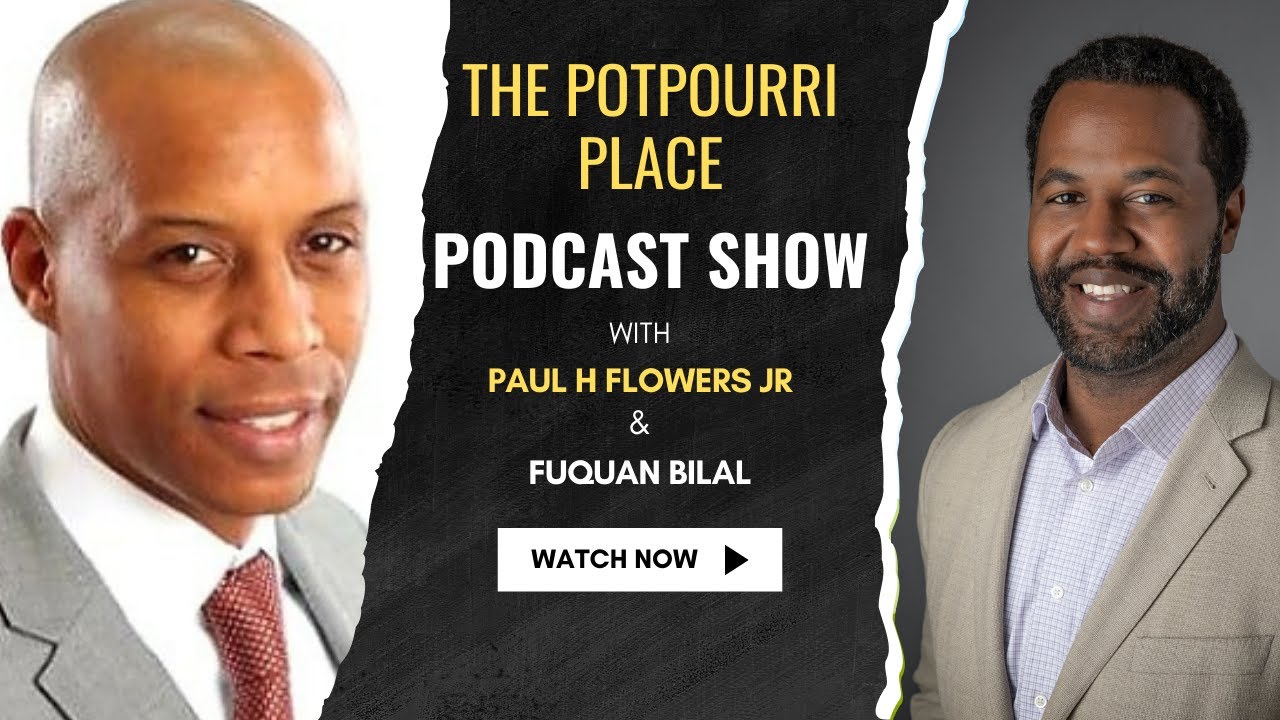
Fuquan Bilal built NNG Capital, which manages over $50 million in real estate assets, starting from fix-and-flips in 1999 and scaling through operational systems like EOS. His mission is to provide affordable housing for 5,000 families while creating jobs for formerly incarcerated individuals, driven by daily habits of journaling, meditation, and reading.
Chapters
Hello everybody and good day to you. My name is Paul H. Flowers Jr. and this is another episode of the Pulper Replace podcast show. On this segment of the Everyday Entrepreneur, we have a living legend, okay, a living legend, Mr. Fuquan Balal. I want to welcome you to the show. Please go ahead and say hello to the audience.
Hello everybody. It's been a, it's a pleasure for having me on a platform. Looking forward to the conversation.
Absolutely. And thank you for joining. Again, uh, Fuquan is a masterful entrepreneur and has one heck of a success story, quite frankly, that I want to get right into. So if you would, I'll allow you first to go ahead, Fuquan, and just go ahead and share where you're at right now. And a little bit of how you got there. And again, we'll kind of build upon that.
Uh, well, physically where I'm at in Macon, Georgia, we, I'm actually here doing some turns to some of the units that we own here as part of our strategy, a hybrid strategy. My office where we operate from is in West Orange, New Jersey, uh, where I've been doing real estate now since '99, uh, in New Jersey, primarily North Jersey, about 25 to 30 minutes away from the city. Got my start in '99, as I said, jumped out the window, grew wings falling down, as they say, and had a successful ride into the global financial crisis, the GFC in 2008, when the market shifted. And, you know, I had to rebuild from there and start off with fix and flips. We didn't really understand the importance of rentals back then. I did $200, $300 a month extra, really wasn't no money. I wanted to go for the larger chunks. Flips until I realized that cash flow is king. So quickly after going through that transition, got into the note business and started to, uh, learn how to help homeowners stay in the house, avoid foreclosure by buying notes from the bank directly. Did that for a few years, uh, opened up my own fund, a real estate fund, in 2013. Started to raise capital from accredited investors and You know, that's where the story really starts. Uh, it's a whole different business, uh, managing people's retirement funds and friends and family funds and using that as a way to pivot to the next level, if you will. So we started to be able to take down larger trades, whether it was buying mortgages, larger trades, or buying bulk properties. And then building out the logistics in order to manage that. So, uh, it's been a great journey. I, I like real estate because you never learn all of it, right? Most entrepreneurs, when they figure something out and build mastery, they get bored, uh, then they start chasing shiny objects. But I like to stay focused on anything real estate. There's so many different, uh, strategies that you can do. So it's just a learning journey for me, and I'm I'm happy to be here to share my journey, uh, with your audience.
All right. And I'm looking forward to it, man. I've got questions that just pop up from the very beginning of what you share to some of the research that I've done. Uh, so we're gonna dive right in. And first and foremost, uh, listeners, I'm gonna share that he says it very casually, like, I just started a fund and am investing funds for individuals. Uh, what he didn't mention is the dollar amount. So we're not talking $5,000 or $10,000. We're not even talking $500,000 or crossing that proverbial two comma mark with a million dollars. We're north of $50 million. Okay. Now, now, $50 million to some, again, it might be a couple of billionaires listening to our show and thank you so much. Please share the word. Uh, for those that aren't in that particular circle, that's a lot of cash. Okay, so when you have that sort of responsibility, let's talk about the vision that you had to have before getting to that place. What were you thinking when you first started NNG Capital Fund, and did you ever imagine it getting to this point?
Well, coming from where I, where I come from, uh, single-parent household, single mom, 5 kids, welfare, you know, the whole story for me $10 million was a lot of money, and it still is a lot of money. But thinking on the investment side, like one building that I'm here now, we paid $10 million for one asset. So when you think of it in that, in that terms, once you start to get involved with large transactions, you realize it's never enough, right? So it's just a number. And the reality is the larger trade you do, the easier it becomes to get financed for. Believe it or not. Of course, you have to have equity portion of it because the banks only lend 55-60%. You have to raise the rest of the equity to take down a trade. Um, but you know, it's a more sophisticated investment. You're going to have a more sophisticated investor, uh, and the whole thing is just educating everyone around that, getting educated yourself for first and going through the trials, as I say, and learning, um, through the school of hard knocks and, and building those relationships, which relationships is key in this business. I always tell people, really, the money will come if you find a great deal. So no, I, I never imagined that, you know, my first fund was $2 million, and, and looking back, I was like, wow, that's a lot of money to ask friends and family. But, you know, we raised that pretty quickly, and then I had said, hey, I'm not going to manage more than $10 million because I don't want to go beyond that. And years later, we were managing, you know, $25 million plus. So Um, you know, it's a huge responsibility. A lot of people can't take that responsibility, but if you have a great team, it, it all works out. So going through the different iterations of businesses, understanding things like, um, EOS, Entrepreneur Operating System, uh, systems, I mean, and also there's another great book called Scaling Up, which is Rockefeller Habits 2.0. These things teach you about business, how to set up, processes, uh, you know, making sure that you have, um, standard operating procedures in place, the right butts in the right seat, uh, job scorecards for those professionals you want to bring in with their— the KPIs you're going to, you know, keep them on track with. So it's a lot, right? So it's business in itself, and then you have the actual real estate business or raising money business, which is separate.
Now you actually just dropped quite a few gems there. And again, for the listeners, you might want to just rewind this episode and go ahead and take a couple of keynotes on the portions and areas of business that he mentioned, from the books to the actual things like the KPIs and business scorecards that are needed in order to make sure that you're tracking the progress, right? The devil is in the details, as they say. And quite frankly, we want to make sure that those details are as crystal clear as they need to be. So let's talk about clarity for a second and vision and purpose. Uh, in terms of getting the clarity around where you want to go with NNG, we're just, we're going to go forward a little bit and then we're going to head back in time because we always want to know how you got there and kind of some of the struggles along the way. But what is the crystal clear vision that you have for NNG Capital sitting where you sit today?
Well, our mission statement really is to add value. Uh, again, coming from where I come from, what gives me my fillet of importance is, you know, giving residents a better place to live, adding properties that are dilapidated to the tax roll, affordable housing, because I grew up with that. So that makes me feel good when I'm able to provide those solutions, or even when I renovate a luxury house in, in, in North Jersey, I know that's going to be something that's going to be there for years. That, you know, have our name on it because we had a quality product that we transitioned in the sale of that. So that's really our whole mantra is, and our mission is to create a win-win for homeowners with quality affordable housing or just quality housing and period. So, you know, our BHAG, our Big Hairy Audacious Goal, is to provide that quality affordable housing for 5,000 families on a rental side. So that's a lot, right? So that every day we wake up with that mission. And it's really what kind of impact we can create. I mean, when I was younger, it was all about the money and the material and everything else. But as you— when you get all that stuff, you really look for impact to fulfill you. And that's really what the mission is for NNG today.
Impact, such a beautiful word. Leaving a legacy comes along with that. And you mentioned one of the newest properties, and again, I, I did a little digging, so I just want to share this one out loud. Uh, talk to us about that build out there in Jersey.
Uh, it looks like, uh, 805 Mountain Avenue.
805 Mountain Avenue. You're absolutely right.
Yeah, that's actually a, a, a really good one to talk about because that is the highest price, uh, single-family house that we have on the market for $2,750,000. And this is a 55— it's actually 7,000 square feet, a little bit more than that, but living square feet is 5,500 above grade. Downstairs we have almost 3,000 more square feet, uh, so it's a huge property. And, um, this is the masterpiece, a 3-car garage. Uh, we just had broker's open house last week Thursday. We had 20 people show up. Uh, we had regular open house on Sunday, another 17, uh, couples showed up. So we're really excited about that one and to get that on the contract. So we do a lot of ground-up construction. We've transitioned— we transitioned to doing that after COVID because we used to buy a lot of stuff in the, the bread-and-butter market, low-income market, but it became very competitive. We had a lot of New Yorkers moving over to New Jersey. Pricing was 30% over list and the profits were smaller. So we decided to move up because we were able to raise capital and compete with the builders. And since we've been doing that, it's easier to control costs, timelines on builds. There's no surprises when you open up the walls and you have foundation issues. It's more streamlined approach. Uh, so we, we like that model. It's more profitable. It just takes longer to build. We are waiting for permits and architecture drawings, or if there's any zoning, things that need to be done, variances or whatever. But I mean, it's, it's great. That's, that's our marquee project. Uh, so, you know, it's awesome. Is it— it's a good feeling when you're at this point in a project where you just list it versus going through it. It's not easy, right? So I've been doing this for 26 years. So a lot of stuff that I post on social media, people think, hey, it's easy because they see how I'm moving, but there's a team behind me. There's standard operating procedures behind me. We're always trying to refine and tweak those. How can we do it faster? How can we make it better? How can we do it for less money and still have quality? It's a lot that goes into that, from the design to the planning, everything.
Well, you actually mentioned something that I'm, I'm really glad that you did, uh, not just the team part, but really about how you say, well, when I post these things on social media, people look at it and they're like, oh man, he's doing so well. Now, that's the Fuquan that people see today. Okay? They see the success. They see the significance in what you're doing in terms of the building and the homes, as well as the goal and mission of putting 5,000 people in, again, homes that they can be proud of. Now, what's something that's before that success? You know, a chapter from Fuquan's book, if you will, that would, that would shock people about this process.
Yeah, really, and I would say a bull in a china shop type of style, like no organization, no systematic process, just do, right? I was a proponent of just getting it done. I used to always say I have a GSD, get stuff done. And basically at any means necessary. And what I learned is that it's harder to work like that instead of taking two steps back to take One step forward, get yourself organized, do a lot of planning before you execute. A lot of people execute and then, you know, they don't want to plan and they just used to chaos. So it's very chaotic, um, not system-driven until I started to join masterminds and get around people to teach me things on really how to run an efficient company. I mean, things got done, but it was exhausting, you know, to the point where you almost burn yourself out and you got to continue to go, go, go. I remember a time where I did some— I purchased some tax liens from a town. I did 17 properties in 19 months. I mean, total full gut rehabs. This wasn't ground up, it was just going and gutting everything out and rehabbing them. And I was so burned out because I really didn't have my systems and processes like refined. And I got it done, but I was like, never again. And now I'm saying I can do it because I have the right tools, systems, and the team members in place to do that. So I would say before then was, you know, like most people do, just any means necessary without being organized. And what I learned is slow is smooth and smooth is fast.
Slow is smooth and smooth is fast. Okay, I like that. I might have to one-line caption that and, uh, and borrow it, if you will. So let's talk about, you know, again, I like to go back to before because a lot of people don't really get to see the beginnings, they see again, everything that's come about. But quite frankly, you've had a certain sets of experiences. And I'd love to know for you, in terms of being able to balance things as you build, right, what role did family play in shaping this empire that you're currently building?
Balance there, to me, there is no balance. It's, it's all the same, right? Really just like how you would schedule and time block things in your business, you would just schedule your family in. So family is first, of course. Like, you will look at your calendar in November, December and go, let me plot now the things I want to do with my family for next year, and everything else goes around that. Because the whole purpose of us working is to serve our lifestyle, right? You know, it's not— a lot of people have it the other way around where they're working, um, and, and it's just to pay bills and do other things, right? The whole purpose of getting into business is to have the lifestyle that you want, right? So that serves the purpose of how you build your life. So planning your, your family things first, and then everything goes around that, you know, whether it's the kids' recitals or whatever. Like, you know, I would get this, this calendar at the beginning of the year and plot all those days off or time kids have off from school and make sure that there's things, you know, to fulfill when they're out so that I can be a tenant for that, or if it's track practice or football practice, whatever those things were. You know, it's, it's very important because time goes fast. And as they say, you only have 18 summers, you know, with your kids. And if you have a significant other, planning that as well. But it's really one because they are part of the business because that's something that's, I guess, covering all the home expenses, what part they can play with it. For me, it's real estate and it's something that I can pass to my family members and my kids as a legacy.
Absolutely.
Getting them involved in a business, whether it's, hey, I'm going to pay you $50 and, you know, it's going to go into your IRA account. I need you to come to the site and record this video. And they're being educated. They're being paid to record a video, but they're hearing the conversations and then they're editing it later and they understand the jargon and the concepts. And years and years after doing that, you know, they may become interested, they may not. You know, so that's kind of how I did it. I didn't like say, okay, this is family quality time. It's just, okay, this is the time that I have blocked to execute on my business. This is the time that I set aside for my family. Uh, sometimes it's, it's things run over, you know, just, it's just conversations really. Um, but you, you have to be relentless if you want to hit a certain goal and some things have to be sacrificed, you know?
Now, relentless, man, that's a really strong word. In fact, there's some books written with very similar topics. And you talk about relentless, man, that's a mindset thing where you've got to have something in you driving you to continue doing this day in, day out. You know, you mentioned 17 full guts in 19 months. Like, it's not an easy task, one, in 19 months for some people. Let alone more than a dozen, almost two. So with that, from a mindset perspective, what's something that you might have come across again in your years of doing this, over 26 years at this point? Uh, what's a myth in the mindset space that you wish that people would maybe unlearn? Something that they think about this industry or hopping into real estate or entrepreneurship in general, but you can tone it into real estate. Uh, what's a myth that people should unlearn when it comes to getting started?
Uh, that you need a lot of money to get involved when you just really need the education. And then, you know, once you get the education and put yourself in the right circle of people, like I give you an example, I have people reach out to me on social media, hey, how do I get started? How do I say, hey, go to meetup.com, find a local meetup. Some of them are free, some of them are $20. You can go to 2 or 3 meetups a month and get educated for $60 a month, right? And you're meeting real people, you're meeting contractors, you're meeting realtors, you're meeting wholesalers, you're meeting lenders. You're, you're understanding the jargon, you're having those conversations, you're putting yourself around those people constantly. And then eventually you'll have some, some understanding of how it works. And, you know, you get started, whether it's wholesaling where you just connect in the buyer and a seller, you're making some money on the side. Um, or you're bird-dogging, you're referring a lead to somebody, you make a couple of thousand dollars, whatever way, you just have to see how you get yourself involved. And when you get to a point where you have some type of finances or some family member who wants to partner with you or savings from yourself, then you can get started, right? Um, that's the myth. People think they have to have tens of thousands of dollars to get started when you just have to be in the right room, in the right places, and be able to be educated on, on what you're trying to get started with.
Come on. So you, you've, this is now maybe the third time you've touched on this in various forms. So I'll just kind of bring it all full circle. You've mentioned having the right team. You've also mentioned having the right relationships. And now you're touching on the aspect of the right network. I meaning putting yourself in the right place and position at the right time, which you can clearly find on Eventbrite in order to gain that education and not necessarily in a formal sense. So I like to touch on this tangent just a little bit. How much formal education do you believe a person actually has to have in order to be successful in a venture such as yours?
Uh, you know, real estate is a learn-by-doing business, right? So you don't have to go to college and get degrees to figure out how to do the real estate business, right? It's, it's, it's— I don't want to say it's very simple sitting here 26 years later, but If you become obsessed with anything and you have drive, you will accomplish any goal you want, period. There's nothing that can stand in your way. You can spend so many hours after you come from your 9 to 5 or your 10 to 6 or your 12 to 8, whatever shift you working, and you can block out 2 hours a day, 10 hours a week to do research on it, watching videos, listening to podcasts, Go on to the meetups and you will be able to get started.
And Fuquan, you forgive me for saying this again, for my Audible listeners out there, please hop on and check out the YouTube. Uh, so when I say this, I totally mean it in the most respectful and lifting you up type of way. You remind me of a very calm, cool, calm, collected David Goggins, right? So if, if David Goggins were to come on and, and bring down some of the, the curse words and, and things of that nature. It's like you, you still like, you feel like you radiate that same level of intensity and discipline. Uh, you just aren't all loud about it, right? So it's kind of like you said, smooth, right? And so that's smoothness. So from a discipline standpoint, um, what's a habit for you that has maintained again this level of success, but maybe has changed the trajectory of your life? Could you speak on any of the habits that have made you successful in this realm?
Yeah, and I like how you use the word habit instead of discipline, right? Nobody wants to do discipline, but creating good habits is everything. So I have a morning ritual where I get up at 4:30, I journal first thing on my mind, I do 15 minutes of yoga, I do 24 minutes of meditation, 1 minute of each hour of the day. If you can't have that to yourself, then what's life worth? Then from there, I do some reading, and then I do my exercise. Uh, and that's my morning, right? That's before I open my phone and go through checking my emails. That's my foundation. Now, am I 100% with that every single day? No, but I attempt to get it all done. Like this morning, I didn't get my reading done because I drove 2.5 hours from Alabama last night. And I didn't get up, I got up at 5:30 instead of 4:30. But I still did everything else. I just didn't do the reading. So guess what, I'll do it tonight. But it's something that I do every single day. And it just keeps me accountable. And then I take self-assessments and self-reflection at the end of each day, right? What did I get done? How did I interact with this person? How could it have been done differently? Did I do the best I can do today? Just a lot of self-reflection. So this is something I've been practicing for a while and taking inventory of self, and that's helped me.
Quite honestly, and again, transparently speaking, I'm looking forward to reviewing this episode and just hearing how you start your day. So for all of our listeners out there, again, I hope you're taking notes. He's literally giving the keys to the kingdom. And that's one of the things that I like about transparent entrepreneurs. They don't gatekeep the success. They don't gatekeep things that help to create, again, those daily habits of success we all could use, right? We all could really grow from. Now, let's, let's come back to, uh, today. Now, you manage a capital fund, and again, no easy task. It takes the right relationships, it takes the right team, takes the right trust worthy people that are inside your circle, um, but it also takes investors. So for maybe investors out there that want to get involved in something like that, um, what do new investors need to understand about trust and transparency when it comes to raising capital?
Yeah, that's a great question. I mean, people have to get to know, like, and trust you in that order, and they want to see a track record. They want to see, uh, you know, probably some case studies, real deals, and they just want to know your history. What have you done? Have you taken any losses? What have been your biggest— what's been your biggest challenges that you went through? How did you handle those? I always joke and say I have the battle scars. I'm market cycle tested because I went through '08, the global financial crisis. Still here, went through COVID, everything, right? So for me, it's really— it's the sponsor the person that's driving the bus, uh, the due diligence on that person to make sure that, you know, it's, it's not a Ponzi scheme or they actually have the assets that they're raising capital for. And the investors are doing thorough due diligence on that sponsor and also the assets. Uh, and that's pretty much it. Any sophisticated investor will know how to do proper due diligence, cuz I'm sure in the past they've even been burned or lost money. Uh, it's, it's tough to be in this business and say you have no losses because that's how you get experience and You know, you build from there.
You touched on something very near and dear to my heart. It's that area of protection, right, by way of due diligence. And again, ideally everyone here is very well astute in how to do said due diligence. But again, you've got some people that might have just come into Auntie or Grandma or Grandpa or Dad's trust fund and they're, they're wanting to get involved. In this space. So for those new investors out there, uh, what's one of the common— something that, you know, they may come across in their early stages— what's one of the common real estate scams or misconceptions that new real estate investors need to, to be aware of and obviously avoid?
Yeah, you want to look for the person that actually is doing the deal. You have a lot of people who are promoters who are raising capital for a deal that's they don't actually own. They may be raising capital for someone else, and, you know, we call those people promoters in the business. You want to find a sponsor who actually owns the deal and who have rights over the deal and who can give you that due diligence without any questions asked, right? Who can show you the property physically if you're local to them and the documents that's related to that transaction. So that's where a lot of people get caught up because they see a lot of marketing online and they don't know that this is just a sponsor, I mean, a promoter raising capital on behalf of someone else. So they want to be careful with that.
Okay. Okay. So, um, in terms of maybe some of the opportunities that are able to be evaluated in, I won't say real time per se, but things that people would go out and evaluate, uh, maybe getting their feet wet in this space, um, with your lens, obviously having gone through over 2 decades now of the ups, downs, and in-betweens, you might evaluate things a little bit more quickly, a little bit more efficiently than the, the new guy. So we want to help them move along that path without having to take 25 years to get the lens that you have. So how would you evaluate if, uh, you know, if a property or an opportunity truly aligns with you? And I know it's going to be different for every person listening to this, but just, you can speak on your behalf and, and use maybe some of the, the check marks, if you will, but How would you evaluate a, a property or an opportunity to know that it, it meshes, it really aligns with your own personal and financial values?
Yeah, so for a single-family property, if, if I'm an investor, I wanna make sure that they're not borrowing, over-leveraging the property.
Mm-hmm.
So all the loans on the property shouldn't be more than 75% of the total value. Uh, if it's construction, I wanna look at the construction draw to make sure that it makes sense and the phases that they're gonna go through. And a holding time that they're calculating to be in and out this deal, right? So again, having that education on how long it would take to do a gut repair of a bathroom, if it's, you know, 3 months from the time they buy it to sell it versus a ground-up project, that could be 18 to 24 months depending on which market it's in. North Carolina, you could build a house from the ground in less than 6 months, right? There's no basements in those areas, so it's just a slab in the house. So being educated on the market, as I mentioned, education comes first. Uh, and that's the process of know, like, and trust. The person who's, uh, pitching deals, so to speak, should be providing some sort of education. But when it comes to analyzing, they will provide you with all of the data, and then it's trust but verify. They will provide all the analysis. They will provide you with everything that they use to underwrite the deal to borrow money from you, so you can review that to see if it makes sense. And then you can get with the competent professionals to verify. If you're looking for values, maybe you can get with a realtor to see if this value is valid. Maybe if you know a contractor, you can have them look at the construction and see if the numbers look right. So again, using those resources in your network.
Love it. There's that word again, uh, network. When you, you touched on something very important, which is again the education. And listeners, I hope you're paying attention. This gentleman is very focused, very poised, and obviously very successful in doing this. So if he's telling you education, network, relationships. You need to be a person that is known, liked, and trust— trusted. Now, you need to do your due diligence. Uh, please take excellent notes, review this episode, and again, we're gonna at the end of the episode have you give, give the best way for the listeners to get in contact with you if you're able to offer any additional support and/or point them in the right directions. So let's talk about again network relationships once more. Uh, when it comes to community and teams, relationships, what have you, um, because we talked about building a legacy a little bit earlier, so I want to kind of go down that path a bit. Uh, what role does community play in the, the creation of wealth and generational change?
Oh, it's everything. As they say, your network is your net worth. So tapping into those resources to figure out where you can add value You know, reciprocity will come, right? You, they say if you want love, you have to give love first. So being able to, like, for example, if I'm going to do a project, like here in Macon, Georgia, we own several buildings. You know, I would go to the meetings and see what's the need for the community other than housing. What else do they need? And see if you, you may not be able to add value in all areas, but where you have your expertise at, which ours is affordable housing. You know, we can do that and just see how you can, how you can help, whether maybe there's people who's looking for jobs, maybe they can help you do cleanouts and you can, you know, provide them with short-term labor jobs, just different things that will be a mutual benefit to both parties where when you're going out to the community looking for help or trying to add value.
And excellent. Again, this gentleman is giving keys to the kingdom. So thank you for not gatekeeping. That brings in areas of partnerships within the community where even local staffing agencies, right, can be a part of what you do. So if you all aren't picking up what he's putting down, what he's saying is have these relationships, get these relationships in and around any area that you want to develop. But more importantly, I don't know if you all caught that, he said you have to give, right? You have to give. So you're not just coming to a place to take, take, take, and what can you get. But I think it's really emblazoned in Fuquan, it was what I'm getting, that you have to be a giver first. So Fuquan, if you would talk about how either you personally or through NNG Capital, how do you all give in these instances?
Yeah, just in certain situations, you know, again, providing labor to the local people in the community. If I were to digress for a minute, I remember getting started back in '99. And going back to the community where I came from, adding value, giving people who say, oh, I have a criminal record, I can't get a job, you know, giving those guys jobs to demo, clean out. That really felt good. And it actually backfired on me. And May 3rd, March 30th, 2001, I was actually shot 5 times and left for dead through a botched robbery.
Whoa.
Inside job of those people that we were hiring in the community. We were paying them cash because they didn't have bank accounts, and we decided to go to the sites and pay them that day. And somebody didn't get the memo, I guess. So they came to office to rob, and I wound up getting shot 5 times. And that was the best thing that ever happened to me because it really taught me the real value of life. And I wanted to really establish a family, get married, and all that, because I was still young at the time. So, you know, I still can add value, but I don't have to be in the weeds, so to speak. And, and we still to this day, you know, give back to the communities by providing either housing for them or labor opportunities for them. And I did a lot of stuff with back-to-school programs, free book bags, and charity events and a whole bunch of stuff.
You know, and you seem very cool, calm, and collected at this point. And, and now I understand why, having faced, you know, the pearly gates, so to speak. It, it causes you to look at things differently. Again, you seem just very peaceful, and I'll ask about that right here. How do you protect that peace when you're building wealth at scale? You're doing this all across the country and possibly even internationally, whether currently or in the plans. How do you protect your peace while you're building wealth at this scale?
Well, I mean, meditation helps me get a clear mind. Each day, right? So it helps me reset in the morning when I do my 24 minutes, sometimes longer, just depends. And I mean, it's, it's— I've come to learn not to let external factors control your emotions. I mean, we're humans, so we go through it, but the more you're mindful of how to control those emotions, you know, having emotional intelligence is important, of course, but being able to control that anger when you, when you feel it coming about, or the frustration because it doesn't do anything. It's not going to help you.
That's right.
I mean, you do go through that, but you have to be able to snap out of it real quick and keep going, you know.
Excellent, excellent, man. Dropping gems. Thank you again so much. So, uh, your father now at this point, yes?
Yes, I am.
And if you wouldn't mind sharing, how many children do you have?
Two boys, 22 and 17.
Okay, so these gentlemen have finished high school and looking at college and/or, uh, you know, beyond. So As a father now, you know, I'm a father also of 3. Mine aren't quite as mature yet, and I'm looking to again set a great example. So for you, how would you like for your sons to describe your life and your work 20 years from now?
Uh, just one word: relentless. That's it.
There it is again. There it is again. Okay, okay. So again, setting a really good example and being able to, to leave something behind. Uh, if we can talk about that legacy for a moment, and again, I know that you're in the space of real estate development and, and those things that are a part of it, but there's also some, some complicated legal structures that are there as well. And as much as you can, again, share what are some of the structures you put in place legally speaking to protect you your family, your business, as well as again structure these things to, to leave legacy.
Yeah. So legacy is what you leave in people, not what you leave for people, man. So, you know, of course trust is, is important. You have all that stuff set up. So, you know, the right legal structure and all that is set up, but it's, is what you leave in them, not for them. Right. And I wanted to make sure that they were clear about that, you know, it's not going to be any amount of money or property or anything that's going to bring happiness to them. It's the values and the things that I, that I'm— I've instilled in them over the years that will last forever, that they can pass to their kids and their kids and their kids. So it's what you leave in people, not for people. Legacy.
That's another one of those one-liners that, again, I'm not afraid to say it, I'm gonna have to borrow that one. In terms of legacy. And this is really good. So let's talk about some of the things that you put into yourself. You're saying legacy is what you leave in people, not for people. And obviously, through the years, you've had to put good things and great things in you, obviously, as it's coming out now. If you can remember maybe one or two of the books that have changed your life, please share these reads with the audience.
Oh yeah, Dr. Maxwell Maltz, Psycho-Cybernetics is one, my favorite book. Outwitting the Devil by Napoleon Hill is another great one, one of his last books. Um, you know, those, those two really were life-changing to me, especially Outwitting the Devil. Uh, Maxwell Maltz, he was a plastic, a renowned plastic surgeon that talked people out of plastic surgery because he kind of spoke about having a winning self-image. And no matter amount of plastic surgery you have, it's not going to make a difference of who you are and how you look at yourself. Um, so yeah, those were two books that were, that were life-changing for me.
And, and that I would imagine to be very controversial to a degree in terms of an entire industry where you said Dr. Maxwell Maltz shared that he would talk people out of plastic surgery.
Correct.
And having a winning self-image, that, that's, that's pretty impressive. I'm going to have to look that one up. Okay, so a couple of the, the canned questions, some of the things that come up as we begin to land the plane here. And I think I know the answer to this one, I'm just, I'm just going to ask it anyway. Uh, Fuquan, if you had to choose between wealth or wisdom to have forever, which would you choose and why?
Wealth. The true wealth is within, which is wisdom. I mean, it's— I don't know, a lot of people look at wealth different, as the money or affluence. You can't have wealth without wisdom.
Or you'll lose it. Yeah, sure. Staying on the topic of wealth, akin to money, at this point, what's a money lesson that especially people coming into this industry, what's something that they learn too late?
Money has no value. Time is the ultimate currency.
Okay, okay, um, dropping the gems. All right, so last but not least, this is May 2025. I'll share again, kind of putting a stamp on this recording. So 5 years from now, from now, uh, and if you can go as far as 10 or 15, but at least 5 years from now, uh, Mr. Bilal, What's next for you? What's next for you and NG Capital?
It's always day one. It's always day one, Paul. You know, for me, it's just, I just keep going, right? It's, it's, I, there's no light at the end of the tunnel where I say when I get there, I'm going to sit in there in the rocking chair and retire. Like, that's not even a word in my vocabulary. I want to go till I can't go no more every single day. So to me, it's just, you know, I'm a builder. What else can I do next, right? So, um, and that's something I, I don't know if it's a personal issue that I have. I'm never satisfied when I get to the top. I want to go to the tip, so to speak, because you're always going to have peaks and valleys in life, and there's always going to be something that's going to beat you up. As soon as you think you made it and you can relax, it's time to get busy again. So for me, it's just continue until I can't go anymore. 5 years from now just keep going and going and going and going.
Okay, okay, I like it, I like it. Uh, so question that I love to ask all of the guests. Now this is a little side note, a little bit more personal and totally random for some. It's really pointed and makes a huge difference for me personally, is that oftentimes we can go to websites and we can see again first name, last name, but there's something to me about a middle name that makes a difference. So, Fuquan, if you would share with the audience, what's your middle name?
Oh, it's the first muezzin, Abu Bakr. He was the— I was born Muslim, the first Muslim in my family. So he was a gentleman that stood on top of the house of God, they call the Kaaba, and called the first call to prayer. So that's kind of what it was. He was, he was the Prophet Muhammad very close to him. So my mom, of course, you know, named me, but we know we're not our names, we're more than that. It's just something that we heard over and over again when we were younger. So we became, you know, associated with that. So— Love it.
Love it, man. You are a very deep and profound human being. And I don't know if you have a book in the works or already created. I didn't see a title, uh, right there. And at the present, are you working on anything like that to be able to share and keep this wisdom going, kind of outliving you?
Yeah, if you go to Amazon and type my name in, I have about 5 books that I've written. Uh, my favorite one, it's a, it's a— friends of mine call it a pamphlet because it's like 30-some pages. It's called The Tire Kicker.
Okay.
Um, you know, how to get unstuck. But yeah, I have several books on real estate, uh, whether it's the note business or, uh, diversifying real estate strategy. They can just type my name, Fuquan Bilal, on Amazon and they'll see the books that I've written.
Perfect, perfect. All right, so I want to go ahead and give this last minute to you— a minute, 2 minutes, 3 minutes, I'm not going to put a time limit on it per se— but for me to not necessarily ask any questions and just allow you to speak and pour into the audience any words of wisdom, whatever you feel is on your heart to share with the listeners. Take the next minute or two just to, to speak to them.
Yeah, so I mean, it just— I thank you again for the opportunity to come on your platform and speak. If anyone wants to reach out to me, you can find me on social media Instagram, Facebook, uh, you can find me there and private message me. I'll be more than happy to help you along with your journey or point you in the right direction.
Excellent. And again, ladies and gentlemen, please, please, please check this gentleman out. Again, definitely the real deal. And of course, as he's always promoted, doing your due diligence. I'm certain that when you do due diligence on him, you'll want to find ways to connect and partner up. Uh, Mr. Bilal, thank you so much for for coming on to the show. This has been another episode at the Hope or Replace podcast show, the Everyday Entrepreneur segment, where we highlight the best of the best in and around the country, in and around the globe. And I'm just so grateful to have had you on the platform today. Uh, to my listeners, again, repeat this episode and take some notes because he did not gatekeep one bit. He dropped as many gems as he could within the time allotted, and we're looking forward to, again, further conversations going forward. Bukwan, thank you so much. Bye for now.
Thank you. Yeah, it's been a plum pleasing pleasure to be on the Popa Replace podcast.
Oh, he dropping that alliteration. I love it, my man. Thank you so much. All right.
More from Paul




Term vs Whole Life Insurance, Explained Plain — Which One Your Family Actually Needs


The Cheapest Claim Is the One That Never Happens | Claims Deflection Explained




