
How Sean Liu & Ping Cares Are Revolutionizing Eldercare—With Love, Tech, and Purpose
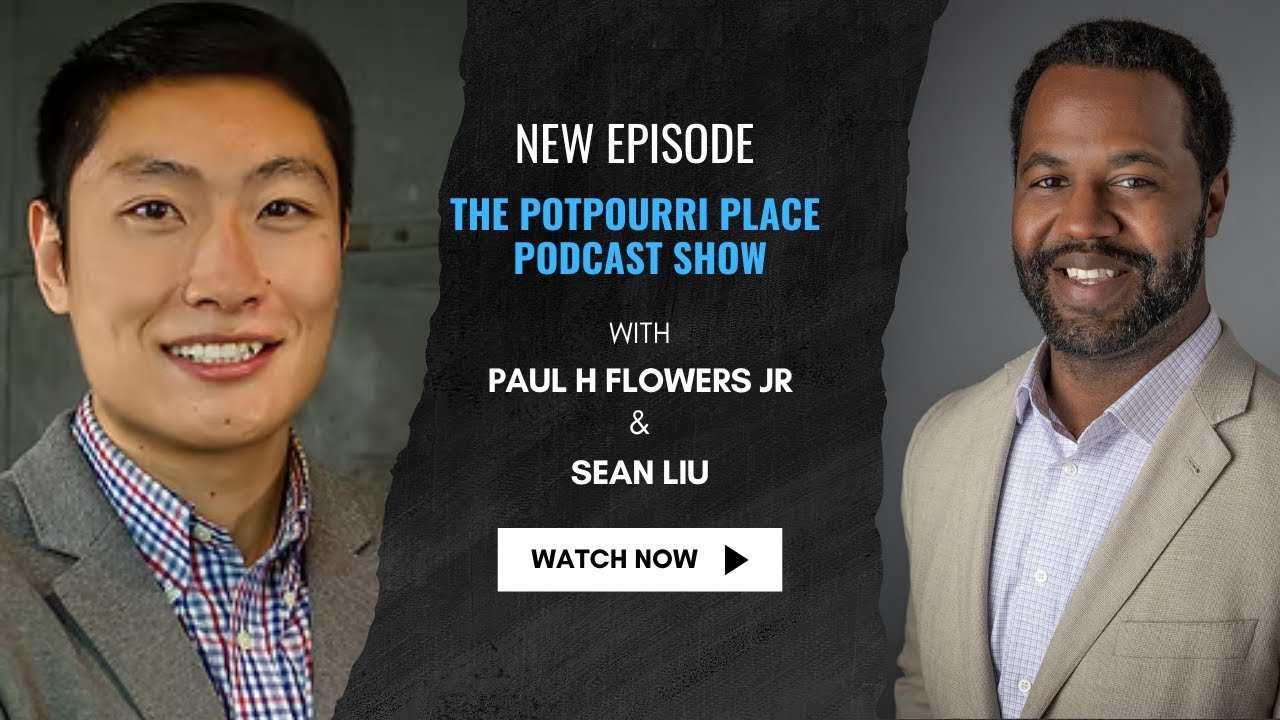
Sean Liu founded Ping Cares after caring for elders in Beijing during COVID. His company makes a cellular smartwatch for seniors with one-button emergency calling and vitals monitoring. Liu claims the device has saved five lives and is expanding into rural facilities despite cellular reception challenges.
Chapters
Hello again and welcome to another episode of The Everyday Entrepreneur. I'm your host, Paul H. Flowers Jr., and this is the Popa Replaced podcast show. I'm amazingly excited today to bring to you a gentleman that I had the pleasure of meeting at a 1 Million Cups event. This gentleman's company, I think personally, is going to change the world. I'll let him get more into it. For now, ladies and gentlemen, let's welcome Mr. Sean Liu. Sean, how are you, my friend?
Doing great, doing great. Thanks, Paul.
Absolutely. And again, welcome to the show. We got a chance to connect in person and actually bring it to this virtual space so that we can expand the reach and of course really get the word out there So first, of course, we're going to talk about your company, Ping Cares. I'd love if you could give us a brief summary, kind of where you've been with Ping Cares, maybe where it started, a bit of the origin story, and then we'll hop into where it's going from there.
That sounds great. Uh, so Ping Cares is a company that I started in the midst of COVID Uh, life was busy for me at the time. I was working and going to school, and, uh, COVID happened. My Uh, loved ones are scattered across the world, and, uh, my grandparents live in Beijing. And, uh, with all the craziness that you hear in the news, I became so worried about how they were doing. And there's a 13-hour time difference between Chicago, where I was living at the time, and Beijing. And so communication was hard, and I was in a desperate need to to know that Grandma's doing okay anytime that I felt worried. And so I was then inspired to build a solution that monitors her health and enables her to be more safe. If she needs help, she can then have a quick and easy way to call for help at least, which will give me the peace of mind from halfway across the globe. I spoke to a number of my colleagues and classmates. Everyone sort of shared the same worry when the pandemic was affecting all of us. And so it became a large enough problem for us to found the company and go all in to build out the solution that we needed.
Excellent. Excellent. So we're going to touch on a few things there. First and foremost, I'll kind of back it up to go forward. You were having trouble reaching out to Grandma and Grandpa, right? Family, basically. Your grandma, you said you focused on, and they're in Beijing. Is that right?
That's right. That's right.
Beautiful. Now, for my Audible audience, you're not able to see this, and I caution— not caution, but I'd urge you all to go to YouTube so you can actually see this. And he didn't set this up for me. I just so happened to notice it in his background. He's got a beautiful picture of— it looks like himself as a child with Grandma and Grandpa right there in the background. So I'm actually getting an opportunity to look at the inspiration for Ping Cares. If you wouldn't mind, would you share with the audience that again is listening now but may see this also on YouTube a little bit about that picture in the background?
Yeah, this picture was taken in the early 2000s and growing up I've always been very close to my elders, particularly my grandparents. And, uh, uh, you know, after I moved from Beijing to Chicago right before high school, so I was still a kid, uh, you know, getting used to this new environment, uh, in America and having to learn English and fit into high school was really hard. But what was even harder was to be separated from my elders, my grandparents. And so, uh, you know, I managed to, to, uh, uh make a good living here in the US and receive great education, meeting great people. But, you know, over the years, seeing my grandparents age and not being able to spend much time with them was hard. And COVID just made it much worse, making me feel that I'm helpless to not be able to contribute or help all my elders when things were scary and crazy at the same time. Wow.
Now that just goes to show that there is a huge sense of essentially indebtedness to the people that brought the people that brought you here, which would be your elders. And I'm starting to notice that there tends to be more of a shift culturally for a lot of people here in the States that are caring more about their parents, their grandparents, and with aging being— I won't call it an epidemic per se, but it's definitely something that we're starting to look more at even as people's lives are getting extended. I want to shift gears a little bit into Ping Care. So with Grandma Ping there in Beijing, tell us about any of the times where you had that instance where you wanted to reach out but you couldn't, and maybe what that meant for you personally.
Yeah, I mean, many times, you know, I'm thinking about Grandma at, you know, 10 o'clock in the morning, and in Beijing it's 11 PM at night. So it's not that easy for me to just shoot a text to Grandma and expect, you know, her to let me know that she's doing okay. And there's been times where there were things going on at the family and we always had to wait for 12, 13 hours until the other world, the other side of the world wakes up. And as you can imagine with COVID happening, uh, it— I'm not sure if you were exposed to any news in China, but there were huge apartment buildings were getting locked down just because of one COVID case, etc. And there were tragedies where if there's a fire going on in the building, because the building is locked, people couldn't escape and end up, you know, causing the lives of everybody in the building to be lost. And so, you know, with us being halfway, you know, across the world, it just felt like, yes, we are getting mature and getting trained and more capable, but we can't do anything about, you know, helping our elders.
Now, that brings to mind a few things, actually. One, no, I had not heard that buildings would be locked down and so much that, again, everyone would perish. Like, that seems really challenging to be on the outside as any family member, knowing that that could happen. And I can see now where that deep sense of care, right, that urge to do something different would come from knowing that this is happening, obviously miles and hours away. But as far as family comes, we call that next to kin. That's, that's grandma, you know, in some cultures, that's like mom, right? And to have that feeling, I can see where the need to make a difference then would, would arise. So tell us about some of the origins of Ping Cares and really that, that foundational piece where maybe that spark came from and then what you did as effective next steps.
Yeah, so I shared quite a bit about the, uh, the personal and family motivation that prompted me to, to start Ping Cares. Uh, the other side of the, the business is that You know, when I started, I was working full-time in marketing strategy. I was a marketing strategist at a manufacturing company in Chicago, and I was getting my MBA at the University of Chicago. So, so it's a very good program that actually has quite a bit of education on entrepreneurship. And so prior to Pink Heels, I attempted to, uh, found 2 companies, both didn't quite work out, but I learned a ton of lessons. One of which was that you always want to start with a problem that many people have, not just to think of a cool engineering idea. My background is in engineering, and so sometimes when I think of a product that's cool, I thought, hey, maybe we should go ahead and build it. But the truth is you always want to start with a problem that many people have so that your solution is actually much more needed rather than a cool concept that could create a want. You always want to start with a need rather than a want. And so leveraging my previous lessons learned, you know, my personal problem of worry and anxiety arose, so I thought that was the perfect opportunity to then figure out how can I help myself and all the classmates and colleagues who experience similar situations.
Now, you bring up University of Chicago, and of course, I'll talk about our interaction in Northwest Indiana here. So I would, you know, bring in a little bit of question about your transition from Chicago to Indiana as well. But let's talk about that educational piece where I've spoken to entrepreneurs, and I've even had several of them mention that school is not very necessary, and, and some may beg to differ. So if you would share, how important was your formal education in maybe those previous two business ventures as well as Pink Cares?
Yeah, so I, I, uh, got an engineering degree from the University of Illinois, which specializes in, in, you know, technology, science, and engineering, uh, which got me to a good place of landing a good job initially. And then as my career progressed, having that education, you know, the engineering degree to think like a problem solver, to think methodically, logically, was very helpful. And then getting the business degree from the University of Chicago helped us, you know, understand different aspects of business, which gave me a lot of confidence to know that, hey, I understand finance, marketing, strategy, et cetera. And more and more schools are incorporating education on entrepreneurship. And so at the University of Chicago, there's this startup competition, which, you know, we ended up participating and did pretty well. And so the school invested money into us, afforded us exposure to other investors, everything was interconnected. We ended up getting capital from a vice president from AARP, so an expert in the field, and then investments from Harvard Business School Angels and mHub Chicago, several funders. And so I think the education provides both, of course, knowledge, network, and also credibility. And, uh, you know, I suppose for entrepreneurs who are successful right away with their business, you know, they want to put all their time into their business, which makes sense. Uh, for me, this line of work naturally takes a long time. You know, building technology for people in their 80s usually doesn't— you don't see a ton of companies that do that. You know, it's usually building an app for teenagers, which can grow very fast. For us, it takes a long time. So I believe in the value of continued education. In fact, I applied and was recently accepted into a Master of Health— Master of Public Health at Harvard. So I'll be going to Harvard part-time while building my business starting in the fall.
Excellent, excellent. And congratulations again on that acceptance. And I'm certain that, again, that's going to be a huge, huge help when it comes to better understanding the world in which we live in as it pertains to, of course, yes, being physically here and understanding healthcare, et cetera, but also where PING Cares fits in and the policies that govern this whole space of health and care for our seniors.
Beautifully said.
Absolutely. Absolutely. So, With that, I wanna transition just a bit. I'd mentioned that I'd ask a question about this, so I just wanna bring that full circle. You'd mentioned being in school in various educational facilities in the state of Illinois coming from Chicago, but then you moved to Northwest Indiana. Curious, with that transition from one space to another, A, why'd you move? And B, have you found, what kind of environment have you found in terms of the difference of receptivity in Indiana versus in Illinois?
Yeah, that's, that's a great question. And I'll just share a little bit more personal information. My wife is from Northwest Indiana, and we both have lived in the Chicago region for about 10 years. And she's in healthcare, she's an anesthesia provider. And so all the cases in Chicago, you know, as you can imagine, are naturally more traumatic, higher stress. And so she wanted to move back to Northwest Indiana to be close to her family, which I completely support. We both are very much into, you know, loving our families. And also for a lower stress level and a lower, I would say a slower life pace, but more time for reflection and for, you know, realizing what's really important life, uh, being away from all the hustle and bustle of city life. I actually enjoy Indiana quite a bit. And in terms of receptivity, uh, this part of Indiana, I, I find people to be extremely, extremely nice, uh, and also, uh, highly educated and well-spoken. And, uh, the townships are usually smaller, but you find it, uh, in a much more close-knit setting in which local businesses are more likely to trust each other and help each other out. And so it's been actually quite favorable for our business.
Excellent. Well, that says a lot. And of course, you and I had a similar story in so much that I'd also transitioned from Chicago over to Northwest Indiana and found a very similar structure, just as you shared, with the business environment, the people. Again, I think you hit the nail right on the head. Shameless Pub for Anyone looking to move from the Chicagoland area to Northwest Indiana, apparently it's very favorable and it obviously creates very strong connections. So I want to talk about just a bit more on the personal side. You'd mentioned your wife and her work as well as the change of pace for yourself as essentially a business owner, but also a family. Uh, would you share how important is that spousal support in terms of how you're bringing Ping Cares to the market? Because this is a, a venture that takes some time, and obviously it may take away time from those that matter most to you, being those in your household. So if you share again, how important is it for that spousal support, and maybe some areas where your wife actually helps out, if either directly with Ping Cares or what she does to make sure that you can do what you need to do?
Yeah, my wife has been instrumental, absolutely, in what I do. We both keep God first, and so that allows us to keep our values aligned. And so supporting each other is hugely important. You know, we're on year, you know, we've been in the business for 4 and a half years. I so far have not paid myself a salary. And last year I took my entire 401k out just to pour into the business and invest in what I think it can do for other people. And not generating an income for a man is difficult. You know, I want to be a provider. I want to live up to the traditional standards of supporting financially and in other areas. But my wife, as a good earner and a very supportive spouse, is essentially giving me all the freedom I need without giving me pressure to, hey, start pulling in on the financial side. So because of that, I also want to contribute in other ways. We're expecting a baby, and as an entrepreneur, it gives me more flexibility to work from home and take care of our baby And, and so it allowed me to kind of come to terms with, hey, maybe we don't always need to have this status quo of man going out to, to make money and the woman stays home to, to take care of the baby. There, there's so much work around the house that a man can do also that, uh, you know, as long as both, uh, spouses are on the same page, there are many areas to add value than just monetarily.
Absolutely. And Sean, I appreciate you actually being vulnerable enough to talk about that. I often share that as men, we don't talk about these things enough. We don't open up enough to really share that, hey, there are societal pressures to be that provider. There are essentially the status quo or the norms that we tend to adhere to where the man has to go out and make sure that everything is taken care of financially. And your story actually highlights a really important aspect, I think, from a relationship standpoint of having compatibility and also someone that sees the vision, obviously, and what it is that you're doing so that that support can be there both emotionally as well as financially. And again, bringing together a unit that's been evenly yoked from the beginning It seems like obviously you made a really good choice.
Yeah, yeah, yes sir. And also, you know, with a beautiful marriage, it lasts for decades. And so, you know, you could take turns in supporting each other. For us, about 5 years ago, I was the only person working and my wife was in school for 3 years. So I supported the two of us. Even without that history or feeling like, you know, my wife being indebted to my support, she would have helped me either way. But I think over time, the roles can definitely change as long as we're supporting each other in different ways. It always works out by us keeping God first.
Excellent. I am another man of faith. I had another gentleman who was very faith-oriented on a previous show and We had a really good conversation about that in terms of the faith that it took for him to grow his particular business, as well as the faith that it took to just operate amidst the trials and tribulations of getting started and really taking yourself to that next level. So let's talk about that for a moment. How, how do you keep your faith first inside of your business?
Yeah, so I mean, it starts from my daily routine. In the morning, I, you know, I drink my cup of coffee. So while I'm well caffeinated, I start reading the Bible and start praying to God on my knees. And that's usually about half an hour to 45 minutes. And so once I line myself right spiritually, um, at least I know what my values are. I'm reminded of all the great things God has done for us. And to learn that a relationship with Him is the most important regardless of the hard times, the good times, or all the everyday trivialities that we go through. We always, you know, keeping God first puts me in that right place. And then the rest of it is just not being afraid of sharing my faith and, you know, always talking to my wife about our takeaways our day-to-day, and God has helped us in our day-to-day.
Beautiful. Again, the family that prays together stays together, and that morning ritual is key in starting off on the right foot, or on the right knee in this case. Now, we, we want to pivot over in terms of, like, as how that faith helps out in the— in getting a venture like this started. So you had, I'm certain, some unexpected hurdles when you were getting Ping Cares off the ground that obviously it took some faith to traverse through. Share with us some of those hurdles that you may have had in the early stages and how you'd overcome them.
Yeah, I, I would share a very specific hurdle, which was that, uh, so our, our solution is essentially a, a cellular-based smartwatch that, uh, that is designed with very simple interface for older adults. So people in their 80s, 90s can utilize it. And because it's cellular, it makes it easy. So the older adult doesn't need to connect it to a smartphone for it to work. But the downside is depending on the area or the connection strength, sometimes it might not work. And so our very first customer, we traditionally have been working in a B2B model. Uh, we, uh, the strategy was to sell into corporations that own senior living facilities. Once we get corporate leadership buy-in, then we can expand, sort of a land and expand strategy. And so we, we had, uh, uh, this great contract with 10 facilities all lined up. And, uh, you know, we had our product ready and our whole team, uh, got ready to spend the whole week in launching the product into the hands of, uh, seniors this particular facility. We go there, uh, and, uh, and it doesn't work. There's no cellular reception. And so it was sort of dead on arrival. Wow. Yeah, yeah. It was a huge letdown for our customer, uh, for my own team members, because as an entrepreneur, you always have to sell the, the future or the value of your business to everybody. Including your own teammates. And so I ended up taking the watches to different areas in that particular geolocation. This was somewhere in Missouri and a bit rural, which we did not anticipate to have that problem. But we worked with our customer who was generous enough to, to purchase and install a cellular booster, which still didn't quite work. And so we had to take the loss and move on to the next facility, which thankfully it worked. And, you know, it's a very memorable story to say that you could do the best you can with all the preparation and getting everybody excited, but there's so many elements that are outside of your control. And so by relying on God, you know, over time, I just learned to do the best I can. And the results, don't worry too much about it. That's really up to God. So it's, it's been very humbling.
Excellent.
Excellent.
I appreciate you sharing that. Again, we don't often share the losses that we take. And in this instance, like you said, you were gracious enough to have a company that was willing to invest a little more in infrastructure in order to bring this to fruition. So I'm really glad to hear that again, apparently who you are and how the product presents itself shows up well enough that a company would not just invest in the product, but really you as a person so that they would come out of their own dollar, come out of their own purse, so to speak, to invest in their facility and their infrastructure to bring your product into the marketplace. So let's talk about the marketplace and wearables and elder care, just kind of as a— where it's going. Where do you see the intersection of AI, wearables, really elder care in that space? Where do you see that going in the next 3 to 5 years?
Uh, in the next 3 to 5 years, I, uh, AI is becoming so popular at such an extremely fast rate. So it works well on powerful processors through the computer, through a smartphone. But with wearables, the challenge you always have to think about for us is battery life. For a wearable to last for a long time, The processor cannot be so powerful that it's able to then utilize all the latest and greatest AI tools. For us, in the next 3 to 5 years, I don't see a huge, huge difference because the current age group or the generation, we still have the greatest generation, the Silent Generation, you know, living alone and in facilities. The Baby Boomers in about 10 years are going to start really moving into sort of the oldest generation of our society. So before then, I'm still optimistic to build the product thoughtfully, methodically, so that our end users currently who are not used to any touchscreen to begin with, or even any smartphone, can find the value so that we become experts in real user experience. And that is not something that Apple, Fitbit is actively doing because big brands, they usually want to create something cool and trendy which grabs the attention of young people. And when young people do it, the other older age groups tend to follow. We're taking a completely different route, uh, which, which takes a longer time but also gives us the grace to to do things right, to lay the foundation one brick at a time.
Excellent. Well, let's get really into Pincars and that generational— I won't say divide, but the multiple generations that it ultimately can touch. It doesn't seem like it's really— as I looked at and done some research on the product, this doesn't seem like just the watch for, for Grandma that's 75 or Grandpa that's 80. I, I think if you— I think you may have even mentioned this to me off, off camera, that this is something that can expand for several generation. So what kind of applications do you see for PING Cares, maybe even in the, the younger age groups, the 50s, 60s, you know, those that are prior to actually being in some sort of facility?
Well, you know, uh, people in their 50s and 60s are actually what we will call family caregivers, or adult children who have parents in their 80s or 90s. So the users of our watch are usually on the older side, and then the baby boomers in their, you know, who are middle age or even in their 60s, use an app that can then monitor how their, their own elders are doing. And so, you know, by using a smartphone app designed for people more comfortable with technology, we can actually get even the grandchildren, you know, so people in their 20s and 30s who actually care about their elders, this will provide a gateway for them to know that, hey, Grandma got 2,000 steps in today. Maybe that's a good piece of topic for you to reach out and just have a conversation. So it's a way for that family connection to to build.
Excellent. Now, you mentioned that again, anywhere from youth to middle-aged or coming into the boomer generation as the ones that provide certain care can access the app. And I don't think we talked much about that. So for, again, for our listeners, if you really just kind of walk through how the watch itself works and really some of the how they could get it for someone in their, their family and how important it is to have that app alongside it so that maybe a person that does care to know what's going on with their family, you know, how they can really check in and stay in tune.
Sure, sure, that, that sounds good. Let me grab my watch. Uh, it's on the charger. So, uh, this is the watch that we have designed for older adults. Uh, it looks just like a regular smartwatch, but we designed it so that we can control the entire user interface and out-of-the-box experience, make it hyper-focused for, or optimized for seniors. So what it does, what the watch does is it's a little, essentially think of a little cell phone that's compact into a watch form. And so it definitely, let me turn it on. So it tells time and it's got two buttons on the side. The red button will allow the person to to push and call for help. And so it, you know, everything is enlarged a little bit.
Absolutely.
You can see the number of steps, and you can check vital signs like heart rate, blood oxygen, and temperature. And because it's a cell phone, we actually store— we can store up to 20 different numbers into the watch. So there's no dial pad or anything. Once you select the name of the person you want, you just tap on their name, and it starts calling. Wow. But there's an easier way. So let's say if I have fallen, um, and I can't do all the swiping and tapping, all I need to do is push this red button. Calling for assistance. And it will start calling 3 emergency contacts one by one that we have set ahead of time. So I have it programmed to my watch or my phone So if I pick up, hey Paul, I'm talking to you right from my watch.
Amazing.
That is done just by one push of a button. And, and so that is the safety feature of the watch primarily, uh, to compare it to like a Life Alert pendant, uh, I fall and I can't get up, something that's been around for— yeah, yeah, I remember that one. Right, right. But we find that people don't want to be reminded of frailty or of an old age. Everybody, no matter the age, wants to feel respected and empowered. And so we want to respect and dignify the person by keeping the solution trendy and stylish. But then at the same time, outside of the safety features, it's got all the sensors that a Life Alert does not have. So it's monitoring the person's vital signs, and so anytime something is abnormal, we would then send out the notification. Because the watch is cellular, it sends data to our Amazon server that can then decide, hey, if something's out of whack, and would then alert all the family members who have an app, um, linked to the watch.
That is amazing. So it really makes sense then for the person that's wearing the watch, obviously, ideally, they'll, they'll have some family or at least someone that they connect this to that it seems like, and begin, I'll just kind of go down that path a bit. For people that don't have families, I'm thinking maybe they could connect it to either a, whether it be 911, or if they're in a facility like the next nearest nurse, or something to that effect.
Okay, exactly right.
For our Audible listeners, please check this out on YouTube. You didn't get a chance to see again the beautiful design. He powered it up, which literally just took seconds. All of the dials and features— excuse me, all of the display, I should say— is exactly how he described. It's very easy to read even from a camera from some inches or feet back away. I can see it really clearly. The two buttons on there really make things simple. And as soon as he pressed that red button for help, he picked up and showed it on his phone, is that his watch was calling his phone. So we're talking about seconds as opposed to minutes when every second does count when it comes to receiving care. Tell me, are there any stories that you can share as far as where this has helped someone or, you know, in the marketplace in real time?
Yeah, absolutely. So this red button to call for help functionality has helped save 5 lives so far. I mentioned earlier that we're not, you know, I'm not paying myself a salary and we're not growing tremendously in revenue, but the most gratifying thing has been to actually save 5 lives. That's been extremely gratifying.
Oh, absolutely. Saving one life is plenty, let alone 5. And when we really understand the impact that seniors and again, those that we care for, have as matriarchs and patriarchs of our family, not only did you save 5 lives, but you impacted 5 families, which could very well have been impacting again, multiple generations per family, that again, family members are still here because they were able to get that care at the time in which they needed. Amazing.
That is so well said. Thank you.
Absolutely. Absolutely. Phenomenal concept. Again, I loved it so much. I again sought you out, wanted to have you on this show so that we can share the good news about Pink Cares. If you would, just because we're coming up to the top of the hour here, share with our listeners, how can they reach you? How can they get more information about the watch, the technology, and bring this into their families?
Yeah, thank you so much for your kind words, Paul. It's been, it's been wonderful to meet you. And I am so impressed by how much knowledge you have in the space of healthcare and insurance, how polished you are as a speaker, as a presenter, but also as an interviewer. I think this helps with your extremely high level of emotional intelligence and being empathetic to understand what the other person is really coming from. But yeah, our website is pingcares.com. It's P-I-N-G-C-A-R-E-S dot com. It's named after my grandma Ping, which by the way is a Chinese word for peace and safety. I can be reached at sean@pinkhearts.com. That's S-E-A-N @pinkhearts.com. And, uh, uh, maybe I'll just share one last story of one of the, uh, 5 lives that we helped to save. The lady actually called me the next day, uh, describing what happened. So I'll go ahead and share my screen, and, uh, hopefully this will work with the sound as well. Okay, please let me know if you can't hear this. Hi, Tron. Just wanted to let you know that my watch came in handy. 3 o'clock this morning, I fell in my apartment and I was nowhere near one of the buttons to call anybody. And so I'm laying on the floor. Thank goodness I had my watch on. So I called for help, and they were there within a couple minutes. I really appreciate having the watch because I was able to get ahold of somebody.
Wow.
Wow.
I am, you know, though, for the sake of our listeners out there, like I said, Sean and I had met at a 1 Million Cups event. And for at the time, It didn't hit me seeing that review as it does now, where I remember being a child, we moved my grandmother in and she had Alzheimer's. And sometimes I might be in the basement, you know, I gave her my room, and I may be outside or whatever the case may be, but I had a cell phone at that time. And I remember coming in one time and seeing my grandmother on the floor. And for whatever reason, just hearing that young lady's voice kind of hit me, got me a little emotional, thinking about how my grandmother has been that grandmother on the floor. And quite frankly, having something that just in the push of a button can alert myself and others, it really truly makes a difference. So, Sean, you are absolutely doing God's work. We thank you. And I'd like to end and wrap up here with just a couple of questions. One, I'm coming to note as a signature question of mine. It's got some context to it, which I'll share in just a moment. And that question is really simple, really straightforward. And this might be different for you. So I'm really interested in your response. But Sean, what's your middle name?
I don't have a middle name. My Chinese name is Yi Xiong. Which means one hero.
And you say that, say that one more time. You said one hero?
Yeah, yeah. Yi Xiong.
One hero. And you clearly are acting in your namesake at this point. Okay. I love that question, namely because again, it brings people a little bit closer. And then I just want to turn it over to you for another minute or so. And Sean, if you would please share any words of wisdom for an aspiring entrepreneur that's wondering, you know, can I do this? Should I do this? Or if they've stumbled, you know, should I keep going with this? If you would just share some words of wisdom that can help to inspire that next entrepreneur so that they can keep going and they can too pass that 4 going on 5-year mark.
Sure. Yes. Yes. Uh, I would say that living in America, we're blessed to be in a country where, uh, uh, you know, hunger isn't quite an issue. And so if you have a dream, if you believe that this will make a difference in other people's lives, the most important thing for an entrepreneur is to maintain your own perspective, to be in the right headspace, and to maintain your physical health. And I personally do that by believing in God and relying on my family. There might be other ways that you can use, But, you know, as long as you see things in the right vantage point, whether it's when things are going well, when things are not going well, if you keep your humility and stay true to your mission, instead of making a ton of money, which should be a byproduct if you're doing your job right for others, but keep your focus on that and maintain, perspective is what I would definitely recommend.
Excellent. Ladies and gentlemen, you've heard it directly from Sean first. Again, Sean Lu, founder of Ping Cares. He shared pingcares.com. Please look this gentleman up. He is absolutely out to make a difference in the world of seniors and the healthcare space. I think the technology is fantastic.. And quite frankly, I can't wait to see you on through and past the Shark Tank phase, which is what I like to call it. So, uh, thank you so much, Sean. And to all our listeners out there, definitely bookmark this episode. You'll want to come back once again. We see Sean's product again, Ping Cares, in every market across this beautiful country as well as the globe. Thank you all for listening. You're very welcome, Sean. Uh, thank you all for listening, and we'll hear from you soon. Bye for now.
Have a blessed day.
More from Paul




Term vs Whole Life Insurance, Explained Plain — Which One Your Family Actually Needs


The Cheapest Claim Is the One That Never Happens | Claims Deflection Explained




