
I Lost Everything and Found the SECRET to Success
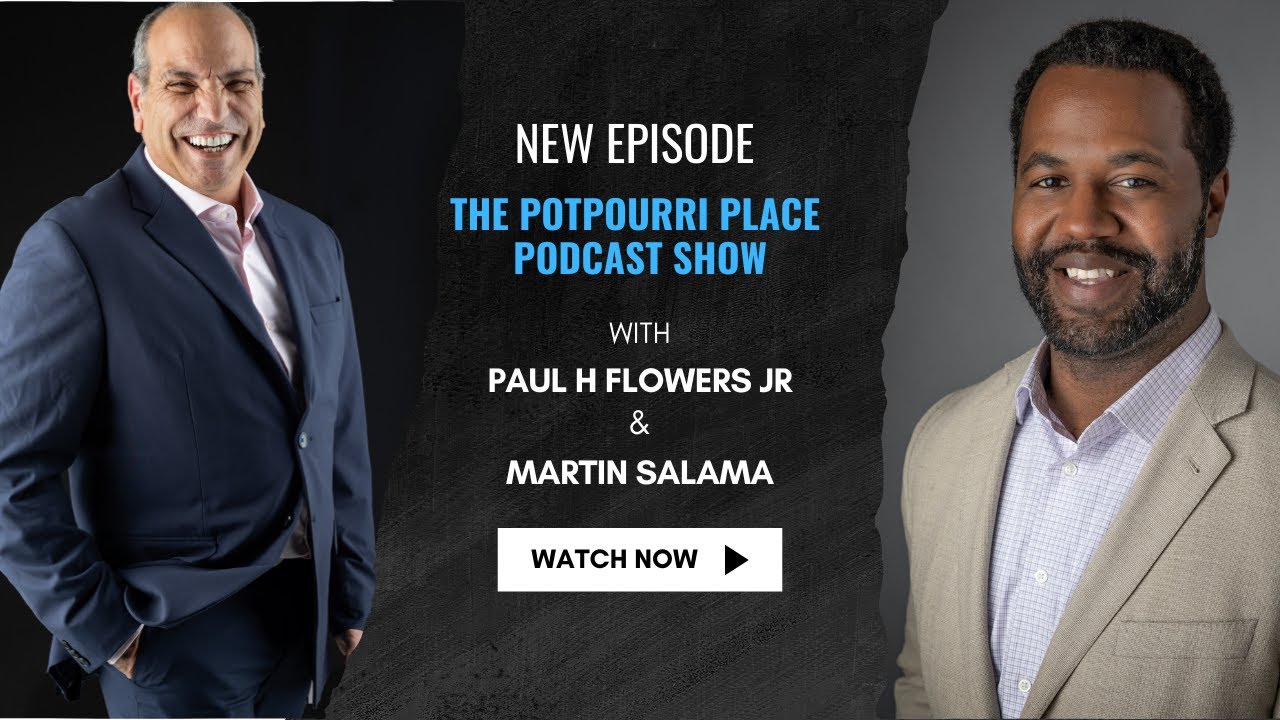
Martin Salama lost a $3.5 million health-club project in the 2008 financial crisis, which led to foreclosure and divorce. He rebuilt by shifting from people-pleaser to purpose-driven entrepreneur, creating the LIFE framework and a coaching model where he takes 12.5% upfront and nothing more until clients earn revenue.
Chapters
Hello and welcome to another episode of The Everyday Entrepreneur. I'm your host, Paul H. Flowers Jr., and this is the Popa Replace podcast show. Today we have an amazing individual. This gentleman hails from the great state of New York, so he's not taking any mess. Mr. Martin Salama, I want to introduce you to the Pulpery Place podcast show's audience. Audience, please welcome Martin. Martin, how are you, my friend?
I'm well, thank you so much. I'm not taking any mess and I'm not taking any Mets either. I'm a Yankee fan.
I love it, I love it. Well, and I'm so glad to connect with you. It's a beautiful day again, energy is flowing, and we want to share some of this energy with the group, with the family, if you will, that's tuning in to listen to our show. So if you would, go ahead and introduce again what's most important to you as far as your entrepreneurial ventures that you've got, again, your hands in right now, and then we'll go ahead and start some of the Q&A from there.
Sounds good, sounds good. So I didn't get to thank you for having me on your show, Paul, because I was making the joke, but really, to be honest, I'm excited to be with you today and to move forward. So I I'm known as the architect of the Warrior's Life Code, and LIFE stands for Live Incredibly Full Every Day.
That's it, right?
And, uh, for me, I do everything on that mantra, on that way of thinking, that I want to wake up in the morning and look for things to appreciate. I write down every day 3 things I'm thankful for, that I'm grateful for, do a little prayer, and then I go, today I'm going to live incredibly full every day.. And for that, it means happy and meaningful, right? Happy is self-love, self-care, even a bit selfish. Meaningful is what am I doing for others? Selfless, right? So out of that, and for many years I was coaching around the ideas of, you know, going from somebody who's a warrior or a wanderer to a warrior. You know, that's where the Warrior's Life Code came from. The Warrior. And over the last few years, I've taken it to another level. I do that well. I coach usually men in their 20s and 30s who are a little stuck in where they are, and they're trying to figure out where to go and what happens next. And they have to— they're waiting for life to fix itself, and they gotta understand they gotta fix it on their own, you know, and go forward from there. And, uh, over the last few years, I've developed a program where I help coaches, consultants, entrepreneurs get to 6, 7 figures within 2 years or less, guaranteed.
Now, that's pretty hefty when you put the G word in there. All right. And again, this meeting is being recorded. So again, when you say something like that, you can absolutely put a guarantee to something. That's a heavy thing. Now, we're gonna talk about that guarantee in just a bit, but that takes a whole lot of confidence and that confidence has definitely got to come from someplace, like experience, very likely. If you would, Martin, tell us about some of your experiences that brought this about and again, garnered such a confidence that sits in front of us today.
You got it. So thank you for that. So let me go back to the, to an interesting time in our lives a little while ago in 2008.
Okay.
2008.
Oh yeah.
So at that time, my wife and I were working on a project for about 5 years. To build a multimillion-dollar health club and tennis center down by the Jersey Shore in New Jersey. And, uh, it took us 4 or 5 years because all that time we were finding the right place, we were doing the feasibility study, then we were raising the capital, we were going out there and getting an engineer, an architect to get all those things and get the approval from the city and the state. And, and every time we'd get there, we'd go to the banks, and while we're in the process of— like, we love this project, it's great. And if you remember, 2005, 2006, banks were lending money as if you were going to Costco and getting them, getting the samples from the ladies at the end of the, at the end of the aisles.
Absolutely.
They were, they were throwing it to you. So like, yeah, we love this project. So we finally get all things in a row, and the final thing was we got the— okay, we're back there. Oh, you need a, you know, civil engineer, make sure that the parking is good, make sure that what it's going to do, the traffic and all that. Finally get all the approvals. It's the summer of 2008. And we go to the bank and like, okay, we're ready. We're not lending right now. Like, what the hell? I'm $3.5 million into this project. What do you mean you're not lending? Well, things are slowing down. There's a lot of uncertainty out there. A month later, September 2008, we had somebody named Bernie Madoff come along. We had the subprime loans all fall apart. And just like that, I was underwater and I was broke overnight. Wow. Yeah, it was a tough time. I stopped paying my mortgage, stopped paying my car payments. I had no money. And, and I, you know, I borrowed up to the hilt, refinanced a couple of times over those times because you could, you'd go back to them like, oh yeah, we'll reevaluate your house now, less than a year later, and we'll give you a better loan and more money and all that stuff. And I had my investors and people I borrowed, family and friends that I borrowed money from. So it was $3.5 million into this, so I had nothing. Uh, eventually, a few months later, my son says, Dad, look outside. They were towing away my car. Oh yeah, it was that bad.
Okay. Yeah, real.
Yeah. And, you know, happened to be, I lived in New Jersey and there was so many houses that got foreclosed on We got foreclosed on, but it took them years until they remembered about us and said, oh yeah, there's that house on Valley Forge. Oh yeah. Right. And they finally, you know, years later, but you know, uh, but it was a tough time and I went into a depression for about a year and I could easily look back now and say it was a situational depression based on everything that had gone on. I was broke. I didn't know what I was going to do next. And as I finally— the fog lifted and I went through coaching, I went through therapy, I even went on medication for a little while, uh, you know, antidepressants and stuff, Wellbutrin. And then finally realized, you know what, it's not— it's, it's not physiological, it's, it's psychological, and it's me understanding that I, I have to just get out of my own way. So I started getting out of this and it Like I said, it was therapy and coaching that got me there. So, okay, now what do I want to do with my life? It's like the end of 2009, it was actually getting into 2010, 2010, and I was like, okay, what do I want to do with the rest of my life? I've been a businessman my whole life. Back then we called ourselves businessmen, now we call them entrepreneurs, right?
Right, the transition of language.
Exactly. And I'm like, I don't know if I want to do that anymore. And I, I'd been in different types of business my whole life. I was towards my late 40s now. And I said, but what do I really like to do? And I thought about it, and I love— I was always involved in community events, community projects, organizations, and I was always a leader. And I was a leader. People would come in and say, okay, I want to volunteer, but I don't want to do what you're doing. Okay, I don't want you to do what I'm doing. I'm doing what I'm doing. Well, what are you good at? And I would talk to them and figure out what they were good at. And I realized I was coaching them to figure out what their potential is, how they could help. I was like, oh, let me look into life coaching. I had some in my past. I was like, okay, looked into it, found a great school to go to, went to the school and said, I can't afford this. Oh, go get financing. I said, no, that's not happening. Nobody's lending me money these days. I said, but if we come up with a number, I'll pay you every month the number we come up with. Every single month we'll come up with that number. He said, okay, I'll make a deal with you. I'll do that with you, but you don't get certified until you're fully paid off. That's fair. It's a 1-year course, or almost a year. When you're done, if you're not done until you're ready, I was like, that's fair. I was able to pay within a month or 2 from when I had finished, so I was pretty good. Perfect. Yeah. So I'm about to get started, and it's about 2 months beforehand, it's my 24th wedding anniversary. My wife, you know, Paul H. Flowers Jr., gave me a very interesting gift that year. He said, I want a divorce.
Oh, oh, so it's not the— you know, oftentimes you hear that the wife gives you a surprise. It's like, hey, by the way, we're having another one.
And this one, no, no, I don't want to have anything to do with you. Okay. So I was like, okay, I just— when I thought I was getting back up I got knocked down again. And I remember saying this to me, why does everything keep happening to me? You know, I could look back now. And I made that decision a couple of days later that I'm going to still go forward with coach training. Okay, not gonna let this knock me down. And it was probably one of the best decisions I've ever made. And they sent me a list of books. And one of the books on the list, they said, read a few of these books before you start, was The Four Agreements by Don Miguel Ruiz.
Beautiful, beautiful. Absolutely.
And when I read the second agreement, don't take anything personally, it was as if Don Miguel was talking directly to me, saying, you don't really need to take everything personal. It was like he was telling me a secret that the world had been telling me my entire life. But until that moment, I wasn't ready to hear it.
Okay. Right.
So I was like, wait a minute, I don't have to put the world on my shoulders. I don't have to take everything personally. And I went in with that mindset into the coach training. And I said earlier that I said, why does everything happen to me? And I can look back now and realize that that statement is really a cop-out. It's really me looking to blame everybody else.
Come on. Say more about that. I don't want to butt in, but say more about that when a person uses a phrase like things happen to them.
Right. So now I changed it. And very often you'll have people say, well, things happen for me. No, that's a little selfish, I think.
Okay.
I say things happen through me. Ooh. All right. Because when they happen through you, that means you're taking the responsibility. Good, bad, or indifferent. At the end of the day, you are taking ownership of it.
I like that. Now, you know what? Admittedly, I was in that camp of things happening for me. Meaning for the benefit. And actually, you shedding light on it just that quickly, I can see that. Not that selfishness is entirely a bad thing, because— no, it's not, it's not— the, the full glass is the only one that can pour into another. But when you say things happen through me, right, it puts you in a position to be a vessel for good things. And it almost sounds like a faith-filled statement. I'm curious, in terms of that— yeah, I was going to say if you'd expand on how faith in yourself and in others and the process and the universe, like whatever your belief system is, if you share how faith has, has brought you again through that time and place.
Right. So, you know, I was at a low period. I really was, as I said. And, you know, as I was going through this, I, I, I, I would look up to God and I was like, you know, there's something going on here. And I think when, when he hit me with the— when she hit me with the divorce, it was God saying, oh, you want to go through coach training? Well, let's just pile it all on. All right. And make sure you get that you're pretty much down at the bottom, you know, down at the rock bottom so that you understand that what you're gonna go through, you've gotta be open for it. Mm-hmm. And I believe that God is there for you, but he's not there to do it for you. He's there to do it through you. Through you.
There we go.
Right. Because it's like that story about the guy who's, who was in a shipwreck. And he prays to God, God, please come save me. He's like on a piece of wood. And then a plane comes by and sees him and a helicopter comes by. He says, okay, you know, come on, we'll save you. No, no, God's going to save me. And then a boat comes by. No, God's going to save me. He dies. And he goes to heaven and God says, he says, God, why didn't you save me? He says, I sent you a boat. I sent you a helicopter. I sent you a plane. You've got to do something.
Exactly.
There's only so much I'm gonna do for you. The rest has to go through you.
I love it.
I love it.
Now that, again, that's amazingly impressive and important. And I've heard iterations of that story before, where you have the ability, essentially, to be saved, so to speak, but you choose not, right, and end up at those pearly gates wondering why.
So I tell people very often, you know, they tell me, You know, I prayed to God and he didn't answer. I said, he did. You weren't listening. He said no. It's not what his plan is for you.
Powerful, powerful. So Martin, tell me, let's hop back into LIFE, right? The Warrior's LIFE Code, you being the architect of that. Break down that acronym for our listeners one more time.
Absolutely. So here I am going through coach training, and I finish, and I become a divorce recovery coach. Okay, makes sense. I just went through a divorce. I even wrote a book on divorce recovery. And I'm doing this for a few years. And as this is going on, I'm developing, I'm evolving. And, and one day I was doing something— I got to tell you this, Paul, I'm ADHD. Me looking straight at a camera for 45 minutes, it's difficult. I'm always looking around. So imagine a guy with ADHD meditating.
Nam-myoho-renge-kyo. No, no, no. What?
What? I was doing the guided meditation. You know, the guy from Headspace with the wonderful English voice. And again, 10 minutes was hard. But one of these days I was meditating and I had this download of information that I was loving my life. And I wanted to help others to love their life as well. So I finished my meditation. I wrote for 2 hours. And out of that came this acronym for life: Live Incredibly Full Every Day.
Beautiful, beautiful. So being able to calm down, essentially, and quiet the soul allowed you to download and then essentially put it out there for individuals to use at this point every day, right? Live Incredibly Full every day. Did I get that right?
You did.
Perfect. Perfect. So when it comes to the Life Code, right, I'll call it the Life Code for simplicity's sake going forward. Now, with each piece, right, because there's, there's steps to this, right? I'm certain there's steps, you got to kind of break it, break it down for us a little bit, and share with us how each piece of the Life Code really interacts with the things that happen in the real world? Like, how does the life code apply to finances? How does the life code apply to health? How does it apply to relationships?
Right? Right. Well, at a very foundational level, okay, I start off by you having to understand there's a process that you're going to go through along the way. Okay, right. The first one is, and it's Paul H. Flowers Jr. I talk about it in my book, which, you know, we'll talk about a little later. It's called Warrior to Warrior. For all those people out there, that's a New Yorker saying the word worry to warrior, you know, because New Yorkers will screw that up. Warrior to Warrior. And it starts with admission, cleansing, and celebration. The process you're going to go through, this is going to happen over and over again. Admission, admit what's going on in your life right now is not working. And you've got to change. Cleansing is, okay, what am I going to do to change? And celebration is, as I'm making these changes, and I see some changes happening, am I celebrating the small victories along the way? Because if you don't, if you say, oh, I'm gonna lose 50 pounds, and you're only going to celebrate when you hit 50, you never get to get to 50.
Let's talk about those bookends for a second, the admission, and then the celebration. I mean, people have a trouble enough time admitting that, you know, they were 10 cents short at the store, or they're the ones that forgot to fill up the napkin holder or put the toilet tissue back on the roll, right? Yeah. Admission is a tough thing for a lot of people with small stuff.
It is.
How would you suggest a person get over the— I don't know if it's guilt or what. Again, you got more expertise than this, too. But what is it that stops a person from being able to admit for themselves that, that there's a problem or that they're the problem?
All right. Well, that's a great question.
It really is.
And I talked about it in a very interesting way, you're gonna get a kick out of this. Very often people rationalize that they do things for certain reasons. Right? And I say when someone rationalizes, what they're really doing is they're telling themselves rational lies. Huh.
Okay. That one's good.
Right?
That's good.
When you're saying, I wake up in the morning and I just don't feel like exercising today. I'm tired. Are you really tired, or you're looking for an excuse or looking for a reason not to exercise? So you make a rational decision to say, I'm too tired, right? That rational decision is really nothing more than a rational lie. You're giving yourself permission not to do something you know you should do.
Okay, okay.
All right, so once when I hit that with people, now I ask them As you go through your day and you're making decisions, right? If you make no decision, that's a decision. It is. People don't recognize that. They're like, what would you— yeah, if you just say I'm gonna punt, you're punting, you know? So admit it to yourself. So as you're going through this, you go, okay, every decision I make has a consequence, good or bad. And am I rational lying to myself? And if I am, what am I going to do about it? Am I going to allow myself to do it? Or am I going to change what's going on? Because, you know, Albert Einstein said, the definition of insanity is doing the same thing over and over again and looking for a change. So that's where it starts. So, and a lot of it comes to when you come to me, you're looking for something. And who I am is your accountability partner. I'm here to support you. I'm here to be objective. I'm here to tell you when you're doing right and wrong. And at the end of the day, if you're ready for it, some tough love.
Okay. Okay. Now let's talk about that. And then we'll get to this other book in accountability.
Yeah.
Again, when you talk about being there for someone, And I'll just put it in the context of your programs. What kind of access would a person get to you such that you could hold them accountable? And in the spirit of, again, playing a little bit of the devil's advocate, are you holding them accountable? Or are you showing them how to hold themselves accountable?
Well, how about if we would take it one step further? I'm having them hold me accountable as well. Okay, that's where the guarantee comes in.
Okay.
All right. So what I did was, after all these years of putting these programs together and going— and what would happen is now I had this divorce recovery coaching, I had this life coach thing, you know, the Live Incredibly Full Every Day. And I would go out and I'd find these coach to coaches out there. There are a ton of them. And they go, oh, we got it. We know you will show you how to put your program together, go out there, content create, and make millions. I was like, that's what I want. But for me, the deeper it really was, I wanted to impact millions of people. And as a result, make the millions as a result of doing that. And I, and me, I'm, here's my ADHD coming in again. I'm like a victim of shiny object syndrome. Oh, that's the one. This is gonna be the guy. Squirrel. Right? Every time.
Okay.
And I'd buy the program and I'd pay all the money and then I'd get into it and I'm realizing, wait a minute, there's accountability missing here. And they're not, they don't care. They've got my money.
Okay.
Right. And, uh, I, I'm as much to blame as they are, me being the client, as much as blame because I didn't read the fine print or I didn't understand what I was getting into or whatever. And they're wrong as well because they're saying, go, go, do. So I said, you know what, I need to shift the paradigm. And for those who don't understand what that means, it means change the way people are thinking about it. There you go, right? That's just— that's a simplistic way of saying shifting the paradigm, right? Right, Paul?
Absolutely, absolutely. Change the thoughts.
Change the thoughts. So I said, how about if I put together a program where I tell them I'll get them to $1 million in 2 years or less? But instead of saying, okay, it's gonna cost X amount of dollars, I'm only gonna ask for 12.5% of my fee upfront.
12.5%, right?
Because let me ask you a question. Do you wanna be coached on information or on results? Results.
It, it, the information's great, but hell, a lot of that is free at this point to a degree, right?
Well, that's what these other people with coaching, They will coach you on information. Go out and take the information we're showing you, cookie cutter, and make it happen.
Okay. Okay. That's actually really good.
And first thing is, nobody's a cookie. There's no perfect cookie out there. Every cookie is different in a different way. What works for me isn't gonna work for Paul H. Flowers Jr.
I mean, there's 37 different types of Oreos. So yeah, you're right about that one.
Right. So it's about understanding each person individually. So I say, okay, in the beginning you need the information to get started. And there we figure out who's your target audience, right? Who is it really? And I go even deeper. I go, okay, who's your right fit client? Because you have a right fit audience, but are they the right fit client? Then we have to have a way of an impact statement, something that you say that draws people in and they go, Ooh, I'm qualifying myself from what Martin is saying. Or even better, I'm disqualifying myself from Martin saying it's not for me what he's got, but it may be for somebody else, right? That's just as important because you don't want to waste your time talking to people who don't want what you— what you're selling.
Absolutely, right?
People think, oh no, everybody wants what I want. No, they don't. It's nice to think that, but it's not the truth. Then you have to know what, what are the outcomes? What are they going to get by working with you?
It's good, right?
It's good because that's really what they want to hear. And then at the end, what kind of blueprint are you putting together to get them to their outcomes? Okay, once they have that, it's then we show them how to validate what they're doing by doing a little market research for free. Go out there to LinkedIn, to Facebook, look for people who are your right fit client and say, this is what I've got going on and I want your feedback. I'm not asking you to buy anything. I'm not— at the end of it, you want to buy, we'll make another call. But if you— I want to see if what I'm putting together is you being the audience that I'm looking for is resonating with this. Great. Then I'm validated. What I put together makes sense. If not, come back to the drawing board and let's figure out what's not working.
Do it again, right?
Do it again. And the whole time I'm there with them. They come back, we use things like ChatGPT that I've created prompts, specific prompts that have my programs built into it so that we're not wasting time, right? ChatGPT is great, it's a tool. So if you build the tool so that it's a, a power drill instead of a screwdriver, you'll get there that much faster.
I like that analogy.
I just came up with it just now.
That's really good. I mean, you know, a lot of really good things come on the fly. Now, I, we had that talk just a moment ago about the bookends, and I definitely wanted to close the loop on that. So we got admission, right? And now people are going through this process with you to the point in which, yes, they've cleansed, and then that celebration. Right. Again, we don't talk about these things enough. I like to say, as men, obviously, I'm assuming you identify as male here on today. So again, for all of my listeners out there, we just want to be politically correct at a time. And often say that as men, we don't talk about this enough, and especially when it comes to celebrating things, right? Celebrating things. So how would you suggest a person celebrate, you know, without going overboard? And, and I mean that humbly speaking, because you got these people that will celebrate their birthday for 6 months.
Exactly. It's my birthday month.
You're right. And my birthday again, it's an entire thing. So what, what is there a process to celebrating?
And then let's take this example that we're talking about right now. So they come to me, they've decided they like what I've got, and they give me this 12.5%. And now I'm not taking another penny from them until they're making money. Just on the sidelines. That's the results part that I talked about earlier.
Okay.
But now we go through this thing and we put together the, all those things I talked about earlier. What's their impact statement? Who's their right fit audience? What's their outcomes and blueprint? That's a celebration right there. Look what you've accomplished in a short amount of time.
Mm-hmm.
Take a moment, sit back, live with it for a few days. Do you like it? Okay, great. Do you love it? Okay. Are you connecting to it? If not, come back and let's rejigger it. Yeah. Okay. And once you do that, that's a celebration. We've put something together. Great. Now let's take it for a test drive.
Okay.
Do the validation when I talked about LinkedIn and Facebook and all that. Now you get somebody who says, I like what you put together there.
Shit.
That's a celebration. Something's clicking. Now build on it, build on the momentum, build on what's going on. And these validation calls that I set up with them, 20 minutes tops. Okay, 20 minutes. I don't want to waste the other person's time. And I'll present my thing, ask 10, 11 questions that are keyed specifically to give them the answers they need. Come back, and if they validate, great. After that, go out, sell a few of them. Then we show you how to do the next thing, put together a workshop. We put the workshop together for them. We give them the CRM in the program, right? That's an important thing for people who don't know what that is. That's, that's customer retention management.
Absolutely.
CRM. There's some great ones out there. I'm using GoHighLevel right now. Everybody talked to— I seem to talk to is loving GoHighLevel.
Absolutely.
I'm on the right train. I'm on the right train with that one.
Yes, you are.
So And then we go through it and then we help them fill their founder circle. Founder circle is the first 5 people. You could call them, like, you call them the beta testers if you want.
Founder circle sounds more official, right? We'll stick with that one.
When they hit their founder circle, they're making a nice amount of money now. They've signed the people on using that same risk reversal strategy, right? Because it works. It's a nice thought that people saying, oh, wait a minute. You're not going to take any more money from me until I start to make money? No, I'm not. And then when you are, it's going to be 2 to 1, and then 5 to 1. 2 to 1 return on your investment.
Okay.
5 to 1 return on your investment, and then 10 to 1.
Okay.
When you hit 10 to 1, then you're gonna— how quickly are you gonna want to pay me, Paul H.
Flowers Jr.? Uh, very, very. Okay.
It's a two-way street. It's a two-way— how quickly do I want to get you there?, even faster. Exactly.
You know, as long as a person's listening and taking those steps. So when we think about a person that is on the receiving end of the coaching, whether they've started the process or not, we come to this field, we come to this place of asking for help. And again, some people have problems doing that. So they think, oh, therapy, right? I need to go see a therapist. But of course you're not a therapist, right? You're in the life coaching space.
But Yeah.
People misunderstand that sometimes. So they do. What, what, what are you doing differently to present yourself in this space? And again, it's not somebody's therapist, but as a true coach for them.
So I look at, I, I learned this back in coach trainings almost 15 years ago that I started 50. So basically it's basically 50. I forgot where 2025, it was in this, in 2010 that I started. So 15 years ago. When I first started going to coach training, and I learned this there, therapy takes you from dysfunctional to functional. Coaching takes you from functional to optimal. They're helping you figure out what your potential is. Okay, right. So it's the same thing here. I'm coaching you around what's going on. And I believe coaching should be in this— my program I do what's called one-on-one coaching in a group setting. There may be times where I have a one-on-one for whatever reason, but most of the coaching is one-on-one in a group setting. Why? Because if you're coming to me with a question on our weekly call, somebody else on the call might have not have thought of that question and can benefit from it.
Absolutely, absolutely. So it's truly sharing the information and the value that one person would receive with the group.
Exactly.
Okay. Okay.
Well, then what the way as they go through it, they'll get to a point where they're put into a mastermind with like-minded thinkers.
Okay. Right.
Why? Because people get masterminds mixed up. Napoleon Hill, Think and Grow Rich.
Oh, absolutely.
He said a mastermind is a room full of people all helping each other. Some people package masterminds these days as come into this room and this one guy will be there for everybody. That's not a mastermind. That's a coaching session. That's a group coaching session. And it's great, but it isn't a mastermind, right? I got— when I'm doing a mastermind, I facilitate it and everybody else is contributing. One person's in the spotlight asking the question and everybody's contributing. Somebody else is in the spotlight, same thing. And I'm just a facilitator.
Absolutely. Now, you talk about groups, and obviously people are going to come from different backgrounds. When it comes to gender, right, let's put that one out there. Do you find that men and women have different internal roadblocks when it comes to embracing their worthiness or taking those next steps?
Absolutely. 100%. Right. And I think a lot of this goes back to the way you and I grew up. Okay, we were brought up to understand that you don't show your emotions. You don't ask for help. Right? That's not manly.
Right? There's another phrase they use for it in Chicago. But yeah, well, go ahead.
I'm older than you. We used to say, that's not macho. Right? Okay. But now, thanks to people like Brené Brown, who's brought the word vulnerability out of the closet, you understand that if as a man, it's okay to be vulnerable, it doesn't make you weak. As a matter of fact, if you understand the true depth of vulnerability, it's a strength. It's when you go and you dump on everybody everything that's going on. And you're like, that's not vulnerability. Vulnerability is, I need some help.
Right?
Right. And can you help me out of this? And for me, it's taking— it's changing the word from worry, which is, you know, worry is, oh, the sky is falling, who's going to fix it? To concern. Concern is, something's going on, I'm going to fix it.
I like that. I like that. That's a really important shift in going from it's happening out there, kind of like the to me, for me, through me, right? How can I make a difference here? And how can I make a difference here? So let's kind of go back and to go forward and get a little personal. You know, you lost everything, Martin. And that's a really easy time for a person you know, to jump off the proverbial bridge again, with all due respect, and curl into a ball in the corner. There we go. Right? Dark closets, the whole nine. And you were able to, to keep it together and kind of bring it back. So how did that, if you would, become like the key, if you will, to, to really unlocking your purpose?
Yeah, yeah, that's a great question. So I don't know what— I, I'm sure God had a lot to do with the fact that I decided to go into life coach training. Okay. And I look back now and the money I spent there is the best money I ever spent if I never get another client in my life.
Okay.
Because it got me to understand the things that I had looked at as I could easily say were default tendencies. And people say, oh, default tendencies, you can't change those, but you can. If you want to for the right reason. The right reason is because you're saying something's wrong with me. I need to fix me for me, not for my wife, not for my children, not for anybody else. The problem was, and this started when I realized in The Four Agreements that I was taking everything personally. And as I started to peel away the layers of the onion, I was kind of stinky. Right? Because I realized that for my whole life, I never understood. I was like one of these guys that I want to make everybody happy. That's just who I am. And really what I was was I was a people pleaser. Ooh.
All right.
That's the first layer of the onion.
There we go. Now we're getting there.
Next for me is as a people pleaser, I was a control freak. Okay. Because if I'm going to please people, they got it. I have to do it my way. Right. And as, and as a result of that, I needed the recognition for everything that I was doing. Hey, I'm a people pleaser. Give me the credit for what I did for you. And when all those things weren't happening, I had a very short temper and I would lose it because, uh, how am I supposed to people please and control at the same time, right?
It doesn't work.
Exactly. Those are the different layers of the onion. So I was a reactor. Excuse me. So I had to learn that that's what was holding me back in my life, and it, it probably played a big part in my divorce. All right, now was I completely to blame? No. Was she completely to blame?
No.
But that took me a few years to get that. In the beginning, it was like, oh, it's all my fault, I did it, you know, nobody's ever going to love me again. Going to this coaching, that's what helped me figure it out. So that's where it comes in. That's the difference between therapy and coaching, is I want to change and I want to do the work, but I understand that I'm, I'm not stuck somewhere and I need therapy and it takes a long time. It's I'm somewhere else on a different plane, and I know I control the way I can do things.
Okay, when you talk about going from a warrior to a warrior, right? And you just mentioned you describe yourself as a recovering approval addict, I believe I've read.
I'm a recovering people pleaser.
So how does your warrior code reframe people pleasing and self-worth?
Oh, that's a great question. So for me, it's— I early on, once I started to understand this, I had to change my mindset. And for me, I kind of go to extremes. And I eventually find the middle ground. But I was like, I'm gonna go out there and do things that are good for me only, as long as I'm not hurting somebody else. Okay, but do things for me first, as long as I'm not hurting somebody. Right. And from there, I started to understand that where I went from, I was always last, I'm always first. To I'm first, but as long as I understand that there's nobody else getting taken down as a result.
There we go. Okay. Okay. Well, kudos to you for that shift. And that takes a lot because just in that example of going from, hey, I'm last to, hey, I'm first to I'm first, and I'm doing it in ethical and a moral way. Right, that takes something because some people are okay with being first at any, you know, by any means necessary.
Yeah, I call them sharks.
Sorry, Kevin O'Leary.
I'd rather be a dolphin, right? They'd rather be a dolphin.
Yeah, seem to have quite a lot more fun.
Yeah, I like win-win situations.
Well, good, good. Now with that, when, when we were talking about, right, getting clients and, and I'm only asking because I like for our guests to share just a little bit of the secret sauce, right? And of course, that may prompt them to come on in a little bit further. But when it comes to gathering clients for the people that you're coaching, what would you say? What if they're going into coaching? Otherwise, you're gathering clients for people that may want to come into life coaching as a profession. Again, because purpose of the segment being The Everyday Entrepreneur, we look to inspire individuals that are looking for new ways or new things that they can do. So how would you, let's say, go about getting your ideal client if you had to start over from scratch?
Well, that's a great question. So it goes back to what we talked about earlier. It's understanding, okay, I'm at scratch. Who do I wanna serve and why do I wanna serve them? Mm-hmm. Right? What am— what are they gonna get out of it? And to be honest, what am I gonna get out of it? All right, it's not selfish, it's not altruistic. At the end of the day, I want to make money. You know, one of my clients is a woman who helps, uh, trauma-informed— she's a trauma-informed coach. Okay, okay. She went through a trauma, uh, with domestic violence, and now she wants to help other women. But it's not enough because she's got to make money. And the ones and she wants to coach other women to coach other women. Right. Right. She wants to coach women to go out there and coach other people who are going through domestic abuse.
Mm-hmm.
So she had her statement, her impact statement says it's faith-based. It's helping people get out of domestic violence and be profitable. So she's letting them know right then and there, this is what I'm looking to do. So it's the same thing for each one individual. You've got to figure out Who is your target audience? Who's your right fit client? Your right fit audience. You could say, oh, my right fit audience is health professionals. That's too broad. You could say, oh, my right fit client is a chiropractor. Who's in the right fit? Who's in the health profession? Right? You see the difference?
Right. The niches.
Right, right. And then it's about, okay, what is it that I wanna solve for them? What is the outcome that they're gonna get? It goes back to everything we said. Once you have that, then it's okay. Not really starting from scratch because you're starting to figure out what does the patchwork look like and how could I put it together so that it's beautiful and sellable and making a difference.
Excellent, excellent. We know we're actually approaching the top of the hour, so we're going to start landing the plane, but I do have a couple of things that with— again, my mind starts to work. You say you've got ADHD, and, and mine would be an undiagnosed version of something, right? I won't, I won't put a label to it because some attorney might come and use this podcast against me in a few times. But, um, so the Life Code— excuse me, the Warrior's Life Code— oftentimes I think of sometimes we wait too long to get information that can be absolutely life-changing and life-altering, right? And we've all been doing life since birth. So I think about this in terms of our growth and where this information might be the most useful. And the first thing that comes to mind— school systems, right? School systems. So I'm not sure if this is on the docket for you, but I figured let's just go ahead and ask. But if the Warrior's Life Code became a a school curriculum, like if it was put inside of either public or charter schools, what age group do you think should get it first and why?
Wow, what a great question. What a great question. I would have to say that I think probably middle school would be a good area to do it.
Okay.
Okay. Because in early learning, they're still not being told to change who they are, right? When we get— when the kids get into middle school, they're being told now to fit into the cookie-cutter society. So if you could start there while they're still impressionable but they haven't been formed fully yet, to form them to say, you could be whoever you want to be. See, that was the first thing they said to me when I walked into coach training. You don't have to be who you think you have to be. You can be whoever you want to be.
Mm. I like that one. I like that one. So our middle schoolers, you've got something coming. If there are parents out there, I'm just putting Martin on the spot saying, really, we've got something coming. Okay. He's got a lifetime to get this done. And I'm looking forward to seeing this in a school near you. Alright. A couple of my canned questions that I like to end with. First and foremost, it's one about connection. It's one about openness. It's one about vulnerability. Martin, what's your middle name?
Ezra.
Ezra, E-Z-R-A.
E-Z-R-A.
Okay, okay, beautiful. Reason I asked that question, obviously, a lot of people might use an initial somewhere. Oftentimes people just go first, last name. That's it.
Yeah.
And what I've learned is that nuclear family and usually only best friends may know your middle name and with our show, we want to make sure that we're opening up our guests, that they share, and that our guests and listeners can feel connected to one another. And I like to use the middle name to do so.
I see that. I see that. So if you put my initials together, it's I'm a mess.
That's good. That's good. And again, you're a mess that comes with a guarantee. So we'll take that any day. And with that, Martin, if you would, share a couple of things. One, let's go ahead and start off with your social media and how people can reach out and connect to you.
Absolutely. So I'm on Instagram, I'm on YouTube, I'm on Facebook, you know, Facebook and YouTube, it's Martin Salama. You can go there and you want to have some fun. I did some YouTube videos where videos where I'm doing coaching and cooking. Okay, so I like to cook, something that came out of my divorce. Okay, I learned that I'm a good cook. So I started cooking and stuff like that. I'm on Instagram, The Warriors Life Code. Yeah. And Martin Salama on LinkedIn and on Facebook.
Perfect. Perfect. And I'll make sure to drop all of your links for social medias into the description for the podcast to make sure that people can reach you directly without having to jump through any hoops. And last minute here, this is going to be entirely for you. Please share with our listeners your best advice and/or words of wisdom.
All right. So this is how I think I like to— when someone asks me this question, I'd like for you to wake up every day and make sure— put a quota that you're going to make somebody laugh every single day. And when you do it, let that person know, right? So you're in the supermarket and you made a joke to the to the cashier. And she laughed. Now most of us do this all the time. And then they walk away. You walk away, you finish buying your stuff, you walk away. Neither of you have had any kind of cellular connection with that person. Imagine if you say to that person, thank you for filling my quota to make somebody laugh today. Huh? What do you mean? I said, yeah, it's my quota to make somebody laugh every day. And now we connected. So now pass it on to someone else.
I like that. I like that. Ladies and gentlemen, this has been Martin Salama with— again, what— I'm not Martin Salama, obviously. This is Martin Salama sharing the Warrior Life Code. Again, please, please connect with this gentleman on social media. This is amazingly powerful. And I think I might actually take that quota into at least tomorrow. Not necessarily every day, but definitely taking that one into tomorrow. Okay, thank you so much for being a guest, Martin. Uh, this has been another episode again of The Everyday Entrepreneur. I'm your host, Paul H. Flowers Jr., and this is a Poker Replace podcast show. Ladies and gentlemen, thank you for tuning in. Bye for now.
More from Paul




Term vs Whole Life Insurance, Explained Plain — Which One Your Family Actually Needs


The Cheapest Claim Is the One That Never Happens | Claims Deflection Explained




