
The Wealth Alignment Blueprint: How Terri Nicklas Empowers Women to Transform Money Into Meaning
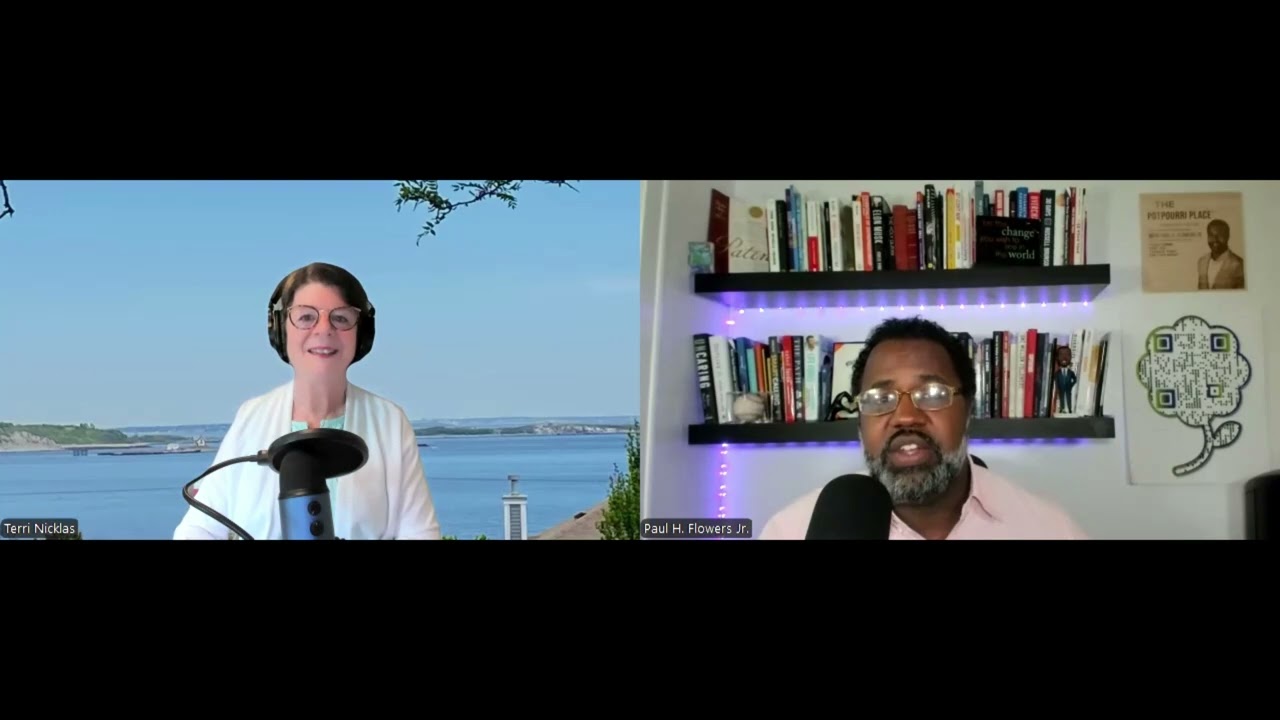
Terri Nicholas, a certified financial planner, helps high-achieving women navigate major life transitions by blending financial planning with life coaching. She defines wealth as purpose and joy, not net worth, and notes that roughly 70% of married women become widows unprepared for financial decisions. Her framework covers cash-flow buffers, insurance needs, and retirement buckets tailored to each client's goals.
Chapters
Hello everyone and welcome to another episode of The Everyday Entrepreneur. I'm your host, Paul H. Flowers Jr., and this is the Popa Replays podcast show. Today we have the esteemed honor of bringing on none other than one of the top wealth coaches for women, Terri Nicholas. Terri is again sought after all around the globe for that wealth of knowledge. And here for just a little bit, we get the honor of having her share some of those insights, tips, and wisdom with you today. So grab your pen and paper, get ready to take notes. And without any further ado, I'd like to welcome Terri Nicholas. Terri, how are you, my friend?
I am doing great, Paul. How are you doing today?
Another beautiful day in proverbial Hollywood. Thank you so much for asking. Look, woke up on the right side of the ground, so I think we can get this done today. So I appreciate you asking me as well. Thank you.
You're welcome.
Well, uh, as we like to start our shows, Terry, this is again all about you. So my audience would love to know again who you are, where you're at today, and then we'll talk about the journey of what got you there. So the floor is yours.
Great, thank you so much, Paul H. Flowers Jr. Well, I am the Wealth Coach for Women, and what that means is I specialize in helping high-achieving women who have spent decades climbing the ladder, whether it's corporate or building their own business, and now they're at or near the top and they find that they no longer like the view. Often they ask themselves questions like, do I still want this lifestyle, or is this really what I signed up for? Or, and they find themselves at a crossroads and they need support to navigate what's next for them. So, I created wealth coaching to empower women to create their next chapter that is a life and career that they love by integrating life, business, and money coaching. So, I did that because a typical life coach will have ability to clarify what's in your heart, what your desires are, what it is that you want from life. But they're not going to have the skill set to help you with the financial end of what is that lifestyle going to cost. And a business coach will look at your business. They will look if you have an idea, they will help you out to determine if it's viable. They'll help you integrate systems and so forth to get that business off the ground. But they're not going to have the ability to help you create that business so you have a lifestyle of balance, joy, and fulfillment. And a financial planner, which I am a certified financial planner, we crunch numbers. And we may take a little peek at all of those other things, but we're not going to have the whole ball of wax. So when I created wealth coaching, it was with the intention of bridging all of those three pieces together. So that I could provide a very holistic method of coaching to help my clients get from wherever they are to where they want to be with clarity and confidence because they know the financial piece, which is usually the thing that hangs them up.
Excellent. Excellent. Now, this hasn't always been your profession. If I did a little bit of research correctly, you came from the corporate space and transitioned into entrepreneurship. Uh, can you talk to us about that? Uh, talk to us about that journey?
Well, it was kind of a short journey, Paul, in a way. I had spent about the first 20 years of my career in financial services working for different insurance companies or insurance brokerages, and towards the end of that stint, I realized that I am a horrible employee. And I say that because I have a zero threshold for bullshit.
Love it.
And I found that in corporate, you know, it's some businesses, they survive in spite of themselves. And you can, you know, for the life of me, in many cases, I couldn't understand how some of these businesses were at all successful because they were so inefficient. And just, you know, there was so many like backroom politics and all kinds of stuff going on. And I really felt strongly that I could do it better. So I packed my bags and I launched my own business. And when I did, it was because a colleague of mine had said to me, gee, Terri, you would really be good at financial planning. Now, this was at a time when financial planning was pretty much brand new, and it was really run by the insurance companies, and they used financial planning as a way to sell more insurance because everyone who got a financial plan needed more life insurance or needed something. No matter who you were or what you were, there was always an angle that would tell them that they needed more insurance. Now, selling insurance isn't a bad thing, and getting somebody more life insurance, you're not harming them. But I really felt that they were taking this great tool and they were using it in a way that was disingenuous. So I spent a lot of time reinventing that tool and looking at it from a new lens. And I determined that if you could really coach a person through the process, as opposed to the way we were taught, which was you created this plan, it was a binder about yay thick that made a great doorstop, and that was about it because people never even looked at it. It was filled with charts and graphs and all kinds of stuff that most people just ignored. And I felt that if you could take them through and do it in a way that's simple, I'm all about simple, and they would relate to it and they would implement the recommendations. And when they implement the recommendations, then they have success. So that's what I did. I reinvented it. I made it into a coaching model. I would take my plan because we were required to. If you charge somebody for the planning service, you had to give them something. I would take it, but I boiled it down to about 24 pages. And then I would create on top of that, I overlaid a plan summary. So I just pulled out the meat and put it on a few pieces of paper, like about maybe up to 6 at the most, and just said, this is what you need to do and this is why you need to do it. And it was right that that's all they really had to look at. But the other stuff was the backup of how I came to those conclusions. And then when they worked with me, we would go page by page and just work through that summary until they got to the promised land.
Now, for all the listeners out there, again, when I started this out, I said make sure you had your pen and paper handy. Needless to say, I'm sure you don't have to have a binder-sized doorstop type of program. And I asked you earlier not to make me laugh so I didn't cough. But that doorstop analogy was spot on, because it speaks to how complicated some organizations and entities make this. Now, this is, you know, I don't like to ask these questions that are anti the industry because I, you know, work in the industry as well when it comes to insurance and financial services. But let me ask you, what is your opinion when it comes to how it seemingly overcomplicated on purpose?
Paul, you speak in my love language. I hate complicated. I hate it with a passion. This is why I said I am not a good employee, because when I see stuff like that, it makes me crazy. The other thing that really bugged me, and you being in financial services, I'm sure you've seen this too. The financial services industry is notorious for ignoring women. If you see any ads for financial services, they're usually some guy in a blue suit with a white shirt talking to another guy in a blue suit with a white shirt. And if they happen to show a couple, they're usually older, and it's the wife— the woman, we'll assume the wife— will be in the background kind of nodding her head, not really doing much, and the husband will be the one that's engaged with the financial planner.
That's it.
And that is reality, sadly. And yet most women, if they're married, become widows.
Mm-hmm.
It's a very— I forget the statistic off the top of my head. I probably should have been prepared and had it with me. But most women that are married end up as a widow. I think it's about 70% to 30% if they are still married at the time that their spouse passes— if they're still together, it's about 70% become a widow. So that means that they're left having to make all these financial decisions, and very often they don't know where to begin, especially if the man's the one that handled the finances, which is very common. Now, my household, I've always handled the finances. That was something I learned from my grandmother. But most of the time when I would work with women, that was the problem, is that they didn't even know where to begin. So that alone is a problem. The next piece that's a huge problem is that they're grieving. They've just had this sudden trauma of losing their loved one, their partner, their other half. And when you are grieving, your brain is not functioning properly. There have been many studies on that. They call it the grieving brain. And you go into fight or flight or reptilian brain mode, which means you're just trying to survive.
Survival. Yep.
It's survival mode. Now you've got this woman who doesn't know how to handle finances. She's got to make all these sudden decisions and she's grieving. She is ripe for the picking for somebody to, um, take advantage of her.
And you know what? Go ahead.
No, you can't. Go ahead.
I, I was going to say you, you've been spot on that I've seen that. And again, I'm not going to name the company that I'd worked with that I parted ways for almost that exact reason, uh, but you, you were so right. You were so right. It is unfortunate that there's a seemingly backseat taken, whereas you— and I just want to say you're spot on. I did Google while you were ask— while you were speaking about that statistic, uh, you nailed it right on the head. 70%. 70%. Become widows. So 7 out of 10 married women will need the insights that you have. And yet the industry as a whole ignores them. I'm curious, why do you think that is?
I, for the life of me, have no idea other than back in the day, when you look at leadership, it was primarily male dominant. And I think that for a lot of those leaders that were the people who were the CEOs of those insurance companies, they have a very narrow view and it's just their own view. It's like, you know, I'm the man of the house, I run the finances, I do this, I do that. We only have to talk to men. And they didn't see beyond that. It wasn't until very recent years, probably maybe even the last 10, that when I would go to conferences, all of a sudden I'd see a breakout session that had to do with how to talk to a widow or how to talk to a divorcee or It's like, oh, really? You know, you're catching on. And I had this experience in my own family. And I think this is what led me to specialize in helping women. Excellent.
Excellent. Now, that experience in your family, would you mind sharing how the impact, you know, what that impact looked like? Maybe if you know, if you can go into the financial part, by all means, but whether it be from an emotional, financial, practical— what, what, how did that impact again you and your overall view on how these finances should be handled?
Well, the first instance was when I was a little girl and one of my relatives was getting a divorce. And this was when you didn't hear about divorce. Divorce was very rare. In fact, it's the first time I had heard of it. And what was really strange for me. I remember it. I didn't remember, I think I blocked the memory for many years. And it wasn't until I was in this field, and I was working with women who were going through divorce, or especially if their divorce was like, they've been married more than 30 years, they were completely dependent on their spouse, and now they're kind of left high and dry, right? The memory started to come back. So in this situation, think back to the early '60s, Divorce is very rare. And my aunt, who has now decided she's getting a divorce, her father had just died the year before. So she sat down, was telling her mother, and I remember this because all the kids had to leave the room and all that. And my grandmother's reaction was, 'Can't you work it out? Who's going to take care of you?' And my aunt was in a very bad situation. She was in an abusive situation. And, you know, I didn't realize at the time the detail that I know today, but I do remember, Paul, that I was always afraid of her husband. And he never did anything to me, you know, for as far as I know. I don't have any reason other than, like, my intuition. Told me that he is not a good person. And I found out much later that he had a drinking problem. Now, when he was sober, he was like the best guy in the world. But as soon as he got a couple under his belt, he was a nightmare. I didn't know that until much, much later in life. But I did know that there was something about him that made me very uncomfortable. And when my aunt's situation with the divorce was explained, what that meant, because I didn't know what it meant. You know what my reaction to that was?
Pardon?
Oh good, I'll never have to see him again.
Elated.
Which is horrible. What? Because I had no— I mean, I was little. I was, I think I was 6 or 7 years old. So I had no concept of what this meant financially to my aunt until like as an adult. Looking back now, I realize how brave she was, because a lot of times women will stay in a relationship for financial reasons, just because they're so afraid of what's on the other side that they don't leave. And they just— it's like, this is the devil I know, I don't want to find out the devil I don't know. And I think that really impacted me. And then fast forward, I'm in this industry, and, um, a good friend of mine lost her husband, dropped dead, you know, in his early 50s. And they had kids in college, mortgage, you know, the whole nine yards. And after he passed, she learned about all these debts that she didn't know about, and she also learned that he had closed out some life insurance that she thought was there, and it wasn't there. So she was left in a complete mess, and I helped her. It took us about a year to sort through everything. We did get through it, and that was another learning experience of how quickly things change when someone dies. And this was a person who was the breadwinner. So I'm thinking, if a breadwinner, somebody who's handling things, has a hard time, can you imagine what it's like for people who don't handle things.
Right, right. Now you bring up some pretty interesting points. You've had some, I'll call it, pretty drastic experiences happen to those around you in life, and that had to undoubtedly, uh, leave an impact obviously on you such that you're on this journey today. But as you were transitioning into this space, um, I'm curious to know in terms of what you believed about money, um, what limiting beliefs did you have to unlearn and how do you help your clients to do the same?
Well, I think, Paul, I was very fortunate because I had an awesome role model, and that was my grandmother, my paternal grandmother. She was a person who— she had no formal education. She moved here in 1928 with my father, who was a year old at the time, and my grandfather came ahead of her to get settled. And she could squeeze a quarter until George Washington cried. And yet she was the most generous person you'd ever meet. She had an abundance mentality. And now in looking at that, she was my greatest teacher. And I remember as a little girl, you know, going to her home, we had Sunday dinner together all the time. And I used to go over early and I'd set the table and do whatever. And she would talk to me and tell me the stories about the old country and growing up. And she never once in our conversations complained about money, but she talked about money, but it was never, "Oh, poor me." And she grew up in abject poverty, which is why they left Sicily, because there was no opportunity there. But she had such confidence in herself, even though she had no education. She was a seamstress. My grandfather was a barber. I mean, we're talking as blue-collar as you get. But she had confidence that she would always be able to provide and have more than enough for her family, and she always did. A lot of it was because she was such a good manager. I mean, she had very little to work with, but she just had that mindset that she's in America and we have unlimited opportunity, and that's what she focused on. And if she met somebody who was better off than her financially, she blessed them. It was, "Oh, God bless, that's wonderful." She didn't have a jealous bone in her body. And hardworking, but hardworking with a smile. She was just so happy to have the opportunity that this country provided. And she talked about that all the time. And one of her big goals was that her children would have an education, and they all did. And that was like a big thing. That was a big accomplishment to her, was that her children had a high school education. They also went on to like trade, you know, a trade after that. They all were self-employed, or at least 3 of them were self-employed. But here's where the kicker comes in, Paul. As I mentioned, my grandmother, great with money. This is the Depression we're talking, you know, the Great Depression, and she's managing to keep their head above water. They always had food on the table. My father used to tell us he didn't even know there was a Depression because, you know, I mean, they weren't wealthy by any means, but they always had food, they had a roof over their head, they didn't have the wolves at the door. And when my father would go to school, he knew there were kids that didn't even have breakfast or lunch, and they might not have dinner. And he would bring them home and my grandmother would feed them.
Wow. Wow.
Yeah. And now we fast forward, she's raising her family, they're all under the same roof, Her 3 sons all went into the exact same profession. They were all self-employed, had their own businesses, the same profession. Only one of her children, who happens to still be alive, he's going to be 95 in October, is doing well financially. The other 2 died penniless. And you wonder why.
Yeah.
It's a mindset. They all had the same opportunity. Their buckets were full to the same level. It was the mindset. One had the mindset of like the glutton at the all-you-can-eat buffet. No matter how much money he had, it was never enough. And he would spend it faster than he could make it. The second one was always looking for a get-rich-quick scheme. And we know where those go. Those go nowhere. The third one had that diligent nose to the grindstone, always saved some money, always, you know, put some money away for the future, and he had a great life. Now, is he wealthy? No, but he was always able to manage and do everything, like whatever travel they wanted to do, they could afford it, you know, they did what they could afford. And, you know, helped his sons through college. Now he's living in like an assisted living. He pays for it. He's not worried about the money and he's 95 years old.
That's excellent. And it speaks to the longevity of how well a person can live from a financial standpoint. When you have a good, I'll call it proactive approach, right? Not just kind of like you said, spending it as it comes in. Or chasing the next shiny new object. So, yep, it seems to make a difference how you prepare for that thing. And we'll shift from the family members to the women that you actually serve at this point. And I'm curious, so how does that, how does that wealth creation differ for the women that you'd work with that may be going through a major transition like that divorce or becoming a widow versus how you'd serve and work with a woman that is just being that proactive person and building their wealth proactively?
Those are great questions, Paul H. Flowers Jr. So when I'm working with a woman who is at that crossroads, and whether it's divorce or she wants to change careers or she's thinking of retirement, the process is similar. The number one thing that we start with is how do you define wealth? Because wealth is not a number. And when I use the word wealth, a lot of people, the first thing they think of is money. They think of their net worth. They think of, you know, how much could I sell my house for? But wealth is really what's in your heart. It's what brings you joy, purpose, and balance. Because at the end of— when we're nearing the end of our journey here on planet Earth, you're not going to think to yourself, gee, I wish I spent more time in the office. You're thinking, I wish I spent more time with my family. Why didn't I have that catch after dinner with my son? Or whatever it might be. So I don't want to see people get to their deathbed or get that phone call from the doctor that says you've got 6 months to live and realize they never really lived.
Hmm.
So how I work with them is really trying to understand holistically what true wealth means to them.
Right.
And then let's work on developing that. So for some, it might be, I want to take an early retirement. Well, let's look at the numbers. Let's look at what you can afford to do and what does a retirement look like to you? What do you want to do with yourself? Because sitting in a rocking chair is not going to do you any good. So how do you want to spend those years, like in your last chapter or your next chapter? How do you want to spend that time? If you want to shift gears, you have a job that's very stressful and you're burned out and you're exhausted and you don't have any time for anything but work. Well, what piece of that do you love that you could take and create a business out of it, like a consulting or a coaching? And then let's look at that business model and figure out how to make it viable. Figure out how much money do you need to earn or want to earn? Or do you have a passion project in mind that's been burning inside you and you haven't had the time to put it together? So what is that? What is that deep footprint in the sand that you want to leave? And let's do the work now to get you there.
I love it. I love it. It sounds like you put a lot of thought, care, consideration into the clients that you work with, regardless of whether they're being at a crossroads or working at it proactively. I really like that you also look at really what's important to them, not just from a financial standpoint of where I'd like to be on a monthly income basis. But what's important to me, or what's important to your clients when it comes to the passion project, when it comes to how you're actually fulfilling your purpose as a walking, talking, living human being, right? And how you want to be through those years. That means something to me as a host, that, that means something to you as a person that's helping individuals and again, specifically women. To achieve that as they continue to gracefully cruise through the retirement times. So, thank you for that service. The intentionality behind what you do to help create that wealth, I think I've seen it referred to as intentional wealth. What does that mean to you beyond dollars and cents?
Well, to me, it feels like you're living your purpose. So I really came to this enlightened place in life during COVID COVID was a big trigger for me, for the isolation. You know, as I said, I don't like being an employee because I have a zero threshold for bullshit. And I felt like all of the rules and restrictions that we had were crazy. So it really rubbed against me the wrong way. And that was when I realized a lot. I said, how much time do I spend doing the things that really bring me joy? How much time do I spend doing the things that make me feel fulfilled? And I realized that my cup was getting empty. And you cannot pour from an empty cup.
Thank you.
So I did a lot of work on myself. I took a program through Jack Canfield. It was called Reignite Your Life. I felt like my life needed to be reignited. And by going through the exercises and that process with him, that was my big aha moment that my purpose is to help others live their purpose. So I decided to become certified in his training as a Certified Success Principles Coach, which is really a combination of life and true wealth coaching. So that was like that piece that I kind of brought everything together so that I could help my clients, whether it was they're in corporate and they want to find a way to make this job feel better, or they decide they want to shift into their own business. How do I help them get there? And learning that about myself was a huge shift. And this is what I help others with, is that when you get to that spot where you know you're on purpose, you know that you're doing exactly what God intends you to do, you have no choice but to be happy. And I think life's too short not to be happy.
Come on, come on. That again, well said. If nothing else, that— look, we can drop the mic and end it right there. Life's too short, right, to not be happy. And that's exactly what many people that have to go through, you know, transitions and deal with money issues when it goes ups and downs and all that, um, you know, they, they have to keep that at a center. So I'm really glad that you, you know, you bring that to the fold today. And of course, you've helped many women to go through these transformational times. Do you have any stories of a client transformation that truly still inspires you today?
Yes, I do. This woman that I worked with during COVID her name is Toni. And she came to me because The whole experience for her was a wake-up call. And she was a single woman, never married. She was the caregiver to both of her parents, and they had— her mother had just recently passed. So now she's at this point of life where I don't have anyone to take care of. And what do I want my next chapter to look like? Can I afford to retire? And if I do retire, what am I going to do with myself? So she had all these questions and she came to me. And first thing we did is I said, okay, if you do, let's pretend you retire tomorrow. How do you want to spend that time? So we sorted through that and I learned that she wanted to travel. She wanted to spend time with family. She also wanted to do some work on her home so people could visit her. So we worked out budgets for all those things, looked at what she had already saved. And I said, you have more than enough money. I mean, she could have retired 4 times over, but she said, you know, if you don't know what you don't know, when you just get up every day, you hop on the hamster wheel and you just keep on going. So, she put a pin in the calendar and said, "I'm going to retire," and she picked a date and she did that. And she had a blast. She remodeled her home, she visited family, she spent time with people that she loved, and sadly, 2 years later she passed away.
Oh, come on.
Yep, she, she died very suddenly. And her brother called me out of the blue. Her brother called me, who I didn't know, and he said, I just want you to know that Toni talked about you all the time and said that if she hadn't— well, whether it was me or someone else, but had she not done that work she probably would have just stayed working because she wouldn't have known what else to do. But because she did the work and learned that she had the opportunity to retire, she had the opportunity for this great adventure. And that's what she called her retirement, her great adventure.
Great adventure.
Wow. And when he called into— I mean, I was a mess when he told me that because she was such a sweet lady. I was thrilled to know that she did retire and did have a few good years out of it. But how sad, you know, when I think that she could have retired 10 years earlier.
Live that great adventure for so much longer.
Yep.
Yeah. Yeah. Well, again, that is very touching. I could seem— maybe I might have been mishearing, but it sounds like it still even touches you today. It does.
It does. It's still a little raw and a little hard for me to talk about, but it's why I do what I do. It's why I get out of bed on a morning. You know, it's not everybody has to die 2 years after they meet me, but you know, it's why I do. None of us know. I mean, we don't come with an expiration notice. This is true. We have to live every day as though tomorrow might not be here. It doesn't mean you spend your last dollar. You have to live it wisely. But my question is always, what are the footprints you want to leave in the sand?
I love it. Well said. Well said. So we're getting to the top of the hour and I definitely want to respect your time. I'll ask, um, one more question on the professional side, and then I want to switch to a couple personal things just to, again, get that well-rounded view of Terri for our listeners. Uh, so Terri, when it comes to a good— I'll call it financial portfolio, right? We're not here, you know, disclaimer, we're not giving any stock advice or tips or anything like that, but what types of, um, I'll call it investment vehicles or even just products should a person consider for a more well-rounded portfolio?
Okay, well, if we're talking products, if you are financially responsible for another person, then you want to be sure to have life insurance that's going to carry them for whatever period of time you feel is necessary. Okay. You know, it really depends on what you already have saved. If you don't have a lot saved and if you have children, you kind of factor all of that in, and I would have somebody give you a really good analysis of how much life insurance you should be carrying. One thing that I've noticed over the years, and anytime I've had to deliver a life insurance beneficiary check, I've never once had anyone say to me, "Oh, Terri, that's too much money." Mm-hmm.
I can understand that one.
So, you know, it's better to err on the side of caution and have more than you need than not enough. So that's one thing. If you're not financially responsible for anyone, then you really, you probably don't need life insurance. Okay, um, as far as cash is king, and I think you should always have a really good cash position, at least 6 months worth of bills. So know how much it costs you on average to live your lifestyle. That's number one. I'm a big cash flow person. I'm like a real nerd when it comes to knowing your cash flow. So let's say, for example, Paul H. Flowers Jr., it costs you $10,000 a month for you to live your lifestyle, to pay your bills and do the things that you like to do. If you wanted 6 months' worth of money, you'd have to have $60,000 in a cash position somewhere. Okay, so I like to use high-yield savings accounts, and don't worry about the gains because this cash, its only job— think of every dollar or every piece of your portfolio has a job. Okay. And that cash's job is to give you the security that if anything ever happened, you could carry yourself easily for 6 months. That's its only job. It doesn't have to gain 10%. If it gains like a modest amount because it's in a high-yield interest savings account, but it's safe, that's all it has to do.
Okay.
Over that, If you have surplus over that and you've got an opportunity to invest in a company's retirement account, strongly encourage that. If you are under the age of 40 and your account, your company retirement account, has the Roth component, I would strongly advise you to use both sides. I, I think of it like the traditional is one side and the Roth is the other. Use both because a younger person, anybody under the age of 40, really needs to be concerned about tax-free income, right, when they retire. That's really important. Somebody older than that, it's not as important. But I really do believe that for the younger generation, they're probably going to be hit with higher income taxes than we are.
Hmm, I can imagine that one.
So that's something— there's a word of caution. I would say make sure you're using both. Um, you don't necessarily have to max out, and it depends on your age. If you are— if you're 40 or under and if you can afford to, try to get in the habit of saving 10%, but don't save so much that you're not saving in that cash position that we spoke about earlier. So I like to look at things in buckets. So your retirement is your long-term, and don't think of it as, oh, I can take out a loan. Pretend it doesn't exist. I don't mean set it and forget it and don't pay attention to it, but don't think of that money as accessible because it really isn't. So that money is parked. Build your cash position. That's your emergency fund. And then the next bucket I like to see people fill is something that if you have a goal that's within the next 5 years, maybe 10. All right, so maybe you want to upgrade your home, you're going to replace your car, you have a big trip that you'd like to take. So you want to have a bucket or a savings vehicle for that event. That could be invested because if you're thinking 5 years or more, you could have it invested. If you're not comfortable with that, then you could also have another high-yield savings account for that. Personally, I like to break them up rather than just having one big savings account. Because that way you can look at it and you could say, oh, that's my emergency fund. I'm good for 6 months. I can move on and do something else.
Okay. Okay. Excellent. Excellent. Again, advice from the ages and for the ages. I can definitely hear the wisdom and care for each person with some of the strategies that you implement here. So we're going to land the proverbial plane. I've got a question and then I'll get into my ending questions. Outside of your professional life, what brings you joy and how do you implement that, or how do you put that in your personal definition of success?
Oh, well, thank you for asking that question. That's great. Well, one thing that really brings me a lot of joy is spending time with my two granddaughters. And when I decided to shift to just doing wealth coaching and sold my asset management business, it was because I wanted to spend more time with them. Or be more present when I do spend time with them. So I babysit for them every Monday. We call it Fun Day Monday. They come over, and then there's other times when we'll get together for either a dinner or, you know, special event or whatever. But I do want to spend at least one full day a week with them. That brings me a great deal of joy. I also have a dog. Her name is Gracie, and I spend time with her. I love to go for long walks with her. I love hiking. I love taking— I don't mean hiking mountains. I'm pretty— like to stay on low terrain, but I do like long walks. I love beach days, as you can see by my background.
Absolutely.
And I love, you know, just being out in nature and reading, creating things, knitting. I do a lot of knitting and crocheting, mostly for the girls. But I do love taking something that is kind of raw, whether it's yarn or I find like a piece of furniture in somebody's trash and restore it. And bring it back and make it useful and make it pretty.
I love it. I love it. Talk about living a full life. Okay. All right. So to our listeners out there, uh, that again is also a part of success. It's not just about the dollars at the end of it and how big the account is. It's some of those things that are intangible, right? Time. And time is intangible, and time spent with loved ones is definitely something that no one should take for granted. So thank you, Paul. Absolutely. And sharing that as well.
What I like to say to people, Paul, is joy isn't tied to a paycheck.
Perfect. Now we're going to have to get a one-liner on that one too. You're giving us so many good one-liners here. This is good. This is good. Um, Terry, now, now for those fun questions I mentioned before. Uh, this is how we kind of wrap up every episode with some of the things that, again, and I, and I look for this insight, uh, from your websites, from your social media, and there's certain things that I just can't find when, when I'm doing my research for the episode. So if it's okay, Terry, would you share with our audience this one thing? What's your middle name?
Rose.
Is there a story behind Rose? Does it have—
Rose is my— the grandmother that I talked about, named after her.
Oh, I love it. I love it.
My first name was after her mother. Because when I was born, I was not supposed to live 24 hours.
Wow.
And my grandmother came to the hospital to see me. And, you know, and she insisted, she asked my father to bring her to me. And she lifted me up out of the little isolette or the incubator, whatever they called them back in the olden days when I was born. And she said to my father, if you give this baby my mother's name, my mother will watch over her. And I really believe that it was her faith that kept me alive.
Wow. Now that is a testament truly to how well faith works. And now you've turned around and blessed so many others. So thank you for that. And thank you for sharing your middle name. There's so many commonalities that we'll talk about offline. But the last minute or two here, if you would, Terry, it's again your show. I'm just facilitating it. So Again, I don't want to prompt this time. I just want to give it to you to share whatever's on your heart to share with the listeners. There may be some men listening too, but I'll definitely be personally and purposely promoting this particular episode to our women in the audience. So for whatever audience you'd like to speak to, whatever's there for you to share, please take the next minute or two and just talk to our listeners.
Okay, thank you, Paul H. Flowers Jr. Well, you know I've come into this work, I've kind of taken a long journey, and part of that journey was really trying to discover my purpose. You know, my early days, as I just shared, were a trigger for me in thinking like, why was I spared? Why was I saved? I've had many family members, ironically, babies that were born premature, born with different problems, Some of them didn't survive, some of them survived. One survived 20 years and then she passed. And, you know, I had such a horrible prognosis. Not only was I supposed to not live, but if I did live, it was expected that I would either be blind or be mentally deficient. Or, you know, all kinds of horrible things were supposed to be my future, and none of them were. And why? So I feel strongly that God spared me for a reason. And it wasn't until recently that I've discovered that my purpose is to help others live their purpose. And I'm very passionate about what I do. And I think the pandemic for me was a blessing in disguise because it gave me that opportunity to go within during that isolation and do a lot of work around self-discovery. And had I not taken the time to do that, I don't know if I would be right here right now. And right now I feel like I am living the best version of myself, and I think that the career path that I'm on right now is the most intentional that I've ever had in my entire life.
Excellent. Living with purpose, passion, intention. Faith-filled life. And again, we're all here for a reason. And I'm so glad because it's not, it's not always the case that people understand that, that you've been able to find yours and truly live into it and turn around and share that blessing with others. So thank you so much, Terry, for joining us today. For our listeners out there that want to know more about you, that want to connect with you and even work with you, what's the best way for them to, to connect?
Well, the best way is through my website. It's wealthcoachforwomen.com. On the website, you'll find a button up at the top right, and it's also throughout the, the page, to book a clarity call. It's a free 30-minute consultation where we'll have a conversation about where you are right now, where you'd like to be, and if there's anything that I can do to help you. I will share how I can help you. And if I can't help you, we'll part as friends. No pressure. That will be the end of that. I also have a workshop coming up this Wednesday, June 11th. If you want to— it's free. It's a 1-hour Success 2.0: How to Live Your Life with Joy, Purpose, and Balance, where I go through some exercises that will help a person get from point A to point B. And that's my website again, wealthcoachforwomen.com/theletterbthelletterltheletterw. That will bring you to the landing page for that. And for all of your podcast listeners, Paul H. Flowers Jr., I have a special gift that I've put together for them. And that again is the website and back, uh, forward slash pod for pod. And they will get that gift.
Okay. Okay. I love it. I love it. I'll make sure that we, uh, get through our editing ASAP so that this can get out there and really get some traction prior to the 11th. Well, Terry, thank you so much. Again, you can be anywhere in the world and you're here with us. You're here with our listeners. So we appreciate you. We thank you so much. And to all our listeners out there, wherever you're listening to this episode, we thank you as well. This has been another episode of The Everyday Entrepreneur. Here on the Pope Replays podcast show, again with your host Paul H. Flowers Jr. and an amazing, astonishing guest, Miss Terry Nicholas. Terry, again, thank you so much, and until next time, bye for now.
More from Paul




Term vs Whole Life Insurance, Explained Plain — Which One Your Family Actually Needs


The Cheapest Claim Is the One That Never Happens | Claims Deflection Explained




