
This Podcast Episode Will Change How You Think!
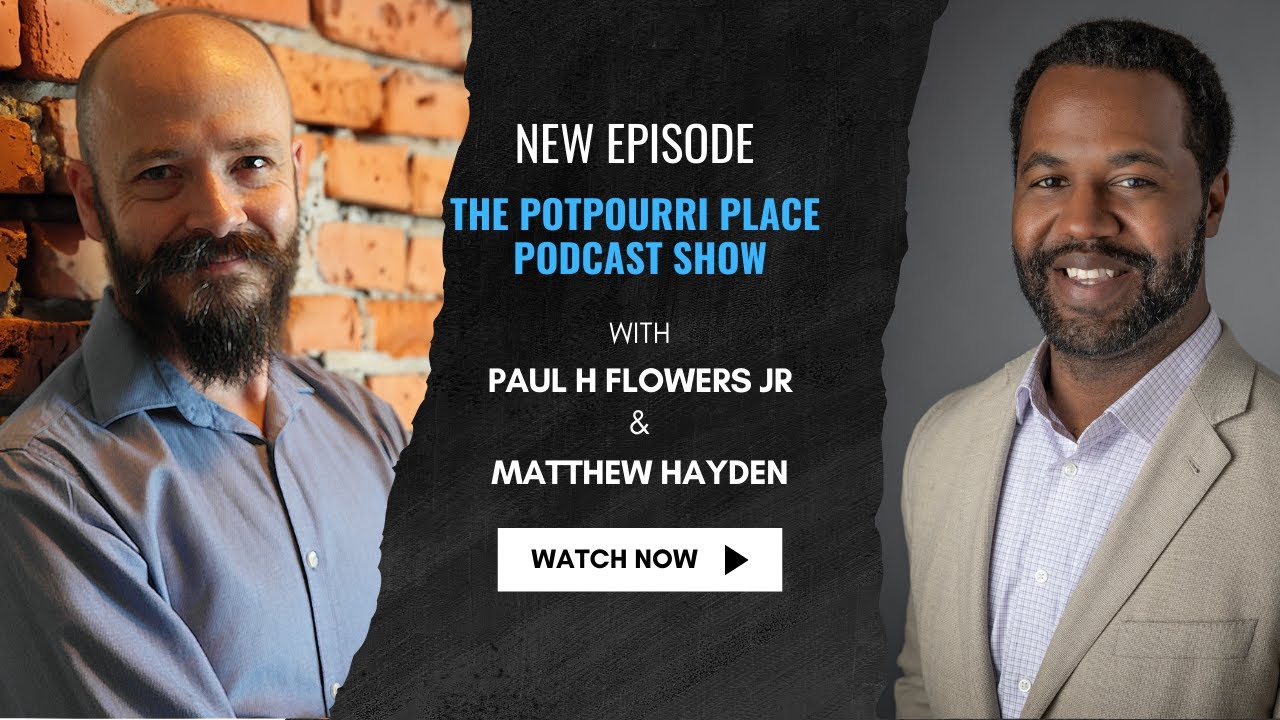
In this episode of The Everyday Entrepreneur (Pulper Replace) podcast, host Paul H. Flowers Jr. interviews Matthew Hayden, CEO of Matt Hayden Coaching. The conversation traces Matthew’s path from a six‑year Navy career through customer‑service and learning‑development roles to founding his own transformational coaching business after the death of his mother prompted a “life is short” epiphany. Matthew explains how he identified the “messy middle” where clients feel stuck between who they are and who they want to become, and outlines his coaching approach—slowing down, cultivating curiosity, uncovering values, journaling, and challenging limiting assumptions. He discusses the practical steps of launching a coaching practice: selecting a values‑aligned certification (Life Coaching School), handling legal and operational setup, and navigating early client acquisition while maintaining family responsibilities. The interview delves into personal authenticity, referencing a pivotal mentorship moment that taught him to drop professional masks and be his true self. Matthew shares his five‑year vision of retaining one‑on‑one coaching while scaling through tailored online courses, and offers concrete advice for aspiring coaches: get curious, journal, seek mentorship, and overcome the fear of self‑promotion. The episode closes with practical contact information and a final piece of wisdom—always pause, get curious, and question why something feels off.
Chapters
Hello everyone and welcome to another episode of The Everyday Entrepreneur. I'm your host, Paul H. Flowers Jr., and this is the Pulper Replace podcast show. Today we've got a fantastic guest. This gentleman is from all the way across the pond as well.. And I'm starting to really enjoy the fact that with technology, we make our world just a little bit smaller. Ladies and gentlemen, I'm going to welcome today the CEO of Matt Hayden Coaching, Mr. Matthew Hayden. Matthew, welcome to the show. How are you, my friend?
Thank you, Paul. I'm going really well. Thank you so much for inviting me here. Really appreciate it.
Absolutely. Again, the pleasure is all mine. And again, for my Audible listeners out there, We've got the visual that'll be there on YouTube. This gentleman's got an amazing beard. I'm kind of jealous, uh, right now. So we're definitely going to get into some of those grooming techniques because he's a handsome guy. So for those that are listening through any of the streaming platforms, make sure you tune in to the YouTube version that'll be released simultaneously so you can also see Matt and again be a part of this engaging conversation. So Matt, found you, we connected, and in the world of what we do, uh, again, here with the show, the whole aim is to make sure that, of course, you have a place that you can share your wares, but also we like to connect as people. So of course I'd like to know about your profession in terms of transformational coaching. We'll also dive into some things that might not be able to be gleaned from your website. And so from there, I just like to start off, of course, with the obvious from a professional standpoint. Matt, tell us about your coaching, how that came to be, where you're at in this stage of your business, and then where you're going.
Perfect. Well, to summarize it, I guess, because it is a very long story, but at the end of the day, yes, I'm a transformation coach. So I mainly work with people who are stuck in the messy middle. You know, which is that space in between who they were and who they're becoming. So whether or not they're rethinking their careers or stepping into a new leadership position or craving more balance. So clients come to me when the old way isn't working anymore and the next steps aren't very clear. So I guess what I do from, um, in my business is I help them slow down and get curious. And what we do is we find out what really matters and then what we do is we uncover the values and work out how to, how to use them to be able to work towards them. And so this business coaching, so it was something that I've thought about for a really long time. You know, I've, I've had multiple careers over the, the Navy, working in customer service and also a career in learning development. And all through it, I've learned that I really love helping and helping people grow and being able to get people from point A through to point B. And it wasn't, wasn't until a couple of years ago that I realized that life is really way too short. And so I thought, why wait?
Okay, well, of course, you literally just left, left us on a cliffhanger there. A couple of years ago, you realized that life is too short. There's clearly a story there that we all want to hear at this point. So I don't want to miss over that because I'd forget to come back to it. Come on, tell me some more. What is this realization you came to?
Yeah, absolutely. Well, a couple of years ago, my mom passed away. And it was having to go through that period, which was one of the hardest. My dad passed away 10, 12, 12 years ago now. And, you know, in a way, it was, you know, the last kick up the bum that my mom gave me. I mean, to me, I go, you know, rethink what was happening in my life. You know, I had a well-paying job, you know, I was doing well. I had a team that appreciated the work that I was doing to be able to help them. But for me, it just wasn't enough. And so I begged the question going, you know what, screw it. Life is too short. I've always wanted to start my own coaching business to be able to have the degree of flexibility and to be able to have the way to be able to create, you know, or co-create people's journeys for them. So I thought, you know, now's the time. And so decided to quit my job straight away, which I don't recommend to do. Um, you know, if you've got a goal, work towards it concurrently. But, um, but yeah, so from there, it's the last couple of years has been, you know, making sure that I've done all the steps that I've had to, to be able to, to create my coaching business in a way that I can see it working, which is to really just simply serve others.
Love it. And serving others is what we're here to do. Now, first and foremost, condolences on the loss of mom, as losing a parent's never easy at any age, quite frankly. So thank you for really just opening up and sharing that and realizing that there's a heartfelt connection to the origins of your coaching business. If you would, tell us about that starting process. I mean, it sounds like when you talk about coaching, you know, people are, are often afraid, or I've heard in the space that people don't want to go out there and start a business because they have their own fears or they don't feel like they know enough. And again, you just got that punch to say, hey, life is short, let's do it. And for those that obviously we don't want to have to go through a similar transition in order to get started. Tell us, you know, what was that like for you getting started? Meaning, did you have to go to school or were you in a process of getting certified? Like, just talk about that starting journey.
No, absolutely. It's actually, it was another podcast that I came across by Phil Goddard, mainly because when I, all through the last 10 years when I've thought about creating a coaching business, I thought that my business had to be a certain way. And when I came across Phil Goddard, I came across some other coaches like Richard Litvin and Steve Chandler, and then that showed me actually how I want to be able to show up for my business, which is to truly serve. Regarding actually creating my business, it was, you know, so yeah, I thought that, you know what, I have already had some coaching certifications, you know, throughout my learning development career, But yeah, I decided to be able to find a school that matched my values so I can make sure that I've got everything that I need. So all the other certifications, I went ahead and did that and found a beautiful community as well with the Life Coaching School. And that's just given me more confidence to be able to go out there to be able to help people.
Excellent.
But yeah, it's—
oh, go ahead.
Sorry, I was just gonna say that, um, it wasn't easy. It's, you know, leaving, leaving something solid, um, something you can hold, hold your hands on, into walking into the unknown. That was not easy by any means. You know, I've got two kids, I've, um, I've got my wife, you know, who I'm still supporting, you know, and these guys are one of the reasons why I wanted to be able to go out so we can have a life, you know, life for ours. So I think that what helped me get through those, you know, I'll call them messy moments and those, you know, quiet fears of will I be good enough? Will this business be successful? It's more about looking to the future and what this business can do and what I want it to do. And that was my, I guess you could say, guiding star. You know, I know what I want to create for my business and I know it's not going to be an easy journey and it hasn't. And so I continue to be able to make sure that I'm working in a way that's aligned with me and how I want to be able to create my business. And throughout steadily, you know, step by step, I'm getting client after client to be able to make sure that I can push myself then.
And well, and again, client acquisition is going to be key. I'm thinking about starting another segment on specifically that, like sales strategies, things of that nature. But I want to go back for a bit. As you'd mentioned, of course, family. And of course, again, with our show, it's— it is as much about the coaching and how you do what you do and the importance of the business structure as it is the support that's around you. You'd mentioned that you just up and left your job to start this where you had a team, you had the funds coming in. And I was blessed enough to have a guest be vulnerable about a similar instance that he had as well. So if you wouldn't mind sharing with me, and again, as much or as little as you'd like for the audience to know, really, what was that like from a as the, the man in the house, if you will. And again, with all due respect to every dynamic of relationship out there, typically I hear that in the, in the heteronormative relationships, uh, male, female, married, children, that there's this, this kind of pressure on, on men to, to be the providers, to make sure that the house is in order and all the finances are taken care of. And not necessarily to jump off and do something different. Talk to our listeners, Matt, about how the support system was there. And if there were ever times where it got ugly, where between yourself and your spouse after you left that work to begin on this new endeavor.
Yeah, no, absolutely. So essentially, before I set out on this journey, so my wife and I were a team, and we talked through what it meant, and you know, what it meant for our family. And we also talked through, you know, with, you know, if we, if we don't have a— I hate to say successful without business. I don't like to, um, to, to categorize it in that respect, right? But if my business wasn't able to be able to support our family within a certain time frame, then I would go out and back into the job, um, into the job market to be able to get another role. And I was perfectly okay with that, you know. It's, um, because at the end of the day, family is important, and being able to put food on the table and, you know, to be able to pay bills, nothing comes before that. Because I was always of the mindset that if I was to re-enter the workplace, well, it doesn't stop me from being a coach. I can still do that as well.
That's right. That's right. You'd mentioned that you wouldn't necessarily recommend hopping off for a person and doing that. So if you wouldn't mind sharing, were there struggles in the first couple of months, you know, years of getting your coaching business to where it is today?
Absolutely. You know, it's, um, I think that when you essentially jump off the cliff and, you know, really go into something that you want to be able to, to create, there's lots of things you don't think of along the way. And, you know, looking back and going, you know, maybe I would have done things a little bit different, um, because it took time to be able to make sure that the legalities of the, of the business, that everything was sorted, to be able to make sure that the contracts were, um, were, you know, essentially legal. So, you know, hiring lawyers to be able to go through that, but creating websites, creating all that background, having a calendar system, it took quite a bit of setting up. And, you know, I look back and I'm going, you know what, maybe I should have started all that before actually saying thank you, I'll see you later, right?
Right. And again, with all due respect to those that enjoy the corporate setting, there's nothing wrong with having a 9-to-5 job while you build what you're building. At the same time, of course, disclaimer, we're not telling you to work on your passion during your work hours. Of course, no employer would ever recommend that. Uh, and at the same time, there's a way to structure your day. It sounds like that yourself and again your wife, at the point in which you'd already kind of left, you were talking through it, but you were able to set that structure out set that, that vision out there for the family. So talk to us again about the vision for your coaching business as you stand there today looking out down the line, because I know that this podcast will be shared in the coaching community and the educational community, those that want to, generally speaking, transform the lives of others. So it's really important to cast a vision, if you would. So if you would talk to us about the vision that you have for your coaching business, whether it be 3, 5, 50 years down the line?
Yeah, no, absolutely. So my 5-year vision for my business is I still want to do one-on-one coaching. That's, that's what, that's the heart of it. That's where I love to be able to build those connections, to be able to, to, to understand people and what's, what's stopping them from getting, from them getting what they want. But what I really love to be able to turn into is I want to be able to turn my my business into something that is helping lots and lots of people grow. You know, I want to be able to have more of an impact in the world. You know, even with the coaching that I do at the moment, I'd like to think of as a bubble. You know, I love to be able to, to be— give people the tools that they need to be able to help themselves, but then they'll be able to utilize the same tools to be able to help other people. And what I would love to be able to do is utilize my learning development background to be able to create courses, but in a way that's going to be able to be tailored to the individual. So whether it might be an emerging leader in the workplace, you know, um, it might be even a senior executive member, you know, there's— or even just someone wanting to be able to understand how to create more balance in their life, to be able to have a checklist from what's happening at the moment, to be able to do an audit. So I'd love to be able to incorporate this so then that way it doesn't just have to be me, you know. I've got people who can go onto a platform that can also go through to help them help themselves. And that's important to me because that's been my, my drive, you know. That's helped me to be able to try and push myself and learn more about myself, read everything that I can get my hands on. Um, so I want, I want people to be reliant just on me to be able to get the life that they want.
Exceptional. You mentioned a couple things I want to touch on, and then I want to kind of poke at you a little bit in terms of what you're reading. I'm curious to know what you're putting in those ears. Um, but in terms— my first question though is, as far as expansion and scalability, you mentioned that 5 years down the line you still want to do the one-on-one coaching, but then also having an aspect of coursework that a person could actually enlist in. And I think about this from that brand new person that very well might be in their early 20s that has the drive to want to help people, but they don't know how to get started. They don't know what it's going to take. Um, curious, Matt, if you would, would you be able to share some of the, the roadmap, if you will, for a person becoming a coach like yourself again that might be realizing that they've got this talent to help and to heal, but they just don't know where to start?
My main advice is to stop and get curious. And what I mean by that is we live in a fast-paced world, and often we're quick to essentially fix things. So if there's something that's stopping a person from doing what they want, what is it exactly? You know, is it a way that they're, they're thinking, or is it an assumption that we're making? And and basing our actions off those assumptions. What is actually really stopping that person? And the best way to be able to get through that is through journaling. You know, even just at the end of the day, you know, it's a process that I recommend to my clients, but I also still do to myself because it's a way that I can coach myself. I'm going, what the hell? I'm like, I've noticed it a few times. Even recently, I've written something. I'm going, what the hell am I thinking like that? For? That doesn't make any sense. And it's a way to be able to— for me to be able to pull myself up. Um, but also I think the other thing, really important thing, is if this is something that you really want to do, find someone and just reach out and have a conversation, you know. Um, that's what I did, you know. I mentioned the, um, the podcast I listened to by Phil Goddard, and he inspired me so much. I just reached out. I just want to say thank you for doing what you're doing. You've just changed my whole outlook on coaching. And then, yeah, we had a conversation. It's, so reach out and have a conversation because, and we can learn a lot more from someone who is already in the field, you know, albeit a mentor or even get a coach yourself, which I highly recommend. But just having someone there to be able to talk through the processes of what might be stopping you, but also to have that accountability as well. I think that's really important.
You touched on so many really good things. One, you pulled that magic M word out, mentorship. And I was going to save that for a little bit later. But since you brought it up, we're going to unpack that can of worms. When it comes to mentorship, who's mentored you?
From the Navy, from learning, my learning development career, so many people have mentored me. But the person who stands out the most is probably had, um, is the person who had the biggest impact in my life. And he was only my manager for a couple of months, but I still look back on the conversation that we had. So when I was in learning development, I was, um, the manager for the contact center there. Um, and my, my manager pulled me into a room and we had a really great conversation. And I can't remember what we're talking about, but I remember the question that he asked me. He said, Matty, who are you? There may have been an F-word thrown in there, um, but he said, who are you? And I was, I was completely taken aback. I was like, what do you mean? And I didn't know how to respond. I just, I, I felt anxious, I felt worried, I was just concerned. What's happening? What have I done? And then he laid it on me and he said, when we're talking in this room, because it was just me and him said, you're a different person, and as soon as you walk out that door, you're going to change into a different person again. And I'm— and I thought about that. I thought, no, I'm just me. I'm just trying to be who I am. And I was just so caught up and with it, with the shock of that question. And it wasn't until later on it, it really hit me. And, you know, I, I realized that, you know, back in the Navy, I remember when I was a communicator, I was in communications, I was on the bridge a lot with the commanding officer and the executive officer and the navigator officer. So all these senior leadership, and I was always told when you're on the bridge, you have to make sure that you are proper, that your shoes are shined, that you are freshly shaved, you know, that you're, you know, acting as a professional as, you know, and as, as you can be. And that was great for the Navy, that served me well then. But I actually took that approach into every other workplace that I have ever been in, that this is how I'm going to show up. I'm going to show up as this person. This is who I need to be. And then once he hit me with that question, it was like, holy crap, I don't have to do that. And that was my realization, to be able to understand who my authentic self is and that I don't have to be two people. I don't have to be the home man. I don't have to be the professional man. I can just be Matt. And that has really changed the way that I show up with— in everyday life.
Man, for my Audible listeners out there, again, make sure you tune into this on YouTube. You can't tell, but like, I literally just got goosebumps when you said that about not having to be one or the other, but just being, right? Just being. And it's so important because it seems that we've learned to wear masks at some point in our life, for some reason. So I want to— maybe you're gonna have to peel off some layers with me, man. You might have to, you know, put a little bit of the secret sauce out there. But for those who have had to deal with wearing those masks, right, in the world of transformation, how would you help or guide a person to be able to put the masks aside and really uncover authentically who they are?
So I think that the first thing is to be able to understand what are those masks doing, and understanding what that purpose is and whether or not that the person behind the mask can do the same thing, I think is important. Because all too often, and this comes up a lot during, during, um, during my coaching sessions that I have with my clients, which is we believe that we need something. We believe it to be so, or someone may have said that we need it to be so, but we have never ever challenged ourselves on that thought. And so I guess that's what I would challenge, is that thought of actually needing it. You know, what's the purpose? If you weren't wearing it, what's the worst thing that's going to happen? You know, it's so— to be able to understand that it's actually not so scary and it's okay to be you, um, you know, it's okay not to be accepted by everyone because that's the thing, you know, as human beings we love to be able to, you know, be collaborative and work with people who are like us. And then, and, you know, the society at the moment with, you know, shunning— and I'm not gonna— I don't want to go too, too much, too far into that, but You know, it's okay to show up as a person who you are. It's, you know, there's absolutely nothing wrong and you've got nothing to apologize for.
Yeah, unapologetically you. I am— I had to take some notes on that last part where, you know, you come right out mentioning the realization or the asking oneself, you know, what do those masks do? And with your own journey I'm going to kind of dive in a little bit, uh, dive being, you know, pun intended, knowing that you're in the Navy. So I'm going to dive in a little bit and ask about the kind of discipline that you received in that setting and how that's helped you to begin and to grow your success at this point in your coaching business.
I think that the most disciplined thing that I've learned is about trusting the process. And what I mean by that is, you know, even thinking back to the, you know, I was in the Gulf on the HMAS Melbourne in 2003, and it's almost like sometimes you just wake up and going, why am I here? But then you have to trust the process that there's a reason, that there's a goal, there's a reason why there's a presence in this particular area., and you might not necessarily understand it, but you understand that's a goal and understanding what you can do to be able to control, to influence within your own ability or your own special job skill sets. Essentially just trusting the process, focusing on what you can control, focusing on what you can do rather than what you can't do. I think that that is something that's helped me throughout my career. And, you know, definitely leading to my coaching business. You know, it's about not really worrying or not giving too much space or thought for the things that you can't control, you know, and focusing on what you can do because there's a clear guide, there's a clear direction in where you want to be able to go. You know, I think that on the opposite side of things, I've noticed throughout my career, you know, when I left the Navy or when I was working in customer service and I wanted so much more, going into learning development, there's been so many times in my career where I've lost that guiding star and I realized, you know, I had to take control of the situation and find a new guiding star, a new direction. And I think over the years I've found, I found how to do that a lot better, um, rather than just walking in a direction and seeing how it goes.
Well, that's definitely a plus, being able to have, again, a notion of where you're going, because so many people walk around today with no idea, no clue. And I appreciate you being able to share that and kind of open up a bit. I want to switch gears for a little bit. And note that there, when it comes to transformation, and again, feel free to correct me on anything that I ask in terms of how I'm asking it. When I'm thinking about transformational coaching, I believe you'd mentioned a person going from one level to another, we're transitioning to a different stage in life or career. But sometimes we don't always know that there's a ceiling there. Right? I've lost the term invisible ceilings or glass ceilings, right? Not necessarily the same thing, but just to note that there's some, some place that, you know, we can only ascend so high. So when it comes to something like an invisible ceiling or even a glass ceiling, again, noting their differences, um, how would you coach a person through that, especially if they might have put it there themselves?
And I think that's where it's really important to, just like what I said before, to be able to get curious and to get curious about that ceiling, to be able to get curious about, you know, the, you know, in what, what way is the other person really truly living their values? And what is it, what is it that they want but they don't yet have? And why is that important to them? So like these are the types of questions that I love to be able to use to be able to get curious, to be able to understand because often, you know, the, you know, you kind of touched on it, but the thoughts or the assumptions that this is a ceiling where I'm at going great, absolutely. And I found after a little bit of work, you know, through the coaching process that sometimes the direction isn't always just up. Sometimes it's across and sometimes it's down to be able to give the person what they really want. An example of that is, you know, I've had a client and he was at an, you know, wanted to be able to get into the executive level at his organization or at any organization and probing and getting curious as to try and find, finding out why is that more important to him. And it was to be able to spend time with his family and that kind of, well, okay, so you want to work hard, you want to spend more time in the office to be able to get more money to spend more time with your family. It was almost like the opposite, right? So then, you know, through those questions and understanding what's important to him, I, you know, it was a simple of, is there a way that you can spend more time with your family now? And it's just a sudden realization. Absolutely. It was like, yes, there is. So the idea that he wanted to be able to go to the next level, and that's what he wanted to be able to employ me for. It, it was actually something he could already do himself.
Right, right.
And exactly.
Now I, I have to ask this, this really just hit me when you mentioned that. Was that, and again, by all means tell me to bugger off if this is a little too inside your business, but was that advice given inside of a paid session or was this like an initial consultation?
Initial consultation.
And I asked that question so that I can follow that up. And I had that feeling again, for my, my guests out there listening, we don't go deep like this into what's going on. This is all an organic conversation. So I asked that question specifically, a leading question, so that I can give this next kudos to who you are as a person, because That is amazing to note that you will tell a person essentially, hey, instead of hiring me on— and not to say that you didn't, by all means— but you can essentially give a person what they're looking for at no cost, right? Yeah, just that initial conversation that really speaks to who you are. As you know, we understand that in the nature of business, it always not always, excuse me, it oftentimes has a negative connotation when people think of business. Because let's face it, everyone's not honest. A lot of companies, which are run by people, humans, are out for the profit, and not the person. And I just want to give you your flowers now that you, to me, come across as You're, you're there for the people, right? You're doing this for the right reason. So thank you. Thank you for that. Now, let's dive a little bit further into the personality side of things. Because again, we want to know who is Matt Hayden. When it comes to growing, again, your business and growing your family, showing up as the leader, etc. What advice, you know, would you give others that you personally, again, as a transformational coach, still struggle to live out yourself?
For me, it's— it's a great question. For me, it's selling myself. And what I mean by that is if you were to ask me what is the hardest thing that I've ever had to do with my business, um, today, I remember being on LinkedIn and it was a, it was great, you know, I had the date and this is the day that I'm going to tell everyone that I'm now a transformation coach. And I had the message typed up on LinkedIn and I couldn't send it. I couldn't announce that this is my new job. I couldn't do it. And The advice that came to mind after probably about a good 6 hours saying, I can't do it, I can't do it, was get over yourself. That's the advice that I received, and, and it came to me because essentially what I was doing wasn't— it was really thinking of me. I was thinking about myself. Okay, because I couldn't do it. You're right, I couldn't. But then again, to dig a little bit deeper, I couldn't do it because of what I was worried about. And if I kept that same belief, then who am I to be able to help others? You know, how would others even know that I am there to be able to help? How many people am I stopping getting the help from my services because I'm too afraid of saying I'm a coach? So I think that that's it, it's almost selling myself but also just second-guessing myself. And so I thought, still there are times that I second-guess my, you know, what I'm doing. But then I, you know, this is through the help of journaling, I quickly going, fuck that. Sorry, sorry. But yeah, I go, you know, it's screw that, it's just not worth it. It's, you know, this is what I want to do. I want to be able to help people. I'm going to make sure that I continue to show up day after day because that's what's important to me.
Excellent. And man, I thank you for again going a little bit deeper with that and just opening up with us. It sounds like you've gone through your own journey of transformation, obviously. And that tends to be— or excuse me, it had been a buzzword right? Transformation— people claim to know what a transformation is or to provide it. So for you, when did transformation really stop being a buzzword and really start being a lifestyle? Like, was there a moment that just clicked for you?
There was. So it was the period when— after I left the Navy. You know, here I was, age 24, and when I left, so I did, I did my 6 years. I didn't want to stay because I wanted to keep on learning. I wanted to keep on challenging myself. And so I decided, you know, what better challenge than go out to civilian world? And my God, it was a difficult journey. And I thought, you know, that I'll be able to easily get a job. It'll just be easy. And it wasn't. And I found myself working in a lot of entry-level roles. You know, I learned a lot through those roles. I was in video teleconferencing. I even did a stint in working for a catering company. But then I found a few roles working in customer service. But then I really learned there about the value of, you know, of serving people. But in saying that, it just wasn't enough. And I did this for about 4 or 5 years until I got to the point where The biggest change I had made in that time was moving from Canberra, where it's cold in the wintertime, to Brisbane, just because the weather's a lot nicer up there. And I was just in a place where I just wasn't happy, or I didn't like what I was doing. I was working in an organization that they were happy to have me. I went from temp to permanent, but again, it was just I wasn't doing what I wanted to do, but I didn't know what it was that I wanted to do. I was just stuck, you know. Again, this is when I say the messy middle, like, this is the real messy middle where I was, because I found myself getting angry and blaming everything, um, as to, you know, for me not, not getting, I'm getting what I want, which is something I didn't even know what I wanted. So I didn't realize that at the time, but the question that I started asking me in taking more control of the situation is what is it that I've loved to do in a job? And that was helping people. And then I've quickly realized that in every single role that I've done is I've been training people, I've been helping people, I've been mentoring people. And then I kind of kicked myself because I found an old resume. It's going, going essentially to be a trainer after I left the Navy. I just like filed it away somewhere. But, um, then I thought, okay, great, well, I'm on minimum wage at the moment, which is, you know, not enough to survive. So then I want to be able to make sure that I can, you know, essentially get a role but in a place where I can essentially be more financially stable. And so I started researching, you know, I could have been a counsellor, but then I found learning development, and learning development was like, hang on a second, working for an organization, being in it, and being in a way to be able to help other people and facilitate their learning within an organization, and the potential aspiration to be a learning development manager, to be able to then have a team do the same thing. And that was a point where I was like, well, I've got nothing left to lose, I'll give it, give it a crack. You know, I didn't know that was the right thing for me at the time, but then looking back now, I can see that I was able to finally tuning with my own values, what I loved, and find out what I needed to do to be able to be successful to get into that career. And then as soon as I got a qualification, doors started to open up, and I had an old friend working in training for the Defence Force for a civilian organization, and I went, fine, sign me up. And then that's, that's where it's with my 15-year L&D career. It really kicked off. So that transformation moment is realized when I first realized that it's possible, and that what— how it was possible wasn't from anyone else, it was from me. But it was me taking more control over my own mindset more than anything.
Oh, okay. I, I don't, I don't always bring my personal stuff into, again, guest conversations, but I was listening to, on the way dropping my children off at school this morning, to podcast, for all intents and purposes, I believe it was Eric Thomas on YouTube. And he mentioned that either you're taking control of your own mind, or someone else's. And by default, if you don't take control of your own mind, then you're giving it away to someone else. And again, I've asked you to kind of spread the— open up the layers of the onion and, and share some of that secret sauce. And again, I think that this this will help people to actually go in and say, hey, let's go ahead and have him as a coach, when you can share some of the secrets. I like that. But if you could expound on one of those secrets to what it actually takes to take control of your own mind.
Determination, sometimes. And when I say determination, it could be— it's also motivation. So we're either motivated by love or fear. So what I mean by that is if we're, you know, if we're going through an event and we go and finally make a decision going, you know what, screw this, I don't want to be here anymore, then absolutely that's a motivation. I don't want to be here more, what else can I do to go to get me out of here? Or motivation by love, which is to be able to, you know, you don't always have to get, um, move away from that, from that place. But you can definitely make a decision going, you know what, I don't love this, this is okay, and trying to, trying to get, find out more about what really drives you to be able to, to come from that place. So I think that from, from my experience, I kind of did that in a couple of different ways. I knew where I didn't want to go back, but throughout a few years, I started to learn where it was that I eventually didn't did want to go.
Oh, man. Matthew, we're getting to the top of the hour. And just out of respect to your time, I of course, have a couple of pointed things that I definitely like to ask my guests in order to help them to open up a bit more. Again, things that we may not find by looking at a LinkedIn or a website. Matt, really random question, but what's your middle name? James. Matthew James Hayden. Any story behind James? Is that a family name or is that just, hey, we, we like James, let's, let's go ahead and plug it in there?
Yeah, um, short story, um, but yes, there is definitely a story behind it. Um, so my father's name is also— his name was also James, Graham James Hayden. And the reason why he decided to name my middle name as James is because of his dad. Although unfortunately, when my grandfather passed away, um, we realized that his middle name wasn't James at all. So he named me based off the thought that he had. And so I've decided to continue that in my family. And my firstborn son, his name is— his middle name is also James.
Okay, okay. And I apologize for chuckling at that, but you said that your father gave you the middle name based off of what he believed his father, your grandfather's middle name, to be, though that wasn't the case. I'm curious, did we ever find out what this middle name was?
Oh, to be honest, I was pretty young when I found, found that out. I can't remember his middle name. But, um, all I remember is, um, the shock on my dad's face when he finally told me the reason why he gave me my middle name. That's, um, the reason it doesn't exist anymore.
The truth rears its head after all.
Well, exactly.
This has been fantastic. I'm sure that again, because we've uncovered quite a bit, you actually were gracious enough to let loose some of those things that again highly trained coaches pay thousands of dollars, right, in developing themselves and practicing and honing their craft. And you're able to come on here and share those things at no cost to our listeners. How can our listeners, Matt, get in contact with you for introductory sessions, reviewing materials that you've put out there? Just how can we get in contact with you?
The best place to get in contact is via my website, which is matthayden.com.au. Nice and simple.
Perfect. That's m-a-t-t-h-a-y-d-e-n.com.au. As—
correct.
Sure, our listeners might have noticed a slight difference in tonality, uh, because we're actually speaking from differences in days. For me, it's Monday, close to 5 PM. And what date and time is it for you, Matt?
Uh, it is Tuesday, almost 8 o'clock in the morning.
So we're literally talking into the future. And then from you, you're reaching back into the past and bringing me to the future, actually. So ladies and gentlemen, he's actually transforming me by the very merit of producing this episode. Matt, again, it's been an absolute pleasure. And before we get off, I've been asking this question now, just really for the listeners, from you to them. What type of last words of wisdom would you want to share with the listeners?
I think that the best words of wisdom is if you are on your own journey and something doesn't feel right, stop and get curious and trying to find out why. Before we get too busy, before we try to fix things, just stop and get curious and ask yourself, what is the reason for this? I think is the best place to start.
Okay, beautiful. Excellent advice. Again, it's been an absolute pleasure, Matt. Thank you so very much for being a guest on the show. Ladies and gentlemen, thank you for listening in. You can be anywhere in the world listening to anything else in the world. But of course, you're right here with us. Been an absolute pleasure being your host, and looking forward to that next conversation. Bye for now.
More from Paul




Term vs Whole Life Insurance, Explained Plain — Which One Your Family Actually Needs


The Cheapest Claim Is the One That Never Happens | Claims Deflection Explained




