
This Story Will Change How You Think about Business!
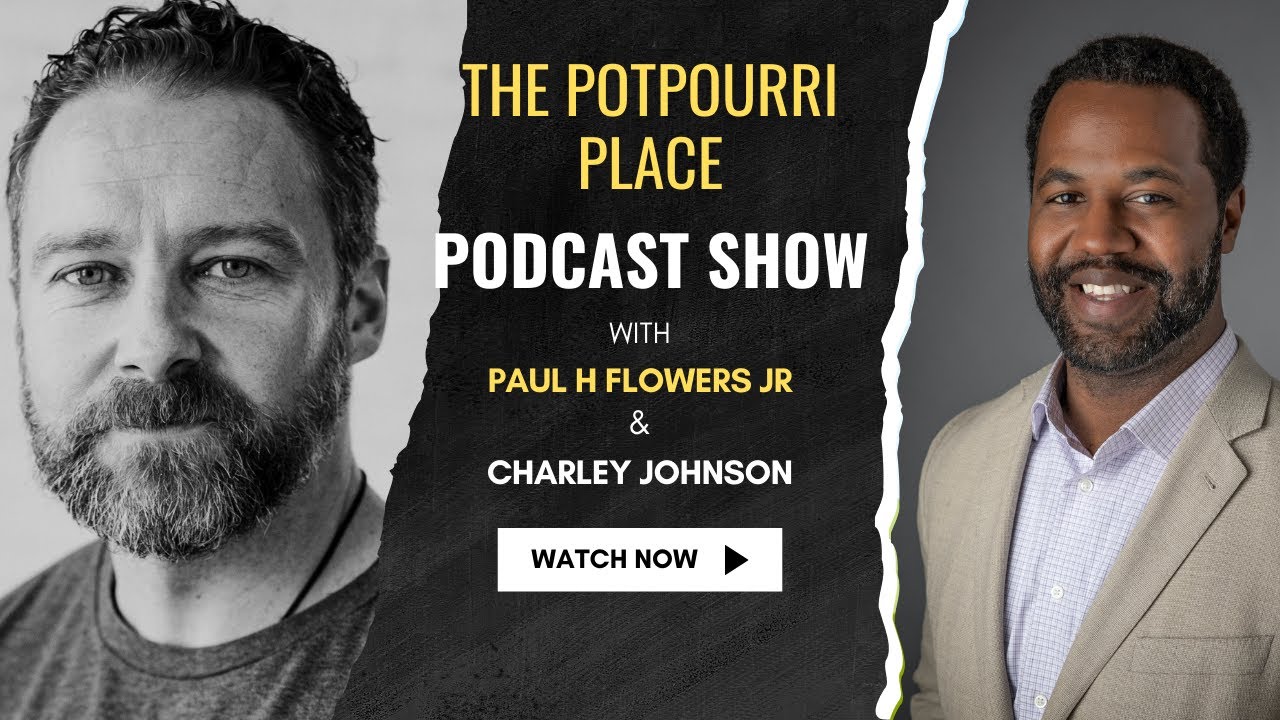
Charlie Johnson explains his role as a Chief Consciousness Officer and a metaphor called
Chapters
Hello and welcome everyone to another episode of the Popery Place podcast show. And on this segment of Everyday Entrepreneur, we have the honor of bringing on Mr. Charlie Johnson. Now when you learn about his history, his track level, his years of servant leadership, and even some things that he actually basically brought to the country by way of his Consciousness Training Movement and Chief Consciousness Officer position. Uh, I think we're going to be in for a really good conversation and a really good impactful, uh, piece of information, pieces of information that our listeners will love and enjoy. Uh, Charlie, go ahead, welcome yourself on, and how are you, my friend?
Uh, great, great, man. Everything's, everything's good this morning. I appreciate you having me on.
Excellent, excellent. So we just like to hop right in, uh, Charlie, if you're open to the, uh, kind of where you're at, where you've been, and where you're going, and then we'll evolve the conversation from there.
Uh, born and raised in Utah. Uh, most people know Utah to be very religious Mormon state. We, we were not. I was not. My family was not. It, it wasn't that we were against it. It wasn't that we were for it. And I— the only reason I bring that up is because it leads into the story of how this Chief Consciousness Officer came about. So I had no religious background. I didn't understand spirituality. There was just nothing. There was just no frame of reference, right? It just was not in our awareness. I didn't do well around kids my age. So when I was 16, I was offered a job around adults, and I loved it because I loved being around adults. I was more comfortable about being around older people. I loved being the ignorant one in the room. I loved being curious. I loved asking questions. I loved being around the executives. I had no college education. My parents were blue collar, so it was just a different world I wanted to be a part of. I just wanted to be— I wanted to be around it. Company did well. The CEO who saw something in me that no one else saw, she actually passed away a few years into the business, uh, on a Saturday, completely unexpected, very young. Uh, and myself and another individual took over the company on a Monday. Uh, it was 150 employees with adults with kids looking at us saying, are these two kids going to be able to handle this business?
I could imagine.
We were blissfully ignorant to what we need needed to do. So we just started doing everything and it worked incredibly well. During that 7 to 8 years after she passed, I flew 2 million miles and then I developed a fear of flying. That was my first understanding of the universe intervening. The business was great. The culture was great. It's where I wanted to be. It was safety, it was security. I wanted to retire there and just go off into the sunset. That fear of flying got so bad, it— because I was a face, sales, marketing, out traveling, right? I had to leave. And then a month later, after leaving the company, I was back on a plane to Europe. So it had nothing to do with the fear of flying. The universe, for some odd reason, needed me out of that company so many years later I could be talking to you and many others. Okay. During that time, um, after the business, I took over the Pay It Forward Foundation. So Random Acts of Kindness, the book and the movie. Travel the world, got tens of millions of people involved. That was great. And during that time, because the corporate didn't work out for me, I wanted to better understand that. So I did what everyone does— you, your listeners— self-development.
That's it.
So I crossed paths with a few coaches. Um, what was interesting though is they couldn't help me.
Okay.
They actually admitted to it, like, we, we can't help you. I was like, well, you're helping all my friends, all these business leaders. You your testimonials.
I—
you're making me feel like something's wrong here. Like, what did I do? Luckily, one individual said, you're just asking for something more, for something deeper. You need a teacher. I was like, okay, what the hell does that mean? Because I didn't have a spiritual reference or a religious reference. Said a teacher. So I was thinking school, and no. Luckily, again, the universe stepped in. An 85-year-old man a couple of months later crossed my path, came up to me and said, I feel like I've known you from a past life.
That—
those were the words that broke the dam because that was very, very interesting to me. I said, what do you mean by that? And tell me more. Well, he was a typical Utahn. He had family he couldn't talk to about this stuff. So he loved being around me and I loved being around him. He had me read books. He had me learn meditation. He cross path— he had me cross paths with this meditation teacher. Everything for months and months, we just kept meeting up, reading books, asking questions, meditation, consciousness, everything. And then after that, I remember thinking to myself for no good reason, there's got to be more. And I asked the meditation teacher, I said, uh, there's got to be more. Is there anything else I can do? And he said, well, there's this other individual, but I haven't sent someone to him in over a decade. He's a very special, very powerful individual that does not like to waste time. I said, well, you were 3, 4 months out when I met you and I came up the next day and forced you to teach me meditation. Do you think I'm going to waste this time? He's like, no, I get it. Well, after my business, I love Steve Jobs. I was just reading the Walter Isaacson book. I love, you know, putting my own debt in the universe. I had a picture of Steve Jobs on my phone. When I met my current teacher, he was a spitting image of Steve Jobs. Ah, I, I wasn't— I wasn't looking— I wasn't looking for Steve Jobs, I was looking for this guy, right? So I looked at this guy and said, uh, I don't know why, but whatever you tell me to do, I will do. Very high-level meditation, very high-level books, very high-level knowledge. He had me read everything under the sun, including many books few people read. Importantly though, not to fill my head with knowledge, but for me to understand on my own volition that every view, belief, religion, politics, book, knowledge, idea side was all coming from the same source.
Mm.
He was stripping it away to make sure I was neutral, I was unbiased, and stripping away my conditioning so that I could understand both sides. He knew the world was going to be incredibly divided and conflicted, and he wanted to create something, someone like me with the passion and the ability to communicate that didn't have a dog in the fight. And what better timing right now with the world being so divided and conflicted, but having someone like a Chief Consciousness Officer who is neutral. And that's where this position came about.
Now, Chief Consciousness Officer, again, is something that most people aren't necessarily aware of and haven't been introduced to. I'll say we're used to the chief executive, the chief financial, the chief human resources, the chief information technology, etc. Um, and if you would tell us now how this development of the Chief Consciousness Officer again is being able to roll— is, is being implemented in companies now, because admittedly But prior to me getting introduced to you, Charlie, I hadn't heard of a chief consciousness officer. So it's a new title to me. And then, you know, I work with the C-suite on a regular basis. So it would be really nice to know, uh, A, how this is being implemented into companies today. Like, what is the receptivity towards it? And, and even what kind of companies you're looking to work with just from a networking standpoint, because I think this is something that should be more just consciousness in business, right? Then get us away from the, the profits, start looking at the people, and we can make a difference. And I'm just, from what I'm gathering, that, that's what I'm feeling this position entails, really getting the most out of people.
So if you could elaborate on that, the people and the profit, uh, well, let's, let's go here. 30 or 40 years ago, technology took over business. Right. Everyone in the C-suite knew that's what was happening. Could they create a website? Could they code? Could they put a URL up? Did they know technology? They did not. So who did they hire? A chief technology officer. Okay. Consciousness is becoming the central focus of humanity right now. Absolute central focus. Everyone knows it. They're understanding this thing right here. The mind is just the middleman. The same mind that creates the problem cannot solve it. Everyone's trying to do the same things at the same time. And look what's happening. The world's more divided and conflicted than ever. Inside businesses, executives, employees are more divided than ever. So they're understanding we can't use the same thing. We got to go a step lower. We got to go a step deeper. We got to go into consciousness, which they're not. Now we're bringing this to their attention, right? This is the most crucial hire a company can make right now. It is absolutely just as, if not more important, the chief technology officer was 30 to 40 years ago. The conflict and division— well, let me go to here. For the last 20 years, we've implemented wellness programs, right?
Yeah, yeah, that's actually my field, so you're speaking my language. Let's keep going.
Okay, so we've got meditation, we've got mindfulness, we've got tai chi, we got yoga, we got all this My question is, with as much as this world is being divided and conflicted, as much as these wellness programs have the heart in the right place, which I am in complete agreement with, I support 100%, especially with my spiritual background and understanding what my teacher is, what meditation does. Why is there still so much division and conflict? These wellness programs, especially here in the West, we have a significant amount of Catholics, atheists, Baptists, et cetera, Western religions. When the wellness programs come in and they're asked to meditate or be mindful, they immediately go to Buddhism and they're shut down. A lot of people think yoga is the devil. That's fine. That's perfectly fine. So in the same regard of having 10,000 books on happiness, yet we've never been so unhappy.
Right?
So we have to understand that What people like you are doing is the exact thing we need to do. Those wellness programs, the stuff you're doing is 100% exactly what we need to do. It is powerful, it's profound, it's consciousness, it's helping clarity, everything. But if we go here, this is full, it's fixed, it's overwhelmed. They've got so much information coming at them. The division and conflict on this planet is creating so much chaos that now there we truly are more closed off than we've ever been because we're starting to have a lot of stuff come up that we don't understand. And when we don't understand it, we fear it. When we fear it, we restrict.
Absolutely.
So this position comes in from a very neutral standpoint, not for you or against you, not for the executives and against the employees and vice versa.
Right.
Neutral position who becomes a secret weapon for the C-suite, a secret weapon for VPs, a secret weapon for customer service, because the neutrality of them not being for you or against you is where the world is. Because we know the polarizations of politics, of religions, and everything. Everyone pays attention to both sides. Well, there's a group of people here in the middle that no one pays attention to— those neutral people, the ones that have a consciousness that is not restricted because of their beliefs. It's wide open. Every meeting that Chief Consciousness Officer steps into, they bring the level up, they break the walls down. This position is just incredibly crucial. And then on top of that, with the implemented wellness programs, this position will help participation skyrocket with those programs because they'll be able to talk about it from a neutral standpoint. We don't talk about business and religion in business— or I'm sorry, politics and religion in business. I get that.
Right.
But if you're in that company long enough, around those people long enough, you know where everyone stands.
True.
So you can say to each their own, we'll agree to disagree. I don't mind what side you choose. We both know that's not the case because if you're pushed into a corner, you're coming out swinging for your own beliefs.
Oh, absolutely.
We've done this since the beginning of humanity. We truly believe at some point our side's going to win, the other side's going to lose, and we're going to go to a utopic society. No, we are continuously creating division and conflict. This position helps neutralize that, minimize division and conflict, and at least go from here, from everyone's awareness, to here. When they go from here to here, maybe those wellness programs have more participation. Maybe there's less division and conflict between Ed and Susie. Maybe the executives can be more authentic to their employees. And vice versa. This position, crucial moving forward, absolutely crucial.
Excellent, excellent. Now, for the audible listeners, when he's saying going from here to here, he's putting his hands up by his eyes, kind of like a binocular, and then widening that view. And when he was talking about going in earlier, going in here is pointing to his head, saying that we need to go here and actually bring about, uh, seemingly a deeper level of consciousness. And I 100% agree that it's not about any particular religion because before a religion is imparted into any person, there stands the person. There needs to be a, basically just like you said, a neutral space where that's an understanding so that we can then build upon that. I really like where you're going with this. I think, um, in some of my research and reading about you, I came across this phrase, uh, clearing the lake, right? Clear your lake. So if you would explain to us kind of what that clearing your lake entails and its impact on like personal clarity and how decisions come about.
So the Clear Your Lake came about with— you've got a lake that's crystal clear, perfect waters, right? The bottom of the lake is muddy. It's got weeds, it's got animals coming to it. If you just let it settle, it just stays clear. If you come in, kick the water up, put your feet down on the ground, kick it up, put this, do this, roam around in it, read this book, do this, go off in a million different directions, create a site. You're kicking mud up. The lake is absolutely dirty, muddy. You can't see it. The animals don't come to it anymore. The weeds don't grow. The trees don't grow. The water's dirty, blah, blah, blah, blah. If the lake's already muddy, which most minds are, if you just stop cramming your mind with the 10, you know, 10 more, a list of another 10 more life hacks with another book on religion, with another book on politics, right? We've got to let the lake clear. We've got to give ourselves some clarity. So you got to let the water settle. The water in a cup does not settle by adding more dirt to it, right? It settles and becomes clear by letting that sediment drop to the ground without adding more dirt, without adding more chaos, without adding more useless knowledge. One big thing here: knowledge is structured in consciousness. Anything we've ever known, read, watched, learned about from a psychologist, learned about from our teachers, from our college professors, from our consultants, from our bosses, from our family, from our religion, from our politics, All of that knowledge came from somewhere. It came from consciousness. So we can either learn it subjectively by a third party, by someone's book, someone else's opinion, or we can learn it objectively by just tapping into our own consciousness. Everything we feel like we've learned, we're just remembering. We are consciousness. It is fundamental to our reality and to our experience. The brain does not produce consciousness. It is merely a filter. That's another thing that this position brings is the helping people, the understanding that the mind is a filter. It's filtering what consciousness is. So let's go to the source. Let's not go to the middleman. Middleman. Let's go to the source. So clearing your lake is letting the mind settle enough so you have clarity. You can have access to any bit of information you want. You will have access to how much division and conflict you're actually creating. You'll have access to the division and conflict that you think the other side is ruining the world with. You're doing the exact same thing. We've got to bring awareness to that.
Okay, okay, good, good. Well, I'm really enjoying this conversation at this point. Now, you just go back for a little bit. Mentors are so important as a part of day-to-day life, I would say, for anyone looking to get to that next level.
Excuse me.
And especially you along this journey, right? You went on this, this journey with the mentor for, you know, a decade plus. So how does that shape your approach, having that one-on-one mentorship? How did that shape your approach to consciousness and leadership?
Well, for me, mine was specifically a very high-level teacher, right? He was a legit teacher. Most people who cross his path, spend years with him, you'll never see him again. They'll leave the world behind and go off into the Himalayas like he does. He does stuff that just defies the laws of physics. It just won't make sense. Very powerful individual, right? So mine was a little bit different path. It wasn't a coach or a mentor or like a— it just— I wasn't learning self-development. I wasn't learning how to be better in business. Mine was a stripping away for me specifically. And this is only me, me specifically. It was a removal of bias and conditioning. So for me specifically, it was a clearing of the lake. It was a clearing out of bias and conditioning. It was so I could have these discussions with you and be completely neutral. I could have a discussion with a Catholic and not care. I could have a discussion with an atheist and not care. I could have a discussion with a Republican or Democrat and help them both understand that I know you think the other side's ruining the world, but they think you're ruining the world. So my question is, if I flip the coin, heads or tails, 'Which one's better?' 'They're the same, man. What are you talking about?' Yeah, exactly. So bringing awareness to that— the mentor and the teacher, and however you go about it— is incredibly crucial because they've been somewhere you probably want to go, right?
Right, absolutely.
That's a huge thing. Having a coach, all that's great. For me specifically, it was a removal of the ignorance of my own bias and conditioning. So that's what was big with me.
Okay, so, so now You've gone through this process, you've been able to remove the bias, the conditioning, and you're able to see essentially, you know, the truth has no, no side to it, right? It's not a, this is right and this is wrong type of thing. Being able to take that neutral approach, I'd consider is very, very Ayn Rand-ish, so to speak, right? The, the theory of objectivity, which I'm, I'm absolutely for, like being objective in situations and kind of taking yourself out of it like a fly on the wall, so to speak. Now, when we talk about, uh, business and you bringing forth a consciousness training, how do you implement something like that in an organization where there is that bias, there are those conditionings, right? How do you overcome that with, I'll say, the, the initial C-suite? I'm assuming, again, correct me if I'm wrong, but how do you overcome that with the C-suite first when they seem to have such siloed roles and it's really tough for them to even get together to you know, come and make a positive decision on healthcare for the company?
Well, you have, you have realistic expectations knowing that you'll never get past it. But what you can do, and this is important that I don't know anyone talking about this and it needs to become a part of every discussion. There are levels of consciousness. Levels of consciousness are like levels of grades. There's 2nd graders, there's 5th graders, there's 8th graders, there's 12th graders.
Okay.
We don't get mad at an 8-year-old for being in 2nd grade. And the 16-year-old being in 10th grade is not better than the 8-year-old. They're just at different stages. The Chief Consciousness Officer understands very quickly and very easily where the level of consciousness is for the CEO, for the customer service, for the middle manager. When that happens, you have the expectation of knowing you're not taking an 8-year-old and putting them in high school. If you did that, they're going to fail miserably. So there's a lot of programs nowadays that are trying to go from head to heart. See, quite a few of the world is not ready for that. So if you try to force an executive and an executive thinks they're ready when they're not, and you try to make them lead from the heart, it's going to backfire. So this position has the clarity and the neutrality and in a sense, the sense of the energy to see that individual, the questions they ask, the way they talk, the way they lead. You're going to know very quickly what level they're at. What you can do is you can take a 5th grader and put them into 7th. So when I'm working with the CEO and I say, would you rather have 8th graders or 6th graders as your employees? 8th graders, a little bit more, a little bit more intelligent, they know math better, they communicate better, they're more self-sustaining. Oh, absolutely, I want every one of them to be 8th grade. That's what we can do. We don't, we don't set the expectation through the roof. We don't have the entire executive lead team, uh, all of a sudden training, you know, leading from the hard because most are not ready for that. It's going to be inauthentic, right? What you do is you level them up. You take their clarity— as, as for your listeners that don't have the video, we're just expanding their awareness. When you expand their awareness, when you know better, you do better. You're raising their level of clarity. That auth— that naturally reduces division and conflict. It naturally increases authenticity. It naturally bridges the gap between the division and conflict created between the employees and the executives due to inauthenticity. So there's little subtle things that do that. But then every executive starts to understand the power of this position, and then it becomes a secret weapon because the CCO can also help the CEO on strategy. They can help marketing expand their awareness so they have better ideas. They can help sales think about new customers. They can help HR hire higher, higher level consciousness employees and understand the better fits. Because the bias and condition of every executive, including HR, is they're looking for a specific person. Well, the person may come in and be a little bit quiet and timid, maybe, maybe introverted. That may be the best hire. But the HR professionals look at him saying, you know, he didn't really, he didn't really give me the energy. I didn't really feel like he was confident. No, he's just a quiet individual. That person's going to work really well with the team you're hiring him for. Giving them an open perspective, a different view, asking different questions, expanding awareness. But the, the key here is realistic expectations. Not everyone in elementary is going to jump up to a PhD-level program, and that's not possible, nor do we want that because their nervous system would fry. Right. Understanding levels of consciousness, understanding who is ready to lead from the heart, who is ready to simply still continue to lead from the mind but with an expanded awareness.
Now, there's, there's so many ways that we can go with this, man. So let me ask this one. Because there are various levels of consciousness, and again, each person comes from their own perspective, like you said, you can't necessarily take the kindergartner and put them into the PhD space. I'd imagine there's a lot of stuff, mental clutter, right, that needs to be sorted out. So from your purview, what strategies that individuals here— you know, our listeners may not all be in the C-suite. Some of them might just be running a mom-and-pop organization or endeavoring to leave high school or college and start a business, right? So these are things that we all deal with as people versus just positions. So with this mental clutter, what strategies could, or do you recommend for people to, to help declutter their minds so that they can have a more, you know, and to focus so that they can focus. You know, we're full of distractions and, and it's tough to focus. So what, what strategies would you recommend so that people can declutter and, and focus more within all the distractions that we come across on a day-to-day basis?
NASA did a study where they followed a few thousand kids at the ages of 4 and 5. 98% were considered a genius. By the time those kids were adults, it was 2%. Wow. Okay. So first of all, this right here, this discussion you're allowing your listeners to have is decluttering the mind because you're letting them know right there, the mind, the middleman, this vast resource of consciousness has been crammed into our minds. And every time we choose a side, every time we think we're learning, every time we think we, we know what's right and the other side is wrong, we have taken the vast resource of consciousness and crammed it into a tiny little box. So when you say declutter, you've got to give a release valve to the mind, a release valve to the box, a release valve to your conditioning and your restrictions on consciousness. So even this discussion, kind of like the 4-minute mile, absolutely impossible. Someone did it. 1,000 people did it, right? Okay. So understanding the mind is the middleman. This is why you're overwhelmed. This is the same mind that creates a problem, can't solve it. Okay, well then let's go one step deeper. What— how do you do that? Consciousness. Consciousness is infinite. It takes your awareness, even this discussion, and expands it, gives your mind a release valve. That's all we're looking to do. Now the next question is, people start loving to hear that word. They realize consciousness is not spiritual, it's business, it's tactical. They can use it, right?
You're right there. You're literally reading my mind.
The question is, the question is, So what is consciousness? A wise fish swimming through the ocean swims by two young fish and says, hey boys, how's the water? The two young fish say, what's water? That is consciousness. You and me right now doing this interview are swimming in consciousness. Your listeners swimming in consciousness. This planet swimming in consciousness. Everything physical and non-physical, everything that's fundamental to our experience and to our existence, is consciousness. Now, consciousness and conscious are drastically different things. Consciousness is a noun. It's everything physical. It's the mountains. It's the water. It's the air. It's you. It's me. It's mind. It's thoughts. Conscious is our 5 senses. We are aware. It's our awareness. If we get knocked in the head, we are unconscious. So that this discussion, letting people understand what consciousness is, how they are a part of it, how that knowledge is everything in consciousness. They are consciousness. They can have access to it. That's how we declutter the mind. We give it space. We give it the correct information. We give it to them in a neutral box, not a spiritual box, not a religious box, not a Republican box, not a Catholic box, not a Muslim box. A neutral box that says, I am Muslim, I am Catholic, I am atheist. He's telling me I have access to this and it doesn't bother anything. Exactly. Consciousness is everything you say. You talk about bringing consciousness into business. It's already been there. Basically, they've had a blank check and they've cashed it for $100.
Oh, man.
We need to cash that check for a trillion. We need to cash it for unlimited resources. Right. Because the mind's a very limited tool. We've been doing this since the beginning of humanity. Yeah, we have been choosing sides. Nothing changes. There is no bipartisanship. There is no getting along with the religions. To each their own has been thrown out the door because if we're pushed into a corner, we're coming out swinging for our beliefs. But this is consciousness in a neutral level which expands the mind and declutters it because you're giving it space.
Charlie, I'm, I'm amazingly thankful, and I'll just take a pause for a moment to express my gratitude universally speaking, that we were able to connect on today, that these platforms brought us together so that we could have this conversation. You know, I'm getting goosebumps over here at several things you're saying, because it resonates, right? It truly resonates. So back, back into a little bit of the Q&A then. For most people that have not been introduced to this, that might hear consciousness and Chief Consciousness Officer as a as a title or as a way of looking at life, a varied perspective, if you will, as something that's, that's tough to grasp. So oftentimes, before a person will move into a thing, they'll need to know what's the light at the end of the tunnel. So that brings my question, if you could, to discuss the relationship between having a heightened consciousness and how that intertwines with innovation either as an individual or on teams?
Well, let's just go with innovation. When Einstein came up with his amazing theories and he never went through the typical scientific method and his colleagues always pressured him, they said, well, where'd you come up with this? Did you copy it? Who— you know what? He's like, I always tapped into my cosmic self. So if you're a chief innovation officer, if you're a chief marketing officer, if you're a sales guy, if you're a customer service that just wants to pay them more, whatever you're looking for, whatever issue you have, If you're looking for solutions, every solution, every pro— every answer to every problem that you're looking for is within your own consciousness. You have got to expand that. Then you become a better employee. You're less divided and conflicted internally, which then creates less division and conflict externally. You get along with your employees better. You get along with your manager better. You get along with your wife better. You get along with your kids better. You get everything. Because again, when we're restricted, all we're seeing is one thing. It's a lot of pressure. It's 80,000 thoughts in a tiny little box of a mind. We need a release valve. The, the, the stress we have is internal. That's what a lot of people are understanding. We, we always point outward. We always point to the leaf of the tree, but the root of the issue is us internally. The division of conflict starts with us. This position helps every single employee. This position helps every employee in and out of work because you're giving them personally access to the most powerful tool on the face of the planet. And you're allowing them to figure that out on their own, no matter their political belief or their religious belief, because you're coming at it neutrally. They get to come up with the answers. They get to come up with the solutions. They get to take ownership of becoming a better human, a better employee, a better spouse, a better father, a better whatever it is. There's no more need for an external figure, a teacher, a book, and everything, anything like that. It now comes back to them. This position literally opens up anyone they cross paths with in a meeting, in a conversation, or just by being in the room.
Well, let's take it back to the work side for a second. You mentioned the stresses that, of course, many positions have, and personally coming from a sales background, I can see all the times with various companies and colleagues that there's burnout just because there are metrics that have to be hit, there are KPIs and blah, blah, blah, right, from the sales world. So how does this consciousness, how does this, um, being able to actually understand that we're swimming in the sea of consciousness all the time, how does that help with recognizing and, and addressing that burnout amongst professionals in any field?
If you're a fish in a tiny little aquarium, you only have access to the water within the aquarium. If you're a fish within the ocean, you have access to the ocean. Where do you think more solutions are? Where do you think our ability to see things? Where do you have more opportunities? Now, with everything, there comes the pros and the cons because we live in a dualistic world and it's always divided. That's perfectly fine.
Right.
But if you want access to a larger aquarium, to more solutions, to more opportunities, to more ways of looking at the world, to seeing things in a better light with less division and conflict, like you tap into consciousness. You stay at the level of the mind, you're staying in a little tiny pond that gets really muddy very quickly. You spread out that dirt and that chaos over a massive pond, it becomes clear. You've got to give yourself access to the vast resource of consciousness. You stay in the mind, you're screwed. But here's the problem. All we've ever talked about is the mind. Anything we've ever focused on is the mind. The only way we've learned, the only thing we've ever been taught, anything anyone says, mental clarity, mental edge, mental health, mental this, mental that, mind, mind, mind, mind, mind, mind, mind. Yeah, the mind is a filter and it was created from consciousness. So let's go to the source of consciousness and then let the mind be a servant, not our— let the mind be a servant, not a slave. What is that quote? We're a slave to our mind, let it be a servant to us. We need to switch that around.
Okay, man, I'm, I'm 100% picking up what you're putting down, and I want to thank you for that use of analogies As you're sharing this with me, you speak in very visual terms, which again, our audible listeners can definitely appreciate because I get that visual of sitting inside a glass bowl. And not that I have one on my desk, but I've got this little pen holder and I look at that as a container, right? It's keeping all of the pens in one really tight and restricted spot so that they can't go any further than the constructed limits. That are placed upon them.
Correct.
So imagining to break that barrier away from the pins, or break that mental glass bowl away, and realize that, yes, I can see at this point to the door, right, to my left, but realistically, if I'm looking at it through a consciousness lens, then I can see much further. And there's so much more out there than just that door, that wall, that window. And this is, this is, this is really good. This is really good. So we talk about in a business sense, and you know, I like to— my listeners that listen to a few episodes, you know, they like that, that I like to take things in more of a personal perspective. So how can this training— I'm— we're going to come back to the business side, but I want to know, how can this training from a familial standpoint impact the relationship dynamics that individuals have, whether it be with their children or their spouse, whomever.
Same thing. So the greatest thing about consciousness is whatever the metaphor is, that metaphor equates to everything you could ask me about. Everything is consciousness. So you're looking at your spouse, you're looking at your kids from a very restricted point of view, a point of view that doesn't have a great awareness. There's a lot of stress. It's the pens in your little glass case. Expand that glass case, expand to a larger pond, whatever. You're giving yourself access to the full story. You're basically just taking parts of your wife or your husband or your kids, and they're stressed out. They have a limited pers— perception. You have a limited perception. You've got this tiny little box on each side, and they're just tiny little boxes of minds, and they're just bumping heads all the time. You open that box, you get to see the human. They get to see you. You're vulnerable. You're authentic. It's the same thing. It's just the same metaphor for relationships, for your kids, because You have these bias and condition. You have what a kid should do. You have what a spouse should do. You have expectations you created based off of how you've lived, how your parents raised you, what you saw in a book, what you saw on TV. All of that is someone else's opinion, someone else's view, someone else's experience. For you, you've boxed yourself in thinking that's how it should be. 8 billion people— there's 8 billion people going up the mountain in the same direction, ended up the same spot, but there's 8 billion different paths. Stop comparing yourself to how your wife or husband should be or how your kids should be. Open up your mind, give it space, give it consciousness so that you can see them in a more open way. You can better understand your kid, you can better understand your spouse because you're no longer stuck in this tiny little perception. You expanded and you're like, oh, okay, that's what they mean, or oh, that's why they're upset, or oh, that's on me. You just start to see things a little bit more openly. Your lake clears. 'cause you got a bigger lake, the mud settles, and you're seeing things more clearly. So the metaphor, no matter what the metaphor is, is going to work with anything you could possibly ask me. It's the same thing over and over again, 'cause it's all consciousness.
Really enjoying this. And as I'm thinking more and more about how and where this can be implemented, it, it's endless, essentially.
It is, yes.
There is no one place where this will work best, so to speak, it can be implemented virtually everywhere.
Yes.
And, and with that, so let's, let's maybe talk about some of that implementation or like integrating this, because most people that listen to this may have employment, whether it be self-employment or not. How does one get trained to raise their awareness to this level of consciousness? And how does one go about starting that process, or how can you help?
Well, they've, they've started the process just by listening to this podcast. So in everything else they've known is they gotta, they gotta take time away every, every week, every month, right? They've got to take a couple hours a week, and it's a 10-step program, and it's once a week for 2 hours, and we're going to break that. Consciousness training is an unlearning. It's an expansion of the mind, not a cramming of more knowledge into something that's already full and exhausted and overwhelmed. So this goes against what they're used to, and that is the point. Consciousness training started with listening to this podcast because now they know what consciousness is. They've heard the metaphors. They know they have access to it. They understand that they're swimming in it, right? It's this conversation. So consciousness training starts out that way. We just start having discussions and I start getting to know them. I start to understand their bias and condition. And I simply, from a neutral standpoint, I never— they know I'm not attacking them because they're there for a reason. They know my neutrality. I always ask them where they got their viewpoints, how they were raised. Why are you this? Why are you that? Just not to change their mind because they're not going to change their politics. They're not going to change their religion.
Right.
But the seed's been planted. The universe is a great gardener and starts to water and it takes their awareness from that very funneled, like horse and blinders type of way and expands it. Every conversation such as this expands consciousness. I don't need a 10-step program. I don't need to force you into a box. I don't need you to. It's just a simple awareness. That awareness expands your level of consciousness, which expands your ability to tap into new knowledge, new questions, new, oh shit, I might be the issue. My side might be causing the conflict. My side might be the one ruining the world just like the other side. It's just a, it's just a, like, the heads and tails of the coin metaphor, right? Tell me what's better. Well, they're the same. Exactly.
Oh man, this is good. This is good. I am— oftentimes when having these conversations, it just makes me want to like reach out and get the, the stuff, right? And as I'm listening and experiencing this, it's not necessarily about knowing more stuff I can understand that your personal journey was about stripping away those beliefs, and I think that that might resonate with more individuals than we think. Yes, as we are all full of stuff and we are all full of these beliefs, and there are things that we can do to move those to the side and clear the lake. If you will. I really like that phraseology. So, so let's talk about maybe where this is heading. You know, it's, it's the year 2025, right? I'll date this particular conversation, the year as we recorded is 2025. And we are in a unique place as a society. Where do you see the role of consciousness in shaping the future of our work and our society?
Consciousness has always been shaping everything since the beginning of humanity, since the beginning of the universe. The difference between then and now is we're aware of it. So now that we're aware of it, we want to know it. And if we want to know it, we want to know how to utilize it. Because let me make something very clear. We will never fully understand consciousness. We will never fully understand God. We do not understand or have the capacity with our tiny little divided minds to know that. What we can know is how to utilize it to its full potential. Now that more people become aware of consciousness, like 30 years ago, technology— that is, you want to talk about the most powerful technology in the universe? Where do you think everything came from? Consciousness. Technology came from consciousness. Speaking of that, artificial intelligence, basically taking the humanity out of humans. Who created quote unquote artificial intelligence? It's not artificial, it's consciousness. It's not artificial, it's intelligence. It's just run through a machine that gives us access to it. Just like everything else on this planet, it creates people who are for it and people who are against it. My point being is we're talking about consciousness like it's this brand new thing that we just discovered. It's always been there, but now we get a— we get to re-up on that blank check. We don't get to cash it for $100. We can cash it for whatever we want.
Mm-hmm.
Consciousness, because of people like you who are allowing this conversation to be heard, that's how we shift consciousness. That's how we bring awareness to your listeners and to everyone across the globe that they are it, that they have access to it, and that it's not spiritual. It doesn't go against your religion. It doesn't go against your politics. Utilize it however you choose with whatever thoughts and beliefs inside you choose, no matter what. It's all yours. Do whatever you want with it. It is the best technology known to man. Technology that we see is just an extension of consciousness, and we are just moving closer and closer and closer and closer to what consciousness is. So the more we clear the lake, as you say, we will have more powerful use. And the more we know, the better we will be. It's just a ripple effect. Boom, boom, boom, boom, boom. We need to go to the source, not the middleman mind. The middleman mind says, I'm Republican. I'm a Republican and I hate Democrats, and I'm a Democrat and I hate Republicans. The mind is what creates the division. Consciousness doesn't. It's pure.
Charlie, this has been amazingly powerful. We're, uh, we're gonna go ahead and start to land the plane here. There are a couple of pointed questions that I like to ask at the end of our show, and the first one is very straightforward, namely because it's great to know that Charlie Johnson exists and that which is Charlie Johnson at its essence is consciousness and at a certain level of awareness. But on the surface, my question is straightforward and simple. And Charlie, what is your middle name?
Lyndon.
Charlie Lyndon Johnson. So if you wouldn't mind sharing, is there a story behind the Lyndon?
I don't think so. I've asked my parents multiple times, and I was expecting some cool little story about some guy that passed away and saved my life, or someone, and they're like, no, no, I don't know where the hell Lyndon came from.
Okay, okay. And then for those listeners who might just be tuning in to season 2 here, the reason that I asked that question is because, again, we're typically in our society first name, last name, first name, last name.
Yeah.
And what I'd learned is that we typically only know the middle names of maybe 5 to 10 people in our nuclear family, best friends, that sort of thing. Usually about 5 to 10 people. And I found out to be true in the hundreds of people that I've asked that over the years. So I appreciate you sharing that. Charlie Lyndon Johnson.
I like that question.
Absolutely. Absolutely. Now, and last but not least, I just really like to turn it over to you to speak to the audience. I don't want to guide or prompt anything. I just want to give you the next minute or two to speak to them and share what's on your heart, what's on your mind, what's there for you as a message to provide to the listeners of the show.
Well, uh, we'll put this in the show notes, I assume. I'd love to push people to, to my LinkedIn page because it's a discussion of what this position is, but specifically what it's not. But my, my last little thought is look into consciousness. Google search it. Do your own research. Because I promise you, it is going to be more and more the central focus of 8 billion people on this planet, no matter their intelligence, no matter their level of consciousness, no matter where they work, no matter what country, no matter what their beliefs or ideals are. Everything is consciousness. And the more we understand it's fundamental to everything that exists, We're going to want to utilize that resource to our own abilities to make our families better, to make them safer, to be more, to be stronger, to be more clear, to help our kids, to help our spouse, to help our employees, to whatever your awareness points to, whatever you want to do on this planet, whatever your soul is begging you to do. It all comes from consciousness. So tap into the source. Do your own research. Not to scare you, not to fear. Just find out the methods, find out the theories behind it, find out what people think it is. But consciousness is everything, everything. So just do your own research on it. And if you want to talk to me, ask questions. If you're a company looking to finally hire this position, reach out, because what I want to do is I want a full-time, good-sized company to hire this position, not as a consultant, but full-time, and then help other companies, thousands of companies hire this position too, because I want this to be within education, within universities. I want it to be taught at an MBA program because this is the most crucial position humanity's ever needed to do right now, because consciousness is expanding more rapidly and more aggressively than humanity's ever experienced. You're going to want someone on staff who understands both sides of the world when it comes to that.
Excellent, excellent. Thank you so much for that. I will ask now— excuse me— what's the best way for our listeners to get a hold of you?
Uh, LinkedIn.
LinkedIn. And I do have that here. I'll put it in the show notes. It's linkedin.com/nin/cjconsciousness. Again, that's CJ C-O-N-S-C-I-O-U-S-N-E-S-S, linkedin.com/n/cjconsciousness. Charlie, this has been a fantastic show. Thank you so much for raising our awareness, bringing consciousness to the forefront of our conscious, and allowing the listeners a reason, if nothing else, to start looking into this so that we can all again develop and grow as humanity together.
Thank you.
Absolutely. This has been another episode of the Pope Replays podcast show. Thank you so much, Charlie Johnson, an everyday entrepreneur that is here truly making a difference. Looking forward to our next conversation. Bye for now.
More from Paul




Term vs Whole Life Insurance, Explained Plain — Which One Your Family Actually Needs


The Cheapest Claim Is the One That Never Happens | Claims Deflection Explained




