Burnout, Familiar Media, and Hard-Coded Solutions
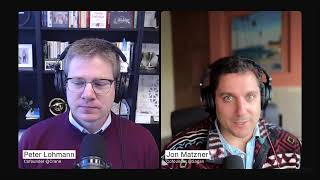
Peter Lohmann and John discuss burnout recovery through tiny habits versus massive action, the comfort of rewatching familiar shows like Seinfeld and Mad Men, and why some products need hard-coded solutions instead of self-serve software. They reference ketamine micro-dosing, Ben Horowitz's distribution essay, and the trade-off between scalability and implementation.
Chapters
57.
Kids don't go out, which is just a non-starter. So, well, what are we, uh, what are we talking about, Peter? I know we're going to talk about a couple things as always from, uh, different categories.
Yeah, we're going to talk about burnout, we're going to talk about familiar media, and we're going to talk about hard-coded solutions. It's quite—
that's quite the, the cornucopia of topics, but, uh, very representative of the things we like to talk about.
I want to tease it a little bit. That's what the pro podcasters do. They, they always say something like And I want to ask you about this, but let's come back to that first.
Stay till the end to get it.
Yeah, you're like, oh wait, what was that? I want to hear that other thing. Let me just wait for the next 39 minutes through this whole episode for a very underwhelming payoff. Yeah. All right, so we think a little bit about burnout. I was just kind of reflecting to you that I'm going through— I'm not, not feeling burnt out, but I'm feeling stuck in a few patterns. Um, in certain parts of my home and business world, and I'm feeling like I need a bit of a reset or a bit of a new way to approach some of these things because I feel like the grooves of how I'm behaving and how I'm relating to things have gotten really deep. I just turned 40 this year. Yeah, so I've gotten a lot of passage over these neural pathways. Yeah, and that's not always healthy, you know. Some of those are useful. You build up habits, you build up relationships and others, you know, you may have bad habits, you may have bad ways of relating to things. And I'm just kind of looking for some approaches to this. And you said you might have some ideas.
So yeah, so I'll give one that's like a normal one. And then I'll give my wacko one. I think the normal one, and I've talked about my mixed feelings. And I'll— I'm actually doing something like this right now. A very specific example. But I've talked about my mixed feelings for Tony Robbins.
Yeah, right.
I have a lot of, you know, I can like parts of Hormozy. Again, our favorite topic here. You know, I have mixed feelings. There are sometimes I say, and I'm like, that's such a brilliant way to say that. And I'm going to reference that. And then there are other things I'm like, come on, man. Like, come on. And I feel similarly about Tony Robbins. And I can have a nuanced view of somebody and say they're not a scammer, but they're also not, you know, Jesus. Right.
So I call this like the Moses Kagan test. Is this something Moses Kagan would do? That's sort of how I think about—
correct.
You know, some of her Moses stuff, I'm like, Moses would never do this. Correct.
Put a donate link instead of just saying buy my book. It says donate.
Yeah.
Like, would Moses do that? No.
Right.
It's a great, excellent test. Okay. And, you know, I think about some Tony Robbins stuff and like, I'll watch his stuff. Like, I'm a student of of all human people, right? He's obviously had a huge impact on the world. But what I think he does, and I will very clearly express how I'm doing it right now, is he says basically, if you want to change, you have to take massive action, like massive action. And he uses the word massive action. And, you know, I have many fascinations of which, you know, several of, you know, Marine Corps doctrine, sumo wrestling, prisons. Um, one of them, I love prisons and interrogation. I love maximum security prisons. Uh, like, yeah, it's incredible. You know, the shoe, the special housing unit, like, it's incredible movement policies.
It's great. Um, if I wanted to dip my toe in this water, what, what series on Netflix should I check out?
You should watch Locked Up on YouTube. Watch like Locked Up Supermax, and you can get like a view inside, like, what it's like in like the collar, you know, where they're like holding the Unabomber. It's incredible.
Okay.
And just like what that's like. So prisons are one of my fascinations. But another one of my fascinations is sobriety, is like the 12-step program, mostly because it's like dealing with humans as they are and behavioral change, which is a favorite topic of mine and stuff like that. And I like Dr. Drew. I used to like Dr. Drew a ton, but he's an addiction therapist. I read all the addiction literature. Like, I'm super into addiction and recovery. I'm not an addict. I'm not like a I'm not a, you know, major drug user, but I just like that stuff. Alcohol recovery and all that stuff. And they're like, hey, you're in sobriety, you need to get rid of all your friends, and you might need to go to 2 meetings a day, 7 days a week. To me, you're not going to be like, oh, I'm just going to drink a little less and I'll still go to the parties, but I won't— they're like, 2 meetings a day for the rest of your life because this is an existential battle with you and your relationship with this substance. It's not this like— and so it can't be like, yeah, I'm just gonna aspire to— it's like, you need to freaking be insane. And so I'll— in my— or you, you comment before I keep going.
Yeah, so that's massive action, right? That is, that is massive action.
Yeah.
And I want to reflect a little bit on this because when I think about making changes in my life I, I try— there's like a barbell that, you know, this is what some of your fancy economist, uh, authors would call this. There's like a barbell approach I like, which is I like to either make very small incremental changes, like, oh, when I wake up in the morning, I'm going to put my slippers over here so I remember to put them on so my feet aren't cold, I'm not grumpy. And like, yeah, just like tiny little tweaks that are so easy to integrate and are brainless and effortless, right? Because I know that I can do those things. I put my keys by the back door so I remember and I don't, you know, little behavior. I love stuff like that. Small optimizations. I'm a big optimizer. Um, and then the other side of that barbell is the massive change, massive action where you're like, I'm selling all of our cars. And you just like, you, you kind of force yourself through a one-way door on something that you know has to change. Um, it's the medium stuff that never works. The medium-sized changes never stick. You know, I'm gonna work out twice a week. No, you're not. Of course you're not. You're gonna do that for 3 weeks. We all know that, right? What I did when I decided I needed to work out is I hired a personal trainer twice a week for an hour and committed to like a year with this guy. Yeah, which was amazing. I was not working out at all. Prior to that. So I would call that a massive action. Um, so I never really thought of it in this way until you just sort of forced me to articulate it, but I— that is how I think about doing medium right now.
You're doing, you're doing medium right now. Yeah, right. You're not— you're right, medium, right? You could write one page at night about the things you're grateful for, which— that would be the small, that'd be the baby.
Yeah.
And then the massive is like I'll tell you, for example, for me. So I am currently on a— I have some health and wellness goals that I'm chasing pretty hard right now. I'm currently very deep in ketosis, and I signed up for a half marathon in 3 months, not because I think running is particularly healthy, but just because I needed to basically be out there. And this is at a starting point where I hadn't run more than 400 meters in 10 years.. And I was just like, and now I'm fricking on it, man. I've got like my GPS watch on. I'm fricking, I'm not going to like let myself off. I'm not going to say, oh, you know, I'll just start with like a few. I'm like, I am going to be a fricking maniac because I've seen that that's what it takes to snap me out of what has been a 10-year rut where, you know, once a year I'd be like, oh, I can totally sneak in some, some kettlebell swings and just kind of, I just won't have so much ice cream. And it was like, it wasn't working. And I'm like, All right, am I just going to be a Nancy or am I going to fricking ball up?
And, you know, yeah, I've had some trouble with this though in the past where I'm realizing that the small changes aren't working or I can't figure out how to implement them. And the big changes, like the massive action, just isn't on the table for whatever reason. And I end up just giving up and I'm like, well, I guess this is just how things are going to be now. And I've had people in my life that I really respect be like, hey, perfect is the enemy of the good. Like, just because you can't fully solve this issue, problem, whatever it is, it doesn't mean you don't take steps to making it better, right? The way you're relating to this is very black and white, which isn't healthy. Um, I get that you like to do like huge changes to like fully and perfectly solve things. That's just not feasible right now for whatever reason. And so you shouldn't just like turn the table over and give up.
If that's the case though, I would say maybe you're not ready to make the change. Like, again, going back to addiction, they're like, we tried, we did intervention, and Dr. Drew would be like, the next time he does that, he steals from you to pay for his drug habit, call the police, throw him in jail, get him, get him arrested. Maybe that'll snap him out of it, because the other option's the morgue. Like, if you're not— if, okay, you're not prepared for massive change, that's okay. Then don't complain about the current state of affairs. Like, fine. But don't lie to yourself and say, I'm going to hang out in the middle, half-ass some stuff, and expect to have the kind of, you know, massive action, massive change. There's a quote here floating around in the back of my mind too that it's one of those quotes that like haunts you. Like, I think you shared one before the show about like, who do you want to serve? Like, there's sometimes these quotes that just haunt you. Do you know who Dan Gable is?
Mm-mm.
He's a gold medal wrestler, just an incredible part of the wrestling community. I was trying to look it up, but I couldn't find it, but it's buried in my notes somewhere. The point, he goes, "In 25 years, I think I missed one wrestling practice. Why? Because it was important to me." He said, "Every day, I would do something for my family, and I would do something for wrestling." And he said, if it's important, do it every day. And if it's not important, don't do it. And he's like, just like, I never missed a wrestling. Why? Why? And for me, it's just like, if something's important to you, you do it every day. And you don't come up with an excuse. And you don't say I don't have enough time. And if it's not important, okay, do it when you feel like it or whatever. And I just thought that was such a profound— it's like why I talk to my parents every day. It's important to me. So I talk to my parents every day. I have— when I was living in the Middle East, I talked to them every day. And so that quote was an example to me where it's just like, okay, you're really serious about getting healthy. What are you doing today? There's no rest days. There's no— what are you doing today to change your behavior? And so that always kind of like kicked me in the ass about, you know, so yeah, it was a Dan Gable quote that I love.
Somebody will dig it up.
But yeah, Google around, you'll find it.
Yeah, that's good.
Do it every day. And if it's not important, don't do it.
Yeah, I like that. I wrote that down. Yeah.
Do you want to hear my second, more out of there idea? Do you want more on this?
Yeah, give us your California thoughts.
California take. Well, it is legal in all 50 states, but I got a prescription because I, you know, dealt what I would describe as business owner anxiety. Just kind of like that, that, that constant chatter. Just that the combine, the grim reaper is 6 inches behind me. And I got a prescription from a, you know, legit doctor. It's not some guy from The Simpsons, right? Like an actual doctor for ketamine. A former friend of mine at Penn runs one of the largest companies in the space, Mindbloom. You can talk to a doctor over Zoom. His name is Dylan Baynon. He's a great guy. I was his pledge master, which is funny, like 20 years ago, but he is the CEO of this great company and it's, you know, safe and whatever. It's doctor prescribed. And I got on with the doctor and he's talking to me about this this. And he said, John, and I had this experience, ketamine in small— it's microdose, right? It's a lozenge. I sit in my guest bedroom and put some headphones on for 90 minutes and off I go. He said ketamine is like when you have snow tracks in the snow. And what the ketamine does is it fills it in with fresh snow. And then, it gives you an opportunity to create new tracks. But if you don't do the work, you'll go right back to the same tracks. And the work be talking to ChatGPT, it could be therapy, it could be habit, but it basically gives you a chance to break through that kind of like hard shell intellect and create some new pathways around gratitude or around presence or around mindfulness. And my experience definitely reflected that, which is it really helped me, or continues to help me. I'm not like, I'm not in the middle of a 4-week cycle right now, but it really helped me kind of get some space. But you know how sometimes— here's what I'd say, my last thing on this. You know how sometimes when you're working on a business problem and then somebody who's not close to the problem comes in out of left field and has this perspective that you're just like— they're like, because you're so—
have you tried emailing him?
And you're like, yeah, like, you're so close to it. Yeah. And to me it was like that, but it was all within my own mind where it was like, oh, I never realized that I feel this way because I'm so proud to be a dad that I never want them to have to worry about this or that. And it like clicked some neurons together that I could not click when I was just sitting here drinking espresso at my desk. So that was— it really, you know, it was not a psychedelic, actually, it's a dissociative. So it's basically like an out-of-body experience in a box.
It's what they give you, like if you come into the ER and you need to have like your arm cut off, like they give this to you, right?
Yeah, so we— well, we did fentanyl. It was fentanyl or some ketamine where, like, in our trauma kits in my old work, we had fentanyl or ketamine lollipops where if a guy got his leg blown off, you'd tape it to his thumb and you'd say, suck on this. And then if he'd pass out, it would fall out. So he dosed it, right? It's a really cool trick. Oh, interesting. And so he could suck it for pain relief, and then if he passed out, it would fall out of his mouth so he wouldn't— so yeah, uh, same thing, but it's a dissociative. So again, if you're of the It's totally doctor prescribed. I recommend Mindbloom. They have guided music that you put on, and I personally got a lot out of it.
Yeah, that's definitely becoming a big thing around, you know, the VC tech bro California circles. I've heard a lot about, you know, heard a lot of people I respect, you know, talking about it the way that you have.
I don't know if I'm quite ready for that yet, but it just helped me with anxiety. Like, it helped me with low-level chatter where I just feel a little bit— I feel a little bit more centered and You know, it wasn't like this, but, you know, to each their own. Right.
But I think I'll make a post in Crane. I'm curious if any Crane members have, you know, and again, it's totally legal.
It's not like some underground thing you get. You just literally, you go on their website and it's like buying Salesforce. I mean, it's professionalized, right?
Right.
Yeah. You know what I mean? It's not like, and I talked to a doctor who's a real doctor, who's an ER doctor, and he does it like on the side. And he's like, yeah, it changed my life. And I love being a part of this organization. We help a lot of people with anxiety and depression and mental health stuff.
Right. I'll tell you, this modern world is not kind to the brain function of humans. Something about the way our modern world is constructed with our culture is extremely hard on your men— on, on the mental health of Homo sapiens. And so, and you can just look at rates of depression, rates of suicide, rates of anxiety, rates of teen suicide. Like, it's, it's a mess. I don't know why that's the case, but I don't know that it's very helpful to take a puritanical approach here and be like, well, you're just not tough enough. Like, there's clearly something in the water, so to speak, that is causing Homo sapiens to struggle with our modern—
that damn fluoride.
No. Yeah. And so I think it's worthwhile to consider new solutions that wouldn't have been considered or necessary in the 1950s or whatever. But yeah, I don't know, that's something I think about a lot.
I, I mentioned right before we got on, I mentioned a book, you know, um, I like to— my wife and I sometimes read to, you know, read to each other at night. And the book we were reading last night was a book by this philosopher like Alain de Botton, who's a, I think, Swiss-English or Swiss— yeah, I think Swiss-English, uh, modern philosopher. And the book is called Small Pleasures, and every chapter is about a different small pleasure. And it's and the one we read last night ties into what you just said. And it was about the pleasure of small islands. And it's just like 3 pages, and it's like, you're flying in and you can see it, and there's one nice restaurant, and there's one nice beach. And there's something about humans where being in a metropolis and you're lost in the sauce, and being on a small island gives you a sense of containment. And you can fantasize about living there and what your life would be, and you know you'd be happy. And it was really cool. And it reminds me of what you said, which is it's like human beings weren't necessarily designed to live in an apartment with 10,000 people, with a million people around them.
And being on a small island, we also weren't built to have the knowledge of the entire world in all history in our pockets, right?
Yeah.
Yeah.
There's a lot of things.
So that chapter, something about the paradox of choice.
Yeah, you just bought the book. And it's, it's, that chapter is a cool one. I mean, there's, he has, you know, he wrote a chapter about grandmothers, and then a chapter about thunder. And, you know, it's a really cool, like, learning to take pleasure in small things, which I really think is an important thing.
I'm gonna, I'm gonna read this with Jim in the sauna. Sounds like a great—
Yeah, it's a one, and they're 3 pages.
They're nothing.
Yeah, right. So they're, and it's really cool. And, you know, oftentimes kicks off conversations and stuff like that. So Uh, incredible author, one of my favorite kind of modern philosophers. Cool.
Yeah, let's talk about familiar media. Sure. So I was telling you that you needed to watch Mad Men because it's a great show and kind of relevant to some of the media stuff that you and I are talking about these days. And you're like, well, I watched one episode, didn't really catch me. And then you were talking about, I'm just watching Seinfeld reruns right now. And that's funny because I love Seinfeld. I've watched that whole series several times through. Um, and Mad Men is one of those for me. I've watched that whole series twice through, and there is something about that familiar media that when you are running multiple businesses, got young kids, you're facing new challenges every day. Yeah, it does feel a little— it feels a little daunting to be like picking up a brand new series and trying to follow along with a complex plot. Correct.
Or even to me, like, I love Larry David. I think he's probably like my favorite. But even watching Curb Your Enthusiasm at night, I've realized I can't do because my brain is so, so just like frazzled from ripping work, 3 kids, bath time, bedtime, that I need to watch like Gilligan's Island. And it's an episode that I've seen before. Yeah, like it needs— like literally, it's like, or I need to watch, you know, one of my other cruise ship documentaries. There's a couple on YouTube. I love cruise ships. I think they're fascinating. Um, you've heard me mention that. So it's like, I need like a salve on my brain. Yeah. And I'm not interested in being like, wait, is that the same guy from the first episode of last season? I'm like, bro, I just want like 2 jokes, a couple moves, like, and then I just want to like turn my brain off. And so it's the same with books too. It's not just like, I'll reread a couple of the same books or types of podcasts. Like the only podcast I've been able to listen to lately is, um, Uh, some movie one that's like them talking about Die Hard. Yeah. Or them talking about Elf, because it's just like, it's like I can't listen to the Founders pod. Definitely not. I don't, I don't have it. I, I, my brain does not have the freaking space, man. And so, uh, I've given myself permission to not like, like, yeah, Mad Men will be good at a different phase in my life, but right now, dude, I, I just, I can't deal with like conflict.
I, I totally relate to what you're saying, but it's not something I've heard other people talk about. And I don't know if it's just because you and I are just at a particularly busy moment in our lives right now, or I don't know, but I do feel like that sense of obligation to like get through some of these books that have been sitting around and some of these movies and series and I almost feel like guilty that I'm like watching a rerun or just flipping through YouTube Shorts for an hour. I'm like, oh, I should be, I should be watching a show or, you know, a movie, not just this, you know, reading the great books, brain rot, you know. Yeah, but I don't know, it's like what I need. It's— and maybe you're kind of giving me permission to feel a little bit less guilty about it too, because let's face it, we're busy people and our brains are running pretty hard all day.
That was where I went with it, which was just trying to be gentle on myself for saying right now I'm going to watch the Summer of George episode again because I know the beats. It's Summer of George, but not too stimulating, right? And I'm not going to go like watch the John Adams documentary. Like, I just— I want to, it's on the list, Someday, maybe, baby.
So the John Adams documentary is great, by the way.
I know it. Again, I haven't seen it, and I'm obsessed.
I want to watch the Civil War one. That's the one.
And I'm obsessed with US history. Yeah, right. But right now, at this particular phase in my life, it feels like— I'm just like, bro, I just want to watch, you know, some old Star Trek TNG. Like, just basic Star— not Season 1, because Deanna— not Troi, um, who was the security officer? Season 1 was horrible. Yeah, season 1's horrible. Skip season 1. But the security officer, the blonde woman with short hair— yeah, um, horrid. Uh, and then I think Tosh— or Tosh?
Yeah, not Tosh.
It's close. It's something like Tosh.
Yeah.
Um, and then she came back like—
it's Tasha, right?
Tasha.
Tasha. Tasha Yar.
I think that was her name. Tasha Yar. Yeah. But season 1 of TNG, horrible. Get to season 2.
So Voyager is that for me. Voyager is like my comfort food of Star Trek.
It's TNG for me. Yeah, I love TNG. Like when they were like the Borg, when they finally start to get into some of the Borg storylines and stuff, I'm like, this is just, this is just fantastic. This is just exactly what I need right now. So, um, yeah, so I guess it's, I guess the theme here is just like, if you feel this way too, and you find yourself like in some of the same tracks, to like be gentle with yourself. Because I've just found probably for the last couple years, I just Now, what's funny though is the reason why I know it's I'm a subject of my environment, which was back in the day, I was kind of stuck in a cubicle for a year. I was like waiting for some training. And my intellectual internal life was explosive. I was reading widely. I was studying Arabic. I was— because I was so understimulated in my professional context that I had to go find that stimulation through language and reading the great Dostoevsky and trying to figure out, like— and so I know it's, it's kind of like what else is going on in my life that like drives my appetite or lack of appetite for some of, some of this stuff.
Yeah, it's like you only have so many— what are they— what do the kids talk about? How many spoons are in the air or something?
Yeah. Hey, one sec, some guys are at my door. I gotta go get my door. Okay, uh, talk solo.
Yeah, I'll just, uh, I'll, I'll carry the pod. Solo here for the next 10 minutes while John deals with personal business. So yeah, I mean, personal media consumption seems to be reflective of what's happening in, in our broader worlds. Trying to think if I can make a recommendation. So I've been really enjoying fiction audiobooks. Brandon Sanderson has a couple great series, and I'm working through the Stormlight series right now. I'm on book 5. Which is— it's about a— I think it's like 70 hours of audio. What's that? Brandon Sanderson's, um, 5th Stormlight book is about 70 hours of the audiobook. It's insanely long.
Did you reread, uh, Horatio Hornblower?
I did, yeah. Right.
I reread Dune. I love Dune. So I just find it like— I read a lot of, uh, Robert Heinlein. Like, there's just a couple— it's just like, I know these characters, I'm back on the journey, I'm not like sitting there trying to figure out So there's something really interesting about returning to media over decades.
And, and it's fascinating that you relate to different characters differently and you also, you learn different lessons from them. So like when I was watching Seinfeld back, you know, I remember my parents watching Seinfeld on TV. You know, I thought about those characters in a certain way because they were old. Quote, old people. And I was—
how you're older than them, and now I'm older than they were.
And I'm like, oh, look at these young people in their apartment having fun in the city, right? And I'm like, I remember when, back when I got to do some of that stuff. And you just, you think about things differently. Um, same thing with media, like Horatio Hornblower. I mean, I first read that series as a teenager. My dad had the books, really liked them. And, you know, Horatio at the beginning of the series is also a teenager, and you're sort of relating to that and like, oh, that could be me. And then but now I'm a dad. And so it's just— if I find it very interesting, and like the lessons that you take away. Same thing with movies, you know, Home Alone, right? You were the kid when you first saw it. Now you're the parents, and you're like, oh my God, what if I left my kid, you know, in the house by accident?
I saw a take that— you know the, the homeless guy who becomes like his friend at the end? Yeah, I saw this take somewhere that that's— it's actually Jesus. Like, because like he puts his hand down and he's got like the stigmata, like, and like there's this whole like Jesus parallel that people have like taken from Home Alone. The one thing I was gonna say, there's a great quote that says, it's like, no man ever crosses the same stream twice because the stream changes and so does he. It's like you never watch the same movie twice 'cause, or, you know, it's like you never experience a book the same way twice. Yeah, um, that's how I feel about reading some of the great stuff like Fountainhead or Shogun or some of my favorite kind of like pillar books of my life. I find myself revisiting them.
Yeah, I mean, there's an activity with my kids that was really fun when I was a kid, and I have all these fond memories of it. Um, it involves going outside when it's cold and there's a bunch of this white stuff just everywhere, all over the ground, you know, sometimes inches of it piled up. It's called snow.
Wow, okay, I'll have to wait. Let me take it. How do you spell that? S-N-O-W. Okay, good.
I'll have to Google it or ask. And, uh, you know, sledding, snowman.
For other people from California who aren't familiar, we'll put it in the show notes.
Snow angels and snowball fights and snow days, all of that is just very integral to my childhood and just so special. And, um, getting to be on the other side of that experience as the parent now is, is really fun and unique and rewarding and keys into all— I'm very nostalgic, so keys into all my nostalgia. Like, um, sledding, and you like put your kid between your legs in front of you on the sled, and you, you get on the hill and they kind of fall out and they laugh or they cry, and just then you go in and you have hot cocoa. It's just, yeah, it's a whole thing, man.
I, I was so— I was like 100 out of 10 excited for this holiday season because my oldest son is now like fully in it. Yeah. And it's just like, because it's— you get to relive a lot of that stuff. Like, put up the Christmas tree, they're like, yeah. We have an advent calendar. Dada, is it— what number is it? Can we get the chocolate? Like, and I remember that as a kid, like how fun, like opening the little squares were. And it's something I bought for $15 on Amazon.
So yeah, we try to do the Lego advent calendar every year, but they were sold out this year.
We do chocolate because we're terrible people. But okay, anything more on this before we get to our last topic?
No, I think we're good. We're good on that.
Okay, so I will introduce this one, which is You know, it's a mix of, you know, we do a lot of soft discussions here and then this is definitely like a more of a forward-looking or hard one, which I think is a really important theme. And you have some disagreements or comments or whatever. So I saw an exchange and I think it was Vercel or it might've been like Ramp or some like, you know, powerful company. And the founder or the COO did a whole big podcast about their go-to-market strategy. You could find it if you Googled around it about how effective it was and they used AI to take their account executives and make them 7 times more effective. And they had real numbers. And these are real companies that have great go-to-market. And then a guy came in on the conversation, said, I was the guy who built that. I was like their go-to-market engineer, the lead of that team. And here are my comments. And it was really good, intelligent stuff. And then an investor or a VC went in the comments and said, why didn't you raise $10 million and just go do this for other people? And among—
basically productize the go-to-market thing.
Take that magic, put it in a box and create a SaaS.
Because every SaaS company needs a solution for go-to-market.
Every company needs go-to-market. Sure. That's what we're building at Sagan right now is a really scalable go-to-market. And among other things, he said, first of all, I love my job, whatever. But the second thing he said was a lot of the magic and the benefit is from hard coding these tools, i.e., it is not something that you can self-onboard, click a few buttons, and now Peter's got a, a great go-to-market engine. And that last 20% of customization or hard coding drives 50 or 75% of the efficacy is what— and I'm seeing that in my own business, which is with the power of these tools, it's, it's a lot of it is in the last couple moves. Right? Like the difference between what you have at Crane for your talent pool stuff versus you could have bought an off-the-shelf database tool and you're like, yeah, I mean, it's, it's close, it's 50%. And so I just thought the implications of that observation in terms of what business models it does and, you know, how you maintain those tools and how you make money and do you develop them or you hire, like, it's just a really important observation because I'm also seeing it and I thought it was really important to mention.
Yeah, this idea of solutions that require hard coding at the endpoints versus you can sign up with a few clicks and just customize a few options is very interesting. It's something I've thought about a lot in my career, and, you know, property management is kind of in the middle. Um, I, I'll make this really real. Um, you can't sign up for our service online. You can't just go to rlpmg.com and click sign up and sign the document online. Um, and there's a lot of reasons for that. And I've thought about, well, what if we— what if we— what if you could? What if we set up a little form on our website? And so if you were browsing and talking with ChatGPT at 3 in the morning, um, you— and you liked what you saw, you could sign up for— sign a one-year management agreement with our company. And then You know, we would mail you a box and you could mail the keys back. And, you know, I could envision how this online signup flow could go, but there's just too much going on. It's too customized, it's too tailored. There's an onboarding process, there's screening that we do. And so you just can't do a self-serve onboarding. Um, and I ended up stumbling on this essay by Marc Andreessen years and years and years ago. It looks like he wrote it in 2017. I think I read it shortly after he put it out. It's called Distribution. Actually, sorry, it's by Ben Horowitz. And, uh, he talks in this essay about the complexity of the implementation of your product on an axis against, um, how, uh, how you deliver the product. So he says, um, there's, there's two ways that you can deliver a product. It can be delivered online where it has to be delivered by a service or a salesperson. And he says there's 3 ways, um, that you can, uh, define how much assistance a user needs to onboard and get started with the product. A is no assistance required, like Slack. B is minor assistance required. That would be maybe like Gusto, like a new payroll software. Like, you probably need a little help but not a lot. C would be major assistance required, and that would be like a new ERP. Right. And so, and he goes on to explain like when these two axes intersect, yeah. How does that affect your go-to-market strategy? It's, it's one of the best essays I've ever read. It's called Distribution. We'll link it. But this is reminding me of that discussion. It's not unique to this age of AI and SaaS. It's a problem that's been around for a long time and you really need to think hard about the solution that you're designing, who is going to be approving it and how easy it is, is it to implement, how customized Is it, you know, think about Oracle or whatever. I don't even know what they sell, but it seems like something that requires a lot of customization. I don't think you can go to oracle.com and sign up.
Yeah, I doubt it.
That doesn't mean it's not a good product. And it does. Yeah. Palantir is the example he uses. It doesn't mean it's not a good product and it doesn't mean you can't make money selling it. It's just, you need a different distribution strategy.
Yeah. The, a couple thoughts pop up and I have some specific examples from Sagan. The first thing is I don't think it's all or nothing. So I've used oftentimes at Sagan this idea of made-to-measure suits. So we don't do off-the-rack men's warehouse, but we also don't start with a roll of fabric. And, and Suit Supply was revolutionary because it had premium fabrics and it was made to measure. It wasn't custom suiting because now the price or the brain damage to get that suit fitting perfectly is at a price point, but the customization is enough. And there's these kind of like these intersecting factors around scalability and usefulness and price point. So I think, I think you have to be, you know, intelligent. So for— I'll give a specific example. One of the smartest things we did a year ago was at Sagan, we were talking about switching to like a big ATS, like Recruit CRM or one of the Treehouse or whatever the hell they were. And I said, guys, I know we're going to have some short-term pain here. But we need to build this in Airtable. Now, we did not build our own database architecture. We did not start, like, we did not start custom coding an entire backend. We're like, we're gonna start with these primary colors, which is the equivalent of a made-to-measure suit. But because we're doing that, it unlocks right now because of that decision. It wasn't saving money on the ATS. It was right now, I suspect we're saving about $100 grand a month because, because of things that we're only able to do because we're on Airtable. You cannot do that if you're in Treehouse's ATS ecosystem. And so it's like, I think the other thing you need to level set is like the elevation at which you do the customization. It's not, I'm trying to replace AWS. It's also not this kind of gimmicky superficial thing. So I think when you're looking at where this hard coding exists, I'm not trying to create an LLM. I'm trying to take an LLM but then have my go-to-market outreach on LinkedIn be hard coded because that's where the magic is, not whether I use Deepseek or Claude.
This is, man, I'll tell you, LeadSimple has really wrestled with this. Yeah. Um, because LeadSimple, the, the CRM, um, product, which is so great, we use it every day. Yep. Is you can, you know, self-onboarding, right?
It's—
I mean, CRMs are brainless, right? So you can, you can self-onboard the CRM. But when they launch their process product, it requires a lot of build-out. You've got to build your lease renewal process. You have to build your move-in process. Yeah. And every property management company has special ways they do that that they feel very strongly about. Theirs is the one and only correct way to do it. So your first thought is, well, let's just build kind of like a default lease renewal process and that'll be how it works. Well, you run into like, well, that's not our policy. We don't, we don't talk to tenants before 60 days before their lease is up because the rule in California is if you do that, blah, blah, blah, blah, blah. And so what you end up with is like, here, you figure it out, you build it.
And then they don't use it and they churn.
Exactly. So now they spun up a whole, motion to implement, right? So they train people on how to do this, then they say, okay, we're going to sell you an implementation with the SaaS subscription. It's $7,000. We'll build your first 3 processes with you, and we'll train you how to build the other 4 that you're going to need. And I was kind of, I don't really want to pay $7,000 for that. So then they tried discounting. Well, we don't really want to discount the value of what we do. And, um, so then this whole ecosystem of independent a lot of, um, implementation experts springs up, like consultants who are like, oh, I'll, I'll build out your LeadSimple processes for you for $4,000. And LeadSimple's kind of like, well, we don't really like that. No, actually we do like that because now we see that they're selling our product for us and they're, you know, it's a, it's very confusing and hard to figure out. At least that was my observation. I, I had no answers for them. I was like, I don't really know what you should do because there's a couple directions you could go with this. You could just You could leave it to the third-party consultants. You could build out that function in-house, get really good and competitive at it. Or you could just say, we're building Lucy rule process. And when you sign up, you're going into our flow and there's 3 or 4 customizations. But other than that, you're kind of locked into how we do it. So there's this sliding scale of customization versus power and, and sort of configurability. And then there's a sliding scale of like in-house versus out-of-house, pre-built There's a lot to it and it, it's something that SaaS companies and consultants all face of like, how much do we allow our customers to take us on a journey to their specific solution?
The one trap there is what I assume is happening, which is you try to split the difference. You, you, and you don't have an opinion on that. Right. And I think that that's. The hard struggle there is at some point you need to say, guys, we're gonna lose 20% of customers because we're gonna force a $3,800 implementation package and it's not optional because we just— but, or we're gonna say, guys, we're gonna have high churn in this category because people are gonna sign up and then they're not gonna use it because they're not gonna take advantage. We need to pour all that energy into customer acquisition so we can grow our way through the churn problem. But like that clear-eyed focus and, well, we're going to give them the choice. And it's like, that is to me turns into like the, the gray muck of a non-defined strategy, which I think, well, well, that would then we'd have to have a whole team of, and we don't want to be in the service business.
We're a software business, but we can have a couple, but only, and it's like, yeah, there's all this, like if more than a certain percentage of your revenue as a SaaS company is non-recurring, it affects your valuations. Like, well, we got to keep, you know, the services revenue under 10% of the MRR.
Tell them to come to Sagan and make us a trusted partner, and we can staff it with global talent who are experts in their tool and can do it at exceptionally low cost. And I'll do it at low cost because I want to acquire— oh, the only thing is, is I can try to sell Sagan to those property managers that you bring me. But like, that to me, you know, the We've worked with some software companies who use us or use our talent as a way to solve this problem, which is, hey, you just bought HubSpot, you have no idea how to plug it in. Let's get your HubSpot expert for $1,700 from Sagan, who's gonna like make it cook. And that's a great kind of value add, and it's done at arm's length, so it doesn't really mess up their core business, that kind of thing. It's like a value-added reseller.
The engineer in me just hates all of this. The engineer in me is like, No, we are going to find the one true and correct way to run a lease renewal process. We are going to hardcode it into our software, and every property manager in the country is going to run it our way. This messy implementation thing— I think about the same thing with HubSpot. It's like, nah, come on, man.
Like, there's a sales function, but that's— but you know, but you know that, that there's not, you know, there's not an objective truth about an onboarding process, if only because of legislative difference.
Well, there is that, but that could be accounted for. We could code that all in, right? Yeah, it's— I know I'm probably too extreme on it. I just— I— no one likes the implementation process. The customers hate it, the company hates it.
It goes to— it goes to hormosy, which is it creates too big of a gap between when the purchase is made and when they feel the pleasure. Yeah, implementation is a big fat thing that sits in there. And so it's easier to just say it's one click and we build an outbound marketing engine, but we all know that doesn't work.
I'm, I'm going through this with Ramp right now. So we're, we're, our corporate accounting group is kind of forcing us to switch over to Ramp, which I was thinking about doing anyway. So it's fine. And, you know, I, there's this whole application process before you can even become a customer. And so today, this morning, I submitted my application and I'm gonna wait 3 days to hear back.
It's like, guys, what do you think their churn is? Probably significantly different if it was 3 clicks. Yeah.
An export from your QuickBooks, right? It's true. But like the excitement of onboarding with Ramp is going to be dwindled in 3 days, right? Like I want to get all my employees with cards and receipt matching and like in 3 days, who knows what I'm going to be doing?
It reminds me of Kavon, you know, and we've looked and we still might look very closely at franchising for you know, some different parts of Sagan or different spinoffs. And he's like, you know, we're talking about B2B service franchises versus say like a McDonald's. And he's like, dude, the deal with B2B, it's easy come, easy go. Because they join for $50 grand, they try for 6 months, it doesn't work, they walk out. When you build a million to leasehold build-out for McDonald's, you're gonna make it work. But you gotta get $1.2, right? You gotta have somebody who's gonna put down 10%, get a loan. Skin in the game. Correct. And so he's like, look, there's advantages and disadvantages. You'll grow very fast in B2B, but you might just shrink just as fast. And so it's like, look, there's a speed to having instant onboarding, but they'll churn just as fast. But there's a— right? And so it reminds me of his comment about like a build-out type franchise versus a, you know, an accounting one that you set up for $25 grand and in 2 weeks and it's all online onboarding versus you must come to Hamburger University for a month and then we might offer you the chance to open up a location. Those guys don't churn. Yeah. And so there's some, definitely some interesting kind of like psychology around that or challenge.
There is. So there is a sunk cost thing.
There's a skin in the game, sunk cost, all that stuff. Absolutely. Totally agree. Uh, pre-selection, like all that stuff. So, all right. Um, let's wind it up, man. You got any tools, techniques, things that you've been doing? Um, let's see. I'm gonna try really hard to not make mine constantly a NotebookLM tribute, which is hard.
I'll, I'll just briefly mention it. You know, I, I got away from having metrics for my direct reports this year, starting in like Q2 and through the rest of the year. I just completely fell off. I wasn't reviewing the metrics with them, uh, of my direct reports, cuz I like all my direct reports to have like 3 to 8 metrics that we look at on a biweekly basis. That was a big mistake. Um, it wasn't good for them and it wasn't good for me. It wasn't good how to keep score. Yeah, so I'm getting back into it and I'm getting excited again about building nice scorecards with metrics. And it's, it's really the best way to, to truly know what's happening in your business and with your direct reports and be, be able to sort of, um, I love the idea, you know, the old thing, what if you— if it matters, measure it. Like, just measuring something is usually enough with a good player that they will start to give it attention and focus. You don't even really have to say anything.
We should do a whole episode about numbers and scorecards and pairing metrics and OKRs and rocks. And like, that's a really good rich topic because I am constantly pulled in different directions on it.
And yeah, so I've just, I just rebuilt the scorecards for most of my direct reports. I'm excited to start reporting in on them again and seeing the numbers move. And it's just, you know, just for anyone out there who may also have fallen off on, you know, metrics, or maybe you never started, just jump on that.
Love it. Cool. All right. I'm going to read a poem from Wendell Berry. Ties into the first or second thing we talked about. Peace of Wild Things. When despair for the world grows in me and I wake in the night at the least sound in fear of what my life and my children's lives may be, I go and lie down where the wood drake rests in his beauty on the water and the great heron feeds. I come into the peace of wild things who do not tax their lives with forethought of grief. I come into the presence of still water and I feel above me the day-blind stars waiting for their light.
For a time I rest in the grace of the world and I am free.
Amen. Oh, sorry.
Uh, no, that was good.
It's a— that's a naturalist prayer, not a, you know, particularly religious prayer, but I like it.
Yeah, that's nice, man. That's good stuff. I love that you're into poetry.
Oh yeah, dude, big poetry, big, big poetry maximalist. Yeah.
So cool, man.
Good show.
Talk soon.
Bye.










