From VA to Boss with Binsi Das: Rewriting the Global Talent Playbook | Peter Lohmann's Podcast
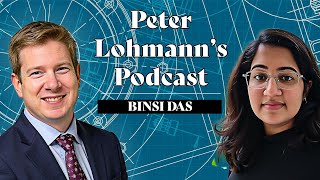
Binsi Das went from virtual assistant in Dubai to Head of Product at Sagan Passport. She credits founder John's mentorship for her rapid rise and now uses ChatGPT to review her own calls and Slack messages. She talks hiring remote talent, accent bias, and why weekly one-on-ones matter more than hierarchy.
Chapters
Whenever we have something like a workshop or something like large-scale kind of thing, we actually mention accent reduction, especially if they're into customer service kind of roles, because again, that becomes the one thing that gets them rejected from the position, which is their accent, right? And so we do mention it a lot. We have a lot of resources. We have accent reduction courses within Seek and You that you can take. So there's a lot of resources we're trying to bring out for these folks. We're also trying to see if we can just put together resources outside of it. Like, I've started taking one accent reduction class and I've started creating some content around that. And so there are things that we are exploring in terms of helping others. But at the end of the day, what we've seen is business owners do prefer a neutral accent, just so that especially people that are new to global talent, the accent is the one thing that like puts them off so much. I don't think so much for like, maybe probably your audience would not be as, because again, they're mature audiences. So it wouldn't matter as much. But I've seen for newer business owners, it's something that they just cannot get over with.
Friends, welcome back to Peter Lohmann's podcast. It's so great to have you here, and I'm thrilled to introduce Binzy Das to the show. Welcome, Binzy.
Thanks, Peter.
It's really awesome to have you here. So Bincy is Head of Product at Sagan Passport, and you may be familiar with Sagan, especially if you're a CRANE member. They help place RTMs, you know, global talent into small businesses of all kinds. And we've been using Sagan Passport to place RTMs here at RL Property Management for a couple years now, actually. So Bincy, I, I'm really excited to chat with you because you essentially are the RTM. You are global talent. But you've worked your way up into a super high leadership role at Sagan Passport. And I really am super excited to interview somebody who's coming at our whole world from the other side of it. We talk a lot about RTMs, but we don't talk to RTMs that much about their experiences. So in, in our world, we call them RTMs, but global talent. And so I'm really curious to get your experiences. Starting as an admin assistant for John and then working your way all the way up to being on the leadership team at Sagan Passport, both sort of what it's like coming into working for American companies and then how you navigated leading American companies from a global perspective. So before we jump into all that though, I'd love to have you give a brief background on yourself just so folks understand where you're tuning in from, where you're from, and just sort of your background, your professional career journey.
Yeah, sure. So thanks, Peter. This is basically my first podcast. I've never been on a podcast, so yeah, very happy to be here.
Great. Well, we're honored to have you.
Thank you. I'm actually based in Dubai. I actually say Dubai, but it's more of Sharjah, but nobody knows Sharjah. So based in Dubai, and I've been working with John for about 7 and a half years now. I started off as like a virtual assistant, and I hate the term virtual assistant, but that's what it used to be at the time. It was about, I think, 8 years ago. And initially I used to be a virtual assistant for like an author and I was on Upwork and John just out of the blue like messaged me on Upwork and he was like, hey, I have this position, I saw your profile, like, you know, wanna chat? And we actually got in an interview. It was like this very brief, very 5-minute kind of interview. It was very short. I cannot even believe that he actually hired me like with that short of an interview.
He's a vibes interviewer. I just heard him talking about that actually.
He is, yeah. So the way we connected was that I used to work at the US consulate as like a program manager, and I was in Saudi Arabia, and he was working at the time at the US consulate here in Dubai. And so we were like, oh, when I shared my background, he's like, oh, I'm at the US consulate. And so we just connected with that. And so yeah, that's where my journey kind of started. And ever since I've been on a very fast track to a leadership position. So I started off as an admin assistant. I was basically creating one report for John. That was my first job, one report and that was it.
Just a short-term contract?
It was, yes. I think we were 5 hours a week or something at the time. And that was it. It was very easy, super easy. Just there were some calls that came in and I had to summarize it for him. That was it. And again, no AI at the time, so—
Yeah, no AI. No easy button to summarize a call. You're listening at 1x. It's like so slow.
It is, yeah. And it was actually some work, like, you know, you had to take some time to do those. That was my first job. And then it was very, like, it was very apparent that I didn't want to just be a VA. Like, I wanted more. I wanted to be involved in things. I wanted to be in the middle of things. I wanted to, you know, feel the excitement of whatever John was going through at the time.
Now, is that, that's really interesting because I don't think that's true for everybody. Was that something you've always known about yourself? Like you're ambitious, you want to get involved, you want to be like decision maker?
Like even when I was a kid, if my mom would be like, oh, you're just a kid, go to the other room, let the adults talk. I'm like, huh, why? Like, I want to be there. I want to know what you guys are talking about, right? So it's like I want to be in the middle of things. I want to be given responsibilities, basically.
Yeah.
I want to be done.
So did you grow up in Dubai?
No, I grew up in Saudi Arabia. So my dad works at the US consulate in Saudi Arabia. And so I was there for like 13 years and then I moved to India to complete my bachelor's and then I moved back here into Sharjah after my marriage and I did my MBA from here. Yeah.
So this desire to be involved and learn things and start making decisions in the environment where you grew up, was that encouraged? Like, did your parents like encourage that? They were excited about that for you, your friends, your other extended family, or were they like sort of like, no, that's like not really your place, that's not your role? Like, I'm curious about the cultural background there.
So although I like, I'm born, I was born in India, I was brought up in Saudi Arabia, and my dad was very exposed to Americans at the time. And so he was always of the attitude that kids have to be involved in everything. Kids have to read, they have to know, they have to get a lot of knowledge and like, So he set me up with my first email and like he would introduce me to a lot of things. So there was the element of him being exposed to Americans that also gave me that kind of a cultural exposure. So that is one aspect of it. But as a whole, it's, yeah, it was, it was a really wonderful time just growing up. But as a whole, I don't think it was that encouraged, like at school or like everywhere. It wasn't very encouraged when you question things, you question authority, or you just go and tell like someone that, hey, I want to take on this project, that wasn't always that encouraged.
Yeah. And that's also the case in certain parts of the US, in certain cultures. That's, you know, it's a similar dynamic where that type of curiosity, especially around certain religious cultures and things like that, is discouraged. So, all right. So sorry to interrupt. So, so keep going there.
So after like I was maybe I cannot even say that I was an admin assistant because I was an admin assistant for like such a short period of time. Very easily I became like executive assistant, and then after that it was head of administration, and then it was head of operations. And then that was when John bought the company in the US and he actually moved to the US. So until then he was in Dubai, but then he moved to the US. And the moment I went from being like an EA, VA kind of thing to like a leader, was when John actually bought Garage XL, which was a company in the US. It was a home improvement company. And we tried to place like a lot of operations managers over there. So like we had like 3 people come and go. I've heard John talk about this a lot where like one person was drunk and he had to drive her to the AA meeting and all that. And in that moment, I used to be the executive assistant to John, right? So I was the one that was—
You're watching these operations managers come and go.
Exactly. Yeah. And I was the catch-all person for anything that got messed up. So if that person was on leave, it was like, hey Bincy, can you do this? Hey Bincy, can you do that? So I was an admin. And then one day I told John, John, I can't do this anymore. Each person quits and then all the job falls on me. Why don't I just do the job? So make me the operations manager. And that was the switch. And from then I've never held an individual contributor role. It was always management after that.
Awesome. That's fascinating. And yeah, because that's a big jump from being, you know, head of administration to head of operations, essentially. And it sounds like you were pretty bold to ask for that and tell John, you know, hey, this is something I think I can do. I'd like you to give me a shot. And knowing John, I'm sure he was up for it because he loves that kind of like ambition.
I wouldn't say bold though. It was more frustration because I was so annoyed at the fact that I had to do the job of somebody else but not get the recognition of the job. Like, why was I the casual person, right? So why don't I just be the person? And I know that I'm reliable. I know that I'll stay and like do whatever it takes, it needs to get done. And so I was like, okay, let's just— but there was a lot, it was a lot of logistical challenges because you are running a physical company in a remote environment with the team members not being exposed to that remote environment. So that was a big challenge, but it worked out pretty well.
Really cool. And you have since gone on to, obviously you and John have worked really closely together ever since then. John's journey went from owning one local home improvement company to following almost like a franchise model, which, and then that's sort of when I met John and we did PM Business in a Box. And so you and I connected quite a bit there. And then that didn't actually, didn't really go anywhere, but John kept iterating on different ideas and he eventually got to Sagan Passport, which is sort of, he's all in on that now. And you've been along for that whole journey and now you're, you're running, you know, you're helping run Sagan Passport, which tell me a little bit for folks who aren't familiar with that company, give us a size of like, how big is that company and what you guys do?
Yeah, so Sagen Passport right now is about 90 to 100 team members, and so pretty big. We started off with like 3 people and that was it, and that was like 1.5 to 2 years ago, and the growth has been wild. It's been crazy. So basically, Sagen Passport is a membership-based recruitment firm, and we have 2 different types of memberships. Based on which type of memberships you have, you have like a credit kind of system, and each credit would be considered one higher. So essentially our primary product would be hiring, custom hiring requests, right? We also have, we kind of think of ourselves as the Costco for global talent. And so we have one aspect of it is the hiring, but we also have other things like we have something called Sagan University, and that's where we teach leadership tracks and organization, personal organization for both the global talent and the members. We're also doing a lot in terms of product automation. We just launched a kind of like something we'll be calling Second Command Center. It's for an executive to work with their assistant like on one-on-one. So it's a whole system for just that. We just launched the app for it. We're building the Android app for it. So there's a lot going on with that. So basically lots of growth, lots of changes, lots of AI coming in. It's just been phenomenal.
So when folks are introduced to John's world, They often meet you as a part of that. You get pulled into meetings, you get pulled into podcasts, recordings with Lazy Leverage, you get pulled into just all kinds of stuff. And something I've even heard people say is like, how do I find my own Binzy? Like, I need, I need a Binzy in my life because, and they'll reflect on their experiences with hiring global talent or hiring RTMs. And they're like, man, how can I find someone who could run my whole operation? I mean, I can't even find somebody who can answer my emails for me. And they express frustration with that. And so I want to unpack that a little bit because I think it's really relevant for the audience. And I think there's a lot to that. I think the, the US-based employer needs to be, it's not just a question of like finding your Bincy, like. You're an awesome person, but you're not a one in a million person.
Not at all.
Lots of people who could excel in a leadership role at an American-based company, but the company needs to be set up culturally and with systems to enable that. And I'd love to hear you talk about what was it you think that John did right that allowed you to thrive and grow and learn and eventually take huge responsibility off of his plate?
I believe Bincy was created by John. I don't believe Bincy exists. Like, okay, I'm as a person, yes, I was there, but—
You are awesome. We know that, Bincy. That's why you're on the show.
But you know how plants grow in an environment where the environment actually enriches them? It's kind of that. Like, I don't think I would have grown to be the person I am if it wasn't for John. The opportunities that he gave me, the support, the mentorship, it's like I cannot negate the fact that that was a huge thing in my growth, right? So this is actually really funny because when I first got on that interview call with John, my Zoom wouldn't connect because I had never used Zoom. Because at the time, Zoom wasn't that popular enough.
Zoom was new, really new.
Yeah, it was. Yeah. So I had about 5 minutes where I had difficulties connecting with Zoom. And a business owner right now would've just canceled the call and be like, okay, see, yeah, this person doesn't even know how to do this, right? The first time I had to create that one report, John had to literally like hop on a call with me and show me, here's how you make a column on Google Docs, because I wasn't very familiar with Google Docs, right? Because again, Google Docs was not this thing. Like at the time it was all Word and Excel. And of course I studied all that, but you never use it. You never do things with it, right? So literally John had to teach me how to make my first report. I think I've said this every time, John and I hop on calls literally every day, every business day for the past 8 years, we've hopped on calls. We talk through things. So it's not hiring your Bincy, it's building your Bincy. That's what I would say. It's the amount of time and mentorship that you give this person to allow them to grow to that position that helps them get there more than finding the right person, I would say. Because for me, one of the things that John has also done is I have blanket access to everything that he has. So, like, literally bank accounts. Like, that's something I'm scared of, but he literally gives me access to bank accounts. I have access to all calendars. I can join any one of John's meetings. And we still have that where he's like, you wanna join, just join. It's okay. I have access to his calendars. And so the level of context, the level of access, the level of, like, anything that I have in the company, it's so much. That I don't think a lot of business owners actually do that. So yeah, I think that's what he does best.
Yeah. So great background there. And I picked up on a few themes. You pointed out that, you know, when you were early and just getting started with John, he had a lot of— it sounds like he had a lot of patience with you and he was willing to invest time in teaching you and training you, showing you new technology. Explaining how to do things and how he would like to see things done. That's a great example of where a lot of American employers who aren't familiar with working with global talent, they just expect that they should know how to do all these things and they have essentially no patience for connection problems, new technology training. So if you want to have a binsi, you need to get yourself comfortable and have patience because it's not just something that happens overnight. You're an example of like John invested many years of you all working together. This wasn't just like within 6 months you were running the company.
No, not at all.
The other thing I really picked up on from what you said is John has invested a ton of time in delivering context for you in the form of, you know, you guys talk every day. You're going to pick up a ton of context from that. You're encouraged to jump into any and all random meetings so that you can pick up more context. You have access to everything he does, emails, calendars, whatever. And so you just— all those little bits and pieces is you're building a mental model of the company and his world, which allows you to be effective as a manager. Today's episode is sponsored by AppFolio, the technology leader powering the future of the real estate industry. Speaking of the future, AppFolio has an event coming up that you can't miss, and I'm super excited to be on the speaking lineup this year. Get ready to dive into everything from using Agentik AI to surviving leasing season at the FUTUR conference happening October 13th to the 15th in sunny San Diego. So I get to go this year. I'm really hyped about that because everyone who went last year was raving about it. If you bumped into anyone who was able to go last year, you know what I'm talking about. It pretty much blew everyone away. Not only that, but I'm actually taking the stage to share exactly how I've taken the month of June away from my business for 4 years in a row. And I'm also really excited because my business partner in Crane, Wolfgang Kroski, is speaking in a couple sessions as well. He's honestly a more experienced presenter than me, so skip my session to catch his. Honestly, he's way funnier. Even better, catch keynote speaker Robin Arsand, global fitness leader and head instructor at Peloton, and wrap up with an epic party at the Rady Shell featuring a legendary performance you won't forget, I promise. So listen, Future's not your typical industry conference. It's not just a user conference for AppFolio. It's where the future of the real estate isn't just talked about, it's built. To register for this not-to-be-missed event and see more breakout sessions, visit futureconference.com. That's futureconference.com, and I'll see you in San Diego. So you work with a ton of US-based employers, obviously Sagan does. And so you've seen, you've seen a lot of Sagan Passport members be really successful in hiring global talent and promoting them. And you've seen a lot of folks be unsuccessful. What are some more of the things that you're picking up on that people are doing right or doing wrong?
I think, so one thing I've always seen John do really well, and some of the, like, that I do have my favorite business owners, I have like my favorite Seagate members. There are people there that are like, they're doing some names.
Who are they?
No, no, I'm just kidding. Not doing that. But there are some people doing things right, right? And one of the things that they always do is they're not a afraid to set hard rules, set expectations, and follow through with that expectation. So John and I have this no-nonsense kind of relationship where he'll not just say, oh, I'm doing a good job if I'm not doing a good job, right? So he's very frank with me and I'm very frank with him. So that's something I've seen a lot of business owners, especially if you've gone from a W-2 where you were a manager or in that and then transitioning to a business owner, they have a lot of hard time setting those expectations or putting their foot down when it comes to the hard stuff. So that's something that I've seen John do really well. A lot of these business owners do really well. The other thing—
The business owners aren't giving direct feedback to the full talent. They're just being too nice about it or not saying anything.
Yes. So they'll just say, oh, she's not working out. And I'll ask them, okay, what's wrong? Like, tell me exactly what's wrong. And I don't know, like I sent this report and she didn't get it back to me. And the next question is, did you tell her about that? No, not really. Yeah. So that's something that most, I would say, newer business— it's not even newer folks. I've also talked to people who are like 10, 15 years, they've been business owners for that long, and they still do that, which is they have a hard time setting those expectations and putting their foot down. That's something that I've seen John do really well. The other thing is also there's an element of development where it's like, so just as an example, about 4 years back I told John, John, I cannot hop on Zoom calls with anyone. Like, I'm not confident enough to do that. I don't want to do that. And the first thing John said was, well, if you want to grow, you have to do it. And he just, he put me in the middle of it. He will just randomly pull me into like Zoom calls with members or like whoever. And I don't think there's one partner that John had that I haven't met. Like I've literally met most of John's partners, business partners, friends, like a lot of people. And that's because he literally put me into situations where I would get exposed to that. And now I'm literally doing a podcast right now. So that level of, let me, you know, get them to that next level. Let me like mentor them and support them and do all these things. I've not seen a lot of business owners do that as well.
Really, really interesting. That's an angle I hadn't thought of. I think, When I reflect on my own experience with global talent, and so for example, Monica, my assistant who was placed through Sagan Passport, she's worked for me for a year and a half now or so. And when, when we first brought her on, I had worked with, with folks, you know, with global talent in the past, but this was my first like daily experience of working with someone from another country. And even for me, like, as I'm thinking about what you were saying, I think it was hard for me, and even still hard— is hard for me sometimes to give direct feedback to Monica because I'm worried that I'm going to, like, upset her or offend her. I think there's something about, like, like, if some guy named Jeff is working in my office and he's messing up, I'm just like, Jeff, What the hell are you doing? Like, why are you—
exactly.
Don't do it like that.
Yeah.
Because I know, I know how he's going to take it. And like, we have this shared cultural knowledge and like, I can look and see how he's responding and sort of pick up on some of those cues. But with Monica, you know, I don't want to upset her. And so like, I hesitate to give super direct feedback like that in the same way that I would like some guy named Jeff working in the office next to me.
But I've never seen John hesitate to do that because like—
John has no problem. Yeah.
Nope. And the one, like the one pact that we have with John and me, initially in my career, John used to do the shit sandwiches. So he'll do like, hey, you've done this thing very well, but I did not like you doing that. But then you did this thing very well. And I would like always tell him, just please stop that. You want to give me a direct feedback, just give me the direct feedback, right? I don't need you to sandwich it for me.
Yeah, I want to come back to, you know, you had a great show with John where you talked about cultural differences that make it challenging. So that's something I definitely want to come back to. And you had a great line about like, um, high context culture versus low contact, low context culture. I also just watched— so for those who don't know, Binsy is pretty active on social media. So you've got a great YouTube channel and you're very active on TikTok. I went back and watched a bunch of your TikTok videos. I saw a really interesting one and I wanted to ask you about that you produced about using ChatGPT to give yourself feedback. I think it was something like you took a transcript from a call that you had and you gave it to ChatGPT and you were like, tell me what I can do better. Share a little bit about that. Cause I thought that was really useful for anybody.
So one of the things that happens as you kind of climb up the management ladder is that the more higher you go, the less feedback people give you because, like, who can give you feedback other than basically your boss, right? And John and I at this stage have gotten to a point where we are sort of done with all of our feedbacks. And so now it's like he doesn't even join a lot of my meetings. He doesn't even have that much context into what I do on like a day-to-day basis. So for me, I still need— I want to improve. I still need to figure out where I'm falling short. And this was one of the things that I've figured out that is the easiest thing to do. And now after every single call that I have, and literally after this podcast, I would take the transcript of it and feed it into ChatGPT, and I'd be like, okay, what are things I did wrong? What are things I could have improved? What are ways in which I can improve my executive presence, which is something that I'm really working on nowadays. And so ChatGPT is amazing at giving those kinds of feedback.
Oh, that's so helpful. Yeah. And I think you're right about that. I mean, as I think about my own experience being a leader, I don't get a lot of feedback.
Exactly.
And so I probably do have these blind spots. I know that there's these companies. In fact, one of my, one of my leaders here at RL just did this where you can pay companies that will, they'll send out a survey to like all of your peers. And like people you worked with before and people who work for you, and they'll do like this 360-degree feedback, they call it, where you get all these really detailed feedback from people who know you super well. That's something I've thought about doing. And what you described is kind of like a, it's like a simple way to get that similar type of feedback. Yeah.
There's also something that I do, which is I'll take our Slack channels. The one-on-ones that I have with my team members, and I'll just copy the entire Slack channel and put into ChatGPT and ask it to analyze. And a lot of times I do that with like my executive assistants because I need to figure out, am I actually giving them information in a way they can understand? And ChatGPT will usually tell me, this is where you did not provide enough context, this was not really clear. So there's a lot that ChatGPT will tell you from those kinds of interactions.
Love that. The other thing I noticed when I looked at your social channels is that you're producing a lot of content for other— you're basically producing content to find folks to work for American companies. So part of your recruiting efforts at Sagan Passport is, you know, obviously you guys need new Sagan members, like the American companies, but you of course need tons and tons and tons of folks from all over the world who are available to work. So it was really interesting to look sort of like behind the curtain to see the other side of what goes on in the sort of RTM ecosystem. You have these great visuals about like work for American companies, how to get started, how to find a great freelance job. I can see you're playing around with like different languages, different wording, different phrasing, different types of things to try and like get people's attention. Tell me a little bit about that. Like when you post a message like that, are you getting overwhelmed with people who are super interested? Or like, what's it like?
So I'm actually on my own journey of figuring out what I want to do with content. I want to put myself out there, but I don't know who to put myself out there for. There's a part of me that's kind of orienting towards business owners, but there's another part of me that's orienting towards like global talent. So kind of in that initial journey of like figuring out what I want to do. But yeah, as soon as I put like one video, I think one of my videos got like 120,000 views or something. And it was all about just remote work. And as soon as I put up a video like that, I get like at least 30 to 50 messages, DMs, and then like 50 to 100 comments on like most people asking for more information about this. There are so many people out there that want a remote job. And so like there's no lack of talent, I would say. Lack of like English-accented, really good talent, maybe a little bit, but even that, no. Not really. So, there's a lot of people looking for jobs, and I actually stopped posting those kinds of posts because I was feeling so overwhelmed with, like, we have what, 100 to 300 jobs at a time, and I get 50,000 messages. So, it's way too much. Yeah, so I kind of stopped posting those.
Yeah, I think what's interesting about that though is there's this whole narrative in certain parts of American culture that like these employers are somehow taking advantage of these people and they're paying them below minimum wage. But the reality is these jobs are highly coveted in many, many parts of the world. And the salary is well above the median wage, let alone minimum wage for these countries.
Like just as an example, I posted a couple of days, I think on my LinkedIn as well as on Twitter, I got some of the salary data of people that joined us before Sagan. Actual offer letters, and I started comparing LATAM, South Africa. I also did one for Philippines. And literally in the Philippines, $400 is like the good salary. And that's what people make a month. Yeah.
A month. Yeah. Not a week, a month.
A month. Yes. And that's what they make at like a BPO or a firm like that. Right.
And that's the good job.
It is, yes. And that is with 3 hours of commute. You have to go into an office, you have to stay there for like more than 8 hours. Most companies don't stick to the 8-hour timeline.
Oh wow.
I don't know if you know that in most countries outside of the US, the 8 hours is not hard and fast 8 hours. People actually need to stay longer. Also, Saturdays are not off all the time. Like, sorry, you have to work Saturdays as well. So it's like 48 hours, not 40 hours a week. And the $400 is for 48 hours a week. So that's a lot. So now compare that to what some of our team members are earning in the Philippines, and it's like $1,200, $1,300, $1,500, even $2,000. Like, that's comparatively, it's a huge amount. And even my previous assistant, I asked her and she actually makes 4 times the amount that her husband makes. And so that's—
Yeah, that's great.
It's very, yeah, it's very interesting. So no, people are not exploiting global talent. Global talent literally wants these jobs. They want to take on these kinds of positions.
And you see that when you post a message and get overwhelmed with comments.
I do, exactly, yes.
Really interesting. You said something really interesting at the beginning of that, which is you're still kind of figuring out your own content journey and you're figuring out who you want to make content for. I can definitely relate to that, and I think a lot of people can. I also went on a long journey there of like, okay, do I want to make content for Columbus rental owners to try to grow RL Property Management, or do I want to make content for like my friends that's funny, or do I want to make con— and eventually I figured out what I really like to do is make content for other property management business owners. But it took me a long time to figure out, to sort of find my groove there. And I think a lot of people jump into social media and they have that— they feel this pressure to, I need to be doing something with social media. Like, I see everyone doing it and I see people getting all these comments and all these new customers. But like getting— I think you're on the right path, which is you need to get super clear on who you're— who you want your audience to be. I had a friend of mine named Adam Lehman, and one of the most profound things he ever said to me was, you need to figure out who do you want to serve? Who do you want to serve? And that question, I thought about it for literally years, and now I know the answer, which is property management business owners. That's who I want to serve.
That's awesome.
And once I got clear on that, it was a huge unlock, but it took me a long time to figure that out. There was a while there when I first started this podcast, the first season of this podcast with Russell Lowery, I wasn't sure yet. And you can see that first season, I was, I had this idea that I was going to serve all small business owners, but that wasn't, it wasn't the right answer, but I didn't know that yet. And so my content was like all over the place at that time.
Yeah. I think, I think for me with my content, so when I talk about, like, when I talk to RTMs or global talent, the problem is that I don't have anything to sell, right? Like, yes, I'm part of Sagan Passport and like Sagan, and we have jobs and all that. But for me, just through my content, I don't sell like LinkedIn optimization services or coaching or any of those kinds of things. So, at the end of the day, people ask me for things that I cannot give them. And it doesn't— so I think John does this a lot, which is he only does things that excite him, and that has rubbed off on me a lot. And so, It doesn't excite me to talk to just global talent. It excites me to talk to business owners and help them through all these processes. So I'm kind of figuring out how to get there, which is where I probably want to get to.
Easy Repair Hotline coordinates maintenance and handles after-hours maintenance calls specifically for residential property managers like you. They handle this 24/7, 365, and I know that because I'm a customer. More on that second. They integrate directly with your property management systems like PropertyMeld, Appfolio, and Rentvine, and they also provide AI automation to help streamline the whole process. They handle emergencies with live agents and text your vendors to confirm service and keep your tenants informed 24/7 so you don't have to be the one waking up in the middle of the night and dealing with that plumbing leak or that furnace that went out. Or just whatever random concern the tenant decided to call an emergency. They handle all that for you and keep you and your team out of the weeds and well-rested on nights and weekends and holidays. They have month-to-month service, which is amazing. No long-term contracts. And they asked if I could share a special offer with my audience. If you mention this podcast, you'll get your first month half off, which I think is an awesome deal. Again, we're a current customer of Easy Repair Hotline. I gotta tell you, and this is gonna sound kind of weird, but I haven't heard a thing about Easy Repair Hotline since we started with them about a year ago. And that is a testament to how smoothly things are running over there because we were with a different provider prior to using Easy Repair, and I was hearing about them just about every week. So if you're ready to hand off emergency after-hours maintenance and free up you and your staff's time, reach out to them at Easy Repair Hotline LLC. Llc.com and set up a demo. Again, that's EasyRepairHotlineLLC.com. Thanks again to Easy Repair Hotline for sponsoring today's episode. Sticking with that content theme for a minute, I know that you were involved with something really interesting that Sagan did recently, which is this month of content, or what did you guys call it?
30 Days of Content Challenge.
Yeah, tell me about that.
So it was just an idea that we had, which is we wanted to kind of put ourselves out there. So our LinkedIn for the global talent side was sort of stagnating. We didn't know like what to do and how to ramp it up and all that. And so I was like, okay, why don't we get everyone in the company to create content? And so we did this 30 Days of Content Challenge. So you had to register for the content challenge, and if you register, you actually are allowing us to like take your content and repurpose it for our main channels. And also you commit that you are going to do it for 30 days, right? And so we also had like a prize money announced. It was about $200 for the first 4 winners. And so it was all on consistency. So my thing was, it doesn't matter how good your content is, it always matters how consistent your content is, right? Because you pay, you make one viral LinkedIn post and okay, it did one-time virality and then that's it. Like it kind of drops off. So it was all about consistency, it doesn't matter what you create. And we had about 30 people from our 90 team members that registered for it, and almost everyone kind of went through with it till the end. At the end, I think we had about 300+ pieces of content, and all like unique pieces of content. And the idea was that you could do whatever you want. So if you want to do a video or a written or a podcasty style thing, whatever it is. And all of our, like everyone from screeners to recruiters to account managers, they all participated. And it was huge. Like we got a ton of followers through that. Our LinkedIn page just blew up. There was a lot happening. And even now we're kind of sustaining that. So you'll see a lot of us are still creating content. And so it was amazing. It was really good.
That is super cool. And I, Do— what was some of the best performing content? Did you notice any trends of like specific people or specific platforms or like what style of content was doing really well?
So we did try LinkedIn, we tried Twitter, we were there on TikTok, we did Facebook. So we were like kind of all over the place. The best pieces were on LinkedIn. That was where, again, it depends on who you're targeting. So account managers were supposed to target business owners and the recruitment team was supposed to target candidates. And for us, we had the best visibility on LinkedIn. Most of our recruiters got a ton of connections and they got a lot of candidates coming to us and things like that. Written content did well on LinkedIn a lot more than videos for some reason. There were some videos that did kind of well, but it was mostly written stuff.
Okay, awesome. You said something in passing that I want to come back to just a few minutes ago about your assistant. And I love this concept of you got to a point in the organization where you yourself brought in presumably global talent for your own assistant. And I think that's a great lesson for business owners. If you can get your global team successful enough and integrated enough and leveled up enough to where they are, can be made even more effective by bringing in their own assistants or EAs and things like that. When did you first hire an assistant for yourself?
So my first assistant was about 3 years back, and that was just before Sagan when we were doing the business in a box concept. Germaine was my first, I would say, assistant, and then I had MJ. Both of them are like pretty popular in Sagan's account.
Yeah, they've both gone on to be very, very well-known individuals themselves.
Exactly, yeah. So they were based in the Philippines. They both were the first assistants. And I would say initially everyone brings on an assistant because there's no one to kind of handle that functional responsibility. So for MJ, I brought her on because there was no one to handle sourcing in the company. And so I used to have sourcing and she would help me with sourcing. Now she's been promoted to sourcing team lead. And so like she has her own team. She has like 5 members underneath her. She's She's just handling her own stuff right now. Yeah. So a lot of times when I bring on an assistant, it's usually because I'm in a position where I need to hand it off to someone and I need them to like stay under me, learn the thing, and then have them like go off on their own. So that's usually how I use an assistant.
And that is very much how John does as well. John and I have talked about this, like he's got this up or out model with his assistants where he wants he wants to bring in assistants who are sort of like under his wing for a period of time, and but they're kind of superstars, they're like rock stars. So they very quickly, they're like, he mentors them and then they go on to do great things after, you know, 6 months, a year, 2 years, whatever. I'm very different. I have this desire to have an assistant with me for like 20 years. Like, I want an assistant who knows everything about me and can predict what I'm going to want and just knows all these little details of like where my old house is and like, you know, the names of all my pets and like all of these details that come with like working together for this really, really, really long time. Like Warren Buffett, I think his assistant, I forget her name, but he's— she's worked for him for like 25 or 30 years. It's insane. So I think, you know, both models can work. And it's interesting that you've replicated like that similar model with yourself, like you brought people in Now they've gone on to be successful in their own right. Presumably you've hired new people since then.
I have, but there's a part of me that, like, after MJ left— so MJ was one of my best assistants. Like, we had so much chemistry. It was like John and me. It was so good. Like, I could, I could conquer the world with her. So it was that good, right? And after she left, I don't think I found anyone as good. Like, I've gone through a few after that, and I've never found anyone as good. And there is a part of me that's like, I wish that I didn't have to promote them. I wish they were my assistant for longer because, again, the context, the things that they know, the things that they can support you and help you with, it's just insane, right? So, as much as I love John's model, I might be leaning towards your model.
Nice. That's right. I got a convert. So, when you brought in, you know, these assistants, you're now on the other side of it. You are having to train them, coach them, give them the context that they need to succeed. So did you find that that was really easy for you since you had been on the other side of it, or did you fall— did you find that you were falling into the same old traps that the American employers do where you just assume that they know everything and like, you're like, oh shoot, now I know why, like, these guys are failing with remote talent?
Not really. Again, I'm very used to— I know what I wanted when I was an assistant, so that has always helped me to like bring on assistants easily. And so I never had troubles with assistants, but my trouble is when the person is not really the right fit for me. So that's, and that's something you kind of figure out only after you start working with them. And so that's where I would always have problems with, but onboarding was always like easy for me. Again, I use John's playbook, so I'm very, John has rubbed off on me a lot.
Yeah, same. And yeah, I mean, if you want John's playbook, by the way, we should do a little plug for Sagan if we haven't already. Join Sagan Passport or join Crane and you basically, it's kind of almost a backdoor to have a membership. Let's talk about, we touched on this earlier, but I want to come back to this idea of the cultural differences that remote talent and the American employer, where, where they don't always align. And this, this idea of a high-context versus a low-context culture, share a little bit more about that because there's, that's a, there's a lot to talk about there. And I know you've, you've talked about it a lot, but I just want to at least talk about it briefly.
So, when I used to first come into meetings with John, I had this, I had a really hard time kind of telling no to John or saying that I don't think it's a good idea because, again, Americans are intimidating. They're very opinionated. They have, they're very loud, very confident, very, you know, all that. And then you have somebody like me, like 23-year-old me.
And John's kind of an extreme version of that.
He is, yes.
He's definitely like—
He's a very extreme version.
Yeah.
And then you have like 23-year-old me that's like very meek and very, I've never even talked to people that much, come in and I don't have the guts to say no, right? And so John figured out that the way to kind of gauge my response to things is to see my facial expression because I have a very expressive face and he can almost in a second understand that, okay, I don't like it, or there's something that I kind of wanna talk about.
He also has some training in reading facial expressions and like picking up on sort of subtle cues.
Exactly, yeah. So one of the biggest differences I've seen is the whole high context versus low context kind of cultural difference, which is with Indians or with like Asians as a whole, I've seen a lot of things are not explicitly said. Like, I'll not like directly come and tell you 'Hey, Peter, like, this is very stressful for me.' Like, just as an example, I wouldn't say that. I would just be silent, or I would kind of— there's even situations where I've seen business owners come and tell me that their global talent just up and quit, like, all of a sudden, and they don't know why. And the whole reason was that they were so overwhelmed and bombarded with things, but they didn't have the guts to, like, actually come to the owner and be like, 'Hey dude, I'm overwhelmed. You're giving me way too much. Can you please help me out over here?' Because They cannot say that because it's not encouraged in our cultures, right? We are taught to sit silent in the classroom. We are all taught to not talk back to teachers. Parents are like, people of authority are supposed to be respected. And now we come to an American culture where the boss is like, oh, hey, we're friends, like, tell me whatever you wanted to say. And it's intimidating. Like, it's not easy to just come out of what 15 to 20 years of background gives you, right?. And so that has always been a big shift for me. And it's kind of, I was exposed to American culture when I was young, but still it's still integrating. So that's something that John has actually figured out really well. And he, I've seen him interact with any kind of cultures so easily. And I'm very surprised by how easy it is for him.
Yeah. And he definitely has some special skills in that area, but there's a lot to learn from what you shared there. This idea of a high context versus low context culture. You're right, Americans, you know, we have no problem just saying, hey, I didn't like that, or hey, do this differently. I heard you describing on another episode with John the idea of a high-context culture is the communication is more sophisticated, it's more understated, it's more nuanced, right? And so in certain areas of the US, It's more like that. So actually here in the Midwest where I am in Ohio, it is a higher context culture compared to New York or even the West Coast. Here in the Midwest, it would be, it can be considered rude to give very direct feedback or state your opinion very bluntly, at least without a little bit of more of a shared experience to just come out and say it. Still, we would be considered very low context compared to other cultures around the world, but it's within the context of the US. And so I actually had trouble with that when I moved because I grew up in New Jersey, so very close to New York, like very blunt, very direct. Tell me what you think. And then when I moved to Ohio and I brought that same super low context approach to communication, I was perceived as rude and arrogant. By people in Ohio. And it took me a long time to figure out why no one liked me when I first moved here, because I was too direct, I was too blunt. So similar type of thing going on between American employers and global talent. Most of the rest of the US— or I'm sorry, many of the areas where American employers are hiring global talent from has this high-context culture where you just, you sort of like intuit what's going on with the other person. You read their facial expressions like you were talking about. They'll say something very, very small, but it has a big meaning that you need to learn. It takes time to learn some of those things.
Yeah. There's this— like, we make fun of it in Sagan, which is most of our Philippines folks will tell you something which is like almost nuclear level in such a way that it feels like, oh, you know, that customer is going to quit. Like, the customer is going to leave. It's okay. Like, we've got it. And like, they'll just brush it off. And you just realize that that's a huge thing and they just, they haven't like given you anything more to go off on. And so, yeah, especially with Philippines, India, Pakistan, Bangladesh, like East Asia kind of regions, that's a little bit more pronounced. If you go more into like LATAM, Africa, you won't see it as much. People are much more like communicative and they'll actually push back a little bit more, but yeah.
So, for American employers, other than just being aware of this fact, what are some ways that we can both make ourselves easier to work with for different cultures? And then what are some ways that we can get better at picking up on what's going on with our global talent?
I think a lot of people don't— like, you have to have some kind of an interaction with the person to pick up on these things, right? A lot of people don't do the one-on-ones. They skip the calls that they have. They skip a lot of these interactions within that are needed to pick these things up. Like a video call? Yes, a video call. So unless you actually— like, you can see my face right now. You can see that I'm pretty relaxed. I'm okay. I'm talking about things. But if I was a bit silent, if I was a bit distracted, you'll kind of pick on it very easily. So I think that's a big thing, which is meet with your global talent at least once a week. If more than that, that's really good, but at least once a week. The other thing is with John, I think one of the things that has always helped him was having me, which is my team members can always, if they cannot go to John, like I am a mentor-ish figure in the company, right? So anyone in the company, whether it's like raises, it's problems, it's issues with other team members, instead of them going direct to John, they can come to me. So I'm always like a kind of like a second-in-command-ish kind of person to like catch those kinds of problems and bring it up to him. So if you're a business owner that has like more than let's say 5 team members, I would like assign one person to be that kind of a mentor-ish kind of person that people can actually talk to. Because at the end of the day, they may not be comfortable enough opening up to the CEO of the company because you have to recognize that you hold a big position in the company, right? And so having somebody else there that can help them through those, that really helps.
I love that advice. And I, I could even see us doing something like that at RL Property Management. I don't, we have, I don't know, 6 or 7 global team members, but I don't know that we have like a leader amongst them that the others could go to, which that sounds like a really great idea. Oh, I was going to say in that other episode with John that I was listening to right before we started recording, you were pointing out that in American culture, it's really easy and common for workers of any rank or status to go to the CEO and say, hey, I need a new computer, or hey, you forgot to give me the raise that we talked about, or like, that's just very normal. It's— some people call this like a fairly flat hierarchy. Whereas in a lot of the cultures that you're describing, that's unheard of. You would never go to the top.
That's a big no. Yeah, absolutely not. It's like, just as an example, last week we have a new recruiter that's onboarding. So we have recruiters, we have team leads, and then we have the head of recruitment, right? So one of the team leads just pulled in the head of recruitment into a chat with the recruiter, and they were just kind of going off of like, hey, some things that need to be fixed and all that. And suddenly this recruiter got very defensive. Because you pulled in the boss, right? You pulled in the big boss, and it wasn't even John. It was our head of recruitment, Sophia. And I found that so funny because for me, that didn't even register. At this point of time, I am very used to the flat hierarchy, and I don't mind if somebody pulls John into any conversation that I have. But for some of these newer folks that are joining, that is, again, it's So, it just doesn't work out for them, right? And so, yeah, you would almost never see anyone pull in a boss unless it's something really bad. And so, going to John or going to even me in some situations now, it becomes this thing where you're complaining to the big boss. And so, yeah, it just doesn't work in most of these global talent circles.
And I think a lot of people listening to this might be thinking like, they might be thinking to themselves, what's the problem? It's so obvious to them that this is the way business is done and it just makes sense and it's logical and it's efficient. And if you've never traveled the world or you've never worked with international talent, you just, you don't realize that to you what seems like common sense and something that everyone does is actually specific and unique to American business culture.
It is.
Yes. Yeah. And so, I just want to encourage folks, like, and let me give a specific example to help make this a little bit more clear. So just like, let's pretend you as an American employer, let's pretend a brand new employee who just started walked into your office and said, hey, what's your religion? Tell me about what religion you are. You'd be like, oh, that's no, that's not appropriate. I don't want to discuss that with you. That's such a funny example. Yeah. That's the equivalent of like, and you're thinking to yourself, well, no one would ever do that. That would be so inappropriate. That's just not done. That's what it is. Like, that's cultural, right? And in some cultures that probably is normal. And in the same way that no, like a new employee would never feel comfortable doing that. And even if you said to them like, hey, we talk openly about religion in this company, just so you know, like that new employee is still never going to come and ask you that. That's how it is in these other cultures. They're not going to come and say, hey, my computer's too slow, or hey, this thing you gave me, like I didn't understand what to do. I need more information. They're going to feel the same revulsion to asking a big boss that type of question that an American employee would feel about asking the big boss about their religion. It's just not done. And so you can say it, you can tell them 100 times, it's just, there's going to be a long learning process and an adjustment, and you need to do your best to accommodate that as best you can and kind of meet them halfway.
Exactly. Yeah. One of the other things I've also noticed is when it comes to LATAM, people are very social, like they want the socialization or they need the socialization even. And most Americans don't, like they just start the meeting off, right? Like you come into the meeting and you're immediately jumping into the agenda. And usually in these cultures, that doesn't really happen. And it's a very, it's a hard thing for them to digest that they're suddenly just jumping in.
Interesting. So they would prefer to start a meeting off with a few minutes of chit-chat about family and You know, what'd you do this weekend and things like that. Exactly. Okay. And Latin America, where are they on the high context, low context?
Definitely a little bit more leaning towards the high context. I don't think anyone outside of the US or maybe like, I don't know, a few other locations are that much of the low context cultures. Okay. Yeah. So, most, most of the people that you're hiring, if you're a US-based business owner, you're dealing with a high context culture.
Got it. Let's talk a little bit about accents. I think this is something that comes up a lot with folks who are engaging with global talent for the first time, or even folks who have been engaging with global talent for a long time. What's your experience as global talent working with American employers? How is your accent perceived? Is it something that you care to work on? You know, reducing it or like how do you talk to other, like when you would, you know, you mentioned that when you would do a social media post about American jobs, a lot of the people responding would have like not great English. I'm just curious to hear about it from your side of things.
So it very much depends on what kind of roles you're sort of targeting. So one of the things that I've always noticed was that accent is very much depending on what kind of jobs you're targeting. So if you are in kind of like a customer services sort of role or anything where you have to talk to a customer, they don't really like the Indian accent, the Philippines accent, especially US-based customers. They're okay with a Spanish accent, but Indian and Philippines accent has a negative rap. And so if I was in a role like that, and I used to be in a role like that, I used to work on my accent a lot. But again, the Indian-ness never just leaves you. And so it just sticks. But when it comes to regular work, when you're not dealing with a customer service sort of role, it depends on whether your English is good enough to communicate with business owners or not. That's where the line gets drawn. So my accent is not like American level, but you can understand me. So as long as you can understand me, that's all that I need to do my job. And so I have worked on my English level, but I haven't really worked on my accent level because again, It's not something that I felt I've needed, although I have had problems with American customers, especially when we were in Garage XL, where they would kind of demean me for the fact that I had an accent. Sure. So that comes up a lot.
Got it. So, and I know that Sagen Passport is really helpful in providing information both for American employers about Hey, you know, they've shared information about that perception of certain accents being negative versus like Spanish accent, not as much. And I've also seen Sagan produce some really amazing content for, for the global talent about working with American employers. And so if you're, if you're talking with candidates, do you give them advice on what types of jobs to apply for based on how based on their accent, or do you, do you direct them to resources if they're interested in reducing their accent? It's, it's an interesting thing that people just are kind of scared to talk about, I think, but it's very relevant if you're going to be hiring global talent.
It is, yes. And whenever we have something like a workshop or something like large-scale kind of thing, we actually mention accent reduction, especially if they're into customer service kind of roles, because again, that becomes the one thing that like gets them rejected from the position, which is their accent, right? And so we do mention it a lot. We have a lot of resources. We have accent reduction courses within Sage and You that you can take. So there's a lot of resources we're trying to bring out for these folks. We're also trying to see if we can just put together resources outside of it. Like, I've started taking one accent reduction class and I've started creating some content around that. And so there are things that we are exploring in terms of helping others. But at the end of the day, what we've seen is business owners do prefer a neutral accent. Just so that especially people that are new to global talent, the accent is the one thing that like puts them off so much. I don't think so much for like, maybe probably your audience would not be as, because again, they have mature audiences, so it wouldn't matter as much. But I've seen for newer business owners, it's something that they just cannot get over with.
Yeah, I think you're right. It's definitely, it takes some getting used to. If you're a business owner, you've only ever worked with American employees, Your, your only experience with, with someone speaking accented English might be an incompetent customer service rep who was not empowered, not trained, didn't even care about the job because it was some horrible low-paying job. It takes a little while to overcome that bias. And but once you do, it opens up a whole new world of talent, which is amazing. I think I want to close by asking you about some of the other nuances of working with American companies. I was reading through this really great little ebook that John wrote for Filipinos who are interested in working with American companies. It's like a guide to working with American companies. Something I didn't even realize is all of the sort of catchphrases and like sports analogies and all of these American phrases that if you just like took a course on English, it wouldn't necessarily come up, but very common use in business culture, even like the stuff that even we Americans make fun of, like the corporate talk, like, oh, let's circle back on that, let me double-click on this, can really trip up people who aren't familiar with it. So how did you navigate that when you first were working with John?
It's still something I'm navigating. The other day, John and K1 got on a call with me and they were like just riffing about this movie that they watched. And apparently it's this super popular movie in the US and like everyone has watched it and everyone understands the references. And I'm just sitting and staring there and I'm like, I have no clue what's happening, right? And so it's still something I'm working on. Again, you're not exposed to that culture, so you're not going to be exposed to any of those kinds of things. Baseball analogies are like, I have no clue what they mean. And so John just uses the crap out of them. So that's usually very difficult for me to navigate, and it still is, right? I think Americans have this thing of having people take a lot of initiative in their work. Like, they're supposed to keep improving, they're supposed to keep upgrading and all that. When it comes to a global talent, like, just as an example, if you go into my, like, husband's office, right, he's working in a local company over here. There are people there that have been working there 15 years, and they've been working on the same thing for 15 years. And so it's the exact same thing, it's the exact same process, the exact same customers, The whole reason— thing is things need to keep moving. There is not a lot of improvement focus that I've seen in local companies, whereas American companies I've always seen, they're always like trying the next thing. They're always wanting to grow and improve, and there's always that going on. And so that's a very difficult thing to get exposed to, and especially if you're joining a startup, like that is very rapid. It's too fast. And some people, they just cannot keep up with the pace. They cannot keep up with all that. They just want a stable job. They want to come in, do the work, and leave. So you'll notice that with global talent, that is something that it's just hard to get used to, and you just have to have some patience to get them used to. And some people will quit. They'll just not be able to take the pressure of it all, and they would end up quitting. But that's something that was, for me, a very big surprise when it comes to US-based companies. Like, I didn't expect rapid improvements to happen all the time. But now I'm like, yeah, it's okay. I got it. I understand.
Yeah. And John is certainly always trying something new. No doubt about that. So, awesome. Well, Bincy, this was really great. Loved having this discussion with you and hearing a little bit about, you know, life on the other side of the new global talent world. For folks who want to follow along with your journey and your growth at Sagan, where's the best place for them to do that?
I think right now LinkedIn, because I'm super active on LinkedIn. So LinkedIn would be the place to go to.
Yeah. Awesome. Well, this was great, Bincy. Thanks again. If you like the show and want to get connected to the community, you can follow me on Twitter @PSLohmann and subscribe to my email newsletter on my website, peterlohmann.com. I try to share as much valuable property management content as I can on a regular basis. Thanks again for listening and have a great week.










