in 2026 every business is a media business
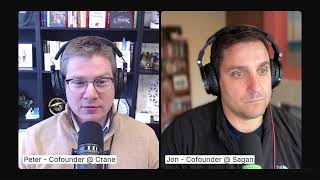
John Matzner and Peter S. Lohmann discuss AI governance through a human-review system, where AI drafts get signed off like an engineer's stamp. They argue every small business needs owned media like newsletters and podcasts as a core growth lever, not paid ads.
Chapters
of Lazy Leverage. I'm joined here by my sweater-wearing, PM-dropping, community-building, heterosexual life partner, Peter S. Lohmann, Eagle Scout extraordinaire. How are you, Peter?
I'm doing really well, John. It's funny you mentioned the Eagle Scout thing. I just got back from a skiing trip and, uh, 3 out of the 5 were Eagle Scouts. Coincidentally, we found out when we were there.
So It's one of those skill identifier things where I think Eagle Scout is like a great selector, like a kid into chess, you know, it's like one of those, like, I hate the stories. I was like, I sold candy out of my locker, but it's like one of those kind of like cluster of the types of people who end up being in our worlds as we age are a lot of times Eagle Scouts or serious Boy Scouts. So what are we talking about today, Peter?
So right now we're going to talk about two things today. The first thing we're going to talk about is, um, the problem of AI-generated content in outbound communications at your business. Yep. And, and not just outbound communications, but outbound work product. And we're also, uh, so we're gonna spend a little while on that, and then we're gonna wrap up the podcast by talking about media and how you and I are thinking about media in 2026 and the heavy emphasis and investment that we're both putting into media and sort of what we think that means for small business owners in general.
[Speaker:BRAD_STONE] And why we think everybody should be making similar investments. I think that's honestly the corollary. Okay. So on the AI piece, there's something called the golden mean from philosophy, which basically says on the side of a good characteristic, there's two bad ones. It's surrounded. So Peter is humble, but he's not underspoken and he's not outspoken. He's appropriately gauged, right?
And similarly, my mother would say it's possible for there to be too much of a good thing.
Correct. It's Goldilocks.
She loved pulling out that line, too much of a good thing.
It's Goldilocks. Don't be underspoken, but don't be outspoken, right? Don't be arrogant, but also don't be, you know, anxious. And similarly with AI, I think we're very early in this trend, you and I both, I think. And if you're listening to this, you're very early as well. If once you get outside our little internet bubble. I think that using AI in the workplace at the individual team department pod level is simultaneously too used and not used enough, and there's a golden median— medium. So I will be specific. In some instances of work product, if you are not consistently using AI I'm going to fire you. So as an example, if you are meeting with a customer and you need to send a follow-up email based on the transcript, and I find out that you went line by line through the transcript and manually took notes over the last 3 hours to send to the member as a follow-up, I'm gonna say, if you do that again, I'm gonna fire you. Take the transcript and put it in Claude or ChatGPT or Llama, or it doesn't even matter, and just say, please pull out the relevant executive summary.
Or even worse, like rewatching the video in real time.
Yeah, exactly. Taking notes and putting your earphones on and saying like—
Rewinding it. Oh, I didn't catch that.
Correct. So on that vector, I'm like, if you do not use AI, I'm kicking your butt out the door.
Yeah. So let me pause for a second though. So what you've just articulated, I think makes sense to a lot of people. Like, yeah, I mean, totally, we should be using AI, it's more efficient. And so what, what's going on right now is a lot of people who are listening to this show and business owners are saying things like that to their team. They're saying things like, you need to be using AI, you need to be using ChatGPT, you need to be using meeting summaries and AI note-takers. And so employees are getting the message, and so they are starting to deploy and get familiar with these topics or tools and they're starting to use AI in their workday. So, so, so far so good. Yeah. And what were the reason? You know, none of this is news, but what we're about to talk about is where I think it gets much more interesting because what you're about to describe is a scenario in which if you use AI for X, Y, Z, I'm going to fire you.
Correct.
And so it's very confusing for team members to try to understand, well, I thought he really wanted me to be using AI. So then they start using it everywhere and then you get mad when they use it on like a customer, you know, something important where it's clear that AI was used.
Correct.
So I just wanted to frame that up a little bit because, yep. Yeah.
So I think let's define the other extreme, right? Reductum ad absurdum, which is reduce things to absurdity. On the other extreme, somebody who, when they get a Slack DM, they respond with ChatGPT. From an internal team member, and they just cut and paste and says, hello John, thank you for your message. While it's not exactly the right time to get on a meeting, that said, it could be. And you're just like, what are you doing? Like, you found a magic typing machine and now it's run wild, and you have no sense of where it is appropriate and inappropriate to use this tool, right?
Yeah. Or, or it's like your biggest customer emails.
Yeah, of course.
And you respond back with, you know, AI slop.
Correct. And so the place where I'm eager for your input is, given your background as a systems engineer, I believe that this is ultimately a question of system design in that certain uses of a technology, just as if you're designing a manufacturing system, or a water overflow system requires certain checks and balances and manual controls. And oh, if it's this use case, you can just whatever. But if you're changing a structural foundation, you need to get the professional engineer's wet signature because that's a load-bearing wall. You don't get to just— and so I think that there's some good lessons to be gained from your background in, in setting up systems where it's not no AI and it's not max AI. It's like, that's like saying no internet, max internet. It's like, well, we can be more sophisticated. So I was eager for your kind of thoughts about man in, man in the loop design. That's where I'm spending my time thinking about it.
So my, my business partner is a professional engineer, PE, and he and I together own an engineering firm that he runs. And that company does consulting engineering work related to structures. So if you own a structure or building of any kind that you need a professional engineer's opinion on, whether you need an inspection or you're moving a doorway or you need to understand the capacity of this beam or you're doing a reserve study for your association or for your building. Yeah. Um, that's what they do. And so, and I worked as an engineer in my prior career even though I'm not a professional engineer. And the way it works in the engineering world is, um, the thing that you're kind of referring to with the wet signature is called stamp the drawings. Okay, so, oh, oh, that's ex—
okay, podcast over. That is exactly what I was looking— so keep going, but that's exactly what I—
thank you. So when you become a professional engineer, which is licensed by Oh, I'm so distracted.
That's so good. I'm like, keep going.
So my, my business partner is licensed in several states, and so he has stamps issued to him by the state saying this person, as of this date, is a registered licensed professional engineer in the state of Ohio. And so what goes on at these engineering companies is the more entry-level engineers and technicians and CAD experts and stuff. They draw up the proposed modifications or the original set of drawings, and then the engineer reviews them. And so the engineer is kind of looking over everything, checking, double-checking some math, and it'll often go back and forth through several sets of revisions. And when it's all said and done and the engineer is happy with it, he stamps the drawing. It's a physical, literal wet ink stamp that goes onto the drawing and says, I, licensed engineer in this state, believe this structure to be safe, structurally safe. No one will die if it's constructed according to these specifications on this drawing. And that's what gets used to, to build the building. And the engineers take this very, very seriously, of course, because you're, you know, people's lives are on the line. Yeah. So now there's a couple of things we can apply here. The obvious one is like the engineer isn't the one doing all the work. But he is accountable for the final product. His eyes, his experienced eyes. Yes. Run over everything. He's kind of giving it both a sanity check, like, is this a 2x4 holding up a skyscraper? I don't care what the math says, as well as probably, you know, running some calcs to just like double-check certain things. And the other thing that happens sometimes is you get these, you get these like mills sometimes. I forget what they call them in the engineering world where it's like the— somehow an engineer is stamping like thousands of drawings a day, right? And it's basically like they just have low-level people doing the work and it's very dangerous and that's how mistakes are made. And if you get caught doing that, because you can kind of rent out your stamp in that way, if you get caught doing that, of course you get your license revoked and could be charged with various, you know, whatever. So that's the situation from the engineering side. So why don't you take us into the land of AI?
And let me, let me pull two other noticeable things about that. First, to me, I do think, and this is obvious, but just to make this very explicit, which is it takes more than 3 days to get your stamp ability. Oh, for sure. It's very hard. There, there is a real no shit. This person has shown excellence in a high stakes environment and I'm handing you the stamp and you might have somebody who you have no changes anytime they do a blueprint, but it still must go through the hands of a stamper.
The final exam, setting aside the educational and course requirements, the, the exam to begin your work as like a quasi-licensed engineer is like 6 to 8 hours. Yeah.
So it is, that is not just you have a pulse and you get a stamp. Right. So that's the first thing. The second thing that I also think, and, and I think this is a big deal, I, I love the physicality of it. I actually think that that's important. When we talked about, I think a few episodes ago about like inputting into a dashboard, I think it's the equivalent. Analog lends a certain level of seriousness that a click in a database in their email when they're half asleep with a couple beers in them doesn't. When they physically go, okay, I have to physically put my mark on this like the freaking ancient pharaohs did with their ring, I think that also lends a certain gravitas that is symbolic of saying I am incurring liability.
There's no chance you like clicked accept without reading it or something.
That's my point.
You got your stamp out of the drawer.
That's my point. It's like, it's like an apostille, apostille, like that lawyers have and stuff like that. As a, as a small thing, I believe that this model of AI or lower skilled production that then bumps up against the licensure is a very, very powerful model when you're even, for example, looking at something like plumbing installation, or even a law firm, which is— you're right, I do have to have a lawyer at the end of the day. This deposition must be certified by a lawyer. But all of these other things that go into putting a deposition together, whether it's an AI tool or low-level lawyers in Mexico who help you draft the arguments, I believe this structure is a fantastic structure in the age of era and a global workforce, which is like the buck stops here and my neck's on the line. And I think it's a wonderful analogy to what I think needs to be coming with AI. So the specific example that I'm thinking of here is we, for example, when we do an interview, we automatically take that interview and it ends up into a candidate package. And we use a bunch of API calls and we take a long interview. It's saved in a certain Google Drive or Airtable database or whatever. And then that transcript comes. And when I present a candidate to Peter, it says, here's the transcript. It has my recruiter asking a question, then it has an answer, then it has my recruiter And 98% of the time, it's perfect. It's absolutely incredible. The AI does a great job. 2% of the time, there is a ghost in the machine and it gets the wrong interview. It's, you know, there's a sunspot. And I caught it a couple times with our recruiters. And I realized what happened, which is because the frequency is so low, they get lazy. Because the 9 out of 10 times there's, they literally don't change one letter. They're like, this is a perfect transcription. But 1 out of X times, there's something gunky. And so what I realized is I need to, in effect, it obviously won't be nearly as serious as a professional engineer stamp, but I need to essentially have some analog, I mean, like something that is out of a normal work pattern that says, I'm initialing this. And it just says prepared by John Matzner. So there's one throat to choke. And you don't get to say, oh, the automation sent that. And I'm sorry that the gobbledygook. And I'm just realizing this certification layer, this stamping layer, is going to look like the future of a lot of AI-assisted work. And so I'm super happy that, that you, you gave me some verbiage around that.
Yeah, what's happening right now is a lot of work that was being done manually by pretty smart humans has moved both to just fully AI tools. Yep. And so that's some of that work, and some some more of that work has moved to less experienced humans.
Yep. Who haven't seen all the edge cases and which is what should happen, by the way.
Of course, that's what you work down the Maslow hierarchy of, you know, whatever.
Yeah. The Maslow hierarchy of whatever. Put some respect on my name.
What is this, the Maslow hierarchy of leverage?
I don't even know. I don't even know.
So yeah, I think it's a hierarchy of leverage. Someone else said they had a name for it, a different name.
John Cipher called it something else.
I don't know. Yeah, but yeah. So that's the right thing to be doing. But yeah, it's like because that's happening, we're driving up efficiency, but mistakes are making their way through that otherwise would never have.
Correct.
So we need a way to catch those and we need a way to hold the people accountable who are preparing the work product for the quality of that work. And so you're proposing like some kind of a made with AI but checked by human stamp, not, not, not, this wouldn't go out externally.
This is for internal use so that you aren't wasting your time reviewing an email or a memo or a note that is not ready or is just clearly, you know, and it's, and, and the way I've been trying to like think about this, but I, this is going to be, this is going to be endemic, which is I'm trying to think about, you know, how to position this with my team. And one of, you know, I, I'm trying carrots and sticks. One of the things I'm saying is, guys, if you are just sending a raw AI output, what would you say you do here? If you are not even reviewing the whatever and you're putting some additional commentary and you're adding some flavor and you're adding that juge, you don't have a job. As soon as I just plug the API in and some agentic logic. So if you are really literally just taking an output and sending it, you know, your customer service team just takes a customer question from an owner investor, cuts and pastes into ChatGPT and puts it back in the email system. What would you say you do here?
Yeah. And this is where I want you to tease apart a little bit how you, how you articulate to your team, when do you go fully AI, when do you use no AI, and when to do the, the thing that we've been talking about where it's like generated by AI but checked by a human. Because like we talked about at the beginning of the show, it's confusing to be a team member at this point who doesn't have— who isn't on the cutting edge of AI, doesn't have the whole context of the company, where value is derived. Like, I thought we were supposed to be using AI and now he's mad at me. Used AI.
Yeah.
So how do we explain in simple terms or in like a nice graphic, or like, how can we articulate this? Because I You and I have an intuition around it that is hard, I think, to put into words. Yeah.
I think if we go back to like you and I's foundations, I think a lot of this is a lack of leadership because it's so early from us, which is why does my team not have a one-page document in Notion that's called a simple guide to using AI at RL Property Management? Background: AI is the future of property management, but done poorly will cause us to break promises with our owner investors and tenants. This is a short reference guide on places where you should be full-throated and use AI from the top of your lungs, and in other instances where you shouldn't be. Please keep reading. So I ultimately think it is our job as leaders to provide the environments and the coaching and the training and the best practices because they are not, like me, spending 50% of my waking hours thinking about which AI system to use and which model to use and when do I check the output and when do I don't and where do I need it to be epistemologically precise versus it's okay if it's a little bit wrong and where, like, yeah. And, and so I think ultimately it's our responsibility as leaders. I think over time, everybody is going to have little cards, so to speak, and it's like red light, yellow light, green light, or pure AI, pure human, AI-assisted.
Well, I thought you were just gonna do that for me right now.
Oh, okay, sure.
So, or is what you're saying that like this is going to be unique by company and you as the leader need to spend some time thinking about this and write up?
That's the point. Like at Sega, so Okay. Green light, you don't even need to check it. Summarizing internal meetings for next actions. Very, you know, if you don't use AI on one of those uses, get out of here.
Right.
Red light, your boss.
Are you still using that meeting? Are you still— what's that meeting thing you told me about? Granola. Granola.
You want to mean am I still using it? That's like saying, are you still using freaking LeadSimple? Yeah, I use Granola every day, dude.
So, and what's incredible. Tell me again why it's better than, Any of these other ones?
I don't want to give too much sauce here.
Yeah, the listeners are gonna rise up.
But, but what I— there's two things that I like the most about it. First is you can deal with live conversations. So it is now like if I'd be running with this Riverside, and I could go to the window right now and say, what's a good follow-up question to ask Peter? Now there are, there are implications right now, see what it says. I don't, do I have it on? I don't have it on.
Oh, you might have it on.
Okay. I don't have it on right now, but for example, we're, these days we're about to launch some real aggressive stuff in the AI agent space for Sagan members. And when we're writing a PRD, which is essentially a summary of a software you're trying to have built, I'll be talking to Peter about the software he wants and I'll go over to Granola and say, what am I missing to write a good PRD? And it'll be like, you haven't asked him users. It's like, ah, so live in conversations, it can help augment my brain with some AI. And then the second thing is It also in effect creates a vector database of all your old conversations. So what I've done is I've built an automation that actually takes all of my transcripts from Granola and automates them over into my Claude Code instance. And now I can query using Claude Code all of my old meetings and do some really great context building for my AI.
So, and it doesn't, it doesn't have the most important thing that you haven't mentioned, the killer feature of this app. Is that it does not have a stupid little black box on my Zoom.
Dude, those drive me crazy. Oh God, dude. When I get somebody's like Otter AI summary and it was like some data entry person from a vendor and I'm getting like emails to sign up for Otter AI and I'm just like, I'm going to murder you. Like, like I'm in fury. Like you are like correspondence before noon. That's how I feel about getting like Otter AI emails. Okay, so I do think that all of us have a mandate to, rather than just wave our hands and say more AI, or say AI is banned in this company, that's just irresponsible, right? So, okay, so that's kind of overall my sweeping narrative on that. And I think there's just so much to be built and developed here and so much nuance and training and, you know, you look at these, I mean, this ties into theory of constraints stuff, but when you just, when you look at people talk about, you know, the use, oh, you know, ChatGPT is used by 70% of whatever. And you're like, yeah, man, they put emails in and then say, write a response. And that's why you get people proclaiming AI is a hype and all this stuff because it's not, it, it hasn't matured in its usage yet. The early internet was like porn and like dog memes. And then somebody figures out, oh my God, I can do an e-com store with 2-day shipping. And they Amazon gets built. And I think similarly right now there's a lot of AI low-level gimmicky whatever, and it hasn't been fully ingested by people into actually driving better outcomes and value and throughput and applying to the constraint.
There's a big AI backlash going on right now that I think a lot of folks are not tuned into, and we probably save it for a future episode, but Like if you read the comments about on any mainstream website, even like tech websites about any article that has anything to do with AI sentiment is extremely negative.
Yeah.
Extremely negative. It's very, it's fascinating.
And it's just the issue though that I sometimes have with my team is that's like saying I went on the internet and saw, you know, adult content. You're like, Yeah, that's, that's like a very— don't write off the internet. You can't. That's like saying I hate Indian people. You're like, there's a billion people in India. Which state? Which city? Like, you can't just wave your hand and say I hate AI. You mean you hate ChatGPT 3.0 that was not nor prompted correctly, was not fine-tuned and was not checked? You mean you hate that? I hate that too. That has nothing to do with what AI— like, so it's like, it's just not fair to be like, there's porn on the internet, therefore I hate the internet. And so I think very similarly, it's just such an elemental view of the capacity of these types of tools in a business context. So I actually love that because like, you know, my, one of my favorite targets who I don't actually dislike, Huber's talked about how he like doesn't like AI. And I'm literally thinking to myself, oh my God, I'm so happy. I'm so happy.
Yeah. That's just one of his rage bits.
I love that. But honestly, I love that. I love that. I love it. I'm so happy because he used the wrong model and saw one of his employees cut and paste from ChatGPT. And now he's like, I, if I ever get some, I'm like, awesome. You guys keep doing that. You guys keep, you know, Napoleon says never interrupt your enemy when they're making a mistake. And, and so I just, I, I don't mind that at all. I don't mind it at all. So, so yeah, I just think that there's going to be a lot of stuff here around sophistication. Training, guardrails, ways to box people in, ways to check the outputs. There's just— it's such a big category that is so useful when deployed correctly. You know what it's like? It's kind of like an airplane where there's so much freedom of movement that you need to box yourself in with process. You— in order to fly an airplane, you have to box yourself in with process because now a train, I could probably figure out how to stop a train. You like, you pull the handle and like, I don't know, like, I'm— because it's— the element itself is boxed in. But with an airplane, like, you know, I'm in trouble here. And so I think similarly with AI, I think there's just so much work to be done in harnessing it and directing it as like a vector. You could build a whole business just off AI for property managers, best practices, training modules, prompt libraries, API integrations, front ends, just as an attachment to Profit Coach.
Yeah. Like as a consultancy. Yeah, I agree.
Yeah. So, okay. Anything more on this before we move to the second topic?
I don't think so. I think that was a good, it was a good bite-sized AI topic.
Awesome. Second topic. Maybe I'll intro it since you introed the first one.
Sounds good. You gotta use the big word though. Once every episode. Okay.
I, I think I used one back. I used epistemology.
Beautiful.
Yeah, I use epistemology.
Yeah. So we're good.
I did. I got that in early. And you got to say Hormozy at some point.
I know. And we need a little sound effect whenever that happens, by the way.
So, you know, hey, podcast editor, you know, put in like a, you know, ding or, you know, something silly. Exactly.
Whoo.
Okay. If you're following this, media is one of the four forms of leverage. Build once, make money forever. Peter and I are serious about media. I believe that business owners who are serious about media are going to have just an unfair advantage in a million different directions moving forward. Build one, simply because of the leverage associated with media. Peter and I are both in the game by any major form of the word. You wouldn't say that Peter and I are in the media business, but if you look at the types of businesses that Peter and I are building, we are majorly in the house I'm in. Right now where my kids live is because of my ability with media, full stop. And so you're right, I'm not Warner Brothers and I'm not producing movies if that's your image of media, because you're like, well, I'm a roofer, what do I need to care about media? I think you're leaving a lot of leverage on the table in a million different ways. And so I just wanted to, at least going into kind of the beginning of the new year, you and I, I think for the last year or two, Essentially in perpetuity said, oh man, we need to be doing more media. Oh man. And so I want to talk about, you've made some moves. I've started to make some moves with many, many more coming. I just wanted to hear you talk a little bit about your most up-to-date thinking, being a celebrity in Las Vegas, all of those various things.
Well, yeah, a lot of thoughts on this, of course. And if we rewind a little bit, um, There's a major new, uh, there's a major movement that you hear a lot that has to do with media that I think because it's part of a two-word phrase often gets forgotten, which is social media. Media is right in the word. What does media really mean? It's broad. It's like broadcast. Media is like one-to-many. What's the difference between an email and a Twitter account? An email goes to one person. A Twitter account is broadcast. Anyone can subscribe. And hear what you have to say. Blogs were a really early form of this one-to-many type of media. And thinking about this has taken me back a little bit to my Twitter days a few years ago when I was very active on Twitter building my account. And at the time, that was like my first little taste of media leverage, and it was social media on Twitter. And there was people talking back in those days about how like, You know, would you sell your Twitter account for a million bucks? And I, my answer was no at that time. I was kind of in a growth mode and I was growing my newsletter off the back of it and was very active and made a bunch of connections who, many of whom have become what I assume will be lifelong friends and some even business partners through social media. Yeah. So that was an early taste of media for me and it, I've now moved more into, um, controlled media, meaning media that is on a platform that I can control. So on these algorithmic platforms like Twitter, Instagram, Facebook, YouTube, you don't get to decide what your audience sees. The algorithm decides that even if they subscribe to you. There's a few, there's still a few own and control media platforms left. The main ones are email and podcasts. So here we are talking on a podcast and I spend a lot of time and money on my newsletter.
So, and you make a lot of money on your newsletter.
Don't forget that.
Well, sure. Yeah, I know. I just, that's an important little footnote there in case it's not obvious.
So that's just a little bit of background on how I think about media and sort of the origin story of where we are today with media. Now, you know, I really, I run 3 businesses today. I run the RL, I run RL Property Management Group. I run Crane. Which is a paid community for property management business owners. And I run Peter Lohmann Media, or PLM is what we're calling it now, which is all my social accounts plus the podcast and the newsletter. And Lazy Leverage sort of half, sort of like half under that umbrella and half under Sagan. But, um, it's certainly where an increasing amount of my time and energy and focus is going. And it's, you know, we can talk about the reasons for that and the strategy a little bit, but So that's a little bit of how I got to where I am today. And I don't know where you want to take this conversation because I feel like it's so big. I don't know a great way to do it.
But yeah, I think the place I want to take it right now, first and foremost, and then we can talk about some of the moves you and I are making because I think they're relevant, which is 10 or 20 years ago, my dad, you know, I mean, wasn't exactly in the media space, but was adjacent to it. The idea of building a media company that was not in the ads business was un— it was impossible, unheard of. It was just not a thing. And you have a guy who runs, you know, a recruitment and membership company, Sagan, and a guy who runs a property man, and we're both saying, yeah, when I think about my highest and best use, it's building a media organization. What?
Well, because what used to happen is that if you owned a roofing company, you borrowed other media, rented. Yeah, you rented space. You know, it was Yellow Pages, it was TV ads, it was billboards, it was whatever. Those were media properties owned by others that you rented. You, you, you know, you borrowed space on their airwaves or on their column inches or whatever to let people know about your business. And what, what's happening is, of course, all of those legacy media properties and legacy media channels are, are essentially dead. Yeah, it's, I mean, it's beyond dying at this point.
It's just noisy. It's just noise.
No one's not— no one's there. Who's watching TV? Who's listening to FM radio? Who's listening?
Don't say that to Rich Jordan though.
Rich Jordan, people looking at their phones, dude. They're looking at their phones and they're looking at computers and they're looking at YouTube and they're looking at Instagram. So that's where the eyeballs are. Um, and you can rent space on those platforms for sure, but it's way more effective to become your own media entity on those platforms and on some other platforms that you control. It's—
if you go back, you know, Seth Godin is one of probably the most fundamental people that, you know, who've affected my opinion. He talked about this 20 years ago when I first started reading him or whatever, which was interruption marketing versus permission-based marketing.. And historically, you bought an ad slot on the Ed Sullivan Show or whatever the hell it was, and you said, buy my product, and you interrupted people. And then eventually people got sick of being interrupted. And in the modern environment, permission-based marketing is really what works. It's not, I just need to interrupt more people at scale. It's more, I need to tell stories. I need to, you know, those kinds of things. So I think from when I think about, you know, I spend my life thinking about how to strengthen my weak points. And there's a great line, and I'm going to butcher it, from like NASA, which was just like, when you're in space and things go wrong, you just think about what's going to kill you next. You don't think about all the things that can kill you. You're just like, we're going to run out of oxygen in a minute, so I'm going to work on that one. And then you solve the next problem, and then you solve the next problem. And similarly for me, when I think from a business trajectory, I know— I knew, I should say— how powerful it would be to be in an environment where you and I, for example, are talking about doing an event in June in the Northeast. Do you or I have any doubts about our ability to say this event's gonna be $5,000, and if you're a Crane or a Sagan member, it's 60% off that? Do you have any doubt about you and I's ability to put 10 people or 15 people on a dot in the Northeast in June? And so for me, it was entirely about building my yacht and letting, like, strengthening a weakness, which was I'm sick of cold emailing. What am I going to do? Do direct mail to try to go do an AI? Like, I'm just not going to do it. Whereas now you and I can mention it twice on the podcast, write a newsletter each about it, and it's done. And I'm like, that's exactly what I want in my life. Like, it's done. And so that for me was ultimately about strengthening my weakness, which was my ability to kind of like talk to my people and build a tribe of affinity and whatever form that took. So that's ultimately what brought me to this. So, and I think roofers need to be doing it and HVAC guys and lawyers and accountants and that kind of stuff.
Yeah. Let's talk about that. Let's, let's talk about why we think they need to be doing that. Like, if you own a small business, why we think You know, you need to have a media component or a media— yeah, angle. Um, and then let's talk a little bit about how we— how to do that if you're not— sure.
And how you and I are doing it right now, 5 years into it. Yep. So the why— I'll give a short answer to my why, and then I'm very curious about yours. The why to me is, in so many different businesses, the constraint is external. The constraint on your growth of your veterinary practice is people don't know about you. They don't like you. They don't love you. They don't know about your new whatever. You're yelling into the void. And so many different businesses are externally constrained and have no plan about systematically finding customers.
Put another way, how would you feel if you had more customers than you could handle at any given moment? Correct. Does that sound exciting?
You had a customer faucet for basically whatever you wanted to do, and you just went, oh yeah, right? And versus I'm going to hire a vendor who's going to do— like, all of that stuff to me is finding customers is like the DNA of a business. And I don't want to say I'm going to hire some cheap social media marketing agency. I'm going to go on a rant about this in a few minutes, who posts Merry Christmas from the RL Property Management team with a Canva graphic, and I want to hurl all over my computer. Like, I want to projectile vomit when I see that because, because that's not taking seriously what is ultimately the constraint on your business.
Correct. And anyone who's ever hired a marketing agency can just tell you, they just don't really work.
I mean, in some special needs. Yeah.
I mean, once in a while you get lucky, or your business was doing well anyway, or, you know, you have tailwinds, whatever. But By and large, you know, marketing agencies aren't effective at what they purport to do.
Generally speaking, I would agree with that. There's some exceptions, but yes, generally.
Sure. And so, you know, the, the why, why you need to do this is because that's how you grow a business beyond a million in revenue. I mean, you can get to a certain size as a main street business just by existing and having a sign on the door. But if you want to— what's that?
And sweating.
Like sweating, hustling, working really hard, for sure. And go into the Chamber of Commerce meetings. And yes, there's, you know, there's a lot of basics that you can do. But if you want to get beyond that $1 to $2 million, you're going to need to figure out marketing. And I think this is the most effective form of marketing in existence, which is essentially turning yourself into a walking content machine. Yeah. And using that to promote your business while delivering extreme value and We talk about, you know, Hermosi's got a great breakdown of the, uh, the ratio of ad space to content on a 1-hour television show or a 30-minute show. If you notice, there's like 7, 8, 10, 11 minutes of ads over the 30 minutes. Well, why isn't it 20 minutes? Because no one would watch it. Why isn't it 3 minutes? Because there's more money to be made by injecting more ads. So the ratio as you're producing— this is like jab, jab, jab, right hook. This is you know, Gary Vaynerchuk stuff. Yeah. The ratio of content that you produce, only in the beginning, I would say 5% of it should be promotional in nature. Once you've built up a channel and a platform, you can increase that a bit because your audience has— you have a little more banked goodwill there. But in the beginning, you basically just need to provide all value all the time for like a year.
Yeah, yeah. Or to some level of— yeah, some level of kind of momentum or whatever.
Yeah.
And I think 'Cause there's a million different ways we can take this conversation. We could talk platform-specific tactics, we could talk channels, mediums, messages, whatever. The direction I think, and it goes into the how as well, and I'll tell you specifically something that we're doing that I think is, if I could like put on a billboard for people starting this journey, to me right now, especially in the age of AI, is You have to be weird and different and memorable. Weird. You know, the Brian Johnson, if people don't dislike you, you need to dial it up a bit. Like, I was like, you, I remember you texting me that like 6 months ago. And I think people think we're gonna do Facebook, so I'm gonna have my virtual assistant make some graphics in Canva that says Merry Christmas from the RL Property Management team. And That is not doing it. And so, you know, at Sagan specifically, you know, we just hired a head of content and a creative director, and we've got a bunch of other folks that we're kind of consolidating in that. I specifically said, I want a creative director who has a nose ring. And they got me somebody with 12 tattoos, including a big neck tattoo named Eduardo from Brazil, who's awesome and weird and went to like drama school and is opinionated. And I said, if you ever post happy holidays from the Sagan team, I'm going to fire you. You need to be, again, whatever, you need to be authentic and weird and different. And you cannot just say like, need a new house? Be sure to check out Lohmann Real Estate Agents. Like that is, if that, if nothing else from this whole thing, I think that is the big, and whatever version of that is authentic to you. It doesn't have to be John's version. Like, you know, teasing humor and making fun of influ— like that's my version. Right.
Yours, you know, fangirling about a bunch of people don't like that, by the way.
Yeah. Yes. I got a review. P.S. I got a review from somebody who said, we love Sagan. The CEO is a little bit kind of like aggressive on, uh, Twitter, which I really don't like. Gave us a 5-star review and just upgraded to our $40,000 a year plan. It's like, yeah, okay. So that's my version of it because that's me. You've seen me offline. I am perfectly coherent. For a, for your business partner, content could be something completely different. It's not gonna look like John's, but I would just say you need to be authentic to you for it to be maximally effective. It cannot be, I'm hiring a VA to put things into ChatGPT called 3 weatherization tips for your rental unit. I, I just, I, I'm bored. I can't even get to the end of that sentence before I'm bored.
Yeah, so a couple thoughts on all this. I mean, I always like to come back to like, why? Like, why? Why do we have to do this? Why does it matter? Why can't we just do what worked 5, 10 years ago? Why are we advocating that, you know, small business needs to have a media component? There's not a great answer for that that I can think of off the top of my head. The stuff that used to work just really isn't working anymore. Yeah, um, we can start with that. And You, you know, it's cliché at this point to say like, well, things are noisier than ever and people's attention is more fragmented than it's ever been. I mean, people were saying that in the 1980s, but it does seem to have an element of truth to it. And so if you want to get the attention of prospective customers, prospective partners, um, investors, employees, you have to find a way to stand out and you have to find a way to Let the world know who you are and what you're about and what your expertise is and what, what you have on offer. So I think where people get hung up here is like two things. First, they— the first thing that I hear people say when I kind of— they— because they— people get curious. They're like, well, tell me about your podcast. How did you get going? And I start explaining and I start recommending like, you know, that could work really well for your—
John just kept calling me or whatever. John just kept calling me. And I said, if you're going to call me this much, we might as well record it.
But the first thing people say is, I don't, I don't really have anything to say. I don't have anything. You know, I'm not a thought leader. I don't have any original— you know, you have— you're so smart. You think about all these things and you write them up. I could never do that. And I know that's not true because I can sit down and have an hour-long conversation with anybody. Agree, anybody, totally agree, and zero in on their little lane of expertise where two skills overlap that isn't totally overlapped for anybody else and extract unbelievable experience and insights and knowledge and hard-won wisdom. And that's what I do when I do interviews on podcasts, by the way. So I know that everyone has that in them, and just any skilled conversationalist can do this, and you can learn as a skilled conversationalist What's that?
By the way, you can learn to be a skilled conversationalist as well if that's what you're afraid of.
It starts with just getting curious about somebody else. So, you know, if you really are struggling, I mean, hire a reporter to interview you. Like, that's what they're good at.
AI or— yep.
Yeah. So the fact is, if you've been practicing a trade or a skill for 5 or 10 years, you are very, very good at it just because you've been doing it for a while. And so The stuff— this is the mistake that people make all the time, is they've been doing it so long they forget that that stuff's not common knowledge. And so when they start explaining something, I'm like, no, no, no, no, that's— I can barely understand what you're saying. You need to dial it way back. You don't understand how experienced you are in this area. The dumbed-down version of what you just explained to me will be fascinating. Yeah. To 95% of your prospective customers. They would love to see a little behind-the-scenes video of how you sharpen a pocket knife. Yeah. Even though that's the first thing you learned how to do when you opened your little knife sharpening business. Yeah. Most people have no friggin idea how to do that. They'll be so interested in like the little oil that you use and where do you buy it and why don't you use water? And like all of those details are fascinating. Correct.
You're, you're, you're so right. Once you build the vision for it, it's, you know, Lessons from being an Eagle Scout that helped me start my business. There you go. That could be a whole Instagram account. Totally. Um, going from an offline business to an online business. Peter just did, like, you could just, once you build the muscle for it, you're just like, there's 100 stories.
There's 100 stories. So that's the first thing. That's like the first roadblock. So if you can clear that roadblock for yourself, or if you don't have that roadblock, you're great. The second one is like the actual mechanics of it. Like, do I do Instagram? Do I do Twitter? Should I start a newsletter? Should I start a podcast? And then when you get going with it, you're like, you don't know what tools to use. You don't know if you should be using hashtags or not. You don't know how long your emails should be. There's all these like tactical details that are very, very easy to get stuck on. And I see people get very stuck here. My recommendation here is the old line, great artists steal. To start, I recommend finding a piece, a plat— finding a person. That's what I was trying to say. Yeah, a person on a platform that you like. Yeah. What are they doing? You literally just rip and replace your content, your subject, your expertise to start.
That's a great— fantastic. Until you develop your own opinions. Exactly. That's a great—
that's a great tip. Roll with that daily. You know, you— by the way, you should produce way more content than you think you should. Roll with that for daily, weekly, for a few months. And in the course of going through those motions, you will almost immediately— you'll be amazed— within your 5th cycle, you're like, oh, I don't really like the way he does that. I'm going to change it up a little bit. Perfect. And you're going to keep iterating. And before you know it, you're going to have this completely original, unique to you way of doing it, way of writing, way of talking, way of explaining. That's going to feel great. And you're just going to continue to build on that.
You said something that I want to, you know, as we kind of bring it home, you said something that I want to just— I heard something and it was such a great idea. It was a podcast on EconTalk, which is like my favorite podcast of all time. And it was talking about norms around stealing small hotel shampoo bottles and about why is it okay to steal those, but it's not okay to steal the mattress. And, you know, it was just like this great conver— it's like, okay, what if it's bolted to the wall, but I bring the small ones in? Am I allowed to fill Fill it up and then take that. And what if I take the one off the wall?
Is that—
and it was like this really convers— good conversation about property rights and norms and what's okay and what's not okay. And why is that okay? It was, it was so, it was super, super cool. It's the kind of stuff I really like.
I really want to go listen to that now.
Yeah. It's a really, really good podcast about like—
you're walking out the front door with a mattress.
Well, why don't you steal the mattress? It's like, cause I can't fit it in my suitcase. Like, like everybody knows that that's why, but like, why is it okay to take that? But it was just a great, great fun conversation about integrating economics in everyday life, which is what I like, just talking about property rights. But he said something in that podcast that I loved, which is— and it ties into something you said, which is he has his graduate students and undergraduate students. He's like, why did you write an econ paper about shampoo bottles? He's like, because I'm so curious about the world, and I realize that so many people aren't. And so I have my grad students and it's a homework assignment, which is every day as they're going about their life, they put their phone away and they just have to observe something. And it has to be like, why is it red, yellow, and green as the colors of a stoplight? And they have to post that. And then the next day they have to say, I wonder how Salesforce got started because it's such a big company now, but how did it get— and you train your brain to be questioning. And I realized that I naturally do it both because that's my previous career and— How can I turn that off? You can't. You can't. You absolutely cannot. Once it's in, there's— not to be too referential, there's a great Mark Twain poem about that called The Riverboat Captain, where he talks about being an amateur and going down the Mississippi River. And it's all like beautiful. And he observes the cranes and the swans and all that crap. And then he becomes a riverboat captain and all he sees is danger. And he's like, I don't like this version. Like, and so, but I do think cultivating a curiosity around your business, around your customers is, is the kind of, uh, like the DNA of starting to have an opinion and being authentic, which is why do we? And just, you're like, well, that's an interesting, like just that curiosity. So many people just have no curiosity around why that is, or is that the best way? Or is it, That ultimately to me is the DNA of starting to have an opinion, is being curious.
So many of my early blog posts were just like me playing with and wrestling with like, what, what, what, you know, let me think about tasks. What are the different types of tasks?
Correct. What is it?
My whole life dealing with tasks. It's just, you know, you and I both independently wrote, or maybe it was Josh Schultz. He and I both independently wrote blog posts around the same time before we knew each other about the 3 different types of tasks.
Yeah. It's great. Yeah. So, so, but that curiosity to me, if I really try to break it down to first principles, that is oftentimes the thing when, when you don't think you have anything to say, you need to build the discipline to be curious because then you're going to have, you know, here's why I think property managers should have pooled commissions because you're starting to ask questions. You hear something, you read an article, you, you open up a book and open up a page, put your finger down and you're like, well, how can I apply this to my expert? Like it, it, it, once you've built it, it's, it just, it runs wild.
Yeah. And, and once you start to build up a following, you'll get inbound content ideas. Mm-hmm. Because people will just ask you, why do you do this? Why do you do this? How would you handle this? And then you can write about that stuff and that's fun and easy. But yeah, before that, just, I mean, if you meet up with pro— if you meet property managers at a conference, you quickly realize that no two property managers run their business the same way, like at all. Right. And just start, right? It's part of why it's so hard to make software for the industry.
Your first 10 posts could be things I learned that other PM companies do differently and why I don't do it that way.
Yeah.
Right. And why I don't think it's a good fit for my 100-door company. Well, pods only work if you have enough specialists. So that's why we're departmental. But I— here's what I think, we're going to switch to pods. And here's why. What do you think? That is the beginning of a voice. And then over time, it shifts. So I just think You know, yeah, I'll say one other thing that just jumped into my head because I was talking to somebody, because I'm trying to get our team to make more content too. Because one of the things with this head of content is that we're trying to document, not create, which is everything we do.
What—
and I was talking to Fabi, who's one of our, you know, leaders of something. And I said, um, I said, uh, I don't know what I said actually.
I forgot.
We were talking this morning. I said baby. I just had baby brain. Uh, it might come back in a minute, but, um, we were talking about creating content, being authentic, um, being genuine. I don't remember, but, um, just saying document, don't create.
Yeah. And once you— so the— so getting back to like every business should be a media business. Once you mature your media business at your business, you can start to use it as a free or even profit-generating source of new customers. And so let me explain what I mean by that. So I'll give two examples. My newsletter, which is free, um, and after a while I was able to start charging for ads, drives the majority, vast majority of traffic to Crane, which I own 50% of. So Crane does not pay currently for new customers. Um, not only that, but I make money on the thing that drives new customers to Crane. I make quite a bit of money on it. So that's, that's like a kind of an extreme success example. I'll give you another example. At the management company, for years now we've been writing a newsletter and it started out kind of bad. And lately it's gotten really good because Andrew, who's my media guy, has really cranked it up. It's actually fantastic now. It's a really nice piece of, of content every month. We've actually just switched it to every 2 weeks because it's getting that good. And we also produce with, for our property management, we produce this quarterly magazine. It's called Rent Magazine. It actually gets physically printed and mailed to like 700 prospects. And the hope is eventually over time they're going to see all this great content. Who is this company? Our property management. I'm getting this magazine for free and you can sign up for the newsletter through the magazine. You can sign up for the magazine through the newsletter. What we're about to do is start selling ads in those two properties because they're getting such broad distribution now and their engagement rate on those pieces of content is so good that we're going to be able to go to the local roofing company, the local plumbing company, the local dentist, like whatever, these little businesses and be like, listen, would you like placement in this? Yeah. And so eventually it's going to cover all of our printing costs and all of Andrew's time to produce it. And we don't, we don't have to charge much to be able to do that.
Like, I'm good.
So now that took a while to get there, but that is so within the realm of— trust me, I have no media background. If I could figure out how to do this, you can figure this out. It's very well within the realm of possibility for any Main Street, you know, home services type business owner.
Yeah, the, the, the last thing I'll say on this, and I remember what I said to Fabi this morning, because she's like a Gen Z or whatever, the young one, and she's 25. She's like, I actually like doing stuff, but like anything I make, a lot of people don't see it. I said, Fabi, you're thinking that you're in the Kim Kardashian makeup business. What is the lifetime value?
We should talk about this. Yeah.
What you're, you're selling roofs. What's your gross margin on a roof? $20,000. Okay. You get 14 views, but one of them sells a roof. Would you say it was worth it?
Yeah.
So this is the other thing that people get on social media because they're like looking at, oh, I only got 87 views. I'm like, bro, you sold a roof. What's your gross margin on a roof, man? Like, yeah, free, the algo distributed it for you.
You're tempted to look at all the big, you know, uh, household names, right? Even, even on some of these new, newer platforms like YouTube, MrBeast, and, you know, my, my 8-year-old daughter's watching all these silly YouTubers, and yeah, they have millions and millions and millions of subscribers. And so you might be thinking that that's what's required to be successful here.
No, that's not what media— not correct. Yeah, that's not what media means.
Yeah, so you're gonna hit like 500 listeners to your podcast. I'm just going to tell you that right now. Yeah, it would be a wild runaway success if you reach 100 consistent listeners to a podcast. You're going to reach like 5,000 newsletter subscribers. Okay, I'm gonna tell you that right now. You're not gonna reach 50,000. Yeah, ever. That will be wildly successful. Yeah, as a local property management company, if you can get 5,000 people reading your newsletter month.
Correct. Building a relationship with you.
Just, you have to like, and get yourself in a group of other people who are doing something similar just to help you benchmark. Yeah. Because you're going to be benchmarking yourself against NPR or something. Correct. Like, that's not—
that was the advice I gave her. And I was like, Fabi, we get one customer every 3 months.
This is the most profitable acquisition channel we have because it's so specific to your demographic. Like, correct. If a cruise line wants to sell 1,000 tickets, they need to advertise on NPR because only 1 out of a million listeners is going to buy one of those cruise tickets.
Or if you're selling a $3.99 Revlon lipstick, you need some volume. That is not— or Beastables candy bars, right? That is not the game that most listeners of this pod are playing.
Because if you're listening to this, you probably have a high ticket price, high customer lifetime value. And so you do not need to sell very many of them. And if you build a niche media product, the density of prospects to readers is extremely high. And so you don't need huge numbers.
It's awesome. Good. Okay, let's wind it up. You want to, uh, quote technology, thought, takeaway from your conference?
Let me introduce you to a piece of technology that I'm really liking right now. It's called a Kindle. So I was out of the Kindle game for years. They've really improved them. If you haven't messed with a Kindle in a while, I recommend getting a Kindle Paperwhite, and it's really great for travel. Like, I know this is like an, uh, like a piece of advice from 2006, but for some reason I forgot.
I mean, so is your sweater, so it makes sense.
Hey. Um, so yeah, Kindles are great and they've just, they've gotten so much better. Like the screens are way better. They're backlit, they're faster. They don't do that weird refresh thing anymore. That was super annoying. So yeah. And they're cheap too. So just grab a Kindle and the Kindle books are way cheaper than the physical books. I'm a physical book guy. Look at my bookcase.
But yeah, so I go, usually what I do is I go Kindle and then if I really like it, I go physical and that's like my relic. The other tip, if you haven't done this, especially given your love of analog and low correspondence, Did you know that every Kindle has a private email address?
Oh, I'm all over that.
Yeah. Okay. So have your assistant, like if you're getting a daily brief about numbers, have her email your Kindle and you're sitting in bed and you're not on your digitally crowded phone and you get to read your, you know, your, your circle community highlights on your Kindle, not on your clouded device.
So what is it like if the PDF is attached or can it be in the body of the email or how does that work?
You have to Google, like I think it's attached is what it is. And then like the subject line of the email becomes the name of the document. But it is such a hack. Whenever I see like a big PDF, you can actually get a browser extension that sends to Kindle. So I'll be on a website and I'll just hit send to Kindle. And then when I'm in bed, I can rip through like some long-form articles from Cedric Chin that I don't wanna read on my phone.
I don't wanna read on my desktop, but I joined his community, by the way. Did you? Yep.
Uh, yeah, I did. Did you see I wrote a, um, uh, a newsletter on XMR Graphs? Uh, just about like XMR, right?
If it was in the last 2 weeks, I haven't seen it yet. Okay.
Yeah, yeah, you don't do correspondence. Sorry, I forgot about that. Yes, it was in the last 2 weeks. Um, but I wrote like a, an amateur's guide to XMR.
Uh, oh, I'm excited to read that for sure.
Um, all right, so we will end, since it's been requested, with a poem. Yes, you know I like poems, and I like—
it's going to take me into the right mindset—
that are maybe a little bit, a little bit different, you know, not the classics. Okay, this is called Rewriting Icarus. Have you ever heard it, read it?
No.
Okay. It's by Fiona. Here's what they don't tell you. Icarus laughed as he fell, threw his head back and yelled into the winds, arms spread wide, teeth bared to the world. There is a bitter triumph in crashing when you should be soaring. The wax scorched his skin, ran blazing trails down his back, his thighs, his ankles, his feet. Feathers floated like prayers past his fingers, close enough to snatch back. Death breathed burning kisses against his shoulders. Where the wings joined the harness, the sun painted everything in shades of gold. There is a certain beauty in setting the world on fire and watching from the center of the flames. Nice. Yeah, very good. Little, little Icarus, little, uh, little mythology.
So, all right, thanks, John.
Good, man. Good episode. Welcome back. Uh, you know, if you ever get to it, it'd be great if you did some work around here.
I'll give that a shot. All right, thanks.
No, no, it'll be new.
All right, all right, bye.










