Inside Evernest’s 20,000-Door Playbook with Matthew Whitaker | Peter Lohmann’s Podcast
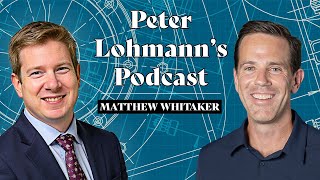
Matthew Whitaker, CEO of Evernest, built a 20,000-door rental portfolio by shifting to a pod-based management structure and embedding a process-accountability framework called PACE. The company uses AppFolio for core functions and built a custom platform called Open for AI-driven insights and owner communication.
Chapters
So I think there's two big pieces to property management, and I think you've got to get the first one right first, and then communication becomes really important. The first thing is just execution, like a high level of execution. What we have found is there's very little communication when there's a high level of execution going on, right? If things are running on time, the residents paying on time, things are going well, then there is— there's very little communication needed. So execution is number one, and that's where we think we need to build the foundation of property management. And so when we think departmental, we think that we just execute much better. Now, the challenge with departmental is the handoff between departments, right? That's where the balls get dropped. And so when we think about communication, we don't just think about communication to our owners or to our residents. We think about communication internally. But if, as long as everything's flowing through the Evernest pipes really well, communication seems to slow down, right?
Friends, welcome back. We are here with season 6 of Peter Lohmann's podcast, and we are kicking off the season with Matthew Whitaker, who is the CEO of Evernest. How are you today, Matthew?
I am great, and I'm honored to be the first guest on season 6. Kudos to you for 6 seasons of the podcast, as we do a podcast as well, and It's really hard to put out great content, but clearly you've done it and it's really impressive what y'all are doing here.
Appreciate that. And I'm excited that you're one of the first ever return guests. We're going to be having, yeah, we're going to be having a few.
I should have listened to the old one to make sure I don't say some of the same things like this guy hasn't grown any since the last time he was on. Yeah.
Or contradict yourself. But yeah, so, you know, we've been doing the podcast long enough now that it's time to check back in with some of our early guests and you were a very early guest on the show. Which I really appreciated at that time when we were, when I was more kind of a, a nobody and the show was just brand new. So yeah, I mean, for those who, I don't know who that might be, but for anyone who might not be familiar, maybe just give a couple sentences on your background and what you're up to and then we'll, we'll jump in.
Yeah, the quick Evernest story is when I got outta college, I started buying and selling houses and thought I was the proverbial real estate investor. I thought I had the world by the tail, I had it all figured out. And then 2008, 2009 hit. I actually owned 30 houses at the time that I couldn't sell, and instead of selling them, moved residents in them and started renting them. And that's how Evernest was born. It was called something else at the time, Golden Key or GK Houses. Some people that have been around a little while remember us from those two names. And since then we've grown the, grown the, the property management business to almost 20,000 doors. Across 19 states, 50 different markets. And the, the thing that we saw was that there was just no national player in, in this single-family property management space. And now we know why there was no national player. It's really hard to do this. So, uh, it makes a lot of sense that it hadn't been done before.
Yeah, that's good to hear. Well, it's been really fun to watch your growth and success over the years. I mean, there's been a lot of players who have come and gone since you got started and you guys are still standing and the volume of doors you have under management is staggering. When I think about the 700 doors operation that we have here, thinking about what it would take to get that to 20,000 just boggles the mind. It's unbelievable. So, and I want to dive into some of that today and hear more about, you know, sort of how one manages that volume of doors. It's funny you mentioned GK Houses. I still have some of that letterhead. You were, you were mailing letters even back then. Hey, you know, if you ever thought about selling, if you're ready to retire, and I saved all those. I still have some scanned in GK Houses with the logo on.
Still hoping you'll call.
Maybe they'll be worth something one day. Hey, look at this, you know? So yeah, talking about managing properties, I want to hear about how you guys are organized these days. We are about to, embark on a company-wide reorganization. We're moving from a depart— from a pure departmental style of organization to more of a pod structure. I'm really interested to hear what you are doing now, and has that changed in a while, or have you kind of settled into what you know works?
So first of all, I think it's important that people know we do not have it figured out. It is still a learning in progress. We are learning new things every day, trying new things every day. And so if you look at us on LinkedIn or all of our content we create and you think, oh, Evernest has it all figured out, that is not the case. We are still deeply, you know, trying to figure out what it looks like at scale. But today we operate, we're very departmental. To get the benefits of scale, you really need to be departmental. And it's interesting because as we've grown, you can imagine You know, you've done this too with your organization. When we first started, Spencer and I and Gray and some of the guys that were around in the early days, we did everything. So a lot of us, we were very, you know, we weren't very focused on one part of the business. We were all generalists and we were all doing all parts of the business. I even did some accounting, which is terrifying if you know me. And so we were very much kind of like the you know, everybody would be— we didn't care about titles. We would just kind of pick things up. But as we've grown, it's just to get the benefits of scale, you've got to start to specialize and hire specialists. And so that's what we've done. We have whole departments that are doing things like resident collections and leasing and underwriting, and those people wake up every day and they're worried about one thing. And that's just— it's really hard to teach because As you know, there's just a big— there's a— we call it a big surface area with property management. And so it's hard to learn all those things. I mean, it takes a really talented person to manage 300 homes and do all those things his or herself. But as we get bigger, it's just way easier to train, you know, one specific thing.
Yeah, that's definitely true. How do you deal, though, with owners saying, I never know who to contact at your company? Because we hear that a lot, frankly, from our owners, which is motivating the switch is owners, you know, they, you, this is the number one feedback we hear. I never know who should, who I should call, or I never know who to contact, or I've talked to 8 different people at your company. No one seems to really know what's happening with my property. So, you know, I hear that you say it's easier to train. Of course it is. If you're just hiring like an accountant or you're just hiring a leasing agent, but there is a trade-off there and I'm wondering how you think about those trade-offs.
So I think there's two big pieces to property management, and I think you've got to get the first one right first, and then communication becomes really important. The first thing is just execution, like a high level of execution. What we have found is there's very little communication when there's a high level of execution going on, right? If things are running on time, the residents paying on time, things are going well, then there is— there's very little communication needed. So execution is number one, and that's where we think we need to build the foundation of property management. And so when we think departmental, we think that we just execute much better. Now, the challenge with departmental is the handoff between departments, right? That's where the balls get dropped. And so when we think about communication, we don't just think about communication to our owners or to our residents. We think about communication internally. But if as long as everything's flowing through the Evernest pipes really well, communication seems to slow down, right? You get frustrated owners that their house hasn't rented or they have a kind of like a big problem with a resident not paying rent, the communication is not 2x, it's like 10x. And so, so much that we can focus on communication— excuse me, on execution— then that's gonna— that's just gonna cut down on the communication. Now, the second piece, we've, we've heard exactly what you're talking about, which is, hey, I don't know who to talk to. I don't, um, you know, I always get like shuffled through to different people. But we kind of changed the way we thought about our property managers. We think of our property managers as almost like air traffic controllers, and our property managers are orchestrating all the departments, making sure, auditing things, making sure they're flowing through the pipes, and then they're responsible for communication. And so the owner does have one, a single point of contact with us. Yeah. And Then the thing that I've been teaching the team right now, which I think is really important, is communication is really two pieces. It's very simple message, it's hard to do. It is speed and quality. And owners don't care how good it is if it doesn't get back to them quickly. And they don't, they don't, you know, if you get back to them quickly with bad information, that's bad too. And so we, we are teaching our team and we're measuring how fast are we getting are we getting back to our owners? How fast are we getting back to our residents? And then what is the quality of the communication? Like how many back and forths are owners having with our property managers? And so we're, we're, we're getting there. Like we're not— we, we just implemented some new systems like Zoom. We have our own message manager that's basically our email system. And so we're getting the quantitative, like how quickly we get back to people is very easy to measure. The qualitative is what's hard, right? Like, how do you tell a good email from a bad email? But I think AI, I mean, you know, not to use a, a current buzzword, but never heard it. AI is actually going to be kind of, going to help us solve some of this, right? It can tell what a good email is versus a bad email, or tell if an owner's pissed off after you've sent an email to them.
Yeah, that's very true. Okay, well, that actually sounds more like the model we're moving to. We're trying to set up where we have 3 property managers, which we've actually never had anyone at our company with that job title before. So this is new territory and each property manager is going to have 100+ property owners. That is their account. And for that owner, their property manager is their primary point of contact. And kind of just like you were saying, the property manager is not really doing the work, but they are coordinating all of the communication and providing oversight. So they should understand what's happening at all the properties they manage and be able to speak intelligently to the property owner when they have questions. They're not the one actually showing the property. They're not the one actually overseeing the turn, but they are sort of— all of the communication is going to flow through that property manager. So is that—
that sounds like— that sounds very much like it. And I think the thing that you'll need to watch for is just making sure that the property managers stay up to date on what is going on with the properties, right? There is a tendency, especially as they start, you start to put a really good team around them, for them to just assume that things are working well. But we've put all sorts of audits in place. We call it a success checklist because audit has a negative term, but we put a success checklist in place. So we want, we want our PMs logging in and looking at work orders and making sure that there's nothing that stands out. And, you know, we want our PMs to, to know what big costs came in so that they can be prepared for the, for the owner to call or jump out ahead and call the owner and say, hey, wanted you to know this is coming on your statement. And so that's the type of thing where we're asking of our PMs and they're starting to really deliver.
We're—
our NPS score has continued to grow. And, you know, NPS for us is, I think for everybody is probably a lead indicator of churn. And we've had our fair share of churn. I mean, you know, we haven't been perfect.
Okay, great. And how long have you been organized this way?
We have probably the last 3 years.
Okay.
So when we went on in 2022, we kind of went on a buying spree. We bought 17 companies the back half of '22, and that was really a lot. That was probably, it was indigestion city. There's a famous quote out there. Most companies don't die from starvation, but from indigestion. That was us at that time. And so we spent the next 2 years till the end of 2024 really focused on the blocking and tackling. It was hard for us to grow just because of the capital markets. So it made sense for us to turn internally, but we got really good at things flowing through the pipes and we were in a really good spot when we bought the Poplar business back in December of last year.
Yep. Okay, great. Well, that's good to hear. So it sounds like the model we're moving to is pretty scalable and I'm excited to get the team onto the new system and start to hear feedback from owners on, because the way I, the way I distill all this down is your property owner doesn't want to call their property management company. They want to call their property manager.
Yeah.
And it's a very subtle distinction in words, but it's a chasm in experience. So that's how I tell you.
Another thing I've been thinking about is as it relates to churn, how do you— because I've seen a PM company that's actually done this really well. How do you also get the property owner committed to the company and let them know if they're not happy with the property manager, that instead of churning to somebody they don't know, why wouldn't you just switch property managers internally? That's okay. Yeah, we're thinking. Yeah.
Taylor Haas talked about this on, on her episode last season, and she said that's the first thing they offer when they sense that an owner's unhappy. So, hey, how about we get you signed to a new property manager? You know, they'll be a better fit for you. He's been here for a year, whatever it is. They sell the new property manager. And she said that saves— I forget what she said— some double-digit percentage of churns they're able to head off by offering that, which I think is phenomenal.
That's great. I should pick up the phone and call her then because it's something we're thinking about. How do you How do you get them committed to the company? But, and because if a property manager leaves, you also have the ability to switch them because we found that when property managers leave, and this will be one of the problems as you develop this one system, this kind of like similar system, when a property manager leaves, the relationship walks out the door. And so it's really hard to, to hand that relationship off to the next person because the next person lacks a lot of context as it relates to the home. And as a homeowner, one of the things that frustrates, frustrates you more than anything is when you have to reeducate your property manager on your home.
Well, two thoughts on that. One, systems should help there. If you have a great system in place, the context should be easily surfaced and digested by the new property manager. And I want to come back to that in a second. The other interesting thing here is I was talking to a property manager recently who has a similar model, but instead of a single property manager, they're two-person teams. They have like a head property manager and assistant assigned to presumably a larger chunk of owners. So kind of like a mini pod. And they said that works out better because then if the property manager's on vacation or if you do have to swap out a property manager, at least there's a familiar face and name involved with the account that provides some continuity. So I thought that was interesting. I mean, at that point you're basically a pod, so maybe we should have just done pods. I don't know.
Well, you're right on the system. I think, you know, one of the things that AI does is it sorts through data really well. And how can we use AI to give So this is the thought I've been having. How do you make a property manager that's been with you 30 days as efficient and as qualitative, like in terms of the service they deliver and that they deliver and the decisions that they make, how do you make them as, as good as somebody that's been there for 25 or 30 years? And the, the answer to that is there's kind of like two things. One is, is just like understanding what went wrong and having the reps on things that go wrong. So an air conditioner breaks. It's crazy that a property manager has been doing it 25 years. You just kind of know what to do because you've seen so many. It's just another one of those. But AI can do that for us. It can actually say, hey, this air conditioner is built in such and such time. You know, here's, here's what we recommend based on the statistics. The other thing AI is really good at doing is, is going through historical context surfacing the things that matter. And so that's the other piece that I think that's got— that you were talking about systems and technology. As we think about the future of our property management system, when an owner calls in and starts to talk about an air conditioner, we ought to be able— the, the system should be pulling how old is that air conditioner, how, you know, what are the expectations, and should be informing the property manager on what is the best decision, given all the historical factors. There's nothing more frustrating. I actually had this happen to myself in the last year, but I had a house that I was having a yard cut and they said, do you want to— this was, this was like in the spring. Do you want the bushes, all the bushes cleaned up? And I said, yeah, you know, $400 or whatever. I don't remember what I paid for it. But then literally 3 months later, a different PM was on my property and she asked the same question and I'm like, I just paid to have this done like that. So it was just like, man, I'm getting to eat, eat some of my own medicine here by lacking historical context where the system should have informed her that, hey, we already paid for this. This is something that you should not send to them. You should actually go back to the previous, the previous landscape person and tell them they need to go fix it.
I couldn't agree more with everything you just said. I can tell you from my perspective, literally none of that is happening with any of our systems. Now, maybe you have access to some advanced technology, maybe you built something in-house, but I don't think anything that you just described is possible with the off-the-shelf software that's part of my— It's not. —software stack.
Yeah. Well, and, and so that's why we started building some of our own tech, right? Like as we scale the organization, love a lot of those providers out there, and we still use one of the providers for property accounting, but they're really built for, you know, the 90, the 95% of PMs, right? The 95% of PMs that are sub-1,000 units or maybe sub-500 units. And as the organization grows, those little workarounds just become harder and harder at scale. And if you, if you manage 300 units, you do have the context. I call it the genius with 1,000 helpers. You have all the context in your head. But as you scale the organization, I just remember the first time that we managed a home that I had never seen, or that we had, you know, made money on a home I'd never seen. Like, as you scale the organization, you're not going to see all these houses and know all the owners. And that's a good thing, but you got to have systems that help you solve some of those problems. Hey, Peter here.
I want to share with you guys a new tool that we're using at my management company for leasing. It's called RentEngine. You may have heard of them. They're a newer product in the marketplace and they facilitate self-showings and agent showings at all the properties that we manage. We typically have anywhere from 25 to 40 rental listings live at any given time. And since making the switch to RentEngine in, I think it was springtime of this year, our leasing timelines have dropped significantly. Not only that, but we're actually saving a bunch of money compared to the solution we were using beforehand. My team absolutely raves about RentEngine. We've used a couple other solutions, but ever since we made the switch, my team just can't shut up about how much they love using RentEngine. I've been recommending them a lot recently to other property managers. Heard nothing but good things. Basically, this is a sort of AI-first leasing platform. It's kind of the first of a new generation of software that's just coming available for property managers. You can actually go into the software and see the AI responding to all the tenant inquiries, both over text message and email as well as voice calls. So I've been really impressed with what they're doing, and the proof is in the numbers. Our leasing timelines are better than ever. Our days on market is lower, and our owners are really happy because frankly, we're just getting their properties leased out really fast. The team also has talked about how much they really like their lockboxes. They're incredibly tough. They're basically unbreakable. And with the company we were using before, we were having a lot of problems with battery life., and people breaking them open or having trouble getting them open, even when they were trying to legitimately use them. So I encourage you to check them out. I'll drop a link in the description where you can book a demo with their team. That was going to be my next question is around your tech stack. I can't remember how much we went into detail on this, but in any case, it was years ago. I'd love to hear about what are you using off-the-shelf providers for and curious specifically who those are, if you're comfortable sharing, and then what have you built in-house and how that all kind of fits together and works together?
I think of technology like property management software as really three kind of like legs of a stool. It is property accounting, it's workflows, and it's communication. And property accounting, it's really, you know, it's hard to re-engineer a whole property accounting software. Like that's a real heavy lift. And you have a bunch of providers. We use AppFolio. You have a bunch of providers that have built property management accounting software. So it just makes sense as long as you can easily get your data in and out. It just makes sense to use one of those providers for property accounting.
Well, in the pricing though, I mean, it's even, even a bare bones and, you know, AppFolio or any of them, if you just wanted accounting plus API, they do not really make that easy or cheap. Now, presumably with some 20,000 units, you have a little bit of leverage that I don't with 700, but it feels like an over— it feels like overkill because I think what you're about to go on to explain is then we bring in all these other things and do it, you know.
Well, everybody does, right? I mean, that's why there's a whole ecosystem of prop tech software, is none of these PMSs do it all really well. And I think AppFolio recognized that, right, 3 years ago. And when they have a new CEO and he kind of like said, hey, we're not going to be able to be Apple and be a closed system anymore because we just can't build software as, you know, take our friend Ray Hespin. We can't build maintenance software because that's all Ray wakes up and, you know, eats and breathes is maintenance software. We can't build it like they can.. And so we might as well open up the system to that. And, and so the, the, the, the, the change in thinking with us is we got to the point where we had so many prop tech softwares outside of AppFolio that it became really hard for all of them to talk to each other. So the story I like to tell is if something broke, like an air conditioner broke, and some of these problems have been solved in the last 3 years since we started building our own tech. So I don't want to. I don't want to project that, that this year these are still a problem. But 3 years ago, if, if somebody called about an air conditioner, our property manager would have to go into 3 different systems to triangulate what was going on with the air conditioner. Well, that's stupid, right? Like, it all ought to be in one system. And so that's what we built is basically a system that triangulates. We pull all the accounting data into our data warehouse. We put— we basically set the workflows that we've built and the communication tools that we built on top of all of that, and then we visualize it to our team. So our team, for the most part, if you're a property manager on the operations side, logs into Open operating platform for Evernest and you spend your day in Open, whether that's communicating with a resident or an owner, and so we, we can visualize, you know, all sorts of data and who's getting the job done there. And if you're a property accountant, you're still logging in daily to AppFolio.
Got it. Yeah, that, that sounds like the dream is, you know, all the data pulled into one screen or one login that you can customize and create reports and dashboards and workflows. Probably not realistic for a company my size, but That's, I mean, clearly the right decision for a huge, you know, larger company.
Yeah. And it's a, that's a hard problem. I mean, again, we're not perfect at it either. Like we're still learning, you know, we have like a team, a small but mighty team of 5 or 6 people that are building technology and it's just a hard problem, right? Because now all of a sudden you're not just in the property management business, but You have bugs and, you know, some one, a funny story we had is we built an app for all of our maintenance technicians and what we realized, and actually I was out at lunch with the maintenance team out in Chattanooga and I said, hey, what are some problems you're having with the software? And the technician said, well, my fingers are very calloused and fat. And I can't hit these buttons on my phone. It's stuff as simple as that, right? Like somebody that's building technology probably doesn't have callous fat fingers and didn't have a problem hitting the back button or whatever the button was. And so you just like learn all sorts of things. You, you realize you need big buttons for these maintenance techs who are literally using their hands every day.
Yeah, that makes sense. I remember a couple years ago on your show, which is great, by the way, if you guys haven't listened to Matthew Whitaker and the Everest podcast, it's a, it's a great show. And I, one of the ones I recommend to all property managers, we'll link to that. You were talking about reaching a headcount where EOS was starting to show its cracks and you were making a transition to something called Scaling Up. And that was a few years ago. And I was wondering if we could check back in on that. Have you sort of completely moved over? And just give me a taste of what that system even is, because I'm not familiar with it at all.
It's kind of funny because I had somebody email me the other day and maybe they listened to me on that podcast or heard something I said and they're like, hey, we're at, you know, 75 people and EOS is starting to show cracks. And I'm like, uh, 75 is not showing cracks. It's just that you're, you're not thinking about scaling the EOS system correctly. But what Gino says is, you know, it starts to time out at about 300 or 350 employees. And Evernest today is somewhere between 500 and 550. And the problem is the business just becomes more complicated, right? There's just, we think of our most, most organizations, including EOS, think of themselves as like a pyramid. And we think of it as like a matrix, which is just kind of like one difference in scaling up. Helped us with our thinking about that. It's actually going really well. So the easiest thing to highlight would be the pace chart. So today you have level 10s that are very departmental, right? Like a marketing level 10, an operations and accounting level 10. And as you scale the org, as we scaled the organization, and candidly, we still have level 10s, right? We still have a Birmingham level 10 and a Nashville level 10. So we haven't just thrown all the EOS principles out, because our management team and below runs EOS almost to a T. But what we found is as you grow the organization, all the processes, especially departmental, we talked about this earlier, all the processes touch so many different people. And just imagine they touch, you know, if it touches 3 different departments, you've got to tell 75 people across 3 different departments how this one little change in the process works. And we did a really poor job of communicating it. And so what we are moving to instead of like an operations level 10 is more of a PACE level 10, which that stands for Process Accountability Chart. And so we've divided the business into processes. And so we're going to start to have level 10s around the process. So the first one we started with just to try to crawl before we walk is the move out to rent ready process. You can imagine— well, people don't have to imagine on this show. Everybody knows it touches everything from your property managers to your property accountants. For us, it's like our PMTs, our maintenance coordinators, like the owner. It just touches so many different people. And so we just wrote out that process and said, you know, what are all the departments? We got department heads from all of those. And we just sat and said, like, today, speaking of execution, today it takes this long. What do we want to get this down to? How do we make it as efficient as possible? Because every day we, we, we, you know, make it shorter, the owner saves money, right? And so we think that'll cut down on churn as well. And so you don't have an accounting level 10 in a silo anymore, and you don't have a you know, property manager level 10 in a silo. You now have the heads of these departments sitting in and creating these processes. And then, you know, you're getting back to an EOS thought, then you go and you, you go communicate that down into the organization. And so we've started with one process, we're working on two more right now, and it's going really well. They've cut down on the time it takes from, from move out to rent ready. And the cool thing about this too, Peter, is you have an owner of the process. That's the whole point. You have the, who is in the, like, who is in charge of this process and what is he or she, he or she runs the level 10, he or she has some KPIs around it and it just makes sure that everybody's informed versus kind of like running in silos.
Okay. Interesting. Yeah. I mean, we, We have our own form of like a process review, pretty informal that we do from time to time, but it's certainly not how we're organized or structured, you know, at the company level. But I can see how that would start to become really important as you get bigger because you must be running hundreds of those a month, many hundreds of those every month. And yeah, a single day will make a big difference. I do think it's very tied up with churn. That was a That was a big area of focus for us last year as well, was tightening up that same timeline.
That's great. Yeah. And so when I think about scaling up, there's been a lot of companies that have gone public on scaling up. So it scales as big as I think we need it to, but it is just like implementing EOS. It's one step at a time. The challenge is, as the organization gets bigger, it's harder to implement. When I started EOS, almost 11 or 12 years ago, I just kind of like force-fed it into the 10 people that were on the team. But now with 550 people, it's just much, much harder.
Yeah. With that many team members, how do you deal with this problem of layers of management? Because believe it or not, even at my tiny little 30-some person company, I'm looking at the org chart and I'm like, do we— is there really 5 layers between me and the receptionist? Like, that seems excessive. Right. But like they report to their department head and their department head reports to the head of ops and the head of ops reports. Like, how do you deal with that? Because isn't there a limit on the number of direct reports any one person can have? And so by the time you get to 500 team members, wouldn't there be like 16 layers of management or something ridiculous?
Yeah, we've thought a lot about this too. Like how many, how many people can a manager adequately manage and then add more complicated, how many more people, how many people can a newbie manager manage, right? Like, yeah, somebody went from being an individual contributor to a manager. I don't think we're— we fully understand this quite yet. The way high output management, Andy Grove, would talk about it is a manager can only manage up to 8 people effectively because he or she should be thinking about his, his people, each one of those 8 people, for half of the day Or spending time with them for half of the day every 2 weeks, or, you know, every week, you know, in that scenario, I guess it could be every week or every 2 weeks. I mean, obviously managers have other things to do, but we have people that manage, you know, have 16 direct reports. We've cut back on some of the habits that we require, like one-to-ones. We went from, we're going from every 30 days having a one-to-one to every 60 days if somebody's really on the team. Over 12— yeah, over 12 months. The first 12 months, we want to stay really closely connected to them, make sure that we're, we're having those conversations. But as somebody's been on the team a little bit longer, we found that from month to month, you're not— you don't have a lot of new feedback. And candidly, you don't have— you shouldn't have a lot of new feedback because you should be giving people feedback in the moment that, that the event happens. But I'll tell you, kind of like our thinking is we have the executive leadership team And then we have the senior leadership team. So the senior leaders are about 35 or 40 people who are department heads, regionals. They're people that are running like big, large parts of the organization. And we have specific things that we do with them. We, we bring them into town twice a year, or we meet somewhere twice a year., and we do specific training with them. And, and, you know, these people are leading teams of anywhere from 12 to, um, some of them are leading hundreds of people, and that just takes a little bit different skill set, right? Like, they are not the makers anymore. They're the ones that are leading and managing people. And then we have a management team, and so you can think of that as like market leaders, people that are managing parts of the property accounting world. And so, we actually have one today. We have a monthly training with them and then bring them in town 2 times a year as well to do more robust training. And then we have individual contributors, but we can't really bifurcate and say, oh, well, you're this type of manager. You're the 2-person manager or the 10-person manager. We just keep feeding them information and give them the reps. And at this point, we just kind of hope it works out, and it has basically directionally worked out. But our HR team, we call them our people experience team, is really thinking about this. How do we institutionalize teaching somebody from going from an individual contributor to a manager? How do you bring those people in and give them a week of kind of focused attention on these are the things, these are the habits that it takes to be a great manager.
I mean, surely this is a solved problem, right? I mean, you're not the first company in the world to scale up from 10 people to 1,000. There must be tons of literature and best practices. And surely, I mean, you're listening to podcasts, people are talking about how they did this, and there must be like a whole ecosystem of here's how you run a 1,000-person company, right?
Yeah, well First of all, you'd be surprised at how few there are out there, but yes, there are that. And then, then it's like, you know, it's a service business that has a technology component to it. Yeah. So there's some nuance, but I think what you do as a leader is you go kind of like get the whole ecosystem of information and then you kind of like do your best to teach the team. The thing about that I have found is like I've done it at all these layers. So I know what to do, but it's similar to the age-old, like, should we be doing kind of like beginner training with everybody? And then the people that are the managers and leaders have been around a long time, get frustrated. Should we do like, go deep and teach people like the psychology of human misjudgment? And that's where your team, there are people on your team that want to learn that type of stuff. And so you, you have like different people that are in their different parts of their, you know, kind of experience in being a manager. Some of them just were a manager, you know, became a manager last week, and some of them have been a manager for 10 years. And yeah, you're constantly trying to pour the habits down into the organization.
Very interesting. Huge challenge. I mean, lots of training and teaching, it seems to me, that would have to be happening at a big company like that, and that sounds boring to me, if I'm completely honest.
I mean, is it draining, or— No, I actually enjoy that part of it. I'll tell you the draining thing, but let me say this first. You, you are, you are constantly— well, I've, I lost my train of thought, so I will jump to the draining. Okay, no problem. The draining piece is You're constantly dealing— you go from managing properties, which typically have an answer, to as the organization grows, you get all the problems with no clear answers. Yeah. And there, you know, sometimes it's like a 51-49 type vote and you got to decide which side's 51%. And that is taxing because I spend a lot of time just marinating on You know, if we do this, this, this, this, and it's gonna happen. But if we do this, this, this, this is gonna happen. It's like, is this like better or is this worse? Or, yeah. And that, that's very draining because, you know, when you have clear answers, you can kind of build momentum and kind of like close your brain off from that. But when there's no clear answers, it, it just, it, you burn a lot of calories.
Hey, I just wanted to give everybody an update on Crane. So CRANE is the paid private community that I co-founded with Wolfgang Kroski a couple of years ago. And if you're listening to this and you're a member of CRANE, especially if you're a new member, I just want to say thank you and welcome to the community. Wolf and I are thrilled to have all of you wonderful folks joining us inside the community and participating in our masterminds and showing up for our CRANE dinners and CRANE events that we host all around the country. If you're curious to learn more about CRANE, or if you missed the application window, I wanted to start providing some information about kind of what you can do in the meantime while you wait for the new application window to open. First thing I really want to encourage you to do is join the waitlist if you haven't done that already. You can go to joincrane.co, and if you just click join the waitlist, you just put in your name and your email and like one or two other pieces of information, and that way you're going to be notified as soon as we open up, uh, for new members. And something we're gonna do differently in the spring is we're actually gonna give the waitlist members early access to jump the line and apply first. Uh, and Wolf and I will be reviewing those applications before we even open up for the general public. We did recently finalize the application dates, just if you wanted to mark your calendar. We're gonna be opening up the application window officially on April 3rd, and it will run for about 10 to 12 days there, uh, before we close up for another 6 months. And so if you join the waitlist, you can expect to get an email from us probably that last week of March or so. Really encourage you to learn more about Crane if you don't know much about it. It's been growing really quickly. We've been overwhelmed, frankly, with all of the, uh, interest and, and positive response from all around the community. Uh, we have industry leaders joining CRANE every time we open for new members, and it's just been an outstanding experience and I'm really honored and grateful to be a part of it. So go to joincrane.co if you want to learn more, and I look forward to seeing you inside the community. Yeah. Let me talk for a few minutes about your customers. You have a lot of customers and a lot of experience dealing with property owners, and I want to ask you about a few different categories of owners and Let me start with maybe some easy ones. Are you all still taking on new HOA accounts?
Because I know that was part of an acquisition. No, we sold both of those HOA businesses. Okay. And we decided that the, you know, if I was a small kind of like, the way we thought about it is if you're in one market, you can make a decision. Do I want to do the same thing that I'm doing in this one market and go to another market? That's what we did. Kind of like go wide on the same thing, or do I want to expand and go wider on the, the different types of services I offer the ecosystem of my one market? And what we found is that the HOA business, we thought it was very close to the SFR property management business. It is not. It is not anything like it. Yeah, well, you could have saved me a bunch of money, but we sold— we've owned two HOA businesses. Both of them came to us through acquisition. Yeah. And we've sold, since sold both of them.
Okay. Okay. That makes sense. And not, not surprising in the least. And then how about, well, I want to ask you about two different sides of multifamily. I want to ask you about like 100+ you know, single site multifamily. And then I also, after that, want to ask you about boutique multifamily. So let me start with the larger multifamily. Have you ever been in that business at all? Yeah, we have some larger multifamily properties in a couple of cities. Okay. And how, how is that? Because it's a very different model.
Yeah, I think it's very easy because it's basically a staffing business. That's why that model scaled so easily. You know, the Greystars and the Rangewaters of the world scaled that business. But the problem is you're competing with those Greystars and Rangewaters. And so it's just hard to compete for the better properties if you don't have relationships in that institutional ecosystem. And so while we do manage some of them, we are not necessarily, I shouldn't say we're not looking for more because we are looking for more, but we think the big opportunity is in the boutique.
All right. So yeah, so boutique multifamily, which I kind of define as like 5 to 99 units, anything but, but can be managed from a central office.
Is that how you think of it? That's right. Yeah, I think we think of it as managed more like SFR than we do like multi—
like institutional-grade multifamily, right? Because the property owner is not paying your staff's payroll.
You're still, you know— that's right, that's right. And you can't, you can't staff it. Maybe you staff it with one person, but you can't fully staff it. It's not its own living, breathing P&L. It requires some support from the other folks in the market.
Yeah. So you've been in that business for a while now. We, I'll be honest, have not had a lot of success with these types of properties. It's hard. And we, we like them because just like you said, they're similar to, you can manage 'em very similar to, to scattered site, mult— single family. But the property owners we've not connected with, they, they stick around for a year or two and then they churn out. They're usually complaining about maintenance costs. I don't really know how to crack this nut. So have you all figured this out? Are you going after this business? How profitable is it? I'm curious.
Yeah, it's a great question. And, you know, I reserve my right to change my opinion because this is something we're kind of midstream and thinking about. So I would actually expand on that. I actually think the multi-house SFR owner is in that same category. Agreed. Because they are, they're, they have some of the same similar complaints, right? They own 20 houses. They went from managing it themselves in most cases to you managing it. And that's just like a big step from zero to one. The easiest clients to manage for, I found, are the one house, one owner. Some people say, well, that's really hard because you have a lot of different people. And what I What I have found is they're just like less sensitive around the things like, you know, an air conditioner. Not that, you know, we want to give them a tremendous value and let them, you know, if they did research it, feel good about what they paid for an air conditioner. But they're not going to beat you up like those, like the avatar we're talking about with the multi-house owner and the, and the kind of like multi-unit owner. So they're easy. And then the institutional world is super easy too, because It's all a formula for them, right? And if you're, if you're, they have this thing called cost to maintain, and if you're staying within that, they're happy. And if you're not, then they're frustrated with you. So all it is is an algorithm for them. I will tell you, we, similar to you, the churn that we have experienced the most is from this kind of like middle, middle owner. It's kind of like the retail person that has, has scaled their own little business. Again, I think it's just like going from zero to one is too big of a step. And so we're trying to think, how do we give them pieces of Evernest without giving them all? Because they don't want all of Evernest. And so the answer is we do want to continue to manage for those folks. And they're the ones that really appreciate the relationship with the the, the guy or the gal that manages 100 or 200 doors because they're a big fish in their pond. And it's almost like having an employee that will work, that's really talented and smart, that will work for cheaper than they're worth. And so that's where they usually end up going, right? Because they can treat a PM business, they can be 50% of their portfolio and basically dictate what that person does. So all that to say, like, I've, I've Told you all the problems with it, which you probably already know, but we still want to continue to grow that business. I actually think, I actually think the opportunity on the boutique multifamily side, if a manager ever figures that out, then institutional capital will start to flow into that space because it is kind of the final frontier of institutionalization. Where it's still the asset ownership still dominated by mom-and-pops. SFR still is. There's only like 3%, but those two, those two kind of like cohorts, there's no institutional ownership. And the reason is, is because nobody's figured out how to manage it at scale. And if somebody ever does, then you're going to get some— the Apollos and the KKR of the world are going to flow capital into that because all of a sudden You know, it could be managed very efficiently.
Hmm. Interesting. Yeah. I always postulated that the reason we have so much trouble with those owners is because those owners specifically are relying on the cash flow from the business to support their daily living expenses. The cash flow from the properties. Yeah. If you think about one unit, one owner, or even if they have 2 or 3 or 5 properties, that cash flow that's coming in from those properties, they're paying the mortgages with it and there's a few hundred dollars left, maybe up to $1,000 left every month. And that's for them is like savings or future retirement or whatever. On the institutional side, these are just employees of some big company, right? And the company's looking at the cash flow as like ROI. But the people who are your bosses, your customers, their income is not tied to the performance of the asset. They're getting their W-2 paycheck from Investcorp regardless. But the guys in the middle who have 40 single-family homes, a lot of them have quit their day jobs and they're a real estate investor. That's their job title, right? And they're self-employed. And the money that's generated by the properties is actually feeding their family on a month-to-month basis. And so when there's a disruption in cash flow, They absolutely lose their mind. Who wouldn't? Because that's their, that's their actual income that they're living off of.
Yeah. But it's a terrible idea to do that because they may not know how great the return is. Right. It's, um, yeah, I would push back on one thing you said is these W-2 employees that are at these big companies, like I know a lot of them, their job is to make sure that that company makes money. And so they're, they're, you know, they're, they're make, they're holding us accountable to make sure that they are profitable so they can keep their job. Yeah, they're on it. They're holding you accountable. Benefit of is objectivity. Exactly. What you're saying is they're very objective because, you know, it kind of costs what it costs. But to your point, it's not going to affect whether their family eats that night or not. Yeah, I, I always— when, when, when somebody gets into real estate investing, the biggest thing, the first thing they want to do is quit their job. Yeah. And I'm just like You don't know how powerful having a job is because it allows you that kind of objectivity on your investing side. And as soon as you start worrying about cash flow, you're making short-term trade-offs for long-term. You're trading the future. And so, as long as you can bear to keep a job, you know, please do that. Because a lot of people— this happens when a lot of people sell their business too. They don't realize having a steady income, how powerful it is. And then all of a sudden when you're eating off of interest or you're eating off of cash flow, how quickly that eats into principal.
Hmm. Interesting. So speaking of selling your business, I wanted to ask how— I know that you mentioned you went on a big buying spree in the back half of 2022, and I think you've been pretty public about kind of pausing things. There for a while and I was curious, are you thinking about starting back up and why, if so, and then kind of go from there?
Yeah, we are. We, we're actually having some conversations right now. We bought a little business back in October. We are absolutely doing that. You know, the thing that we have found is that as we, we build the organization, when we create density in a market, it becomes very accretive to our bottom line. So the way to think about this is if we're managing 300 homes in a, in a market, adding one more unit is just way more profitable per unit than the first 300. And so we are trying to buy more businesses and markets in the 50+ markets that we're in because, you know, we think that our EBITDA can go from X to 3X by just increasing the business by 50%. And so actively out having conversations and, and just think that it's, it's kind of a good opportunity now because in 2022 there's just a lot of competition for it and it pulled a lot of the demand or excuse me, the supply forward because there was so much demand. A lot of people probably sold a year or two sooner than they would have. So I don't really think we've missed any deals or anybody's missed any deals over the last 3 years because we felt like all that stuff got pulled forward. But if you were 60 back in 2022 and you're 63 today, you're starting to think you weren't ready back then, but you're starting to think you're ready now. And so we would love to have those conversations with folks and we think we're a pretty good solution for the right seller because we don't require the seller to stick around for a very long time. There's other, and if somebody wanted to stick around and have a job for 2 or 3 years, there's some better buyers out there. That are really good people and super trustworthy. And, you know, if I was in that situation, would have, you know, no qualms about selling my business to them. But if you said, hey, I want to get out, I want to retire, I want to go do something else, like, that's kind of the seller that we're looking for.
Okay. And what's your perception of valuations today compared to last year or 3 or 2 or 3 years ago?
Yeah, the— so they're, they're not as high. Great. But well, I mean, this is with everything. I mean, it's like we're all in real estate and we know that there's cycles in real estate, there's cycles in business, right? So we're kind of like come— came down off of a high. I heard a guy say, you know, you come down in an elevator and you go back up in an escalator. So it's not like it's just going to shoot back up to those 2022, 2021 numbers. What I think about value, I think you can get similar, some, like, we've never paid more than a certain number, so we're not paying more. We still think that may be the right number and may be willing to pay up for some of the right businesses. It's just the terms have gotten more buyer-friendly. So in the past, we may have done, you know, 10 or 20% seller finance, whereas today we might do 50% seller finance. Just because if you think about it from our perspective, the cost of capital out there is just really expensive. And so if we can use the seller and we get cheaper cost of capital from them, it's just a better solution for us.
Okay. And what Are you, how are you looking at companies differently now than you did 3 years ago? Presumably during that period of digestion, you learned a lot of lessons about, oh yeah, what to look for, things to avoid, things to, that you, that you are interested in. I know you've talked a lot about here's 10 things to know when you go to sell your business or when you're buying a PM business. Yeah. I'm curious if there's been any changes or updates to your appetite for this and, you know, some of the specifics.
So we actually did a cohort analysis of every business we bought and looked at the revenue by year. So we bought, you know, it, you know, it's 100% when we buy it, and then do we increase it or decrease it every year? And so if you, if you want to, like, if you were at Evernest and you wanted to cry yourself to sleep, you would go look at that cohort analysis because we have made a ton of mistakes. And I mean, there's some businesses we bought that, you know, 3 years later, like we're only getting 30% of the revenue we bought.
So, but having— if it makes you feel any better, I did this on the 2 acquisitions that we made. This is going back many years now, and it was also pretty disheartening. The churn is much higher than you think it was. The revenue retention is not as good as you thought it was. Even accounting for the clawback provisions, if you have those. Yep. You're kind of like, wow, after all that work and all that money, here we are 3.5 years later and half the accounts are gone. Half or more. You know, just like, what are we even doing here?
You'll get a kick out of this. I said, hey, will you— I saw the analysis and I sent it back and I said, hey, will you— let's assume that we didn't pay for the clawback. And they're like, oh, we already did that. And I'm like, oh crap, this is the clawback version. Yeah, yeah. Look, the— it actually goes back to a conversation that we had just a few minutes ago around that multi-unit owner. They're just the hardest ones to manage for. And if you think about it, if I buy a 200-unit business and it has a 50-unit owner, that is like somebody that, that PM, that, that owner of that business, they have like a direct— they probably have their cell phone number, they know where they live. Not us. And well, if you're bigger than the 200-unit owner, but if somebody is a quarter of your business, they just have a lot of pull. And so when somebody comes over and, you know, they're 50 houses out of 20,000, they just don't feel that. And so they're kind of like the first ones to churn, right? They go from being able to talk to the owner to not being able to talk to— not to being able to like talking to their PM. Yeah. And you may have a really competent PM, but It just feels very different. So that's one of the biggest things now is just units per owner. We really want as many retail owners, one house, two houses, high expectations on service delivery and, you know, trust, but lower— not saying low, but lower expectations around how they— their, their level of communication and how much they think they can dictate processes.
Yeah. Okay. Any, any other reflections on, you know, what, how your acquisition strategy may differ today from 3 years ago?
We don't want to buy— I'm kind of like thinking through kind of like our metrics, but we don't want to buy too nice of properties. What we found in that cohort analysis is the ones that are the average $3,500, $4,000 rents are very boutique-y. Yeah. And typically the way to manage those properties is to have an agent or a PM that does everything. And when we move them onto our model, it's just way different. Oh, I'll tell you another one. This is— we are no longer paying for somebody who— for the owners, the owner of the property management company's portfolio of rental properties. That never works. We haven't had that work one time and we've just churned off almost every owner we've bought.
Hmm. That's tough. Yeah.
So you're saying like if the owner has a 12-unit portfolio or a 50-unit portfolio that the management company manages, that's discounted in the negotiation because we just, we just act like those don't exist because we, we think there's just a low probability. And keep in mind, some of these owners have been doing it for 15, 20, 25 years. And, you know, their way is the right way to do it. And it's the right way to do it for their size. And it's the right way to do it for their houses. But they don't—
it's kind of like not the right way to do it for Evernest. Yeah. Because if you got two of those people in a room, they wouldn't even agree.
Correct. So what are you supposed to do? That's right. Yeah. Well, all of us show up at NARPM and everybody thinks they have it Yeah, that their way's the right way, right?
Right. Okay. And how about financing these acquisitions? You mentioned you're going to be leaning more on seller financing. Do you, are you going to be able to finance these through operating cash?
You guys raising some more friends and family? Yeah, we're trying to figure that out right now. We will probably raise a round of equity sometime next year. So if you have any if there's any private equity people that are listening to this, would love to have that conversation. We have some like unique opportunities in terms of like product expansion as it relates to like what we currently do. And so it would, it would require more capital to buy businesses and expand on what we're doing.
Okay, great. Well, hey, if you're listening to this and you're ready to make an investment in property management, give Matthew a call and you guys can work that out. That'd be great. Let's end on lead flow, new owner lead flow. This is a topic that's relevant to every property manager. You know, you and I traded some notes here recently on year over year lead flow, or maybe that was Spencer. Our lead flow in 2025 was down a bit. Yeah, ours is too. Versus 2024. Okay. And tell me a little more. What are you seeing?
What do you think the reasons are? Yeah, so I'm going to spitball just kind of like some things I've been thinking about. I mean, first of all, there is some data that suggests that we went from 15.5, 16 million rental homes down to somewhere in the 14s. So there are less— that means that the rental home world has been a net seller to the retail market. And so despite all the negative press about, you know, rental homes are ruining the world, Most institutions are probably the biggest net seller. A lot of these institutions have sold these homes to end users that are living in the home. So I just think, I think our market's down at least 10%.
So there's just, again, 10% less homes for us to manage. That's fascinating. I've, I don't know how, but I've never thought about it that way. But that makes sense to me because we've all experienced our investor owners selling off their property to a homeowner, homebuyer person who's going to live in it. Yeah, I guess I just assumed that there was more homes getting built and—
but yeah, I don't know, that probably wouldn't make up for it. They're not building them fast enough. Yeah. And we even compounded the problem. We've had a bunch hit the market lately, so I don't know if you've read some of the leasing data. We have Brett on our team that's putting out a bunch of stuff right now. Places like Florida and Georgia and Texas, it just is really hard to— the rental market softened because you have this huge glut of homes that hit the market and then there's nothing behind them. So once we get all of these homes fully leased up, there's a big hole in the market. So we've actually— we're actually compounding the problem because we're not efficiently bringing doors into the ecosystem. So that, that's, that's one thing I would say. Like, if you're— and I've— I won't tell you who said this, but the— I've talked to some prop tech companies that for the longest time they said, hey, you know, if we just kept our customer base the same because y'all grew 10% or 15% per year, our business would naturally grow 10 to 15%. And what they've said is over the last— they're saying it's starting to turn. So there's some like early signs of positivity, but over the last 2 or 3 years that they have been down too. So that suggests that the whole industry is down. So that, that would be one thing. And again, like the capital markets, like it is hard to make rental housing work. There's a reason that all the institutions stopped buying. Because houses are in the 4 to 5 cap range and the cost of debt's like 5.5, 6% even for these massive companies. And so it's just, they call that negative leverage and you basically would pay money every month to own that house. Now some of them are still buying because they can onesie twosie find the 6 cap, And some of them think that there's going to be some appreciation in rent, so they're willing to buy it today so that they can capture all of that appreciation. But it's just even the retail buyer can't make the house cash flow. And so he or she's not buying that. And where we all fit into the ecosystem is while some doors do turn off and go from property to manager to property manager, The most doors come in when things are changing hands and they're just not changing hands right now. They're changing hands, but they're changing hands to the retail owner.
Very interesting. The data that we have from the PM Trends report shows that more and more properties are being professionally managed. But if there's fewer and fewer properties just being managed at all, whether they're professionally managed or self-managed, That's not great. The industry is essentially contracting. I wonder about, is your perception that the number of property management companies is increasing right now or decreasing? And by the way, it's absolutely ridiculous that we don't know this.
Yeah, I don't just about our own industry. I actually don't know the answer. I used to be pretty connected to the industry. I'm less connected. I mean, I would like to be more connected, but just in terms of bandwidth. So I don't know. I mean, I, I would say a good canary in the coal mine here would be how many people are showing up at these NARPM conventions. Mm-hmm. Right. Like if, if those, if they're increasing or decreasing, I think that would be a, a good directional.
Yeah. Give you a directional answer. Interesting. Well, I hope to one day be able to say this is how many of us there are. I've got some irons in the fire on, you know, data and, and, you know, industry reporting right now because, you know, I, I like to sort of read outside our industry. I, I, for some reason I got subscribed to this pest control technology or pest control group. Yeah. Trade magazine. And they know precisely how many companies there are in their industry. And they're, they're reporting on all of these metrics about their own industry that we could only dream of. I'm not sure why that is or how we could get there, but I want to be a part of that.
Yeah, it's hard to have a pest control business that's as small as a property manager that manages 20 units. Right. So our— I think our, our, you know, the tail on ours is longer than theirs. So it's hard to It's hard to count those, those real estate agents that manage a handful.
There's more and more of those. I've seen so many Facebook ads for like, they're aimed at realtors and they usually say something like the secret to making money in rentals, right? And they're like pitching some guru course on how to pivot into rentals if you're a realtor who doesn't have any listings, right? Which is 90% of them right now. Yeah. So from that perspective, like, would you count that as a business? Maybe the number of property management companies is increasing, right? But if, if you were to say, no, you have to have a minimum of 40 doors to count, you can't just do 6 lease-ups and call yourself a property management company.
I don't know. Yeah. Yeah. That's interesting. I mean, you can't, using your pest control thing though, you can't spray 4 doors and call yourself a pest control company.
Right. So yeah. All right, Matthew. Well, this has been a great conversation. It was wonderful to kind of get some updates from your end, and I love that you guys are still in the good fight alongside us. For people who want to keep up with you and Evernest, where would be the best place to do that?
Yeah, we are pretty active on LinkedIn. Evernest is active. I'm fairly active. I go in spurts. And then we also have the Evernest Property Management Show. Similar to you, we have a property management audience and try to do some best practices that, you know, how can you improve your business? And the story arc is how do we— how did we go from managing 300 homes to 3,000 is what's the original version, and now we're 20,000. But we try to, we try to do our best to tell everybody the, the good, the bad, and ugly on how to, how to get to, how to scale their organization.
I remember, uh, hearing you talk about on, on when back when it was called 300 to 3,000, you felt like some kind of imposter syndrome because you weren't at 3,000 yet, or we were at 2,400 doors when we started the, started the podcast.
And we just kind of assumed, right or wrong, Spencer and I assumed we'd get to 3,000 one day. Yeah, well, you made it and then some, so congrats.
We did. Thank you. All right, Matthew, thanks again and hope to see you soon. Thanks, Peter. If you like the show and want to get connected to the community, you can follow me on Twitter @PSLohmann and subscribe to my email newsletter on my website, peterlohmann.com. I try to share as much valuable property management content as I can on a regular basis. Thanks again for listening and have a great week.










