Owner Occupied Episode 9 - Special Guest John Wilson
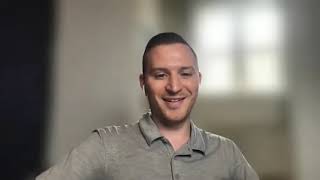
John Wilson built a portfolio of plumbing, HVAC, septic, and restoration companies by leaving accounting school and acquiring rapidly. He uses daily KPIs, management meetings, and a two-year EOS system to run each company as a cash-cow platform that funds the next acquisition.
Chapters
Hey everyone, welcome back to Owner Occupied. We're coming at you here with episode 9, and we are super excited because we have our very first guest, John Wilson, and we recorded an absolutely phenomenal episode with John. He has some really interesting perspectives on home service businesses and his portfolio of small service-related companies. So we talk a little bit about his history and how he got started. John goes into great detail on his KPIs and why he uses those to run his company on a day-to-day basis. We talk about the value of a property management business as a platform for home service companies and why John is so bullish on that idea. And John talks about what he loves and what he hates about service businesses from an accounting perspective. And then finally, we wrap up with a great discussion about the challenge of finding and training operators to run small businesses. So stick around, we're going to get right into it.
I've been looking forward to this episode of Owner Occupied. It's been, it's been a couple weeks since I, we had our KPI conversation, key performance indicators. And some of the interaction on social media has been helpful, some of the books we've been reading. And today, for the first in owner-occupied history, we have a special guest, John Wilson, uh, with us. And so rather than waste our time, uh, chatting and, and me recapping while I'm excited, uh, John, welcome to the show, and we'd love to hear your origin story. How did, how did you get started in owning your business at such a young age?
Yeah, thanks. Thanks for the introduction. I'm super excited to be here with you guys. So in my early 20s, I started working with my family's business, which is plumbing and HVAC. Very small company at the time. 8 to 10 employees and sub-a-million dollars of revenue when I first began. I was working on the truck and helping out as a technician, really learning the ropes. At the time, my father was a, a very hands-on owner, like both as in he could not delegate, but hands-on like he was doing the repairs at times too. So like very hands-on. So I came into that with the sort of intention of hopefully one day taking it over at one point. At maybe 22 or 23, I started going to school at night for accounting because I had not gone to, I had not gone to college at that point yet. So I started going to school at night full-time. I had just gotten married at 23. So I was working full-time. Going to school full-time, freshly married. And about a year into marriage, I was like, I think I gotta drop this school thing and just go ahead and run the company and, you know, spend time with my wife. So I pulled back, started focusing on the business, started working on growing it and building the business itself. I bought 49% in 2016. I was 25 at the time. Um, we've done a couple acquisitions since. I did another acquisition in 2018. We ended up doubling that year. I bought my father out in 2019, and we've done a few launches from ground up. We've done 4 total acquisitions, and as of today, we have 2 deals under contract.
Congratulations, that's huge.
Yeah, it's beautiful.
Yeah.
Is your dad still involved with the business day to day?
Um, he works, I'd say, 15 hours a week doing basically whatever it is that he wants to do on my payroll for 15 hours a week.
Gotcha. And does he like running, actually doing the service calls still? I remember I was listening to your podcast and you're saying that he, uh, He just couldn't believe that you would be really doing anything other than going on the service calls. You know, that was like mind-blowing.
Yeah, um, he enjoys it, you know. It's— yeah, he's doing the size he wanted to because that's what he liked doing, and that's, you know, that's fair game. He really enjoys just looking at a problem and figuring out how to fix it, so he gets a lot of personal value out of that.
Yeah.
Well, one of the reasons we reached out to you, uh, we did a show on key performance indicators. It's my favorite one. It's the one I've learned the most from. If you're interested, go look. It's, it's really clear in the show notes. Um, but you responded right away. Um, and they're just different kinds of people in business. Uh, you responded right away. You knew exactly what your 5 KPIs that you would take if you were on a desert island and had to know the status and health of your business using 5 numbers. Could you do it? What, what 5 would you take? What role do KPIs play in your business? Describe that for our audience.
KPIs for us, I mean, it's, it's hard to describe what role it is because KPIs are sort of the business That is the business. Like, that's how you measure your success, right? You can't know if you're winning or if you're doing well if you don't have a measurement stick for it. So the trick is, are you measuring the right things? And how often are you measuring them? Like, over what time period? Um, so we have a variety of KPIs that we look at. I think I gave you probably the biggest 5. Um, so if, if all I needed to do was look at our company's performance over the course of a month or a quarter, Uh, those would be the KPIs I'd be looking at. Whereas we have a daily management meeting every single day at 3:30. I just got off it. And, uh, we go over the 10 daily KPIs, which are, you know, sort of my more minute, um, and give access to, hey, what happened yesterday in our companies.
Okay.
And so would—
so for those 10 daily KPIs, You know, I assume it's things like, you know, how many jobs were completed and revenue for the day and incoming call volume and stuff. I mean, are you, are you taking any type of action based on what you find in those KPIs? Is it more of just for your peace of mind to know that the ship is sailing?
Is—
I guess chat a little bit about what's discussed during that meeting.
Um, if you want, I can just screen share one.
That'd be awesome.
All right.
Yeah, if you unlock, unlock screen sharing, I should be able to do that.
The guest is now the host.
There you go.
Oh boy. Okay. Should be able to see that, right?
Yeah.
Okay, so we measure by division. So, uh, this is our Cleveland Plumbing Service division. This is one tech right now. So we have one tech in this division. That's unusual. That's our smallest division. We're doing like a little bit of an experiment. But, um, so this is our— this is our DME report. So every day we go over these things. They get filled in through a very complicated, uh, spreadsheet, which I can show you if you'd like. But we had 3 total service calls, sold 1 club. The metric there is 33%. You can sort of see the stoplight, green, red, work performed, 2/3. This is such a small data pool, it's hard to take real action steps against 2 out of 3 calls being a work performed. But if you can imagine this being more like 50 total calls, and 30 work performed, then you're like, well, what happened to the other 20? So were they callbacks? Were they zero invoice jobs? Like, what happened? What action can we take?
Gotcha.
Did we hit sales average, average ticket goal? Did we collect? And what was our payroll on point?
So you—
it's sort of your question was, do you take action after seeing if you didn't hit KPI? And the answer is yes, it— and then followed by it depends, right? But like, it depends on how far off we are.
Yeah, sure.
So, uh, you know, looking at this, I would say that that was a successful day. We hit our call goal. We aimed for 3, so that was great. We beat our revenue goal, average ticket goal. Those are great. Uh, we were off on wages, but we expect to be off on wages in this division. Because there's only one technician, so we can't really hit office wages. And the only thing that we missed was work performed. So that just usually that comes with an explanation from the field manager. Hey, we— one of those was a $0 invoice because if it was a callback, it would say warranty recall right here.
Okay. Yeah, this is, this is fabulous. I'm curious. Where did you sort of come to under— where and when did you come to understand the importance of KPIs? Because I'm guessing it wasn't from your dad, because it sounds like he kind of ran it, you know, the way a lot of the old-school guys do. Where, you know, was it a mentor of yours? Was it your accounting background? Was it just doing your own research? Where did you come up with this idea like, hey, we should have a daily meeting where we review the KPIs?
It really developed over a few years and there was a lot of different iterations. So when I bought that— when I bought another company in 2018, we doubled overnight and suddenly we had two companies that were previously very flat organizations that now had a layer of middle managers and And I had to create a system from scratch at that time that gave me a tool to hold the middle managers accountable. So it turned into, it was really basic when we started, just gross profit, tech payroll percentage, and sales per tech per month. So those were the big three. That was really almost all we measured. And then as we grew and we continued to understand our own company better, it got more and more complicated.
Yeah.
What gave us sort of this framework for the daily management meeting was we joined an industry contractor network that, sort of laid this groundwork, hey, daily management meetings are good. So we started basically once we heard that, we're like, okay, that makes sense. You know, that's cool. And that was early 2020. And then we almost immediately after implementing this daily management meeting, we went into total crisis mode of COVID shutdowns, which caused a 30% drop in revenue, literally overnight. So, you know, everyone's got that story, but for us, we were able to pivot pivot so quickly because we had a daily management meeting where we knew all of our numbers that we needed to know to determine, hey, what are the action steps we have to take today to continue doing what we need to do? So we sort of started doing it. There wasn't a lot to talk about right when we first started because we were getting our bearing on this daily management thing. But immediately going into crisis mode helped solidify a process.
Was that framework from someone within your industry specifically, or was it, was it plumbing and HVAC specific, or was it broader small business?
Yeah, so it's plumbing, HVAC, electric, and the, the name of the group is SGI. I've talked about them on Twitter and I think other interviews before. We recommend them a lot if you're in groups that— if you're in the trades that they work with, we recommend it. And I think in general You should, I guess my general recommendation is most of this stuff doesn't need to be reinvented, right? There's a lot of groups out there that for $5,000 to $10,000 a year, they'll give you most of their best practices sort of on a silver platter. And it's worth it. It'll save you years of time.
[Speaker] Yeah, that was one of my top 5 regrets. I did like a top 5 mistakes I made when starting my business was not joining a trade group from day one, 'cause you're exactly right. You end up reinventing the wheel when, you know, it's fine to, you do kind of want to reinvent the wheel on certain things, but there's no point in reinventing all the basics, right? All the tactical stuff, that's all been figured out and you might as well adopt the best practices from the start.
Yeah, yeah, I agree. I wish I would have done it years before. It would have given just a clearer framework for my team.
Yeah.
You've mentioned in one of your tweets about adopting a system, the recommendation, the path, your tweet blew up, but it was your path to scale from like 1 million to 5 million and your playbook. And so did you just adopt a particular system? Did you look at multiple systems? How did you—
So in my industry, there's 3 main systems: SGI, Nexstar, and I always mess this name up, but I think it's like Quality Service Roundtable or something like that. So we looked at all 3 and we landed on SGI for a variety of reasons. But I, like Peter just said, I would recommend people, if you're at $1 million or if you're at $500,000, just start there. We didn't join one of those systems until we were at, um, maybe $3.5 or $4 million, and it just would have made that journey a lot easier. It just would have been so much easier. Uh, so yeah, the sooner you can find someone, uh, so we launched We launched our damage remediation company from ground up, and day one we joined an industry best practice group, and we've been able to surpass our expectations in that business because we were able to get best practices. Otherwise, it would have been me making it up or the GM making it up, and I don't feel like that— I don't feel like we would have done as well. Like, we have some of the framework from our existing companies, like we know how to run a truck-based company, but We don't know that specific trade and best practices.
Yeah. Yeah, that makes sense.
You and Peter are nodding here and I approach my business from a sales side. When you talk about the numbers that matter and I'm learning, but the numbers that matter to me are profit. And so I can tell you my bank account balance. I can tell you how much money I've made and I've done it that way. And so I've been reading Traction and the, I— maybe the first time I heard KPIs was seeing it referenced in, in a tweet, or— and not knowing exactly what it meant, skipping over that and learning this other stuff. So before we move on, um, tell me what that means when you talk about adopting a system. What did it mean for your business? You read a book, you went to a conference, you came back to work on Monday. What, what did adopting a system mean?
It looks probably very different depending on how in-depth the system is. The system that we adopted is probably going to be a 2-year total integration. Okay. So we started at the very tail end of 2019 and we're expecting to be fully on the model at the end of this year, '21. That is taking a long time, but there's just a lot of moving parts. If we were, you know, a sub-10-person team, it could have probably taken 3 or 4 months, but unfortunately we're not. So, um, it's, it's really everything. Our entire business has gone through a revamp to sort of get to this model. Um, And I— the next logical question I would think is, why do this if it's all this work? And, uh, our goal is that our GMs run the companies, right? I don't run the company. I don't really have much— I help the GMs. Uh, so Brandon is the GM of Wilson. I offer him support, guidance if he wants it, needs it. Um, we have weekly calls, but I really don't get involved in the company. So I needed a framework, like a package, a little box that I could just hand someone and say, "Hey, this is how I want this company run. Go do all of the things inside of this." And I think Girdley's is similar because he uses EOS for his and he self-integrates EOS. And it's for the same reason. If you're managing multiple companies, you want to be able to look in and know What are they measuring? Why are they measuring it? And just not have to reinvent it with every company.
Yeah. We're on EOS. We've been on it for a couple of years, although I really want to finish the rollout. We're probably 50 to 75% on the system, and I'm considering bringing in a professional integrator toward the end of this year to sort of get us over that hump to 100% because I think there's a lot of value there. What do you—
What's left? What do you have to do now?
Um, I want us to be a lot more diligent about the, um, the daily— I'm sorry, the weekly level 10 meetings. We do them biweekly now and they're a little bit more loosey-goosey than I would like. And I also want to get way more hardcore about the annual off-site with the goal setting and then making sure that the quarterly rocks tie back to that and basically holding our feet to the fire for not just picking rocks that are easy or fun, but ones that actually matter. And I think having like a third party come in and really show the way by example and maybe even overrule me on some things would be good, so.
How big is your team?
So in total, we've got 15 people.
Yeah, all right, that's a pretty good-sized team. So what we started doing, I don't follow EOS, I understand the principles, but we're not on that system. What we started doing was we just sort of forced ourselves to do the annual offsite, but we now do quarterly offsites too. We just did our quarterly like a week or two ago. I think the biggest lesson I learned there was me having nothing to do with it, because if I get in the middle, then it either takes too long or goes off on my own agenda or whatever. We do have a third party come in. We have a fractional CFO. So our fractional CFO comes up from Cincinnati once a quarter, and we either are doing our big annual or we're doing our quarterly, but he manages it. And I usually don't, I don't go until the end. So they do a SWOT, they go through the SWOT from last time, they go through what's good, what's bad, what's different. And then I show up at the end and basically get presented with what it was. Which I feel like is probably better because it really decentralizes who's identifying problems and who's taking ownership over problems. It's not just me, right? I'm not the one, hey, you guys are all doing a bad job. It's people saying, hey, this is not our strongest point. This should go on opportunities. We can do better here, or we knock this out of the park. It really helped. Yeah, I think I said decentralized authority, but it really helped with that. It allowed managers to step up and take control.
Yeah, I love that model, and I think a lot of entrepreneurs and small business owners want to get to a point where their business is running on autopilot or with a general manager. Along those lines, so Brandon, your general manager, I'm curious What would you— what did you give him as a mandate? And by that I mean, you know, he's running the day-to-day. Like, did you tell him, listen, Brandon, I want you to grow this company as fast as humanly possible. I don't even care, you know, you can be 2% profit margin as long as there's cash in the bank. I don't care what you do as long as it's growing. Or did you— or did you tell him something like, listen, I want this thing to just churn out cash like nobody's business. You can grow 10% a year for all I care as long as you're hitting 20% margins. Or have you had a discussion about like, here's what I want you to— here's where I want you to take this business? Because I think as a general manager, as a CEO, you know, there's a lot of different directions you could take a business. And I'm curious how you think about providing that mandate and then sort of maybe even setting up the comp structure to align with that.
So there's a lot to unpack there, which is, which is good. Like, it's all fair game. So like, the, the probably the big answer is yes, like you do, but it really depends on the specific company. So I'll go through like our current portfolio real quick and then the upcoming ones because they all have a different target. Yeah. So the plumbing company, Brandon's goal is 13% cash flow, and that's how he's incentivized. That's his hurdle that he has to jump, right? Very achievable. And we should also be able to achieve that continuing to grow at 20 to 25% a year.
30% margin, right? Okay. You said cash flow.
Cash flow. No, I know it is cash flow, not just margin.
Okay. Now, how do you define that?
EBITDA, usually.
Okay.
Their restoration business is in cash cow mode. So we're not trying to aggressively grow. We just launched it last year, but we're trying to basically give it a year of rest and just churn cash because it's doing a good job of that right now. So her hurdle is 21%. That one's margin, not cash flow, slightly different measurement. And then we're looking, we have two businesses under LOI right now. One's a septic company. I've tweeted about that one. And the and the HVAC company. Um, the septic company will— we're not expecting huge growth, so the operator is going to come in and basically, if you can keep me at $400,000 in cash flow out of that company, then I'm going to be, you know, very happy with what you're doing. Uh, the HVAC company, we are expecting a lot of growth, um, just because it's a turnaround business. So we should be able to go in there and add 50 to 60% top line and triple that bottom line within the first year. So the operator will be held accountable to that standard.
Okay, fascinating. So you're literally taking each company, you're thinking about its position in the marketplace, strengths, weaknesses, opportunities, and stage.
Like, what stage is this company in? So like, Wilson is not yet mature enough to turn into a cash cow. It's just not like I— that it would be irresponsible to do that at this point. It could go another— it could double, and that, that would be cash cow mode. Um, restoration, we have— we're at a really nice plateau right now where we can cash cow it, but then if we want to reinvest, if we want to turn that into a 10-person team, that's going to take about 2 years, and we just want to like growth is an option, right? That's an option.
Okay. Yeah, that's really interesting.
I've tried to— mentally, I've tried to think about Peter's business back to where your dad was, who was primarily interested in his real estate, and he had this HVAC— I mean, he had this plumbing company on the side. That took care of his properties, but his— and he was making enough and he kept it at this size. He would do jobs, but he wasn't invested in it, but it was helpful to his property, which is what he cared about. And, and I, the way my brain works, I look at all those verticals associated with how much business somebody in the property management world that has almost 500 units could make for each of the verticals in your world and say, if I took a poorly run plumbing company and I got the right operator in place there and—
You both told me to do this now, by the way.
I told Peter to do this like 4 months ago in DMs.
I was like, bro, I'll go shopping for a plumber. Plumbing, I would go shopping for a plumbing company. If I could do a good job and Peter's work was available, each of those verticals for how many jobs do you do and the way Peter's brain works, he has a really good idea how much each job is going to, how many of them are going to come up and how much they're going to cost. But he's looking at it from the property owner side as opposed to the service side. But you've— your example, your dad was good at the real estate because that's what he paid attention to and cared about. And you're really good at the service business because you gave it the attention it deserved and it took off.
I don't know that I would say really good, but I've been decent. I think the thing that has helped a lot is just putting people in the right seats. So sort of circling back to what mandates do I give my operators, I think understanding that I needed an operator, that's not really me being good at business. That's me being like, hey, I'm bad at business, probably. Like, I need somebody to run this company for me because I'm not very good at this. But I think that's just an understanding your strengths thing. Like, Peter, what role do you think you take in your company now? Are you the operator? Are you the integrator? Or sorry, are you the operator or the investor?
I'm the— under the EOS model, I'm the visionary, which is like the pie in the sky. I'm just the ideas guy type of, you know, I'm coming up with these big ideas and bringing them to the team, and they're already, you know, too busy. But I spend very little of my time in the business these days. We've got a really great team here. So I'm able to spend my time doing things like this and more strategic, you know, thinking and planning and stuff like that. So I'm still in the office.
Do you have the integrator to match your visionary?
Not the one I want. So my business partner who's a COO has been sort of filling that role, although I don't think he's ideal for it. I think he would probably even agree with that. He has more visionary tendencies., as well. But he is headed off. I mentioned right before we jumped on, we're closing on a small engineering company here, so he's headed off to run that in about a week, and I will be looking for an integrator, for sure. So that's in my near future.
Yeah, I think that's when it starts to take off, when you have someone, especially, um You need both. And two visionaries running a company is a mess. I'm sure you guys are great. When we did it, it was a mess. Yeah. But, uh, yeah, I, I think, um, I think you're on the right path. How do you think you're going to find them? What's the goal? And how are you going to mandate them? Like, what do you want out of your company?
Well, so for now I'll stay in as the CEO and, um, The reason I was asking you about those mandates is because since my business partner and I are now going to be operating separate companies but will continue to be 50/50 owners of both of them, we're trying to set up our comp structure for both of us as CEOs of our respective companies. So you end up drilling way down into your compensation as a CEO versus your compensation as the owner. And then your ownership, you get a share of the profits. That's pretty simple. But as a CEO, it would make sense to be compensated based on the performance of the company. And now you're asking, well, what's the hurdle rates essentially that we want or that are appropriate for our respective businesses? So that's where my head's been at recently. But I'll continue to be—
What's the end goal? Like, you guys are running a property management company, you're buying an engineering company. What's 5 years? Like, what are you looking for?
I think closer to where you are at or where you're headed, which is not necessarily being involved in the day-to-day and having a general manager or a CEO in place, which would allow my business partner and I to focus more on a capital allocator role. We're big followers and fans of Berkshire Hathaway, long-time shareholders. We've been out there to the annual meetings in Omaha a few times. We love following Warren Buffett and Charlie Munger. They've got the dream job, right? You come in, you read books for half the day, you chat with your best friend and talk about where to allocate the profits from all your businesses that you own. So I think that's, I think, the dream or the plan.
Do you both share that plan? Do you like— is that the same for both of you?
Yeah, I think we're very similar in that.
Yeah, I think I'm going to give my own thoughts.
Please do.
That's why you're here. So I think I don't think I'm in a magical place. I have 35 employees right now. I think by the end of the year, we'll have like 60 or something after a couple acquisitions. It's fun, it's cool. I have not touched my compensation personally as an owner since like 2014 or something. I genuinely am not totally sure what I make for a salary because it is so irrelevant. Because if the goal is, as you described, to become a capital allocator, then you need capital to do that. So that means if that's really the goal, then how can I reduce the drag of my business as much as humanly possible and have the lowest possible salary over the next 5 years? Because every dollar that I'm spending on my life is a dollar that I'm not using to buy more companies. Build more income streams. That's my personal perspective. That's how I've done it. But I mean, yeah, we've built a profit snowball because I don't take much profit.
Yeah, yeah, everyone has to find their own balance. You know, we operated, I think, more that way for a lot of years in the beginning. I think at this point, I'm a little older than you. I'm 35. I think you're what, 30?
Um, I have a few more weeks. I'm still 29. I'm holding on to that. I'm holding on, guys.
All right, there's a part of you that, you know, every dollar— yeah, you're absolutely right. And you sit there, you do the math on, all right, well, if I save $10 a week, if you assume like a 10%, you know, return on that, you know, you kind of run the math out for 30 years. It makes spending money painful as someone who appreciates about, you know, the time value of money, but But on the other hand, it's like you only get one go in life. I think an incremental extra $10,000 or $20,000 a year added toward the snowball versus improving your life in a significant way— everyone comes to their own opinions on where those trade-offs lie. So yeah, interesting stuff. But yeah, I'll be looking for an integrator for sure. And I don't— I've never hired for a role like that before. So I'll be spending a while crafting that job description and interviewing, I'm sure.
John, yeah, I would— in your business experience, when you— do you think what you've learned over the last 6, 7 years of running this business, is it plumbing and HVAC and septic and industry-specific? Could you, could you buy a much bigger company in, in the disconnected from what you've built in your existing business and you had to start something, drop into a new territory with a bigger business? Is that an option for you? How about in a different industry? Is it business-specific? Is it your business? Or is it your industry-specific? How's it translate in your mind?
I think that, um, for the moment I have a good system for truck-based companies. I think it would be, um, pretty overconfident to think that I can just jump in. Like, I have no idea how property management— I— and honestly, I think I would— like, what I do know, I think I would do a terrible job running a property management company. So I think in, in cert— like, I have a general 4 or 5 things that I think I can do well in an industry that has these characteristics: pricing power, high gross profits, because I mess up a lot, decentralized— that's not quite the word— fragmented, low professionalism. That I happen to find all of that inside blue collar. If it was another industry that I could do most of the same characteristics with, I would feel comfortable jumping in it.
A lot of that applies to property management, to be fair.
Oh man, I don't think I could do it. Property management, like, property management has some really cool attributes. To me, honestly, the coolest part is what you can add on to it. I think that that's like best in class, is when a property management has like a plumbing arm. Uh, who's, who's doing this? Uh, Benton Moss from the Circle of Competence. He's buying a property management company that has a plumbing and HVAC ARM on it, like, that's awesome. That's so cool. Because that's gonna, that's gonna so dramatically increase the total pie.
So I think what, where I bounce off that is, I feel like running a property management company is extremely intense and requires like 100% focus. And so when I think about then separately spinning up or acquiring a truck-based business, with everything that you figured out about dispatching and revenue per call, and You know, fleet management and all that stuff, that's a whole other— just like you said, it's in the same way that you'd be hesitant to get into property management. I'm hesitant to get into a plumbing company, because I don't underestimate what a serious undertaking that would be to actually do it well. And just because we have a base of customers in the form of the properties that we manage doesn't necessarily solve all those problems. It solves a couple of them sort of partway. Because you have, you essentially have a locked-in client.
So maybe you shouldn't— That's a superpower.
That's something.
You hate sales and revenue, Peter, I'm telling you.
Yeah.
I make so many stupid mistakes because I can deliver a high-quality product to the customer and I can charge them for it, which you have money to make mistakes. I haven't made nearly as much as I should have, because I made a bunch of dumb mistakes, but I made enough to figure them out. And that's how I look at—
that's how we run a home. We run a home maintenance company within the management company. We have 6 guys that— 6 handyman guys, W-2 employees of ours that run around and fix everything at the property. So I've got a little bit of a taste for it. Yeah, we'll see. We'll see. Maybe again, maybe once we get to scale and I could support a full-time plumber and a full-time HVAC guy, just with the company, you know, the properties under management, I'd feel way more comfortable. That'd be a good way to kind of get my feet wet. And then once I saw how it worked, and what's required in terms of equipment and how to price it and bill it and everything, then at that point, it's easy to add another plumber and just start taking calls from the public.
What is scale inside property management?
So we're 4 units away from being at 500 units under management, as I tweeted yesterday. Someone with a, someone with a fourplex, please call me because we want that 500 units. And I think, I think somewhere before we hit 1,000 units, we could support both a full-time HVAC and a full-time plumber and keep them busy most of most weeks, 40 hours a week.
Yeah, I think, um, I'm going to keep pushing you on this just because I think what ends up— I think what ends up happening just from the guys I've talked to, but also my slight understanding of, of your industry and knowing mine, is that they add it and then they— you know, you have a captive customer base. That's a superpower. That's a serious advantage, uh, as any new industry. What do you have? You have captive customers. That's amazing. And then being able to turn it into a part retail and offering it out, I think that the plumbing and HVAC would very quickly eclipse the property management, which it probably should because the margins are pretty significant and it's on-demand repair.
Yeah.
So that's at least what I've heard from the guys that are doing property management plus.
I will continue to ponder that.
I will continue pushing it because it's a good idea.
So, so along those lines, I've got a question for you. So if you put your accountant hat on for a second, which I know is you've got a big, a big accountant hat. What, what is both attractive to you about these sort of sweaty service businesses from the perspective of an accountant? And what makes them terrible? Because I think there's certain— in the same way that there's certain things about property management that are super attractive, like recurring revenue, essentially negative working capital, a couple other things. Basically no accounts receivable whatsoever since we get paid by the incoming rents. Along those same lines, what do you love about the line of work that you're in and what do you hate?
Okay.
So there's a lot that I like a lot. High cash flow, high margins, defensible, like you can buy moats, brand matters. Pricing power. There's a lot of serious advantages to being in it. The downsides are it's, it's growable, but it's not scalable. Like, you can't scale a plumbing company. It never really outpaces its expenses. That's just how it works. Yeah. Very geo-locked. So, you know, it's not like a SaaS where I could do whatever, wherever. I'm very locked into an area. Staffing is a pain. That's just the reality of it. For me to continue to grow, I have to continue to bring on more staff, and continuing to bring on more staff brings a multitude of other issues. That said, I like to look at our holdings somewhat holistically. So I think that there's a place for platform companies. I would define property management as a platform company, nonstop cash flow. You know, the margins aren't SaaS level, but like you have money to do stuff with. And it's, you can very easily build on top of that with sort of whatever vehicle you wanna build on top of it with. So I see plumbing as the same way. It's essentially a cash cow business that you can sort of turn on, turn off whenever you want. And you can take that cash and either continue to build those business segments, or when you've hit scale or mass or whatever, whatever, you can go down any other vertical because you have a platform just sort of funneling cash to you.
Yeah. Do you, do you have trouble getting paid? Speaking of getting paid, or how's, how's your accounts receivable look?
Not really. It's COD. And, um, I think our accounts receivable is maybe $30,000.
Nice. Yeah, it's not bad.
Yeah, it's not a big deal. It's like a couple of projects and some, you know, tough service customer accounts. You ever file a lien? Not often. So rarely because we're residential, you know, so it's not really dealing with contractors very often. I think I did one lien in the past 4 years. Like, it's super rare.
Yeah. Because that's one nice thing about home service businesses that I've always viewed as actually a strength is if you don't get paid, you can file a lien. And that's like a shortcut. It's like a cheat code to getting paid rather than small claims nonsense. Because you file a lien, that gets someone's attention. Believe me, we've done it. And you generally get paid in a hurry, in my experience.
Yeah, yeah, we've threatened it at times. We just haven't had to actually do it for the most part. Um, but yeah, for the most part, service businesses are super asset light and cash flow heavy. And, and that's like, those are two great attributes, right? For sure. Uh, the only downside, or the biggest downside, is you just can't scale them to the moon, right? Just because of the nature of the business. It's selling time and it's selling expertise, but they serve as very strong platforms to to sort of create a vehicle to do whatever you'd like with.
John, have you— can you share a little bit about what you think if you, if you grow your business, you're not going to scale it, but you get your plumbing and HVAC business to sort of that status you have with the septic business where you're sort of at stasis, not— I mean, developing, but you're not going to shoot for growth and, and cash cow status is the phrase you use.
Is it?
I don't know what your timeframe is that, but do you see yourself, you want to be a capital allocator, you want real estate investment, you want, what kind of thing do you have in mind for your future?
Well, it's kind of what I just described of what I like about home service. You can turn it into a platform to do sort of whatever you'd like. So I see scale at $10 million in sales a year at our— in our industry. So we should be able to do $10 million in sales with between $1.5 and $2 million a year in free cash flow. So when we get there, which we're maybe a year or two away from, we should be able to take all of that cash flow and move it into new verticals. We'll continue growing the home service companies because they just sort of naturally grow as you do best practices and do right by customers, but we want to have the flexibility to transition into other business lines. So basically, capital allocator is the hope, but that's a challenging place to be under, I'm sure, a billion dollars. We all have to be more than that. I think the big things that are on my horizon are training managers and really building out that bench and creating a vehicle that we can harvest our own operators from. So if I identify someone with talent, how do I get them from I've identified that they have talent to they can run a new business unit in, you know, whatever vertical within a year or 6 months? So we have to build that because I have not Truthfully, I have not invested enough time into all of the leaders in my company. I've only invested time into the GMs. I've invested a lot of time into the, into the GMs, right? But it's the people right below them that I have to sort of support my GMs to build a program for those leaders so that they can one day become GMs or, or just better at what they're doing. So that's, that's the next big one is focusing on training.
So does that look like handbooks for those positions with sort of detailed documentation of the standard processes and workflows and the standard forms, or does that more look like sort of like a sophisticated onboarding and training program for every, you know, every new manager you bring in, or some combination of that?
I think a combination. The way I'm looking at it right now is an incubator. Of some type. Because if, like, I'll demonstrate the problem and then I think you guys can, like, follow along. So I want to be able to buy a company or launch a business unit and have someone on bench that I can trust operating, because I'm not an operator. I'm never going to be an operator. Someone needs to go do that. So right now, because of our size, I have to go recruit that position. And that is a tough— like, hiring operators is already tough when you're working inside the company, but hiring an operator that you're not even going to be in that company, and like, at most, you're going to get twice weekly check-ins, they don't understand how you think, they don't understand how you make staff decisions, they don't understand your culture, like, they just don't get it.
Are you talking about your general managers for each business or the people right below them?
Uh, really both. Okay, really both. Because when you, when you place someone in a leadership position, you, you want them to understand how I would react. Uh, in a, in a— I'll give you an example. Tuesday, a customer stopped by our office. I'm still in that building, so I got, you know, I was asked to step in, um, by the GM and just say hi. But the, the customer said that one of our technicians stole from her. And she like showed us proof. And I was like, that has, that has literally never happened in my life. I was enraged and I don't get mad. That's not— so I was, uh, yeah, I was pretty frustrated. Um, but I just sort of sat there and my GM handled the entire thing exactly how I would have handled it. And I don't think that that could have magically happened if I didn't work very closely with him for 6 months before he took over. So that's, that's sort of how I see the problem is how can I go buy the septic company in 100 days? Who can I put in there that is going to act in exactly the way that I'm going to act, is going to treat the staff exactly how I want them to be treated, the customers how I want them to be treated, and understand our culture as a company so they can integrate it?
Well, that's the million-dollar question, right? I mean, that's being asked by every, you know, private equity firm and, you know, every entrepreneur How do I replace myself in the business? How do I have a CEO go off? And yeah, that's—
but for us, it's the bench. So we have a solution for it because we've placed 3 GMs now, but it takes time. Yeah. And my issue is I haven't yet taken the time to more fully examine all of the people on our team and say, hey, you're not a leader yet today, but in 2 years, I can see it. Like, I see that you've got potential. I see that you're smart as hell. I want to give you the tools so that when an opportunity comes in, I can place you. And right now we just don't have that because it wasn't really a need until the last 2 years.
Yeah, and that's, that's such a hard one. Um, and I sometimes I wish that I had somebody that, that I could model my behavior after. Because I think as an entrepreneur, I don't have a— I never really had anyone growing up or in the engineering company I worked at before I started my company that I could look to as an example of here's how you behave if you want to grow a $10 million company. Here's how you interact with customers. Here's how you hire employees. Here's how you deal with tough situations. Here's how you make decisions. So yeah, I think there's so much value in some combination of being around other people who are like that and sort of ingesting their values and their culture. Like you were saying, your GMs spent time with you and sort of picked up your mental models as well as like a more formal training, reading, instruction type, you know, here's, here's a little handbook of, of our values and how to think about certain common scenarios that come up all the time. So you're not reinventing the wheel every time a customer, you know, does a chargeback on a credit card or something.
I think that, that part, that's not the hard part because we have that, like, SOPs and how to onboard managers and all of that sort of base level training is already there. But how do you train someone how you want cash to flow? And how do you— there's just— it's the nuanced stuff. It's not necessarily the— here's the— hey, hey, a customer's pissed. What happens? Because there's sort of a chain that you can build there of how that works. Yeah, I agree. I just think it's very in-depth. Like, it's a big— it's a big problem. But we are aiming to solve at least a section of that problem in the next 6 months, really, because I have to place 2 operators. And, uh, our continued growth is based on our success with this program.
Awesome. Well, I don't want to take up too much of your time, John. Did you have any, uh, last questions, Russell?
No, that's— it's been fascinating. It's fun to watch business brains at work and, and It's so different from the PR and political affairs work that I do. But there's so much I learn every episode. I appreciate you coming on, John.
Yeah, thanks for having me on, guys. This was fun. Peter, you got, you got to have plumbing and HVAC, man. It's such a good idea.
Yeah, well, like I said, I'll start giving that some more serious consideration and maybe flesh out what it would look like. But thanks so much for coming, John. This has been great. And if you haven't already, you should really check out John's podcast. He just launched it a few weeks ago, and I've already listened to most of it. The episodes are fantastic. And bonus, the name is very similar to the name of this podcast. So our podcast is Owner Occupied. You want to give a little summary of what you got going on with your podcast and what's coming up?
Yeah, so ours is Owned and Operated, and it's really just about the businesses that we own and operate. So we're talking about mistakes we've made, decisions we're actively making, deals we're looking at, and, um, yeah, I hope it's interesting to people. Fantastic.
And if people want to connect with you, John, where's the best place to see what you're up to, interact with you, and, uh, and follow along?
Twitter, and it's @WilsonCompanies.
Perfect. Well, thanks again, John. Uh, we'll stop it here, and we'll see everyone next week.










