PM Tech Panel: Rentvine, AppFolio & LeadSimple
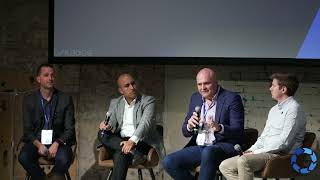
Dave from Rentvine, Matthew from AppFolio, and Jordan from LeadSimple discuss what separates successful property managers: clear processes and control over clients. They compare integration philosophies (AppFolio's curated marketplace vs. Rentvine's open API), pricing models, and 2024 plans including AppFolio's RealmX conversational interface and Rentvine's owner and tenant portals.
Chapters
I'm excited to have this dynamic panel here today and have free rein to hit them with the hard questions. All of them told me don't hold back, so I prepared a few good ones. So we're going to jump right into it. Each of you has a really interesting perspective on the industry in the sense that you have access or you have visibility into Property management companies across the country, you see thousands and thousands of property managers and property management companies, and you see a lot of their, their numbers and their operations. So I want to start by asking each of you, what are you seeing the most successful users, the most successful property managers on your platform doing differently? Maybe we'll start with— we're gonna, we're gonna start with Jordan because he tapped me last minute for this panel.
Yeah, that's an interesting question. I think for two reasons. Number one is that our visibility is based on engagement. So somebody who's not engaged, what are they doing to be more or less successful? I don't have any idea. So the subset of what I have a window into is folks that are well engaged with the product. And of the folks that are well engaged with the product, what I see is that maybe rigid isn't the right term, but they're very clear in how their business operates in relation to process in a way that is agnostic of the software. Their view of how the business should run to enable leverage from technology, they're really clear-headed about it, and therefore, when they run into compliance issues with maybe some staff that doesn't want to use it, they're able to press in because it's not a, it's my way or the highway, it's like, no, there's a really good reason, and we've structured the business this way, and the upside flows out of that.
Got it, thank you. How about you, Dave?
Consistently, the most successful property managers that I see are the ones that are in charge of their clients and not vice versa. So there's clients out there that tell you what to do and tell you how to advertise and tell you what they're gonna fix and what they're gonna pay for, or in tenants that tell you what to do. Those of you that are in charge of your clients are consistently the most successful, and it's hard to say it when you're growing and early on, but if somebody's not willing to trust you and pay you for what you've spent your life learning how to do, then you don't need them, and the sooner you get them out of your business, the better. So it's very frustrating as a technology provider when someone wants us to build something because they have a, poor relationship with their owner or tenant that they can't manage and they want us to manage it through software. So consistently across the board, even outside of property management, is— are you in charge of your clients or is it the other way around?
That's a great point, and I don't see him, but I know Todd is nodding in the crowd somewhere. He makes that point quite often. The theme I'm teasing out from that answer is not trying to solve a people problem with technology. And there's been a few folks who have come up to me and asked questions along those lines, and that was almost verbatim my answer. So I love that. How about you, Matthew?
Yeah. So from, from my perspective, I'll just— both of what they said I agree with. If they're clear about the problems they're trying to solve, they often can adopt the technology or pick the technology more intelligently. And so we obviously see some correlation with product adoption and growth. I don't necessarily always attribute that to our product makes you grow. I think we just have some features that solve important problems, and the property managers that are using that are very, very clear about solving those problems with technology rather than just trying stuff.
Love that. And we're going to get to the hard questions, by the way, so don't get too comfortable. But we're going to go with another easier question. As you reflect back on 2023 and the advancements we've seen in technology with AI and just— it's been a crazy year. What are some of the things that you saw or heard from your users that you weren't expecting? What are some of their feature requests? What are some of their problems or their successes that you would have never predicted coming into this year? I'd love to hear just like something different that wasn't on your radar?
Their requests or what they're doing?
Yeah, well, like, you know, going into this year versus where we are today, what's happened this year that's changed the way you think about your users or the industry?
Well, there's been some financial changes this year. With the raise in interest rates. And we've seen that customers are, like you mentioned yesterday, we're going back into a growth mode for property management. You have a, a white-hot market that finally cooled off a little bit, and people aren't able to sell properties for what they want to, even though values haven't dropped at 8%. Things are a lot more expensive. So you guys are all going to be backing into some accidental landlords again, like back in 2008. And I see a lot of portfolio growth over the— as long as this, this situation goes on, which who knows. But we see a lot of organic portfolio growth amongst our customers, and we attribute a lot of that to the housing market going the other way. And as we know, this is a counter— a counter industry. When the real estate market's roaring, you guys are struggling. When the real estate market is slow, you guys are thriving. So I think we're going to see a little bit more of that. I've seen that throughout the year.
You know, I certainly didn't see the OpenAI ChatGPT getting into the market and getting crazy user adoption and it touched all of technology. The amount of rapid interest within all sectors but property management, I just would have not predicted that. We've been developing AI technology for 3 or 4 years now. And just the amount of adoption of our own stuff has been incredible in the last 12 months, in large part because there is a big shift in usable tech that was developed by OpenAI that hit the market. And so that's just a technology trend I would never have predicted.
Yeah, I think the trend for me was It only feels nominally technology related. The biggest trend for me was seeing clearly this year that enough pressure was going to be applied that the ecosystem was really going to open up. That has not been a technical challenge over time. That has been a will and governance challenge. And it's become obvious this year that the tide is too big for anyone to resist, and that's opening up a lot of possibilities. And then on the AI thing, that hasn't shifted much for me, and we've been really reticent to roll out any kind of a thin AI thing to take advantage of saying, slapping some AI on it. Long term, I think it's really going to be useful, but in the near term, there's been a lot of thin stuff that's gonna wash away. So it's here to stay, but it hasn't fully— I don't see it transforming people's businesses yet, even though I'm confident we're going to get there.
I'd like to comment on that real quick.
Yeah, please.
AI is, is, it is obviously the buzzword for the year. But I think if you look at it, it feels like it's overwhelming you and that you're not keeping up with it. And but like any other technology, I mean, 20 years ago, you didn't have web-based software. And 10 years ago, you didn't have really good smartphone. And so although it feels like it's hitting you instantaneously, it's really not. It's going to develop over the next 4 or 5 years. So we did do an integration, an AI integration with the marketing description. We rolled it out. We were very careful to say, listen, you're responsible for what you put out there, and nobody is going to sue the AI if you use it or advertise with it. And people were saying, hey, there's fair housing problems with these, with these AI-generated descriptions. That's on you. And you can go through, and there's ways you can train it and make it smarter and discount words and things like that. But in its current form, AI is an assistant. It is not a replacement for anything that we've had so far. So whatever you're putting out there, you're still responsible for. And if the AI makes the mistake, you're going to pay for it if there's a problem. So you have to be careful with the integrations that are out there, and you have to make sure that you're still checking it.
Yeah, that makes sense to me. Jordan, you touched on integrations and just the overwhelming pressure that's in place now that's really opening up the players to talk to one another. As a property manager myself, I'm loving it, right? This is great. The ability for LeadSimple to talk to AppFolio and Rentvine and Propertyware, I mean, that's a beautiful thing. Um, you know, AppFolio and Rentvine have taken very different perspectives on how they open their software and play with others. And since we got you both up here, I'd love to give you each a few minutes to talk about why you've taken the route that you have. And just to maybe save a little bit of time and for those who aren't familiar, AppFolio opens up their stack marketplace Vendor partners can apply and eventually be approved and build a direct integration with that folio. Rentvine has taken a different approach, and you can feel free to correct me if I'm getting any of this wrong, but they have an open API. So anyone who wants to can build and access their API, and it's a much more sort of open situation. So I'm sure there's advantages and disadvantages. I'm sure you both thought a lot about why your respective products went the route they did, and I'd love to hear some more about that. Maybe start with you, Matthew.
Yeah, so, um, when we got really excited about opening up our platform, I think we were hesitant for some time because what we heard in the marketplace from the big players, the Yardies, RealPages, was there's an API, but it's not fun. Customers are caught in the middle. They're pinged between vendors. It doesn't it wasn't a great customer experience. And so we dragged our feet on wanting to do that because we didn't want to create a bad customer experience. But I think a couple things happened. The maturity of what I would call like point solutions or other prop tech solutions in the space really accelerated quite a bit. And the amount of customer value was there and we, really looked at how do great companies build these marketplaces or build these interactions so that customers are so valued and in the center. And so our approach was how can we build a marketplace that's curated to some extent, right? We'll let many prop tech vendors on, but we really wanna understand how their system's gonna work with our system and understand the interaction points so that customers don't feel caught in the middle between two different vendors pointing the finger at the other one, and we can really support great customer experiences and build out good technology together with, with our partners. And so that's sort of like the reasons behind our strategic approach.
Thanks. And how about, and how about Rentvine, Dave?
So one of the primary reasons that we built Rentvine is because we heard from our PMW clients that we wanted a software solution that shares data with other software providers. And we realize that we can't build all of the best categories of software, so our initial challenge is let's make sure that it's an open API. And I want to explain to you what that is. Uh, Rentvine is an API. And so if you have a Rentvine account, when you log in, our React frontend accesses the API. Any other software in the world that has access to that API, which you generate, can see everything in Rentvine that you see as a user. And what that means is it allows you to define your tech stack. So if you want to do business with another company and they're willing to build an API integration to Rentvine, we don't even have to get involved. And you also get to govern which information you share with them. If you want to make them administrator and share everything, you can do that. If they're a maintenance company and you only want to share maintenance and work orders, you can do that. So what the open API does is it allows you to share your data with any software application, every software application, allowing you to build your own stack and whichever information you want to share. Which with an integration, both companies have to define the fields and information that gets shared. With an open API, you get to define the information that's shared.
Got it. Thank you.
Here's what I would add to that. There's a difference between an API and an integration. An API is like a technical thing. It's just like raw access, raw exposure.
Most—
what most people want is an integration, which is a curated thing that was thought through with affordances that are visual in nature, that are thinking about the use case and the problems, and that are solving for that. So there really is a difference between an API and an integration, and there's a number of players that have had APIs for an extended period of time, but it felt more like a technicality, like, great, you have an API, what am I supposed to do with that? Yeah, I could hire a developer on staff to build towards it. Do I want to do that?
No.
The money is in well-thought-through integrations where the two companies are really collaborating and partnering to build something awesome. And that is what's really, really exciting and starting to happen more and more.
And to be clear, it sounds like Rentvine— vendors can build a Rentvine integration without Rentvine's approval, whereas Appfolio takes a more curated approach. That might be like a fair way to say that. Um, great, I appreciate that, those answers. And the reason I'm pressing in on this is because the experience that we have as property managers in our day-to-day jobs and that our teams have is highly impacted by the work that these companies are doing to integrate with each other. And so it's helpful for me to hear how they think through this so that we can understand as property managers what we can look forward to in terms of future integrations, support, APIs. And, and I just— it's a lot of technical talk, but it's really, really, really relevant. I wouldn't be on LeadSimple Process if it wasn't for the integrations that they took time to build, which were made possible by the accounting vendors opening up and participating. So thank you for doing that. That's been amazing. Okay, let's talk about pricing for a minute. You know, pricing is a sensitive topic for property managers. Each of you charges a fee to use your product, makes sense. All of you charge a per-door fee. That probably also makes sense. What I want to ask about is, how do you think about what you include in your core product for the base fee versus what you charge à la carte? So property management softwares, many, most of them, all of them, I don't know, we're going to hear more about it, but there's usually like a base fee per unit. And then there's extra charge for this, extra charge for that, extra charge for running an application. And LeadSimple as well. There's certain things that are included in the base price, and there's certain things that are parceled out. And on the property management side, as I think about my experience as a property management company owner, sometimes it feels arbitrary or even punitive when things that seem cheap for the vendor to do, I'm getting a big fee for. Or you feel like that should be included. So I know there's a lot of thought that goes into pricing.
Who invited this guy up here?
Brent?
So I know there's a lot of thought that goes into pricing, and maybe it would be helpful for us to hear each of you articulate how you think about that.
I'll start. We have one price that includes everything that we've built and everything that we ever will build. And that includes the API, it includes world-class customer support, it includes everything that you'd expect when you're spending that kind of money. And our objective is, number one, we have to pay our bills, so we do need to charge for things. But ultimately, we want— there's one thing that we have a unique understanding of the industry being in it so long. Both my parents were property managers, and this is my third tech company that I've built, is that the easiest path of least resistance for a property manager a company like ours is to hammer you or your tenants or your owners or try to make money that way. But having a great understanding of the industry, a lot of people don't think that there's a ton of money from property managers. They're starting to figure it out because even though the business is tough to make money in, you guys spend hundreds of millions, billions, even bordering on trillions of dollars in maintenance and all of the things that you do every year, and people are looking to get a piece of that. And we know that if we build a large enough platform that scales, we're gonna go after those people to make our money instead of you guys, tenants, owners, that kind of thing. Now obviously we have to keep the lights on, so we do have a fee, but it is all-inclusive. It includes everything, API. There's no different differentiating, there's no different levels of support. It's all included there. So that's our philosophy on pricing.
You know, I'd say that our philosophy, philosophy is to map to value, and what we charge has changed over time as the product suite has grown and changed over time. When I think about all this cool stuff we want to build, like you guys saw that presentation earlier, all that stuff doesn't exist yet. We got to build it, and building software costs a lot of money. We're going to pay for it. We're going to fund it somehow. So when we roll out something new, we have to charge for it. If we weren't charging for it, we probably wouldn't build it. That's just like the raw practical reality of the situation. For all the altruism in my heart, if there was no hope of ever being able to charge for any of the new stuff that we build, that would materially impact our roadmap. So generally speaking, as we roll out new functionality, we're asking ourselves, how much value is this creating? Now, is that kind of made up? Yeah, I can't quite like exactly calibrate or dial into that, but that's the intent, is to mapping to value. Value is going to be a function of the business use case as well as the size and scale of the operation, which is why we're anchored to the door. Sometimes we get pushback about the door. Does anybody feel like there's a different lever than a door that should be used?
Wow.
Okay.
Nobody's taking the bait on that one. Sometimes people push back.
Maybe give more than a second. No, no, that was it.
That was it. Don't keep your hands down.
I'll go by unit next.
We're done.
We're done.
Nice job, Jordan.
But the point is, it's just a way to map towards usage, right? It's pretty intuitive that if you have 100 employees, you should be paying something different than having 1 employee using the software. So that's my basic take.
Yeah, I think my answer is really similar to yours, Jordan. Value-based pricing is a really important pricing principle. When you're adjusting pricing or differentiating on price, it has to be mapped to real customer value, and the customer has to win in the equation. You have to give them outsized value for what you're charging. Our business is— pricing is complex at our business size. Our customer base is not homogenous. Some people want very basic functionality, and some people want extremely complicated functionality. So we have tiered system to accommodate different customer sophistication and size, and we've put different value within each one of the, the tiers that we offer. And then we do have a host of what we call value-added services internally, but they're really transactional type services that have value and typically have some sort of transactional fee on our end, right? Like a tenant screening report, we can't put that into a monthly subscription very easily because if you use a lot of it, it costs us a lot more money and it's easier to kind of break that into the number of tenant screening reports you're running. And so anything that has, you know, a sizable cost and a usage model will will typically roll into an additional value-added service. But everything else, like core functionality, we're trying to put within a tiered structure that maps to specific customers that are the ideal profile for each tier. So long-winded answer, but pricing is an ever-changing thing, and, and like Jordan said, it's really important to map to the value you're getting out of the software when we think through pricing.
Thanks. Appreciate that. So we heard from LeadSimple earlier about their— some of their product roadmap for next year, and I can't let each of you off the stage without at least asking, what can your users look forward to for 2024?
So, so we definitely want to continue to invest in the LeadSimple relationship, some of the bidirectional stuff that, that that they're talking about what we have or will have endpoints available for consumption. And so that's obviously an important piece to this room that we'll continue to invest in, in not only this relationship, but all our vendor integrations. It's a big bet for us is to keep our platform with a lot of integration partners so you can build the tech stack you want to build. Outside, I could go on and on about it. I'll leave it there for the sake of time. If you want to hit me up for longer—
well, we're just real quick. So, you know, you demoed RealmX. That was a big announcement. Is that something that's gonna be coming out Q1, Q2 for general availability?
So middle of next year we will have that generally available, RealmX.
Can you just explain what that is briefly?
Yeah, this is a large language model, LLM, product that users can use a conversational interface to interact with the software, ask it to complete certain tasks, ask it to give them answers about data that's in their system, really leveraging some of the stuff you see in ChatGPT, et cetera, and trying to put it into a vertical piece of software to, at the end of the day, drive efficiency for your operations, make the product easier to use, and help you scale your organizations.
Great, thanks. How about Rentvine?
Well, our mission is to transform property management companies by strengthening their relationships with their clients. So you're going to see a lot of integrations coming through the year that is that is going to increase communication and cheerleading between your owners, tenants, and vendors through improving communication and offering incentives, offering value-added services like portfolio valuations to the owner portals, and tenant features in the portal. So we ultimately know that you guys have relationships with all of those people, and we don't consider those our relationships. We consider them your relationships. So we are going to do, through our portals, which is how you interact with them in our software, we're going to be adding a ton of value-added services for all of those individual clients that you deal with on a daily basis, but we're going to give you all the credit for it so that you look like you're doing those things yourself, because we want to— rather than just have your owner visit their portal once a month, maybe to check their statement, Maybe you can help them find a few more investment properties or help them find a lender or that kind of thing. So we want to help you guys look like the hero in front of your clients that you work with.
Great, thank you so much. This has been awesome. I appreciate each of you panelists for coming up here and taking these questions, and let's give them a round of applause. Appreciate that.










