The Owner's Dilemma: Should You Build with AI or Let Go? with Sam Eddinger | Peter Lohmann's Podcast
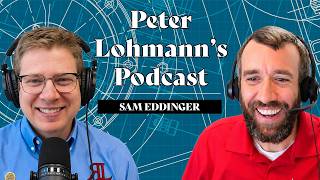
In this episode of Peter Lohmann's podcast, Sam Eddinger, CEO of Ironclad Property Management, discusses the strategic tension between building AI and automation in-house versus delegating it to others. He explains how owner churn is driven by perceived value versus cost, emphasizing relationship building and "unreasonable hospitality" as a churn reducer. Sam shares his background as a nuclear engineer, his obsession with second‑ and third‑order effects, and how that mindset informs his process‑centric approach. The conversation covers the evolution from hundreds of LeadSimple processes to a GoHighLevel CRM, the adoption of a pod‑department hybrid organizational model with single‑person pods (client success manager, maintenance coordinator, resident experience specialist, field inspector, leasing specialist) and the challenges of the client‑success manager role. They debate AI’s ability to solve bottlenecks, Sam’s reluctance to dive back into coding, and his focus on upskilling his team and his children for an AI‑driven future. The episode also touches on performance‑review cadence (moving from annual to monthly), remote‑team management, scaling hurdles in property management, market‑specific challenges in Connecticut, and Sam’s personal real‑estate investment philosophy (buy‑and‑hold vs. flipping). Sponsorship plugs for AppFolio and Haven AI are interspersed. Throughout, Sam stresses that trust, consistent communication, and adaptable leadership outweigh pure technology solutions.
Chapters
When is an owner going to fire you? An owner's going to fire you when they think the value you provide is less than the cost that you have, right? Fundamentally, that's when they're going to fire you. And what's interesting is if you're a great property management company, you seem to make it look easy, which makes it look like the value you provide is lower. If you're a bad property management company, you're calling the owner all the time with this and that. They feel like you're like firefighting. They feel like you're very helpful. So they might think that you're, you have higher value because of the fact that you're reaching out to them and doing all these things. So managing the, the expectations of the owner and managing how they feel about you automatically makes them value you more, right? So that's where I think the relationship building just naturally is gonna reduce churn. That's fundamentally what we need to do as property management companies is provide more value than they feel that our cost is.
Friends, welcome back to Peter Lohmann's podcast. Today I have on the show Sam Ettinger, CEO of Ironclad Property Management. Welcome to the show, Sam.
Thanks, Peter. It's fun being on the show.
Yeah. So, Sam, you and I have hiked the canyon together. We've had a lot of fun discussions and even some debates at conferences and other industry events. So I was excited to get you on the show and dive into a couple topics. I know that the audience is going to enjoy hearing us kind of riff on. Let's— I mean, let's skip your background because I think a lot of people are familiar with you. You've been pretty out there on socials and podcasts before. Long story short, you own a property management company in Columbus. You've been doing it for a while.
Not Columbus. You own it.
Sorry, not Columbus. In Connecticut. Wrong C-word. Connecticut, not Columbus. I'm actually from Connecticut. I was born in Hartford Hospital in Connecticut, but—
Oh, crazy.
Moved away from that area when I was about 9 years old. So anything we should know other than you're a smart guy who runs a good-sized management company?
Yeah, I think that the real thing to recognize is you and I have very similar backgrounds. So I was a nuclear engineer for about 15 years. I have a physics degree, so very process focused and, and I, I think a lot about it the same way you do. And, uh, I really resonate with a lot of the things that you're trying to do. So.
That's true. I appreciate you mentioning that. And I know that we have kind of geeked out on some process and system stuff in the past. Do you miss those engineering days, Sam?
I miss the fact that there always was an answer. If there was a problem, there was an answer that once you figured it out, you would say, wow, that makes complete sense.
Yeah.
Right. And it, and I, I used to think, and I still do a lot in second order effects, third order effects, right?
Yeah.
Because the first order effect is obvious. It's the second and third order effect. And I do that a lot in my property management companies. I think, you know, people are like, oh, if you do, I'm just gonna do this. And it's like, yeah, but the second order effect is gonna be this. And then the third order effect's gonna be this. So why don't you just go right to this? Right. And so I, I definitely do.
How do you find that people respond when you point that out?
Not well, because most people don't understand second-order effects, right? They just see the obvious.
Yeah. But once you explain it, after you explain it, how it's harder, it's, I found it's really hard to teach second-order and third-order effects.
Like it really is. And I even see with like ChatGPT and other AIs where they're still only doing first-order effects and not really understanding all of the second and third-order effects, right? They'll be like, just do this. And it's like, yeah, but there's a subtlety that you're missing.
So just to, just to sort of make an exa— to create an example here for anyone listening and isn't familiar with some of these terms, you know about second order effects if you're a property manager, because what happens if local legislators make it harder to screen tenants, right? The idea is the, what they're trying to accomplish is make housing more available to people who are on the bubble, who have a troubled criminal or eviction history or something like that. So that, so that they go, oh, I know what we'll do. We'll just make so landlords can't check that. Now, as a property manager, you already know the second order effect of that. The first order effect is more tenants are getting approved. The second order effect is housing is less available because now property managers raise their standards in every other area in order to protect against the downside of this domain that they're no longer allowed to check for. And so the downstream effect is actually harmful to the average tenant because it raises the security deposit requirements, it raises the income requirements and everything else just to capture the information that was lost through this, you know, very short-sighted move by your local legislator. So that's an example of like a second order effect. Okay. So let's dive in, Sam, to— you were just mentioning something really interesting, is very present. Present, if I can say that word correctly, which is there's a lot going on in the world of AI right now. And as the owner or the operator of a business, you are kind of thinking through, well, should I be the one who's really looking in into all this stuff? Or is that actually not my highest and best use as an owner? Should I be, should I apply like a who, not how? And should I find, you know, an AI engineer to hire? So tell me a little bit about what you're thinking here and, and sort of like how you got to that.
Yeah, so I, you know, like so many people, I ended up reading Traction, and one of the big lines in Traction that really stuck with me is let go of the vine, right? The whole concept of holding on so tight that you don't really allow anyone else to be successful in their roles, you know. So I, I've, you know, as a high-level engineer, I used to really have a hard time doing it. I've, I am one of the few people that built all of my LeadSimple processes and I have hundreds of them. And so I'm very—
You have hundreds of LeadSimple processes?
I, I have hundreds of LeadSimple processes. Oh my gosh. I have processes for my processes.
Wow.
But basically the, the concept was, with respect to that, was trying to modularize the LeadSimple processes because you can't do things in parallel. You can only do them in series. So I have a lot of really small processes and trying to do that so I can really have consistent results from the people. And we have a lot of regulation, a lot more than, you know, Columbus as an example. We're, we're like the redheaded stepchild of, of California with respect to the things that they're doing. And it's, it's kind of crazy. But, but going back to that, I built out all these things. I was, you know, I, I was, you know, built out a lot of the, the workflows and things in PropertyMelt. So I was doing all of those things and what I recognized was I became the bottleneck and I couldn't, continue to scale because of the fact that it was always me. And so, you know, some, one of my employees said, let go of the Vine. And so I started letting go a lot more. We ended up implementing GoHighLevel instead of LeadSimple for our CRM for a number of reasons. And I made the strategic decision that I was not going to learn GoHighLevel at all. And so in the same vein, now I'm in this situation with AI and you see a lot of our contemporary property management company owners that are going heavily into VibeCoding and You know, that, that's in my wheelhouse. But the issue is if I go back into all of the normal day-to-day and building out all the processes and stuff, like it's in conflict with my growth as an entrepreneur and as a per— as a leader of the organization because the fact that now I'm the guy that has to maintain and control and build out and, and support all of the systems. And so I'm struggling heavily with that whole dichotomy because yes, I'm probably well-equipped to start vibe coding and, you know, I'm looking into Claude Code and I bought for my son a Mac Mini to do OpenClaw. And so like, I'm trying to encourage my kids to do it now instead of me. But part of me says I gotta get back into it. And so like, it's pull— this whole thing with AI is pulling me back in, whereas I realize again, if I do that, then I'm not going to be able to get out of it easily, right? Partly because of my nature and partly because of the fact that I'm going to become better at it than probably anyone else on my team.
So much of that is relatable. I also built out our original processes and moved them over from Process Street to LeadSimple and had a similar feeling of like, hey, I'm the guy who knows this stuff. I know all the details. I know how it needs to be set up to be efficient and compliant and not have these weird things happen. And then I also reached a point where I decided I need to start stepping back. And so, for example, PropertyMeld, when we rolled out PropertyMeld, I made a decision that I was not going to learn PropertyMeld and I still don't, still don't know anything much about it. I can barely log in and I'm sure we have all these lead workflows set up. I know we do. And the dashboard's been all configured by somebody. I don't know the first thing about it, right? Now, if that had rolled out 6 years ago instead of 4 years ago, I would have been all over it. I would have been the guy, just like you said, I would have been that guy. So, but now fast forward to AI, which I think is, is distinct because I think the opportunity is bigger. So let me ask you this as we sort of like prosecute this together. Would you say that you believe something with Vibe Coding or, or AI could solve what is your current constraint at Ironclad Property Management?
No, I don't think so.
Okay. Second question: do you want to— would you just enjoy messing around with this stuff?
I would enjoy messing around with it to a certain level, but I think so much of the identity that I'm trying to build for myself is about leveraging others and building into people. That I'm afraid that if I went back into it, it would suck me back in. Right.
I gotcha.
And so it's more like, you know, I've worked so hard on a lot of my life goal right now is to make work less and make more money. Right. And so being the guy that does the AI, I think that it definitely won't allow me to work less, make more money, debatable. Right. But I know that learning the skills to become a better leader instead and taking the emphasis and the focus and my attention on those attributes, I think will continue to pay more dividends because I already know that I can do the other side really well. Right. So, and I think to a certain level, like with my children, I think a lot about that and the world that they're going to be in and trying to guide them in that way. So as an example, my daughter recently said to me, Hey dad, I think that I might wanna become a paralegal. I said, full stop.
Whoa, whoa, whoa, whoa, whoa.
That's like the first thing that's gonna be removed, right? From it. And, uh, and I was like, you know, if this was 20 years ago, I would say, you know, that would be a great profession for you. I said, but in light of AI, in light of, you know, uploading documents and the logic behind the, the technology, like paralegals are probably one of the first professions that are gonna become obsolete. Like it's so a abundantly obvious that that's the case. And so I'm looking a lot of it with respect to how do I equip my children to become employable in this future world? And I believe that the attribute that is the most important, it used to be intelligence, right? Being smart, you know, you could get a great job. AI is smarter than the vast majority of the population. Even the Nobel Prize winning laureates, they use AI as a mechanism to check what they're doing and, and find stuff and they're doing great things with it. And so intelligence really doesn't matter anymore. What matters in today's world is being flexible and adaptable to a changing world. And so what I'm doing with my kids is trying to teach them to adapt to this changing world. And I'm also, one of the big things that I'm trying to teach them too is is how do you become a net producer for the world instead of a net consumer? Right. And that's the hardest one with all of the devices and everything else, just pulling them in and the addiction. So, you know, for me, a lot of what I'm trying to do is in the same vein. I already, I don't, you know, I don't need to go back in to do AI. Like I can figure it out, but if I can teach my kids how to do it and teach people how to adapt, like my team, like I'm setting them up for success in the future in anything that they do. Whereas If we, if I treat them as a cog in the machine, if I treat them as just a, you know, a person that can do my wishes, well, then I'll just get AI for that. So I'm really trying to level up my team, upskill them, and find people that are, you know, really leaning into AI as a, as a tool for the future. So.
Okay. Wow. A lot of great stuff in there. Let me, let me banter around with you some of what you just articulated. First thing, one, one of the things I heard you say there was you're talking about how in the past, like if you were smart, that was a great way to make money. I mean, I would push back on that a little bit. I've, I've read a lot of studies on this and just from my own experience, you can tell me what you think. The smartest people, very, very smartest, smartest, I find don't make the most money. I find that the people who make the most money tend to have the highest EQ, not IQ, and they have other attributes like refusing to give up, grit, adaptability is something you mentioned. So yeah, I mean, I don't, I've never really noticed that like the super, super smartest of my friends are the ones who are making the most money. To their annoyance, I think it's usually the people who are like maybe like a standard deviation above average, but not like 3 or 4 standard deviations above average intelligence. And I do wonder how AI will change that, if at all. I mean, I think people who are hardworking, fun to be around, and get other people tend to do really well. And I don't know that that's going to change much with AI. What do you think?
You know, I think you're right. I think when I was talking about intelligence, I was more or less referring to, you know, maybe not what's valued in the marketplace, right? But it is valued. Maybe, maybe I more or less value more. So I look at a lot of like the Nobel Prize winning people and stuff. And those were some of my, the people that I looked up to. And want it to be. But no, I would recognize that people historically, if you're an entrepreneur willing to take risk, like you're gonna have an outsized chance of rewards, but also outside chance of going bankrupt and, and having other issues. So I agree with you wholeheartedly about that. I just think that, you know, with respect to things like engineering, which we both did, being intelligent and you could solve problems effectively is, is one of the things that gave you the ability for promotions, gave you the ability for all of those type of things. And that doesn't matter anymore, right? Like it's really about how well you can adapt to this changing world. I think that's going to be the major, one of the major deciders of, of who is able to succeed and, and fail. Like I think I heard a statistic recently that some of the founders of AI are overwhelmed by the progress of AI. Right? Like things like that. Like, like they were the ones that started this whole thing and they can't keep up with the level and the pace of change. I think a lot about my parents. My dad doesn't even really do email. And I used to question him like, why is it my dad doesn't do email? And what I realized is that we're born and grow up in a certain world with a certain with a certain rate of change. And the world, the rate of change is accelerating. It doesn't stay flat. So we get used to a certain cadence that we can follow, but when it becomes faster, we get overwhelmed by it. And then we just stick on to all of the things that we knew and held dear. And so I'm even feeling that now that I'm 40, 43, it's like, do I want to go into AI? Right. And so I'm feeling like I'm this old codger now to a certain level, right? And it's kind of, it's kind of interesting. I'm really relating to the elderly who never wanted to do texting and never wanted to get an iPhone and all that stuff.
Yeah, my dad to this day does not have a smartphone and famously for decades resisted getting any type of a cell phone at all. Now eventually he had to get one for work and he does have a personal one now. He's retired, but it's a flip phone. It's a dumb phone. And I think in my whole life I've received 2 text messages from my father ever. Now my mom texts all day, every day. She has an iPhone. It's totally natural for her. So it is interesting on the topic of like, you know, intelligence no longer being a differentiator or valued in the marketplace. I've heard that as well. I think that could be true. I've heard some people say that like the new differentiator is going to be taste. Like, do you have taste? Do you, can you create something that is beautiful, functional, easy to use, these types of things? I'm not sure how that's going to apply in something like engineering, but I thought it was interesting. And it goes along with something else you mentioned, which is like, you're trying to encourage your kids not to just be consumers. Couldn't agree more with that. Right. And I even try to remind myself on a regular basis to create, don't consume. Create, don't consume. Don't be in a consumption mode on your phone or on your computer scrolling, scrolling, scrolling. Make a post, make a video. And I see you do that all the time. I mean, as I was scrolling back through your Facebook to get ideas of things I wanted to chat with you about, it's video after video after video with you on the screen talking about property management topics for potential customers and current customers. Yours at Ironclad. Tell me a little bit about how that's been going, 'cause I see that you've been at it for a while now.
Yeah, so there was a guy, I was never into Facebook or any of these type of things for a long time. And then I got into property management and I realized, okay, I need to be where the people are. And so decided to do that. I had an intern that ultimately said, you know, Sam, you gotta be on Facebook. This is where everyone is. And I was still resisting it. So one day I think we spent 4 hours and I just basically like did a whole bunch of 1-minute videos. I love the idea of like a 1-minute video and, and I did it. And so then when I said like, look, no one's gonna remember a video a year from now, so we essentially just kind of rotate them once a week. We post 'em and, and try to provide great content that's timeless. And we do that, but then we also, you know, these podcasts and things, we chop 'em up and, and find some, some key little points and you know, something that we think would be valuable to provide to the community and we provide it to the community. So I will say that like I've been to a lot of different events and like, oh, you're that guy on Facebook, right? And so I'm like, at least they recognize me from that whole experience. But at the same point in time, I wouldn't say that it's gotten me a lot of business, right? So, but, you know, for me, I think providing value to the community and trying to do that, that's always what I've been about because for me, you know, it's just better to provide, you know, like we're talking about consuming versus producing. It's better to provide for the world and try to help people solve and deal with problems that they have. For me, that's so much more fulfilling and brings me a lot more joy than say, you know, just being a lurker in the background consuming stuff.
So today's episode is sponsored by Appfolio. Hey everyone, we all know the real estate industry is entering a new era. But the question is, are you just living through the change or are you leading it? If you're ready to shift your focus from simple task-based efficiency to true business performance, you need to be at FUTURE, the real estate conference by AppFolio. FUTURE is where the industry's most forward-thinking operators come together to turn technology and data into measurable performance results. This year, we're heading to sunny San Diego from September 28th to October 1st. And diving deep into the technology shaping what's next. Specifically, we'll look at how native AI is being used to unlock new levels of property operations and deliver the outcomes that everyone needs, from residents and teams to owners and investors. With dozens of sessions featuring countless industry experts and accomplished visionaries, you'll get hands-on training into the latest AppFolio innovations, hear from thought leaders who are driving change today, and connect with a community that's building the next generation of real estate. I can tell you from my own personal experience at FUTURE that it's an unbelievable show. There's no other real estate conference like this. So don't just keep up with the industry, lead it. Head over to appfolio.com/future to grab your spot today. And here's a pro tip: register by May 31st to take advantage of early bird rate and save some serious budget. I'll see you in San Diego. Let's define what's next. Together. So to swing it back toward where we started and try to close that loop, the idea of not being the guy for AI and vibe coding at your management company. So you identified that you don't believe those solutions would, would unclog the bottleneck for your, you know, the constraint or the bottleneck for your property management business. I think that's probably correct. And the second question I asked you is like, would you enjoy it? And when you talk about, you know, wanting to work less and make more money. I think it's completely fair to— if you get yourself to the point where you're only working 10 hours a week in your management company, if you want to mess around for another 10 hours a week or 20 hours a week with AI stuff just because you like doing it, that's the whole point of owning a business, is to be able to do stuff like that because it's fun. You don't even necessarily need to get to the point where you create something that's integral to your company and now suddenly you're bug fixing and like dealing with it like that. But I do think AI is one of those things that it can kind of be both because it's going to be so revolutionary because you want to be fluent in it for the sake of your kids, because you like being someone who contributes to your community and the industry. You could share insights gained that way. I think there could be a lot there for you. And I think AI is one of those once in a generation type things like the internet or like social media where being fluent in it and being at the forefront of it can provide an outsized return to an owner of a business in a way that like understanding how your printers are set up and how to troubleshoot them isn't, you know, not going to give you that same level of return.
Sure.
Sure. So, yeah, a couple of random thoughts on that. Do you want to dive into discussing how your property management company is organized in terms of pods, squads, departmental. And I can chime in because we just switched at my company about 6, 8 weeks ago. We moved over from pure departmental to a pod departmental hybrid. And I've talked a little bit about that, but I want to hear how your company's organized and your thoughts on this. And I know you did a debate with Todd about this, right?
We did. And I actually got Todd— I got Todd to say, wow, that's actually really good. And it's funny, then he ended up making a, an article about it recently where he like walked it all back.
Oh, he walked it back. Oh no, he did.
He walked it completely back. It was so funny. And then like, he actually, I think alluded to me in his article, but like, you know, it was kind of an interesting thing. So we are Pod and so basically the, you know, call it Squad Pod if you want, but we actually don't think of it as a Squad Pod. It's, it's a, we consider it to be a single person departmental. And so we have a client success manager. Their role is to be client facing. We have a, maintenance coordinator. They're, they're supposed to be vendor-facing. We have a resident experience specialist. They're resident-facing. We have a field inspector. They go and be the eyes of the organization. And we also have a leasing specialist and, and they also specialize in other things like evictions and, and maybe Section 8, things like that. So in that way, they each have their own individual that they're supposed to be kind of relating to. And there, there's this In its purest form, there's a little bit of tension between all of the different, uh, single person departments, right? So the vendor-facing person, the maintenance coordinator, wants to build relationships with the vendors, right? So they want to advocate for the vendors, but the client success manager wants to be advocating for the clients, and the resident experience specialist is supposed to be advocating for the residents. And so you want to basically have a little bit of tension between the organizations only because that will allow you to kind of get to better situations and to, and to continue to be empathetic. Right towards the needs of each of the individual people. When you asked about what was the biggest challenge, to me, that's the biggest challenge. It's how do you actually give unreasonable hospitality to each and every person that we interact with regularly so that they want to work with you? They want to stay with you. I don't try to do that. I understand you don't want to do that, but that's for me, that's, that's the decision on what I think is necessary to reduce churn rates, to keep people longer, to keep tenants in it longer. I think it's all related to, is to thinking of us as a hospitality business, right? And so that's for me where I'm, I'm convinced for, for me and my business that that's our biggest issue. And that's why AI is not going to solve it because it's a—
So wait, how is this pods though? Because this sounds like pure departmental to me.
Well, the reason why is because if we— so each of these pods, it is pure departmental, but it's single person. So each of these pods has 300 to 400 units. And so if we had 1,000 units, we'd have 3 different pods. Right. We wouldn't just go—
so you have a 5-person pod that handles 300 to 400 units. Is that right? Yeah. Okay. Got it. So let me think about that. So you have 5 people in a pod handling 400-ish units.
And we have an accounting person too. So, but some of those would be straight like hybrid where they would be over across, you know, potentially multiple pods. Yeah.
Like a finance person you're saying would be across multiple pods.
Yeah.
That makes sense. Okay. Yeah. So that is so different than the way we are set up. So you've, you've done a pod departmental hybrid heavy on the department side. Oh yeah. I mean, it's just a big pod. I would call it like pod maxing or something like you, like you, like that's a lot of people in a pod. I mean, at 300 Doors, you would just call that a management company with departments, right? I mean, that would be— Sure.
Right now we're, we're departmental if you want to think about it that way. But as we grow, we've, we've built it so that we can basically just put in new pods. So we would rip out different clients and then each client would basically be in their own pod and then everything else would flow from that.
Okay. So who does the client talk to?
The client success manager.
Okay. And does the client ever talk to anybody else?
We basically have it so that emails and stuff from LeadSimple can come out from a maintenance coordinator or resident experience specialist. But the client success manager is always on CC so that he or she knows exactly who, what is being said to the owner and can kind of have that knowledge at all times.
Yeah, yeah, that's big. Okay. But the owner knows their client success manager by name. They have their direct phone number.
Yep.
They contact them if they know that this is my person. I always contact them if I have a question.
Absolutely.
Yeah. Okay, great. Is this how you were always organized or did you switch to this model at some point?
We switched to this model probably 4 or 5 years ago. What's interesting about it though too is LeadSimple's actually set up perfectly for this as compared to someone like Apply who's really set up for round robins for more like departmental. So LeadSimple allows you to do property groups and so you can have single person departmental, right? Based on property groups. And so, you know, I don't really have to there's a lot of things that I don't— I, I just get out of it very easily because of the fact it's set up that way. And so like, that's one of the reasons why I think I've been able to build so many processes, because all the processes get to exactly the right person.
Got it. Okay. What would you say are like the downsides of this structure? Because everything's trade-offs.
Sure. The downside of the structure is the how difficult the client success manager role is. The reason why is because not only are they trying to have all of the, you know, control everything going on for that physical owner, but they also have to lead the people, right? So they have, they have to manage 4 or 5 people as well as essentially be on call and available for the clients.
Okay. So they're the manager of this pod.
Correct.
Got it.
So, so they're doing one-on-ones. They're basically leading meetings. They're running standard reports, meetings or vacancy meetings so they can know what's going on, so they can communicate that back to the owner. But, you know, they're the one that ultimately has to get all the information from the different people so that they can do it. So it makes sense for them to lead and manage those people as well. And so because of that, it just becomes very difficult. You have to find a really good, strong person, both in management decision-making, leadership, right? So it's really, it's, it's a, it's a tough role to have. Whereas in a straight departmental, you'd have people in these roles and then you'd have a manager over top of them, you know, kind of providing that leadership development and growth and stuff.
Yeah. I mean, there's no reason you couldn't do the same here. I mean, you could have a manager who was managing 5 people across 2 pods with 10 direct reports and all they did was manage those 10 people. Sure.
I try to do it so that I can, you know, not— I can have higher DLRs. And so like I'm trying to kind of redo it, but because that would be an extra person, you know, extra administrative burden, extra everything. So I think if you find the right person, you can find people that are good at being a client success manager. And again, it goes to the point that I wanted to say before, one of the major things that I want the client success managers to do is to do just because calls. I want you to call all of the owners once a month and just say, hey, look, I'm not calling you for any reason to ask for money. I just wanna know how you're doing and to build a relationship. And that always becomes the last thing that they'll do. Oh, I got all this stuff. I'll do that later. I'll do that later. So they just keep kicking it down the curb. And I've heard, you know, from, from people in our, in our organization or other clients, some of 'em has said, hey, you know, the, the client success manager's really good, but sometimes I just want a phone call and he texts and emails a lot. Right? And I just want him to call me. And I'm like, uh, like, you know, it's just like, and it's like all the things that I've been saying the whole time. I just feel like, you know, we talk about Alex Hormozi a lot. And, and I know, I'm pretty sure you are a big fan of him as well.
Yeah.
One of the things that I think a lot about is, you know, when is an owner going to fire you? An owner's going to fire you when they think the value you provide is less than the cost that you have, right? Fundamentally, that's when they're gonna fire you. And what's interesting is if you are a great property management company, you seem to make it look easy, which makes it look like the value you provide is lower. If you're a bad property management company, you're calling the owner all the time with this and that. They feel like you're like firefighting. They feel like you're very helpful. So they might think that you're, you have higher value because of the fact that you're reaching out to them and doing all these things. So managing the expectations of the owner and managing how they feel about you automatically makes them value you more, right? So that's where I think the relationship building just naturally is going to reduce churn because the fact that you're now just calling them because it also gives you goodwill so that when something bad happens, they're not just bombing and say, oh, again, again, again, like, you know, I've, You know, so it's all of that kind of building a relationship and navigating it so that they feel like the value that they're providing is higher than the cost. Like, that's fundamentally what we need to do as property management companies is provide more value than they feel that our cost is.
Yeah, I agree with almost all of that. A couple of thoughts. First, I think AI in particular is actually going to make it much easier to show our owners the value our value in a way that we never could before. For example, I've dreamed of since day one, 13, 14 years ago when I started in property management, I've dreamed of the ability to show our owners more of what we're doing in terms of rent collected, showings completed, maintenance orders resolved, dealing with city code, dealing with eviction. Like everything that you, me, and everyone listening to the show is doing every day. The owner doesn't see 5% of it, right? Because it's all just, we're doing it in the background. And I've always wanted there to be a way in my softwares to go hit a box and say, notify owner every time we do something good for them, just send them an email, right? And now we can do that. We can essentially, that's a third, that's a morning in Replit or in Claude Code. You hook into the Meld API, you hook into the Buildium API, you hook into LeadSimple API. You run a little logic in there and you say, just email the owner anytime this, this, this, this, or this happens and let them know and tell them to hit reply if they have questions or call us. Right. So I think that is going to be huge because now we have the ability to show them what we're doing without being in firefighting mode. The other thing that you mentioned is like this personal relationship and like, why do owners let us go? I've been battling churn for years. Our churn was horrendous for a long time. It was embarrassing, right? Because I'm, supposed to be this leader in the industry. I'm talking to conferences and my churn is just bad, really bad. And but I shared it publicly and I've written about it in my newsletter and thankfully it's come way down now. And year to date, it's April 6th of 2026 right now. Our churn year to date has never been lower.
It's awesome.
Phenomenal right now. I'm thrilled. I think our unit churn is tracking for 10% for the year if we stick with our current, which would be incredible. It'd be by far the lowest we've ever had. But I think some of that has to do with our new org, you know, the new way we're organized, which is I mentioned pod-departmental hybrid, but it's a lot different than yours. So instead of having 5 people in a pod, we have 1 person in a pod, and that is the property manager. And the property manager in our world is basically the CSM for you. Everyone else is still broken out into departments and handles leasing and turns and all of that is handled at the department level. But every single property owner, and we have about 380, 390 property owners, they are assigned to one of 3 property managers. And those property managers handle all communications. They handle lease renewals, they handle PMA renewals, they handle escalated tenant items, they handle escalated maintenance and turn items. But mostly they're there to build a relationship with the client. And so the client knows everything from, hey, I have their direct number, I see their face in emails. All communication goes to and from this person. And so now the subtle distinction is our clients are not calling their property management company, they're calling their property manager. Uh-huh. Small but very important difference. And just like you said, I think it builds this goodwill up in a way that you just never could get, no matter how well you ran your management company in a pure departmental setup. You never get this goodwill accumulation the way you do in the, the way that you and I are organized right now. So, very excited and optimistic about this. And I think you mentioned that like property owners churn when the value they're getting from you is less than what they're paying. I actually think it has so much to do with trust. When a property owner loses trust, they almost don't even care about the numbers anymore. They just bounce because they feel like you're unpredictable. And so that— how do you build trust? Well, you can't trust a company. Or I guess you can, but only to a certain extent. You can trust a person. You get to know that person. You even get to know what they're bad at. I can trust somebody if I know what they're bad at.
Sure.
Because I know they're predictable, right? And I can work with that. What I can't trust is 6 different people dealing with my property and I don't even know the first name of half of them, right? So I don't know. This is kind of my scatterbrained thoughts on all of this. We're still early days.
One of, one of the things, and I think for your organization, it's, it's probably better because the fact that you have in-house maintenance, but we don't have in-house maintenance. And so it's hard for an owner to trust a person when they don't have control over the maintenance. Right. So I think that when you have a little bit of that tension where the maintenance coordinator and the client success manager are having conversations and being like, this seems way too high. Right. I think that actually works out better because the fact that then when they talk to the owner, they can say, look, like we got the quote in, we did this, we did that. Whereas in yours, it sounds like your client success managers are just going in there trying to get information of what's happening in it so they can provide answers, but they're not really part of any of the decision-making so that they can justify the answers. Right. So I would question if that will become problematic in your situation. As compared to mine. I do like, you know, what you're, what you're doing and what you're saying, because in reality, my client success manager is always fighting fires, whereas yours is, you know, has full capability of being available for owners, like, very timely, right? Where mine, maybe not as much. So, you know, definitely, you know, there's no perfect solution, unfortunately.
This episode is sponsored by Haven AI. I've been hearing a lot of great things about Haven AI recently. Couple weeks ago, I was on a webinar panel about AI and property management, and Evernest talked about how Haven's AI agent transformed their leasing operation, handling most of their top-of-funnel leasing interactions across text and email. And you might have heard Haven mentioned on a recent episode of my podcast where one of their customers, Matt Luke, told me about how he's managing 350 doors with no W-2 employees. That's not a typo or a misspeak. Zero W-2s. He's using Haven's AI agents for maintenance and leasing to make that work. There's no shortage of AI hype in property management right now. Everybody's got an AI something, but what caught my attention with Haven is that it's not just a chatbot bolted onto your website. It's a platform of configurable AI agents that plugs into your existing software and actually takes action. We're talking creating work orders, dispatching vendors from your preferred vendor list, triaging emergencies, qualifying leads, scheduling tours, and following up with prospects across phone, text, and email around the clock. They're Y Combinator-backed and were just named one of the top 50 AI startups in real estate. The operators I've talked to who are using it seem genuinely impressed, which in our industry is not easy to earn. If you want to see what the buzz is about, book a demo at usehaven.ai. And thanks again to Haven AI for sponsoring this episode. Tell me about something else that you do differently, Sam, at your management company compared to the broad consensus or the average property manager.
Yeah. So I think that, you know, the differentiation that we have, one of them is the process focus. So like we said at the beginning of this conversation, I've got like over 100 LeadSimple processes. So we have like weekly processes, monthly processes, yearly processes. We also have Notion that we use for workflow management as well. And I know you have said that you don't like that historically, but we do that for one-offs, right? So if there's, you know, something that went on and you want to track it to completion, I don't think LeadSimple is the best approach because LeadSimple's approach is Boolean. It's done or not done, but sometimes done looks differently for a specific situation than than just yes or no. And so we want to be able to have discussion about, about that. So we built out essentially 90.io in leads in Notion. And so we run all of our meetings with Notion. We have to-dos that come out of every meeting, and those tasks are then tracked to completion through using Notion and different stages. So that's one thing we do.
I just find Notion to be too heavyweight for task tracking. It's too slow. It's too cumbersome. It's too like I just don't like going in there and checking tasks off. I always feel like I'm moving in molasses when I'm navigating Notion for tasks. Yeah.
And I, and I, I can see that. The thing about it though is, as we've talked about historically in the industry, is trying to reduce the number of logins. You know, when I do, when I did OKRs, you know, there was OKR software to, to track projects. Mm-hmm. Then it was, I've got 90.io to track to-dos and Level 10 meetings, but then there are other to-dos. And so. You know, Notion, like, like I think you've advocated for as a company wiki, like I'm fully on board with that. We put all of our, you know, our process, our procedures in there. We're putting standard operating procedures. We're going to be building out that some more. And we keep finding additional functionality that we can utilize it for because it really is kind of a black box where it can do a lot of different activities. And so I recognize it's not ideal for any one thing, but I feel like it's good enough in a lot of different areas. And so the concept is. If I can get my team living in Notion and living in LeadSimple, the vast majority of the work will be done. And I know it can be done correctly and well. And, you know, the concept of, because that's the situation we had, we had all these spreadsheets everywhere and it was like, where the heck, like, like, and people were like, I didn't, I forgot that I need to do this. And I, and I said, well, you have like 4 different spreadsheets to go to your to-dos. Like you can't keep them track. And so like, I just needed a standard repository for it. And so You know, while I would say it's not ideal as compared to like a 90.io, which is built for that, it's, it's got 80 or 90% or, or maybe even more of what we built it to do that. So I buy it.
Yeah, I buy that. I think especially for team to-dos and tracking 90, you know, EOS stuff that, that makes complete sense to me. Yeah. The whole, like, it's in a spreadsheet. Don't get me going on that, man. Like, The average employee, when left to their own devices, will just make a spreadsheet for anything and everything. Their answer to anything is just, oh yeah, I made a spreadsheet, I made a tracker sheet. And that just makes my head explode because I'm like, what do you mean? This is disconnected from everything. Like, you can't just make tracker spreadsheets. Like, if you need to track something that's not being tracked already, that's like a bring it to the leadership team. Let's have a brawl. And figure out who in the hell didn't make this a part of their process that you needed to create a whole separate tracker just to keep track. Like, I don't know, I could do like an hour-long rant on this. Totally relates to the idea of reducing the number of logins. Like, I would give my firstborn to reduce logins by one. It might come— it's crazy, the ridiculous number of logins the average property manager has to have. And love all the SaaS providers, some of my best friends in the industry, but We just can't do any more logins. We got to figure out how to get stuff done with what we got.
It's, it's, it is a lot. And so like, and that's what I like about LeadSimple too, is you talk about like all these spreadsheets, who's going to keep track of them? Well, I put them in notes to go out to a spreadsheet so that you could fill in some information. But like, like what, one of the things that we're talking, trying to track is these just because calls. Right. And so I guess I could try to like go into RingCentral and do exports of like who, who, who called who and how many minutes they were on there. But like, I want to, I want to basically do it based on the honor system. Right. And so, you know, you can say, okay, well, this person's going to— is making the calls. But in reality, what's— what you'll find or what I found is you have to— you can't track the number of people that they call weekly. You have to track the number of people that they have not called over the last 30 days. Right. Because they'll call the same people and be like, I called 3 people, called 3 people. It's like the same 3 people that they've already built great relationships with. So that's one thing that I think we do much better than the vast majority of the industry is we really are process forward and process centric. The other thing that I would say that we're really leaning into a lot is performance management and performance review management. So one of the issues that we had was I started out like everyone else, Peter, I don't know if you do the same thing, but like I ended up doing annual reviews, right? And then I did biannual reviews. And what I realized was, you know, you would end up having people that maybe weren't doing everything exactly the way you wanted to, but they'd have good days and they'd have bad days. Sometimes their KPIs would be amazing and they would be on track, on fire, and then some days their, their KPIs wouldn't be good, but then, you know, they would have a good reason for why it wasn't good and this and that, right? A lot of excuses. And so, you know, what I realized at that point was a best practice was to really do like performance reviews every quarter. Okay. But even that cadence is not fast enough, I think, right? Because, you know, what are you going to say? I'm going to decide on a PIP if you're this quarter, you're not going to do well. Like you want to, you want to be able to determine that people are or are not succeeding much faster. So we just moved into monthly reviews. They're a 1, 2, 3. So you basically send an email. It takes 2 minutes per person. You say, I rate you 1, not meeting expectations, 2, you're meeting expectations, or 3, you're exceeding expectations, and here's why. Right? And then in the email that I sent to the leadership team, so I proceduralized it as a monthly email to remind them. We put it into a spreadsheet so that we can track in one place really quickly whether or not the person is having 1 for 2 months in a row. And then it's like an automatic PIP, right? If they basically are not meeting expectations for 2 times in a row. And for me, like, it's all about like leveling up the organization, like they don't teach us as property managers how to be great leaders or how to, like, be good at HR, right? So it's like trying to build out a lot of these systems to, to be able to get feedback to people so that they're not surprised that they're not performing well. Like, that's been something really recent that I've really been focusing on that I think is not well done in our industry.
Yeah, I admire you for that. This is an area I've always been weak in and I've never liked it. I've been interested and read many books on The Coaching Habit, One Minute Manager. Like, I've read so many of these books and like there's pieces and parts of it that I find intellectually interesting of like, how do you get maximum performance out of a team? What's the right cadence for performance reviews? How do you set someone's metrics? You know, what's the right— you know, when do you give out raises? When do you not? How do you handle promotions, PIPs, firings? I just have found it. I'm not great at it. I don't love it. My approach to dealing with team members, unfortunately, is kind of like, you're either doing a great job for me or I kind of want to fire you. And I don't want to manage you. Like, I, I like teaching. Like, I'll do a little teaching here and there. That's fun for me. But in terms of like, how did you do this quarter versus last quarter? My mind just spins with all of the different variables. And like, I always have this idea that like, I don't actually really know. I'm kind of making it up because I'm seeing 2% of what they do every day because I'm on a few emails and I see Slack and maybe I look at their metrics, but like, I don't really know what they did all day, every day. I don't really want to know. I don't want to grade it either. I don't want to— I don't want to figure that out if they did a good job or a bad job. I just want the results that I want from the role. Right?
Sure.
So I don't know, I'm navigating these days toward companies with very, very, very small teams who even like contractors. And it's just like, I don't, I don't care about all of these details of messy humans. I just, you know, it's like the engineer in me in a bad way. It's like, I just want the machine that produces the results that I want. And I want to hang out with people that I like and I don't want to like give them a performance review. So yeah.
Yeah. I hated it as well. I absolutely hate it. But like one of my big things that I was always trying to do is, you know, I've moved so heavily into remote teams. Teams, right?
Yeah.
And, and I, and I will say that being like pretty much a fully remote organization is way harder than being in person, right? Because when you're in person, there's that organic communication and you kind of, you kind of are keeping up on it. I remember I was looking at the side of the road one day and you saw a bunch of people working on, you know, fixing potholes or something, but this one was more detailed and, you know, it was sophisticated. And I got to thinking about like how those systems work because they have untrained people, right, that are physically doing the vast majority of the work. But it's because they have a really good foreman and the foreman can watch them and see what they're doing and then guide them and like anticipate. You can have a great foreman in property management, but you have to be that much more intentional, right? Because they're not— you can't see them, you know, I can't physically watch what they're doing. And so you have to do it by trust and influence and things like that. And so, you know, I've always said and, you know, other people have challenged me, like, how do you be a completely remote organization? I think a lot of people don't do it that well, but like, it's all, it's all got to be tied to KPIs and performance reviews and like, and like enabling and equipping my, my leaders, my, my, the, the managers to be able to have the tools to be able to do it effectively. And so that's what I've been doing because I want to be a lot bigger. I want to be 1,000 units or 2,000 units, right? Like I'm not, Right. But I want to build the infrastructure to be able to get me there when I need to. And so, yeah, so we build a lot of that stuff and, you know, and a lot of times I'm like, why am I continuing to build all this crap? But it's like this issue or that. And I'm just, I just look at the amount of like additional overhead that I have for all of this stuff and I'm just like, is it worth it? But like, I want to be a high-level sports team, right? I want to be considered one of the top property management companies in the country.
Right.
And so these are things you really have to double down in if you want to do it. Just like unreasonable hospitality. It's all of those little things that you don't really realize matter. They matter. So yeah, it's tough.
So you guys are fully remote? No one there in your office?
No, I mean, we have some US-based people, but like they work from home. So like I'm the only one that comes in. If we do pip a person, then they have to be on Time Doctor if they're, if they're remote, and they have to be in the office if they're local. So But what I will say, Peter, and we can always talk about this too, I believe that I can get a client success manager that is remote, a maintenance coordinator that is remote, a field inspector that is not remote because they're going out in the field, and a leasing specialist that is remote, and accounting person that is remote. And I think I can get my dealer, if I have that, to about 10.
Well, I agree with those, you being able to fulfill those roles remotely. The remote talent that I see Sagan placing for our Crane members and for us is phenomenal.
Sure.
And, you know, other groups place great team members as well. Now, your deal area of 10, so that means every— that means for every $10 of revenue, you're spending $1 on labor across all of those people. So that means that this 5-person pod, if you're spending $10,000 a month in labor for all 5 of those people, I have no idea if that's even close to right. You would have to be generating $100,000 in revenue per month. And if you have 400, let's say you had 500 units, that would be just, that would be a $200 RPU. That's completely reasonable. So maybe my labor cost is low.
Yeah. So we basically, if you do $100,000, it would be $10,000 a month in revenue and that. And so I'm saying you can go above 10, right? Even if you, if you really do do it right. Wow. I mean, I think that— and so that's where, like, I'm kind of pushing the envelope. But when you have to have so much local, you know, all the payroll taxes and all that other stuff just adds up like crazy, right?
So crushes your deal.
Yeah. And so, like, I'm able to, like— and so I've always talked to people and they're like, you know, how do I tell them I have 12, 12 employees and I'm still making— if I get to 400 units, I'm making 40% profit margins. And so after I pay myself a market-based salary, you know, it's interesting, like it's to each their own, like what you want to do. And that's the game that I want to play. And I think that I just love international people. I want to give them opportunities. A lot of times, you know, and I'm sure you see this from Sagan and everything else, like they're appreciative of the opportunity they have, right? As opposed to, I feel like so many people in the US just feel like they're entitled to whatever. And so, You know, we were interviewing someone today right before this meeting and she's amazing. And I'm like, I'm not sure that I have an opportunity to place her right now. But, and that's one of the things that we're doing now as a differentiator too, is, is continuously be hiring, always be interviewing people, try to build a bench depth of people either internally or people that you can reach out to if and when you have an opportunity. So those are other things that we're kind of differentiating us versus other property management companies in the industry.
Yeah. You know, one of the things that comes up for me as we chat is it's just a reminder of how hard this business is. Because if you think about everything you just talked about, right? Nuclear engineer, hundreds of processes, fully bought in on remote, fully bought in on leveling people up, managing the performance, playing around with review styles, empowering people, right? Like, You know, from the outside, this is somebody who's given it their all. Smart person, high integrity, really getting after it, goes to the conferences, leader in the industry. And yet, and I hope you don't take offense to this, you haven't even hit 400 doors yet. And what, what that means to me is this business is effing hard. Really hard. Yeah. If a nuclear engineer is struggling to get past 400 doors like this, this thing is hard. Yeah, I, I don't know that everyone outside or inside the industry really appreciates the challenge of what we do. I mean, managing rental properties is hard enough. Like, when you throw in the fact that you don't own these properties, it just adds a whole other layer of nightmare complexity. And it's something I've wrestled with and thought about on and off since I started, which is like every time I think I've got it figured out and I'm like, okay, this is going to be the unlock that's going to let us scale and everything's going to be easy. We're going to have it all figured out. I've got all the processes. And then some crazy thing happens that I've never heard of, or some key person quits or some law changes. And you just feel like, man, we are not getting paid enough to deal with this nonsense. Sure. I don't know how some of these people, if I'm going to be really honest with you for a minute, I don't know how some of these people are scaling to thousands of doors. I don't know how they're doing it. I just don't understand how they're handling all of the backend complexity. And maybe the answer is a lot of them just ignore all that and they just plow ahead with sales and marketing. But you and I have this engineering bent where we're like, no, we have to, like, it has to be right.
Yeah.
You know, there has to be a right answer. We have to deliver the right product.
Yeah, I agree with that wholeheartedly. I think sometimes what people do is they're just acquiring books of business all the time. Right. And so they're doing it through acquisitions. I think some of it is, you know, some of the, like my mastermind and other people in the industry, they're driving like end to end 2 hours, 3 hours. Right. And so they just built, built such a huge geography that they're, that they're doing it right. That, and some of it is now they're going multi, multi-market, right. As the mechanism to do that. I know that Connecticut sucks, like Connecticut sucks for a lot of reasons. And so like I, a lot of times envy, you know, even you and your market in Columbus because Columbus has a lot of actual investors that are coming into it. The vast majority of the people in Connecticut, they literally are self-managed landlords who bought years ago. Like our population, we had a decline in population for a long time. Like all of the Fortune 500 companies, they left our state because our state is not pro-business. And so ultimately because of that, you know, we actually had no rent growth for about 15 years from about 2002 to about 2017. I bought a property and I went back into the MLS and it was renting for $800 back in 2002. And when I bought it in 2017, that person was renting it for $900.
That's—
it went up like 10%. And so like all of these owners have been band-aiding it and like all of our stock is is 100+ years old, right? So like everything is hard. And then you've got regulation where they're trying to do just cause evictions. You know, they, they put in a fair rent commission. So anytime a tenant is unhappy, we had, we have tenants that literally are like, I'm unhappy that you literally charged me to unclog a sink in the kitchen. And we told them, you've been there for 6 years. It's your like clog, like it's not from someone else, but they ended up contesting it to the fair rent commission. Us even trying to get $200 from them. Like, this is the kind of BS that we have to put up with and deal with. And it's like, yeah, and every once in a while I'm just like, why am I doing this?
Yeah, I feel that. Now here's something that could maybe take the conversation in a positive direction. I, I've seen you post that you've been buying properties. I want to hear a little bit about your own investments and how you're thinking about in relation to third-party accounts and are you actively buying? Are you seeing those perform well financially? What, you know, got you going there?
Yeah, so my dad had bought real estate when I was growing up and I saw a man on a teacher's salary make a multimillion dollar real estate portfolio. And, you know, he never made more than $70,000 a year when he was retired after 30 years. And so how the heck can someone with 5 kids and a wife that doesn't work a traditional job become a millionaire? Right? So the answer is to, buy real estate and never sell it. And so I was really inspired by my dad. And so I started buying real estate back in 2012. And I remember people calling me an idiot. Sam, you're buying single-family homes. They don't, they don't cash flow. Cash is king. Cash flow, cash flow. Right? And so I was buying, you know, single-family homes for like $80,000, putting in $10,000, $20,000 into them and then renting them out for like $1,200. Those same single-family homes rent out now over $2,000. And so we're making good money on it. But, you know, it's crazy because all these people buying, they're buying properties that higher interest rates, a lot higher than I have my highest, like 4.5%. But also they are have so much deferred maintenance because these properties are over 100 years old. Yeah. And so like the, and the owners before them just lipstick it. I, we've, I had a person buy a property that instead of actually repairing the copper pipes, they put spray foam insulation and kept doing it over and over and over again. To make it so that the leak was minimal. Like, this is the kind of stuff that people were doing, right? And it's like, you know, you just— you can't understand it. So I look at it and I think that there's a lot of people losing a lot of money right now in real estate investing. But we are actively flipping, right? So we are— because it's still a buyer's market in Connecticut, we're finding opportunities that are distressed, we're renovating them, and then we're trying to sell them to an end buyer. And so that's kind of what I've done. I've pivoted. Really trying to own my own real estate for long-term, and we're more or less flipping and using the capital that I've accumulated from all of that real estate investing in the property management as a vehicle to, to do flipping. And so I think I have like close to $1 million out on all sorts of flip projects right now. So, okay.
And so why not just hold onto those properties though? Didn't you just get done telling me how you should buy and never sell?
Well, I agree with that, but because the interest rates are a lot higher right now, it's harder to even sniff out any cash flow, right? And a lot of these properties, you know, a single-family home that, yeah, that's worth $400,000 will probably rent at $2,500. The debt service just doesn't justify it and wouldn't justify it for a long time. So we're still trying to buy like two families, three families, four families, five families, 10 families, you know, but these single families, they sell much better for flippers. And so don't get me wrong, like if I find an opportunity, I'm not selling it. But it's mostly all the properties that I bought a long time ago. I tend to think something has to give in this market. I agree. I'm not exactly sure what's it going to be. And so I'm trying to kind of deploy the capital efficiently but still have it available to me so that if there's stuff that I can pick up, like I'm going to pick it up. So.
Sure. Okay. Very good. Well, it's been a great conversation, Sam. I'm glad to have you on the show. We got to unpack some really interesting topics today. For folks who want to follow along with your journey and Ironclad, where's the best place to do that?
Yeah, so you can email me directly at sam@ironcladpm.com. But like Peter said, I'm on Facebook. You can DM me if you want to. Happy to have conversations with anyone periodically. I like to just drop knowledge bombs and just leave and see what happens. So I'll try. I'll hope, hopefully I'll do some of those again in the future.
So awesome. Great. Well, thanks again, Sam.
Thanks, Peter.
I hope you have enjoyed this episode. If you like the show and want to get connected to the community, you can follow me on Twitter @PSLohmann and subscribe to my email newsletter on my website, peterlohmann.com. I try to share as much valuable property management content as I can on a regular basis. Thanks again for listening and have a great week.










