The Swiftly-Changing PM Landscape with Matthew Tandy
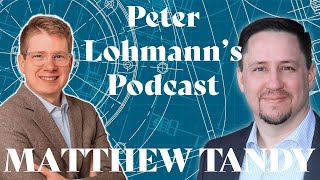
Matthew Tandy left financial advising and ancient Near-Eastern studies to co-found Formatic, a property-management firm that rejects his old company's growth-at-any-cost model. He adopts California's strictest regulations across all markets, runs weekly legal training, and built the company on a "no-jerks" philosophy. He expects consolidation in property-management software.
Chapters
If you can't see the humanness in your residents, then you're going to lose because guess where the voting power is? It doesn't matter what you personally feel. You have to accept reality. And that's the other part. I'm a realist and most property owners, most landlords, most housing providers do not live in the same voting district as their property. And that means the only votes that matter are the people in the high rental areas are the renters. And so you have to go in and say, hey, 3-month notice, 3 months is too long, but I agree we need to have something. Let's talk about a 21-day. Let's talk about a month. And if you negotiate to be where everybody's like, that's a winning position as a country and as a reputation. If we want to be the feudal lord and everyone lives in fear of us, we're going to lose. Someone's going to have our heads.
Welcome back to Peter Lohmann's podcast. Today, I know I'm always excited to introduce guests, but today I'm really excited to introduce Matthew Tandy. Matt, welcome to the show, man.
Hey, thank you, Peter. Appreciate you having me on.
Yeah, I'm excited to get into a conversation with you about a bunch of different topics. Before we do that, though, I'd love to have you give just like a 2-minute background on your career, sort of your journey that led up to what you're up to today. All right.
Happy to do so. So I started off like most people in life, absolutely not having no interest or even knowledge of a property management career. It was not in my top 3, top 10, or even in its existence. And, and so it's— I've heard it said that property management is something that finds you. And as it turns out, I really enjoy it. In my past life, I had been a certified licensed financial advisor and stockbroker. I went to school for ancient Near Eastern studies with the folks in biblical Hebrew, which is, of course, where the big money is, everybody. But I left that big unemployed money behind. And in my last year or two of that, I happened across a friend who— he and I had been roommates in Australia many years before, and he was in real estate and he knew someone who was starting a property management company. So I met with him. And so he had started like 2 days before I came on, I did all the policies, procedures, management. He did the capital raising and made a good team for us. And that— we grew that to 13 offices in 11 states and 3,500 properties under management. That's 2009 to 2015. And at that point I separated. Started my own company a month or two later that, uh, was just focused a bit on higher quality. Uh, prior company, fantastic company, fantastic people, and learned a lot from so many people. One thing is that it was very isolated. They didn't really interact with anybody. Uh, there are different mindsets of that. So coming on to podcasts and listening to podcasts and groups like NARPM is really what changed my trajectory from 2015 onwards. And so I was able to learn from even more people with more experiences across the country and even across the globe. And since then, we now have multiple offices in California. We have an office in Wilkes-Barre, Pennsylvania, and we have other offices coming online here in the next couple of months. So and we manage now about 550 doors And fun thing is that our 550 doors are more profitable than my 3,500 doors with the prior company, which is pretty awesome.
Wow.
That's it. And I love property management. I love it so much.
Yeah. So let's start at your current company, Formatic. You mentioned your office locations and your size. And of course, I'm definitely going to ask you about that profitability. You operate in California, multiple offices in California. That sounds terrifying, frankly. And so maybe share how you think about that and even with all your experience at the prior company operating multiple states and many cities, you decided that, yeah, I'm going to go ahead and start in California this time again. What's the attraction there? Is it more just, you know, your, was that your home base at the time? Is that why?
It was not. Again, happenstance happened. I should note, by the way, that one of the reasons that I ended up with my first company and starting that, helping start that, was that I did own a rental. My wife and I, first home was an up-down duplex. We had a basement that absolutely was not to code. I'm 5'5". The ceiling in one part came to about right there on my head. At one point we had someone who's 6-foot-something living in there. It was hilarious and tragic. And so the— as it turned out, when I decided that I wanted to continue doing management but in a different style with a different focus, that I brought in a bunch of people. I said, well, I'm not gonna have the money to feed myself until it gets going and feed my wife and kid. So I started raising some money. Not, it wasn't looking for a lot, just $70,000, $100,000. Had friends and family together. And the same person who ended up connecting me with the person who was starting their management company back in 2009, he had gotten really into real estate investing and he, in Riverside, California, his name is Jared Jones, fantastic guy. And he said, hey, in a conversation he said, hey, you know, would you be interested in having me invest? I said, well, you know, I already have enough people. I don't want to make it too crazy. And he said, well, no, I don't think you understand. I'm asking if I could be your sole investor. And through a series of events, went that path. He was in Riverside. He had a small portfolio of about 15 doors. Great. He had some connections. As it turns out, that didn't work out so well. Property management was not his thing. He also brought in a second person to help fund that, really caused a lot of problems with that. We parted ways within the first year, but by that time my wife and I were in Riverside, California. Now, I will say that California turned out to be way better than all the horror stories that people tell us. And I say this as someone who has lived in multiple parts of Texas, and I love Texas, and lived in Utah, and I love Utah. And as it turns out, I just love everywhere for the most part.
You know, you're not the person to ask then. You just love everywhere.
I love every— you know, I didn't like the like 6 to 7 months of snow in Utah. That was probably in northern Utah. That was probably not my favorite. And that's one of the reasons my wife and I were looking to move anywhere other than there.
Yeah.
That said, the regulatory environment in California has definitely become more and more complex. Different areas are rougher. The bigger issue is not the state. There's this thought of, oh, well, it's California. Most of the challenges in California come not from the state level, they come from the city level and the county level. And keeping that up to date is, uh, that is terrifying. Uh, and we have encountered multiple issues where even despite our best efforts— and I'm a very research-oriented person, very legal-oriented person, this is a lot of my reputation with my managers, especially in California— Even with that, sometimes we over— we overlook something. Some city changed some law 2 weeks ago and, and there it is. We didn't send that city's disclosure out with the lease. There it is. But that said, most of those I find being a good person, being nice, people will work with you and it's not a big deal and the returns are great. So no real complaints.
So would you say The best opportunities in property management then are in some of these high regulatory areas and states, or would you say the better opportunities are in the low regulatory areas?
The highest, just like the stock market or buying A-class versus C-class, the highest risk has the potential for the highest reward. Hmm. I, as regulations become stricter, as they become more complex, city by city, county by county, state level, the demand for property management at a high professional level dramatically increases. And with a lot of the changes that happen, in part because of COVID in part because of, of just changing, changes in politics and all sorts of things, that we see more and more people who have been self-managing for 20, 30, 40 years and had said they'd never hire a manager. Now they're hiring a manager. We also have a whole bevy of people, kind of an interesting one, who have reached out to me. They've been self-managing. They really feel they can do this themselves, but they have told me that I am written down in their, in their wills and in their notes to their surviving spouse that if they die to contact Matt Tandy. And because they know that their spouse would not be able to handle that. So I really, Peter, I'm just waiting for a lot of people to die, I guess. And, but no, it really is in demand and the rents are higher. And this is the big thing, rent control, just cause eviction protections, all those things, they don't happen in largely rural areas where in rural states where there's not a lot of challenges in housing, if they only happen where the rents are rising dramatically, where there's a lot of other things going on and frankly blatant violations of resident or tenant rights and I'd say ethics. And so that's when these laws come in. So, okay, well, they're coming in because there's not enough housing, rents are skyrocketing. Well, I'm a percentage-based manager. If rents are skyrocketing, I do really well and I just make sure I invest a lot of money into our insurance, into our legal, and into other elements there.
Great sort of takeaway there. I heard you make a few points. Big opportunities in areas where things are harder to do, harder to manage. And then also increasing regulation is a byproduct of rising rents, which is probably a signal that you might enjoy owning a management company in that part of the country. So I, that's a great distillation. At your prior company, you know, with your help, it grew to 3,500 units. And then today, your current company, you mentioned that it's incredibly profitable, even more profitable than at that prior company. So you've, it sounds like we've had incredible growth and massive size currently, more of a focus on profitability. I guess it sounds like you've got it, got it all figured out. Like what, you know, wouldn't be doing my job if I didn't ask, how did you help grow that company to 3,500 units? And then maybe we'll come back to the profit question.
We grew by taking anything and everything. Hmm. We've all— in management, the big topic these days is, and has been for some time, is about the cycle of suck is one term that one coach uses, right? There's also things like the Pumpkin Plan, if you've ever read that book. Same— I forget the author, but same guy did Toilet Paper Millionaire. And these kinds of concepts that really teach a fundamental thing that's been known in business, which is focus on your, on your target. Well, at my first company, our focus was door count, right? We— this was before the NARFM accounting standard. This is before the profitability metrics. And one thing is that my— our CEO at that time, he never met a property he didn't want to take on, which is great because he never managed it. He'd assign it to other people and make their lives miserable. And the, I remember him going into constantly, it was all about that thrill of the deal, right? Trying to close it, that this was some sort of like, and I don't want to speak for him and his logic, just from an outside perspective. Sometimes it felt like a thrill of the deal, getting the fight, being the victor at any cost. And that cost was often if we were going for an apartment complex that was C-level, we'll call it D-level, where I remember one instance back in 20— I want to say 2012, 2013, where he really wanted this apartment complex. No one else wanted it. It was a rough area of town. And he, the property owner had fired multiple managers or they had fired him in the last 2 years, which is usually a red flag.
Yeah.
Well, a couple other managers were out there pursuing the same deal and he just kept going lower and lower and lower per unit until, as the CFO would often say, hey, we can't do this. Like, yes, we're taking this on, but we're losing money and it puts us at a bigger risk. And so the reality is, is we grew because we chose to grow at any cost. Now, the logic behind that, that he would often say, was that, well, you never know, let's take the shot and we can always terminate them. And he had no problem terminating people at the drop of a hat. And so he said, well, you know, the dross rises It's the top, you scrape it off, and what you're left with is the gold. So that was the concept. I take a different approach these days, and they're both valid business approaches, but I know what makes me happier. And in fact, this led to a rule at Formatic. The number one founding rule of Formatic is no jerks. And I've been told to make it sound more pleasant. I don't know how to, but no jerks. So we don't have jerk clients. We don't have jerks in the company. No one's allowed to scream or yell or demean each other. And if a resident is a jerk, if the law allows us to— California, sometimes we are stuck with them for literally the rest of their lives. But outside of those situations, then we also remove them from the property. In my view, life is too short, Peter, to be dealing with or even having your property managers giving them pain and anguish and frustration like that. We want everyone to live a good life.
Yeah. Thanks. That really adds a lot of context and color to that growth. One thing that came up for me when you were describing that, you know, the philosophy that the other, that the, the CEO of that former company had about growth, talking about, well, we could just take it and then we can always fire them later. That's, I'm just going to say that's kind of stupid because the reality is that onboarding a new property, even if it's a single unit, but, you know, set aside if it's 20 or 30-unit apartment building, the cost of onboarding a unit is extremely high for a property management business. My rule of thumb is that we aren't profitable until year 2. So when we onboard a new property, whether that's a duplex or fourplex or 20 units, that first year I'm happy if we break even. And it's in the second year that we actually start being profitable. When you look at the true cost of labor and just other expenses that go into onboarding a new property. And there's also a lot of costs associated with de-managing a property. So I'm very careful and picky about who we onboard at RL Property Management because I'm so cognizant of this cost, this burden. And it's not only a financial cost, it's actually just a— your staff pays the cost of just kind of ripping them around back and forth and they get kind of whiplash from onboarding, offboarding, and then if they feel like half the units they're onboarding are going to get offloaded within 90 days anyway, then they're not very incentivized to do a good job. And, you know, I just can't see how that would have worked very well. I'm not surprised that you took a different tack with, uh, Formatic. That's, that's very interesting.
Yeah, well, I'll give you a little bit more insight because there's companies out there doing something similar on the growth and how it worked in a sort of financial way. Number one is each office had its own set of investors and was its own LLC, even within the same state. This siloed risk and allowed him to raise capital office by office. Unfortunately, that created other problems down the road that did cause much bigger headaches. So that was part of it is their solid expenses. And he would take money from one investment office and their group of investors and put it towards a nonprofit one until it was there. It's kind of an interesting thing. I kind of feel it was a pyramid scheme at one point, but they did resolve it in the end. The second thing is we grew 100%, I'll say 99% through paid advertising. Incredible amounts of money poured into Google. And what was the big one at that time was allpropertymanagement.com. Just enormous amounts, enough that in 2014 I was the vice president of business development. And in that year I was able to close over 1,000 units in, in a one-year period across those offices. Now, lots of low-hanging fruit. Paid advertising picks that up. And of course, paid advertising got a lot of those lower quality. So from his perspective is that there's a sunk cost, right? Already spent the money on all those things. And in terms of the onboarding expenses, it was pretty minimal because it was portfolio, 100% commission for the local managers.
Okay.
And so he simply said, hey, Peter, congratulations, you're going to get a pay raise. I give you 20 units. Now, 2 people have died in the last month from gunshots and the last manager was assaulted. But you're gonna make, uh, an extra $150 a month. Isn't that great, Peter?
Wow.
And what's the onboard— yeah, what's the onboarding expense for the company? Nothing really, right? Uh, because the manager had to do all the onboarding.
Got it.
And, uh, so, and the manager earned a commission, so it was, uh, it was really no cost to the company. Again, it's a way of doing business. Not mine, but I certainly understand how they made it work.
Sure. All right. Let's shift now and talk about profitability. Sounds like you're running a really profitable operation there at Formatic. I don't want to rehash all the industry learnings over the last 5 years about profitability. I think most of my listeners by this point are familiar with things like resident benefit packages and the importance of keeping an eye on your revenue per unit. Is there anything unorthodox that you've done or that you are doing in Formatic that's contributing to that profitability? And this could be either on the revenue side or on the cost side.
No.
That's a valid answer.
I don't spend a lot in marketing. I have and I will again, but for the last several years, it's mainly been referrals. I participate in real estate investment groups and local ones and built a reputation. And so people would refer the business, agents would refer them, other members of the National Association of Residential Property Managers would refer them to us. And that is— that was our main source. So I'd say our marketing costs was, is very low. I, that, that's really about it. You know, I've played around with different things, Peter, portfolio-based management, salary-based managers, uh, remote members, other things like that. I, I wouldn't say that on a net revenue that were exceptionally awesome. In fact, I pay people more in my company than is average. And frankly, I'd like to pay them more still. That is kind of a thing. So I'd say that we keep people happy as much as we can. I am the opposite of the industry, of standard business, as hire slow, fire fast. I hire slow and I fire extremely slow. In fact, I give people more opportunities than any reasonable human being probably should. I do struggle with that because it is probably my greatest weakness in business is that they got families, right? Or even themselves. I know that some people, they're struggling and I always use it as an opportunity to say, well, if they're that bad, is it because I don't have the systems written down? I tend to keep people on until I've refined the areas they're working on and I can say, okay, well, here's your checklist. Okay, you're not okay. And until I have the checklist in place, then we look at termination or separation. And well, how does this sign to profit? It just means that I don't have the same kind of turnover, the same kind of hiring training costs. It does mean it's a lot more work for us internal, but who takes that work on? Me. And I don't pay myself more for it. And because we have long-term staff, it makes a big difference.
Okay. Hey, and that's the great thing about America and about business is that you can do it however you want. You can run your business any way you please. You can hire fast, fire fast, hire slow, fire slow, whatever you want. And the beauty of this is you get to customize your business to your preferences. There's a lot of things we do at RL Property Management that other people think are crazy and weird, but it's just what I, how I like to do it. And That's how we're going to do it. And that's why I started my own company, for goodness' sake. So I appreciate that. Even though the conventional wisdom is to hire slow and fire fast, it's not always the right answer. You mentioned in another show as I was prepping for today that in staying with the theme of your team and sort of investing in them and caring a lot about them, You mentioned the importance of legal training at your company, and I think you even said something like there's some kind of a training component almost every week. I'd love to hear more about this because I frankly would appreciate my team getting some more legal training, legal updates, compliance, fiduciary, landlord-tenant, everything along those lines, fair housing. So love to hear the cadence that you're on and where you're actually getting the materials or what courses you're enrolling them in or sort of how it works.
So there's a couple elements of keeping our staff up to date. And I'm going to preface this by saying, if I had one big wish for the next person who could replace me, it'd be someone as legally oriented and detailed as I am. Every CEO of a company has their strengths. And mine is definitely in that side. And others are incredible at, at schmoozing and some are great at the day-to-day issues. Mine is technical. So part of that is just I read so much, Peter. I read legal briefs for fun. I, when I open up a new office, I go and I read all the codes on that state, like not just a summary. I read and highlight and I'm just so happy. And I talk to my wife who has no interest in any of this. I'm like, oh honey, did you know that in this state?
Yeah. So instead of telling this to your wife, please write this in the form of a newsletter or a website or a blog, or just talk about it on a podcast. And I will promote it because our industry needs way more of this type of analysis and discussion and, and sort of surfacing of, of relevant information.
I appreciate that. That's one of my not strengths. I like talking about it to people. I, I, My executive assistant says, yes, I should write more things down.
Just call my phone and leave a long voicemail. I'll get AI to summarize that. We'll pop it in the newsletter.
All right.
Credit you.
Do I use my bedroom voice with that, Peter?
Yes, please.
Talk about it. All right. So the— so that's number one. Number two is, is there a real estate attorney? Is there an eviction attorney? In your area, then subscribe to their newsletters. Ask them if they have a newsletter. Ask them if they have a legal notice that they send out occasionally if something pops up. I have so many that pop in.
It's a great—
and I read every single one. Keep in mind that because we're spread out geographically, that I get a lot more of those, and some of them will mention something at a state level or a national level that another person didn't. And one of those things that I like to think of that comes from this and the legal part, and then I'll talk about how we do the training for that, is it's a lot like learning another language, how there's language families. And once you learn Spanish, it becomes easier to learn, say, another Romance language, right? French or something else. Whereas if you know English, it's very hard to learn, say, Russian or Chinese.
Do you speak a lot of languages, Matt?
I am so good at speaking at the level of a 2.5-year-old in Spanish. It blows those 3-year-olds away. They're shocked.
All right.
With my now almost 1,500-day Duolingo streak.
They got you.
Yeah, yeah, they got me. So I am not actually that great at languages. I also, I should note that technically I can read ancient Hebrew. That was my degree. I used to and still can do Middle Egyptian, some Coptic, some— I could do cuneiform. Again, not much demand for those, and I couldn't really speak them. I could only translate. So, but when I think about language families, I think about this. Now, my dad, I should note, spoke 7 languages fluently and had a smattering of other languages that he could converse in a general way. And so he would talk about this with me and he'd say, well, you know, I just choose something from the next closest language. And the rules would kind of cross over. And if you knew some of the differences by the language, the underlying cores, you could start to recognize if one language did something this way, you knew that it probably did these other things the same way. The other way. Legal briefs are like that. Legal codes are like that. Just like us as property managers, Peter, get together at conferences and get together and we talk about all these things. Laws don't come out of thin air. They're not writing these themselves. When an intern, an intern or a low-level person at a city level is given the task of writing up some person's big thing, do you think they're just sitting there typing it out? This is before ChatGPT. Right now, I'm sure they just use ChatGPT. But before then, they would go to conferences. There's conferences like every week for government officials at city, at state, at other levels. And when they get together, what do they talk about? They talk about, well, Washington. I'm California and, you know, people say we're bad, but you're doing something really creative with your properties over there. Mind if I take a smattering of that language? Oh, that's great, California. And Karl Rostepff says, "Well, I don't wanna be outdone." And so a lot of these have the same underlying language. And once you read through it, once you get familiar with the bases, all you're really looking for are the variances and you go from there. All right, so how do I educate about it? Number one, we operate loosely on the Traction or EOS way of management. And so part of that is we have our weekly L10 or level 10 meeting. Part of that is IDS— identify, discuss, and solve. If during the week we encounter some really interesting part, everyone in our staff has access to it. They toss it on there whether they want to save it to talk about and solve, or maybe we solved it. And I will say, I used to have to say it all the time, now they do it themselves. They, they'll go in and say, you know, this would be a great training item for everybody else. And so now I do have more and more where other people are putting things in, and we're talking about Well, our rule is, is that we're not there to solve that issue directly. Yes, we want to solve the immediate issue, but we always want to ask a few basic questions. And it all comes down to, boils down to, is why. Why did this happen? And if they say, well, because this person, they did this, you say, okay, but why? Why were they able to do that? What could have prevented that? And then how could that relate to other things? And we solve the underlying. And to get to that underlying, we always ask what— and we have two things then from there. What are the legal and what are the financial implications of making a change at a company-wide level? And so then we do that. It makes it really easy. Now, other things we do is when certain law offices are doing their routine, doing education bits, new laws coming out, we participate in that. NARPN conferences and other conferences. We get our staff onto the, onto the Zooms. We bring them in person, whatever we need to do. I want as many people in our company to be a participant. I do see other companies where it's just the owner or just an executive. No, I want my lowest level, newest person to go to an ARPA meeting. I want them to learn from others. And if they end up working for someone else, yes, great. I mean, it's never happened, but, you know, fantastic. I just want them to learn. The same way I did. And I will say the final part here of how we educate is on legal elements. There is that all of our documents or most of our documents are custom. We do bring in attorneys to talk about that and we do have them review everything. And when in doubt, yes. Could I file stuff ourselves? Could we file stuff ourselves in court? Absolutely. But we don't. We require attorneys and we have trained our staff to not just hand it over, but to ask the whys. And sometimes it really annoys the attorneys. They get really annoyed. They're like, "Well, I don't know, just because." We say, "Well, you're telling me that, but can you point to the exact law that you're referring to?" And interesting thing, probably not a shocker to you, Peter, is attorneys are wrong sometimes.
Mm-hmm.
And so we do question everything, even from our attorneys, and have everybody prove it.
Yeah. Or they just give you, well, it's case law, blah, blah, blah. It's like, yeah, I mean, one more question along these lines. Did you by chance read the HUD guidance that came out around tenant screening a month or two ago? And if so, did you have any guidance for us as property managers on how we should react or interpret that?
So I did, but I didn't pay as much attention to it because it's no different than California's. In fact, actually, it's way less than California's.
Okay.
One of the beautiful things about if you can make it in California or Washington, then you can pretty much handle anything else that gets thrown at you. So we already operated and have for years off of a first come, first qualified— sorry, first fully submitted application, first qualified. We already, of course, because of back and forth about disparate impact, no disparate impact depending on the administration, we already just made a rule about criminal elements that says, well, unless it's— they're actually a risk to someone, you know, we don't count it. So all those elements we already take into account.
Okay. And does it, would you say, given that you operate in multiple markets, both multiple municipalities and areas in California as well as multiple states, in that case, do you just take whatever the strictest jurisdiction is and use those rules and procedures across your whole company, or do you customize it? So, well, we do this in California, but not in Pennsylvania. Like, how do you approach approach that?
So I'm not able to bring it up fast enough. I was going to bring this up for you to answer that exact question. We have in our management agreement, uh, something called the Formatic Way. In fact, it, it is a foundation to everything we do, and we got that from a book called How to Never Lose a Customer Again. And lots of stuff in there I think is way overboard for property management. Doesn't apply. We're not a luxury brand or anything like that, but it does talk about going further on your brand, having your way. So we have the Formatic Way. In fact, our handbook for our property was just called The Formatic Way: Being a Modern Housing Provider. And in that we have what's called the Formatic Standard of Excellence. So you notice that we have lots of branding. About Formatic this, Formatic that, because we want to make clear from the very beginning that this isn't about what the law says you can get away with. This is about who Formatic feels is aligned with what we want to manage. And right now we turn down about 2 out of every 3 people who come to us for management. And the— we do try to help them and point them in other places. So in that it does say that, look, except for one or two unusual circumstances, mainly around Section 8 and housing vouchers, outside of that, we typically use the strictest standard because what we find is the strictest standard gets you the best residents. And it simplifies things on a managerial level. And if you have a standard operating procedure— and Peter, I know you've talked about this with other guests— is that you have to have a way of doing things. And if you give too many variances to this person, that person, that person, then everything falls apart. In fact, I decided— cautionary tale— I teach this, I preach this, I live it. But we had a client last year that we brought on in our Wilkes-Barre office who, because of a problem in our leasing department and also some tech things that had nothing to do with us, but there were some problems in getting some of this stuff properly marketed. And I started to feel bad and I went against my judgment and he wanted to make one exception. And then that became another exception and became another, oh, that's not, you know, maybe that's out there. Oh, you don't understand out here. Even though we were having great success with all of our other properties outside of his. And I made exception, exception, and that turned into just the biggest mess of time and effort. I'm still— I'm like probably 2 days from wrapping that up for forever. And it's just been a nightmare. And you know what? No one was happy. We certainly weren't. Our staff boots on the ground were like, literally told us whenever the phone rings with that person's name, they want to cry. Yeah. And we parted ways because, again, no jerks. And, and he thinks we're horrible, even though really it was all of his exceptions that caused problems. So we follow the same rules everywhere. The only exception is housing vouchers. In places where they are not mandatory, then we find in places where, where accepting housing vouchers are mandatory, it usually actually works pretty well. And because people are more spread out there, they tend to be doing better, programs run better. In places where it's not mandatory, we find that it's just a mess. And so we let our housing partners make that decision. Do they want to accept a voucher or not? Uh, but outside of that, yes, everything's pretty standard, uh, other than legal variances.
Got it. Yeah, I can see how that would totally make sense from a business perspective. I mean, take security deposit returning, for example, different states, different jurisdictions. Oh, you have 30 days, you have 7 days, you have— it has to be itemized, it doesn't have to be itemized. It's like, you know what, we're just— it's going to be 7 days, everything's itemized across the whole company, and you just, you just make it happen. And then the tenants who are in the 30-day states love you and are thrilled to be getting their security deposit back faster than they're used to. And it's no sweat off the owner's back, really, just maybe a little bit more operational tightness around the move-out process, which probably only good things can come from that. So I like this approach. I think it makes sense if you're going to go multi-state, multi-jurisdiction rather than having a bunch of one-offs and little like Custom fields in your workflow. Well, what state is it? And just, you know what, it's 7 days for everyone. And, uh, we're gonna, we're gonna find a way to make that happen in every market.
Precisely.
Yeah.
The, uh, everything else is just a buffer if something goes wrong.
Yeah. So, um, about a year ago you came on Jordan's, uh, show, which I, I love and was partially the inspiration for my own podcast. You guys had a great discussion about the state of the industry, specifically as it relates to the integration between and among softwares. And this was a little over a year ago. I was curious if your perspective has changed at all. Um, how do you feel about the software integrations that we're seeing, especially with Buildium and AppFolio as they're opening up direct integrations without making people pay for APIs? Is this a positive for you or do you like, Do you feel like we still have a long way to go? Um, are you taking advantage of any of this?
I think the industry still has a long way to go, but some of the things I said were coming down the line are— we're starting to see. We're starting to see, uh, FOLIO, who's always been in the past, I want to do it all kind of thing, uh, they've opened it up, but at the same time they're still trying to do it all. Uh, so they just don't want people to leave while they're putting it together. Uh, the— I've seen with Buildium 2 and other softwares their desire to be better integrated to, uh, as you said, with the APIs, uh, and to even— what I've seen the big growth in the last year is that now the newsletters from the different software providers and not just the base management software but all the others start talking about, well, hey, if you want to do a Zap, if you want to do this and talk to this other software. So now they're starting to give tips and trying to say, hey, let's do this. We're starting to see software try to expand out. LeadSimple, of course, has been building out and building out the process side of things. And you have more people moving to— Aptly showed up a little while ago, a year or two ago, a couple of years ago. And now more people are looking into them because of the direct integrations. Uh, and we're just seeing more and more of that. It's still not there. And I, again, I think it's going to be years away, but I do expect to see some people go out of business in the next couple of years that are in this field. Uh, not managers, software providers. I expect to see people gobbled up, and I expect to start to see a kind of a cycle that you see in other industries where you're going to see people building little things, building a feature set. This is actually really common in tech, uh, serial entrepreneurs. They build some software, they bring in people with their contacts and say, hey, check out this new cool feature. But what are they really building it for, Peter? They're building it to sell to a company that they already have in mind or a couple of companies, and then they just go do it again and again. I think that's what we're really starting to see are these people who kind of get the ins and outs and they don't want to do it right now. They just want to focus on this. They'll build out a few things, get it sold, start again. So yeah, I think we're going to hit a cyclical part and bit by bit those companies will be acquired and other softwares will stick around. The bigger ones that have that eye for growth, will be the— you'll have 2 or 3 big acquisition companies in the software world.
And how about Rentvine? At the time, about a year ago, you mentioned that you really— you sounded very optimistic about what they were up to. I think you had some questions around their— the completeness of their accounting solutions specifically, but I think you said something like, they have my business as soon as the accounting is, is, you know, where I need it. Is that still on your radar?
It's not, not on my radar.
Interesting.
Okay, I, I haven't—
I'll have to elaborate. I don't want to throw anyone under the bus or anything, but no, no, the—
I, I have no one to throw under the bus on this stuff. I haven't followed them enough in the last 6 months. I do talk to them at every conference. The last one I was at was the, uh, uh, CalNARPM conference, uh, in April, March, and I liked what I saw there. I think that like all companies, they are slowing down a little bit because as you get more users from outside of your core enthusiastic group, you start finding more bugs, start finding more unusual use cases, and that multiplies the amount of labor and coding needed to go in and compliance and research for those companies. So they slowed down. I'm seeing— personally, I'm seeing less enthusiasm for them. But those who do comment, we are— what we are starting to see is they're now in the cycle where I'm starting to see on social media, uh, that various managers who are fairly well known are saying, well, you know, I'm not as happy as I thought I'd be. I feel like I made a mistake. Now, this is not a knock on Rentvine because way more people say that about Appfolio, or Buildium or, you know, these other ones. But they're just now getting to that client lifecycle where that's going to create a bit of a backwash against their momentum as the amount of effort to grow starts to multiply at the same time anyways, in terms of labor, as we talk about the development costs. So I am keeping my eye on them. I'm not ready yet. I want to see what they do. And frankly, AppFolio has really upped their game. In the last year, it seems like every week Appfolio comes out with several new updates and integrations, and that's pretty good. So I still don't love Appfolio, but, you know, I'm comfortable with them.
Well, very good. I think you managed to probably annoy all of those vendors equally, which is probably good for me and good for the, good for the show's, you know, neutral reputation. Awesome. I want to shift now to talk a little bit about the industry's reputation, property management industry among the general public. So we've talked about, you know, sort of the regulatory environment. And to be clear, the state regulations and the city and these other jurisdictions that bring out rules, that those rules are designed to protect the public. They're designed to keep the public safe. That's something I think a lot of realtors and even property managers misunderstand about the purpose of state regulatory bodies and rules and regulations around things like trust accounting. Those, those things are not there for our benefit or just because the state feels like being annoying. Those are there nominally to protect the public from unscrupulous actors and ensure some minimum standard of quality regardless of the specific service provider that you go with. Because real estate, for most people, the general public, is the largest, their largest asset. It's one of the the biggest transactions they're involved with in their life. And the state feels that they owe the public some minimum level of oversight here. Now, what's interesting about property management specifically is that we are a fiduciary— in most states, we are a fiduciary actor. We have a special principal-agent relationship with our clients, the property owners. And we are bound to act in their best interest. That's what a fiduciary means. The way I think about this is that the property owner kind of takes a shard of their authority and gives it to us and empowers us to act on their behalf in our negotiations with vendors and in our discussions with tenants and in our approach to rent collection and property maintenance. And I think it's important to remember that But for some reason, as property managers, our reputation is not that of other fiduciaries like doctors and lawyers and engineers and financial advisors. It's more akin to that of a used car salesman when you look at sort of NPS surveys and other ratings of our industry. And I'm curious to really get your take on this, Matthew, because you have a legally minded approach to things. And I think you mentioned at the beginning of the show you actually spent some time as a stockbroker. Maybe, you know, that's different than a financial advisor, but what are we doing wrong here as an industry? And I know the easy answer is, well, it's all the bad property managers that are messing it up for the rest of us. And that's true to a certain extent. But there must be something systemic about the way our industry is structured or the way that we're serving our customers or the way that we're pricing our services that's creating these incentives that results in bad outcomes for property owners. So I know that was a lot of words, but what, what's going on here?
This is a big thing to me. And during our L10 meetings as a company, I spend enormous amounts of time when talking about, well, this is what we're going to do, talking about the underlying reasons, not just legally, but politically, ethically, what does it mean to have a fiduciary and how does that inform it? I want to start with talking about the fiduciary element as part of the reputation, and I'm going to go back to the Formatic way and the Formatic standard of excellence. When we send out our management agreement and our handbook and our service level section brochure, to our potential housing partners, which is what we call our clients. When I do that, I— there's a preface and I tell them on the phone, I say, hey, I want you to know, Peter, that I'm going to be sending you— it's just a generic email, just form letter. I'll have a few things for you near the end that are very specific to what we talked about. But this is informational. It's going to have 3 documents for you. It's going to have our service level selection brochure is going to have our 3 tiers of service. It's going to have our property management agreement and it's going to have our, our housing partner handbook. It's called the Formatic Way. And I want you to be prepared. This is not a standard management agreement. If you're looking for the standard 4 or 5 pages of authorities and powers that, that everybody and their brother uses, boilerplate, that's going to— that has a section, there's an index and says authorities and powers, just go straight to that. Everything else, we took our backend handbook and we— that we had, because we realized years ago that most of the questions came about the unusual things, most of the heartache. We want to let you know we have a plan. So we put our entire handbook into our agreement. And look, it's long. We put lots of white space because I hate tiny text. I hate walls of text. And so I could shrink it down to 25, 30 pages, we found out. But really it's about 90 pages. And so we prepare them in advance. I say, you know, and we do a little well poisoning, right? Standard marketing, a little poisoning of the well against others. Say, now we know other companies don't like to put that kind of effort in. They may not feel it's that important. But for us, this is just the way that we do it. And there, it's good. And we do say that, look, if you've ever wondered what happens if you die? What happens if the resident dies? Well, we're going to tell you what we do, when we do it, how we do it, why we do it, what are the pros and cons. And look, you are welcome, Peter, to read through our agreement. And if you decide to keep self-managing, you're going to be a better property owner because of that. And that's okay because I've done good. But if you want us to do that and elevate your long-term gains and reduce your long-term liability, then this is going to be the game changer for you. So first off is that you have to know what you're doing. What is a fiduciary? Well, we talk about that in our— in everything that we do in those conversations. Too many people think the fiduciary is whatever is the cheapest or whatever is the most financially efficacious in the immediate. Well, the reality is, is that fiduciary is based off of two key elements outside of the very basic do what's right for the client. But what is right? Well, we're putting them first. But what does that mean? That means that sometimes I'm going to encourage and even mandate that we settle certain, certain complex issues with the resident that the property owner doesn't want to. And if the property owner doesn't want to do it, then I'm going to say, okay, well, I'm going to have to end management. I'm not saying you're wrong. And I tell people this and I mean it from the bottom of my heart. It's just not marketing. I said, Peter, you're not— I'm not saying you're wrong. I'm not even saying there's anything wrong with your way, but it's not our way. And this is what we agreed to in advance on page 52, subsection 7D.I, where we said this is what we do in this complex situation. And again, I love that you want to do it that way. You have to make a decision. Is everything we're doing as a whole still the best for what you feel achieves your goals, partnering with us? Or do you feel that this is a line in the sand. And if it is, I understand. Let's part ways. I'm going to make it the smoothest transition out that you'll ever have. And so with that, then a fiduciary for me says that we've tested a lot of things in A/B testing. We've taken side-by-side units, Peter, model matches, and we've tested late fees, methods of showing in-person, tenant, or show mode or whatever. Right. We've tested all these ways. And we say, this is our way, and we believe that this is the way that will get you the best results, dear housing partner. And that is our fiduciary. And if they want to go do something that we, from the bottom of our hearts, think is going to be a bad idea, then I am violating my fiduciary duty by going along with it. And so that's fiduciary there, is to make the right decision and know what you're doing and be educated. All right. So then what is happening in the industry? Why do we have such a bad reputation? Number one is that names and words matter. And I know there's a schism and there's identity politics and there's all sorts of stuff with this. But coming from a place where, keep in mind, I've had offices in the Deep South, I've had offices out in super crazy land of laws where sometimes the absolute pendulum swings too far one way. Swings too far the other. I see the good and the bad in each approach. I see the lives that are affected in it. And what I see is that it starts with messaging. The formatic way is a message. The words we use, Peter, is a message. And when I— I could say tenets, but tenet is— and here's the thing that we use that I talked about, is there's the legal terminology which you don't get to define the legal terminology other than in your agreements. You can say, well, I'm calling you this, and hereafter Peter Lohmann, you know, parentheses resident or whatever. That's fine internal. But in the eyes of the law, it's tenant, it's landlord, it's vendor, it's whatever. So understanding that is a legal position. But then I like to use the adjectives for what we do. What is our primary function? So we don't have clients. We have housing partners. Too many people run around like a lackey, not having a way of doing business that they're telling people upfront, this is the way that I'm going to do it. And because of that, they really do just do whatever the property owner says. They say, well, that's my job. And so by saying right up front, We, what we do and having these titles that establish a relationship. No, I'm not your employee. You didn't hire me. We agreed to partner together for this. And we do talk about attorneys and we do talk about accountants. Those are the two things we say. This is very similar to your attorney and to your tax, to your CPA. You're welcome to challenge them. That's a reasonable thing to do, but in the end, they are the professional. Mm-hmm. Now, I understand some markets you don't need to be that complex because maybe it's anything goes. Sure. But again, coming from California for so long, the last 9 years, that's a big deal. Now, the next part is other titles matter. Landlord or housing provider? Well, of course you're a landlord, but no. And as I say, and it's funny because someone said, well, other resident groups will say, Lord of the Land. I came up with saying no one has pity for the Lord of the Land. That was my phrase. I made that and I pass it around like crazy all over the place. No one has love or pity for the lord of the land. Play me the smallest fiddle.
I heard an instructor once along similar lines say something like, when you show up in court and you're trying to bring this action against the tenant, the judge is going to say, so you— the guy has so many houses he can't even live in them all. Is bringing this action against this poor resident. So tell me again, what's your complaint? You got this phrase about you have so many houses you can't even live in them all.
Yeah. And so how we frame things is so important, especially in our supercharged political environment in this country right now. And right now, who has the biggest target on their backs? And this is what you're alluding to, I know, is landlords. And the people who manage the properties. And I mean, we've all— maybe we haven't all seen, but I've seen been suggested in Reddit and Facebook, these tenant activist groups, and some of them horrific where they're straight up advocating for them, for our murders and, and just horrible things. So when we look at these titles, so we say, yes, you're a landlord, but a landlord could be a landlord, lord of the land over factory over a strip mall, over a mine, over anything. So what kind of landlord are you? Let's talk about that because I don't care about those. I mean, it's not that I don't care, but is my focus— I want to group our housing partners in with the mega people over the— who own the strip mine? No, I don't. Now, I want good rights for everybody, but I want to talk about what this kind of landlord is and this kind of landlord that we partner with. Is a housing provider. That is what they do. That is the identity of their investment strategy, at least as far as we touch on it. And housing provider helps reduce the politics. It's not denying their landlord. We're not taking that away. We're defining it further. And if we make clear that you're not a tenant, you're a resident, because what does a tenant do? They reside at that property. What kind of a landlord? Well, we have— we work with landlords who do the public service of providing housing. They don't have to. They could take their money anywhere, but they have decided to invest in you and giving you a place to live, Peter. And we love that. Now, sometimes they don't do so good. Sometimes they're not sure how they do, how to do it. We're here to smooth that out. That is our message in cities that we talk to, in state levels that we talk to. We do like to get involved and talk to our representatives, and we do use these terms and we see it reflected. And it's not just us. There's other people who do the same thing. All right. So brand management is so key and the lack of that is an issue. And people want to say, well, I'm never going to do that. I, you know, I'm not going to cow to the liberal or the whatever. I don't care. I'm a marketing person in this sense. You got to have your brand. You got to do good marketing. And if you think you can get away with not caring about the changes in cultures and everything, great. I'm going to keep growing and you can sit there in your little area and you'll grow well with your group and I'll take everything else. And that's okay. I mean, I'm not going to complain about that. But the big thing here, though, and the other part is, is bad owners. And here's the reality for those who haven't managed in high-density areas, really high-density areas like downtown L.A. I find most conversations with other property managers across the country to reflect an absolute ignorance of why so many of these laws are important. If you've never joined a landlord group, one of those private landlord groups for your state or local city on Facebook, go read that and get an education to how blatantly people are asking about how to violate basic human rights. And the horrific things I've seen are— I'm not going to share them because, you know, too many of them, because I don't want to get other people in trouble. But it's bad. And these laws exist, and they have to be tightened in some areas because fundamentally, to me, I think it is ethically and morally wrong. And you don't have to agree with this. No one— none of your listeners have to agree. You're not— I'm not going to be sad if you— if someone listening to this later on says Well, that Matt, he's, he's from California. Just to be clear, I'm from Texas, from a military family. But the— and I'm a staunch independent. So the— but what I look at is if you believe that you should be able to— Peter, resident Peter, you didn't pay rent as of the 1st. On the 2nd, here's your notice to pay or vacate. And on the 5th, your 3-day notice. And on the 5th, I'm going to lock your doors and take out all your stuff. I personally think that's a violation of human rights. I'm not saying that we have to allow people to go for California, like in some areas where it could take like half a year. That's also a violation to me because now you have— well, we had clients, COVID. Oh my goodness, COVID in California. The law is so bad in some areas. We had someone buy a house with all their investment money. Lovely old lady worked hard and she came from poverty. She came from nothing. She came from a lot of challenges. She was a woman of color and she talked about all the challenges she faced getting into the legal field at that time. She was in her 70s, buys this property right before the COVID restrictions go in. The residents immediately stopped paying rent in this duplex. She loses everything because we can't kick them out for 2 years. And so clearly there has to be a balance. What does that look like? I don't know, Peter. Now, The problem is, is that we're never going to win this completely. And too many people want to go for an outright victory. We as housing providers, as landlords, as property managers, if we think the way to fight against an erosion of really good landlord rights, which we need to have, is to say no, not ever. That's a losing battle. That's politics. If you can't see the humanness in your residents, then you're going to lose because guess who— where the voting power is. It doesn't matter what you personally feel. You have to accept reality. And that's the other part. I'm a realist. And most property owners, most landlords, most housing providers do not live in the same voting district as their property. And that means the only votes that matter are the people in high rental areas, are the renters. And so you have to go in and say, hey, 3-month notice, 3-month is too long, but I agree we need to have something. Let's talk about a 21-day. Let's talk about a month. And if you negotiate to be where everybody's like, that's a, that's a winning position. As a country and as a reputation. If we want to be the feudal lord and everyone lives in fear of us, we're going to lose. Someone's going to have our heads and it's not going to be mine. They'll be like, and then Matt Tandy, he was such a reasonable person. So that's my spill on it.
I think there is some deep wisdom in what you just shared over the last 10 minutes or so, Matthew. Thank you so much for coming on the show and getting into conversation with me. This has been great.
Thank you. My pleasure. Thanks for having me.
For, for anyone who's listening and, uh, wasn't scared off, um, by any of your stated policy positions there, um, where can they follow along with what you're up to and what you're doing with Formatic?
I am becoming less and less out there as I get busier and busier. I eventually I will, I'm sure, hire someone to go and put stuff out there. My biggest weakness, some of my biggest weaknesses in business and where I struggle with growth is putting myself out there more, or the company or the way we do things. And the— yeah, that's a big one. The other one is just general growth outside of what I know. I get very comfortable, and then I put my head down. And I find that if I spend too much time on social media— I'll let everyone know here, and I hope this encourages someone who struggles— I have multiple, we could say, disabilities that aren't as apparent. I have motor Tourette's, that when I get really stressed out or things, I'll start doing like, ah, It's video. So those on video, just those listening, just so you know, I'm doing weird neck things and eye things. I, I get obsessed about work. Just the other night I woke up at 5:50 to get a nephew to the airport who had helped us do a recent move. And I got home and I started working around 7:30 in the morning and I didn't stop working except for like maybe a half hour break to eat between meals and bathroom. 'til 4:10 in the morning. I get really obsessive about this stuff. And this means that I love work. I'm just not into a lot of other things. I find that if it gets too argumentative, I'm out. I'm happy to have a discussion, but anytime anyone wants to follow up or follow along, just reach out. I'm always happy to chat. I just less and less visible online.
Yeah. Hey, that's fair enough. And I think that, I think definitely some people appreciate you getting a little vulnerable there. So appreciate that. Well, thanks again, Matthew. This was great and enjoy the rest of your week.
Thank you, Peter. You too.
If you like the show and want to get connected to the community, you can follow me on Twitter @PSLohmann and subscribe to my email newsletter on my website, peterlohmann.com. I try to share as much valuable property management content as I can on a regular basis. Thanks again for listening and have a great week.










