time as the foundational system
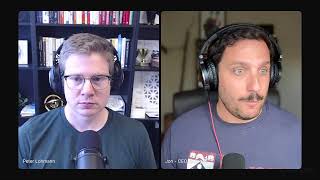
In this episode of the Small and Medium Business Operations podcast, host Jon interviews Peter Lohmann to explore how time management serves as the core system for business owners. They discuss the concept of "crane breaks"—scheduled periods of slack to protect time—and how most entrepreneurs lack sufficient slack, leading to constant firefighting. The conversation covers the pitfalls of saying yes to 1x opportunities, the importance of saying no, and how strategic time allocation (investing vs. spending time) compounds success. They reference Peter Drucker’s advice on time audits, the Getting Things Done (GTD) methodology, and the role of AI agents in both alleviating and exacerbating time overload. Personal anecdotes illustrate how they protect time through rituals (e.g., jacuzzi breaks), delegation, and building systems that enable them to say no without guilt. The episode concludes with a prescriptive framework: prioritize creating white‑space, use GTD or similar trusted systems, and treat time as a scarce resource that must be deliberately managed to capture high‑impact opportunities.
Chapters
one small and medium business operations podcast. Peter Lohmann, how the hell are you?
I'm doing great, man. We are on the last day of crane applications for the spring. We won't reopen till the fall, and I am thrilled and excited.
And how's it been going so far?
Really good. We've gotten over 100 applications for new members, and, um, it's been really fun seeing all those folks come in and The community's growing. So yeah, it's been a great time.
Fantastic. We also went live on something recently that we have put an absolute ton of time into, which is— and you've known about this for some time, but I haven't been talking about it publicly, which is we've been building AI agents for our members and we finally went live. We will be talking about this much, much more. I will be writing about it because of all the really fun things we're doing. But if you're interested in checking it out, go to shipyourweekendproject.com. So if you have thousands of Twitter bookmarks and LinkedIn posts about OpenClaw and Claude skills and a bunch of half-built stuff on your desktop that's so close to just being right and there's so much more you could do.
Dude, so real.
Come to us. So real.
I know.
Dude, I build things for myself. So real. I build things for myself. Just full stop.
Painfully accurate.
I build things for myself, Peter. So I was like, I don't wanna just hire from the Philippines. I wanna hire the rest. There went Sagan, right? So this all came about my usage and obsession with using these correctly and then just recognizing that I need to get serious about it. I need to have a business that's serious about it. I need to hire AI engineers, the whole thing. So do you like it?
We'll talk about it. You think AI is here to stay?
I hate you. I hate you so much.
Remember when like, remember when AI first came out and like a bunch of people were like, oh, this is like the next NFTs. Like, This is just a fad. It's like, really?
I mean, I think the valuations between an LLM and an NFT. Yeah. The valuations might not be here to stay because there's a lot of kind of like vapor valuations, but in terms of its use, in terms of education and, you know, I say that to my wife, right?
The dot-com bubble, like there's a bit of, but the valuations were high, but internet was a legit thing.
Yeah. I say that to my wife all the time. I was like, I remember going to the library. Because there were 2 magic books there, because all I wanted to do was learn more magic tricks.
And that was like me and computers. Yeah, there was 2.
And now I can like, from my phone with my son, be like, uh, in a dinosaur-themed motif, come up with— I have a coin and a handkerchief, let's do some basic magic tricks, uh, don't use the letter N, right? Yeah, like 30 seconds. So if you have a curious mind, I just— it's, it's— I'm so excited. It's just, yeah.
So I actually ties into our topic today, which is, yeah, let's get into our topic.
The first and most important system. So I took a couple of notes here. What we're basically saying right here, my core thesis here, and this is you and I both, actually you and I both, by the way, this ties into Crane Breaks. You and I both work with a huge amount of business owners who are trying to get better. Would you agree that you and I are both in that business?
Yes. 100%.
I talk to lawyers, and we have a pet cremation company, and we have a— I mean, we have the most incredible ice sculptures, and boiler repairs, and we have the most insane membership base. It's like my favorite part.
You guys have— that's one thing that's cool about Sagan is you have a much more diverse membership base. Oh, crazy.
But I'll give you a downside to that. We can't build a community. We can't build a community because what does the guy who's like a $1 million, $2 million a year roofer have in common with a billion-dollar private equity operating partner? So we don't have the— unless we subdivide, which we're not gonna do, we can't build a community like you can. Cuz what do they have in common except AI, by the way, which is what we're—
well, hold on though. What about like, what about Vistage? What about EO? What about YPO? Like there's ways to do this.
Yeah. You split it by revenue. That is a heavy enough lift that we're not gonna do it. Okay. Like it, it, I mean, you could do it. You gotta be really serious about it. We're not that serious about it. What we're gonna do instead is have all of our community stuff be around AI because we've actually seen that that is unifying. Which is the big guy and the small guy are all trying to figure out how to fix, you know, AI slop in written communication. It's actually very unifying.
Hampton has this problem as well, and they've, they've talked about how it's been a challenge with size and just with just all the diverse different types of businesses in there and yeah, being all different sizes. Yeah.
So, okay, so what we're talking about here is you and I both work with a ton of business owners. I'm going to give my credibility on this topic in a second. But you and I both work a ton with business owners who want to get better. And when I think about the through line, the through line of all of these conversations that I have, it's not enough time. It's not enough time. I don't know if I've ever talked to a business owner other than maybe like me and you, frankly, there's maybe a couple others, there's probably some I'm forgetting, who are just like, No, I have adequate slack in my professional life. I can be opportunistic. I can do a podcast at 8:00 AM on a Monday.
I—
wait, it's not Monday, but what I mean is there's not a lot of people that I interact with who are time-rich, let's say, who own a business. Comments?
That's a really interesting observation. The first thing that jumped out for me is that you and I are both pretty neurotic about protecting that. And it's not an accident.
It's not an accident.
That's exactly, that's exactly what I mean. We, we spend, you and I have spent a ridiculous amount of time investing in systems and reducing friction for capturing to-do items and set, you know, delegating and hiring assistants. And the first one didn't work out and you find one that does. Like, if you think about all the time we've spent trying to get to where we do have that slack in our day. It's actually incredible, and it's not surprising that most people haven't achieved it because it is a lot of work. It's like its own work.
So here's my pitch: every other system is downstream of time. A CRM requires time to update. EOS requires time for L10s. Financial systems require time for review. You can't even evaluate if you need a system if you don't have time. Yeah. And so, so often I'm interacting with business owners who, oh yeah, I totally need to hire a head of sales, but who has the time?
We get people on, people reply to some of my emails about CRANE saying they don't have time to join CRANE.
Think of— I, I— that makes blood shoot out of my eyeball. Yeah, but it's kind of like when you reach a paradox, because I think about this with Sagan, when you reach a paradox, you have to like re-examine your premises. And my, my, my, my premises that I'm, I'm pitching you on in this episode is that I think it's just premise. Premises, the plural? I promise. I don't know. I have a series of premises.
Would that be premise? I, I don't know, actually.
Premises. If I'm right, I'm gonna— no, it's a word.
All right, I thought you were using the singular.
Okay, I might have been. I did, you know, I make up words all the time. I'm a neologist. Okay, which is actually a real thing. Okay, um. Okay. I went back and looked in The Effective Executive, Peter Drucker, 1967.
Great book.
Just put this on a plane in the sky. Until we can manage time, we can manage nothing else.
Is that in the book? Nice.
Episode over. Episode over.
God, what a legend.
Hero. Just paint, inject that into my veins until we can manage time. How many people in the PM community get pulled around and have no ability to be in control of their time? 94%.
Yeah. More. Yep.
They are, they are on a runaway roller coaster and they have no ability to direct it and they might show up. And what a crane break is, which, P.S., is the whole heartbeat of your community, is them symbolically saying, "I'm in charge of my time." It's a forcing function too.
Yeah.
And it's an organizing principle. And so, until we can manage our time, we can manage nothing else. Why? Because to go on a crane break, you need to define what good looks like. In order to go on a crane break, you need to make sure you're not the only person who can run payroll. Like it's an organizing principle. It's like that old CrossFit thing that I've mentioned before, which is like, don't try to lose weight, just try to run a 6-minute mile. Like you'll become the person you need to if you focus on that. It's like, don't try to build a perfect company, try to take a month off and have nothing break.
Now, Jon, was it ever thus, or did our grandfathers in office buildings have more control over their time or feel less pulled in a million directions. Now remember, at that time, correspondence was a lot different, right? There was no email, there was no text messages. There was intra-office mail delivery with memos and such, and the U.S. Mail Service, I believe, delivered twice a day on weekdays to businesses. But if you know— and there was a little bit of telephone going on but it seems to me that there was a lot less ways they could be interrupted and a lot less directions they could be pulled in.
Yes and no. I think it's a little bit like a gas, which is it expands to the container in which it's placed. Dude, that's so true.
Yes.
I knew you'd like that. I was like, I need to like a little—
yeah, it's like, you know, task expand to fill the time allotted. It's kind of a similar deal.
Correct. Which is, I remember going back and reading like, you know, Ray Bradbury, who would get letters and correspondence, and he had like a stock response, because he's like, I'm not going to spend all of my— and it was like, thank you for your letter. I do not respond to these individually. I'm trying to do something with my life. Ray Bradbury. Like, here's an autograph if that's what you're looking for.
Yeah, nice.
Like, in effect, right? I certainly think Slack and cell phones and whatever is, of course, makes it even easier, but I think that they probably felt the same way, like death by a thousand cuts. It didn't look like it did now, but I think it was the same thing.
Well, Peter, I mean, we kind of answered our own question because when did Peter Drucker write The Effective Executive? Yeah, there you go.
That was before the— that was before like ubiquitous telephones. And he still said that, right? So, okay. So time is more scarce than money. You can always get more money.
For, I would say for our audience, that's probably true.
Well, I mean, that's a whole nother avenue we could walk down, which is when you trade time for money, when you don't, right? But you can't earn more time. That's basically really what I mean, which is it's a one-way door, right? Like everybody has 168 hours kind of thing. So I think that that's a very important understanding. So, okay. Drucker, uh, time is more scarce than money. Drucker recommends the first thing before he does anything is a time audit.
Okay. So let me ask you something very personal.
Yep.
Have you ever actually done a time study?
No.
I never have either.
No.
It's one of those things that's like everyone recommends it and everyone talks about it. But the only person in my life who I've ever met who legitimately did one and has done it multiple times is my business partner, Adam Rich.
He has handwritten a letter, a letter opener and a ballpoint pen on his desk only.
Handwritten time studies. This man has done multiple times in the time that I've known and worked with him.
Incredible.
Over weeks, he'd come to me with results. Right. With a little pie chart breaking down his hours. It's incredible.
By the way, as a small aside about engineering, you know that it's now become like a security blanket to me. I watch it to relax at night. The heavy construction 2-hour video from Practical Engineering where they do the whole site and then they drop the like storage tank. It's so fascinating.
Yeah.
Yeah.
Yeah. Like Andrew Camarata, that guy's awesome on YouTube.
I haven't seen him.
He's like this guy in upstate New York who has this property maintenance business. He's building a castle. He owns a mountain. I'm like, it's so—
it's exactly what I want to watch at night.
Oh yeah. Get into this.
And he's talking about like, oh, well, the foundation can't be level. So I had to pour a— I'm like, oh my God, I love this. It's like so good. Okay. So back to time is more scarce than money. All right. Drucker's diagnosis. Until we can manage time, we can manage nothing else. Okay. Everything I see is downstream of that. Everything I see. I see almost every Sagan member still underhiring. Why? They don't have time to onboard. They don't have time to train. They don't have— yeah, yeah, good idea. I don't have time. Right? When I look at my relationship, my personal relationships, my role as a father, as a husband, as a friend, that's all downstream of my ability to manage time. Until I am in fucking charge of time, I'm a little bitch. There are moments, right? There are moments where your time is not your own. Your wife is in labor. You have an ill family member, whatever, but it should be episodic, not chronic. Most entrepreneurs I deal with, Again, episodic, time is not my own, fine. That's called life. But perpetual, indefinite lack of control around your time is something that needs to be attacked.
Yeah. I'm excited to get to the part where we talk about how you and I have sort of mostly achieved this because I think it's going to be really helpful. You're reminding me of the fact that I almost had a mental breakdown when our first kid arrived. Yeah, because I had spent so long fighting for control of my time and achieving it as a business owner, and only not really having to go or do anything that I didn't want to do, you know, on a specific timetable. Obviously with a few exceptions. And then when your first kid arrives, right, all that's out the window, you know, you gotta get up, you gotta deal with them. You gotta change diapers, gotta take 'em to school. Like suddenly my time was no longer my own in what felt like—
You have a perfect plan and you're, you know, one of, uh, somebody who helps us with our kids called in sick today.
Mm-hmm.
Can you flex?
Right. So that was very difficult for me. I'm, I'm mostly over it 8 years after our first kid was born. 75% of the way done. It, uh, it still was a shock to the system, um, and it wasn't something I had really internalized of how significant that was going to be. So I don't know, kind of—
yeah, sorry. And, and I actually wanted to lead into about this a little bit, and I, you know, we've kind of mentioned it in passing, but I want to— I, I actually should have done this earlier in the episode, which is I want to, I want to talk about my creds. When I was in high school, I used to write my homework on my hand. I was smart enough that I could basically wing everything and get like B pluses or A minuses, I didn't really— I'm not naturally organized, right? If you talk to me, do I sound like the kind of person who's naturally— Like, you talk to your business partner and you're like, this guy fucking alphabetizes his socks, I'm sure, right? Do I seem like the kind of person who has an obsession with inbox management? No. But I went into a career where the stakes of me forgetting stuff were massive, were massive, working in the government. You cannot write down a meeting on your hand and be like, oops, sorry, I no-showed, right? Or misremember something or have competing priority— priorities that you don't. So I was forced at that point, I got obsessed with getting things done. So that was how it started. So I'm not a natural. I was an obsessive and I realized my life, if I couldn't manage my time without actually saying this, was not going to be my own. So I got obsessed. So that's the first thing. My second creds is you have seen kind of inside the last year of, you know, we do a lot of business together, but also you and I are, you know, friends. Would you agree that the last year has been a balls-out year professionally for me?
Oh, yeah. Not to mention the twins, but yes.
No, no, I'm getting there.
Wait.
I'm just business-wise. Oh, absolutely. Would you say We've grown, we've launched stuff, we've done— there's some— okay. In the last year, I moved houses twice. I have under-year-old twins that I'm extremely involved with their life. I also have a 3-and-a-half-year-old. Right? And so, these are my creds.
Which is— Do you want to hear mine?
Yeah, which is I have— I'm not like a 23-year-old who says like, I write morning pages and sip my espresso. Like, I get woken up by someone like pooping on me. Yeah. Right? So I just want to insert— these are my creds, right? Because I'm not a 23-year-old who's like, oh, I always take an extra 10 minutes in the cold plunge. I'm like, literally, my son comes in with me when I go to the bathroom. That's my life. So, okay. Now do you do your creds?
All right. So it's important. Yeah. So I run, I run 3 businesses. Um, so RL Property Management, Crane, and the media business, which is the podcast and newsletter, all very active. Um, also got 2 kids, 8 and 3, and I take a month off every year with a full disconnect, which I've written, talked about a lot, Crane breaks. And I also take Thursday with no meetings and you and I are able to impromptu record these podcasts. We just text each other. It happens within a day or two or instantaneously. So yeah. And you know, my inbox right now has about 5 emails in it. My, my work inbox and my personal inbox has 1. So yeah, when I run into people who own one business and have kids that are grown, And their inbox is overflowing and they can't find 10 minutes to have a meeting in the next 2 weeks. I'm like, I could probably help you. Um, yeah. Yeah.
I saw, so I'll tell you, I wanna give you a quote from Buffett, but I saw something on LinkedIn. God forbid I've been going on that platform now, 'cause we've been doing really well on it. But, um, it said, part of my diligence with a company is I go meet with the owner. So, you know, like upper middle, uh, main street or lower middle market. And I just sit with them. And I watch how many times people walk into their office or they get phone calls. And everything they say about how the management of the company works, I can figure out in 2 hours on a Tuesday morning.
That's great.
Right? So Peter podcasting at 9 in the morning on a Thursday says everything you need to know about what the leadership of RL looks like versus a lot of other people who are like, you know, have 3 different cell phones because whatever, right? Okay.
Sure.
Buffett, this is one that I think you and I do exceptionally well. You and I have always flirted with this concept, right? We talk about a version of this almost every episode. The difference between successful people and really successful people is that really successful people say no to almost everything.
Yeah.
It's a Buffett quote.
That's going to be my biggest sort of— I think that's the biggest key to success here because all the GTD in the world can't save you from saying yes to too many things. And I have a lot to say about that and sort of how it changes and gets harder over time and philosophically become more successful.
And yeah, money monster.
Yeah, yeah. There's a lot there. But that truly, I mean, time is— everything's downstream of time. But when it comes to time, everything's downstream of what you say yes and no to, what your commitments are. If you make too many commitments, There is no productivity system in the world that's gonna save your inbox and save your time.
It's just not. And that's what tries, and that's what I, you know, you know me, I get excited. I, I get, I lose my mind with all these like email management AI tools. And my answer is, why are you getting so much email?
Yeah, same. I've never used one of 'em.
It's not, oh, I, a superhuman, I can get through my 87 emails. And it's like, why are you getting 87 emails? What? Like, I don't understand. And so it always tweaks me when I see a lot of these solutions out there and it's like, I'm making more poor decisions faster with AI powered in the wrong direction. I'm like, how is— we need to zoom way way out and come— we need to come in completely differently. It's, you know, I gave this comment to somebody and you'll have different opinions about this and it's a fine comment, but I basically said, I don't think most business owners, their desired end state is to have an executive assistant. I mean, I can see why on the edges it's okay, but like what I mean is more philosophically, like you shouldn't be building your life such that you need an executive assistant to like answer the mail. Right? You shouldn't have so many— said another way, you shouldn't have so many meetings that you need somebody to schedule them for you. That's another— like, oh, they manage my calendar. Now, there are other ways to use an executive assistant. Like Peter doesn't want to go book on miles on AA.com and call customers. Like, so that's why I'm being a little bit like exaggerate. I'm exaggerating a little bit here. But what I mean is like, Never. I'm just excited. The, but what I mean is like an EA in many cases is a stopgap to poor time management. That's, that's maybe another way in many diagnose, oh, I just need an EA. It's like, or you could just be like, you guys should make this decision. Here's a clear SOP. You don't even have to—
I think we're back to like the 20-year-old founder, you know, like if a 20-year-old founder running one business needs an EA. Come on, right? I'm gonna go ahead and give myself a pass with 3 businesses, young kids, owning multiple properties, multiple business partners, a lot going on.
Yeah, uh, I'm soft on the edges on that point.
Just like, if I was running one business and my kids were grown, I would have a lot less for Monica to do, put it that way. Yeah, yeah.
Okay, so, so you wanted to talk— we talked about our creds, we talked about You— there was some topic that you want to dig into a little bit more once I explain.
Well, it's saying no is really what I want to dig into. And then I want to dig into once you're clear on that, like, what are the other things you can do to get control of your time back? My big thing is that people just say yes to way too much. And the problem is that once you start to have— like, earlier in your career, you should say yes to almost everything, right? Back to the 20-year-old founder, everything's an opportunity for you.
Everything's a spark that's a madman.
Yeah. Um, Don Draper is yelling at Peggy. He's like, everything is an opportunity. That's true when you're young, right? Go to every meeting, go to every meetup, take the coffee, get on the phone. Great. As you start to have some success, it's time to start to scale those things back. But what happens is your brain is anchored around what previously would have been a good opportunity for you, whether that's size of a deal, Uh, how important a person is who wants to get you on the phone, things like that. So your brain gets anchored earlier in your career of like, oh, this level of person is important and worth me taking time to meet with or do a project with or partner with. And that is hard to unwire. And so once you've reached kind of a medium level of success, it's time to recalibrate that. But most people never do. And so every 1x opportunity that comes across their desk, they're saying yes to because their brain is lighting up and saying, oh, I'm so flattered that this person wants to do this thing with me. Or yes, this deal makes sense. It's going to add a couple hundred thousand to our revenue. But in reality, you should never be saying yes to a 1x opportunity. Anything that's going to—
by the way, not— we're scoping this to our level. Somebody who has a billion-dollar private equity company should say, oh, it's just one of those things that can only add a couple million. Totally bottom line, or somebody who's got a $20,000 Shopify store could say it's one of those things that adds a couple hundred to my monthly sale. So yeah, just work at our level, but it's calibrated from Bezos to a 19-year-old at a lemonade stand.
And that's why I say a 1x opportunity. Like if you have a million-dollar business and you have an opportunity to double that business by opening a new line of business, that's like different to the business you're owning, but you know you could make it work, you should not do that. You should continue on with what you're doing and only say yes to a new opportunity that's a 10x, that has the opportunity to make everything you've done up to now look like a footnote. That's the same.
I'm going to connect— wait, I'm going to connect something you told me before. If you think about time as invest— by the way, and this is a topic we could pull on, you can spend or invest time. It's one of my notes. If you think about your time as an investment, it is the classic investment thing, which is wait for your fat pitch.
Yes.
Right. So connect the— you do that because you're—
yeah. Like if you keep saying yes to these 1x opportunities, you are going to be busy. You're going to have so much. And so when that email finally comes or that partnership opportunity comes, you're not going to have time to execute properly on it. And so you're going to miss what would have been an unbelievable opportunity. Because you've said yes to all these mediocre opportunities. And I think what's really, uh, unfortunately a lot of these things seem simple. Everything seems easy and simple, and this will take no time at all on the front end. And once you've done a bunch of work and projects and partnerships, you realize that everything takes forever and everything takes a bunch of meetings.
It's like the fog of war.
Yeah. It is a bunch of emails and there's just like all of this mental weight to things. And so. Even things that seem like, oh, it's just gonna be so easy. All I have to do is like show up for this one thing and a couple meetings. No, just say no. Stop. Don't do it. I'm telling you, say no. The stuff you should be saying yes to should be pulling you so hard, like the tide, that you can't, you can't stop yourself.
That's what this AI agent thing was for. There's a million things going on.
And that's what Crane has been for me, right? Like Crane is pulling me under like a riptide. And it's like this black hole of things happening, opportunities, success, that it's obviously proper that I invest time and money in that. But there's a million other things that come in my email every day that like, yeah, that'd be cool.
Yeah.
I could be on that podcast. Yeah. I could go meet this guy for coffee that 2 years ago I would have been unbelievably blown away that even meeting him was.
Yeah.
But that calibration—
wait, you just said no to something that you would have— you don't have to share the specifics, but you and I were talking about it on Slack. You just said no to something that is an extremely high-profile event in your industry, and you would have been on stage.
Yeah, yeah, right. That was a bummer.
But that's a— but that's a perfect example.
That's a good example.
Yep. That is something basically everybody would kill for that. And the reason why you and I are time rich is you And you came and talked to me and you're like, I really want to say yes to this, but I was like, I probably should say no.
And you're like, eh, yeah. So, but it's just the challenge here is that just, you have to recalibrate and like the more successful you are, the more quickly your calibration has to reset. It's kind of an exponential thing. It's like the first million is the hardest type deal. So it just, you, you need to be like, the things you're saying no to should be painful. Yeah.
You're the one who said that the things that you say no to should have been the best opportunity of the year last year.
Yeah.
Right. Or it hurt. Like, it's not delegation. It's— oh, sorry. It's not prioritization if it's not painful.
We just—
we shut down something where we were making like— I mean, it's not like $20,000 or $30,000 a month. It wasn't taking any of my time, but the management cycles that it was taking and the meetings and whatever, we're like, kill it. We need to go all in on AI agents, which is what we are.
So that's, that's the first thing that comes up when we talk about time is you just got to say no to almost everything.
Strategy is what you say no to.
Yep.
That's what the essence of strategy is. No.
Yep.
Right. Steve Jobs talked about that. He's most proud of the things that he said no to.
Correct.
But that doesn't— isn't what gets written about, right? I think that there's this— I think there's two things at play here for business owners in particular. First, I think that there's this anxiety around busyness. That they, that basically motion is progress. Right? That by just motioning more, I'm going to win. And my challenge to that always is, do you think the line cook at the local Taco Bell works as hard or harder than you? I can tell you he does. He does, right? He does. He wakes up earlier. He stays later. He is, he has more activity, right? That does not make him pushing in the, you know, he's not progressing in the direction just because he's moving a lot and working hard.
They're uncorrelated.
Yeah. Yeah. Correct. They're uncorrelated or they're like lightly correlated or something.
Right. Yeah, I know we've got it. We've got a real hustle culture kind of resurgence happening right now in, in entrepreneurship culture and in tech culture. There's a whole 996 thing where you're supposed to work 9 a.m. to 9 p.m., 6 days a week if you really want to be successful. I completely reject all of that. Crane is the antithesis of that. If you can't get done what you need to get done in 40 hours a week, you're working on the wrong things. I can't be more clear about that.
I think that message resonates. It because you and I work so much with business owners, it's kind of like you wouldn't be here if you didn't work hard. So I'm going to assume you work hard, right?
Ah, what happened?
Refresh, then rejoin. Uh, you're, you're not recording. So it says refresh and rejoin. You know, I've never been on a podcast by myself. I will kill time while Peter's here. So is he back? There he is. You back?
That was so weird. Yeah, I'm back.
Okay, cool. No worries. Um, I think that message about hard work— it's like, I've been in communities before. You and I are talking to people. If you've built a property management company to any— to 50 doors or higher, you work hard. Like, you work hard. The message around working hard, I think, is really important when you're 23 and just getting started and you're saying, sure, I want to be a YouTube— that They haven't shown that they know. But when you're talking to a PM who's got 100 doors and is stressed the fuck out, you're like, you got here with hard work, but that's not going to get you to the next level. Yeah. Like, you and I can assume I'm talking to a guy who runs a roofing company. He works hard, right? So I think you and I are also a little bit indexed to who we talk to, which is people who've proven that they don't just like watch porn and order DoorDash in the basement all day, which is what the majority of the people watching influencer content on Instagram are there, they're watching porn and eating Doritos, playing video games, smoking weed, right? So you and I are talking to people who are like, okay, you're definitely not that. But to get to the next level, it's not more. So I think that that's the one thing, which is this business owner anxiety. The second thing that really, really helped me out, that really helped me out is I don't do my best work when I'm fucking manic. I don't do my best work. Sagan was— and I have people who, you know, his name is Kiwi Rene. He used to work for me, and he's about to come start doing some stuff with me. Rene Avendano, who's my longtime business partner and CFO, and my dad, in the middle of a week, were in a jacuzzi. And I said, I think we should do membership-based hiring. It wasn't me sitting here being like, all right, it's ideation time. See what we got in the old gullet. I don't even know if gullets work. And so that's the other thing that's helped me break free of that kind of like Puritan work ethic stuff, which is like, I oftentimes, I'm always working. My brain's always vibrating. I'm thinking about stuff in the shower. And so redefining what that looks like and giving myself the space to be smart, not just bounce between fricking extremes. That's the other thing that really helped me break out of that, like, well, if I'm not at my desk till 5:00 PM every day, I'm not going to be— it's like, dude, I come up with my best ideas when I'm working out. I finally figured out that problem.
Yeah. I mean, you truly can't solve the big problems while you're firefighting. You can't. Yeah. You can put out the fire, but if you want to figure out how to prevent fires from starting, You got to get out of the burning building, stop fighting the fire, go sit on a park bench, go to the movies, go for a hike, go work out, go swimming, go on a date with your wife. Yeah. I mean, that's when your big ideas are going to happen. That's when your brain gets into that relaxation mode where new connections happen. And you know that, of course, that's a big part of crane breaks and the importance of stepping away. And that's, that's why we are so big on that. But I think for anybody, any phase of life, any business owner, yeah, you got to take time away. That's— you're— you just— I don't know how else to explain it. But I can also point back to whether it's my month off, or I do my New Year's two-night retreat cabin in the woods kind of reading break that I do. That's where all the big stuff came out of. I mean, newsletter, podcasts, Crane, like a lot of stuff. Has either, you know, originated there or been refined to the point where it's in its form that you see now that was actually successful because of those times.
Now, okay. Now I want to, I want to trans— I want to give one kind of transitional quote and then I want to talk about some solutions to this because I'm very opinionated about the solution, but like, let's be like a little kind of prescriptive or best practices just so that people come out of this. You know, we've, we've hammered the problem enough. We've, we've showed our credentials, but let's transition to solutions. But here's, a great line that I think introduces the next thing. Time can be invested or spent. Learning systems, hiring, and relationships compound. Firefighting doesn't. You and I, I think, are obsessed with investing our time, and we are allergic to firefighting with our time. Like, oh, I am, I am horribly allergic, horribly allergic. But investing, because I go, if I just sit down and bang out this SOP, I never need to upload another dang newsletter to Beehive again. So I'm going to invest an hour right now so that I can send voice notes to my head of media and have this stuff done for the next—
That was my notions. That was my notion build out. Yeah, I was like, I'm tired of answering the same questions. I'm sorry, I'm tired of looking for things in our Google Drive. I'm tired of digging through binders. I'm tired of training people and having to put together training manuals every time a new hire starts. I'm going to get all this in one place that's easily referenced, easily accessible, easily updated, and that I'm going to just— it's all going to be there. Like any question that anyone could ever have. Yeah. So that all came out of the way I think about this is Everything I do in my life is so that I can be lazy later. That's literally how I think of it. Like I'm doing this now so I can be lazy later. And that works on the micro scale. I'm doing this, this, and this today. So when I get home, I can actually relax. To the week, to the month, to the year, to the decade. I'm spending time this decade working on this and this so that when I'm in my 50s, I can take it easy. Right. So that's been like my philosophy on life forever. And I truly love sitting around doing nothing, which people are blown away when I tell them that, but that's what I like to do. That's what motivates me to do all the things I'm doing now is so that I can chill and be lazy, you know, as much as possible on like the timescale of my whole life. Right.
I'm currently on a very strict 2 jacuzzi a day diet with my son. He's obsessed with our jacuzzi. We took one this morning and we take one every afternoon. It's great. So it's like, that's why I do a lot of this stuff so that I can spend time with that, which I deeply enjoy. Okay. So then let's talk like some solutions here. So somebody hears this and goes, I get it. I need to start investing my time, not firefighting. I would say, let's talk kind of like prescription here. For me, and I've talked about this extensively, my system of choice is Getting Things Done by David Allen. That to me and versions of that are what pulled me out of a disorganized jumble and into feeling like I have, as he says, a mind like water. And I can get whacked in the head of the day and have my day calendar completely changed and my week prior, and I still can— I have a way to recenter and re-wrangle my time. It is a robust philosophy by which I view the world, but that would be If somebody isn't familiar with me talking about that, I write about it constantly. I read books, we're building an AI app for it. Like, so that is just in one sentence. We're gonna kind of break different ideas together. But first and most importantly, I would say if you get obsessed with that, I would str— I would almost guarantee your life will be better.
I can't think of a better place to start.
Yeah.
I'm not saying it's the best ever or it works for everybody. I would encourage everyone to start by reading that book. Getting Things Done by David Allen and see if that doesn't work most of the way for you. And I wouldn't try to implement the whole system at once. Just pick a few things that resonate with you, whether it's like task capture or the weekly review or whatever. Just try to implement that and then slowly add to it. You end up like, you've read the book many times. I've read it a few times and every time you reread it, you get more and more of the system that you can put in place because you have a better foundation. Now, obviously, take what works for you, leave what doesn't. These things make sense for different people at different phases of life and in different contexts. But, um, that, I mean, once you've said no to all the right things, Getting Things Done is actually the unlock, I think, to regaining not only control of your time, but it's control of your mind. Like you said, the mind like water. That's what—
yeah, mind like water.
The— the ability to know for sure that every idea you have, every task you remember, everything that's important to you is in one place that you know where it is and is referenced often. Can't even describe the level of calm that has brought me for over a decade now. Yeah, just knowing that like every— at any second I can think of something, whether it's like some weird thing on our application for Crane or the fact that I need to schedule a haircut for Kate, or the fact that I need to talk to the school about some tuition thing or some new business idea for RL, whatever. It all goes into my inbox.
Yep. Into your trusted system. That's what David Allen would say.
And I don't have to worry or stress about it because at the right moment, I'm going to go through that, process it. It's going to get organized in the right place and it's there forever. And so the sense of calm that brings, like you and I have had it for so long now. I don't think you. I don't know if you remember. Yeah, but I don't know if you remember what it was like before that. I kind of still do where it's like, you always kind of feel like you're forgetting something. It's a horrible way to go through life, especially as a business owner, because there's just so much going on. So that task capture thing, in fact, I wrote a blog post about task capture like a decade ago because I was so obsessed with it. That one thing alone is life-changing, but it does require discipline. To stop carrying around a paper journal, stop having lists all over different parts of your house and business. Yeah. Stop putting stuff on your calendar that isn't actually tied to an event that you have to be at. Cause it requires— so you do have to be disciplined about getting it all in one place in a way that you can go through. But, and you're going to like, if you're like most people, you're going to take a few, it's going to take, it's like quitting smoking. Like it'll take a few times to stick. Yeah. But each time you make an attempt and fall off, you're going to learn a little bit about what, what worked and what didn't and what needs to be different the next time you try it. So just encourage you to just keep trying. Just, we, I got Wolf back into getting things done because I was getting on him about stuff and he's like, yeah, I'm back into it now. Like I was way off for like years. Yeah.
Yeah. It's like, I went, I went to a meeting today. I cleared my inbox. I did a weekly review. Right. Like, okay. So I'm going to throw friends of John, uh, meeting in a conference room. See, don't even get me started. Okay. I will say one small thing and then I wanna do a, ask you a question, then I'll bring it home. This is all insanely magnified by AI because AI gives you the fantasy that you can just like, oh, I can read every Slack message. It gives you this complete hallucination that you are gonna be able to get all the work done. And it fans the worst parts of your addict personality.
Mm-hmm.
And it makes it so much worse. It takes— it accelerates. It's a freaking thermonuclear weapon because now you can have 7 parallel agents all, all just vibrating, just vibrating like crazy. And you haven't gotten control of your time. It's like, so I just think it makes it way worse or it can make it way better, by the way. So yeah.
It's like gasoline on the fire.
Correct. And it could take you way back. Like my GTD practice is better now because of AI, but that's only because I basically learned GTD with Manila folders.
Yeah.
Because my thinking was click-oriented. Okay. Here's my question for you. And then I'll bring it home and I'll comment on this after you do. When was the last time your time system got genuinely tested? And did it hold?
I don't know how you want to define didn't hold, but I would say the last 30—
it could be your crane break. It could be your last crane break, dude. I mean, that's you testing your time system, isn't it?
Oh yeah, I see what you mean.
Like, did you come back and it was— you know, that's, that's a time system, and you leaving is testing it.
Right. Yeah. But when you say it didn't hold, you mean like it didn't work out?
No, I'm asking you, did it hold or not hold?
Oh, you're asking?
Yeah.
Like, so I hold. Yeah. So the crane, crane break is an obvious one, but I would say the last 45 days have been the busiest of my career between crane applications opening, PM Trends report at BrokerOwner, the NARPM accounting standards at BrokerOwner, BrokerOwner itself giving two keynote talks.
Mexico.
All the normal stuff. Yeah, we were in Mexico, like all the normal stuff with kids and multiple businesses. Like, it has been insane for me these last 45 to 60 days. Um, but I'm still here. We're still recording a podcast on the last day that crane applications are open. And I'm headed to, I'm headed to Cancún on Tuesday, coming back for a weekend, then I'm headed to New Orleans for Broker Owner. So I think, yeah, that's for sure been a test. Like, and my inbox has been much more full on average than it has been before. I probably have a couple dozen items in there, but I just, I'm confident that yeah, everything I need is in there. I'll get to it when I get to it. I'm able to see it and look through it every day and reprioritize and move stuff to the right.
Spending, not breaking.
Yeah, it's spending.
Spending, not breaking.
Yep.
Right. The way that you would know if it broke, by the way, is like if you missed a huge meeting because you didn't capture it, it never went into a trusted system and you, you no-showed a meeting with a huge vendor partner, right? That would be, you know, you missed your flight because, right, that would be an ex— that would be an example.
Or having to drop something, like just being like, I can't do the PM Trends report this year, I'm too busy, and like, we have to cancel it or whatever. Yeah.
So I already gave my example of my system being tested, which was having 3 kids under 3.
Yeah.
And it held, right? It bent, right? As you said, some things ended up piling up in an inbox a little bit more, but I knew that it was in a trusted system. And when the kids were napping and I— we had a babysitter, I was able to clear the backlog to very, very low effect.
Every time my inbox gets to a couple dozen items, I get this feeling like, okay, this is the end. I'm never going to be caught up again. This is impossible for me to get through this. I'm like doing the math of like, if every one of these items takes an hour to get through, that's 12 hours. Like, but it always does. I always catch up. Like I always do, like something happens where space opens up and suddenly I'm like, oh. Yeah, there's like 2 items left in there. Okay. Yeah.
And you can, and that's what's been really helping with AI. We're, we're building something to help people with this as a Sagan benefit. But what, that's what really helps me with, with AI is AI helps you like get started. So you're like, hey, let's clear my inbox. And it gives me one item at a time and it goes, this looks like a someday, maybe. And I'm like, yep. This looks like reference. Yep. And I'm literally just going, yep, yep, yep. Nope. Yep.
Yep. Yeah, that's great.
And I can rapidly get through my inbox. Which is via text message. You know, so it's— I don't have to kind of like bring my own energy and kind of like, hey, let's just get as far as we can. I got 10 minutes. And it goes, okay, first item, schedule a meeting with Peter about— and I'm like, oh, so nice.
Yeah. It's like a super helpful executive assistant. Like you can text with it any second. Yeah.
Correct. Okay. I'm going to bring it home with this quote. You ready?
I'm ready.
Okay. The goal of a time management system is not to fit more in. It's to create enough white space that you can respond to opportunity. Most entrepreneurs optimize for throughput and end up with a calendar so dense that when the big opportunity shows up, the right hire, the right acquisition, the right customer, the right partnership, they can't move on it. A great time system is measured by how much strategically empty time it produces, not how full it is.
Yes. Yeah.
You gotta have that slack in there and it's okay to, as you say, sometimes, amen.
Do I say that?
You just, I did some quote. I think I read a poem or whatever in an old episode and you just went, amen.
Oh yeah. I do remember that. Yeah.
Yeah. It's just like, it's just like, amen.
Yeah. I think your default should be that you have slack. Your default should be, you have a couple hours of slack every day and a day or two of slack every week. In your work week. And I think it's okay if that, if that flexes and sort of maxes out for a week or two or three during a busy season, episodically. Yep. But it should flex right back for that exact reason on the quote you read. You have to have the capacity for those big opportunities. And I think, I think if you talk to anyone who's done big things, they would agree with that. They would say, yeah, like you can't just be running around like a chicken with your head cut off all the time. You gotta have that space. And I think what, what makes you and I different here is you and I are just unbelievably obsessed with this. And we simply— you've talked about this before, like, we simply do— don't allow—
yeah, I'm just like, I'm recalcitrant.
It's just not gonna happen.
Yeah, just like, no.
So we just don't allow it to not be that way in a way, in a way that I think a lot of people would find off-putting or rude or like unreasonable, but to you and I, we're just like, no, what would be unreasonable would be for the businesses that I'm involved in to dictate terms to me, the owner of the business.
I'll give you an example and we'll end. All right. A very specific example from 2 days ago. One of our salespeople needed some help with a sale. The guy was based in New Zealand and the salesperson was slacking me saying, oh, can you do this time? Can you do this time? Cause it's later there. He's like, could you do 4:00 PM? I'm like, I do not want to do a sales call at 4:00 4:00 PM. And so I wrote him. I said, what is a way that you could use the fact that he's gonna get to meet with the CEO to schedule this meeting in a powerful way? And he said, hey, potential customer, our CEO thinks he can really help you, but he can only squeeze you in at 1:00 PM PST. Could you start your day a little bit early to get on with him? And the guy was like, yep. And now I didn't have to do a fricking sales call at 4:00 PM. I did it at 12:30 in the afternoon. And I was like, great. I will be in the jacuzzi at 4:00 PM with my son, which is what I like to do every day. So it's a very specific example of me being like, Like, I refuse to just say, sure, call me at 4 PM. I don't want to do it. No thanks.
And that's the thing I think people don't do. And I would kind of wish we would have started with this. That's here at the end, but I think it's one of the most important points, is like, you have to be willing to be seen as unreasonable by other people for— for as a prerequisite to achieving time freedom.
I really like this topic, man. I think it is a through line, like many things on almost everything you and I do. It's like a through line. Even this podcast is downstream of you and I's ability to manage our time proactively. So I think this will be an episode that I will send to business owners to get in the right space when they say, oh, I wanna get a chief of staff, I just don't have the time. I wanna join Crane, I just don't have the time. It's like, listen to this. This should make you want to take a more active role in your business in a way that maybe you didn't before listening to this episode. So I'm really glad we talk about this. I think this is gonna become like doctrine.
You know, good stuff, man.
It's good stuff, man. All right, talk soon. All right, dude, there's so much more.










