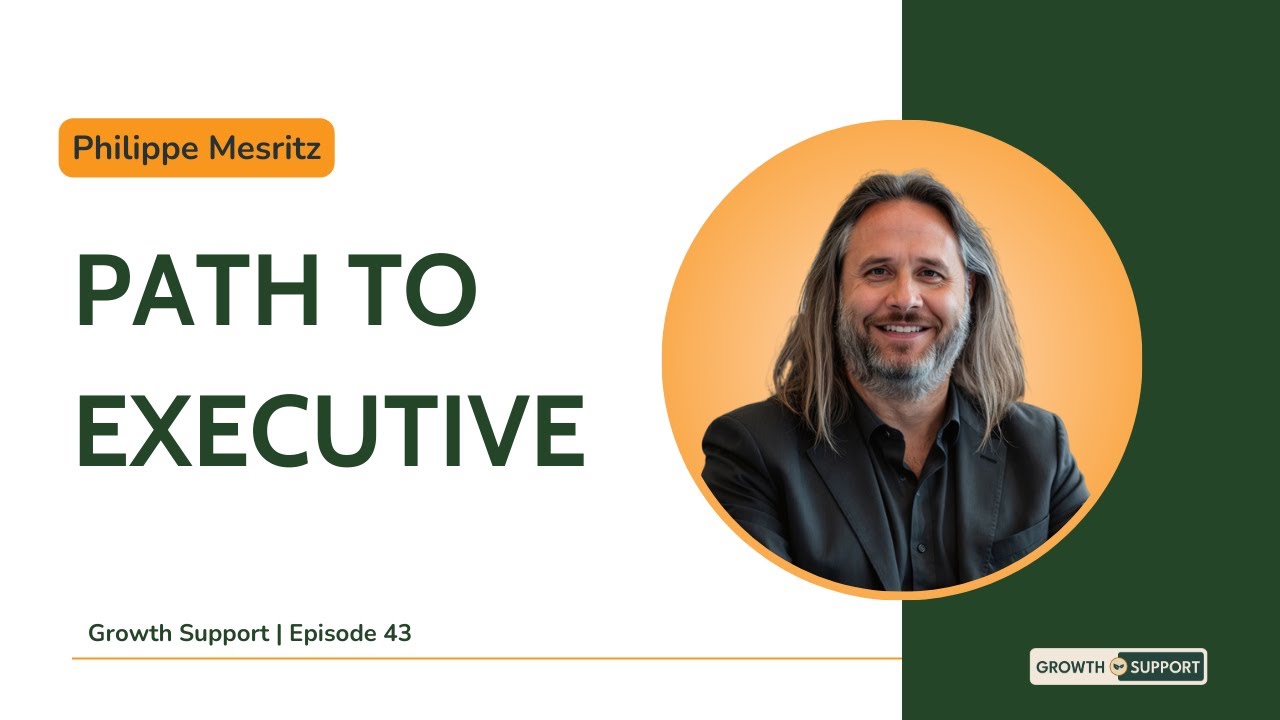
Ep #13 - The Capacity Gap: Unlocking Human Potential in the Age of AI w/ Philippe Mesritz

Philippe Mesritz, Chief Customer Officer at Access Group, argues that AI automation creates a "capacity gap" when companies cut workers instead of retraining them. Fifty-five percent of firms later regretted layoffs tied to automation. Human capacity is infinite if organizations invest in learning and culture.
Chapters
Thousands of jobs vanish, but the capacity inside people rarely does. In the age of AI, the real risk isn't machines replacing us. It is leaders forgetting what humans can become.
Companies look at their value, whether it's in the stock market, whether it's in private equity, whether it's in venture capitalists. It all has to do with certain sets of metrics that EBITDA and cost has a very heavy influence toward.
2025 is witnessing massive layoffs and automation moves. For example, major firms like Amazon announced cuts of 14,000 corporate jobs recently. While at the same time, many companies also regret automation-driven layoffs because we know sometimes those automations and AI gains that people are looking for, they're not materializing. It's helping to detect cancer, for example, before it is too late. And those type of things in the medical industry that it can benefit society as a whole. And I think part of it, it's because when we hear the bad news and we're just focused on that, it also We cannot remove— it's kind of the noise that we see in front of us.
The news, right? News likes to amplify the negative because that's how they feel. People will watch. But I think simultaneously, don't be afraid to make the other decision, which is invest in your human, invest in your future.
Thousands of jobs vanish, but the capacity inside people rarely does. In the age of AI, the real risk isn't machines replacing us. It is leaders forgetting what humans can become. Welcome to The Human Protocol, the podcast about staying human while building the future. I am your host, Michael Solomon. 2025 is witnessing massive layoffs and automation moves. For example, major firms like Amazon announced cuts of 14,000 corporate jobs recently. According to OrgView, 39% of companies laid off workers because of automation. And 55% of them now regret that decision. Yet many leaders focus on cost cutting rather than capacity building. Today we'll challenge that status quo. What if the answer isn't fewer humans, but better humans? So I'm very excited to be joined today by Philippe Mesritz. He is a Chief Customer Officer for the Americas Hospitality Division at Access Group, a global $1.5 billion company based in the UK. He's transformed enterprise-size organizations by driving 77-point NPS improvements, achieving 121% net retention, and delivering 40% margin gains. A recognized CX Leader of the Year finalist, he believes AI amplifies human potential rather than replacing it in order to drive operational improvements and effectiveness. Philippe, my friend, welcome to The Human Protocol.
Uh, thank you for having me. Uh, this is one of those conversations that I've always loved having. It is, uh, a passion of mine to be able to say, how do we think about the humans? Because they're the ones that drive our improvements. AI automation is great, but we have to always think about that human centricity.
Absolutely. And thanks for sharing that. And Philippe, to kick things off, I would like to ask you something that I ask every single guest that comes to the show, which is when we remove the LinkedIn bio and everything the internet knows about Philippe, who is Philippe at his core?
At my core, I would say I'm a family man. My, I have a 24-year-old son and I've been married for 26 years and they're what I spend my time on. I don't have a ton of hobbies. Outside of that. So I just hang out with them, go to dinner, go to nice places and have a lot of fun.
Beautiful. Thanks for sharing that with us, my friend. Appreciate that. And now let's get into the conversation on the topic that we would like to cover today. And I would like to ask you this first question, which is what lights you up about this conversation that it's capacity rather than headcount? How do you measure both? Why they're so different for, for you, in your opinion?
So one of my people here that I talk to on a regular basis about how things work, she says that human capacity is infinite. And I think that's the core of what it looks like. I think people believe they're finite. Time is finite, but your capacity to think about things, to deliver value, to really invest is how you exist, right? So I think that's the part that makes it so fun for me is we're now getting to an age of AI where we don't have to limit ourselves to how fast we can type necessarily, because, or think, because you can have multiple things helping you at the same time. And so I believe that that's a opportunity that we've never had before, but it all is built off of that human capacity and interest.
Yeah, I agree. I think that the more we hear this news about companies laying off and we take a look at this conversation today, which is the human capacity, right? And from my point of view, I really think that when companies are making these decisions and taking this so lightly, we are just laying off talent instead of retraining it. And I think what companies are looking for is a short-term kind of saving money. But at the end of the day, I see this more as a waste in the potential that exists in every single human. I think that's where this is such a sore sight, that we can retrain and we can develop so much potential and we're not looking and paying attention too much on it.
It's an interesting approach. Because if you think about those companies that are cost-cutting and you fast forward 3 years, for example, they're all cost-cutting either the people that are older and more expensive typically, or they're cutting the frontline entry-level employees. But you think 3 years from now, 5 years from now, all of the next, the older generations are starting to retire. They're going to leave the market, which means that every single mid-manager now goes up the chain, right? And what that ends up means you don't have anybody to take the bottom tier. You don't have anybody left. So how is your company going to succeed in the long run? So you have to think a little bit beyond today to be able to get to that as a conclusion.
And why do you think companies— because I know business is business, right, Philippe Mesritz? And you have been in business a very long time, especially in leadership positions and leadership roles. Why do you think it's such a rush to just get into the cost-cutting effort instead of trying to spend some time and money on retraining the people, which seems like lately that's where many of these companies are actually doing?
I think when you look at— I think it has to do with history. So when customer— and when companies look at their value, whether it's in the stock market, whether it's in private equity, whether it's in venture capitalists, it all has to do with certain sets of metrics that EBITDA and cost has a very heavy influence towards. So I think what happens is we are still in that old methodology. And so if you can afford, quote unquote, to cut your cost, it makes your value greater. And so I think the leaders are still in that mentality versus thinking about the value that we're driving and the longevity and the capabilities, which I believe in the long run will become much more of an important factor to success.
And for, for middle managers and entry-level leaders, what would you recommend to be the approach that, you know, at the end of the day, there is a business to run, but there are people also to lead? And to find that middle ground between the two, I think lately it's becoming harder and harder to achieve. How, what would be your, your, your approach on recommendations for, for them and organizations going through that?
I think it's still spend the time training your teams, helping them think about their role in an AI world, right? Whether you're in sales or customer success or support, It doesn't matter. If you don't think in an AI world, then you are legacy already. But if you don't change and learn, you're going to run into more and more problems. And so, I think middle management and frontline leaders can take this opportunity to teach their employees whether they're going to be here or not because of the cuts that you're talking about. I think we take that time and we invest in those humans. So that they have something in the future and so that if they stay with you, now they're powered by AI versus, well, I'm not sure how to use this thing.
Yeah, it's a very interesting period that we're going through it. And I was— when we first talking about what would be the topic for our conversation and we kind of landed on this one, it made me think and take a look at, especially with this news lately of layoffs that we're seeing more and more. And there are some interesting kind of conflicting facts out there, 'cause while we know the numbers because they are shown every day, at TechLayoffs, for example, so far in 2025, there have been more than 94,000 employees in 400 companies where those roles have been cut, many citing AI and automation. Right. While at the same time, many companies also regret automation-driven layoffs because we know sometimes those automations and AI gains that people are looking for, they're not materializing. So when I look and when we look at this news, it's kind of conflicting in nature. We see people rushing to do something thinking that they're going to get the immediate gain from the cut, but reality is showing something different.
No, I think that's very valid. I think part of it as well is the gains aren't there. But not only that, you're impacting your renewal rates and your retention rates and everything else because now you've got less humans working with your customers. And even if you have automation, someone has to help guide that automation. AI isn't self-creation yet, right? It's not going to invent something new. It's not going to do something that a human doesn't think of yet. At some point, that's a different story. But I think if we think about the capabilities of what AI brings us, it should augment the human capacity. It should give you that ability to, instead of dealing with 3 customers in a day, do 5 or 10 or 20, because now you're being more efficient with your time and you're using things. You don't have to spend as much time doing things that you can now have an AI bring back to you so you can have that human conversation. This podcast, for example, Notebook LLM can create a podcast, right? But it doesn't create the ability to think about it. All you do is you throw in text and it will AI analyze how you want to talk about it, but it's not creative.
That's still a very human thing. The creative part of it stays with us. But for AI to augment humans, humans also will need to learn to work with AI.
Absolutely.
And when I'm looking and we're looking at companies, companies are choosing between numbers and cost. Because if you have to retrain your people, that will be cost to your company, correct? But at the same time, you looking only at the cost, it's very short-sighted because then the capacity and what you can enable these humans in the middle and long run will really create more benefits to your company and your business than whatever happened in the past.
Correct. And I was having this conversation actually yesterday with my own automation team, and we were talking about their roadmap, and the presentation that they had was, this is what we're going to save in cost every year. And I quickly did the math. I'm like, you're— I'm not going to save enough cost to make that worthwhile, but each of these allows us to spend more time with our customer. So I can talk about retention and customer experience And I think the companies that will be successful in the midterm, at least, are those that focus on that customer experience and think about how do I use AI to automate the ability to better serve our customers? If you don't do that, you're going to run into— you're going to— there's a company that bought one of my old companies. They went AI and you can see all of the challenges. Because to your point, 55% of the companies out there regret the decision. And it all has to do with that customer experience, the automation not quite doing what they think it should or could have done. And we have to be able to do that and then train your employees on how to use it better so that they can deliver on all of that value to your customers.
And you touch into a very valid point. Which I want to touch back again. It's capacity building strategy. You're looking at what your automation initiatives can provide back into your business and into your customer experience. So you are approaching these in a way that I hope many companies and businesses should be doing is what is your strategy? What is it that you want to find? What are the business goals? What are the outcomes that you want to achieve and how automation can help you with this? Right. But that's, that's what you're looking at. It's really you are putting a strategy around your business goals and how to leverage all this technology and the benefits of it in pro of those business goals.
I think you have it right. I think the business goals become that North Star from a cost perspective, a driving perspective. The customer experience becomes the North Star on how you retain your customers. And when you think about that as an overarching kind of decision matrix, call it, it becomes evident that yes, automation may remove certain pieces of the business, right? So frontline technical support, for example, most AI can look, read through your knowledge base and answer the question much faster than a human can. But who's going to maintain that knowledge base? Who's going to make sure that you've got ongoing kind of engagement? Who's going to step in when the customer gets frustrated in talking to AI that isn't understanding the nuance of what they mean? Who's going to help those get complex solutions that AI can't solve for, right? So by taking it at face value and not thinking about how do you adjust or retrain your teams.
Yeah.
You end up losing that fundamental human capacity that exists inside your business. And unless you are truly at risk to go out of business, in which case, yes, layoffs, like it's gonna happen, right? It's business. But if you're already hitting your numbers and your EBITDA targets and your revenue goals, why don't you accelerate those? Go for twice as the size instead. Of reducing your cost. And I think you're much more, you're much better off.
As a strategy, that's something that I really applaud because it's investing in the human capacity that I think we should be doing more and more, right? It's not about only looking at the number, but yes, what are the benefits that automation and AI is bringing to your different functions within your organizations? And also taking a look at what are those roles that we may need to adjust as we move? What are those that we may need to evolve and we may need to transform? All this needs to be part of the same conversation because as we are talking here, there may be some frontline jobs that they will evolve or will have to become something else because AI will do it better and faster. And why not having AI doing it if it makes more sense because it's providing better and faster results to the business and the customer? Correct.
So absolutely. It's— I read an article a little while ago and they said one of the most likely jobs to be replaced is the CEO, because a CEO makes decisions throughout the day based on data. Right. So when you think about the pure value, you replace your CEO, but then your company, like, it has no vision. It has no direction because AI is not going to do that. So replacing your CEO doesn't make sense unless you look at it in a bubble. And I think that's the thing that people think about. And like this conversation we can have because I've actually got two instances of AI running in the background doing some analysis that I needed to get done by the end of the day. But because I've got it doing it, I have the capacity and the time to have a good conversation about how do we think about AI? And that's the power of our capabilities to do multiple things where before you could be single-threaded.
I was just laughing right now because you made me remember something when you were saying AI replacing CEOs, you know, in this whole new conversation, there are people that really are against the way things are being handled, the layoffs, robots replacing. And the other day in social media, there was conversation, a video that I was watching, I think from OpenAI CEO, and people were were pissed at what he was saying because he was just painting a world where really this is all about AI automation and machines and that's it. And people were saying, maybe AI should replace you. And let's see if you're going to like that when that happens. And you were just mentioning that and it made me remember that thing.
But it's true. Like if you think about what CEOs do, they make big decisions. Based on big data sets and inputs, right? So they do a lot of other things, but when you fundamentally do it, their job is to make sure that the business is making the right decisions.
Yeah.
You can replace that component with AI, but they will never invest— they will never be the visionary that people want to follow. They will never invent something brand new. Like, AI is not going to invent a brand new capability that it's never been thought of before. Because it refactors itself. So how do you take the human— that's where that human CEO now becomes powerful. They can inform what they do by data and AI. No different at the front line. But I think the problem is people don't realize the individual's struggle with how do I think about AI to make myself better.
And part of also the challenge that I see, Philippe, if everybody just rushed to automation and companies don't invest more in the human capacity, in our creativity, and everybody keeps just leveraging automation for everything, what's gonna make you different from the rest? If we continue to detach ourselves from what make us humans, which is our ability to create, to innovate, and we just keep repeating formula and using AI and automation for the sake of it, companies won't find a way to really innovate anymore. And that should be a concern for a lot of people.
Yeah, I mean, if you go back in the day, companies like Facebook wouldn't have been invented because AI wouldn't even think that that human connection makes sense, right? So, Google wouldn't have been invented because no one had ever thought about putting a search engine on top of this thing called the internet. To really design and create. iPhones wouldn't have been invented because Steve Jobs rethought the way that people use mobile phones. AI would reinvent and make a better phone, but not necessarily a newly invented creation.
Yeah, totally, totally agree with that. Things that we need to continue to push for it and keep in mind, right, as, as we move along. Let's talk about culture and how culture, Philippe it has a big say into how we navigate through this transition. Because I think it's important, especially for leaders, to understand that culture needs to be a huge bet on how we navigate and how we communicate changes to our people. Curious to see how you are navigating through change and what's your approach and feedback and that you can share with us. For us, of us navigating through, through this time?
I think the shift is hard. We have to acknowledge that it is changing the entire way that people have to think and approach their jobs, because people are used to doing things a certain way. They're used to not being creative. So you have to understand the value of it. What's ironic to your culture question, it's ironic, I had an automation engineer that is on my team. He's doing a great job. He's building automations. What he's not doing— he has a Claude license. He's had zero logins on Claude. And I'm like, wait a second, these two things don't align. And when we talked to him, we found out, well, I don't really know how I can use Claude correctly. And I think that's where we have to drive curiosity. Because the fun thing about Copilot and Claude and all ChatGPT is you can literally go to it and say, how do I use you best? I do these things every day. I have this job. How can you suggest I use you? But if you're not curious, you don't understand that you can ask it to train you. And so, I think that's the cultural shift that has to happen because it is no longer a world where you can wait for someone to train you fully on these things. AI changes every day. You have to learn, you have to pay attention, you have to ask, what else could I do? And you have to be curious. And I think that's the cultural shift that every job, every person needs to make sure that they're focusing on.
So interesting you talk about remaining curious because that's something that I talk to my team every day. And I tell them, things will change and it's going to demand more from us. You may not be a curious person and you may think that you will be doing your job the same way for a few years. No, things are changing and it will demand for us to stay vigilant, engaged, and curious. Like any new tool, you will have to be curious enough to log in, play around, and start learning, right? It is the same story with, with AI and these automation tools. You need to be curious enough to try to learn to work with it. And curiosity is what's really gonna make you not only learn with the tool, but also understand the benefits of it, the potential of it, and how you can leverage those to be better at what you're doing.
Yeah, I think using AI to answer your questions is the best way. But I was having that same conversation with a team member and I'm like, well, Fine, think about this in an old school methodology. Forget AI for a second. What would you do if you're trying to learn something new? You'd go to Google and you'd type in, "I want to learn this thing." Okay, type in, "I want to learn how to use AI." Google will tell you. Then you can go use AI because ChatGPT and Claude, you can use free licenses, teach yourself. And I think that's the mindset that it's a hard one to change because people are used to, "Well, my company will train me on this." my school will train me on this, they will teach me this. Everything coming to us. Yeah, exactly. But the world now is you have to go out and ask, you have to go out and be proactive for yourself, for your career, because there's so many things happening from the foundational capabilities of AI to some of the things the company I'm at now have, we're rolling out the ability for everybody at the company to effectively, through AI, build a front-end tool capability that we can hand over to product, and then they can go build it off of a wire— not even a wireframe, a working prototype that you've built. Yeah, using AI. So it's vibe coding on steroids. Yeah, but you have to be curious to think differently.
And, and, you know, because it happened to me, I know some friends that they have They've been putting a lot of efforts into VibeCoding and letting their creative self materialize maybe the ideas that they had in mind in the past, but they never had the skills to put it in place. With all these automation and AI tools that now they can help you to kind of bring those dreams that you have in the back of your hand to reality. It's a beautiful thing. When you look at what you can build only with your creative self and the help of this tool, it's just amazing.
It is absolutely amazing. There's a friend of mine, he's a marketer, so think about how far away marketing is from development, right? Yeah, he built a program that is now sold, that he sells to help writers get better with their writing. And he vibe coded the whole entire thing. And so you think about people who don't understand code at all, having that capacity, because they're curious, they've taught themselves, and they just get creative with what they can do. I'm actually jealous because I didn't think of stuff like that. But it's one of those like really cool examples of a space people can play in today that even a year ago wasn't possible.
It is really amazing, the capability of and how this all can help you to bring all these ideas. And then the more you get yourself around it and you see things happening and materializing, the more active, engaged, excited you become. And I really see this as a huge benefit to humanity because we need more people to be more creative, to bring those ideas and start building things. We need more builders, I think. And that can help us a lot.
I think this is an interesting concept, right? Your concept of building and helping change the world. There are people out there that are like, AI does this bad, it's bad for whatever reason. That we have these economic problems, or we have these environmental problems, or social problems. If you took that one step further and you said, I'm going to get curious and I'm going to use AI to solve those problems, I think you now have a capacity to do a lot more because you've got capabilities you never had. You could be a chemist, you could be a rocket scientist, you can and leverage AI to help you think through these things that before you didn't have the education, training, knowledge, capacity, whatever to be. And so I think this is the part that people need to realize. One, they can't stop the AI bus, it's gonna happen. But two, how do you use AI to solve the problems that you are personally passionate about? And that can be anything.
And, you know, it's the future that is out there for us to grab it, the way I see it. And it starts with us being curious and really want to do something about it. And I think that's kind of the mindset shift that this whole AI era is bringing. And I hope people feel excited about being creative and being able to build things that maybe in the past, as you were saying, they were not able to do it because of money, skills, lack of resources, you name it. And now with these tools, it helps you tremendously.
Absolutely. And I think if you think about your question earlier about how leaders can help culture change, I think it boils down to if the top-level leaders are showing that curiosity and giving ideas, and then the middle leaders are doing the same, your frontline does the same. And now suddenly, in its own weird way, we're benefiting society as a whole to think differently and not simply be machines. Because in many jobs, the humans were machines, which is how the whole, like, initial Industrial Revolution started. We're in a new revolution, and we know that AI's adoption is faster than the internet was. And so how do we think about that? We have to change our mindsets, just like we did in the '90s when we picked up the internet, and we did when the farmland turned into like tractors, and when every single of these iterations of culture shifts and world shifts. AI is just the fastest moving version of this right now.
And for, for this conversation today, I know that we are concerned about layoffs and everything, and I wish also the good news were more amplified in a way because there is a lot of good news that I don't think they— we hear a lot about, you know, how AI is helping to detect cancer, for example, before it is too late. And those type of things in the medical industry that can benefit society as a whole. And I think part of it, it's because when we hear the bad news and we're just focused on that, it's also kind of remove— it's kind of the noise that we see in front of us, right?
The news, right? The news likes to amplify the negative because that's how they feel. People will watch it.
Yeah.
But I think your point on good news, like, I read something, I don't remember this week, last week, and it had to do with a doctor. And the doctor used AI to transcribe notes and not have to type anything. And he said, "Look, I still do 15 minutes with the customer or still 15 minutes with my patients, but now I don't have to spend 10 of those minutes documenting the notes so I can pay attention and I can really be human with them." And so, these are the type of things that help our kind of society and our people become more human-centric and really focusing around what that experience looks like You can do the same thing in restaurants. You can do the same thing in hotels. You can do the same thing at car shops. Electricians are doing it now where AI is reducing their likely to get shocked because they're using AI to make sure that there's no problems, right? So how do we think about that? I think that's the part that Curiosity gets to is helping these trades and these capabilities that before you had to plug into things and you had to put a tester on. And you had to know how to use the tester and you had to do these things. AI can accelerate all that and reduce our risk of someone getting shocked. It's great.
Now you just need to dedicate some time in front of it to think what you want, and the tool will do the rest. That's it. Yeah, you don't need to worry about anything else. It's just be curious, take some time, what is it that you want to achieve, and let the tool give you insights and and help you through it, whatever that challenge is that, that you want to tackle. Totally agree. Totally agree. Let's talk about human potential, because I think this is the future, and, and this is something that I know you're passionate— I'm passionate about. This is part of the reason why this podcast exists, right? It's really to talk about human and how we see humans in, in this new future. And when we look ahead, Philippe, let's say in the next 5 to 10 years, what do you think will separate those organizations that succeed from, from those that struggle in this AI-driven future?
I think that figuring out how to treat your customers in whatever capacity that might be, how to treat your customers like the humans they are, the whole concept of the golden rule, right? Treat others as you want to be treated. And yeah, I think most people don't really want to be treated like a robot. AI will treat like a robot. So how do you use AI to accelerate the ability for me to have a conversation with you around your challenges, your problems? And I think that's really where 5 years from now, the companies that have been successful are the ones that have learned to balance those two things. They have learned how to take AI and remove the noise. They've taken AI and automated the repetitive keyboard things that drive no added value. And they are focused on that customer experience, the value-added capabilities, the strategy conversations. It's a different mentality because before it was, how fast can you deliver something to me? Now it's, how fast can you help me create my next thing, my next engagement, my next experience. And I think that's really where the successful companies will come into play.
Yeah, it's, um, and, and especially with customers, right? And, and, and that's an extremely important customers, because yes, customers, they want to receive the best support, the best service they can. But also at the same time, we need to be very careful. And what are those areas where we implement AI? On it because there may be some areas that the customer, they really don't care if it's AI or a human, but there are others that they really care where is this information coming from. And trust can erode very fast if for whatever reason customer receive an answer from a bot or AI and that start creating a distrust. And we know what happens when customers start losing trust. In your service, they open the door and they leave you, right? And that's something that I always tell everyone, whatever you're trying to implement, make sure that you implement because you have a goal that aligns with the similar— what the customer wants to achieve, which is very fast and great service all the time.
No, I think that's very valid. And I think the other aspect of it is emotion, right? Because AI is emotionless. And so if we think about that doctor example, in theory, you could replace a doctor with AI, in theory, right? Because AI will know all the answers.
There's people that are already replacing.
Right. So that's what I mean. But it's like doctors get replaced by AI. So now you're talking to pure AI. And that's fine. If I break my arm, If AI tells me this is what you do, this is how you fix it, that's fine, right? But if I have some sort of like emotional challenge or if I have a cancer diagnosis, to your earlier point, I don't want AI telling me you have a cancer diagnosis, right? So how do you think about that emotionality and being part of that piece and being part of that conversation? And it doesn't apply to every business in every scenario. But I do think that the more you can think about that human component and that experience that they have, the reaction that they have, like if you go to dinner and you have a great meal, you are happy. If that's AI, you're like, is that a great meal? Like people say cooking with love for a reason, even though obviously you can't put like love as an ingredient, but there is a feeling within a good restaurant. And I think AI would just like kill that in some ways. So how do you think about that experience? And so I think it's customer experience, it's the emotional attachment that people have, and all of that combined ends up being much more successful than something that is purely automated.
And it's at the end of the day, human beings working for human beings. We are looking for that connection. Right? We're looking for that experience. And that's, I think it's also something, and I've talked to people here in the podcast in previous episodes, I think we're gonna be looking more and more in the future for those experiences that still keep us humans. And that human connection is precious. And I think we're gonna be kind of longing more and more those connections that we have with each other. Totally, totally agree with you on that.
Yeah, I think it's interesting because like, like I said earlier, you could have this podcast with no guest or no host, right? In theory, it can respond either way, but it's not a human connection. It doesn't allow for organic conversation that has excitement or has sadness or has any of those things. It becomes mechanical. And so you have to think about that reaction from your customers. How are they going to interact with you? What's the purpose? Do they just need fast service? Great. Give it AI. Do they need—
Yeah.
Experiment— experiential service? AI may not be the right choice.
Then think about it. Exactly. Yeah, totally. It's all about what you want to achieve. Who are your customers? What they need, right? It's all about that, always. Philippe, my friend, I have the next segment. It's really one question, right? But it's for 4 different groups, and I would like to see and hear from you how do you think each one of those should be approached. So, to individuals navigating AI disruption, And I think you have already touched on it throughout the conversation, but I'm curious just to see right now, what would be your advice, your one piece of advice to really people navigating through AI that may not be using at all?
Yeah, we talked about that. It's curiosity. It's go ask the questions. Whether you're using AI to answer it, whether it's Google, whether it's your friends, have the conversation so that your mindset can start to shift. Because I think if you don't, like we are rewriting our job descriptions and our titles to be AI-enabled X. We are not hiring people who have never thought about AI before, because that pulls us back as an organization. And so my challenge is, if you don't want to be left behind, you have to ask the questions. Use the free ChatGPT. Just start asking it what to do. And I think you'll educate yourself significantly and that'll help you position yourself for your first step.
And sometimes, you know, in the past, people blame money on their ability to use these tools. I don't think that you can do that today. It's, you have free versions out there. As far as you have a cell phone and we all have a cell phone, you can use it. It's just a matter of what is the priority for you, being on social media that you're not learning anything, or dedicating some time to learn the basic, very basic skills that the jobs of the future will ask you. So it's, uh, it starts with us and that's what we tell everyone. It starts with you. You have to put in the work because no one will do it for you.
I think that's absolutely accurate. Like you can choose what, where you spend your time. And the thing is, I think everybody thinks, well, I need to stop everything I do to do this. Well, you don't. Spend half an hour a day doing it. Get up 30 minutes earlier if you don't want to change your trajectory. Watch one less 30-minute episode of a TV show. Scroll, doom scroll a little bit less, right? I think 30 minutes a day gets you very far because you can have that conversation with AI. And then over the next day, you think about what your next conversation is going to be. And you go, okay, what am I going to ask next and next and next? And at some point you might run into, well, you need to buy these tools or these capabilities, but by then you've formulated it, you know what you're going to do. And I think that's the way you have to think about it. It's not all or nothing.
It's a, it's an exciting brain exercise. That's how I see it. Because you ask one question and you just keep going and keep going. Sometimes I need to say, okay, I need to go to sleep now because my brain and my mind just get attached to what I'm trying to build or what I'm trying to think about. And this thing keeps going and keeps going and you keep going. I say, no, it's time to sleep.
9 PM, I close my AI tools down. I'm like, I don't care.
I'm done. That's my time, Philippe. 9 PM, that's it. I'm gone. I'm gone because I wake up very early. That's funny. That was awesome. Philippe Mesritz, your piece of advice to companies that are tempted to cut instead of cultivate, amplify, retrain. What would you tell them?
I would say, number one, evaluate whether this is a must-do, right? From a cost-cutting perspective, there are absolutely valid times where you have to cut costs in order to stay alive and keep the rest of your employees employed. So absolutely, don't be afraid to make that decision. But simultaneously, don't be afraid to make the other decision, which is invest in your humans and invest in your future. Because I think if you really lean in and you go, "Look, our numbers are fine. We have the cash flow to do this." You as a leader need to challenge yourself to think about what could you do if you AI-enabled your teams. If your salesperson could go and close 3 times as many deals as they did because your win rate goes from 10 to 20 or 20 to 60 or whatever because they're using AI. If your support team can answer questions faster, increasing your CSAT and your NPS significantly by using AI. Your CSMs can drive value to your customers better. Your engineers can use Devon and other tools to build 5 times as much roadmap that they never could before, fix bugs while they're sleeping. And I think this is where leaders start to fail because they don't think about what could be. They think about what is today. And my favorite story, and I heard this while we were doing our own AI enablement session a couple of weeks ago, There was a developer who was challenged in the morning to say, "Hey, I need you to build something." And he goes, "I can't do this. It's going to take 3 weeks." He couldn't, to your point, I couldn't go to sleep, right? So he was thinking about this in the afternoon. He went home and he used AI in between when he was putting his kids to bed. He would go to AI, type in, "Go do this," put kid number 1 to bed, go back, type, "Follow up and do this thing," put kid number 2 to bed. And by the next morning, He had a prototype. So, it's this amazing speed that you can now do new technology, new features, new functionality. So, think differently about your humans. And if you can afford it, absolutely invest in how your teams can think about this because it'll make your company more valuable, better, faster. You'll grow. You'll keep more customers and you'll make more sales.
That's awesome. That story that you just said, because it's like the technology is giving us an opportunity to invest in our human potential like we've never seen in the past. And the more stories that we hear about it, that people building were putting their kids to sleep and so forth, it just should give us a lot of the energy that we need to embrace this and see what we can do with the potential that it's in us by leveraging all the benefits of this technology. Because I think there's so much more, so much more that we can do to embrace this.
Exactly. And so the thing I said initially, human capacity, there's really like no one knows what that limit is.
Yeah.
So how do we push ourselves to think differently and have that passion to say, let me spend 3 minutes before I put my next kid to bed just to give a prompt Yeah. And how they either go do the next step and it allows you to do so much more in a much more time. Your work-life balance doesn't get screwed up. Your life is better. Like there are so many things that you can do because you're driving value. So now you have your company, to your point, that can provide that context and you have your employees rising up in their curiosity. Those two powers combined, those are the companies going to be truly successful.
Incredible. It's just, you know, we also need to alert people, 9 PM, put your cell phone to sleep because you may be hooked to it and you need to detach from it.
My worst is the other night I couldn't sleep and I went to bed at 9:10. 3 AM I woke up and my brain was going. So, I grabbed my phone and I type in some stuff and I hit send because it gets it out of my head into something that when I wake up, now tells me what I thought about.
I don't want to forget the idea that is at that moment. So we put it there.
Right. But the advantage is before I had to sit down and write it down and I had to think about it and flesh it out. So now my 3 to 4 AM becomes used. Now I wake up at 3 AM, by 3:05, I'm like, okay, I don't have to think about this anymore. And it fleshes it out. So when I wake up, I can now have that conversation with AI. And I can go to bed on time.
There you go, people. This is life in 2025 and beyond. Okay. I love it. I love it because it happens to me as well. It happens the same thing. Philippe, to AI designers and architects, right? Those designing these AI solutions, how should they think about human capacity in their systems and in their design? What would you like these companies and and these AI architects to think about when they're designing these solutions?
Oh, that's an interesting question. I think the, the request that I would have is think about how you can help people understand how to use your capabilities more, right? So making sure that your AI has the insight around the details and how your information, how your tools can help enable people by being more effective. So if it can prompt, if it can help people, if it can think, it will accelerate our overall ability to adopt AI because now you're removing one of the hurdles. So I would say that's probably the big one. The second one is think about efficiency from a tooling perspective because I do think that AI building AI, which is what's happening now, it doesn't pay attention to how to be truly effective. And so making sure that AI building AI that's refined by humans becomes a better solution than just AI built AI delivered to the market.
Interesting. Thank you for that. And to policymakers and governments, how do you think they should help us? What are the things that you would like to see? What are the safeguards that you'd like to see in this new future with AI? That you are not seeing a lot of discussion, for example, today?
I think one, invest in it because invest in helping retrain because I do think that the government has an opportunity to help those that can't quite help themselves and can't quite make that leap by giving them that first step. And that doesn't have to be a lot. It can be a once a month session at the city hall where we talk about AI, right? It doesn't, something that will help leveling the playing field, right? Correct. Because not everybody has people like you or I, yeah, that can think about AI and help them think about AI. So somebody that helps that. So I would say that's the thing that I think policymakers need to think about. The second one is how do we put in, I don't know, safety guardrails of some sort that we don't allow for— and I don't know how to do this because bluntly, I believe in like free, free world in many ways. But at the same time, I don't— cars on the road have rules, right, for a reason, for general safety. We know that if you don't do these things on the road, you don't use your blinkers, accidents go up, right?
Yeah.
So how does overall policy help with that piece of the puzzle? And I don't know that I have an answer because I think you're still early. But I think that's the part that we have to start thinking about.
Yeah, I agree. That's something that also kind of keeps me, made me think on what are the things that we all can do, that the government can do from global standards, for example, to local standards to make sure that there are safety regulations in place to help make this evolve as safe as possible. Especially for us human beings.
Yeah, exactly.
And last but not least, what would be your piece of advice to a young Philippe Mesritz? Seeing him today and in this new future with AI, what would you tell him?
Be curious. I think that's what it boils down to. I've told my son that, and I've told him before, I go, it doesn't matter what you do, just try something, because that in and of itself will start you down a path of asking questions. Like, one of my favorite prompts to LLMs that I always do is when I put in any ideation, I say, and ask me questions that I can answer to help you answer my question better. Something along those lines, because it needs to be curious in exchange. So you need that bi-directional. So I think a young person in today's world, you need to be curious because that's going to be your limiter. Not your capacity, not your intelligence, not your financial, your economics. It's are you curious enough to ask the right questions and teach yourself how to do something new?
Yeah, be curious, stay hungry, learn, continue to adjust as you move along, because we will continue to go through a lot of changes. And I think those that will succeed are those that can adapt and change as they move along. I think those are kind of the main wishes that we have for people. And Philippe, thank you for being with us today. It's been a real pleasure having you with us today for pushing us to rethink what true capacity looks like. So I appreciate you taking the time to be with us today.
No, thank you for having me on. This is the kind of conversation that for me, it makes me think, right? It makes me think about how do I educate, how do I talk to my teams, how do I talk to my customers about what they could be doing. Um, so I love these conversations. It, it puts me in a different mindset. So thank you.
Yeah, no, it's a pleasure. You know that. And for the sake of, you know, keeping us healthy and our families happy, let's continue to keep the 9:00 PM rule, okay? Unless we have to wake up at 2, 3 AM, but no one is seeing at that time.
No one knows that at that point, right?
It's fine. My friend, thank you. Thank you very much. And if this conversation stretched your thinking, share it with your team, your board, or a leader who needs to hear it. Subscribe to The Human Protocol and keep exploring how we stay human while building the future. Remember, the code may change, but our humanity is the content. Thank you everyone, see you next week. Take care.