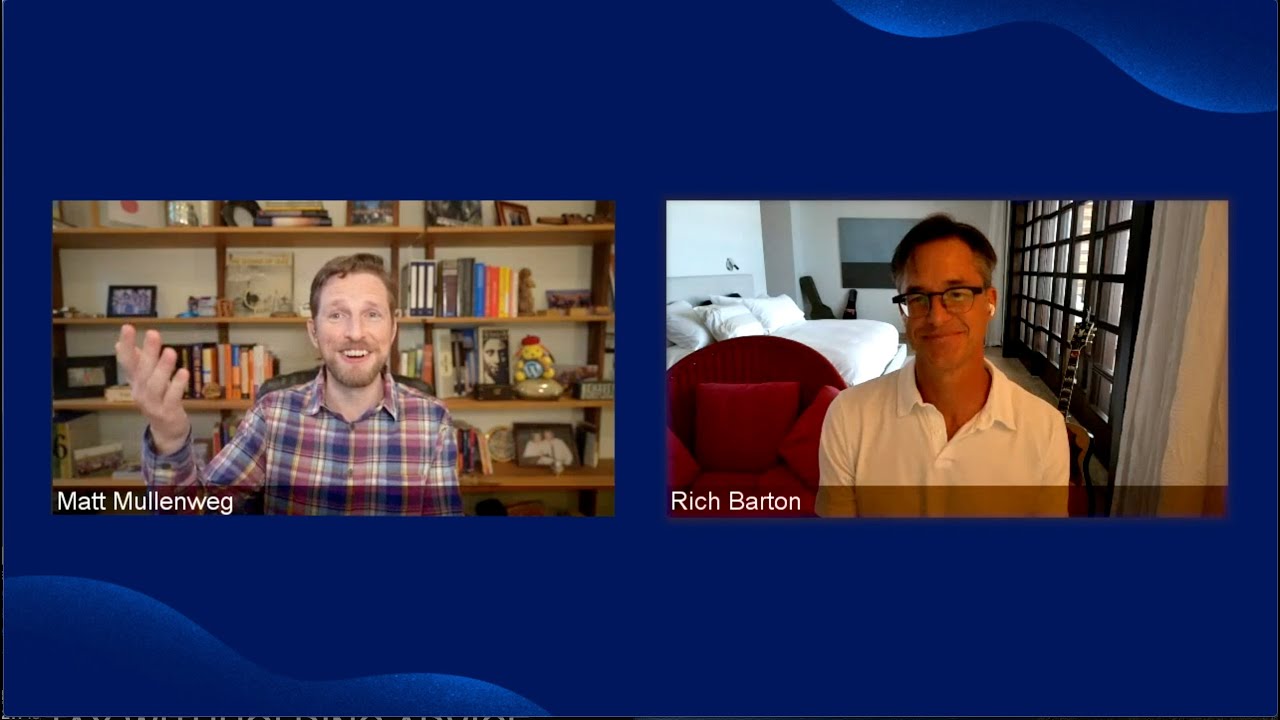
Matt Mullenweg CEO of Automattic: What is The Future of WordPress in a World of AI?

In this episode of the WP Tonic Show, host Jonathan (joined by co‑host Kurt von Ahnen) interviews Matt Mullenweg, CEO of Automattic and co‑founder of WordPress. The conversation covers the dual nature of AI for WordPress – massive opportunities to improve core, plugins, themes, security, and developer productivity, alongside new threats such as AI‑generated code bugs and plugin compatibility chaos. Matt explains how the massive plugin ecosystem (70‑80k+ plugins) will need better tooling, discoverability, and community‑driven consolidation, and he outlines plans for AI‑enhanced developer workflows (CLI, Playgrounds, agentic personal assistants, and evaluation benchmarks). The discussion also touches on headless/decoupled WordPress, the role of agencies in an AI‑augmented world, the impact of large language models on the broader economy, and whether the current wave of AI investment is a bubble. Matt shares excitement about upcoming WordPress 7, the OpenClaw project, and the future of personal AI agents that can securely interact with WordPress services. Throughout, he emphasizes democratization, the importance of learning how to learn, and the need for both human expertise and AI tools to coexist.
Chapters
Welcome back, folks, to the WP Tonic Show. This is episode 998. Got the great pleasure of having a returning guest. We got Matt Mullenweg, the CEO of Automattic, as our guest on this episode. We're going to be discussing all things WordPress and AI and the madness around AI. It just seems to get worse and worse. Should be a fantastic discussion. So Matt, would you like to give a quick 10-15 second intro to our audience?
Sure. My name is Matt Mullenweg, talking to you today from Houston, Texas, where I was born and raised. And where, you know, I guess 23 years ago now, you know, I connected with Mike Little over the internet. On our blogs. And, uh, you know, we, we founded what we now know as WordPress, that little, you know, pebble that turned into a snowball that turned into an avalanche of, of code and community and plugins and themes and everything. And I consider myself very, very lucky, uh, to be part of that. Uh, my other sort of night, night job is I do a little bit of investing with RG Capital, and my My main gig is the CEO of Automattic, which makes WordPress.com, WooCommerce, Jetpack, Tumblr, Day One, SimpleNote, a number of— we're a distributed company with about 1,400 people across the world. And yeah, I'm excited to be with y'all today.
Thanks for that, Matt. And I've got my great co-host, Kurt. Would you like to introduce yourself to the new listeners and viewers?
Yeah, sure thing, Jonathan. My name is Kurt von Ahnen. I own a small agency called Mañana No Más. We also work directly with like the great folks at LifterLMS and, uh, WP Tonic.
That's fantastic. Like I say, we're going to be discussing all things WordPress, AI, the future of WordPress. It should be a great discussion. But before we go into the meat and potatoes, I've got a message from one of our major sponsors. We will be back in a few moments, folks.
Hey, running a business is tough. You shouldn't have to worry about your website too. With Kinsta's managed hosting for WordPress, you get lightning fast, load times, enterprise-grade security, and 24/7 expert support from real humans. Switch to Kinsta and see site speeds improve by up to 200% with effortless migrations and powerful, easy-to-use dashboard. Join over 120,000 other businesses who also trust Kinsta. Get your first month for free at kinsta.com. That's K-I-N-S-T-A.com. Kinsta.com. Kinsta, simply better hosting.
We're coming back, folks. Like I say, um, should be a great discussion, but I also want to point out we've got some great deals from our major sponsors, plus a curated list that's aimed at the WordPress user and small agency owner. You can get these free resources by going over to wp-tonic.com. Wp-tonic.com/deals, wp-tonic.com/deals, and you'll find all the goodies there, my beloved tribe. What more could you ask for? Probably a lot more, but that's all you're going to get on that page. So let's go straight into it, Matt. Um, so to say that we're living in interesting times would be the understatement of the century, I would say, Matt. So What do you see as some of the biggest opportunities and maybe threats to WordPress over the next 18 months?
Huh. Well, in terms of threats, you know, I guess the, the main thing I would think about is just that it's, it's, it's tied to the opportunity, which is that You know, as, as we start to start apply, you know, the coding part of AI has gotten quite good. If you, if you haven't been following with Cloud Code and the new models like Opus, Codex, um, Minimax, there's a lot of amazing stuff happening. Um, so as that starts to be pointed at, um, not just core, but, you know, the 60, 70, 80,000 plugins and themes, I think we'll find lots of opportunities to improve. I think we're also going to find a lot of, you know, security bugs and things like that. So I would say like many open source projects around the world are being a little bit flooded with, you know, sort of this sort of agentic driven input. And so I said the biggest thing we have to figure out over the next 18 months is how to incorporate this and deal with this both for core and our translations and everything we do in sort of main WordPress and our official canonical plugins, but also how to like provide the tools so that like all the tens of thousands of the maintainers of these different open source plugins are able to sort of like triage and incorporate all these improvements. Now at the end of this, what we'll have is a vastly upgraded from a security performance, and I think functionality as well, um, set of open source code and extensions, which is very, very exciting. So yeah, I think like many things, the opportunity and threat is kind of like two sides of the same coin.
Well, we've seen that what has been called the SaaS apocalypse recently, haven't we? You know, some people in the WordPress community say plugins are finished, you know, you know, in the next 18 months, you're gonna see a total semi-collapse of the why build a WordPress plugin? You know, why buy a commercial WordPress plugin? How would you respond to that?
Well, it's nuanced, right? So I do think that we're going to see a lot more people doing what WordPress is designed for, which is customizing it and making it bespoke for their needs, which is, I think, beautiful. Now, essentially what you're doing though then is you have some proprietary code that is proprietary or unique to you. So you have to really balance like the sort of gradient of whether it's something that's truly unique to your sites and, you know, should be sort of like proprietary code to your sites, or whether there are some sort of benefits to using shared code that other people are looking at updating, securing, maintaining, etc. I know that's a little bit abstract, but think of it like, well, let's just use e-commerce as an example. I don't think you want to vibe code your e-commerce solution because you're going to have compliance and credit cards and anti-fraud and all these different things. It's probably good to use some code that a bunch of smart humans have looked at and a company is backing and things like that. Now, if it's just a different functionality, like, this is true in technology, like, the baseline of what people expect or what's possible is going to change. You know, like, what's a good example? Let's just talk about image editing, you know, or all this stuff around managing images or libraries of images. Like, AI is so good now at at manipulating images, stuff you used to spend hours in Photoshop doing, you can now do with a single command. It takes like 10 seconds. So any plugins that used to exist around like, you know, being better image editors or things like that, probably, uh, now, uh, that's just something that's not as uniquely differentiated before, but it provides an opportunity for them to figure out like what is uniquely differentiated. So This is, I think, going to happen a little faster than it's happened in the past. But it's not dissimilar to what is sort of the normal sort of gales of creative destruction, as Frederick Hayek would call it, that is prevalent in being in the technology industry in general. Right.
Over to you, Kurt.
As kind of an extension to that, to that answer, Matt, one of the things that I seem to constantly struggle with internally, and that is when I think of WordPress, and I think about other platforms, because I try them. I'm like, hey, Skool's super popular, let's try Skool, right? And you go in there and the only thing you can do is light mode or dark mode. Like, there's no other, you know. And when I build something in an LMS for WordPress, I can customize the whole stinking experience. And I, I see a disconnect in my clients because they seem fine with like no options and other platforms. And as soon as we mention WordPress, instantly it's, well, I want to change this, change that, this, this needs to be blue, this needs to be periwinkle. Um, To me, I'm seeing a lot of people post publicly like, oh, AI and WordPress, and it's the doom for the agency, and people are going to do these things. And I see the opposite. I see more and more people are focused on like, I just want to run my business, and because I want all this weird stuff in my website, I got to hire an agency or a pro to build it or maintain it for me. And so I'm seeing opportunity. Other people are predicting doom. And from an agency perspective, it's a little hard to walk that line and figure out what direction things are really going to go. What are your gut feelings there?
Well, I think you nailed the core thing that although, you know, the realm of what is possible is being vastly democratized, which I love. I mean, that is literally the mission of WordPress is to democratize publishing. So these things being accessible to more people is possible. But also, you know it as you're following it, man, it's hard to keep up with all the different AI models and what's launching every day. Sometimes they mess up and it can be very hard to debug sometimes and they can delete things. There's actually still, someone described it almost like a slot machine where sometimes it does something super incredible and you're like, wow, that would have taken me 2 months to code manually. And it just happened instantly. And then sometimes, you know, nothing happens or something bad happens. So the beauty of this is that for sort of motivated technical people, I think you get like not even just 10x, maybe 100x in terms of what you're able to do or maintain. And so agencies, I think their ability not just to serve more clients, but maybe even serve their existing clients much, much better than they have in the past, it's gonna be increased. If you're one of those clients, let's say you're a small business owner and your, your day-to-day and your things you want to think about every day might be serving your customers. That's a barber shop, a restaurant, a law firm, a doctor, whatever you might be out there, a teacher. Um, you probably don't want to have to become an expert in, you know, using Claude and Codex and all these other things. Like, you might have an expectation that, you know, when you call your agency, what used to take them a week now might take them a day. And I think that's completely fine. But, uh, there's still, um, a benefit to having a phone you can call, someone you can trust to manage all this complexity, all the change, and, um, yeah, all the unknowns. It'll sort of guide you through, uh, you know, again, the AIs can do anything, but you have to ask them the right questions. And so that ability to know what the question is and prompt them well, I think is still something that for folks who, you know, really dedicate a lot of their time to it and make it their craft profession, you know, thing they love to do, there's gonna be value in that.
Nice, nice, thanks. If we were to dive deeper into the AI thing, like I saw you just posted on LinkedIn a couple videos of Jamie Marsland in a post and he was talking about some new AI features and it was cool, you know, he put a cat on a mat. You know, fun things. But when we see things like that, do you feel that that— obviously you're excited that AI is part of WordPress, like obviously that's an exciting thing. But overall, like long term looking downstream, do you see that being like a true benefit to the, to the ecosphere that we're working in? Or do you think it's more like a threat? Like, because we're making things very easy and putting them into what we're working in. When they could just make it in another screen and import it? You know what I mean? It's like, are we making things too complicated by putting those tools in WordPress.com, or are we making it that much easier for the client?
That's a good question. Um, and I'll say here, my thinking here has probably shifted over the past maybe year and a half where, uh, I started talking maybe at least 2 WordCamps ago about— remember I mentioned the Perplexity browser, which is called Comet? And more recently I talked about Atlas, which is the OpenAI one. And so this idea that you have a really smart personal AI, which is embedded into your operating system or your browser, I think just given the sort of context that's allowed, that is going to know you better and be more powerful. So, um, it's also probably something you're paying for directly versus, you know, like going into the hosting margin of your hosting plan or something like that, which by the way, it's not huge already. You're paying like dollars for something which is pretty amazing, 24/7, globally available, etc. Um, so just to give a simple example, like when you log into wordpress.com We'll know everything about your sites and things you chose to connect or share with us. But we don't know all of your calendar. We don't know all of the chats you've had with your personal AI in the past. If you imagine this personal AI has access to all your photos, your emails, your everything, it's a very intimate relationship that you would be rightfully hesitant to ask for, for something. Honestly, with WordPress.com, I don't want to ask for all that stuff. For you. Um, so that personal agent could then sort of like essentially be like the, the mediator. It can have access to all that super private stuff, manage it securely, and have all that context, and then talk to the tool, you know, whether that's WordPress.com or any other website, and, uh, just give it what that site's external site needs to have or needs to know. And actually, I'm really excited that in the future some more of these models might be entirely local, you know, as we get like new chips from Apple and others that like can run actually some pretty powerful things just on your device on the edge, which of course from a privacy and security point of view is like fantastic. Um, so that, that personal agent, um, you know, I think will be able to do things on your behalf, including using some of our existing interfaces. I guess we're doing all the MCP and command line interfaces and all that sort of stuff, and we actually have We're very blessed to have like decades now of like really strong API support, everything. But I think also these agents will be able to figure out like any website, you know, even if they don't— haven't built something specifically for AI, they'll just start using it like a human will. It'll just be slower. So, um, in terms of what that balance will be, I think it's probably going to be 80 or 90% is going to be perhaps your personal agent using, um, tools. And so what it behooves us as toolmakers, you know, whether it's WordPress or others to do, is make sure that, you know, as we design for human usability, which of course we're going to continue to improve, um, that we're also thinking about sort of the agentic usability. So how is this accessible to agents to use it? And, you know, more like, um, you know, sort of AI or agent-driven things on behalf of humans, uh, using the tools and services. Nice.
Jonathan, over to you.
Yeah, I just want a quick follow-through question. You know, you know, was you really surprised, surprised by what happened around OpenClaw and Peter Steinberger? You know, a fantastic developer, but in some ways you must have been delighted that this, this Quasar open source project— I think it's it got some of the quickest traction of any open source project in history. I might be wrong about that, but, you know, somebody with enormous experience of open source, what was your thoughts about what Peter achieved and what's happened with OpenClaw?
Yeah, I think it's, um, Actually awesome. And it's a project that Peter and I have a lot of mutual friends, and we've talked a bit through his whole process here. Also, I think if you notice, WordPress is one of the few accounts that OpenClaw follows. So that's no accident. I think that there's a lot of parallels to OpenClaw and WordPress. And I also think there's a lot of ways for OpenClaw to drive WordPress. And I'd highly encourage you to check out the wp-pinch project, uh, from Nick Hamsey. It's on GitHub, uh, which sort of connects your OpenClaw to your WordPress, allows you to do like lots of management, different things. So, um, it's also gotten me thinking about, you know, OpenClaw loves working with command line interfaces. And of course we have a, a long history of— it's an official project, you know, we we brought it into the fold, I think, 8 or 9 years ago, WP-CLI, which some of you are familiar with. And so, you know, I've definitely been thinking a lot about how to expand our CLI interface to, you know, expose some things that we might not currently support through it, um, that that might be a way, you know, it's kind of like old Unix philosophy of like piping together lots of smart command line tools, um, actually is a very, very efficient way, took an efficient way for, um, for AI to interact with applications like WordPress. So, hey, it's exciting to watch. Uh, we'll see where it goes. You know, I think, you know, things happen faster now than ever, uh, including like adoption of things, switching between other things, alternatives. Uh, I've been following some of the things like NanoClaw or IronClaw, or like some things inspired by OpenClaw. Um, I'm kind of rooting for OpenClaw. I kind of love the weirdness and quirkiness of the community and everything. And I, you know, the fact that automatic, we're contributing some code to it and some security patches and other things. So I think it's an interesting project to follow. And we're certainly going to try to support it however we can.
Were you surprised that because Peter obviously doesn't need the money, he had a— he was highly successful with his last company. And I think he took a 3-year break and he came back to this and it just came on the radar. But now he's— I don't know precisely what his position with OpenAI is. Was you surprised that he's partnered up in some way with OpenAI? Because they— I think I'm not being unfair to say that they've got a very complex and controversial relationship with open source software, haven't they?
Ah, it's a good question. Um, well, one, I would say that all the AI frontier labs, they're spicy, right? Like, you know, there's definitely a lot going on behind the scenes that we're not aware of, but you kind of see from the outside when people move between one or the other. Um, they're also in a very unique position. I don't envy them. Like, they're the targets of nation states and geopolitics and countless billions or trillions in funding value that's going between them in a hyper-competitive environment. In terms of Peter going to OpenAI or any one of the frontier labs, I don't think it's a— they are some of the most interesting companies in the world right now, whether that's Anthropic or OpenAI or You know, so, and they have an access to resources which is a little bit unparalleled. So if there's something that— if he wanted access to like the latest and greatest models and unlimited tokens and everything like that, um, not to mention that there's just good sets of people with these things. You know, all my interactions with folks at these companies, uh, they're definitely a magnet for a lot of, uh, interesting talent. Um, so we'll see what happens. I, I agree. That these companies sometimes have a mixed relationship with open source. But to be honest, you could say that of any large company. You could say that Google, you could say that Facebook, you could say that of Automattic even, probably one of those open source forward companies in the world. Like, uh, companies, I think it's good, uh, we sort of anthropomorphize them and speak of them as a single entity, but you have to remember these are often made up of thousands of individuals And they make mistakes. Those individuals make mistakes. They change direction. And they might do simultaneously things which— think of Google and Apple. They're like the biggest competitors in the world. They also have tens of billions of dollars of partnerships and deals that they do every year. In fact, Apple now, I think, choosing the Gemini model to power some of the new AI stuff in their devices. So I think as adults, like, you have to look at this as like these companies are sometimes going to compete. They also work together.. And it's good not to completely write them off or, or think that they're, they're angels, just at any given point in time. Like, it's going to be complex, just like humans, and evolve.
Right. Over to you, Kurt.
Thinking about that, that next question that we have, I was driven to think about some of the content that Matt Mullenweg had posted up with WP Minute. And he was real fond of Replit for a while. And then he started playing with Lovable for a bit. And then we had people on our show here that we're talking about Lovable very fondly, you know, I could build this, I could build that. And then we saw some content where a lot of folks were like using these kind of AI-driven site building sources, but also injecting like WordPress, headless CMS, and stuff like that into the mix. Just for the record, I'm going to go on the record for myself. I like just building plain WordPress sites, man, simple. I like just keeping things simple. But what are your thoughts on the whole, like, headless WordPress CMS working with— in conjunction with these other tools? It's kind of a mishmash of stuff, but it seems to be working for a lot of people.
Yeah, and sort of— I like to call it decoupled rather than headless, but same idea. Using WordPress as a backend to, you know, talk to it via APIs is something we've supported very strongly. It's been a huge use case. Some of the largest WordPress sites in the world run this way. And, you know, I think that's, you know, the first kind of like version, the V1. And I like to say we are in the command line DOS era of these, uh, these AIs in a lot of ways, was a lot of them creating sort of random stuff from scratch. I think the next generation is going to be a lot more saying like, oh, how do they build on existing libraries, existing open source projects in the most efficient way so they can use their tokens, use their customization to benefit from large existing communities, um, yeah, and plug into existing tools. So I would say some of the most interesting stuff happening there, as you might have noticed, is we're starting to publish evals or evaluations and benchmarks for WordPress. Basically, this is a way for the Frontier Labs or tools like Replit, Lovable, v0, etc., say how well they work at creating WordPress blocks, WordPress plugins, WordPress sites, etc. Right now, there could be a lot of basic errors. I saw an example the other day where it created a full plugin, but it messed up something in the README file, so it actually wasn't loaded correctly. It was like a one-line change. That was just like a very, very simple thing. But it was, you know, it was a bug. So it made, you know, the hard part of the plugin, it did like thousands of lines of PHP code and everything like that, and it messed up something in the text file. So these are kind of basic errors. And as we provide sort of ways for AI to test their work and evaluate, they will get better and better at sort of make no mistakes part of building things for WordPress. And I agree with WordPress.
And I think it's important to inject for the listeners and viewers now, it would be important to inject like, some people think of WordPress as like you mentioned earlier, the barbershop, the coffee shop, the lawyer's office. But I mean, there's giant, huge enterprise projects focused around WordPress that, you know, millions upon millions upon millions of items of data that are correlated and all that kind of stuff. So I want to make sure people really fully understand if they come in and they're not in our little circle, you know, and understand that it's used for huge projects.
Yeah, there was persons out there with, um, hundreds of millions of rows, the wp_posts table. Yeah, with 10— well, actually hundreds of millions of wp_users table. Like, it could scale quite a bit, do very, very complex things. Um, that the final thing I'll say on that eval is like one amazing thing, and, you know, I've been pounding the drum about playgrounds. And for those who don't know, basically a playground is a way that we spin up a fully containerized virtual machine inside your browser. It takes, depending on how fast your computer is, anywhere from 20 to 45 seconds with a database, web server, everything like that, PHP, and it runs WordPress in this little container. It's completely sort of atomic, so you can roll back forward. So if you make a mistake, you kind of roll back to a previous state. In an atomic way and with checkpoints sort of along the way. So it's, it's very hard to break. If you break it, it's very easy to fix. Also, because it's so cheap and easy to spin these up, it's free essentially. You run it in just the memory of your browser. And so as the AIs use things like Playwright or other ways to sort of launch virtual browsers, they could actually spin up 20 of these, for example, and use it to verify whether, you know, the code they've written works. They can take screenshots and see whether it does the thing that's expecting, or show that to the user, say, is this what you wanted? Um, so right now, I mean, we're doing some stuff with Telex and others, so they're more like WordPress-centric AI things, and I know some others in the community are. But I think once we get the, the sort of more frontier models and bigger tools to understand and be able to use things like Playground as a tool, it will unlock an incredible sort of amount of capability for this going forward. And things that would have been unimaginable before, like for example, let's just talk about plugin compatibility. So there's like 70,000 plugins out there. And you WordPress users have probably experienced where one plugin messes with another plugin, right? And right now, like, finding that out is, is a somewhat manual process. Like, someone installs it, something breaks, they report it to the respective developers, they fix it. Um, now while we do do some automations a day for like the top 1,000 plugins or whatever and how they interact with each other, obviously as that number goes larger, the factorial combinations of every possible plugin being installed with every other plugin it's very, very difficult to do. You get into, you know, tens of millions or hundreds of millions of combinations. However, we could start to do that much more efficiently with a sort of playground-like interface where we're actually spinning up different things and running sort of an automated test in a much more efficient way than we currently do this with like virtual machines or other ways. Also, we can do some sampling, so knowing sort of like some of the statistics of which plugins are most frequently used with others. To sort of make this a little bit more of an O problem, which is like a little more efficient. So that I think is, again, a possibility. You know, when we think over the next 18-24 months, like some of these things will start to be much better. So that's a lot of fancy words, but basically a way to say that, like, you know, expect your WordPress in the future to not just be more secure, also just be a lot more stable as you like, you know, install different plugins to try different things.
You, in your answer, you brought up a huge curiosity for me. And it's, it's a little bit of a rabbit trail. So I apologize. But you yourself said, you know, 70,000 plugins. And we've joked on the show before about how many plugins there are. Is there any kind of roadmap or plan or, I don't know, qualifier that says, this group of plugins is going to get removed because of inactivity, or this group of plugins is going to be— go to a premium category, and this is going to be a mainstream category, and this is going to be a hobbyist category. Or because I know when I send— when I, when I get a new client and they've tried to look for themselves, you know, to shop around, sometimes I get people because they're just product overwhelmed, right? I think the skill set my agency brings is that I can go, these are the top 20 plugins that we use with reliability to help businesses drive revenue. Right? And it's like, boom, like, that's— we know what works out of this mess of stuff. We know what works. Um, with AI, there's going to be ever more submissions for new plugins and new things, so that 70,000 could turn into 100,000 really quickly.
Yeah. How—
is there a plan to manage that more effectively?
I've been thinking about this a ton, so I'm glad you brought it up. So First, I'll say, yeah, there are going to be 100,000 plugins. We're just seeing like the submissions go up. We already have a distinction in the plugin directory, which we introduced a few years ago, I believe, where there's sort of like a personal plugin. So essentially solo developer, there's community plugin, which means it has multiple contributors from a community. And then there's commercial plugins, right, which, you know, have typically some sort of paid upgrade, and it's typically a single company behind it. So I would love to see the, that second category, the community plugins, grow quite a bit. And right now, the, it's a little easier if there's an existing plugin, and you want to do something slightly different for you to fork it or make your own version, versus sort of collaborate on that more shared codebase. So So I've been thinking a lot about like, what are the collaboration tools we can give, just like WordPress itself, encourage people to maybe work together when they have a similar goal and purpose. So that we could have some consolidation perhaps of like plugins, which are, again, non-commercial but highly overlapping. Does that make sense?
It's kind of making sense to me. Yeah, I can picture it. I'm just Again, I think of like, in layman's terms, someone needs a new laptop, they go to Best Buy, they're going to buy a new computer and they start shopping and it just becomes product overload. Like they end up leaving without buying a computer because they can't make up their mind. You know what I mean? There's just too many options. And I just, sometimes when people are shopping in the repository, maybe an advanced filter or, you know, maybe I'm dreamscape in here with you and I know it wasn't planned, but it's the plugin directory can be overwhelming to a lot of folks, especially if they're new. To our market. And I think WordPress is a fantastic product. I've been using it. I mean, I got my username in 2004. But when new people come in, there is a sense of overwhelm or difficulty. And some people drive to SaaS platforms over that perceived difficulty when it shouldn't be difficult. It, it's relatively easy.
Hey, you make a good point. So the things I'll put in there that we're trying to balance is one, I mean, the biggest reason to use WordPress over those other proprietary platforms is that infinite flexibility and customization.
Yeah.
The fact that the marketplace is so much bigger. So let's not forget that. Um, two, I would say that the thing we're trying to balance there is, uh, you know, helping people find those more canonical or popular plugins, like you said, so they're not presented with a bajillion options, but also making it possible for new things to come in, right? So that's, that's the other thing you want to balance. Like, you could easily design a system which points everyone towards the top old existing stuff. Um, however, part of the beauty of an open marketplace is the ability for something new to come along and gain that traction, gain that user base, become the next, you know, Jetpack or Yoast or one of these things we think about as like the huge canonical plugins. Um, so I think we, we definitely want to make sure the marketplace dynamics, um, allow, you know, for, for incumbency but doesn't like lock it in. So there's still a discoverability of newer, uh, things because we want to keep that open. And I've been doing a little bit of work here talking to some folks about, you know, ways we could actually perhaps use some editorial there to highlight some newer projects, ones that have really excellent, you know, code design, usability, etc., to sort of like, you know, shine a little bit of spotlight on some of these, these new things that are, that I've really— people put in the work to make them excellent.
Nice, thanks for that, Jonathan.
Yeah, I think that's a great time for us to have our middle break. When we're coming back, we're going to be discussing Matt's views on large learning models and AI in general and some other topics. It should be a great second half. We will be back in a few moments, folks.
Updating plugins and themes shouldn't feel risky. That's why over 300,000 WordPress users trust WP Rollback. With just a click, you can safely rollback any plugin or theme. No manual file uploads and no downtime. And with WP Rollback Pro, you can download premium plugins and themes. Tools like Elementor, Gravity Forms, and more. Track every rollback you do with detailed activity logs. Protect your workflow and take the stress out of updates. Learn more at wprollback.com.
This podcast episode is brought to you by LifterLMS, the leading learning management system solution for WordPress. If you or your client are creating any kind of online course, training-based membership website, or any type of e-learning project, LifterLMS is the most secure, stable, well-supported solution on the market. Go to lifterlms.com and save 20% at checkout with coupon code PODCAST20. That's PODCAST20. Enjoy the rest of your show.
We're coming back, folks. We've had a great discussion with Matt Mullenweg, the founder, the joint founder of WordPress and the CEO of Automattic. Before we go into the second half, I'd like to point out, if you're looking for a hosting partner for your membership, your large learning membership or community-focused website, why don't you look at hosting at WP Tonic? We're much more than a host. We can be your tech partner in the build-up. You can find more by going over to wp-tonic.com/partners. WP— hyphentonic.com/partners. So, so, Matt, um, well, I've been listening through podcasts to quite a few people. I've been to some degree about AI and large learning models. Um, I've been kind of influenced to some degree by Gary Marcus. Um, who is enormously knowledgeable and in this area and has a, a track record of scholarship and experience. But I listened to his interview by Steve Iceman on, um, he had a very intensive interview with Gary, and then he had another interview with Daniel Gürtel, um, recently. And I don't really think people really understand what large learning models are and the technology behind them. And it doesn't mean because I listen to Gary that I don't think that AI technology is going to have a really fundamental influence about technology in the next few years. But on the other hand, I, I'm getting very frustrated with people predicting that everybody's going to lose their job and, um, people are just going to be paid a universal amount of money in that. I I don't really see that myself. What's your own views about all this, Matt?
I mean, this is a good question, and probably actually one good for us to sort of wrap up on.
So, we've got a couple more questions.
I might have to run. So, I dropped something in the chat there. The— this is So one thing I'll say is that even if there were going to be no more sort of iterations with the new generations of chips and data centers coming online, the capabilities of the models today— yeah, when you talk about the diffusion of their impact on the economy— is still relatively small compared to what I think could happen. So that's basically another way to say that, like, Although these platforms might have 800 million users on ChatGPT or something, the way people are using them seems not basic, but they're using it to help with their homework and translate things. They do things that aren't yet transforming companies or the economy. However, we're starting to see that sort of adoption by enterprises. And humans adopting this thing is going to take a little bit of time. And that's a big topic right now is the diffusion of these, the impact on the economy. And actually a good discussion about this is Dario Amadi, the sort of CEO of Anthropic, which does Claude, which is the big coding one, had a great interview with Dwarkesh Patel. The other day, which I think I blogged on ma.tt. So if you check out my blog ma.tt, I blog about a lot of interesting AI stuff. So it's a good place to stay current with what I think is sort of like the bleeding edge of this thinking. Um, so I don't know if I, I agree as much with like a Gary Marcus or Yann LeCun who think that like this, this technology isn't going to get us to where we're hoping there's a big, big impact. Perhaps for some definitions of AGI or ASI, artificial superintelligence, they might be correct. But I do think that we, um, sort of the gradient descent or whatever will get us like a lot even better functionality what we have today. And some of this is just, again, applying that existing functionality in different ways, like a reasoning model or a model of experts, or having AI check each other, or think for longer, or like all these sorts of different techniques you could do to sort of like get better results out of even some existing models or weights. In terms of the impact on the economy, like is everyone going to lose their jobs, etc., etc., there has been predictions around that for almost every big technological revolution, whether that's electrification or automobiles or all sorts of things, railways. When you think of the big society shaking, changes refrigeration, you know. So yes, some of those jobs go away. Actually, there's a— I saw a great YouTube the other day that talked about the whole like way that ice used to be distributed and moved around the world. And you had an ice box, there was an iceman who would come and deliver your ice every day. Like, you know, ice boxes used to literally be like you have a block of ice on a thing. That was how like refrigeration worked. So before we sort of figured out how to deal with electricity and everything else. So yes, the ice deliverer is probably a less big job now, right? There still are some, right? You get the fancy ice at certain cocktail bars or something, but like, it's not like something we're all getting delivered to our homes every day or every other day. Um, so that sort of stuff is, uh, definitely going to change. However, you know, think of the countless jobs and other things that were created. So I am typically a believer in like Yes, there, there will be technological disruption and like certain jobs will change. However, you know, there's going to be a lot of demand for new things. And second, that also the ability to learn or be retrained or reskilled is sort of— it's the golden era for that. Like we know historically the very best way to learn to be educated is sort of this idea of one-on-one tutoring and the infinitely patient, uh, They get with today's models, you could talk to them and learn anything you want. It is incredible. And so if you have a CSS bug, if you wanna learn about physics, if you wanna learn about whatever, I encourage you to using your AI as a tutor. And any of the models are actually really great at this today is, is kind of an incredible way to sort of increase your general edification and knowledge and be that lifelong learner. Which I think is also, we're going to say the skill. When I have friends who come to me with kids that are being born or going to college, they're like, what do we study? What do we do? The thing I always come back to is learning how to learn and filling yourself with curiosity. Also, I think a study of the classics, philosophy, logic, ethics, those things like that. I think that is going to become more important than ever. Certainly command of the English language and vocabulary, I think, is going to be more important than ever. But that sort of learning how to learn is a lifelong skill, which I think is never gonna go to gas out and make you well adapted for whatever is going to come.
Yeah, I agree with most of what you said there. But aren't you— can— well, that the amount of investment that's gone into some of these companies is so vast. That it's very difficult to say it's a bubble, because if people are saying it's a bubble, it probably isn't a bubble, because bubble— but on the other hand, when you look at the amount of investments, it does seem to have a lot of the taste of the dot-com bubble, the railway bubble, um, other bubbles that have happened in history where you've had And haven't a lot of the major players been kind of forced to invest? Because if they don't invest and they are left behind, they're finished. So do you think we are— have seen the actual— we are seeing a kind of bubble when it comes to the investment level?
Um, yes and no. Bubbles aren't always a bad thing. In fact, if you look at things like railway or broadband into 2000, the dot-com bubble, we think a lot about the Pets.com and the internet companies, but actually, a really amazing thing was the amount of fiber that was being laid down that wasn't utilized right then, but that dark fiber then became the basis for why things like YouTube, Facebook, et cetera, were able to grow. And that dark fiber being lit up over the coming decades. So there was an overinvestment at the beginning, but there was a huge consumer surplus from that. People like to say that there's not very many, you know, dead GPUs right now. Like, basically the demand for this is exceeding our ability to produce it. And even old generations are still having a lifetime and being used far longer. I think was originally predicted with a normal depreciation model of these assets. So that points to the demand for this, perhaps being able to fill up the idea of a Jevons paradox of the demand filling up even what we seem like is a lot of supply. And then the final thing I'll say is there probably is some posturing or politics or fundraising, where if you look at some of these crazy numbers being thrown around, Some of it is announced, and there's a competition to announce that you're going to invest more, or perhaps you get like more kudos from a politician by saying you're going to make a $500 billion investment or something. I would not be surprised if along the way for the next few years we figure out some efficiency improvements and the way we're running some of these algorithms or inference or other things that perhaps means that we don't need to spend a trillion dollars of new things. Or, you know, 100 gigawatts of new power. And we'll figure out some ways to get some similar growth and meet the demands, uh, perhaps in more efficient ways than the current sort of approaches and algorithms, uh, suggest. There's some very cool companies around there, not just inference companies like Severus, but like, um, Liquid AI and others, that I think are— there's a really interesting work here.
So Well, Matt, I think—
for the rest, thank you so much. It was really good to connect today. It's always fun to come on. Happy to return, you know, whether that's a year or a few years, but—
oh yeah, hopefully it's a bit sooner than that. So we're going to wrap it up.
Will I be in Asia? Yeah, I'm very much looking forward to WordCamp Europe, WordCamp Asia, and then the US later in the year. We've got some exciting things. WordPress 7 coming out is going to be a very, very cool release. Lots of fun AI stuff going to be in there. And yeah, I think 2026 is going to be certainly a year that since I started in technology is one of the most exciting at Vidyard. All right.
Thank you for coming on the show, Matt. We're going to wrap it up now. So, Curt, what's the best way for people to find out more about you and what you're up to?
Mañana no más for business, or you can always find me on LinkedIn. I'm on there almost every day.
And Matt, what's the best way for people to find out? I suppose it's your blog, isn't it?
ma.tt is my blog. And actually, besides the newsletter or RSS, you can also subscribe. There's a Telegram channel, which is a really cool way to sort of get my updates as I post it. And also, I think I post my photo blog is there as well. And then on like Tumblr, X, Instagram, everything, um, Photomat, P-H-O-T-O-M-A-T-T. That's funny. Actually, a good place to follow me now is also GitHub. Doing a lot more stuff there, been coding a lot more. My username there is the letter M. That's useful.
You won't forget that, will you? Thanks so much, Matt, for coming on the show. We're going to round it up now, folks. We will be back next week with our monthly roundtable show. Should be a hoot. We will see you next week. Bye.