Startups Are Losing the Narrative War. Here Is How to Win It Back.
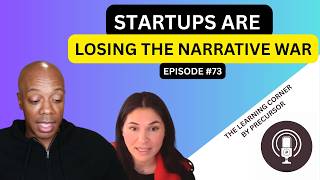
Charles Hudson and Mia Farnam argue startups have ceded narrative control to big tech by telling investor stories instead of customer ones. They cite AI companies like Anthropic versus OpenAI, discuss how LPs are becoming active partners rather than passive funders, and examine the return of small-tranche fundraising in a FOMO-driven market.
Chapters
I think there is this tension that you highlighted, which is I think startups are like, we very much want to put our customers front and center, but we also very much want to be in the prime position in that market map. And being on that market map requires being loud and attracting attention to us. And I think attracting attention to yourself is something you can do quickly. Highlighting your customers takes time, attention, and care. If you're like, I want the Just Add Water solution, the easiest thing to do is to try to attract attention to the company.
It's the week of March 30th. Welcome to the Learning Corner, a Precursor Ventures podcast. Welcome to the Learning Corner by Precursor Ventures. I'm Mia Farnam, and I'm joined by RGP and managing partner Charles Hudson, where we will be talking through the articles and Goodreads that caught our team's attention over the past week. Our first read of the week is a piece from Ashley Mayer from Coalition Ventures on her Substack titled "We Need Better Stories," a timely call to action aimed directly at startup founders. Ashley's core argument is that the tech industry's biggest players have essentially forfeited the narrative because their storytelling is built for investors, not people. And the headlines that reach mainstream audiences as a result range from depressing to doomsday. She makes the case that startups actually have 3 structural advantages right now. Their survival depends on building stories around customers, not cap tables. They can embrace uncertainty in ways that a trillion-dollar CEO simply cannot. And in a fragmented media landscape, they can find and own niche audiences that the hyperscalers also cannot. She also points out that the companies winning the last few years made a fundamental branding error by casting themselves as the hero of the story, when historically the best brands—think Apple, think Nike, made someone else the hero. Ashley closes with a thought that in a moment where optimism is actually the contrarian position, founders who are willing to tell a bigger, more honest story about who wins if they win have a genuine opening to break through. I do like that last piece, Ashley's question she poses to founders in search of these better stories. Quote, beyond your cap table, who wins if you win? When you construct your narrative with someone or something else as the hero, your own growth becomes much more powerful. Charles, how can founders accomplish this without coming across as disingenuous? I think if this is done right now, you likely as a founder also have to address the fact that there's growing skepticism about the ulterior motives and prioritization that exists as your core as an AI startup.
Yeah, I just think about a lot of the billboards I saw in San Francisco a year and a half ago. I was like, these are not comforting messages for normal human beings. Fire all the humans, never hire a human. Like, these are not really narrative arcs that are going to pull people in. They're just not. And I think at times it's not even just that tech talks to cap tables, but tech just talks to itself. You know, I think if you think what are the things that are really animating people about AI, it's job loss and human irrelevance. And I think there are some companies whose messages This is inevitable and we are going to usher this in as quickly as possible. That's not really a recipe for popularity. I think even you look at the messaging differences between Anthropic and OpenAI, and neither of those companies I would describe as like humble, but the messaging with Anthropic at least has the hint of restraint. Also, people aren't dumb. And I think sometimes I hear these messages like, there's nothing to fear, this is all gonna be fine. Creative destruction. Well, explain that to somebody who's like, 24-year-old college graduate kid works in a call center or in a customer support role, that person is on the front— like, you can't really gaslight that person because they're watching this happen to them in real time. And so I think there's actually like two issues. You know, Ashley is a very talented communications professional from her pre— and investor. But I think there's like two issues. One is the narrative, which is how do we talk about these changes and what they mean for people? And the other one is like, what's the reality? Which in some cases probably is hard to spin. And I've been spending a lot of time reading about these data center protests and these other ways that people are trying to find a way to have agency against AI because AI feels like this amorphous leviathan that's like happening to them. And I think people are hungry for some way, symbolic or real, to feel like they're doing something to maybe slow this stuff down. And I just don't think most of the messaging I see that comes from tech companies ever asks the question, what would a normal human being Who doesn't work in AI in a 94XXX zip code think of this message?
I do like Ashley's points throughout the piece that for these massive companies, they absolutely have to exist in the doomsday spiral, in the certainty that this is where it's headed because they are speaking directly to investors. They're trying to send out signal to the public markets ahead of a possible IPO before the year closes. That piece, I think, gets lost to obviously the everyday consumer. And then I think normal everyday startups see the behavior of the larger tech companies and think that they have to mirror the same stuff. So that's kind of how the pattern matching begins. Have you started to see founders try to make that narrative distinction when they come to pitch us? How does that actually look in real life? And is that a real advantage in attempting to walk this line to draw in attention for fundraising to then go off and build for the ideal customer? Like, can, can you just do two things basically that are separate?
I think the irony is Ashley's right. There are good stories. We have companies in our portfolio and others that I've met where AI is having a huge impact on a small business person who's able to now do a lot more than they could before through technology. There are lots of good examples of the way that this technology is making things better, and I don't think people have figured out how to tell those stories. And I also think one way people have sought to break through the noise is to make wild, ridiculous claims because those claims get attention on X and then they get debated. And so I think what Ashley said is also good advice for VCs because I've always felt like, hey, if we're going to promote our portfolio company's progress, the focus should be on them, not us. It shouldn't be like a 3-paragraph essay about we're so brilliant for having given this company money. That's about you, not about the company. And so I also think in general, for anybody who's trying to like lead a movement, shining a light on other people is a great way to do it. And so I think people would be well served to listen to what Ashley's saying, because I think it'd be harder if I'm like, there are actually no good narratives. There's tons of them. They're just not organized or not told well. And I would say that the protagonists of those stories are heroes. They are people who are like having their lives changed through technology. And that, you know, like the— for all the criticism of the drug companies, the drug companies understand that if you're going to sell a very expensive cancer drug, it sure does help to have cancer patients talking about how this drug saved their life.
Ashley mentioned Apple and Nike as these glowing brands from previous times that they made the hero other people, not themselves. Yeah. And then kind of calls upon startups to try and do something similar, which I agree with. Those companies are products companies, they're consumer heavy, and so you can touch, feel, and really relate to the products. Like, how do you bring that same energy if you're not a consumer startup? I mean, you mentioned a couple of companies that I know in our own portfolio that directly touch small businesses.
You know, I look at the granola bus and Billboard campaigns in San Francisco. I think they're trying to make Granola feel like a human superpower. For you, I think there are other products that I've used that are trying to help people be more responsive to the people that they care about or to send better messages. I think putting people at the hero at the center of the story, you can do it in B2B too. You know, I tell people like, what is a customer case study done right other than making one of your customers look like a rock star for using your product? And I think there is this tension that you highlighted, which is I think startups are like, we very much want to put our customers front and center, but we also very much want to be in the prime position in that market map that like whatever VC is building right now. And being on that market map requires being loud and attracting attention to us. And I think attracting attention to yourself is something you can do quickly. Highlighting your customers takes time, attention, and care. And again, if you're like, I want the just add water solution, the easiest thing to do is to try to like attract attention to the company.
I think a lot of this will happen also in like healthcare infrastructure too. If you talk to a lot of founders who are building there right now, a lot of them say the same message of, I'm not trying to remove specific people off the care continuum. I'm basically trying to make them refocus their energy on the things that require their energy and let them build care that's personalized. I want this to be almost invisible and just elevate everyone's outcomes. And I think that's an industry where it's spot on there. Well, our next piece is an essay from Pavel Prada at Murph Capital titled The Value-Add LP Era. And it makes a compelling argument that the value-add model that transformed venture capital 20 years ago is now playing out one layer up at the LP level. The core thesis is a familiar one where for decades capital was the scarce resource in venture, so GPs were largely passive checkwriters. But as capital got commoditized and the best founders started selecting their investors, GPs had to become genuinely useful to stay competitive. Pavel argues that that same dynamic is now unfolding for LPs because sub-$100 million emerging managers spend roughly 40% of their time on fundraising and IR alone. And an LP who can compress that timeline with introductions, narrative support, or operational help is giving a manager something more valuable than just a bigger check. He also makes the case that AI is flattening diligence across the board, and when everyone is processing the same data with the same tools, a durable edge becomes access and reputation, not information. The piece touches on the same conclusion venture reached 20 years ago. The allocators who win are the ones that GPs are calling before they're in market, not because they have better models, but because they've actually been helpful. His core parallel is that LPs these are roughly where VCs were in 2005, right when folks showcased other structures and offerings that made the passive checkwriter model irrelevant. Do you think that that analogy holds up, and do you think most LPs are actually equipped and structured to deliver quote unquote real value to their GPs' portfolios or GPs themselves?
It's interesting. I think there are some value-add LPs. I will say this, there is a dynamic we're getting into, particularly new hot competitive funds. Is hard. And last year was the first year I had some of our LPs call me and say, can you put in a good word with this GP? I was like, wow, you must really want to be in their fund. And of course I was happy to do it. I think the difference is LPs and GPs actually do live in different worlds. One of the things I'm consistently surprised by is how much more— one of my favorite LPs says, he's like, we don't hunt in packs the way you do. If you're a GP, you have other GPs that you like co-investing with, that you're on boards with, like There's a lot of this like interaction among GPs that's just part of our job. And if it isn't happening, we find ways to manufacture it and make it happen. And when I talk to my friends on the LP side, they're just, I'll meet two allocators that both work for foundations in the same city. And I'm like, well, you guys must hang out. They're like, no. How? They're like, we just don't. And so I think the nature of the work is different. Also, I think the things that are helpful as a GP, at least from my perspective, things that LPs can do are helpful. One, help you see things about your own pitch, story, or organization that are getting in the way of other LPs saying yes. That maybe you don't see in the same way that a good VC can look at a startup pitch deck and say, let me tell you why this deck isn't working. In the same way with VC, there are a few very high signal LPs where if you get them, it's a signal to other people that like, oh, those people see everything and have a good, have good judgment. If you have them, it's great. And I think good LPs really help you think through future of the firm, organize like big strategic decisions. They really can. But I read this post and I was like, I really want the world to be this way. I'm not in I'm not entirely sure that it will be that way on average for every GP. And I think who's going to benefit from this ironically is going to be just like in startups, the premium tier, most highly sought after managers are going to be able to ask harder questions of LPs. You know, one thing that would be hugely value-add is why don't you just agree to do my next 3 funds? Agree to do it today. That would be a huge value-add for the GP because now you know you've got this person locked in. And I don't think we will see the same level of frenzied competition by LPs to get into funds. In the same way that we've seen GPs compete to get into the hottest startup names.
That was a thought that I had that I wanted to push back on because the FOMO concept materializes different for LPs. Like, there are not as many cons in oversubscribing a fund that there are in oversubscribing a round. Like, there's just more fees. Like, for founders, there's dilution risk, there's all these other things that you can kind of basket in. So is that kind of where you're coming from? Like, the FOMO It's structurally different.
I think also like venture, you know, a big part of the reason we have this value add is Andreessen sort of came in and raised the expectations across the industry of like what you should get from your VC, but not to get all MBA, that's like a good challenger strategy. Like if everybody else isn't doing this and I'm a new brand, how do I differentiate myself? And candidly, when Screen Door got started, I think there were some ideas about there are some things we could do as an LP that weren't being done in the same way, predominantly, mostly like having more GP involvement in in the decision-making and review of prospective managers, and also trying to foster a community on the back end that I think are valuable and are different than what other LPs do. And so I do think that, like, there are some people I've met— I won't name them because they're, they're rather private— who are legitimately raising the bar of what GPs can expect from their LPs. Okay, I named one person. For me, like, the team at Virtus has raised my expectations bar for what a really supportive, helpful, good LP can do to help make your life better as a GP. In the same way, as a founder, not everything a GP or a board member does to help your life, it's a strategy thing. Sometimes it's just like taking you out to dinner and letting you vent. Sometimes it's helping you see something that you don't want to see, but like doing it in a way that gives you space. Like, it's not all these, we've closed a candidate for you, or we like retweeted your blog post. It's not always those things.
Anything else that you feel like from a GP perspective would genuinely add value from an LP that might be different from people?
I think there's one, at least in my observation, one fundamental difference. A really well-networked GP can always get you access to capital that you don't have. They will always be able to find someone in their network who doesn't know you who will invest in their company. I have found there are relatively few LPs who can make direct intros to other allocators who will then follow their lead again because their business isn't— each strategy is completely different. Yeah. And if you think about it, if you're an LP in a fund, if you're on the LPAC, maybe see the other big investors a couple times a year, and then you see them at the AGM. So maybe you get 2 or 3 touchpoints. On a company where I'm really involved, I'm talking to my co-investors at least once a month. It's just a different rhythm and a different intensity.
Well, our last piece of the week is a LinkedIn post from our friend Jenny Fielding at Everywhere Ventures. In the post, Jenny is making the case that we are firmly back in the era of what Paul Graham originally called high-resolution fundraising. The idea that instead of raising one large round all at once, founders raise capital in smaller tranches as they hit milestones and generate momentum. Momentum. We saw this approach explode during the pandemic when founders were stacking safes in real time and then watched it kind of fall out of fashion when the market corrected in 2022 and investors demanded a little bit more structure. But back in today's age, Jenny argues the pendulum has fully swung back, and in an AI-driven world where a two-person team can build a feature, sign a pilot, and increase their company's value in the time it takes a traditional VC to begin their standard diligence process, agile funding just might make more sense. She does flag that the approach comes with real risks, including messy cap tables and safe stacks and create almost like debt sandwiches down the road. But our bottom line is that if you have the data, the customers, and the velocity, you may not need to wait for a lead investor to give you permission to grow. I wanted to hear your perspective on this type of fundraising because I think we've seen it play out in so many different ways here. More specifically, are there specific tells that indicate that a founder or a company is a strong candidate to approach capital raising in that more agile manner than others?
Yes, I'm seeing this in full force again at YC. And in some cases I'm like, what's the point? Okay, you raised at 8, 2 weeks later you want to raise $100 grand at 10. You're saving 25 bps of dilution. Is it really that important to either one of us? Is it that important? The thing I found is that you end up with this very weird cap table with like 17 safes, all with different caps. And if you think it's hard for founders to keep track of a bunch of safes with a single cap, it's really hard. And then you get into this question of like, well, what matters if someone's like, well, we signed a pilot deal with this company. So I want to raise a higher valuation. I'm like, pilot, what is that? Like, what does that even mean? What are we even talking about? And so I think it comes down to, we are in a world, I think, with AI where there's a lot of FOMO. I think every time this happens, it's almost always because of FOMO. It's always investors feeling like, if I don't get into this thing, it's going to run away from me and I'm never going to catch it again. And so if I have to pay this escalating stair-step thing, I'll do it. And I think in the end, for most founders, I actually think it's the wrong idea. But I will not win that argument. And so I think I've seen some companies where like the step up is like quite meaningful. Like I've seen Y Combinator companies where the valuation doubles after demo day and like, I'm not entirely sure like why other than the only way this works is if you as the founder have the leverage to say, this is the price and you will either pay it or I won't include you. And most founders don't have that leverage. Some do. And I think the ones who do have it use it and they use it aggressively.
I mean, the whole premise of making it successful is based on the assumption that there will be continuous interest on your company and it will grow in a period of time that you can forecast. Because if you miss out on any part of that interest in the next like 4 to 5 months, your smaller raise that you did now falls apart and you have less swings at the bat to do so. So you almost, especially in today's age too, where in 2, 3 months, not just your features have this opportunity to change, but the competitive landscape shifts and changes as well. So that's why I feel like, ooh, this feels like agile funding in today's market is gonna look a lot different than in 2021. Oh yeah.
It feels me like gas prices. They go up a lot faster than they come down. And it's not like, oh, we missed our last two milestones, so we're going to give you a break. No, that doesn't happen. So I think this is always, to me, a sign of a heavily FOMO-induced market when people are willing to pay dramatically higher prices for the same asset when relatively little has changed. And so I think right now, again, people who are looking at investing in AI companies are more afraid of not getting in than they are of overpaying. And that's why you're getting some of this behavior that you're getting.
When founders give you a reason to like why they're raising a smaller round and one of the reasons being they want to protect on their dilution. How do you absorb that response? Because in my brain I'm like, of course, like, of course I know that that's something that you think of, but that certainly cannot be the driving reason as to why you're raising a smaller round. It just like doesn't work for me.
I think continuous fundraising is also a distraction. You're like constantly talking to people and you're constantly pitching and it breaks. No founder I know is like, oh, the peak operating efficiency of my company was at the middle of my fundraise. No one says that. So I think the one nice thing about these sort of more modular fundraisers where you raise all the money at once is they have a discrete beginning and end and you get to get back to work. And this continuous fundraising or high-resolution thing, you just end up fundraising longer, but at a lower intensity. I oftentimes ask people like, why is the thing that we're talking about a significant milestone or change? And the real risk with raising these little increments is that the next time you go out, whatever progress you've made will be insufficient to garner more interest. And right now you have people's time, attention, interest. So why not capitalize on and get the amount of money you need plus a cushion to get to the next milestone versus like trying to be like, oh, we'll raise $250K, then we're going to like close this customer and raise another $250K. And I'm like, okay, like you're introducing a lot of financing risk to the business by doing it this way. And I think in general, my view is like the savings in dilution to me are not oftentimes worth it relative to the financing risk you're introducing to the company.
We are all out of time today. Thank you, Charles, for hopping in. Thank you to our listeners for jumping in as well. Please like and subscribe and we will talk with you all next week. Thank you. Thank you. Bye.
More from Precursor


VCs Only Fund Trillion Dollar Ideas Now | Funded Teams With No Plan | How to Be Legible to Capital

AI Is Not Killing Software. It Is Picking New Winners | Nic Poulos, Euclid Ventures


When an Investor Passes But Gives You Advice 💡 #shorts #venturecapital #startup