3 Most Important Lessons from Matthew Perry's New Book-Friends, Lovers, and the Big Bad Thing
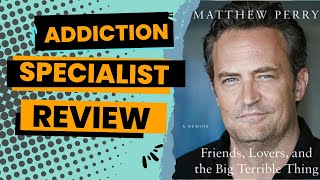
Amber Hollingsworth, a master addiction counselor, breaks down Matthew Perry's memoir and pulls three lessons: keep trying because recovery is always possible, money doesn't prevent addiction, and lasting sobriety needs purpose beyond yourself. Perry went through 65 detoxes and multiple rehabs before finding what worked.
Chapters
So just this week, Matthew Perry, or as you probably know him, Chandler Bean from Friends, released his brand new memoir, all about his journey with addiction recovery. And oh, my gosh, it is packed with stories that you would think, you think this is going to be the bottom. And this is going to be the bottom. This is going to be the bottom. And it just gets more and more and more and more difficult as you listen to this book. Now, what I would like to pull out for you, I'm not going to tell you everything that's in the book because you need to read it or like, I do listen to it for you to get that. But I'm going to pull out the most important addiction recovery lessons that you're going to find inside this book. Now, these things are not just sort of like said directly, but these are the lessons that I take from reading about Mr. Perry's journey with addiction recovery. For those of you who don't know me and you're new here, I'm Amber Hollingsworth. I am a master addiction counselor. I have been treating people and families struggling with an addiction for almost 20 years now. And so I've been doing this a long time. I have seen lots and lots of recovery journeys. I've helped lots of people and families find their way to sobriety. And so when I'm reading this or listening, I feel like I can't say reading because I feel like it's cheating. I listened, which is kind of cool because Matthew Perry narrates it. And I usually, I just always really like it when the author of a book narrates it because you just get that tone and inflection from it. And so you. I feel like it gives you a better, like, sense of how they meant it to sound because they're the one that wrote it. They know how minted sounds. So anyways, when I read this, the thing that I listen to it, I get out of it, are these really big lessons that I think a lot of people really don't understand about addiction recovery. So I'm going to go through those. I got three of them for you. I'm going to go through those first, and then I'm going to give you just some general addiction specialist thoughts that I had as I was listening to this book. Maybe if it. If Matthew were sitting in my house talking to me about this, these are the thoughts that would be going through my head as someone tells me these kind of things. So the first, most important lesson that I get from this book is if you're still alive you're still in the game. Now, what do I mean by that? A lot of times family members especially will say things to me like they've been to treatment 10 times, they're just never going to get it. Or, you know, my husband or daughter or son or whatever, they say that they just really love it and they're just never going to give it up. Does that mean, you know, I should just give up trying? Absolutely not. If you're still alive, you're still in the game and you're really gonna hear this. Listening to or reading, if you're reading this book, because he talks about going to detox 65 times, that's just detox. That doesn't even count. Rehab counseling that he said he's been in since he was like 3, 15 or something years old, you know, more than 20 years of counseling, all of those things. And you might think if you were Mr. Perry's family, you might be thinking, he's never going to get it. Like, what's it going to take for this guy to hit bottom, to have a wake up call and to do better? The thing of it is, is I think there were lots and lots and lots of bottoms. There were lots of wake up calls and there were lots of attempts at getting sober. And that's not uncommon. Now, 65 detoxes might be uncommon, but I would say the only reason why it's that uncommon is because most people don't have the money for 65 detoxes or their insurance won't pay for it 65 times. But is 65 attempts at getting sober. I would say that's not that uncommon, if you want to count it that way. Now there are a lot of things that people try to get sober before they really, really figure it out. Because there's just a lot of phases of it. There's coming to terms with the fact that I have a problem coming to terms with the fact that I have a problem severe enough that I need to quit completely. Like all of it. There's, there's at least 15 or 20 trials right in there with the bargaining of, can I back it down? Can I, you know, do this and not that, can I let go of this substance, but still use this substance. You know, I call it the bargaining phase. There's at least 20 trials in that until someone comes to terms with not only do I have problem and it's big and I have to let go of it completely. Even after you understand all of those things, you have to figure out what the heck it's going to take to do that. And that's a whole another process that you have to trial and error what works for you. Now I can tell from listening to his book that he's got a very strong 12 step influence. He just, he says a lot of things well in this interviews and in this book that are just 12 step kind of sayings, like your diseases and they're doing one arm push ups even when you're not using. That's like, that's a 12, a 12 step kind of thing. So you can feel that 12 step influence in there. But when you listen to the book, you can see that he's tried pretty much anything and everything. Really nice, expensive rehabs, hardcore bare bones rehabs, drugs rehabs in this country and that country, experimental things, you name it, he tried it until he found, until he found what worked for him. Now the second huge lesson that I really pulled from this book is is this having, or let me say it in reverse, you don't have to run out of money to get cleaner sober. Now why is that important? That's important because a lot of family members watch this YouTube channel and family members always think like, well, the key to getting them sober is to kick them out of your house and to quit giving them money and then they're going to hit bottom and then they're going to get better. And that's not really necessarily the case. You look at all of these very rich famous people who have tons and tons of money and their chances of getting sober are about the same as anybody else's. Okay? The pain of addiction is much, much bigger than the pain of not having money. And so that's why you can throw someone out. They can live on the street, you can, you know, they can be experienced, they can be in jail, they can lose their kids, they can experience like the biggest consequences ever. And it doesn't necessarily mean they're going to get clean and sober because the pain from the addiction is greater than the pain from not having money. There are a couple of times in the book, in the book where Mr. Perry talks about, I would give it all up like fine enough to do this. I would like, I know I give up this amount of money or that amount of money or whatever because it's just that horrible. So the key isn't necessarily trying to deprive someone in order for them to get sober. In fact, it's my belief that a better way to help someone get clean and sober is to not withdraw from them. You know, I'm not saying that you should just pour your money into someone that has an addiction. Okay? Because that's a bad investment for you. Okay, you shouldn't do that for you. But, but a lot of people think they can't do that because it's bad for the person. And it is, I guess, in some ways, but it's, it's really not the end all, be all like most people think it is. It's a very small factor in the whole, should I get sober or should I not get sober? That's a lot more based on like, does this drug or drugs, do they work for me anymore? And can my life be better without it? Those are the things that people have to come to terms with in order to make this decision to go on this recovery journey. And those can happen with or without money. Because you can have like Ms. Perry talks about $100 million in the bank. And it does not protect you from the pain of addiction. It is horrible. It's a terrible way to live. And I think that really comes through when you listen to this book. Like, no matter, you know, you can have all the pretty girlfriends he talks about. You can have all the money, you can have all the fame. You can have every toy gadget thing you would want. You can be charming and charismatic. None of that insulates from getting an addiction, having addiction, or from the difficulty and pain that it is going to cause. Now the third big lesson, and maybe the most important lesson that I get from the book, and I don't even think I've said the name of the book, the name of the book is Friends, Lovers and the Big Bad Thing, which I think is a great name for this book. The third lesson is the key to long lasting sobriety and recovery. One of the biggest pieces of this puzzle is you've got to find a sense of meaning and purpose in your life that is bigger than you. Now. What does that mean? It means I need something more important than my own comfort to make me stay clean and sober. Because there's a lot of times if it's just about me, I don't care. You know, you get to that point, it's just like, I don't care. I'm miserable. I just want. I saw him get drunk, high, whatever. You need something that's more important than that. And I, and I feel like I hear that especially when you hear the interviews where he goes around. He's done a lot of interviews, I'm sure, for publicity for the new book just came out this week. And he talks about, you know, why Am I still alive? Because the book opens in a really sort of dramatic scene which is basically his bowels explode. Related to addiction. He had opioid addiction. When you have, when you're using opiates, you don't go number two. And all that backing up can cause some severe problems. Anyways, I'll let you read the book to get all those gory details. But he, he nearly dies. He does die, actually. And so, and, and he talks about in the book, most people that go through what he goes. Went through don't make it like way most people, not like half people. Like he shouldn't be alive now. And so his question is, is why am I alive now? And I feel like that's a big thing that he's trying to accomplish with the book, is I'm trying to help somebody else. And maybe that's more important. Maybe that's more important than being famous, than making all this money. Can I use my fame and my sort of, you know, contacts, publicity and all that kind of stuff to help someone else? And that is very much immersed in the 12 step recovery culture as well. Those of you who don't really know the 12 steps, that's alcoholics Anonymous, Narcotics Anonymous, any of those anonymous groups, the last step is spreading the message of recovery. And I, I'm pretty sure that this is part of his 12th step work. He's spreading the message of recovery. It's kind of like being a recovery missionary, if you will, so that finding a stronger sense of meaning and purpose. Why is your life important? And why is it important for you to stay clean and sober? Need that to get you through the hard days. You need that to get you through the days where you're craving and life sucks or, you know, something really great happened and someone's offering you something, you need. That anchor, I guess, is what I would call it, to keep you solid. Not only that, that's a psychological part, but on a biological basis. It gives you the serotonin that you need, which is the chemical you get in your brain when you're proud of yourself and when you feel good about yourself. And that chemical actually helps to protect you and buffer you from addiction. It's like a protective layer in there. So it does a lot for you psychologically, spiritually and biologically. Having something in your life that you are working on and pursuing that's more important than you, more important than getting high is going to help you get through those tough days. And you can definitely feel that coming across in his interview, in his interviews, when he talks about the book. Now those are my biggest lessons that I pull from this book that I hope all of you sort of understand. But here are just my general thoughts as. As I was listening to the going to the book there. Here are my addiction counselor thoughts. Now all I have is what's in the book. You know, obviously I don't know, Mr. Perry, so everything I'm saying here is just speculation and just theory. Okay. But in the beginning of the book, right after he. He goes through that dramatic thing with the bowels and all that kind of stuff, he go. He kind of reverses back and he talks about childhood. And there was. There was a few pieces of childhood that really stuck out to me in this question of are these key important factors for maybe why he developed that addiction later in life? The first one is he talks about when he was born. He came out screaming and he screamed and he screamed and he cried and he screamed for days and weeks and months. I think because there was a problem. Like sometimes when you have a baby and it's colicky. Well, when that happens, that, as you could imagine, is extraordinarily stressful on the parents. If any of you watching, those of you watching, have you ever had a baby maybe that had colic or something else, and it just cried and cried and cried and cried. I mean, you're already hormonal, you're already stressed out. They can't talk to you. You don't know what's wrong, you're trying to fix it. I mean, the amount of stress and anxiety that produces is pretty tremendous. Have you ever been through that? If you have put me like a crying baby emoji or something in the comments. So I know you know what I'm talking about. Why is that important? Well, the way he talks about it in the book is that he thinks it's important because his parents took him to the doctor eventually and the doctor put him on a pretty high addictive kind of medication as an infant. And I would say, yeah, that's important because you're given an infant baby, you know, days old, a high powered medication could, you know, does that play into maybe why he developed an addiction? It could, but the thing that stands out to me most, and like I said, just theory here, is the part about the dynamic between him and his mother and his father as an infant because he's crying. And that really impairs the ability to bond with the baby. And the bonding and attachment that happens in your first few years of life are everything that. That's basically Creating your wiring for how you will form relationships and attachments for the entire rest of your life. So like I said, no one can really ever know for sure. But when I hear it, I hear an attachment issue happening. More than just the fact that they put them on. The doctor put him on the powerful drug. I think that might be piece of it. You know, it's like, oh, hey, here, give the drug and make the baby hush. And, you know, makes things better. There's that, but the difficulty and stress. And then on top of that, not only did that impact the ability to bond with the baby, but when he was very, very young, his parents split and his dad went to California. His mom stayed in Canada, and she had a big important job. She needed to work. She was a single mom, but she was busy lot. And so then again, I think you have this attachment break, the break from. With the dad. And then also you've got a mom who's doing the best she can. And I do think, you know, he talks about her. I think she's a good mom, she's a loving mom. But you're in a situation like that, and you have to do what you have to do. And I think there were just multiple attachment problems and issues that I can hear when he talks about his childhood experience. But like I said, that's all theory. There are a lot of theories out there about addiction being an attachment disorder. And I'm a pretty big fan of that. I've actually got a video. I'll link it up here at the end that explains that. Because when you're an infant and they hand you to the mom and your. Your limbic, which is your emotional brain lines up or sort of sinks is the right word. It syncs up with the limbic or emotional system of your primary caregiver, which is usually your. But as long as there's this primary other person, your emotional system lines up with theirs. Well, because there was something physically wrong with him. And he's crying and crying and crying. Her emotional limbic system, I'm sure, because she was like very young, 21 years old, I think, had. Have been going crazy. And so then there's this feedback loop between the baby and the mom, you know, the distress loop that's happening there. And then you mix in. Not just when his dad left, he didn't talk about a lot of what went into that, why his dad left, because he was too young to remember. But you could imagine whatever it was, wasn't good. So then there was this other stressful thing that was going on with his mom. So there was the crying initially, the deterioration of the marriage, and then there's this stressful thing on her part about having to work. Now, I am definitely not one to blame a parent. Most of that stuff, most of that was completely outside of her control. It wasn't neglectful. It wasn't I did something wrong necessarily. But there is an attachment thing going on there. If you listen to or you like any of Gabor Mate, who's like very sort of famous, well respected doctor and researcher in the field of addiction, you can definitely follow along with that line of thinking. And a lot of these traumatic things are things you don't even really remember. Now in the book, a very significant story, at least significant to Mr. Perry, as he remembers it, is this incident where he's put on an airplane, I think, at like 5 years old, by himself. His mom puts him on the airplane to go visit the dad, and he's what they call unaccompanied minor. And he talks about this quite a bit in the beginning of the book and the fear that he felt. And I feel like for him, that was a very pivotal sort of life changing moment that he makes a lot of. He connects a lot of dots to that. And I would say that, yeah, there probably are some dots to that, but the attachment piece is very significant in my mind as an addiction counselor, because throughout the book, over and over and over again, you hear this theme and he says it. He talks about how he has a constant need for attention and it's never enough. And I love that he's able to articulate that because it takes a lot of humility and willingness to be able to talk about those maybe not so great parts of yourself out loud, which is a huge important part of recovery, humility and willingness. But he talks about how he can never have enough attention. And on top of that, he also talks about how he's got this pattern with women where he. He's sort of. He's. He's. He's had an ability to get pretty girls for most of his life because even before he was, like, famous, he was pretty charming and funny. And he kind of learned to do that as like a coping or defense mechanism as a kid. But once he gets in a relationship, there's this fear of abandonment. And so he tends to push the other person away or break up with the other person before they can abandon or hurt him. So to me, the biggest themes that I hear throughout the book, as far as maybe why there's an addiction or what was fueling the addiction or like that underlying thing as people like to talk about it, are attachment things. You can hear it in the dating stories. You can hear it in the my sense of self, I can't get enough attention. I don't ever feel good enough about myself. And you can definitely hear it in those early childhood stories. Now, if you want to read the book or listen to the book, I've put the Amazon link in the description for you. Now, I listen to books because I'm pretty ADD plus I. So it's hard for me to just sit and read. Plus I usually listen while I'm like washing the dishes, driving, you know, on a walk out in the neighborhood or something like that. I love. And so I do that through audible and I think audible is actually a really good recovery tool because let's say you can't get to a meeting every day. Let's say you need some positive influence in your life. I think listening to books about recovery, podcasts about recovery, YouTube's about recovery, to me, that is putting that influence in your life. And that's a great way to supplement a good recovery program. So feel free to listen to it, read it, whatever is your thing. The link's in the description and I am going to link up for you the video on attachment so you can understand more about what I'm saying from like a theoretical perspective about his story and the addiction. But before we go, we are live here, so I would love to say hello, acknowledge you guys that are here with me live and you guys that are watching on replay and we'll see if we can take some questions or some comments. Has anybody got the book already? I mean, it just came out like November 1st. Like it's not even been out a full week yet, so. Hey, Teresa. Hey, Karen. Let's see. Sunny Patu says, I understand we're talking about Matthew Perry, but the news about Aaron Carter seems drug related. I feel silly admitting this honeypad, but I don't know who Aaron Carter is. And I'm assuming that's somebody I probably should know, but I don't. So I don't know what that news is, but I have to look into it. Hi, Daniel. Jess says thanks for bringing awareness about this book to everyone. I'm definitely going to listen after this. I mean, you can definitely just when you listen to the book, you can. It feels like Chandler Bing is reading it to you with that sort of sarcasm. And that biting humor is definitely in the book. If you have kids or little ones that'll around because I'm looking at your profile picture here, Jess, and I see little, cute, cute little baby in there. You want to listen to this with your headphones on because there's a lot of F words in there. Hey, Debbie. Let's see here. Debbie says, I was given up for adoption at birth and was an orphan for my first five months. And I've often wondered how much of that has to do with my addiction issues. I would say, Debbie, a heck of a lot. If you haven't seen my video on attachment, you definitely need to watch that next. And I'll say this and, and this is a, this is another whole video or series of videos worth. But I'll just say this little statement. A lot of people talk about addiction being genetic, but there really has never been an addiction gene found. It's just something people talk about it because it runs in families. And even when you do like adoption studies and this and that, which is kind of like, you know, if it runs in the family, if the kid is adopted, are they likely to have it? Or even twin studies, you know, identical twins, if one gets it, is the other one get gonna get it? But the newer science talks even about how the environmental influence before you're born impacts these kind of things. So because a lot of people say, well, I was adopted, but I was adopted at birth, like literally they picked me up from the hospital room and I had these parents. But connection and attachment starts to form even before you're born. Because those of you that have ever had a baby or have a child, you know, when that baby's in that belly, you're loving that baby. You're attached to that baby. Like you're already formed connections. You have certain brain chemicals going on because you are connected to that baby. And if you are pregnant and you're going to give a baby up for adoption, that is not a bad thing. Please don't, please don't think I'm thinking that that is a bad thing. It is not a bad thing. But you could imagine that that is a stressful situation. Any mother is in who's going to give a kid up for adoption. Like, it would just have to be. It's usually too young or life circumstances aren't good. And it's just a very stressful thing. So you don't have that bonding that's happening even during pregnancy. So it goes back far back because people think, well, we're talking about attachment from the moment of birth, but it's actually in those nine months. All of those things are Important. Hey, Stephen. Hey, Debbie. Let's see here. Teresa says, I personally adopted my daughter's child, and she was in his life, but his dad never wanted to be a part. So what you're saying is you adopted your, your granddaughter or your grandson and the mom was in, but the dad wasn't in the life. Okay, I see what you're saying. My own mom was adopted. She was not adopted at birth. She was adopted. I don't think she was walking yet, but I know that my mom and my grandmother told me stories about how when she got adopted, the back of her head was very, very flat because it had not rounded out. And my grandmothers and my mom, looking back, their thought about that was it was because she got left in a car seat a lot while her own mom was in the bars drinking. And all that resulted in her being adopted by my grandmother. And my, my mom also struggled with addiction on and off for her whole life, and it ultimately did kill her. Now, I don't know if that's completely related to being adopted. I know that my grandmother was a great mom. I know that my grandmother, she had a great dad. Her dad, her adoptive dad did die when she was fairly young, but teenagerish, not like super, super young. But you have, I don't, you know, you have that. All that attachment stuff that obviously did not happen correctly those first few months. Let's see here. Sunny Pie 2 says. I remember watching an interview with him and he would always compare himself with his better looking dad. Yeah, you can hear that in the book he talks about both his parents are like super good looking and super popular and they're just like, got this great energy in the room growing up, being told or thinking that you're not good enough. I don't think he was ever told he was not good enough. But, but I would imagine having two fabulous, very popular parents would be a little, a little intimidating. Right? Because you know your baby, you want to be the star of the show. You're the baby. Babies and little kids inherently think the world revolves around them. So I could imagine that. Donnie, you're telling me who Nick Caster is? It's the brother from the Backstreet Boys. Nick cast Nick Caster's brother from the Backstreet Boys. Okay, I'll have to look that up. Not sure about him. Nick Carter. Donnie. That's my husband, you guys. He knows everything about any, any kind of pop culture, any kind of movie reference, somebody's ever been in a commercial. He knows who it is. So let's see. Hey, just Cindy, thank you for your nice feedback there. Renee says, hey, Amber, I haven't gotten the book, but I did watch an interview and it was great. He mentioned the book. I definitely want to read or listen. See here. Here's a comment. How can we make a meth user realize and feel bad about them? Ranting with meth takes over their brain. I'm having a lot of thoughts about that question, and I'm trying to decide where to. Where to start. It's going to be. It's going to be hard because with meth, if the person. The person. People that are on meth, they can be fully psychotic, which can mean their thinking is completely not rational. And if that's the case, there's no sense in trying to reason with them like that. But I think what you're saying is, you know, he gets all high, this person. I say he, but it could be a she. They get all high and then they rant and rave and act crazy. And, you know, how do we get them to see how that's affecting everybody else? It's honestly probably not the most productive method at getting them to stop. A lot of times as family members, friends, and loved ones, we think if we can just get this person to see how terrible they're being and how terrible they're acting, they'll stop. But actually, all of that shame and guilt is more likely to make them keep using than to make them stop. But there are things you can do. There are ways you can influence people. I just don't know that that that's the most productive way. And I have several playlists on this, but I've got one playlist, a bunch of videos called how to Motivate Someone to Get Sober, and another one called how to Influence Someone to Get Sober. So I would check those out because you might just want to go through the back door and take another route. Jess says thanks for the tip about the earphones. Yeah. All right. I've seen that he's always tried to please everyone, almost trying to buy love, maybe feel his rejection. He does talk about that in the book quite a bit, Teresa, that this sort of need for attention. And he doesn't necessarily talk about trying to buy love a whole lot in there, but that could be part of it. But there's definitely a lot of talk about having to sort of feel like he has to entertain and be charming and be funny to win the attention and approval of other people. People. And that that's a big lesson he's learned through his recovery. All right, everybody, thank you. For those who are who have joined us live and those of you who are watching the replay, I'm going to put those links up for you for the attachment videos and I will also put the link up on how to influence someone to get sober, because we had a question about that. And the book link is in the description. All right, everybody, we are live every Thursday if at 1pm Eastern, if you want to join us. And we release a new video every Tuesday morning. Bye, everyone.
More from Amber




Addiction Turns “Me vs. Drinking” Into “Me vs. You” #addictionrecovery #addictionawareness

They Admit Everything Except the Addiction #addictionrecovery #addictionawareness

Stop Trying to Make Them Admit the Truth #addictionrecovery #addictionawareness


You Caught Them…So Why Are YOU on Trial? #addictionrecovery #addictionawareness


Sobriety and Recovery Are NOT the Same Thing #soberlife #sobercurious #sobrietyjourney

Addiction Changes More Than Just the Addicted Person #addictionrecovery #addictionawareness