The Hospitality Hub - IMI Podcast Ep.3: A conversation with Life House Co-founder Rami Zeidan
This is a transcript of a May 2024 IMI Switzerland podcast interview with Rami Zeidan (co‑founder of Lifehouse). Rami describes his career path (commercial real estate, Starwood Capital, Citadel/TPG), founding Lifehouse in 2017 and the company’s mission: make small and medium independent hotels easier to operate and more profitable by supplying repeatable operational processes and software. Lifehouse began as a consumer brand (7 branded hotels) while also building an operations/software business that has powered ~150 hotels; the software was sold standalone from 2022. Rami left the day‑to‑day role recently but remains a shareholder and plans to found a new, more software‑focused company. Key themes: scaling localized hotel brands by automating back‑office work, targeting independent hotels (not large flags), using apps to cultivate guest community, and prioritising ‘‘invisible’’ tech that removes friction for guests.
Chapters
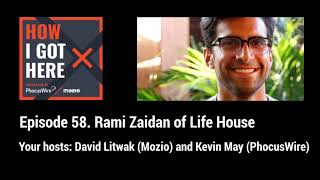
Hi everybody and welcome to the latest episode of the Hospitality Hub, a Imi Switzerland podcast. My name is Andrew and I work in the marketing team at the school. And today we're really excited to have a special guest join us on the pod. We're going to be speaking to Rami Zayden, who is the co founder of lifehouse. Lifehouse is a integrated hotel operator and software provider and they've been operating since 2017 and they bring a bit of a different approach to hotel chain market. So we're going to be speaking to Rami a little bit about his background, his early life, about the idea behind lifehouse and how they are aiming to change the hospitality business as we know it. Okay, so without further ado, let's, let's introduce Rami.
Yes, well, I'll try to keep this brief and obviously thanks for having me, but do interrupt me if I get carried away, but yes. In short, I started lifehouse after a collection of both personal and professional experiences. On the professional side, I graduated in the last recession, worked in commercial real estate in, you know, buying up distressed debt at the time and Deutsche bank, and got to be somewhat of an engineer. I was an engineer in college and was really interested in like, how do we quickly automate things because we needed to buy a bunch of, you know, finance a bunch of things really, really quickly. I wasn't a financial engineer at my core and we also did hotel financing so we got to make loans on amazing hotel projects that were being built and that kind of catalyzed my interest in something more creative. I'm a more creative person. I'm not really interested in being a financial engineer. It's a great skill to have and like, I wouldn't be anywhere in my career if I didn't have those, those muscles, so to speak, but was more creative and interested in an operational business, etc. So kind of piggybacked off of that experience to go to Starwood Capital where I was fortunate to have a unique role for the latter half of my time and got to learn the hotel business inside and out from a lot of smart people and some experienced people in that space. And one of which was Barry Stern, like, who's probably the smartest person in that space that I've ever met. In doing so, I got to learn a lot, learn a lot about the opportunities, learn about the problem, problems in the space and learn how the smart, experienced folks approached hotel, hotel management company and building brands. And I subsequently went to Citadel Group where we built some boutique brands and tpg Capital as well, where we did more financing of hotels and ultimately through all those experiences saw that hotels were, there were a lot of opportunities in hotels that could be solved and that is specifically in small and medium sized hotels. I saw that the technology that was being built was really focused on the larger hotel segment where you have big teams on property that can do marketing or do revenue management or do operations. And the small medium sized hotels don't have those resources and you know, usually they have a, say, less experienced general manager and no other salaried staff. So if you give them software, it needs to be super simple or frankly even automated. And so long story short, I had the entrepreneurial bug, my personal circumstance. I come from a Lebanese immigrant family and was interested in the ability for people to travel and experience new places because I think that brings a lot of depth and knowledge to people's perspective, to people's lives. There's a lot of literature on that. And so combining that kind of personal passion with my professional experience, it made sense to say, hey, let's go tackle some of these problems and essentially make small medium sized independent hotels more accessible to the, to the world and better operated for the hoteliers.
Yeah, I think obviously doing a little bit of research into your backstory, I think it's kind of interesting how obviously it's, it's very tech first approach, I think is one of the, one of the quotes I read. But I'm interested how you lifehouse seems to merge that with obviously also a very experience led approach. I think you said about your time at Sidle in one of your LinkedIn posts, it was telling stories through design and it was the kind of narrative that you enjoyed. So was there something in hospitality that kind of appealed to that? The creative side, the, the chance to tell stories through, through experience?
Yeah, I mean, so hotels are such a complicated or yeah. Complicated business because there's so many facets. There's a guest experience, there's an operation, there's a real estate asset. And so yes, in short, initially we started Lifehouse started as a, as a kind of consumer brand. I was really focused on the consumer, the B2C side of things. And you know, there's obviously been a lot of literature out there about consumers desiring more substantive, localized experiences where there's kind of a depth and soul and something quote unquote authentically local.
And.
Many times the best hotels, the best restaurants, I think restaurants are maybe a more easier analogy to understand are kind of MANPA local guys who. Guys or gals. What have you who kind of built something that's like their passion project and it just bleeds and oozes authenticity. And it hasn't been done at scale, naturally, because it's so reliant on people. And so what we tried to do with our consumer brand was how do we kind of build those localized stories and scale that. And the approach to that I think was quite interesting and worked quite well, which was one these unicorn creatives who build these projects, hotels or restaurants typically aren't good at everything. Or if they are, you know, there's, there's, there's such few successful stories. And so what we tried to do is say, okay, let's automate the back office, automate the complicated operational stuff and the revenue management, the finance, so we could hire these great creative brand ambassadors to be the life and soul of the project. And on top of that, on the design side, which is less relevant these days, was, you know, again, tell a localized story through the historical and cultural significance of the property. And so unlike traditional brands, which is like, you know, copy and paste a repeatable physical product, we said, let's copy and paste a repeatable process to designing a localized project. And so that's where, you know, we had hotels in Miami and Little Havana, which were like hyper infused with like the historical and cultural significance of a Little Havana, which I think was always my favorite one, but in Nantucket, it's a completely different aesthetic, it's a completely different storyline because we had the same repeatable process. And the last I'll say on that is essentially we put our design team into the lens of like a script writer or a storyteller and said, okay, if you were to build a story, how could we do that? And we essentially developed the protagonist character who would be the creator of this hotel, and then really did kind of like method acting to become like, who is this protagonist? And made every design decision and operational decision through that lens. And that works if you can then hire the right person to embody that thereafter. But it's still always a challenge, for sure.
Yeah, sounds quite theatrical. Now one thing I liked about your hotel's websites is they have kind of a map with some of the local cultural, kind of areas of interest or cultural sites of interest. And I thought that was a nice way of tying in what you were just saying about having that sense of locality and I guess history as well, in a way. What's kind of the timeline on this? So I think you have, is it about seven hotels currently in operation?
Yeah. So yeah, maybe the Quick background. So we started Lifehouse in 2017 and we started with just the consumer brand, the Lifehouse brand. I think that's probably the website you're referring to, but we actually turned into so. So our mission was to make small medium sized independent hotels easy to operate and more operationally profitable for the owners, basically helping small independent hotels have a leg to stand on against the brands. And we start with the consumer brand. I think we have seven hotels operational that are branded, but we had about 150 hotels that were powered by our software or operated by us in total. And so we actually, I wouldn't say pivoted, but it was always the roadmap to start operating hotels that weren't branded lifehouse by implementing our software and operational processes for the small medium sized hotels as well. And then as that software matured, we started selling that software in 2022 to hotels alone who didn't want to give control of the operations away, but just needed help with the revenue side of the equation. And so yeah, so, so the consumer brand is where we get all the attention. But actually we had a big kind of, of operation and software business as well.
Is that the way. I mean it's always kind of maybe tough to forecast the next 5, 10 years, but from what you're saying, do you see it going more down the. Yeah. Focusing on the software implementation in other kind of independent or private brands.
Well, so just when you have a consumer brand, no matter how good it is to scale, it is challenging because you have to get some, some real estate owner to spend money to either buy hotels and renovate them or renovate their existing hotels, which is just always a challenge and hard to grow at scale. I think like the best example is Oyo rooms like they were able to scale quickly because they financed the renovations. And you know, converting a hotel to an O room is like a very simple, less not so capital intensive project, but turning something into a completely new aesthetic and brand is quite an expensive timeline, time, timely process. So I think it's just hard to scale a consumer brand in hotels in any reasonable pace. And I think you see companies like, you know, in the short term rental space that have also done the same and that capital intensive approach usually doesn't pan out. So it's challenging. I think, you know, the established players are able to do it because they've built these really big loyalty programs and they can finance with key money, if, if that's a familiar term and, and convince real estate owners more aggressively and then they have massive teams around the world to do it. So I think it's hard to scale a consumer brand. So to answer your question, yes, I think software just ends up being an easier thing to scale than that. And so our approach was let's build software that makes all the complicated things easier so that the hoteliers, real estate owners, hotel owners, hotel brands, et cetera, can just focus on the things they're good at, which is the brand stuff. And with independent hotels, there's so many independent hotels that we kind of wanted to say, hey, every independent hotel, do your thing, do your special thing and we'll help you with all the back office stuff.
Don't worry about the. Yeah, don't worry about the background stuff. Yeah. So do you, I know you have a big focus on independent hotels. Do you kind of work exclusively with them?
So, yeah, I should clarify. I left Lifehouse a few months ago to start a new company. And so at lifehouse, I will say that it was independent. Small independent hotels are unique for two reasons. One, the big flags require you to use a number of their systems and that is a bottleneck to innovation, but into selling new software. And two, big, like I said earlier, big hotels have teams of people on property and small hotels don't. And so whatever software you build is going to be pretty different depending on who you're selling it to and who your customer and user is. So that in that spirit, yes, we essentially sold exclusively to small and medium sized independent hotels, but there's no reason why some of that couldn't work for the larger hotels if they were willing to adopt a new way of doing things, which is a challenging solution. Up.
It doesn't happen overnight. I guess that's.
It doesn't happen overnight. Exactly.
That's a long, a longer process. Yeah. But I, Yeah, I suppose what I was thinking from, I know obviously looking at the hospitality industry a bit more generally and where it's. Where it's gone over the last 10 years and where it might be heading. I guess a lot of the hotels that you've implemented in your software in Airbnb and companies of the like must have been a big, A big threat to them at one point. Do you see your software as maybe kind of leveling the playing field a little bit in that regard about giving these independents a chance to. Yeah. Kind of be a bit more, A bit more competitive against the, the new threats in the market?
Yes, yes and no. I think leveling the playing field was core to our DNA is how, how do we help the small, medium sized, special independence Hotels have a better chance, let's say, and a competitive demand for travel demand. So one of our investors was actually Kayak, which is owned by booking.com so one of the problems that they saw was, and I don't want to speak on their behalf, but one of the problems that I think they've been pretty public about sharing is small, medium sized independent hotels struggle with properly using the tools that exist, whether it be the OTAs, the promotions, the merchandising of their hotel online on digital channels, whether it be an ota, Google or otherwise. And so that's certainly one low hanging fruit way to improve their visibility and the demand. Essentially the problem was consumers want these localized experiences but have a difficulty finding them. And once they find them, they have difficulty trusting them because they're still making an E commerce and online purchasing decision. And so small things like a better trustworthy website and a booking engine that doesn't look like it's going to scam my credit card. And leveling the playing field with the basic scalable technology problems was certainly a component of it as it relates to Airbnb in particular. We weren't tremendously fearful of Airbnb and our hotel owners in most markets weren't either. Only because I think the evolution of Airbnb was, it rose really quickly and regulation lags innovation. So regulation started coming in and all the markets where it was really harming the hotel business and started to course. Correct. It's also quite a different experience, I think, in many respects. But of course it's an incremental supply to the market. And so it really was more how do we level the playing field against the brands versus the Airbnb of the world, if that makes sense.
Yeah, no, absolutely. And I suppose having the, your own hotels, that was a good shop window for when you're, when you're approaching these guys to say, hey, look what we can do. This is the proof of concept.
That's exactly right. It was a big trust signal to hoteliers to say, this is my, this is my pride project, my passion project. I don't want to just hand it over to a tech company or an operator. But when they say, hey, we built an award winning brand, we deeply care about the traveler and we know how to care for them. You know, it helps them kind of reduce their, let's say, trust barriers so they could get comfortable with the idea.
No, absolutely. Okay, maybe moving a little bit away from the business side of it, coming back to obviously we're, we're a hospital hospitality school here. In Switzerland, we have a lot of young students who are looking to enter this market. What for you on a personal level, what makes for a great hospitality experience? I guess you do quite a lot of traveling around the States, around the world. What, what makes something stand out, be it hotel, be it the, the additional experiences they offer.
For me, I think every person has their own preferences. For me, I'm usually a transient traveler who's looking for a. Also I'm an entrepreneur, so I work all the time. And so I'm looking for the thing that I'm maybe part of the literature, you know, part of the bag and that I want something that feels like it has some soul, local authenticity, et cetera. Like I'll never stay at a flagged hotel. And so something with intentional design and food and beverage and then the kind of standard staples are like super easy check in experience. And I really don't like interacting with hotel staff. I just like to get, get into my room, make sure the wi fi is good and go work in the lobby or work in a coffee shop or you know, kind of engage more transiently with, with the, with the community. And, and so it's, it's kind of all of those things. We always thought like the text should be invisible to, to the people. So we were never about, you know, tech, guest facing tech. It's like just use tech to make everything efficient so people can kind of get into their, the experience they're looking for. And so for me, you know, charming, charming boutique hotels is my language. But you know, as long as there's good wi fi and I also like shower pressure matters and you know, bath amenities. I love, I hate when there's like an amazing hotel and then they, they give you cheap shampoo and a cheap hair dryer or something like that.
I'm absolutely with you on the shower pressure. Having stayed in some pretty old hotels in central Europe, that can be a real issue. So yeah, here's for higher pressures.
That's a very first world privileged problem. So I do apologize if that sounds tone deaf in light of things going on in the world, but you asked my, my preferences, so that's it.
No, I think this, we, we all have an ideal that we look for and it's, that's all good. And one other thing I did, again, this is maybe reading back to when, when you guys were first starting out with the Lifehouse. I did notice that you, you were kind of drawing on maybe the, the social possibilities of staying, of traveling, staying in hotels. And I think you were Talking about how you maybe bring in the text so that if someone wanted to, if you're traveling, obviously a lot of the time, I think the example used, someone maybe goes to the bar, is quite keen on maybe chatting or. Yeah. Killing a bit of time with, with some other people. But that can be a little, or certainly used to be a little bit awkward. So do you see that as maybe, maybe one way that the industry might evolve, kind of almost integrating kind of meetup type experiences or social. Social interaction type apps with the, with the experience of being traveler in transit?
Yeah. Tech can be an enabler of an efficiency, whether it be social or, you know, more productive. And so, yes, at lifehouse, we had actually built a social network inside of our app so that guests could see who else is traveling. I think hotels have a unique, a unique ability to cultivate community because people are traveling to the same place, maybe for a different reason, and they've selected the same hotel, which means they have some similar preferences and they could be coming from completely different areas. And so they kind of have unique ways of kind of cultivating a diverse community as well. And so. But there are these barriers for those people to meet. You know, you walk into a hotel and you go straight to your room, and so you may see somebody, you may not have the social courage to interact with them. There's obviously been a prevalence, a growth of online means of meeting people. So it seemed wise to cultivate community through an app when people are transiently traveling and don't have that much time. I obviously believe in social courage and that's like a productive thing for people to have as the world evolves. But it is what it is and sometimes there's just not time to do it. One of the problems though, with these apps, the app that we built is if you're in small hotels and there's only 25 rooms or 35 rooms, and only 10% of the people are using it and you're only 80% occupied. There's just not that many people using the application. And so I think it's a better suited for, for market day where you have a bunch of hotels. So in Miami, for example, we have close to 100 rooms in other markets as well, where there's a lot more people that can use the app at once. And I'm surprised no one else has done it. We built it seven years ago and it's just candidly, it would have been better for larger hotels and we didn't, not in that space. So I'm hoping someone you know, does it for larger hotels? I think that would be wise and I would use it as a guest as well.
Someone takes that on at some point.
Yes.
Yeah. And yeah, again, thinking about, I don't know, I don't know what your, what your next steps are. Poster post lifehouse. But thinking more generally about the hotel industry, what, given your insights, given what you've seen in the last few years, what would you predict might be the next kind of big, big thing to shake up the industry? What's a hotel experience of 20, 20, 30 going to look like if you could make one prediction here today? Maybe. Oh man, sorry, tough question. I didn't prep you for this one. So I feel, I feel a bit guilty just chucking it out there.
I'll give a, I'll give a, a bad answer, but a good answer maybe for some of your entrepreneurs, entrepreneurial students. I think there's a lot of problems in hotels that are not just going to get, that are not going to get solved by the incumbents. And so I think that the big brands are really, you know, really, really focused on, you know, taking what they've got and maximizing with their loyalty program. I think the OTAs, if they use Gen AI, hate, hate the buzzwords, of course, but it seems that they're using it for like making travel searching easier, which is a big, big problem. Still, I think I don't know how long it takes you to select a hotel when you're traveling, but for me, maybe I'm too picky, but it takes a while still, especially to a new market. So I think the lifehouse mission of making small medium sized hotels just like super easy to operate. We always used to say how can we make a small hotel as easy to operate as hosting an Airbnb? And I think we're still a ways away from that. So my hope is that the lifehouse mission and more, more folks will kind of pursue that because I think there's a lot of demand from the small medium sized hotels. They seem pretty overwhelmed still with all the tools that are being, that are available to them and the shortage of time they have. And ultimately they just want to make sure their guests is taken care of and that they can make ends meet financially and that they're proud of the brand they created. So they have great digital presence as well. And so long story short is I think I'm hopeful that that movement continues and that the small medium sized hotels can continue to be on a level playing field with the big boys.
Yeah, no, I think that's a fair answer. And I think what you say is true. We all talk about AI and the difference it's going to make in sorts of different markets, but there's so much, there's so much new information out there and there's so many potential tools that you can, you can look to that. It actually I think it needs people who have that kind of deeper understanding to make sense of that. And at the same side, from the hospitality side of it, I think we say to our students, you will always need those people whose primary focus is on the, on the hospitality experience itself. And it's, I think what you, what you guys seem to do at lifehouse is maybe bring those two worlds together quite effectively. Yeah. And I think that can, that could definitely be a bit of an inspiration for some of our, some of our young students here. And yeah, final question, I don't know if you're able to say, but what's, what's your future looking like post. Are you, are you still involved in Lifehouse or what's, what's the next, the next project?
Yeah, so I'm still a big shareholder in Lifehouse and cheering from the sidelines going forward. I think, you know, as an entrepreneur, I think I listened to your last guest. You learn a lot as a first time entrepreneur and as well established of education and professional experiences that I had prior to starting Lifehouse, you know, I didn't know very much and so I want to certainly apply all the painful learnings I had at lifehouse into a new company that likely will be more software, less operations. If I'm candid. Not because the operations side isn't interesting, it's easier to scale when there's a software and with I think the tools that are available today. I hate to again say the buzzword of AI. There are ways to build software faster and there are ways to help customers and users do more faster. Before you raise a lot of money to build software and now you can raise less and do way more. And so I am still passionate about the small, medium sized hotel problems that exist. But I'm working on a couple tinkering with a few ideas in the hotel space as well as in the educational tech space, but making sure that whatever journey I embark on, I'm not doing it without robust reasons to because I'm, you know, it's a 10 year commitment basically no matter what you do. So I want to make sure I do something that I'm passionate about and that will endure for 10 years.
I think that's always. Yeah Harking back to our last guest, I think one of the, one of the common ones was do something you love, do something you're passionate about. Everything else, you'll have success, you'll have failure, but as long as that's true, then you'll, you'll have a lot of fun on the journey.
Exactly. Exactly. Right. And I think I would. Yeah, maybe a lesson for some folks is entrepreneurialism isn't for everyone and it's not what it's cracked out to be. I think Jensen Wong, the CEO and founder of Nvidia, recently said if, you know, he's like a bajillionaire now. He recently said something like, if I were to be asked to do it again, I wouldn't. Even though he's been like wildly successful because it's like way too painful and hard. But yeah, it's a great experience for those that have the entrepreneurial bug for sure.
That's great. Rami. Thank you so much for your time. We will certainly watch your next few years with interest and best of luck with all the projects that you're currently working on. Thanks for your time on the podcast. Enjoy, enjoy your surfing and we'll, we'll keep an eye on your story for sure.
Thanks so much. Pleasure.
A big thank you to Rami there for what I'm sure you'll agree was a really, really fascinating insight into how technology is making a huge difference in hospitality operations. And so, yeah, that was the latest edition of the IMI Insights podcast. We are looking forward to bringing a new episode to your feeds very soon. And in the meantime, and be sure to check out the IMI website and yeah, all our social media to see the latest events and activities at the school. Thanks for listening and catch you next time.