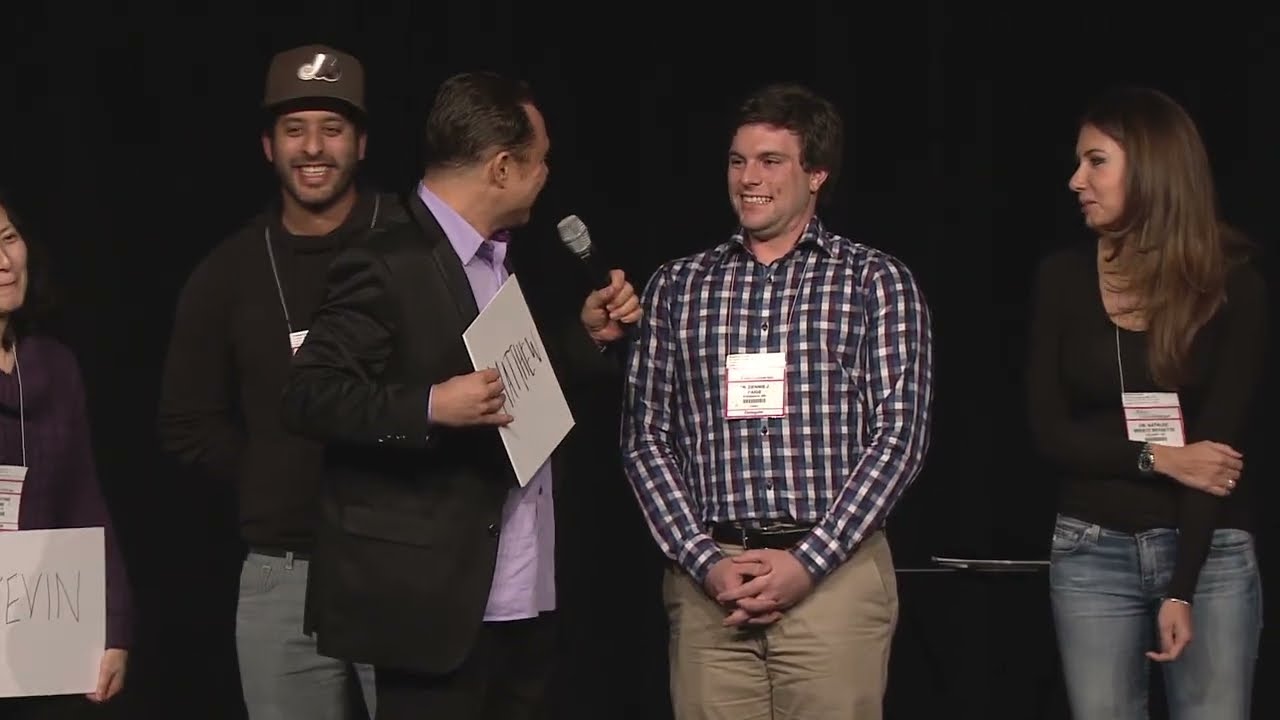
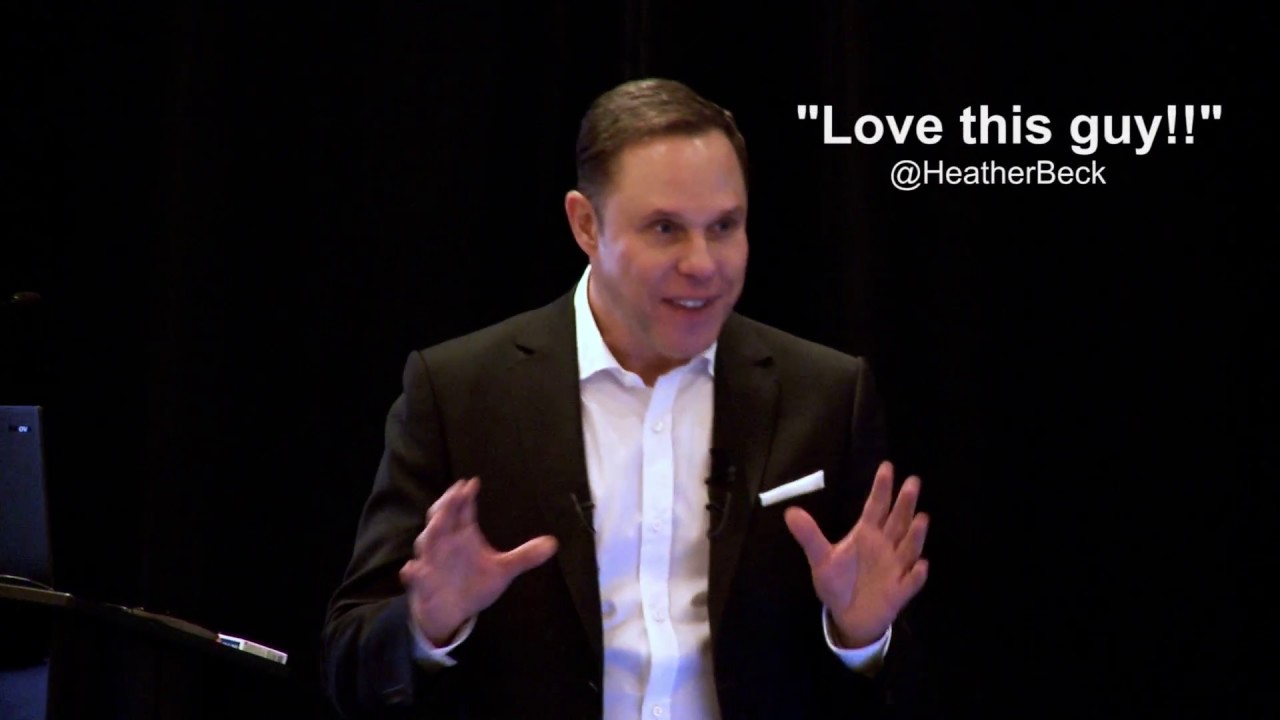
In this live keynote, Randy Charach argues that businesses should move beyond traditional customer service to a truly client‑centric model that delivers a memorable experience by consistently exceeding expectations and surprising clients. He introduces the SHIP acronym—Stories, Help, Integrity, Passion—as a practical framework for shaping brand voice and client interactions. Throughout the talk, Charach conducts a series of interactive mind‑reading and intuition demonstrations, reading audience members’ non‑verbal cues, guessing words, numbers, and personal details to illustrate how keen observation and gut feeling can uncover hidden client insights. The presentation blends persuasive storytelling, audience participation, and actionable advice, emphasizing that a focus on every touchpoint, authenticity, and surprise creates more profit, fun, and impact.
Please give a big top of the table welcome to the stage, Randy Charach.
Our role is not to sell a product or service, it's to provide an experience, to provide a memorable experience. And the way you do that is by exceeding people's expectations. And how you do that is by surprising them. It's a red card, yes?
I think yes.
Yes, good. King of hearts. Yes, it is. There we go, thank you. All right, let's give her a big round of applause. Thanks for coming up here. Okay. And here's the big difference between focusing on customer service and being client-centric. Customer service is focusing on just one slice of that client experience. To be client-centric, you need to be looking at every single touchpoint and making sure that that client service, that relationship, that follow-up, your brand, your advertising, your language, everybody on your team are on the same page delivering the same message and putting the client first and paying attention to those smaller details. The long-awaited acronym: SHIP. That's SHIP with a P. Yeah, S-H-I-P. Stories, help, integrity, and passion. This is how you develop your brand voice. This is the formula for you to create your story. So by doing all this, you actually end up making more money, having more fun, and helping more people. Nice and loud, what is the word that you're thinking about of 48,000 words?
Snowflakes.
Thank you. Thank you.
Thank you.
The way to know though is to look at the whole picture, to really get the demeanor of the person, just look for other clues and nonverbal cues as you're going along and just see how people People shift and change, and you'll be able to tell. Trust your intuition, your gut, when you're doing this.
Hmm. All right, take care, Randy. Enjoy your time in Hawaii. Good to see you.
All right, thanks. Thanks, Randy. He just gave me a nonverbal cue. Not that he knows which everybody wrote, but he knows that he didn't write any of those, and he just, he just looked at me like this. I mean, he wasn't trying to help me. It was completely subconscious, which lets me know that none of those are yours. If you are holding on to the name of either your first kiss or your first pet, I'd like you to hand me your card and go back to your seat with this big round of applause. Amazing! Thank you. Thank you.
And sleep.
That's right. Good. And in a moment, you're not going to remember the number 6. In fact, the number 6 will have never existed for you.
1, 2, 3, 4. 5, 7, 8, 9, 10, 11.
And the suggestion that I'll give you right now is that you can consciously decide at any point in the future to put that conscious mind aside and allow your subconscious mind to achieve anything you want. You simply need to take a deep breath in and relax and remember this experience we had tonight.