The journey of a software engineer from opera singing to coding

Zainan Suzuki trained as an opera singer at McGill before a car crash and COVID pushed him toward coding. He completed Lighthouse Labs bootcamp in three months, then moved into web development and Web3 work at ECAD Labs building Tezos tooling.
Chapters
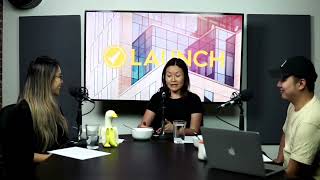
Welcome, everyone back to another episode of Bits and Pipes. We are now on season two and episode three. Today we have an interesting guest here named Zanen Suzuki joining us. But before we get into the formal introductions, of course, just like all of our episodes, we have a new dish that we wanted to introduce to the audience as a representation of Vancouver city and how much diversity that we have here. So today we have Lebanese food. So this is typically eaten during breakfast times, but it is served all day. So the two dishes that we have here, they're called. One is called zaatar manushe, and then the other one is lambi ah jeen. I may be butchering these names, so apologies in advance. Advance. But just to get a little bit into what these dishes are. So zaatar is actually means, like, a mixture of, like, culinary herbs, spices, and in this case, it is kind of ground up into a paste and spread over a flatbread. So it is a vegetarian dish that we have here. And as you can see inside, there's, like, some sesame seeds as well as herbs that are kind of ground into it. The other version that we have here is, as I mentioned, lambia hin. So this is a minced beef flavored flatbread. So as you can see here, it has some beef as well as a bit of spices as well. So we're gonna give it a try and share our thoughts on the dishes. And then, yeah, this is meant to.
Be, like, a warm dish, cold dish.
It's supposed to be warm. So it did get a little bit cold during the delivery. But yeah, usually the bread is serv. Like, freshly baked out of the oven and they serve it hot. Sometimes they do have options to have, like, cheese, tomatoes, onions as well, but typically it's just served plain with the zaatar spices.
Cool. Zanen, have you ever tried this before?
I think I have. I just could not place it on where and when.
Maybe in Lebanon.
Probably not Lebanon, since I've never been, but fair enough. I went to school with someone from Lebanon, so he might have shared some with me once time.
Okay, sweet. Well, give it a shot. See how it goes.
Which one are we starting with?
I'm gonna try the meat one if.
You guys can't tell the difference.
All right.
Oh, there's some crunch in there.
Good asmr.
There's no crunch in mine. Why is it happening? Did you do one of those things where you give me something different again?
No, I. Oh, but, you know, we could do that. We could just make a roux. Oh, that's really Good.
I think I got all pita, so.
No, it's really good.
Yeah, it's, like, super savory. And there's, like, a little bit of, like. I don't know, is that cinnamon or something? I don't know what I'm tasting. It's like a little bit of sweetness in there too.
Are we eating the same ones? Oh, I think we need the other one.
Yes. I guess we'll try the other one now too. So we're gonna try the one that's the. Just the plain spice mixture spread.
Yeah.
Because there's.
I'd say this one's, like, more muted. I haven't had the other one, but I'm assuming since you guys were all like, oh, it's full flavor. And I'm like, this one's kind of not. But there is, like, kind of, like, a little bit of almost sour taste to it. Just a little bit. Not. Not too much.
Mm.
Confused there for a second.
The. The other one's, like, citrusy a bit. Yeah, it's really good. I like that.
So this is meant for breakfast. Okay, I didn't see that.
Yeah. Like, this is usually for breakfast, and obviously we kind of cut down the portion size of it, but it's quite large. It's about half a pizza diameter, I would say, when it's folded over. So pretty hearty breakfast.
I can see you filling up on this, for sure. Try the other one. Which one do you like more?
They're both good for different reasons. Like, I feel like the meat one's so much more filling, whereas the other one is just very refreshing. Yeah, it's almost got, like, a tea taste in it. Yeah.
Yeah.
I kind of almost want to grab, like, the second one, because it's like breakfast for me.
It's grabbing.
It's not like a sit down and enjoy my flatbread kind of experience.
Yeah, it looks kind of like on the go. Yeah.
It's already folded in half, but you then roll it up and you just take a bite. Yeah.
And I mean, you can. Honestly, we have. So we got this from a place called Zatar Zay. So I think this is the one that's on Granville Street. I remember passing by it, but it's close to One of the SkyTrain stations in Vancouver downtown.
Okay.
Yeah. Really good prices, I think, are pretty decent as well. Like, definitely more on the affordable side considering Vancouver food prices. So definitely check it out if anyone's interested in trying this dish.
Awesome. Yeah, I've never had that before. Thanks.
Yeah, of course. All right. So as you mentioned, we have a guest here today, Zainan Suzuki. So, Zainan, how about you introduce yourself, let us know a little about yourself, what you're doing right now and yeah, we'll start from there.
Yeah. So, yeah, my name is Zainan Suzuki. I'm currently a software developer at ECAD Labs. However, software was not the place that I started more or less. I was always interested in problem solving, but I like for schooling wise, I headed down the path of music and more in particular I opera performance. So I did my undergrad at McGill in vocal performance, where it wasn't fully opera based is more like art songs. So like Schubert and stuff like that. And yeah, I really enjoyed it. But once I finished my undergrad, I still thought that I could get better at singing because only screaming pretty goes so far with not very being very pretty at it. So I decided to do a master's as well, where I stayed at McGill. Like, I applied to Manhattan School of Music, which I got into as well, but I didn't want to go like $150,000 in debt.
Wow.
For a music degree.
So I'm like, good call.
I'm okay, I'm okay. So I, yeah, I stayed at McGill, I did my undergrad, I did I think five operas at the school. So that's when I fully dove into like the opera world. And then since then, I like, after I finished school, I did an opera with a company here and then a couple solo performances. And then when, when Covid hit, I was like, it was, it was already a bit of a change. But I also, I had a pretty decent car crash as well, which stopped me from singing for a while. And then when I was like ready to get back into the world, Covid was out and about. So I'm like, okay, so maybe it's time to learn a new skill. So I went to Lighthouse Labs and did a three month boot camp. And then eventually, like, I think it was six months after the bootcamp, I got hired with a company in Vancouver and worked as a web dev developer. And then nine months after that, I got hired at ECAD Labs where I started working with Web3 and Tezos tooling software.
Wow, that was a lot.
I don't know where to begin. I have so many questions and so many random tidbits of jokes. But okay, so what? Maybe let's dive a little bit deeper because it's not every day we get an opera singer.
Yeah.
On here. Like, what kind of made you want to go into music in the first place.
I, like, I, I always grew up with music. Like, I started. I started playing piano when I was, I think, three and a half. Okay. So I started with piano with my, with my family. And then when I got into about grade eight high school, I switched into voice and then I studied voice mainly like pop and musical theater. But when I got to grade 12, I was like, okay, if I want to actually go for studying somewhere, I need to actually do classical because, yeah, musical theater is. It's, it's like, it's good training, but it's not all round training. Whereas, like, I'm still able to do musical theater, but I can also do opera, where it's harder to go and do musical theater and then try and do opera. So it's just more overall training. And I, like, my, my grandmother was an opera singer as well, so I had a lot of music influence growing up, so I definitely stuck with it.
And, and so, I mean, like, Gene and I both have. I'm using air quotes arts degrees, right? Hers is in English, mine is in communication. Neither of which are the art that we're talking about now.
Right.
And like, I think, I don't, I don't want to speak for you, but definitely when I was going through school, it always kind of felt impractical, as in, like the skills transferred wasn't directly to obviously what we're doing now. How, how was your kind of experience through. Through university and I guess post postgrad with your master's, like, was it much more practical? Because they're very singularly focused on, on building out your voice. Like, is your high school voice that much worse than your, like, master's voice?
I would say probably miles apart, like, unrecognizable changes. Like, there's still, there's always still like a resemblance of it, but just in terms of accuracy, quality and confidence is just so different. Which, yeah, which really just took time and especially with growing up, like, puberty is not very kind to the voice.
So shout out to Justin Bieber.
Yeah, so it was navigating the changes as well as, like, puberty is one point, but the voice changes for males up until like, what, 27 to 29. So that's where, like, the voice actually becomes more mature. And it's, it's a constantly changing thing. It's not like an instrument where it's gonna stay the same over time. It may change moderately, but it's gonna be a gradual change that will always kind of be in the same direction. Whereas voice you could have, like, you could Have a cold and then it's just, it's a fully different instrument that you're failing.
Yeah.
And so I know you mentioned like, you know, going to Lighthouse labs for three months to do their boot camp. So like, would you say if you were to compare, like, what was your day to day like classes look like when you were at McGill studying like, you know, music, Like. I'm just curious because I've never. You're actually the first I know that actually went to school for music. So like what was your like day to day schedule look like?
For my undergrad classes were like. It was, it was my. Okay, my undergrad was harder than my master's by schooling wise, which is more uncommon than I would say other degrees. But in my undergrad we had a pretty high course load of what courses we needed to do. In our four years at McGill, I think we were the second highest credit amount that we needed to graduate and we would have more classes that are more like one or two credits. So there were smaller credit courses that would take less time but still had like whatever prep amount of time that you would need and studying. And like, because they were kind of isolated ones where we had like ear training where we would be given a piece of music and be like, okay, here's your note, sing it. Or here's this rhythm bars like this set of rhythm and just tap it out. And that's, that's kind of what we had to do. Whereas other ones we would have like history. For my degree I had to do Italian, French and German for a year of each, as well as dictate diction courses to be able to like speak and sing properly in that language without insulting everyone. But yeah, so we, we had I like, in my undergrad, my first year, I think I had 21 credits in my first semester, which the limit is 18, the minimum is 12 for a full time student. So it was a lot of credits at the beginning and then it tapered off like your third and fourth year. But my, under my master's it was like maybe, maybe three classes a week. But the only thing is the most time consuming parts are the rehearsals and like the practice times that we'd have to do. Because we're not just there to like be able to like remember the history of music or write down the harmony of something and analyze music. It was the performance that a lot of us were there for. So regardless of all the stuff, we had to learn and be able to prove that we had learned it. We had to prove that we were progressing with our instrument.
How would you compare like that workload then the intensity compared to Lighthouse? Because I have heard, I have a couple friends that went through boot camps and they always comment that. There was always this comment that was like, it's very, very intense. Not everyone's set out for it and the school environment is very different from what they were used to if they went through college or post secondary at university. It's a very. They said it's a very different pacing. How would you kind of compare it and what were your thoughts on it?
For my experience with bootcamp, I thought it was really good. Like, I didn't really have any bad interactions or experiences with the bootcamp. I also did mine fully remote, which I believe Lighthouse Labs is remaining like it's going to keep remote as it. So like I found that the remote really changed my experience in comparison to like a friend of mine that also studied at Lighthouse Labs that did it in person where they were always stressed because they were seeing like where other people were and like having that. Not even competition, but just feeling you're behind. Whereas since we're so remote, it's mainly our own work. And then there's like paired program programming ones where it's just like, we're gonna do this now regardless of whatever other work there is and we can get through it. Like, I felt like I adapted into the coding lifestyle and just thought, logic thinking pretty well. Like, I've always been like a logic based person, but in terms of like, I always. I would always ask the question of why something is this way and that way I can more so validate why it isn't. And that really helped me get through the bootcamp because I can or I've already asked that question of why can't I do it this way and know why I shouldn't be heading down that path because, like, there's rabbit holes everywhere and you just have to learn how to jump over the right ones.
That makes sense.
That's crazy. So, like, what I guess, I guess people listening I think are going to be really interested because like you've up to this point when you obviously you were hit with a pretty rough patch in that. Well, we all were in Covid. But you know, you made a pretty substantial decision to kind of, you know, stop what you were doing. And at this point you dedicated the majority of your life to studying music, to studying voice, to studying opera. Right? To transition over to that. What's the motivation and how do you kind of stick along with it? And because like you could, you know, you could go to culinary school, you could go do literally anything else, right? And obviously what's the decision making behind you that made you go into software? And then, and then as you're going through with it, like were there doubts in your mind saying like, oh, maybe this isn't for me.
Like the, the biggest change, like the. I guess the reason why I really did the switch was like for one, I had a car crash where it knocked me out from being able to sing. Like singing is or like a lot of things are full bodied and like the part that I damaged the most was like my, my lower back and pelvis area. And from that I damaged a lot of the muscles that were, that are used in singing. So singing was just not comfortable. And at that point I was like, I don't like, even before leading up to this, I never, I never knew if music would be my full career because for one, living in Vancouver and being a musician is just not very sustainable. Like you could have like a full time address here, but traveling around and being other places is most definitely going to be more so your life because there's just. There's not enough music here, at least in the classical sense. So I always question whether or not music was going to be like my life. And it. When the crash happened as well as Covid, it definitely gave me the time to like, what else, what are the things am I interested in? And I've always been interested in computers and coding and stuff and I never really took the dive into it to learn. Like I would always download these. Oh, learn C on your phone. I don't know, I would look at it for five minutes and then be like, this is too hard. But the bootcamp really I felt, gave me the structure and forced me to go at a pace that I otherwise would have kind of neglected because I'd be like interested and then I just wouldn't be interested. But since I was there to do something and to achieve something, it was, it was something that I could dive into and actually go day to day through it. Like it was three months. They, I think they said expect about on average. No, I think they, they were expecting people to put in about 70 hours per week. So it's 12 hour days and then 10 hours on the weekend. So it. At the beginning I would say that I was more so doing around that because I was learning so much of the fundamentals of just like how to. How to create a variable. What a variable is how to create a loop to iterate over it, how to make a, like a basic program that would say, hello world, and still not understand what I was doing. It was, yeah, it was, it gave me, it gave me these different things where I could see my progress over time very clearly and it really helped me to see how much further I could potentially go with it. Yep.
So, like, what you said too, like about, you know, going through Universe and Masters, like, it's like it helped essentially the camp that you went through helped build up your confidence in a very progressive way.
Yeah, yeah, it definitely gave me a very progressive way because it gave you like each week was like a milestone type thing. Each day had little milestones in it and you would pretty much validate what you were learning as you were going because you'd be using it regularly as you're going through. Like for music, it was a bit harder because the, you would have so many like going forward then going backwards. Like the same can happen in coding, but it's like just your physical ability rather than like maybe a blocker that you have. And like the, I think the, the largest thing that I've heard on repeat in the tech industry is imposter syndrome, which, yeah, it's, it's the feeling like you're somewhere where you don't belong. And as you get more blockers that you, that you run into, you're like, oh, why can't I do this? Why am I here? I shouldn't be here. But in reality it's just like, it's when you get into the coding world, it's accepting that you're always going to be learning. You're never going to stop learning because tech change is so quick. A lot of places they're trying to do a new technology, they're trying to do a new ability that something that hasn't happened, other things may have happened similar to it. You just have to learn how to adapt it to what you're trying to achieve.
And then those that are listening that maybe are considering going down the similar path as you. Like, what kind of advice would you have for them before they're going into boot camp or something similar to that where it's the full commitment, it's 70 hour weeks, three months. But you're also learning something completely new.
Right.
Do people just dive right in or what advice would you have for them?
Like, when I did it, I dove into Lighthouse Labs, free course where they give you like, it's pretty. I think it's like code academy that they're just directing people to where you just go through learning the basics of JavaScript and how to do things in JavaScript at a Super basic level without even getting into creating projects and stuff. And that, that is the one that probably like I was, I was thinking about going into the boot camp, but I was like, okay, maybe I should actually try and see how this goes first. And I really enjoyed the type of stuff that it was. Even though it was super basic, it was enough to get me interested to go further and dive into a bootcamp. Like, people can learn to code. Like a lot of people are self brought up coders where they just have a passion for it and they just don't use a boot camp. They just go and make things that they're kind of interested in doing. Lighthouse is just the, or the boot camps are more so the things that will get you job ready. And that's the whole marketing behind it. It's like we're gonna have you able to go and just do a job by the end of these three months, you're able to apply for jobs and you have the projects behind your back, like on your belt that show you're able to do the things that they may need you to do. And like, yeah, a lot of bootcamp grabs, like Lighthouse Labs has a, has a impressive hiring rate after boot camps, but it's really just, it's just a waiting game because there's so many tech jobs that eventually you're going to get hired somewhere and the longer you wait while applying, at least if you're coding and practicing and trying to get better and learning more, you're gonna be more hireable and be seen as more than just a boot camp. Boot camp grad.
Yeah, actually out of curiosity, because I know that like, as you mentioned, it's about being adaptable, it's about learning and stuff. So do you think, you know, in your thoughts, can anyone really just decide to join a boot camp? And what about those that they want to test the waters? Like, what if, you know, sorry, I lost a train of thought here. Let me reword this. Okay. Actually the direction I want to go with this is let's say, you know, someone went to the boot camp, they realized, hey, maybe this isn't really fit for them. Like, would you suggest that, you know what, just keep going at it. Like, do you think it's something that there's so many different languages out there, maybe they just haven't found one that they felt comfortable with? Or do you think that maybe some people just aren't fit to be in tech or becoming a Developer or I.
Think if you don't enjoy logic problems, coding is like at least if you don't like logic problems, back end development is not for you. If you like creative development, front end is more for you. Like if you like styling a webpage or making something that you can actually see, then it'd be more so the front end side. Like there's. There's so many different aspects of coding that you can't just say that one thing would mean, okay, no, no coding for me. Because there's just so many different ways to do things. Like, I started my first job, I was a web developer where I was working full stack, which means I was working like the front end where you see the web page. I was working the brain behind it where it was doing everything and I was working the database itself where it was storing and interacting with the brain. And that one I got to actually get a flavor of everything, which was really cool. But now I'm working for a company where we just create the tooling software for interacting with the Tezos, cryptocurrency and blockchain. So it's a lot different. There is no front end that we really have to deal with aside from maybe our documentations that we, that we hand out to people to actually know how to use our stuff. And other than that, it's just creating the logic even without an API to do all the thinking and have everything because the API is the blockchain. So it's just we're making the stuff to handle with it properly.
I'm really glad that you brought up that it's diverse. It's not just like you said, if you're more creative side, if you want to see the results sudden, yeah, there is front end development or if you're, as you mentioned, more stronger in problem solving, there's back end development. Like there's so many different routes that you can take that you know, as long as you get the basics down, then the opportunities are endless. And also you did highlight a point too where it's like there's so many different startups, there's so many different companies, so much different tech out there that you may, you know, there's so many different opportunities to check out and as you go, maybe you'll find something that you really, really like. It's really niche. I remember this is kind of a little bit off topic, but I think that coding is so interesting, but there's so many possibilities with it. I know I came across this video where this developer was coding artwork and it would be very intricate art. It's not just a simple pixelated tree or something. This is art that you would probably see at a museum or a gallery. And it was just so fascinating that all of it was coded. Like, it's just crazy how much different, how many different possibilities there are. So I really, like, I'm really glad that you mentioned that, because I think a lot of people watching this, they're always kind of nervous. Like, people talk about wanting to get into tech and they're always nervous. They're like, I don't know where to start. Like, I don't know if I'm technical enough. Like, but the thing is, like, you know, like, you showed yourself, like, you went from music into developing, and it's a completely, you know, opposite world almost.
So, yeah, so, yeah, definitely wrap up those two topics. Eric Rees is, is one of the guys that did a lot of early digital art. So if you guys are interested in that, definitely check him out. And also, just to kind of wrap up the Bootcamp stuff, we do have an episode with Karam on our other podcast launch, ama. So if you're interested in learning more about the boot camp process, learning about Lighthouse Labs itself, you can go ahead and check out that episode. But kind of back to what you were talking about with software development. Knowing what you know now, like, you're. You're a year in, so it's not, it's not too far away. Like, are there some surprises that now you're kind of knee deep into being a developer day to day that you didn't realize whether it's a perk or it's a negative either or.
What I've gotten into now is like, there's lots of times where I feel like I've bitten off more than I can chew.
Like, imposter syndrome.
You talk. Yeah, exactly. With my current company, it's Web3 technology, so it's very, like, avant garde. It's newly changing. It's breaking the stereotype of what is in the normal world. Because it's Web three, it's going into trying to decentralize everything and I have to interact. Like, since we're an open source software and company and pretty much entire ecosystem, we interact with so many different backgrounds of, like, coding, develop, like, coding styles and stuff. Like, I'm consistently learning every day and like, I have to. The hardest part for me right now is, is trying to go in, interpret and understand the things that I have no clue what it is. So, like, different coding languages that I just can barely recognize. I have to go and be like, okay, this is what's happening I think and go and try and implement it in our language or like mirror it in our language which is typescript and get it to be happy and function because there is a validator which is pretty much our blockchain. Whereas if it's not done properly it's just not going to work and we have to figure out how to recreate it in a different language. And like I should study more of the languages that will be. That I'll be coming across more and that way it'll be an easier time. But it's just like it's. I feel like. Well no, what really came into clarity for me was how things actually do just take time. Sometimes you just, you. It's not going to happen at once, like all at once. You have to actually sit and digest it and actually work at things over time that will just make. Make your life easier. And that's the thing that I kind of didn't really understand in boot camp since it was already paced I guess at whatever it would be. I like when I got out I was like sometimes getting frustrated like why can't I just do this right now? It's just because I didn't have the fundamentals to understand and couldn't grasp that I just needed to work a little bit more at everything to understand why something couldn't be a certain way.
And would it be fair to say that a lot of what you're doing now is because you're creating net new like you don't know you're doing it wrong until you've done it. Like there's no wrong because nobody's done it. And now that it's a little bit trial and error is like the, the term I'm trying to use but I don't want to make it sound like simple.
Mm, right. Yeah.
So it's a little bit like that. And I hear a lot around the office. Something we hear often is this concept of effort. Ship it. So I feel like I'm sensing a little bit of that with the work that you're working with the ECAD nowadays. A lot of times it's just like we have to put it out there and just see run it through the validator.
Right.
I don't know if that's relatable.
Yeah, we try and we're very much a test driven company like we, we very much we have to ensure that everything is tested and have in a. And both like locally for our own system as well. As externally to like, we have how many test nets? We've got one, two, I think, I think maybe three or four testnets that are like mock blockchains where it's running either the current protocol or a new protocol. Since Tezos is self amending and self upgrading. And we have to like, we ensure that we actually test these things against those test nets which, like, sometimes they have bugs. So we'll make something and it's, and it's working, but when it's actually corrected by the side of the people that are actually developing it, then it's like, oh, it's not working anymore, what happened? But that's why it's so important for us to be testing, because if people are using the software that we're outputting that, like we need to have tested it to make sure that it's working properly as well as have tests that are consistently running whenever we're, whenever we're doing anything. Like we have integration tests where they're going to run every single time we make a change and they'll make sure that it's working for whatever protocol we're, we're currently running or whatever protocol we're going to be running.
And I think one of the things that you have really unique experience of is like, you weren't, you didn't go to 10 years of software development and go through web one, web two. You kind of, you know, you've been thrown in, for lack of a better term, into Web three. There's a lot of misconceptions and probably maybe some are true, some are confused about web3 itself. So for the layman, for the non developer, for the non, pretty much everybody in this room that's talking right now, how can you kind of basically explain the potential impact of Web3 to I think, everyday life? That's a loaded question. It's a loaded question. I'm making you the face of Web3 for the next 30 seconds, right?
I'm still very new to Web3. I started working in Web3 April. But yeah, Web3, it's the goal to, I guess the most basic phrase is to decentralize everything. So it's moving it away from validations by pretty much banks and things like that. Like, you can have your own or like personal identity, you can have your own identity that doesn't have to be tied to your personal identity identity and then do things that way. Like there's, yeah, there's so many different cryptocurrencies, they all work similarly but, but also have their own flavors and different things. And yeah, it's. It's just opening up potential for growth in ways that can be lit, led by more so the community and, and people around the world rather than people.
That care about that subject or peace. Right. That's the kind of concept of.
More from Ray




A Founder's Story. Creating the World’s First Laundry Robot — Joshua Rabanne, Laundrx

Bits&Bytes with Sherry Li, Assistant Professor at Berklee, Co-Founder of ICTUS Audio

Why This Young Person Left Child and Youth Care To Work in Tech - Bits & Bytes with Samson Li




Why exit strategy matters — Angel Pui, 3x VC-Funded tech founder & Launch Academy mentor