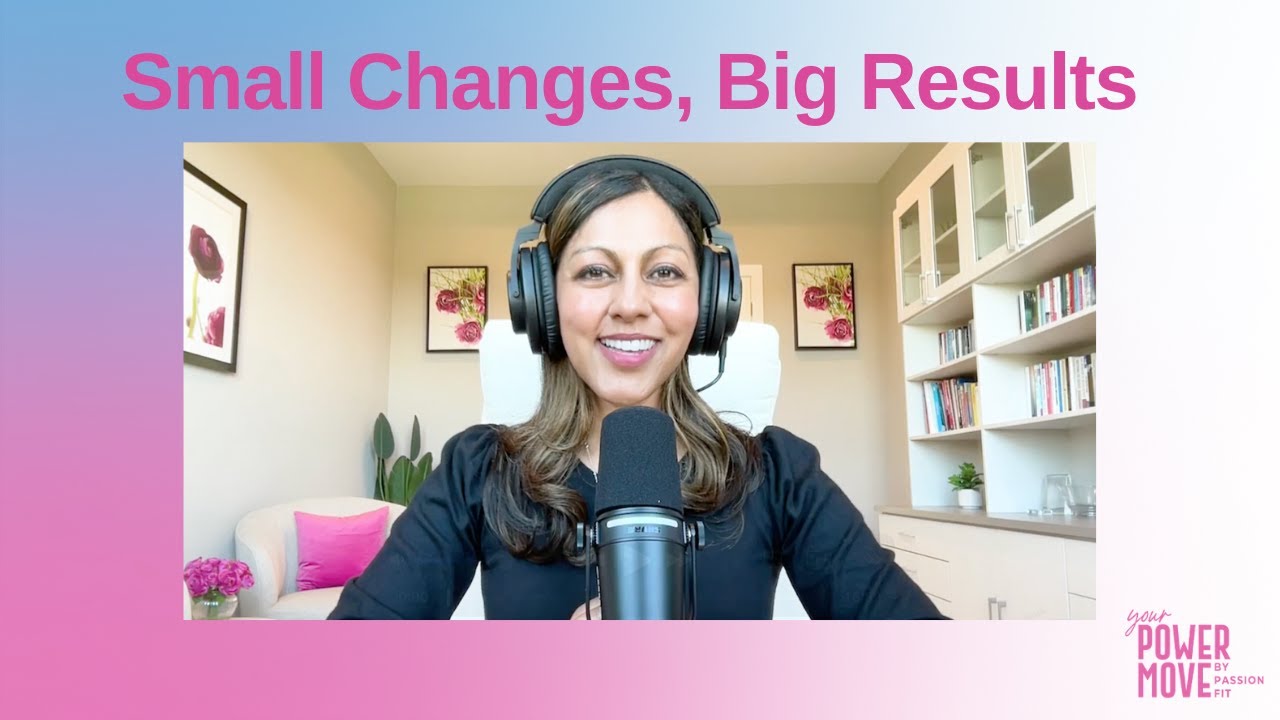
In this episode of "Your Power Move by PassionFit," host Reena Vokoun, a certified behavior‑change specialist, explains why lasting habits typically require about 66 days of consistent practice. Drawing on research from the American Council on Exercise and the work of BJ Fogg (Stanford), she outlines a step‑by‑step framework: start with one simple, enjoyable action, reinforce it positively each day, and repeat until the behavior becomes automatic—like brushing teeth. Reena illustrates the approach with everyday examples (eating a piece of fruit each morning, 10‑minute walks, 3‑5 minute breathwork) and stresses the importance of choosing activities you like, keeping them simple, and gradually building on them after the 66‑day mark. She walks listeners through the classic stages of behavior change (pre‑contemplation, contemplation, preparation, action, maintenance) and recommends using SMART goals to give structure. Practical tools for tracking (apps such as Habitify, Streaks, Coach.me, wearables, spreadsheets, notebooks) and community accountability (PassionFit community, health coaches) are highlighted. The episode concludes with encouragement to self‑assess, stay patient, adjust goals when needed, and seek support, reinforcing that small daily actions compound into significant, sustainable health improvements.
Chapters
According to several research studies featured through the American Council on Exercise, it takes approximately 66 days to make a behavior change. I'm Reena Vokoun, the host of Your Power Move by PassionFit, and if you want to learn how to make long-lasting behavior changes, not just for the new year but throughout the year and beyond, stick around for our latest episode. So making behavior changes can be really difficult for a lot of people, and we're We're getting into, uh, the second month of the new year. We're into February now. And by this time, a lot of people have fallen off of their New Year's resolutions and goals. And that's okay. That is not what I'm here to talk to you about today. I really wanna focus on behavior change and how if you make small changes at a time and you stay consistent with them, it really can lead to big results over time. The key again is the consistency and the simplicity. And that's what we are going to focus on on this episode today. I am a behavior change specialist certified through the American Council on Exercise, and BJ Fogg is one of the PhDs from Stanford University that we studied a lot about. He himself has studied behavior change quite extensively, and what his findings have found is that if you make one simple change at a time and then you positively reinforce that change, you're going to have positive feelings about it, which is going to help prompt you to do it again the next day. And then if you continue with that that same change the next day, again, reinforce it positively, it'll take you to the day after that. And the goal is to keep on doing that until you get to that 66-day mark approximately. So it's about 2 months. And by that point, the goal is that it's going to become a regular daily habit. And it will become as simple as brushing your teeth, something that you really don't have to think twice about. Um, so let's take a couple of examples. Let's say you are interested in getting more fruit in your nutrition plan. So you make a goal that you're gonna eat one piece of fruit every morning for breakfast. So let's say you add a banana or an orange or maybe some berries on the side with your eggs. Um, and so that first day, again, you eat that banana and you just reinforce it. So meaning tell yourself, you know what, this was my goal for today. It's very easy, very simple. I can grab it on the go on my way out the door to work. Um, and I'm proud of myself for doing it. Now I know it might seem a little silly. Silly to be proud of yourself for eating a piece of fruit, but literally that's what you want to do because you have to be your biggest cheerleader and motivator, and you want to encourage yourself to take the action that you're trying to take. And again, I'm giving a very simplistic example here on purpose because it's easy and something that you can really do if you set yourself up with a big bunch of bananas every day and it's something you can easily grab and go. And then once you've created those positive feelings, then you'll do it again and again. Um, again, after you've mastered that change, let's say with eating that piece of fruit every day, then you can move on to the next thing. Maybe if you still want to stick with your nutrition plan and some changes you want to make, maybe it's adding one vegetable to your lunch or to your dinner every day, or adding more whole grains for lunch, but then, you know, not having whole grains for dinner and keeping your dinners more light. If you're somebody who's in the process of trying to lose weight and you're trying to manage your complex carbohydrate intake, you still need them, but the timing of when you have them can also really help. So that could be your behavior change. Or another example might be if you want to get moving more, maybe you focus on just getting 10 minutes a day of walking. You can fit that in in the morning, you can fit it in the afternoon, maybe if you're at the office and you want to take a little break or do a walking meeting with a coworker, or it could be something that you do with your spouse or significant other or kids in the evenings after dinner. The key is to make it again simple and accessible, and once you get that going, then you might want to add on to the goal after it's been about 2 months. So after that 10 minutes of walking every day for 2 months, then maybe you increase it to 20 or to 30, or you add some sort of other cardiovascular exercise to your fitness regimen. And then a last example that I'll share is around breathwork. I know that is something that it's one of the most simplest things a human can do is to breathe, but it's one of the things that we sometimes forget to do intentionally when we're running around in the midst of a busy day. So maybe your goal could be just take 3 to 5 minutes every day and just focus on my breath. And that could be inhalations and exhalations, um, expanding and contracting your diaphragm, and just taking a few minutes every day. If going and sitting in silence in your backyard is something that you just don't have the time for, you could incorporate it when you're busy and on the go. So maybe you're commuting from work and you're driving in your car. Take that time to just focus on your breath. Obviously you're focused on the road and traffic as well. Um, and I know that might not be counterintuitive because driving in traffic can be stressful. Um, so to focus on your breath could be a little bit difficult at first, but that actually might make you less stressed when you are in traffic and commuting. Um, so those are just a few examples, um, in the areas of mindfulness, in nutrition and movement, um, where you can incorporate these very simple behavior changes. Um, the key is also to make the changes enjoyable. So when we were talking about the types of foods that you want to add into your nutrition plan, pick foods that you like, right? Don't pick something that you hate if you're not somebody who likes Brussels sprouts, don't add that as the vegetable to your lunch or dinner every day. Maybe broccoli is more your thing, or carrots, or whatever it might be. So pick something that is, you know, that you enjoy, that's really pleasing to your palate, and that you can easily incorporate, that's not complicated, doesn't require a lot of cooking time, but is simple, something you could easily cook or grab and go. Same thing with movement. If walking isn't your thing, and again, that's a very basic one that most people can do, so it does have the the simplicity factor. But if that for you feels boring and something that's just not exciting enough to keep you going, you know, day after day, week after week, then pick some other activity that you really like. You know, maybe it's dancing, maybe it's gardening, maybe it's going out for hikes, maybe it's going out for a bike ride. So whatever it is, pick something that you truly enjoy because then instead of dreading that behavior change that you're trying to make, that becomes something that you actually look forward to. And that is the easiest and quickest way to stay motivated and to keep doing it over and over again. And what can often happen is even if you enjoy the activity and you're lacking time, uh, because of other priorities, I think when you realize how good it makes you feel and you've continuously positively reinforced it, then even when you are busy and are short on time, you will find a way to make it happen. Um, so that can really go a long way as well. It's also important to think about all of the different stages of behavior change because believe it or not, there are different stages that we go through. Um, the first one is pre-contemplation. So that might be where, you know, you're not quite contemplating the change. It's something that comes into your mind here and there, but again, life gets busy. There's oftentimes fear of taking something on if we don't think we can follow through or even feeling fearful of what that change might entail in terms of success. Believe it or not, Some people are afraid of what will happen if we're successful with something because it's the success itself or the change that that success is going to cause that can be scary because it takes us out of the norm and out of our comfort zone. But again, if we really wanna make transformational, healthy, positive changes in our lives, then we can't be afraid of that. Right? We have to believe that whatever's going to happen on the other side of being successful in reaching our goals is really going to lead us to a better lifestyle, better health, and just an overall better way way of life. So hopefully once you get through the pre-contemplation stage, then you actually get into the contemplation stage where you're literally contemplating doing it and you're thinking about, you know, is this something that I can really commit myself to? And you, you're getting more serious about it. From there, you might get into the preparation stage. So now that you know that you want to make a change, maybe it is in your nutrition And then you're starting to prepare and think about, okay, how can I do my meal planning every week differently? How can I do my grocery shopping differently every week? And how can I account for this change that I wanna make if I'm traveling for work or if I'm out for dinner with friends or family? How can I stick to it? Um, and then you actually get into the action stage where you start the behavior change process. And this is where you really wanna get into that 66-day plan, um, and start again, making one small change at a time. So we're not talking about 5 changes at once because that's another way to not be successful and give up, right? And so we want to make this as sustainable and easy as possible. So start with that one change, again, positively reinforce it and keep doing it over and over and over again until you get to that about 2-month mark. And then once you've actually taken the action, then you get into the maintenance stage. And now this is, okay, how am I gonna keep doing this and keep it consistent throughout my your life. And hopefully at that point, as mentioned earlier, it'll become a regular habit, so you really don't have to think about it too much, and you'll already be reaping the benefits and feeling good. And from there, you probably won't want to stop doing it, and that's really the goal. If it truly is a healthy goal that you have, it's simple and it's sustainable and it's something you enjoy and it motivates you and makes you feel better, hopefully you're going to want to keep doing it because you see all of the amazing benefits. But sometimes it It takes patience and consistency and not giving up to get to that point. So you want to allow yourself to get to that place. And then from there, once you're in maintenance mode or it becomes habitual, then you just can add another change from there. So as you can see, these little small changes really make a huge difference. Also, when I'm working with my health coaching clients and my corporate clients, I talk a lot about SMART goals. So SMART goals are those that are specific, measurable, attainable, relevant, and timely. Rather than having these vague, big overarching goals that really aren't narrowed down to some structured and specific steps that you need to take, um, then they're not gonna be, um, you know, very meaningful and they're not gonna lead you to success. So I do follow the SMART goal methodology with my clients because we really need to have a strategy and we need to break it down. That is also very important. Goals are not things that you can just, you know, sort of do in a very loose way, in a very casual way, because if you really want to make a change, you've got to have that structure behind it. So that's another important thing to think about. And if you do want to add more structure, there are a lot of great apps out there like Habitify, Streaks, and Coach.me. So leverage technology if you want to have, you know, accountability, if you want to be able to track your progress. You could also track things through your wearable devices. You You could use a good old-fashioned spreadsheet or a notebook. And if you have a health coach or a community that you're working with, having those accountability partners is really going to help as well. So lean on people that are also trying to make changes, and you can all encourage one another and support one another. That's really what my community PassionFit is all about, and our Your Power Move by PassionFit community as well. I want to be able to have people feel like they're not alone, that they can achieve goals that they want and they can really make a positive impact in their life. So if you are feeling a little bit discouraged this time of year when it does come to resolutions or goals or things like that, um, you know, I really want to first empathize with you because we all go through that. Um, and it's not easy to make changes, but I do think it's possible. You just really have to have the commitment. Um, I think it's also really important to do a little bit of a self-assessment and look at where you are now and where it is that you want to get to and what are those specific steps that you need to take each day to get there. And in this case, with behavior change, it really is that 66-day mark. So look at your starting point, look at the end point where then it be, you know, you want it to become habitual and just put in the work to take those steps every day. And one of the things that I think you'll realize is the little amount of time that you're spending each day, whether it's the 10-minute walk or the 5, 3 to 5 minute breathwork, or eating that one piece of fruit or one vegetable every day, it doesn't really take a lot of time. So it's something that you can, you know, definitely fit into a busy day and it hopefully doesn't feel so daunting. Um, and it's not even that singular action that matters. It's the series of singular actions that are taken over an extended period of time. So doing that self-assessment, I think is really important as well. And then also just thinking about how these changes are going to make you feel at the end of the day, we're humans and we're really seeking, you know, pleasure and we're trying to move away from pain, right? That's what we don't want— pain. We don't want discomfort. We want to feel good. So you want to think about how these healthy behaviors can make you feel good and what are some of the positive outcomes that are, that are going to come from all of this, right? More energy, um, you know, feeling like you're more capable in your job. You're able to do things for your family at home. You're able to enjoy your more because you've got that energy, you've got that vitality, you're feeling like you're more in shape, and so functionally you can move well every day without pain, or, you know, whatever it might be. So if you think about the end goal and how you're going to just have, you know, more successes, more happiness, more joy in your life by making these changes, those are other great motivators to have. And at the end of the day, look, we are all human. I think we've all been in situations where we fall off track on something, and that's okay because 'Cause then you just need to reevaluate and figure out, well, why did I fall off track? Was that goal maybe not as important to me as I thought it was? Maybe I didn't have the right structure or environment to set myself up for success, or maybe I need to tweak the goal a little bit to make it more simple and sustainable or even more enjoyable. So really think about that as well. Again, having that sense of self-awareness about what goals are gonna work for you and what ones are not is also very important. Don't be afraid to seek out help and support if you need it. You definitely don't have to go at it alone, and it is something that you can definitely do. So I believe in you guys. I hope that you take those changes, whatever it is that you want to make, do it at your own pace and at your own time. And just know that the PassionFit community and myself are here to support you. You can always reach out through passionfit.com if you do need support. We offer lots of different products and services and content to help keep you motivated so you can lead a healthier, happier, and more productive life. Well, that is it for me today on this latest episode of Your Power Move by PassionFit, and I will be back with another episode soon. So feel free to tune in again. These episodes are coming out every other week, uh, the first and the third Tuesdays of every month. Um, so feel free to subscribe so you get the, the alerts, rate and review, and as always, tell your family and friends. Thanks so much, and I will see you guys soon. Take care.










