Lessons on Life and Entrepreneurship From My Dad - Full Video
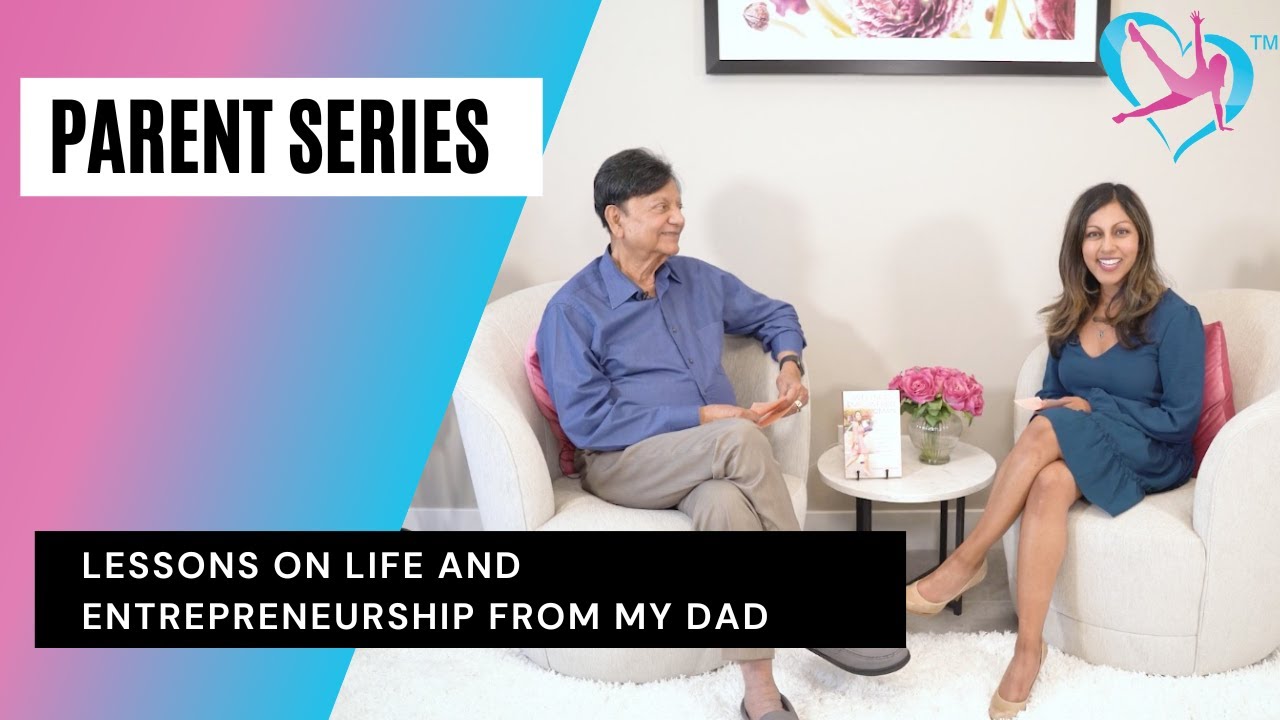
In this interview, Reena Vokoun, founder and CEO of PassionFit, sits down with her father (Speaker B) to discuss his extensive academic and professional background and to extract practical entrepreneurship wisdom. Speaker B holds degrees in metallurgical engineering, law, and industrial engineering, and has worked across manufacturing, brewing, and insurance for over five decades, earning the Order of the Long Leaf Pine for his contributions. He shares insights on the excitement and challenges of entrepreneurship, emphasizing vision creation, total accountability, and the need for ethical, legal, and cost‑competitive solutions. He stresses calculated risk‑taking—drawing on his immigrant experience of moving to the U.S. with limited resources—and the importance of thorough homework before decisions. He advises entrepreneurs to plan for a five‑year runway, maintain a financial cushion, and be prepared for pivots based on feedback. Core themes include continuous learning, faith or belief in a higher power, professionalism, and relationship building. The conversation concludes with broader life lessons about adaptability, resilience, and the necessity of change to avoid obsolescence.
Chapters
Hi guys, I'm Reena Vokoun, the founder and CEO of PassionFit, and I'm really excited to be interviewing my dad today so he can share his tips and insights on entrepreneurship. My dad has been a huge influence in my career, having had a corporate career like him and also becoming an entrepreneur, and I'm just really excited for him to share his advice with all of you. So, Papa, my first question for you is, tell us about your academic and professional background so everyone can learn a little bit about what you've done.
Yes, my academic background, I have two bachelor's degrees, one in metallurgical engineering, another one in law from Ranchi University in India. And my second degree was from NYU in industrial engineering. So that's about my academic background. As for my professional background, I have 6 years of experience in manufacturing and operation, which was in India, and 28 years in brewing industry all in America. And my afterlife, I mean to say, after my retirement, there was another era, and that was in insurance industry. Yeah. And I have spent about 18 years in insurance industry, and I'm still continuing.
That's right. You've had a really fascinating career, and I think what I respect most about you, Bapa, is even after all these years and even after retirement, you continue to learn and grow and challenge yourself. And again, being an entrepreneur myself, I can really appreciate how hard it is and how much work it takes. And the fact that you're still doing it and still enjoying it means a lot.
Many people have experience or exposure in one or two or three, uh, aspects of a business, but I was fortunate to have aspects of many, many exposures, like in manufacturing, testing and research, industrial engineering, productivity improvement, strategic planning, and site selection. Site selection was actually the most important highlight of my career. Yeah, because I was able to locate 3 brewing industry site, 3 brewing plants and 2 container plants. And they used to be huge in size. They used to be anywhere from $500 to $600 million each.
Yeah.
And they used to create 1,000 to 1,500 jobs.
Yeah.
And it was a really grace of God that because of By my learning, by my zeal, and my knowledge, the state of North Carolina, they conferred upon me what they call the Order of the Long Leaf Pine, which is the highest honorary qualification they offer, which is equivalent to the rank of ambassador. Yeah. So that was my highlight of my career.
Yeah, I'm very proud of you for that, Bap. I remember that when I was a little kid. It's a huge honor. So in your opinion, what are the most exciting aspects of being an entrepreneur as you fast forward to your current career as an entrepreneur in the insurance and consulting field?
Yeah, the exciting part of being an entrepreneur is that you create a vision for your company. You make decision to achieve that vision, and you make, take, or decide the directions of your company. The another aspect is that you are responsible for everything, for the sales, manufacturing, business, account management, customer relationship, as well as service. And lastly, the success and failure all depends upon you.
Yeah.
And if you succeed, you take a credit for it. If you fail, or if you're unsuccessful, then you blame yourself. But not just blame, you do a creative thinking where you went wrong, what you should do. To not repeat the same mistake and go further ahead with full vigor and determination.
Yeah, I agree. It's one of the most exciting and exhilarating things, but it can also be very challenging. Yeah. In your opinion, Papa, what are the most challenging aspects of being an entrepreneur?
The most challenging aspect is that Each customer, they have their unique set of circumstances and requirements, and you have to come up with a business solution which is legal, moral, ethical. And insurance being a highly regulated company, it should be in compliance with all the regulatory, regulatory requirements. Even after meeting all these things, it has to be cost competitive so that you can win over that particular job or that particular account, right? The second aspect is that, that people do not like to change. The business like to stay and have a status quo. So it's most challenging thing to win them over and convince them that you have a solution which is good for them, right? And the third most challenging thing is that because of your solutions, because of your service you gain their confidence and loyalty, and loyalty to the point that they start referring you to other businesses. So these are the 3 most challenging things that I think, yeah, every entrepreneur faces, right?
But the positives that can come from that, like you were saying, to have integrity, to be ethical in how you're working with these companies, to really understand their challenges and to win their loyalty and trust in the end, then becomes the opportunity opportunity that comes out of those challenges, right? Right. Yeah. Yeah. That's really good advice. What is your feeling on taking risks? Because obviously being an immigrant from India, being in corporate, being an entrepreneur, you've taken a lot of risks. And I, you know, have been able to see the rewards for those risks as your daughter. And so I'd love for you to share with everyone, you know, what your thoughts are on taking risks in life and in business.
Yeah. I like and have always taken calculated risk. Mm-hmm. That means you just don't have to jump into any decision and start a new business or change your job or anything. Mm-hmm. You have to do a lot of pre-work, homework, and see whether you can do it or not. Mm-hmm. Other than taking a risk, the life becomes very stagnant. And there is no growth and there is no reward. I took calculated risk when I immigrated to America 52 years ago. Yeah. When I moved your mom and your siblings over here. Yeah. Initially it was because of the recession in America in the '70s, it was difficult for me to get a suitable job. Having come from India and left all my business and my experience there, I had to start again anew. But I didn't give up.
Yeah.
I always looked for a higher solution. And I went for higher studies. I was doing 2 jobs and going to graduate school in the night. I made a lot of sacrifices, didn't have time for spending with, with the family. But there is a reward, and the reward was that once I graduated, a lot of doors were opened for me.
Yeah.
And I started feeling at that moment that America is really a land of opportunity. And if you work hard and don't give up and keep trying to sustain yourself in the workplace, and we are more competitive, then you'll succeed.
Yeah. Yeah, no, I mean, I saw it firsthand and experienced it. And the fact that you started from nothing, I know you always say you you came to this country with one suitcase and $400 in your pocket and to be able to have such a respectable career to put all 4 of us kids through college and, you know, help the grandchildren as well and be a great role model for them. I mean, it really speaks to your virtues and your values, and I think we are all benefiting and learning from you still every single day, and we're grateful for that, Papa. So in your opinion, because I think a lot of entrepreneurs want to know the answer to this question, I know when I first started out, I asked you this question, how long should you give a business to succeed and start generating revenue and becoming successful?
Based on the statistics, 20% of the startup or new business, they fail in 2 years. Yeah. And about 45% fail in about 5 years. So every entrepreneur should have patience and period of trials and tribulations at least for 5 years.
Yeah.
And they should have saved enough of cushion money or startup cost that they can survive that troublesome period. Yeah. So I think 5 years should be a good period for anyone to be working, striving, struggling, and trying to get a foothold and be profitable.
Yeah, I think that's a good period of time. I was actually just— I didn't tell you this, Baba, but I was reading an entrepreneurship book last night before bedtime, and you had said this statistic to me about what percentage of businesses fail, and that exact statistic was in the book. So I thought, wow, Baba really knows what he's talking about. And you know, over the 8 years that I've been an entrepreneur, I've definitely had ups and downs and trials and tribulations myself. And you definitely have been the person that has given me the most faith in myself in times when I didn't believe in myself. And I think for a lot of entrepreneurs out there, to have somebody that's in your corner that believes in you, that's been through it themselves, can really be a huge help on those really tough days. But if you truly believe in what you're doing, which I know you have in all the businesses that you've run, that will keep you going, right, on those really hard days. And having support in your corner means everything. So thank you for that, Papa. And what is your advice for anyone that wants to start their own business and/or company? How should they get started and what should they focus on?
My first advice is that don't rush to start a company. Do your homework, research the industry and the market, assess the needs and requirements, know what are and what could be pitfalls and be a critic of yourself and decide, do you have core competency and do you need to develop more? And this core competency development is a lifelong effort, right? So though that's— that would be the basic things I would say. And then second would be that be ready to have obstacles and failures. Things will not plan— things will not happen the way you have planned. Next one is, as in our religious book Gita says, one has no control over the results, but one has control over his karmas. So always try to put in the best effort possible that you can do. Then always be ready for a course correction, right? And as I said, the things never go as planned. So based on the feedback that you get, the results what you get, the failures that you get, be ready to make a course correction.
Yeah.
Next one is, which is I'm a firm believer, have faith in God and the God will always give you wisdom and he will show you the correct path which will get you to the good solution. And if you fail, do not get depressed. Things— I do not think that this is the end of the life. It was— you can think in this way that it was not meant for you, right? But destiny has something better for you in the destiny's plan. So I would say that go back to the drawing board. And begin a new journey with unwavering determination, full faith, and vigor. And lastly, never lose your cool and professionalism. Always be very courteous, polite, and positive towards the other person, other party, other company, because you never know in life. You may have to go back to them, or they will come back to you. So keep the door open for everyone that you meet with and give an impression that you are ready to work with them and you can be helpful to them and you can provide the solution. Right.
Yeah, that's all really great advice because I do think, yeah, knowing that there could be times where you have to pivot your business, right, or do something a little different than what you intended can be tough, I think, for a lot of entrepreneurs. But knowing when that time comes is critical, and having faith, whether it's a higher power or something bigger than yourself, I think is really important. And I know when I was leaving Google and wanting to start PassionFit, you had said to me, I want you to create a very thorough business plan and really understand what you want to accomplish, what revenue model you want to have, what products and services you want to have. And that was a very helpful piece of advice for me when I was making that transition. And I think for a lot of entrepreneurs, it's having a plan, but like you said, not being so tied to the result because you don't know how things are going to shake out, but ultimately it'll work out for the best, right?
And one more thing I would like to emphasize is that There will be many, many times in your life that you'll feel that the dark clouds are over you and you will be failing one step, one attempt, another attempt, but you never know when the bright sunshine will come. And it has happened to me in my life. I have seen that I was kind of very depressed, but you know, at the same time, by the grace of God, the solutions comes through. And I could never imagine or think how is it possible, but it has been. Yeah, many, many times. Yeah, so I'm a great believer in God, and I am great believer in his kindness for me and for everyone in mankind, that he will come and help everyone.
Yeah, well, those are really wonderful thoughts, Baba. And are there any other life lessons, as our kind of last concluding question, that you would like to share with everyone from your experiences as an immigrant, you know, in being an entrepreneur, working in corporate America, as a father, husband, Well, I will go back to the initial question that you had, and that is taking risk.
Always be prepared to take calculated risk because in this changing world, everything changes. Yeah. And if you are where you are, and you don't make change, then you become obsolete. You are unfit for the society, for your company, for your business. So you always have to strive for change and keep continuing, keep learning new things, keep developing new solutions. So That's what I think.
Yeah.
Be ready to change, keep learning.
Yeah, keep growing.
Have faith in the God.
Yeah, God or higher power, whatever anybody believes in.
Yeah, higher power, superpower.
Yeah. Well, Papa, this has been so helpful and informative. I'm so proud of everything that you've done for our family. I'm honored to be your daughter and to have had the opportunity to interview you today.
I am Very proud, and this is the happiest moment of my life that my daughter, my youngest daughter, is herself a successful entrepreneur, and she is very well sought in her line of business in the community. And you have accomplished, I think, more than what I have done in such a short span of life.
Thank you, Papa. I don't think that's true. I look up to you so much, but I I love you so much, and I'm so honored that you were able to interview— be interviewed by me today. Well, I want to thank you all for tuning in, and I hope that this was informative, especially for all of you entrepreneurs out there. Thanks again to my dad for sharing his tips and advice and insights. Feel free to share, like, comment, and subscribe to our YouTube channel and share it with your family and friends as well. Thank you so much for tuning in with us.










