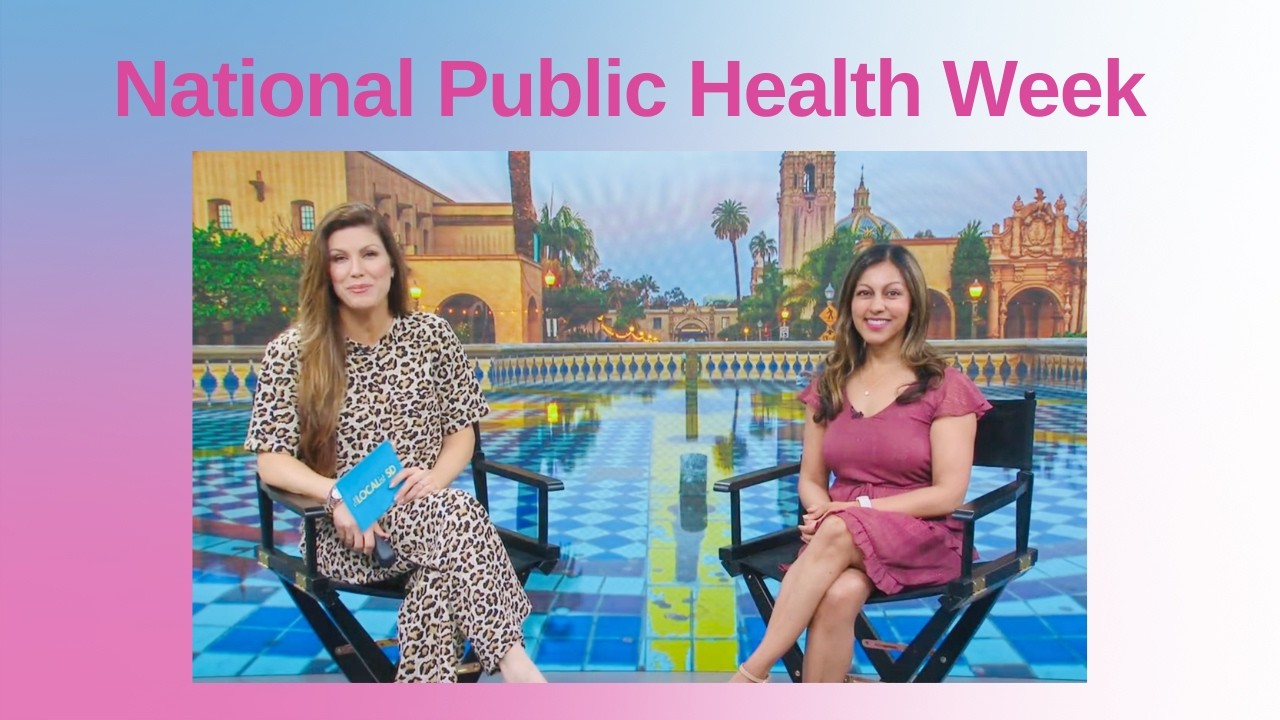
In a National Public Health Week segment of The Localist, host Brandi welcomes health and wellness expert Reena Vokoun, founder of PassionFit, to discuss practical, sustainable approaches to public health. Reena explains PassionFit’s mission to empower women’s personal and professional flourishing through wellness. She highlights the global obesity epidemic—nearly 3 billion people affected and a projected $4.32 trillion economic impact by 2035—and frames GLP‑1 medications as temporary aids that must be paired with daily movement and nutrition for lasting results. The conversation shifts to mental health, noting rising awareness among younger generations, the multiple determinants (education, environment, economics), and the need to meet people where they are. Reena then addresses AI’s growing role in healthcare, emphasizing efficiency gains in data gathering and diagnostics while underscoring that human interaction and interpretation remain essential. Finally, she spotlights the historic under‑funding of women’s health research (only 8.8 % of NIH grants from 2013‑2023) and celebrates emerging advocacy, such as the Foundation for Women’s Health, that is expanding focus beyond breast cancer to osteoporosis, heart disease, and reproductive health. Throughout, Reena offers actionable advice and promotes her podcast “Your Power Move” as a resource for continued learning.
Chapters
Welcome back, everyone. From workplaces to schools and communities, National Public Health Week is a time to focus on building healthier lifestyles. And we're doing it for all. We're talking about everyone across the board. It is so important. Our resident health and wellness expert is here to teach us all how to do it, and not only how to do it, but to keep up with it. Reena is joining us. Thank you so much. I understand you're here every month. You're keeping us on track. That's why you keep coming back, right?
Absolutely. I love coming back. Love being here. Thank you for having me. Thank you for having me, Brandi.
So happy to have you. So, for the folks who are just tuning in, maybe it's their first time watching The Localist, and they're not too familiar with PassionFit. Can you tell them all about it?
Yeah, great question. So PassionFit is a health, wellness, and fitness lifestyle company. We focus on consumer and corporate wellness, and our mission is to empower women to flourish both personally and professionally through wellness.
And you're here specifically to tell us how to do it. Yes. And to sustain it, because there isn't one person out there who's gonna say, "I don't wanna be healthy." Everyone wants to be healthy. But it's a commitment.
It's a huge commitment, and this just happens to be National Public Health Week, and I think it's great to talk about topics that do affect everything from our communities to our workplaces to our families. And there's 4 key things I'd love to share that's happening right now in the public health sector.
Yes, and one of them, there's an obesity epidemic going on right now.
Yes.
Talk about that. I mean, some ways they are— you're not able to avoid it. There are people who have health conditions. There are other people who just aren't making that jump and aren't making that full commitment, that you can help them. So give us some of that advice.
Yeah, so according to the Health and Fitness Association, nearly 3 billion people worldwide are suffering from obesity or being overweight, and that has an economic impact of $4.32 trillion by 2035. Um, GLP-1s, as we know, are on the rise, and they can be very effective, especially if you're working closely with your doctor. But really, the goal is for them to ultimately be, in most cases— everyone's different, but in most cases, you want them to be temporary medications that are supported by healthy lifestyles. So if we can focus more on daily movement and nutrition in conjunction with those medications, that's just going to help keep it much more sustainable. So I think that's something that we really want to raise awareness of is the GLP-1s are great, but they're not a magic pill, and we still need those lifestyle factors to be in place.
You have to do the work.
You have to do the work. There's no shortcut.
That's right. Something else in my opinion that doesn't get enough attention is mental health awareness. Yeah. So let's talk about why that's so important.
Yeah, you know, mental health awareness is on the rise as well. Luckily, younger generations are talking about it more, and there's different determinants of mental health, like education, like environment, like economics, right? There's so many things that can affect our mental health. We are seeing people suffering from, you know, depression and anxiety and stress and burnout. And while older generations historically have been more private about those challenges, younger generations are really talking about it, which I think is great. The ideal is to meet people where they are, because again, every generation handles those challenges differently, but we We need to recognize that it is happening, it is out there, and there are things that we can do to help with people's mental health.
It's incredibly important.
Yeah.
Another thing everyone is talking about is AI and the AI takeovers. So how is AI affected by the health and wellness world?
Yeah, so you know, there is an integration of AI and technology into the healthcare sector. Healthcare providers are now benefiting from efficiencies in their administrative work, being able to gather health data, diagnostics, risk assessments, and more. But as much as we fear that AI is going to take over all of our jobs and take over the world—
We talk about it all the time.
We talk about it all the time. But really, at the end of the day, we still need human interaction, right? Human engagement, human interpretation of those results of that data, and then just human care for the patient.
And we're still responsible for ourselves.
Yes, exactly right. We can't just have AI do everything for us. We have to be proactive about our health, and our healthcare providers need to work with us and support us as humans as well.
If it could do my dishes and my laundry though, I'm all for it. Sign me up.
Absolutely, I agree.
Now you mentioned, um, women's health.
Yes.
So let's talk about that as well. It seems like we're hearing, we're learning a lot more than we have in the past, which is a very positive thing.
Right, it's another topic where, you know, conversations are starting to happen. I actually have a podcast called Your Power Move by PassionFit, and last month in honor of Women's History Month, I talked all about women's health research because what's alarming is we make up 51% of the U.S. population, but only 8.8% of National Institutes of Health research grants were dedicated to women's health research between 2013 and 2033— or excuse me, 2023. So what's nice to see is that even though we weren't getting a lot of focus, now organizations like the Foundation for Women's Health are doing a great job of focusing on women's health research for things like osteoporosis and heart disease. Beyond breast cancer, which is obviously very important, reproductive health is very important as well, but there are these other diseases that we need to prevent and manage for women that aren't being talked about but finally will hopefully start to.
Absolutely. Well, you're doing a great job. Did you see her working out on those videos? That was amazing. Thank you so much for being here. Appreciate your time, Brandy. And please stay with us because coming up on the other side of the break, get ready to get your cumbia on. We have details of a really fun event, a Selena-inspired event happening this weekend. We'll be right back.