The Naturopathic Approach to Women's Hormonal Health
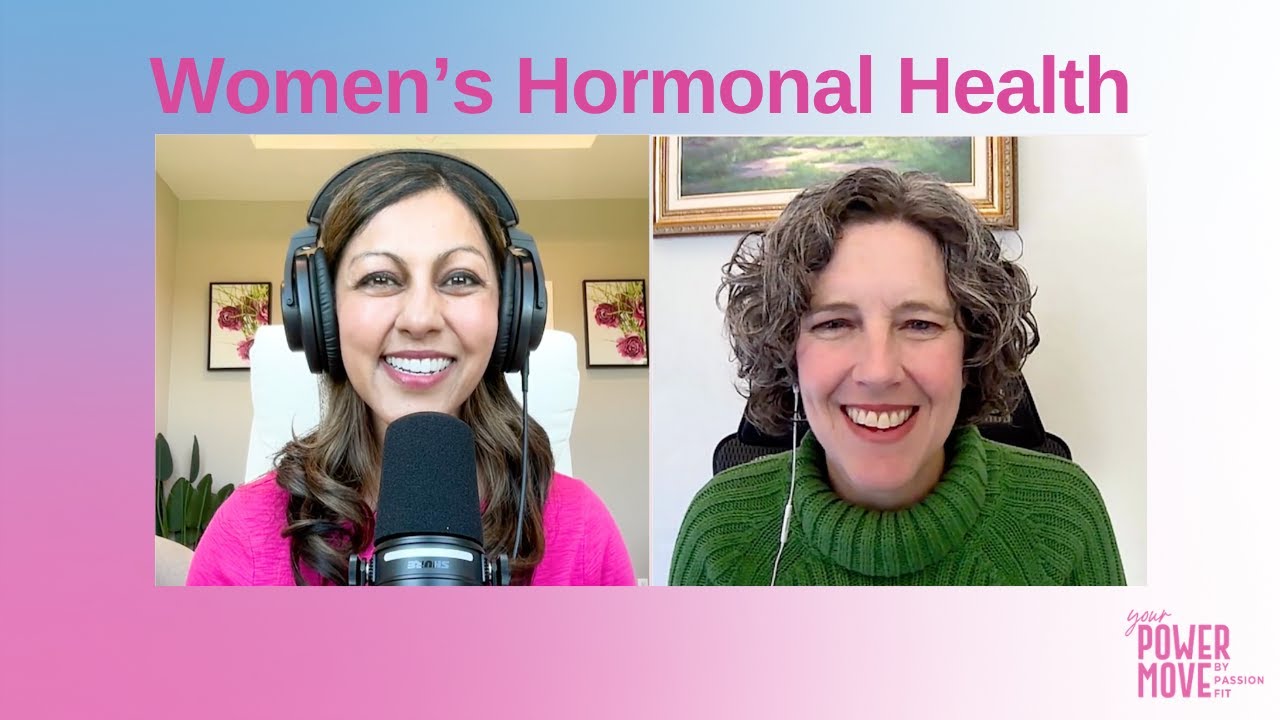
In this episode of the Your Power Move podcast, host Reena Vokoun interviews Dr. Amy Day, a California‑licensed naturopathic doctor and founder of the Women’s Vitality Center. Dr. Day shares her personal journey from a curiosity about herbs in college to becoming one of the first ND licensees in California, motivated by her own experience with severe endometriosis. She discusses the evolution of women’s hormonal health care over the past two decades, emphasizing that naturopathic physicians have long been trained in bioidentical hormone therapy (HRT) and can safely prescribe it when informed by current research. The conversation highlights the pervasive societal messaging that normalizes suffering during perimenopause and menopause, and the challenges patients face in making lifestyle changes amid busy lives. Dr. Day offers concrete “power moves” for listeners, such as waking up at the same time each day to support circadian rhythm, and stresses the importance of community and accountability partners for sustaining healthy habits. She explains her broader purpose: improving women’s health to create ripple effects for families and communities. The interview also promotes two upcoming educational resources—a documentary, The M Factor: Before the Pause, where Dr. Day appears as an expert, and an on‑demand workshop, “Navigating Perimenopause: Is HRT Right for Me?”—and shares a personal fun fact about her long‑standing involvement in Ultimate Frisbee and recent interest in pickleball. Throughout, the tone is conversational, supportive, and optimistic, aiming to empower women to seek better health outcomes beyond the narrative of inevitable decline.
Chapters
There's just too much messaging from our medical experiences and from society that it's just normal to suffer. My experience as a patient really made me want to create a practice that gave patients a very different experience.
I do think the holistic approach is really important. For some women, maybe they take a more natural path. Others might want to get access to HRT. It doesn't have to be one or the other.
There are ways to feel better, and, and actually it can be really awesome.
Hello everyone, and welcome to another episode of Your Power Move by PassionFit. I am Reena Vokoun, your host, and I am so excited to welcome my latest guest today. Her name is Dr. Amy Day, and she is a naturopath doctor. She is an ND, and she runs the Women's Vitality Center. And what's really cool is that she's only the 4th licensed neuropathic doctor in the state of California, which is amazing. And she is a women's health expert and hormonal expert and works with women in various areas, lifestyle counseling, blood work, really looking at all the different aspects of their health and well-being from the inside out and taking a natural approach. So everybody, welcome Dr. Amy Day.
Thank you so much, Reena. It's really awesome to be here. You're doing such great things with this podcast, and it's an honor to be here. Thank you.
Oh, well, it's an honor to have you. And I just love the story of how we met because Dr. Amy Day was recommended to me, Dr. Amy, by my friend Jackie, who had seen her. And Jackie has been one of my closest friends for almost 30 years. And she really thought that her work would be helpful and beneficial for women's health. And so it's just wonderful to have her. She is a wealth of knowledge, and I can't wait for her to share all that she has to share with you guys. So, Dr. Amy, tell us a little bit about your background, how you got into this line of work and anything else you'd like to share personally and professionally.
Yeah, I mean, there's always a journey, right, to, to the things that we do in our lives. I was in— I was just personally really interested in natural medicine, things like herbs and nutrition and that during college. Like, it was not something that I really was raised with particularly, but I was just curious to explore alternative things and kind of the empowerment of knowing that, oh, there are things that I can eat or do or take that like impact my health and help me feel better. And I learned about echinacea as an herb that helps the immune system get over a cold faster. And I had never heard of that before at that point in my life. And that just was really excited about the possibility of that. But it was only a personal interest at first. I actually was never interested in becoming a doctor. That was not a path that I was really pursuing. And then my mom actually sent me— she cut out of an actual paper magazine and mailed me in the actual mail an article from Women's Health magazine that was about the profession of naturopathic medicine. And I had never heard of it before. And it was just like all the, you know, all the lights came out shining and I could hear the bells. And it was like, oh, this is kind of what I've been looking for. And I didn't know it existed. And an opportunity to really study the science I was in an engineering degree program before that, and then a business degree, and just kind of figuring out my path and my interests. And I really like science and math and engineering and like understanding how things work. But I also recognized that like, I was really interested in health and healing and just the complexity of our beings and our bodies. And there was this opportunity that was very science-based and evidence-informed, but also very holistic and open and inclusive. Um, so I was really excited about, uh, becoming a naturopathic doctor once I found out about that and had to get a bunch of prereqs. And then I moved to Portland, Oregon— is the school that I went to is, is up in Portland. So, and I had been— I grew up in Florida, so. Okay, so that was it. That was amazing. Yeah, yeah.
And you've been doing this, I think you've been licensed for almost 20 years or over 20 years, right?
Now like 21 years or something, I think now. Yeah, yeah, yeah. Practicing. So yeah, when I finished school in Portland, I had— I I was done with the rain and gray weather. I'm a sunshine girl. And so I, I was, my husband and I were checking out California as an option, but California wasn't licensed yet while I was in school, cuz the license varies from state to state. And, um, the licensure effort was going through like right as I was graduating and I was able to be in that first wave and actually become the I got my fourth ND, my license in California. So really quite an opportunity and timing to join the practice that I joined at that time and to be able to start my practice at that time.
Yeah, that's incredible. And is it now more regulated and do more states offer the license in addition to California? I would imagine over the last 21 years it's accelerated since then, right?
Yeah. And there were quite a few states before California also. So it's, you know, we're kind of in the middle of that. But there's— yes, there's ongoing legislative, political stuff about expanding the licensure. There's a real need for, for primary care and holistic medicine. And so we're, we're part of that. We're working on it, but we're a relatively small profession, but growing.
That's incredible. I mean, yeah, I was going to ask, how has it changed? Because obviously from 2004 when you first got licensed to now, you know, into 2026, women's health has become a bigger topic of conversation, which has been wonderful. You know, I work in the health and wellness space for women as well, and I'm really happy and pleased to see that women are, you know, advocating for their own health. We're seeing a lot of conversations happening on social media. They're, you know, challenging their healthcare providers to, you know, really look into their hormonal needs, looking at blood work, looking at natural sources of, you know, hormone replacement. Not to say that regular HRT is not good. I think there's lots of different paths that people can take. Obviously, in the Eastern and the Western medicine realms. I, being first-generation born Indian American, kind of grew up with homeopathic medicine and Ayurvedics and herbs and spices and all those things. So to me, it's really fascinating to see how we've progressed so much. And so I'd love to hear from you what you've seen working in the profession, kind of what has evolved and grown over the last 21 years.
Yeah, it's interesting to reflect on that. You know, we're so moment-to-moment, day-to-day, so I appreciate the question. You know, I I focused on women's health because I went through a big personal issue while I was in naturopathic medical school. I was diagnosed with endometriosis. I had an emergency surgery and diagnosed with stage 4 endo, and it was really severe. And I had to really take a step back and, and think about my own health and how, what I needed to do to really take care of myself. If I was going to go out there and be a practitioner to help other people, like, I needed to be okay too. But diving into all the research and all the treatment options and learning just so many different things about women's health and hormones and really, you know, the focus came from me for my personal journey. But then I just realized how much of a need there was. And my experience as a patient really made me want to create a practice that gave patients a very different experience than what the typical experience is for so many people seeking women's health treatments and being told it's normal, or it's, you know, like, oh, pain is typical, or you just have to put up with it, or sorry, there's nothing we can do, or that kind of thing. And/or drastic surgeries and medications, which there's a time and a place, like you were saying, you know, I really think there's a time for everything, but really wanting to have a more supportive, empowered, informed, and options kind of experience that I wanted to create for patients. So that was right from the get-go. And then watching the field of women's health and hormones. As naturopathic doctors, we were actually trained in bioidentical hormone therapy right from the beginning. So even, even before the Women's Health Initiative study that came— that was stopped early in 2002 is what kind of scared everybody about hormone therapy. We were trained in how to do hormone therapy safely from before that and through that. And so I've been prescribing hormones for the last 20 years. In safe ways and being aware of the nuances of the research and what we now have as greater, greater guidelines that more and more doctors are learning about too. So and there's more research happening all the time too, right? So never enough. Women's health is never enough research, but at least we have, have some of the things that we have had coming, coming out that are really helpful for understanding efficacy and safety and when it's not also. And then the holistic approach like you were alluding to, like the working with, you know, Ayurveda or Chinese medicine or other formats and herbs and dietary effects and gut health and just all those things matter so much also. So I really appreciate— I think there's been kind of a swing towards hormone therapy specifically. And I think the pendulum kind of needs to come back to the center a little bit more to recognize that, like, yes, it's relatively safe and we should have access to it, and it's not the only answer. There's so much— so many other things that can be done to support also, whether you do or don't take hormones, other things to do along with that.
So yeah, I agree. I, I think having that balance is good. Um, you know, I'm sure you had to counteract a lot of fear in those years when that research was pointing against hormone replacement therapy. But I agree that there are also so many things, I even as a health coach for my clients, you know, do a lot of training on hormone, you know, management really, and how lifestyle medicine can really help with that, right? And so when we can focus on our daily movement and our nutrition and what nutrient-dense foods we're eating and how we're managing stress, how we're managing our sleep, I do think the holistic approach is really important. The supplements that we're taking with, you know, you know, our doctors' support as well. And, you know, for some women, maybe they take a more natural path, others might want to get access to HRT. And I agree, I think it doesn't have to be one or the other, but it's— those are not the only things to consider. It really is the whole sort of spectrum of lifestyle medicine. So I'm curious if you experienced any other challenges as you've been working with patients, whether it's just things, trends that you've seen, or again, people that maybe were fearful of, you know, understanding how to work with hormone replacement therapy or other types of things that you prescribe? Like, what are some of the challenges you've experienced?
Hmm. I mean, or maybe not. Yeah. Yeah. I mean, there's, like you said, the idea that there's, there's just been a lot of fear that was actually not based in research, but it was so, so blown out of proportion by media and just the response at the time. So So just the education and really standing for women having access and having the option and knowing safe ways to do it. That means that it's along with all those things, those things you were just mentioning, your movement and your diet and your sleep and all of that. Those things really impact our hormones. Like, it's not, it's not some, like, you know, little, little meaningless thing that you're doing like that has an impact on your hormones. It's really important. And good to be doing those things. And there are some people who are doing all the things and just still so miserable. That's— we now specialize in perimenopause and then menopausal support too. And there's just, yeah, too much messaging in our— from our medicine, from our medical experiences and from society that it's just normal to suffer. Like, it's just, yeah, you just have to kind of put up with it. There's nothing you can do. And I think being able to really speak out and step up for empowerment around like, yes, you deserve better answers, like you can do something to help yourself. And some of that is, I'd say, a challenge, I guess, is that some of that is things that people have to actually do in their day-to-day life. And lifestyle change is hard. And we are up against a lot when it comes to societal norms and expectations and pressures and all of that, you know, most often when women are going through perimenopause, like your 40s or so in your life, and there's so much going on. If you, if you are a mom that you're, you know, you have your kids, you often have aging parents at that point, like career moves are just, just rocking and rolling at that phase usually, and just so much demand on us. And then it's like, oh, and you need to exercise and you need to cook dinner every night and you need to do all these things. And it's really hard. So I think finding, you know, part of my journey and challenge in a good way has been finding ways that are approachable and doable and easier. And, you know, the little baby steps that build momentum. And I like talking about the visual of building an upward spiral, like just taking one step, like do one little thing that you can do, and then that might help you to have a little more energy or a little more balance to be able to do the next thing and, and have grace with ourselves. Like, it's not about being 100% perfect 100% of the time, and that's okay. And but having, you know, having forward momentum ultimately.
Absolutely. I mean, yeah, I mean, what you just described is kind of what this whole podcast is about— your power move, right? It's what is that first step on those days when, again, I think a lot of us who are working mothers, as you mentioned, aging parents, we're very busy in our careers, we have marriages, we have communities, family, friends, um, to also care for and be there for. And it can be a lot, and there are the days when we feel burnt out and we feel exhausted and we just don't want to do anything. And so the power moves are again those small steps that really help ignite that motivation in you to help you then continue on whatever lifestyle change or transformation that you're trying to make. But it is— to your point, it does start with that one first step. So I'm curious if you can share with our listeners and viewers what your power moves are in your own personal life. And I'm sure those are things that you also share with your patients and clients, but what do you do, whether it's health-related, career-related, with your relationships? You can pick whatever you would like.
Yeah, that's part of what I just— I feel like you and I resonate, have such good synergy around and everything because of that idea. Let's see, one of the starting places that has made a big difference for me, and I am not 100% perfect about this, but it's something that I teach a lot of people to try to do too, is to wake up at the same time every morning. And that's— it's like one little thing that has so many ripple effects on our, our health and our energy and our mood and our hormones and everything. So our adrenal glands, which is what helps us to respond to stress, work on a circadian rhythm, and we produce more cortisol first thing upon waking. It's called the cortisol awakening response. And then it kind of tapers off over the course of the day, and then it's supposed to drop at nighttime when melatonin takes over to help us sleep. So regulating our circadian rhythm by having routines and rhythms in our life is, is a key thing that, that I think— I'm all for spontaneity and, you know, you know, being able to go off track sometimes, um, but generally speaking, trying to have like a regular routine and getting up at the same time every morning and like having a little movement, a little fresh air, a little sunshine if, if this if you can, and like wake your body up so that your physiology is learning that like, okay, now's the time to start. And that just helps to help throughout the whole cycle of the next 24 hours. So that's, that's one starting place kind of thing.
I love that. And it really does start with sleep, right? Because if you are not properly rested, if your circadian rhythms are off, it just throws everything else off. And then some of the lifestyle changes that you were talking about that are naturally hard become harder because now you don't have the energy to eat well and move well and everything seems stressful and you lose perspective. So I think what you're saying makes a lot of sense and it's the consistency. I think that's the key with the sleep to start, but probably all the other things you hear about consistency with your fitness regimen, consistency with your nutrition, or at least following the 80/20 rule, right? Where you can have, like you said, that spontaneity to maybe 20% of the time in all areas. What you're eating, your sleep times, you know, if you're going out or traveling. But yeah, I think that consistency really does matter. So I think that's a great power move.
And just making the decision about what that wake-up time is for you based on your life and your needs and that kind of stuff and trying to stay within about a half an hour window of that. But then everything backtracks from that to make it possible. So if you know what your wake-up time intention is, then I'd say you need to be in bed like 9 hours before that because you don't you don't sleep the entire time you're in bed. And so backing up, if you're gonna go to bed at that time, you don't wanna be eating or doing a lot of exercise or stressful things for those couple of hours before bedtime. So then what does that mean for dinner? And making sure that you have easy but healthy food available to you in the evening. So it's, you could just like make the decision of the wake-up time and then you can kind of stack everything from that.
Exactly. But you're right. I think having more time allotted for your sleep activity is important 'Cause yeah, I think if anyone is tracking their sleep, I track mine on my Fitbit and I look at my deep and REM sleep every single day. My husband and I, we kind of geek out on it. It's like a fun topic of conversation. Like, what was your REM score? What was, you know, what was your sleep score? And most of the time we are tossing and turning for part of the night. I don't think, I can't even remember when I could just sleep for 8 hours straight without, you know, waking up or whatever. So—
It's natural to have, like physiologically there are sleep cycles over the night where you're deeper and then out of it. And so there's always going to be some part of the night like that. So it's really good to allow yourself more hours than what you think. And it's— I mean, there's, there's the physiology of knowing that some of that time is that way. And then we're up against a lot of pressure around productivity and recognizing that so much of our society and value and worth and there's this deep stuff can be really tied into like being productive all the time. And sleep and rest are just not valued in our society very much. But we know that sleep has so many profound impacts on our brain and our mood and our ability to function and our longevity in so many ways. It's really important.
So it really is. Dr. Reena Vokoun, yes, yes, exactly. And I think it's, you know, hopefully it continues to get better and people are more aware. I know like living and working in Silicon Valley in the Bay Area myself, like it used to be a badge of honor, especially working in the tech industry where I came from before doing the work I do now. And people would brag about, you know, yeah, I've been working 80 hours this week and I've barely slept. And, you know, somehow that gave you status or prestige or power for overworking. And I think, you know, we realized, especially during the pandemic when we had to really put a lens on our own health, that these things are not good for us. Technology, I think, can, you know, it's a double-edged sword and that also keeps us connected all the time. You know, having that blue light on the phone just really does mess with our sleep as well. And we're always in this constant state of go, go, go, panic, a sense of urgency. And I agree, I think that that really has a profound effect on our health and it wears on us year after year. So hopefully the more people can get educated and when they do these practices, do these power moves, and they see how much better they feel, you just hope that, you know, people will continue to have those healthy lifestyle practices.
Totally. Can I share another power move that just came to mind?
Yeah, please.
Um, this is something that's true around these like healthy habit kind of things, and it's also something that's been really significant for me in my professional life too, is not doing it alone. I think really having other people who are, are aligned and supporting each other and working together towards something, or, you know, supporting you to work towards the thing that you're, that you're working towards. I think that the, the most successful that I've been, and then also just seeing trends with patients that, that when you have supportive people around you, whether that's a workout buddy, right, or someone else that's also hopefully within your household that's into healthy eating and you can, you know, do that together and those kind of things, or like getting, getting to bed on time, like that's— it's really hard if you don't have a partner that's on board with that too. And, and that— so finding ways, and, you know, sometimes the partner's just not on board and you can't wait for that. You have to find your own way. Ways too. But generally speaking, trying to like surround yourself with like-minded people that really support the direction that you want to be going in. And because if you're around people who are like, we work 80-hour weeks and that's how it is and all that, you're going to tend to do that. But if you really spend time with the people who are valuing their health and making themselves a priority and all of the things that they're doing, that's going to rub off on you too.
So Absolutely. Yeah. Community, like-minded people, having accountability partners, whether it's within your household, like you're saying, or within your broader community. I think that makes a huge difference. Yeah. So you talked a lot about your, you know, endometriosis diagnosis and kind of what got you started. Are there any other elements of your purpose and what drives you to do this work that you've been doing for over 20 years?
Yeah. You know, it really did start with that of just like, I just wanted people to have a better experience for women's health and to to have more of that. Um, I, over the years, I have recognized that, that another layer to a why for me is that— is, is seeing so, so many times now, like, what happens in that person's life compared to when they were feeling exhausted and tired and brain foggy and couldn't sleep and all like, like what they're able to do in their life versus when they feel energetic and excited and connected to their health and all of like the impact that they can have in their lives when their own health and hormones are supporting them. That is really an exciting factor for me for thinking of a why is the ripple effect. Like when, when one, one woman that we work with gets healthier, feels better, like that's probably going to influence family, right? Women have so much impact on their family and then it's probably going to influence her community because of, you know, who she's being in the the causes she may support or the things she may be able to do. And then professionally, you know, working with people who are leaders, whether they're an entrepreneur or a leader in their business or a leader in their community, the ripple effect of the impact when, when more women plus— I like to be gender inclusive— of people who are just not well taken care of typically in the patriarchal system, that, yeah, when there's more health and energy, it makes the world a better place.
Absolutely. And it really does start from within and it does start from your well-being and having that intact can then, yes, have an effect on so many other areas of your life, which is really important. Well, that sounds like a really great purpose. And is there anything else that you would like to share with us? Maybe something that not everybody knows about you, maybe a fun fact?
Well, I'll— so I have a long history of being an Ultimate Frisbee player. That's a fun fact.
Wow.
It's how my husband and I met, and it is how a lot of my early adulthood, like, community was, like, all my friends through Ultimate Frisbee. Um, so surrounding myself with, with people who, you know, like to exercise and are just— that's like a real, you know, really cool community of people through Ultimate. Um, over the years, I have to be a little gentler on my joints these days. I'm playing beach Ultimate. I had had a break for quite a few years actually because of a knee issue that I'm working my way back from. But playing on the sand here in the Bay Area, we have a beach ultimate pickup game in Alameda. That's a really, really fun thing. And then recently I'm also getting into pickleball. So I'm joining that craze.
I love it. Yeah, yeah. My husband's gotten— and my kids are really into pickleball, so my husband's like, we need to join a couple's pickleball league. So we're looking to do that. And I love Ultimate Frisbee. What a fun way to meet your husband. And we have, um, our kids play competitive soccer, and there's a soccer complex, um, not too far from our house where they practice. And oftentimes they rent out that space for Ultimate Frisbee tournaments. And so we've seen a bunch happening, and it's a huge craze. I mean, people come from all over the country, even all over the world, for these big tournaments. And it's a really exciting sport.
There's a big Beach Ultimate Tournament. Two of them kind of happen in the same weekend in Santa Monica in January, actually. So that's, yeah, that's every year. It's like just as far as you can see down the beach, it's just like ultimate fields and players. So I just really like that idea of play and having fun. And that's, I think that's part of why pickleball is so popular and like our age and above and stuff. It's like, it's the way that we get to play. Like we're not on the playgrounds anymore. We're not like, you You know, just, but it's just fun. And I think that's a really important part of life and health.
Absolutely. And then you're moving and sometimes you don't even realize you're getting in a great workout because it's not grueling. I mean, it can be grueling, but you know, when you're right, but when you're in the moment and you're playing with a team and you're, you know, with your significant other and friends, it really does make it enjoyable. And that's really the key, right? That's what's going to keep people staying active year after year when they find those activities, those sports arts, those types of workouts that they find fun. So I love your, your thoughts on that element of play. And play can happen at any age. It's not just in our childhood. I think in adulthood it becomes even more important to give us perspective and not take ourselves so seriously all the time, right?
We have so much of our lives that, like we were saying before, all the demands and all the things we're dealing with and everything going on in the world at large, and it's just, there's so much to be worried about and everything. And I'm not saying to ignore all of that, but like to have breaks and to be able to just fuel yourself with some good— I refer to vitamin P for pleasure. Ooh, I love that. So yes, that's an important nutrient to be getting in life in whatever form. So for some people, it's sports or fitness or physical activities or whatever form that does bring joy and pleasure and happiness into your life.
Exactly. We need some of that. Yeah, for a lot of people, that could be music-related, singing, playing an instrument, just listening to music, all those things. So I love that. Well, I know you have a very exciting workshop coming up, so I don't know if you want to tell our listeners and viewers more about it and share where they can learn more.
Yeah, yeah. I have two exciting things coming up actually that I'd love to mention, and one I don't think I've even had a chance to mention to you, so I will just throw it in here. I am so honored to share this, that I am one of the featured experts in an upcoming documentary that's about perimenopause. It's called The M Factor: Before the Pause. And this is— it's The M Factor 2. So they did a movie last year that was about menopause, and this one is a documentary film about perimenopause, and it's releasing over the spring of 2026. So look for that, I would say. And there's going to be screenings around the country and even in other countries too. So The M Factor film, um, is something to look for. We'll be hosting a screening here in Berkeley on March 21st, 2026. And that's— it's just going to be a really, really educational and empowering film for people about perimenopause. So really important conversation to be having. And I'm really honored to be a part of that.
So that's incredible. And you've already filmed it. So now it's just going to be coming out in spring of 2026. Wow. Well, congratulations to you. I am sure it is going to be watched by many, many women and others as well, men alike, or anybody, uh, because I think it is such an important topic. Perimenopause and menopause are coming up a lot, and I think having the right scientific research and education from experts like yourself is what people need so that they can make really well-informed choices, having access to all the information. So I cannot wait to check it out, and I really congratulate you. That's fantastic news.
Thank you. Yeah, very exciting. So, and then for my workshop, so we have a workshop that's available on demand, so it's accessible and it's called Navigating Perimenopause: Is HRT Right for Me? So it's a question we get a lot of, a lot of time. So it's got a, it's just really packed with a lot of education and understanding about how to think about HRT and maybe it is, maybe it isn't. If it is, maybe there's other things that go along with it too. So that workshop, Navigating Perimenopause: Is HRT Right for Me, is available on our website. It's womensvitalitycenter.com/workshop. And I think we'll throw that in the show notes too.
So yeah. Yes, definitely. Yeah, we'll have all this information in the show notes so people can find you. Well, Dr. Amy, this was such a pleasure. I've really enjoyed our conversation. You shared so much. Important information that I think can really help women to look at hormonal changes, perimenopause and menopause in a different way, because I agree with you, it doesn't mean that life has to be negatively impacted for years and years on end. There are ways to still manage your health, manage your hormones and your life so you can still feel great and enjoy life, which is how it should be. It doesn't, you know, age should not dictate how good you should feel from the inside out in your physical and mental health. So I think the work you're doing is so important. Thank you so much for being here today.
Thank you. Thank you for having me. Yeah, it's just— it's not normal to suffer. Don't, don't take that message. And, you know, find your answers because there are, there are ways to feel better. And, and actually, it can be really awesome. I was just talking to someone this morning. She's like, this is actually going to be great, like, to like not have periods and all of that. So there's some real pluses to embrace too. Well, you know, with any change, there's things we're losing and letting go of, but there are some real pluses as well.
So that's right, there's always a silver lining to be found in any situation.
Thank you so much.
Yeah, thanks again, and thanks everyone for tuning in. We will be back with another episode soon. Feel free to subscribe, rate, and review, share with your family and friends, and I'll be back with another episode of Your Power Move by PassionFit soon. Thank you so much and take care.










