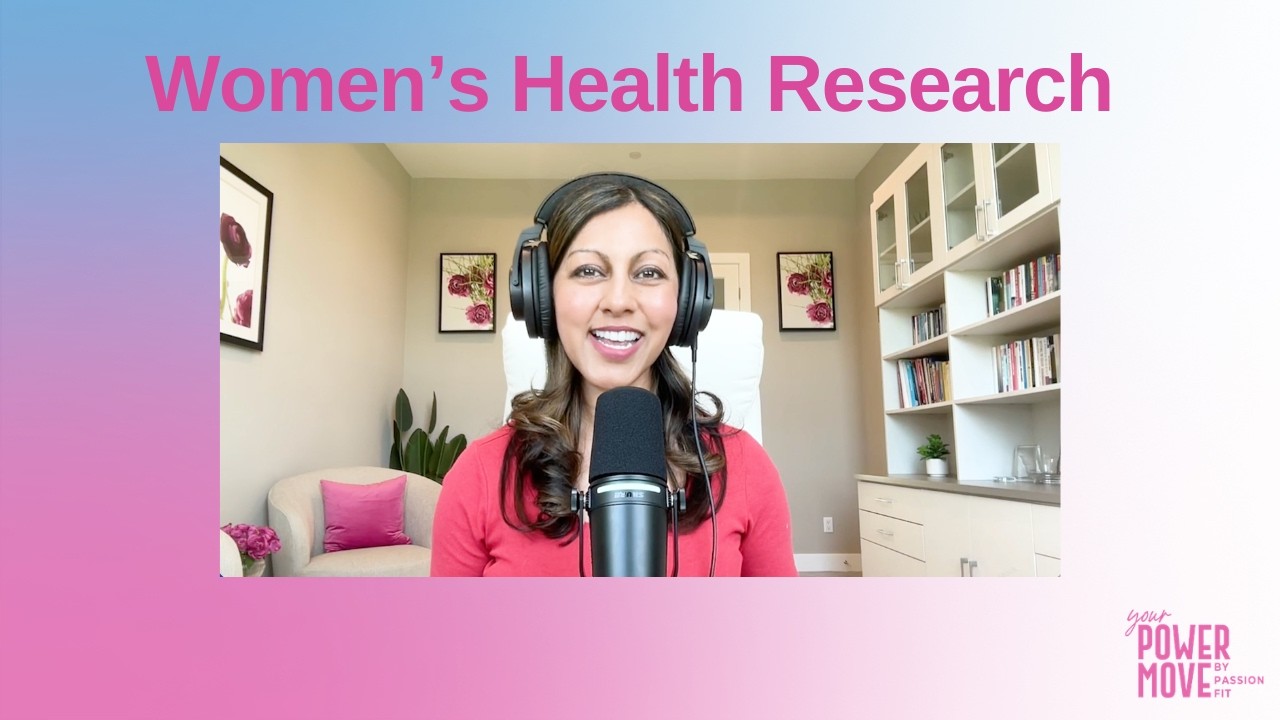
In this solo episode of the Your Power Move by PassionFit podcast, host Reena Vokoun highlights the severe under‑funding of women’s health research, noting that only 8.8% of NIH grants from 2013‑2023 focused on women’s health despite women comprising 51% of the population and experiencing higher adverse medication effects and poorer health outcomes. She frames the discussion within Women’s History Month and Women’s Health Month, expanding the conversation beyond reproductive issues to include heart disease, lung cancer, menopause, Alzheimer’s, endometriosis, and more. Vokoun describes her participation in a 2025 Podcastthon, using the platform to promote the Foundation for Women’s Health, an organization that identifies research gaps, secures targeted funding, and boasts an advisory board from elite institutions. She stresses the importance of sourcing credible health information, leveraging social and digital media for community education, and encouraging listeners to advocate for themselves and others by consulting doctors, asking questions, and supporting the Foundation. Throughout, she ties the mission of her company PassionFit—empowering women’s personal and professional wellbeing—to the broader goal of improving women’s health outcomes, productivity, and societal benefits. The episode concludes with a call to donate, continue the conversation, and stay tuned for future content.
Chapters
According to the Association of American Medical Colleges and NIH, only 8.8% of NIH research grants have accounted for women's health between 2013 and 2023. I'm Reena Vokoun, the host of Your Power Move by PassionFit. Stick around for this latest episode where we're going to be talking all about women's health research. Hi everyone, and welcome to another episode of Your Power Move by PassionFit. This is a really exciting episode for a few different reasons. First off, we are in the month of March, which is Women's History Month. This is a time to recognize the achievements and advancements for women in many different areas, from historically to contemporary society today, and also talk about where there might still be room for improvement. Um, also because of Women's Health Month, I wanted to focus this episode on women's health research. And in addition to that, I am participating proudly in what's called a Podcastthon. This has been put together by an organization that is focused on connecting podcast hosts from around the world. In fact, in 2025, 1,500 podcasters participated in the Podcastthon in over 40 different languages, highlighting charities and causes that are important to them. So I always love to give back and I always love to highlight charities and causes that can make an impact, which is why I've chosen the Foundation for Women's Health to be the charity that I am highlighting in today's podcast-thon episode. Um, all of this really ties into my own personal passions around women's health. The mission of my company, PassionFit, is to empower women to flourish both personally and professionally through wellness. Um, I always want to be encouraging women to take care of their own health and wellbeing so that they can go out and make a positive impact in the world as well, within their careers, with their families, with their communities. And more. Um, so it's just important for me to also find causes that connect to my own personal mission and passions around women's health. That's also another reason why I started this podcast, Your Power Move by PassionFit, because I want to be able to, um, share about topics that can really help women in different areas of their health and wellbeing and their personal and professional development. And I also want to bring on people to interview that can also have, uh, strong voices and advocate for, um, different career choices their own journeys, their own purpose to hopefully inspire others. And again, participating in an event like the Podcastthon really allows us all as podcast hosts to use the medium of podcasting and media digitally from a video and audio perspective to reach audiences around the world to again, make a truly important and strong impact for a great cause. So I'm really excited about this episode and I will be posting a donation link for the Foundations for Women's Health at the end, uh, in the show notes in case you are interested in learning more and donating to this great organization focused on women's health research and getting the proper funding. What I wanted to highlight is the fact that according to the Association of American Medical Colleges and the National Institutes for Health, only 8.8% of research grants focused on women's health over a 10-year period between 2013 and 2023. Um, this is alarming because women make up 51% of the population. Um, also women experience adverse effects from medications at 2 times the rate of men, and women spend 25% of their lives in poorer health than men. So given that women are having some struggles with their health, um, with the right treatments, um, with the right diagnoses for different types of diseases and ailments, um, it's important for us to continue to focus on women's health research. Um, and that's really what our focus is on today. I think we often talk about reproductive health for women, we talk about breast cancer for women, and those are extremely important causes. But there are also many other pressing health concerns for women, including heart disease, which is the number one killer for women, as well as lung cancer, perimenopause and menopause, Alzheimer's disease, endometriosis, and so much more. And so the more we can focus on research and understanding how to treat these types of diseases, again, how to diagnose them, and how women actually differ from men in terms of their anatomy and their physiology, um, and their health needs. And while there is a gap in research, um, because prior to 1993, women were rarely included in clinical trials, um, I do think that there has been some positive progress. Women are starting to talk more and more about their health concerns. Um, as a certified health coach, nutrition, behavior change, fitness, yoga, and mindfulness specialist, I am hearing more discussion about women's health research in my circles, whether it's conferences that I'm attending, whether it's within academia, whether it's within my continuing education studies, um, even my discussions with clients as well as in the healthcare sector. Um, people are recognizing the needs to better understand women's health, which is great to see. Also, social and digital media are contributing and really opening up the airwaves to these types of conversations. Um, people are feeling more open to talk about about their struggles, which then allows women to feel seen and heard and understood. And also that they're not alone and can get education and community from these channels. Now, with any social media channel, it is important to understand fact from fiction, really look at the, the source credibility. If there are research studies being done and trials that are being done, making sure that they are coming from credible and reputable educational institutes as well as hospitals, and just making sure that you're, again, educating yourself and getting the right information from the right sources. But the fact that these conversations are happening is fantastic, and it's really great to see. And that's where the Foundation for Women's Health, um, really comes into play. This organization is dedicated to looking for where there are holes and gaps in research because they don't want to gather funding for areas where research maybe already is happening. So they wanna look at those underserved areas of women's health health and then focus on getting the right funding so those research studies can start to take place. And they have a very impressive advisory board of women's health experts and physicians coming from schools like Harvard and Cornell and NYU and MIT, UCLA, and much more. Um, so I am very impressed with this organization and I love that they're taking a stance and they're really, um, putting this cause as a priority and also trying to, you know, create accountability within the research community. So that's really, you know, an important thing for us all to be thinking about. And I encourage all of you that are tuning in for this episode today to do your own research, make sure that you are understanding if there are any symptoms that you're facing or challenges that you're having, talk to your doctor. And if you're not getting the right answers that you want, continue to press them and ask for recommendations for other resources. Talk to your network. Um, if you have any friends or family members or people in your professional network that work in healthcare, um, encourage them as well, um, to help share information and ask those questions. And don't be afraid to do your own research. Uh, the more we as women can take these types of actions and prioritize our health and wellbeing, um, it's just gonna make all of us much better off. Um, because when we look at the women's life cycle over many different stages, it it is complex. I had a previous episode with Dr. Amy Day where we talked a lot about perimenopause and menopause and other hormonal changes that happen for women in different stages of their lives. And really, there are so many different symptoms and domino effects to health if we don't treat one thing or the other, whether we are in the prenatal stage, pregnancy, postpartum, perimenopause, and menopausal stages. So many things can affect us physiologically, within our mental health, within our emotional health, which then really ultimately impacts our quality of life. So again, ask those questions, advocate, look for organizations like the Foundation for Women's Health that are really trailblazing and creating innovative ways to seek funding for this research. Because when we can improve women's health, it's gonna have such a great ripple effect on women's overall health and wellbeing and longevity, as well as, you know, productivity in the workplace and many, many different economic benefits as well, and benefits in society as a whole. Um, so that is really the focus for the episode for today. I really hope that, um, you learned a little something from this information. And again, I'm so proud to be participating in the podcast, um, highlighting a specific cause and also advocating for women's health through the Foundation for Women's Health and also celebrating Women's History Month. So with that, I will sign off for today, but stay tuned for another episode coming very soon. Thank you so much and take care.