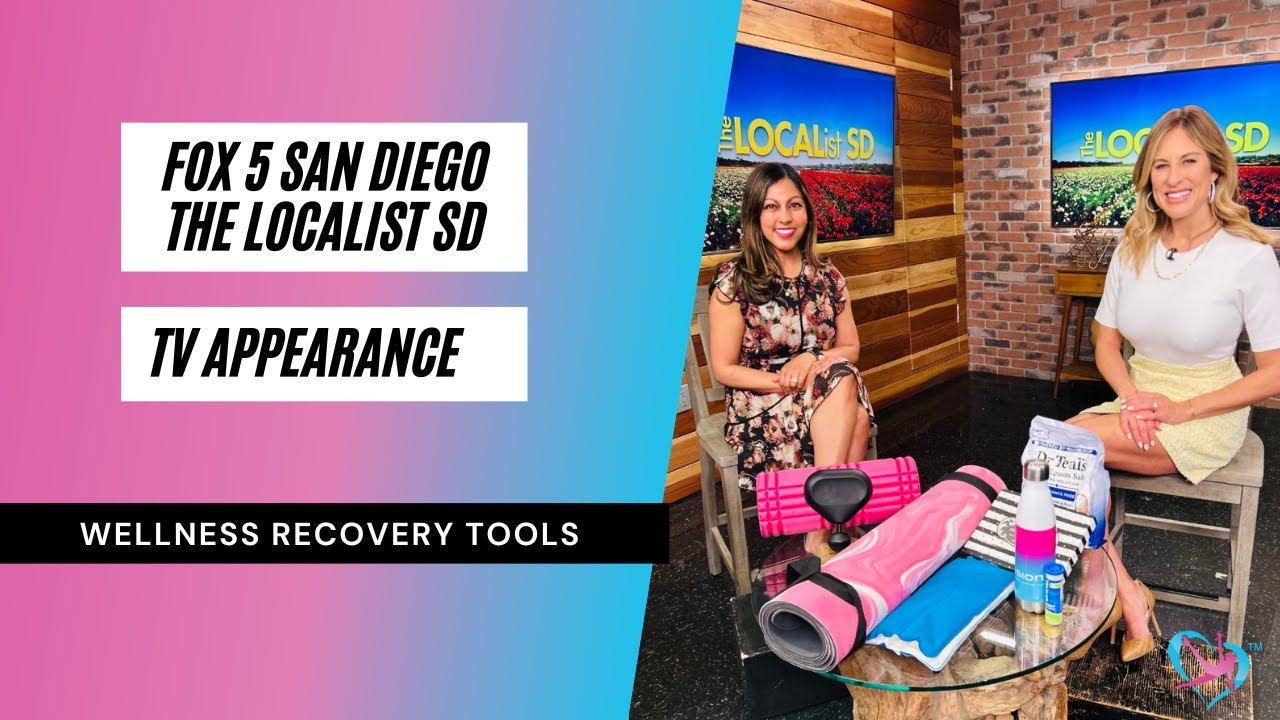
Fitness expert Reena Vokoun breaks down four recovery strategies: massage devices for muscle soreness, dynamic stretches before workouts and static after, ice for swelling and heat for tightness, and hydration based on body weight. Recovery restores your body to homeostasis and prevents injury and overtraining.
Chapters
Reena, equally, maybe even more important to a workout is the recovery, but I feel like that's the part that so many of us often skip. Why is it so important to recover properly between workouts?
Yeah, so according to the National Academy of Sports Medicine, basically recovery tools help to return your body to homeostasis, which is basically a stable environment after any external changes that happen. And while working out is good for us, it does create a little wear and tear on the body. We get muscle tears in our muscle tissues, um, dehydration. It changes your body temperature, your circulation, and so much more. So having these workout recovery tools can help prevent against injury and overtraining and just help you get stronger for the next workout.
And I see you brought a massage device with you as well. Those are great really for the whole family. You can help each other out or do them on your own.
Absolutely. If you don't have time to actually go to a spa or a sports clinic to get a massage, a massage tool is so great because it really helps to promote, um, relaxation, lymphatic flow. It helps with any muscle soreness after a workout. Again, it might be a little painful if you're working through some muscle knots. If any of us have ever had deep tissue massages, we were talking about that earlier, those can be really painful. So be careful with it. You could always go a little bit lighter with less pressure. Pressure or work on a different part of the body, but massage is really important as well after a really grueling workout.
Okay, and something else that literally costs no money, stretching. I see you brought a yoga mat, but you could just do this on your carpet.
Yes, exactly. Stretching is so good for your overall flexibility, for your mobility, and for overall increase in range of motion. Um, when I teach my fitness classes, I always do a warm-up and cool-down, but it's important to do dynamic stretching at the beginning of the workout so that you're allowing your body to still generate heat. Because usually your muscles are kind of tight. So move through the stretches in the beginning of a workout, but at the end of the workout, it's great to do static stretching. This is where now you're probably drenched in sweat, and this is where you can really make changes in your flexibility and push and hold those stretches for 15 to 35 to 45 seconds. So stretching is a must.
Okay, and as a fitness and nutrition expert, you know the difference between hot and cold therapies and when to use each. So what can you share about that?
Yeah, and that these are becoming really popular in the health and wellness industry. Industry and in our world. So there's hot and cold therapies for different situations. Obviously, if you're having a lot of swelling and inflammation in the body, you know, you did something where you can actually see your ankle swelling or something like that, you're going to want to focus on ice. You could do cold plunging, cold showers. I think I saw a segment where you went into a cold plunge.
I have done a few of those on TV.
Yeah, exactly. And they're not the most fun in the moment, but they're so good for healing and recovery. So that's when you would use cold therapies. Hot therapies, which is my personal preference, is more of the steam room and the sauna, getting in the jacuzzi, doing an Epsom salt bath, and that's really, again, when you have that muscle tightness and stiffness and you're trying to promote that relaxation and blood flow in the body. So you kinda have to pick and choose depending on what you're feeling after the workout.
Okay, great. And then really all day long, hydration is key to it all.
Yes, absolutely. When you're working out, even if you're working out outside, outside in hot weather, that's when you really lose hydration and electrolytes. So it's really important to be drinking at least half your body weight in ounces of water. So if you weigh 120 pounds, you want to get about 60 ounces of water, and then more than that if you have really been sweating profusely in hot weather. And then electrolyte replacements are really great. Obviously Gatorade is the one that most people know about, but it can often be packed with sugar, so you might want to pick the low sugar or no sugar options. Or this option that we have here, you know, any sort of tablet form is another great way to stay hydrated. And to, again, get your body kind of, you know, refreshed again after a workout.
Okay, great. Well, people can see you monthly on our show, but where can they stay in touch with you? Tell us all about staying in touch through PassionFit.
Yeah, just go to passionfit.com. All of my social media channels are connected there. We have an online boutique, so some of the products that you see here, the yoga mat, the water bottle, we have lots of great activewear and healthy lifestyle products. So feel free to check it out, and PassionFit's always here to help if anyone has any questions.