REinventing China's Real Estate dynamics with Dom Penaloza
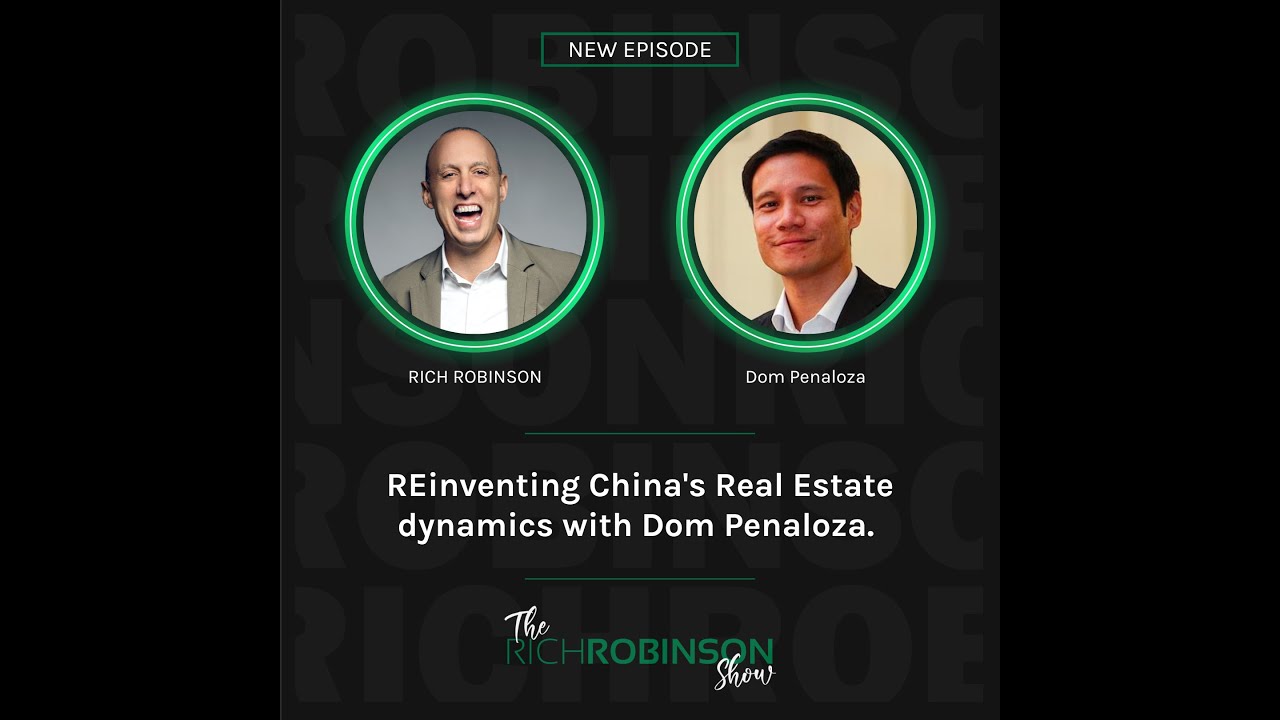
In this episode of the Rich Robinson Show, host Richard Robinson interviews Dom Peñalosa, a veteran of WeWork and Naked Hub, about his new venture Reinvent (capital‑R, capital‑E) that aims to overhaul China’s real‑estate market. Peñalosa explains how traditional real‑estate, rooted in centuries‑old landlord‑tenant power dynamics, can be democratized by allowing users to rent space by the minute via a QR‑code, a concept inspired by China’s pragmatic, rapid‑iteration culture. He introduces Switch (switch.site), a two‑sided marketplace that aggregates coworking, co‑living, hotels, clubhouses, and shopping malls, enabling any spare square meter to be monetized on a pay‑per‑minute basis. The discussion covers the lag of prop‑tech compared to fintech, the challenges of building physical‑world products, and Peñalosa’s “incubator‑factory” model that repeatedly launches tech products using the experience and team from previous ventures. He shares traction: backing from major investors such as GIC, Fraser’s Properties, Daito Trust, and Justco; two funding rounds within a year; 4,000 desks across 50+ locations in Singapore; and a growing roster of corporate customers. The conversation also touches on the importance of founder experience and networks, the potential to scale globally (e.g., Bali), the realistic expectation of failure, and the cultural shift where China now leads innovation that other markets copy. Throughout, Robinson and Peñalosa reflect on entrepreneurship’s hardships, the need for resilience, and the excitement of reshaping a trillion‑dollar industry.
Chapters
Hello and welcome to the Rich Robinson Show. I'm your host, Rich Robinson. Over the past 25 years, I've been an entrepreneur, investor, advisor, and professor here in Asia. After nearly a quarter of a century in China, I'm now based here in Bali, Indonesia, the island Asia is my home now. 60% of the world's population also lives here, but I would contend 80% of the world's dynamism and opportunity is right here in the region. On the show, you'll hear candid and fun conversations with some of my friends and colleagues, people I've met along my journey, entrepreneurs, operators, experts, It will help you unlock actionable insights around the Asia region and the entrepreneurial agility that actually defines it. This first season, season one of the Rich Robinson Show, is titled At the Speed of China. Like, wait for it, at the speed of light. Things happen fast in China, and in this season one, we're gonna Take a deeper look at that. The rapid economic development over the past few decades, as well as the speed and cycles of innovation taking place all day, every day right now. Let's go, Jio! Dom Penelosa, Nushenman, Shuangling. Welcome, my friend. You are hailing from Shanghai right now. in Bali. And we know each other from the curiously fragrant harbor that is Hong Kong back in the dot-com boom days in 1990, in the 1990s. And welcome to the pod, my friend.
Yeah, thanks, Rich. It's great to be here. Thanks for having me.
Wonderful to get back in touch. It's wonderful to actually like leverage this podcast as a way of like kind of like therapy and also like refreshing my network of like good people to like catch up and let other people kind of listen to that. So I appreciate you taking the time.
Oh, likewise. My pleasure. I feel like I should have a Beer here or whiskey or something.
Yeah. Or at least I'll raise my mug of joe to our old friendship. So I remember back during the dot-com boom times, you know, it came a little bit later to Hong Kong. Like it was probably like '98, '99. And I was in the dot-com house. It was literally called the dot-com house. It was printed out in this old dot matrix printer that had like the little holes on the end of the paper that you could, that you could peel off on Wellington Street. And your startup was just around the corner in a little bit of a plusher, nicer place. I think you chose well your offices. I remember hungry for words to go up in—
They sent up on Midhurst Terrace.
The workstation.
Yes. Wow.
That's the workstation because there was like workstation computers. So we both had like these throwback kind of how embarrassing it is for us to have worked in places like that more than 2 decades ago. Right. It was always like I-something back in those days. And now it's going to be embarrassing for crypto or for whatever else is connected, but let's take Our listeners back to your origin story way back where you grew up and that path to where we collided in Honkers.
Yeah, okay, sure. So by the time we met up on Wellington Street, and I guess that was probably '99, I had already been in China and Hong Kong for nine years.
Whoa, what? It's already been that long. Oh, I knew, but I didn't know it was that long, man.
Next year will be next year will be thirty years for me here in either China or Hong Kong. So that's that's my whole adult life. So I came to China straight. Out of university, before that. So hi everyone, I'm Dom Dominic Peñalosa. So with a name like that, I'm Chinese Filipino. So I guess it all everything starts with my great grandfather.
Yeah. Oh, do tell, do tell.
Nice. Yeah.
I didn't know that.
That does a lot. Maybe that explains a lot of what I'll share today. So my grandfather, great grandfather had four wives. He's from Xiamen area in China, and his third wife was Filipino. So my grandpa is half and half, and he immigrated to Philippines. So he's like Philippine Hua Chao, Chinese Filipino. You know, had tons of kids. And then my dad met my mom at McGill.
Oh, in Montreal, Canada. Excellent. The Harvard of Canada. Yeah.
Kind of romantic story. So these 2 roommates from Xiamen, they both chose Philippines. They both moved to Philippines. One guy had 10 kids and the other guy had 7 kids. And then son number 4 and daughter number 3, they both get into McGill at the same time. And then the one father would say, McGill, that sounds familiar. I think my buddy's Son is going to that school. Let me call him up. One guy was up in Manila. The other guy was down in General Santos City in the southern Philippines. And then my dad picked up my mom at the Montreal airport and the rest is history.
Beautiful. Like, you know that story well. Like, that's beautiful. Like, you recounted it with like accuracy on like the birth order and everything. I love that. I love when people can know their heritage so well. Oh, proud thing.
I think we're really into it. I mean, I'm sure you've met people from southern China where Some ancestor laid out the next 12 or 20 generations, lays out their names, right? So they have the first character of the first name of the next 10 to 20 generations. So my family is one of those named Lu Hanshen. The Han was predetermined, like ages ago.
Oh, that's so great.
Yeah. Yeah. So we think it's important and we just keep oversharing the story.
So I—
That's beautiful.
Beautiful. It's a proud thing. That's great. And I'm on the board of a company called My China Roots. It's a guy. who grew up in the Netherlands, 7th generation, 6th or 7th generation, and all previous generations were in Indonesia. But he wanted, he had, he had, I think, 3 or 4 generations back, but he wanted to glue it all together. And I think there's so many more people, right? It's, it's like super cool to be Chinese, right? With like Crazy Rich Asians and the rise of China and like all that heritage. People are like, wow, like I want to know my heritage. Right. And I did that with my Irish heritage. Right. Same thing, like ridiculous number of brothers and sisters in all of Generations, and I know birth order and how people met. And it's like, yeah, and I push that on my kids too. Like you really should. People should know that, right? And I think they they have historically. So it's important. Thanks for sharing. That's great.
It's on us. With globalization now, it's easy for young people to just move and live all over the place more and more. So it's it's even more important to let them know about about their story.
Yeah, and and also I've been making I've been calling you Penelosa for my entire time that I knew. Of course, it has that Spanish. Filipino connection as well too. So Peñalosa.
Yeah.
Sounds wet.
That'll do. We got rid of it because it's too complicated. It's just, it just adds like 3 minutes to every encounter. So we lost it, but that is the proper way to say it.
And the other thing that I've become hyper aware of that I knew before is that the Chinese diaspora or diaspora, however, however you want, or Peñalosa, um, it's like, it's already so well established in Southeast Asia and so dominant, right? Like the Chinese families in the Philippines and In the Indonesia and Malaysia and Singapore and Thailand, like there's like such a outsized representation of just like wealth, and it just makes total sense, right? Because Chinese came down with that kind of like ambition and drive and speed, and just all that kind of cultural sort of muscle memory, and then banded together, and then became so dominant around the region, right?
Yeah, the best story is when it was Magellan who discovered the Philippines in air quotes. When he arrived in Cebu, and there's a whole memorial, and there's a. Statue in the beach where he landed with his galleons and his conquistadors and his priests and all that. But he he discovers the land, and he names the Philippines after King Philip. But the reason why Cebu was called Cebu was because there was all these Chinese guys already living there, and that's actually Chinese for "sombu," which is the Hokkien dialect from Fujian. So exactly to your point, like they're like very entrepreneurial and just not afraid to chase after a better life. I think that's what drove them all throughout all the countries that you mentioned, all the people from like the Southeast corner of China.
Incredible. Yeah. That's why my 2 teenage boys have, are half Chinese because I needed some chlorine in my Irish gene pool to China, you know? So anyway, that's great. Excellent. Great backstory. And, and then you grew up in Toronto. That's where my wife is from, which, you know, the Six, T-Dot.
Cool. Yeah.
Represent. I'm an honorary Canuck through that now.
I did not know that. Yeah. Okay. Well, something else that we should catch up over.
And a pretty, a pretty diverse city. I think like one of the most sort of like aggressively sort of like, let's, let's make it diverse and let's really kind of lean into that. Did you have a good experience growing up as an Asian kid in the, in the, in that city?
Yeah. That's how I, that's how I describe Toronto to everyone. It's just so multicultural. We take it for granted over there. My babysitter when I was a really young kid was a Miss Mirza, Indian lady. We used to go to her apartment. We eat rice with our hands, the Indian style. And then when I was in grade school, the reason why I can't speak French, I don't know if Em speaks French, but every Canadian has 6 years of mandatory French, right?
Yes.
But my teacher was named Hakim Subrati and he was directly from Pakistan. And I have no idea how he learned French, but he was not the best French teacher. Shout out to Mr. Subrati if you're ever listening to this podcast. But this just shows you how international it is in Toronto. It's like the coolest part of it.
Indeed. Indeed. That's great.
Wow.
And then I guess you had, you know, and then you went to school in Canada.
Yep.
Yeah.
Always thought I'd be an entrepreneur. My 2 parents are both entrepreneurs. All 4 of the grandparents are entrepreneurs, which shouldn't be surprising considering the story I just told. But so I always kind of thought I would be as well for some unknown reason, like, yeah. Not so.
So, so my dad was too, he, he ran diner donut shops, but tell me a little bit about your family, like some of the stuff that you experienced and got through osmosis.
Well, you'll appreciate this. I think what brought us to China, what brought me to China is bearings, ball bearings. That's like they say in Fletch. Is that right? So yeah, after World War II, Philippines was rebuilding and there was a big opportunity to bring in imported bearings because the Philippines didn't have the manufacturing base to make bearings, relatively sophisticated industrial parts. Well, some of them are relatively sophisticated. Others are ultimate commodities. But anyway, yeah, built a business importing and distributing bearings. And back to the whole Fujian tribe across Asia, it's the number one occupation is traders. And I think that's what those guys lived when Magellan arrived. They were traders, no doubt. And then, yeah, my dad had the, when he was 20-something, he had the guts to, he went to Tokyo and he asked for the distribution rights to Philippine market for a certain brand of Japanese bearings.
Wow.
And so. That's kept my grandparents and my dad busy. And then when I was graduating from school, I always thought I'd be an entrepreneur. So I went to business school at University of Western Ontario, which is just outside of Toronto. And then at that, this is 1992. So I think ultimately it came down to, should I— I got an offer from Andersen Consulting back in the day, Accenture was called that, and stay there in Toronto and be a white collar worker, or China was just reopening. China was just a sleeping giant, just beginning to wake up. And my grandfather was telling me, man, He was always like a stridently passionate Chinese. So really supportive of his hometown, which is a really poor hometown. So he would always, there's only 2 guys from his hometown who got out of China to build more opportunities outside. And those 2 guys gave back a lot. This is a very tiny town, 2 hours outside of Xiamen. Even in 1992, there's no streetlights, really basic. So he said, if I was you, I would definitely go back to China. It's like—
That's amazing. Because a lot of people of their generation were like, forget it. Like I got out and I barely got out, like, don't Even go back because '92 was not attractive. Mandy Clue's so close to they're still so close to Mao and the Tiananmen Hangover kind of right? So it's like, so it's like you had to be he really like smelled the future in the right way, right? And then Anderson Consulting like that's a good gig and you went to the best business school in Canada, right? So it's like that's a that was a risky move for you. That's a nice work.
Supposed to be a one year as you as many people have the experience. It was supposed to be a one year experience over here in China. And yeah, that was 29 years ago.
So you said you went to China to get your bearings. Thank you. Good night. Like you never heard that before. Anyway, if this podcast cuts out, I know that it's not the internet. It's just you.
It's just like the gong.
Wow. So '92, did you actually go to, did you go to Xiamen or did you go the, where'd you land?
Yeah. Good question. I landed in the Nanning International in Guangxi Province, which is south China. Closer to Hanoi than it is to Hong Kong.
Indeed. And one of the top lowest, maybe top low 10%, bottom 10% in terms of wealth in China, right? Like, that's like China with a capital C-H-I-N-A, right? That was like '92, but it was more like 1942 back then or whatever, right?
Yeah. There was very few cars. We, I know that because we were lucky enough to have a car, some, some average Toyota, but it was like one of the few cars in the city. Most people were on bicycles or motorcycles. So for me, it was a great time to learn how to ride a motorcycle and use that to get around, playing basketball outside under palm trees. Yeah, it was really awesome.
So it's interesting. The first time I came to China was by train through Siberia. And this guy on the train's like, Forbidden City, Forbidden City. My grandfather told me, he's a white guy from Tennessee about the Forbidden City. We go to the Forbidden City and there's a bunch of soldiers there, like guarding the Forbidden City, but they had hoops set up outside. So my first experience in China was playing hoops and basketball indeed is like the most popular sport in China, right? Because it's such an urban sport and it's so easy to set it up, right? Compared to soccer, football, or other stuff. So you're playing hoops in the early '90s in just without missing a step. That's pretty awesome.
Oh, it's such a great time. And it made, what made it even more amazing is I managed to convince one classmate of mine to join me on this adventure. This guy from small town Canada, from Kingston, Ontario. An hour outside of Toronto. Me and Robertson, very Scottish name and person. And just for all the people who are considering China on this podcast, so I literally witnessed my friend, 100% Canadian, no Asian background, 7 months later doing sales calls in Chinese. So it's a language where you can kind of quickly—
Yeah, China is accessible to get going. It's much more accessible to get into than people think, but then of course When you really get into it, then you're like, this is a lifetime and then some, but that's great.
Yeah. I spent the next 25 years stuck at this level, half fluent, not so great.
Did you speak Chinese with your grandfather or a dialect or was there?
We spoke the dialect, but it's really far. It's like 80% difference. Hokkien. So that helped. It helped a little bit to get going. No doubt.
So, wow. In the deep end in Nanning. How long did that last?
That lasted a year, about 6 months in Nanning and 6 months in Xiamen. So my dad was very crafty. So he committed first, right? So he said, I'm setting up my business in China. Why don't you come and please help me out? Help me get it started. And you've never been to China before. You really should check out your ancestral homeland. Let's, we're taking a trip to Xiamen, which is where everybody's from. Yeah, great. Sounds great. Oh, by the way, my friend is joining us for dinner tonight. Hopefully that's cool with you, right? Yeah, sure. Cool. His friend shows up, Alan. This guy is another businessman. And he, and then Alan says, oh, I hope you guys don't mind. My friend is joining us tonight. And then in walks one of the 10 Miss Fujian 1992. And these guys set me up completely like it's totally a plan, but I totally fell for it as this 22-year-old guy and 22-year-old unattached man. So that helps. That was really a cool part of the whole experience as well. Then I spent 6 months in Nanning and 6 months in China during my first year out here.
Love it. Wow. Really, really exploring your Chinese roots through your language study partner.
There you go. That's right. We spoke. We spoke Hokkien to each other instead of Mandarin. My Mandarin was worse than my Hokkien. Then it was a 1-year deal between my father and I. So I'll work, I'll help you out for 1 year, but then I'm going to seek my own path. Yeah. Meanwhile, me and my buddy, and same for him, right? He also said 1 year, I'll come and experience all this. So he and I, we used to joke like we single, you know how for business schools, it's so important to report the average salary of each class, right? It's like one of the You guys, we totally destroyed the average of our class because our school only has 144 undergraduate business students per year. It's not, you know, we're 2 out of the 144.
But in China back then, you could have worked at Mickey D's in downtown Toronto and brought it up probably more. Right. But the crazy thing is now you work in China, like you're pulling it up if you have a good job in China. Right. So it's like how the turntables have turntabled. Yeah.
Yeah, that's true. It's especially here in Shanghai. It's very globally competitive now, 29 years later. But at that time it was really, really basic. There was very low level of medical care. My friend, one day he woke up and his 2 legs didn't work. It was really, really scary.
I think he needed those.
Wow.
That's some, that's some hardcore baijiu. What was going on with that?
Well, we never really got a great English-speaking doctor in the whole place. And they just gave him some shots and some medicine, and it was really scary for a few days. But after about 3 days, he was able to move his legs again. I really, I mean, in those days, the airport didn't even have a washroom inside. Well, we touched down and there's a building, but just a very, very small building. And that's where the washroom is and got directed to this, literally an outhouse built over a pond, like on a wooden platform, no plumbing. It's just a hole.
That's cool.
Looking down into the park. And that was the international airport back in those days. So yeah, we had—
And I'm guessing like that, I've never been, the Nanning airport is probably 3 times better than the Detroit airport now. Right. So like, that's probably like just leapfrogged.
I haven't been around for a long time back to Nanning, but I've seen photos of the beautiful airport. Somehow there's a lot of trees around and in the airport.
Well, that's because they had all that fertilizer. And then how did you end up, what was your path then to Hong Kong? Were you in Hong Kong right after that then?
Yeah. So what happened was, so we dragged down the average of our class, but all of our classmates were doing the typical stuff like investment banking and consulting and all that. So it looks really glamorous from that perspective, especially after the year that we had been through. So anyway, we somehow talked our way into joining an investment, an American investment bank in Hong Kong. Back then it was called Smith Barney, then became part of Citigroup, but now I think it's part of Morgan Stanley. So yeah, switch from the jungles of Guangxi Province to Central District Hong Kong and just went into finance, did the whole corporate finance investment banking thing. And it was a different kind of fun. And for me, that was like the first year out of the next 6 years I spent in finance, in, but mostly in private equity. So I was working in private equity for Dr. Victor Fung at Prudential Asia, the private equity fund.
He's a rock star.
Yeah. Back in the day, it was one of the biggest funds in Asia.
That's great. Did you get much face time with him?
Yeah. There's only like 20 of us.
Wow. That's so great. Like you're starting your career. That's what you want. You want somebody like that who's just like an absolute rockstar to have a mentor.
So smart, so dynamic and so hardworking. It's can't compete. So that was a really awesome experience and his partners as well. It had a real great culture in the firm, almost like uncles and had a lot of fun and got posted around Asia. So 6 months in Jakarta, like a year in Sydney working on private equity and then the internet happened, but now it's the late '90s and this whole, the original dot-com boom was in full swing.
Excellent. So you started to get the itch.
Yeah, exactly. So we're in that generation. So we're like those kids from the '70s, the kids who grew up with personal computers and video games and just fascination for that kind of stuff. So we're just really in the sweet spot. A little bit late. I mean, sitting in the private equity cushy job, flying business class, like, wow, these are, this internet thing is really cool. But flying business class is really cool in a way as well.
Someone once said the 3 most addictive things on the planet are heroin, carbs, and a salary. And not in that order. Right.
I thought you were going to say business class.
Well, yeah, but that's the thing. Salary slash expense account slash status. Because when you, especially back then, there was no status of being an entrepreneur. Like there was no coolness around it. You were completely like no salary, no perks. And you're a what? Like what? And the internet's kind of, some people are like, the internet's bullshit. Like it's kind of like, there were, there were people, old school people that were like, there was no advertising. model yet. There was no e-commerce yet. There was no real business models. Companies were worth a lot of money. There was no term as unicorn then, but a lot of people were like, bah humbug, this is, you know, just a farce, fraud. Right. So.
Yeah.
Yeah.
Yeah. To some degrees, including our own private equity firms. We were passing on a lot of investment opportunities because we were evaluating it in a very old school way. So I was assigned at the time to our worst investment, which was a TV home shopping company based in Sydney, operate around the region. Including Japan, Indonesia, and China. And eventually we took it into the Australian version of Chapter 11, which they call voluntary administration down there. So bankrupt, terminate all those expensive satellite contracts from Japan and Indonesia, and, and try to stay alive. And went through that restructuring. 13 months later after the bankruptcy, it actually, we listed it on the Australia Stock Exchange in the summer of '99. And of course, the way we did that. Is to turn it into an e-commerce company, internet company, and you know because they had real time. They were selling stuff real time through TV, and that's very similar to or there's some of the skill sets you need for e-commerce. So we took it public, and it was such a cool journey. And and I took a holiday, and that's where I started having my own internet. This model idea. So that hungry for words that you mentioned before, I like. I wrote up a PowerPoint, and then I resigned in October. '99 is like near the peak now.
Sure. 6 months, 6 months off the crash, but yep.
That's it. I didn't, we didn't know that at the time.
So who knew?
Raised $2 million at an $8 million pre. I didn't even know what I was doing, frankly. And it's one of those stories that you raise money with a PowerPoint.
Yeah. Back then it was definitely just an idea and a few slides.
Yeah. Yeah. And then just got it going. So we, we started building it in like December, paused for the mega 1999 New Year's holiday, like the New New Year celebration. Some people thought the world was ending.
Y2K, but also that Prince song. Everybody's like, I want to, I want to be drunk as hell, but not so drunk that I'm not there for when they play that Prince song.
So we paused for a bit for that and then got it going and we launched Hungry for Words in February 2000. And then the peak of the bubble is in May. So we had like 3 months of good time and then that was it. Everything started.
So here's my, because everybody has a different history of everybody else. Like here's my view of you back then. Then number one, like real deal. Like, you know, like there were so many people that were like, I'm a CEO. And it's like, what did you do before? I was a sysadmin, right? And it's like, you know, then they're like, you know, I know some HTML and now I'm a CEO of a company, right? So it's like some of those people went on to do real deals, but for the most part they didn't, right? And like, you were like somebody who has like options and, you know, education, experience, intelligence. I'm starting a company. So I was like, wow, this, this guy's like a founder who's got some chops behind him. Number 2 was that you had like funding and some, and you'd launched in a way, just your professionalism and your sort of attention to detail. And it was just, it was at a different level. And I thought the idea was great. It was just like way before its time, but then so many things were way before their time. Right. So that's when I was like, I became a founding member of the Dom fan club back then. Right. So tell us some of the trials, tribulations, and triumphs of HFW, Hungry for Words.
Well, long story short, we managed to turn it into a small but profitable real business. And which is, which is back to the basics. So maybe, sorry, I was probably brainwashed by private equity 6 years on VC funds to think that, hey, you better, you should make some profits. So yeah, we, the model was built to be profitable from the beginning. For those who don't know Hungry for Words, it's, we tried to teach English through email to China and to Japan. That from my experience running around in that 1992, running around China. And as you know very well, in those days, if you spoke good English, that's enough to be a little bit of a rock star over here. People would flock to you and just want to talk to you. That's no longer true. But back then it was people were hungry for words. And so we try— it's an email service that helps people build their email vocabulary.
And I love it because I subscribed for a long time. Push, right? Like Push was a really good like insight for you, right? Like that was a— and that of course today is like people push alerts and messages. And, but like, that was like, it seemed old school because it was email, but it's actually really smart because now you're contact with the user all the time. So that was a, that was a good feature. Yeah.
We tried to get it off the ground in China. So I think we had 200,000 registered members in China. At the time we had 55,000 registered members in Japan, but we couldn't even get $1 of revenue in China, whereas we were starting to get some revenue in Japan. And one day our server went down and people started to call our Tokyo office and say, excuse me, is this Hungry for Words? And the Yep. Well, I haven't received my email today. Is there a problem? And I should expect it. We're onto something here. We're onto something here. This is important to some people. They're starving for words.
And Japanese people have money too, right? So that was like, that made total sense back then. It was such a disparity, you know, 20 years ago, like they were not price sensitive then or now, but China definitely was.
Yep. That's right. And the whole digital ad space in China was much more wild than it was in Japan. And, you know, eternal shout out to SoftBank. So SoftBank threw me a lifeline and invested a very small amount of money in my company, but otherwise I probably would have gone bankrupt in 2001. So they— eternally grateful to them. So they put money in, we agreed to focus on Japan. So I spent the next 2 years building it up in Japan and to become profitable. At the same time in Hong Kong, just to keep us humble, you remember that old conference?
Well, I was the founder of that conference.
You remember? Oh my God. So surely you remember. Well, so our old friend, John Hakim, so he's around here in Shanghai, right? It was about like not that long ago, maybe 18 months ago. He sent me on WeChat. He sent me a screenshot of the INI May 2000, like a screenshot of the website. And it's like Thursday's presentation is by Dominic Nielosa of Hungry for Words, right? But what's amazing about it is to just to keep us all humble right And kudos to you as the founder of INI, because 2 slots before me was named Jack Ma. Yes. Some guy named Jack Ma. So, hey.
So it's funny. I talked about that in an earlier podcast. You're like, hey, Victor Fung is like, you should be profitable. Jack Ma, when we brought him on, he was like revenues. Like he didn't even care about revenue. He's like top line. I don't even care about, right? He said, we're running too fast for revenues. And like, that's actually one of the opening lines in my book is talking about speed. Like for Jack Ma back then, like speed was like, I don't even care about revenues. I'm just caring about eyeballs and users. And one of the guys that I brought in, he was probably my age now. Like I'm 54 this summer. And he was a charlatan and like slammed his glass down when he said that. And he's like, this guy's full of shit and like stormed out. And I was like, no, don't go. But like, definitely, you know, Jack Ma then kind of did okay after that. Right. But we had like real people, like on the front lines, the man in the arena. Like that's one of my favorite poems, right? The man in the arena, like covered in sweat and dust and blood and like in there fighting. And you were definitely, you were that man in the arena. Right.
And like, there's, you know, Roosevelt, that's a great quote for an entrepreneur. It can keep you going when it's tough. I love that quote too.
Oh, that's great. That's super cool. I want to, if you could send me that, that screencap, I'd love to post that in the show notes. And hey, did you have a Masa sighting when you did get that SoftBank? Did you ever meet him?
I wish I could say yes, but no, that was run by Kitao-san. One of the right-hand men of Masayoshi-san.
Because, you know, Masayoshi-san famously made that investment into Alibaba and talking about Jack Ma, people think it may be the best investment in the history of mankind, right? Although maybe the angel investment in ByteDance might be, you know, TikTok mothership. It might be better, but yeah, excellent. And then, all right, so great. So actually what I knew that you had, like, it was so improbable to have any kind of a good outcome. Even if you were doing well during the dot-com boom, right? So for you to be able to like pull that out of the ashes, like that's pretty extraordinary. Like props to you, my friend. Like it was a really different beast back then. And to be able to crack Japan, like that was like, that was some secret sauce. 'Cause then you're like, okay, that's one of the few places where you can get people to pay for stuff, right? And like, so that was a good, but you had like this industry insider secret, like you had been there and like you had been on the ground and you had like tasted And I think it wasn't like you just like shooting from the hip, right? You felt the pain and you saw the pain and you made a lot of like right decisions, right? About like cutting China and doing the email push and getting the SoftBank investment, right? So it's like all those little things nudged you to an exit. And I don't even care. I wouldn't even need to go into the details. An exit is an exit is an exit. Like the most likely outcome is absolutely all-encompassing, magnificent failure. So if you have an exit, Then let's have a parade. I don't care what happened, right? So that's good.
Thanks. Thanks. I mean, slightly more right decisions than wrong, I guess slightly, but that's, that's how it works. And, and that ultimately led to World Friends and to Yoshi Wong and to Naked Hobbit. Yeah.
So like, take us into that. So you were like the, you know, then you reinvented yourself again and again and again. Right. But like, I think World Friends and like Yoshi Wong, like Yoshi Wong was like excellent. It was like something like, damn it, I wish I had started that.
Well, that's my, that's my expectation. Crash and burn. Still story. Yeah. Zhou Shuang. But no, it's all good. So, you know, had 200,000 Japanese people on Hungry for Words, kind of small profitable company. But as you said, they're willing to pay for stuff and pay for services, which, which at the time was very different than China. And so we launched World Friends, which was meet your neighbors in the global village. It's still back to that yingwen zhao, the English corner and the language exchange. And as you also sort of hinted before, when we spoke about Fujian, its language exchange partner. So World Friends was a community, but with a dating subscription business model, built that up to 5 million members and a couple million bucks of revenue and getting revenue from US, from Japan, from China, about 8% of our revenue is from China. And so then starting to scale up, we had about 40 engineers and 50 people in total and started building our office here in Shanghai. So then I decided to move to Shanghai. So moved here in 2006. From Hong Kong and running around living in Shanghai, and at that now at this point in time, Facebook had just launched in 2003. So social social was a new thing. There was MySpace, there was Friendster, and all that. So when World Friends came out, Facebook was still relatively new company, and then LinkedIn launched about a year after that. And I personally, I was a big fan of LinkedIn as a kind of introverted person by nature.
But are you?
Yeah.
Yeah. Wow. You bring out your inner extrovert well.
You, yeah, you have to do it if you're going to be in business. And yeah, you intellectually, you know that you need to be doing that. But it takes a lot more energy for us introverts than it does for extroverts. We can do it, but it's just more costly. So LinkedIn is great because you can do part of it, like just sitting here. So I was a big fan of LinkedIn and I was, I was using it as a real user and getting value out of it. of it. And I was asking all my friends, like, how come there's no Chinese LinkedIn? Right. So anyway, I decided to start one of my own. That's Youshuoarm that we were talking about. So brilliant marketing, if I may say so myself.
Oh, absolutely. The way you launched it, the way you did everything was, was, was really like, that was definitely your third startup. Like you had like learned.
Yeah. I learned that part. But what I didn't learn Which what I wish I had learned by then was this concept of product market fit, which I wasn't aware of back then. We made, meaning that we thought that our product already fit because it was exponentially growing in number of users because of our brilliant marketing, which just to share the story with everyone, it was an, imagine an invite-only LinkedIn, but started by 100 Chinese business rock stars, but including a lot of VC So the it was like a who's who of the China early stage internet investment scene, where the first hundred members and they invited their friends and their friends invited their friends.
And it was so well done. It was like really, really a whole different level. But back then, product market fit was not like Lean Startup hadn't come out yet, and people were still feeling stuff out, right? Moja sherto gola, right? Crossing the river by feeling the stones. People still didn't really understand. There was still so much. Opaqueness around business models and how to really do startups well, right? Yeah.
A lot of the sort of frameworks and tools that we have now as product managers weren't quite developed back then. Yes. But fundamentally, we still knew that we needed to deliver enough value back for every user. And we weren't— our Youchuan product wasn't doing that. So eventually, after 3 years of trying, it actually just failed.
But even to this day, nobody's really cracked that in China. Either, and even LinkedIn has in China in that Chinese people that want to do stuff with people outside of China, they own that right. But then of course they're gonna own that. There's nobody else that's in even distant second place, right? But and I think also I met Eric Reese once, and you know if you read his origin story, like he launched a company that was like here's our vision, here's our product roadmap, here's the team that we hired, here's the budget and the timeline, and they were just like check check check check check check check. Check all the way down. They nailed it, you know, under budget, under time, amazing team, amazing product. Just like, oh, nobody wants this shit. Whoops. Right. And so it doesn't, it kind of doesn't matter. Right. So it's like, but you really, I think, set a whole different bar on the UI, UX/UI, the sensibility, the launch. Like you did a, like, it was really extraordinary. I remember that back then. Right. So kind of like keeping in line with your impression that you made on me with Hungry for Words. Right. Yeah. So I mean, like it was well done. And did you ever meet Reid Hoffman when he came sniffing around China?
Yep. He's one of the reasons, and we're still in touch today. He's one of the reasons I started Yoast Hua.
Oh, you met him before then?
Yeah. I was trying to, I met him and I was telling him about World Friends. And then he told me that, hey, did you know before I started LinkedIn that I started SocialNet, which was a Dutch site? And I was like, oh yeah, no, tell me about it. And he said the reason that he loved LinkedIn much better than SocialNet was because with SocialNet, when When the product is good, the users don't need you anymore. You know, after they meet a significant other, they stop using the dating site.
Ah, yes.
And it can, it can be an eternal relationship or a very, very long-lasting relationship. So yeah, yeah. And funny enough, his new SPAC is called Reinvent.
Oh, really? I'm not familiar.
My new innovation studio is called Reinvent as well. Weird, weird coincidence. So yeah, we do have a few touchpoints between us over the years. But in, so my friend in 2015, my friend friend calls me up. You might know him, Grant Horsfield, the founder of resorts, Naked Hotels.
African kick-ass entrepreneur.
Yep. Yep. Who I had known since I moved here in '06, but more just like as fellow entrepreneurs running around the city, mutual friends and all that. So he calls me up in 2015 and he says, Dom, I need your help. I know you just finished doing Yoshi and I need you to create something simple. We need to create an online and offline Business community for my new coworking business.
And you're like, what's coworking?
Yeah. I'm like, what's coworking? I literally asked him. Me too. And I was like, is that an incubator? Which is the common misperception. So then he goes, no, no, no. It's going to be something like a Chinese version of WeWork.
And then you're like, what's WeWork?
Yeah. I said, what's, what's WeWork? Never heard of it. And he's like, you never heard of WeWork? I said, no, I haven't. So he told me all about it. I drank the Kool-Aid completely.
Good, good job chugging that Kool-Aid. Just to spoiler alert, not very long after that, WeWork snaps up you guys for, I don't even know, $400 million. Is that the, is there a publicly disclosed figure? That's the right number.
$400 million.
Last time I checked, that was a pretty good, that's a pretty good neighborhood.
For once, the media articles are accurate.
Accurate.
Wow.
Amazing. Amazing. So take us through that crazy-ass rocket ship. ship, because I visited, it was called Naked as well too, which is pretty incredible for China. Right. And I remember like, I think it's excellent as somebody like ourselves to kind of like flow in between like being a founder and being like an exec in rocket ships. Right. Because especially if you can be an exec in something that has momentum and product market fit and is going, then you can be like, all right, wow, I can take all of these scabs and calluses and scar tissue. I can put them on like armor and go into battle with like really getting traction and like slaying monsters and like doing crazy shit. Right. And then after that, then you're like, okay, now I have all this time and treasure and now I'm going to go back into doing something on my own, which you're doing now, but we'll get to that. So you join and I was like, I remember seeing that and I was like, hmm, that's interesting. That's going to be something to keep my eyeball on if Dom's attached his chariot to that thing. So like, tell me about the early days of that.
Yeah. Thanks. Thanks. Well, I think executive is far too euphemistic of a word in this particular case, there was like literally 5 people and it was one location. So there was, it was very much still a startup. But long story short for the audience, it's 25 months and exited at $400 million and only raised $33 million along the way.
Wow.
That's very efficient in terms of both time and also the amount of money we needed to get there. So in terms of the track record of foreign entrepreneurs in China, I think MakeItHub should be way up there.
Top, top 5, top 10. Yeah, for sure.
Yeah. Yeah. So it's a great, great example of, we can call it China speed. We can call it hypergrowth, but it really was.
Yeah. Like take me, take me into some of those because there already is China speed, but then now you guys are cycling even faster than that. Right. And like really, really, really, then also in the messy, expensive real estate space as well too, which is a whole nother, like that's like tectonic plate that are shifting real time, much faster. Like my thesis of the book is that it's a 4-to-1 ratio. And there's good data around that, like 4 years in the West, year in China, a generation in the West, 20 years, a half decade in China. And I think that hasn't always been the case, but for sure in the last decade, that's the pace and it's going to continue at that pace. And, but then the more anecdotal stuff about just how insanely quickly things happen. And it's not just the JoJo Leo, you know, 9:00 AM, 9:00 PM, 6 days a week working. That's one factor. But there's so many other, there's multivariate and there's a dozen different factors that all converge to just create this turbocharged atmosphere of execution in China that just, it's like you can't even, breaks the sound barrier and like you can't even necessarily, it's like that speeded up film. Sometimes it's like too fast. Right. So, so please share some anecdotes about your experience there.
I think, well, maybe many of the keywords from this whole hour kind of explain this point to help people understand the environment over here and why everything moves. At this China speed. Some of the things that we've talked about are, first of all, that just that entrepreneurial culture is very much like in the blood, or as you said, Sure. Cultural memory.
Bone marrow.
Like, that's like just instinctive or DNA, but then you have to multiply it by the scale. So when we have 1.4, back then 1.2, but now 1.4 billion people, there's just that many more of those rabid, hungry, starving entrepreneurs. So that whenever anything is successful in the West, there's like you said, 4 to 1. There's like 4 people who try to replicate it for every 1 person who would try to replicate it in the States. So in other words, WeWork, I would, I could name you easily like 3 other serious WeWorks in the US market, similar business model, kind of follow, fast follow or copy. But here there was literally like 50. I'm not exaggerating, not exaggerating. So me and Grant, we dove into that same red ocean, gladiator pit, the man in the arena. We just dove in there with a very aggressive attitude of, and that was inspired by WeWork. So WeWork was, the Western word is called hypergrowth for that, where Masa, and here comes Masa again. So Masa says, yeah, you guys are not crazy enough, right? He said that. And so that's in Adam's defense, in Adam Neumann's defense.
Sure.
Our main investor told him that He should go faster with his money. So he did. So inspired by that, we kind of set off on our own path for that. So we opened the first location in like December 2015, which is when I joined the company and 5 people. And the second location launched in about, I want to say like March. So March, April, May, we were launching location 2, 3, 4. But each location is pretty huge project. It's 5,000 square meters of space also, and to acquire real estate and to renovate And to run it is not like internet. There's a lot of work involved. So we were moving really fast and we decided to build the technology much faster than anyone else.
Yeah, you guys definitely were. But that's, I think that has to be your, that was your fingerprints on that, if I may.
Well, that was Grant's commitment to me. He's like, that's why I joined. He said, if you join, we will make tech into one of our core competencies.
Like, like I thought like WeWork was like saying that, but you guys were better than WeWork and WeWork has like gigantic, you know, orders of magnitude of size than you and you, you were already doing way better than they were. So it's kind of interesting how that— yeah, it was like such a thin veneer for WeWork, but you guys really made it part of the fabric.
WeWork would agree with you. So even Adam Neumann, he said that basically he said what you said in public in April. Well, that was the announcement of the merger. So one of the reasons they acquired us was because of the technology. I think I, my team, I think we had 50 technology people back at that point. And I think they had more than 500.
And yeah, I mean, if I may, if I could peel that back, you know, when I said like, oh, Yoshi Wong was like your third startup. And like, I think a lot of people have to think about entrepreneurship as a vocation, like as a series of, I'm going to be an exec here, I'm going to be, you know, or part of the team here, and then maybe an exec and start a company and then maybe not have the desired outcome. And by the third one that I've started on my own, then maybe you're kind of like really, then you're like, all right, I've made so many mistakes already that I know what I'm doing. Right. But then you're like, that was my most magnificent failure. But in a way, it was like that's what gave you all of the chops to be able to do you know what Naked Hub was able to do, right? And like that's something that can't be sort of underestimated, right? Because there was just you know if you're just looking at like a real estate play, there were so many other players there that had more real estate or real estate companies, right? Or companies that had better T and maybe even executed faster and had deeper pockets than you did, right? But you guys were really able to differentiate yourself in a way that like even these big players were like, "Is it buy or build?" And they're like, "Wow, we can buy into." China, but then we can also buy tech. Like, that's a twofer. And then like, let's go, right? And then the cultural fit and everything else. But anyway, I think that's so great. I was high-fiving myself when I saw that announcement. I remember, and I was like, yeah, that's just so awesome.
Well, thanks. I mean, thank you. You're even reminding me of it now. So I— it's true, I suppose. Like, for me, it was a kind of a second chance. And this second time, I was really, really freaking fanatical about the product-market And measuring that using daily active users divided by monthly active users, and like looking at it every day and every month until it was strong.
And how could you have not known that unless you failed, right? So it's like that's the beautiful thing, right? There's no failure; it's just feedback. I love that.
Yeah, so that's definitely part of it. And coming at it with because tech is part of the core competency, like say one third of the DNA of naked. Hub, we, even as a whole company, we tended to look at things as a user experience and as a service experience, which not a lot of real estate companies actually do.
Yeah.
It's just too easy to sit back and collect the rent. So they didn't.
It's almost as if there's like a brain trust in some of those companies that are trying to figure out how to make it a bad experience, right? When you're like, wait a sec, you show up and you don't even have the key. Like you got one job, right? Or it's It's like, I wanted to look for places in this range. And then you're like, oh, they want it in this range. Then I'm going to take them to places in this range. And you're like, what are you even doing? Right? Are you even thinking about the user at all? Right? And like, no, I'm a landlord. I'm a fat cat with a cigar. Right? So they don't know about service. And you guys come from this, like, Grant was an F&B guy, right? He had like a hotel before and other stuff going on. And then you're a pure hardcore internet entrepreneur. Yeah. So you guys are like, man, we better be taking care of user-centric, right? The user at the center of everything and that whole like storyboard of like the user experience, right? So that's your differentiator.
Yeah, yeah, exactly. Grant has a strong hospitality background and also the real estate side. So it's actually a really great combination. And, and yeah, it's, it was very eye-opening, like for people who are in the tech world. world, we could easily take for granted, like, how things move in the tech world. So if you take China and then you add tech, that's like, that's the fastest, probably literally the fastest, no question, which businesses can get built, right? If you then go into real estate world, wow, it's—
Yeah, that's the most, that's the most macro place that, a place that things can get done, right?
Like the most and the slowest as well in terms of speed. So it's like Neo from The Matrix. It's like bullet time when they shoot bullets at him and then the time slows down. It's like that. It's like, okay, here we are. We have some great tech for the real estate world. That's Naked Hub and WeWork and talking with real landlords, like serious landlords. It's almost like bullet time.
So it's so funny. I'm glad you brought up Keanu because I think if you had grown out your COVID locks, and then your sort of like Asian good looks and you're kind of like really likable vibe. I think you could definitely, and you're from Toronto, right? You could be like the Keanu.
That's it. Scarborough. Shout out to Scarborough, which is like the Asian suburb. One of the, now it's one of the Asian suburbs.
It's the, I think it's my mother-in-law because my father-in-law remarried a woman from Xiamen. I think, I think it might be the best, like I haven't had better Chinese food in Chinatowns before, right? Like Scarborough is like filled with places where you're not going to hear a word of English. And it's just, it's like, I think there's a million Chinese in Toronto, right? So it's like, it's absolutely like terrific, like amazing Chinese food there. Yeah. So Scarborough indeed. Scarborough indeed. Yeah. Yeah.
Cantonese became officially the 2nd most popular language in Toronto a long time ago. So yeah, it was world-class Chinese food. There, and yes, the other risks from there.
Yeah, love it, love it. So wow! So what an amazing 25 months of strap in, let's go. And then tell me about some of your interactions with the incredibly charismatic founder of We. Like you must have bumped up against him a lot because he was coming to China a whole bunch. And I've never met him, but I know a lot of people that know him. And he, of course, he gets a bad rap at anything that blows up. Like of course, he's got some. Something super special about him, right? And like, tell me about some of your interactions.
We— well, it was up close and personal because I didn't want to join with WeWork. I wanted to keep fighting the fight and build the unicorn that we were well on our way to building. And it was a very, very painful decision for Grant because he is a legit, true entrepreneur. And for real entrepreneurs, you don't get that many chances to build a real unicorn from zero. Right, and we knew that we had such an opportunity, and we knew how precious it was. So it wasn't as easy as you might think. Hey, for sure dollars great, but actually it was quite agonizing, and I didn't really necessarily want to join myself. I like to merge with them myself, but I was just a really tiny shareholder compared to him. So we ultimately decided to merge, and me joining became one of the closing conditions.
Yeah.
So that brings me up close and personal with Adam because so he had a. So originally I declined and then we, I had to fly to San Francisco to meet up with him. And it was great.
So tell me that story. That can't be, it can't be easy to say no to that guy.
It's very stressful. So Grant had my back all the way and really supportive. So I, we, he flew with me to make sure I wouldn't like, to make sure I'll show up for the meeting and stuff. And, you know, we had our whole plan, like, yeah, we had a whole plan to make a mutually agreeable offer. But so then we get into the room and it was all so easy and pleasant. So he just agreed. And he and I got along so well because we're both really, really entrepreneurial. We tended to agree on most things quite naturally.
Like you're talking about you and Adam. And also you guys are, I guess, as a, I'm such an extroverted extrovert, probably more, much more like Adam that I actually have a lot of friends that are introverts. introverts that I'm like a little bit of a clueless, like golden retriever in a way. Like, like, let's play. Like, I don't, I don't even really register that so much just cuz I'm so, I get so energized from people. Like, I don't even care. And maybe I even pull out some inner extrovert from people just because they're like, all right, go. Yeah, yeah, let's play. Right. So in some ways, like, I have a lot of friends that are, that are introverts. I'm like, oh, are you really? And I'm like, oh, I guess. Shit. I'm a dope. Yeah, I guess you are. So in some ways, like an extreme extrovert. An extrovert and an introvert can sort of like meld together in different, in a way that I could, I imagine that maybe you probably brought him down to earth a lot.
I think what you're talking about right now is a really important factor in like human relationships, in management team relationships, and in company culture building is like the, how do different characters mesh? And so Grant and Adam have that in common too, right? They're both that kind of, you know, sort of charismatic, like very extroverted. Very charismatic type of people, and some people can work with them and some people can't. But for me, I had some kind of ability to work with them, and I think it's because of the reason that you're saying is that our personalities could mesh and we could deal with each other effectively, whereas can't really take that for granted.
Yeah, certainly, certainly. So if I may, I remember when Yahoo and eBay were going to merge. Merge, like Meg Whitman didn't like, didn't get along well with David Filo and Jerry Yang and it didn't happen. And eBay was a much bigger company then, but then Yahoo became a much bigger company, right? And you're just like, wow, like it's so crazy that sometimes like just personalities like are like, it's not about a spreadsheet or even about what the board says. It's like, it really is important. And then I become a huge fan of Ray Dalio, founder of Bridgewater Associates, biggest hedge fund in the world. And he wrote this book called But he recently launched something in the last couple of months, which is my favorite personality test that I've ever taken. And it's the most accurate. It's called principlesyou.com. And it really shows, like, I think better than StrengthsFinder or DiSC or Briggs, some, any of those other tests. And I think it's really important to understand like who you are and to see who you're working with, because that's one of his secret sauce at Bridgewater was that he Like put, he made like baseball cards for everybody. It's like, all right, if we're putting this team together, then I'm not going to put together like 9 pitchers and then throw them all in the field. Right? Like you wouldn't, it's like, that's ridiculous. Right? Of course you want that. Like he's got to play in left field. Like, what are you doing putting him as the catcher? Right. And it's just like, and I think we kind of lose sight that your personality does really inform, I think, Big 5 personality traits, like how you can perform for some specific tasks. Right. And you got to lean into your strengths.
And I think, you know, that's a— Thank you.
Thanks for bringing up the whole introvert extrovert thing. And I think that's the one that's like the most, you know, especially in the tech scene too. Like you see people that are introverts who are just gonna shine because they're so great at product and engineering and like to be able to extract that. Like here's one last tip and I'm sorry, I, I wanna hear more of your story is that like, I would be like, all right team, that's what we're doing. Let's go. Like anybody got anything? No. All right, great.
Yeah.
Do this, and then I'd get somebody. You know, this woman on the engineering team. She'd come up to me like a day later and just be like, "Oh, hi!" And she's like, "Hey, what's up?" And she'd be like, "Oh, 한 두 해부터 이제 잘. Well, 완전不同意." And like she, it was like 36 hours later, and she's like, "Actually, there's this really material piece of information that you should know that like that's not going to work because of this." And I at first, "What are you telling me now? Like what's going on? Like why didn't you just bring that up in the meeting?" But then of course in the meeting. And she's like, I'm not gonna bring this up because I don't feel comfortable bringing it up in front of other people. And the other male engineers are gonna attack me as a female. And like, I'm just like, I'm not ready. And I would just be like, oh wow. Then I, then I learned my wife coaches me as like, you're like, that's a gift when somebody tells you something that's like, so, you know, just after that I'd be like, you know what? I think this is where we're gonna go. If anybody has any questions about this, send me an email. Send me an email or send me a text or grab me. And then we'll decide to, we'll decide later, right? When you're really going on like a big decision, right? Not just like some smaller tactical things that are around. And then like, that's how I was able to be inclusive because my wife works in diversity inclusion. It's not just about gender or ethnicity or whatever, like sexual orientation. It's really just about like extrovert, introvert, right? And like bringing that in there. Right. So anyway, I just wanted to share that. Thank you for letting, letting me riff.
And—
No, I love that.
It's, it's serious. It's really important.
So please tell me, so then you had some even like crazier adventures in some ways with WeWork, because now you've got all of the platform and resources and China is like one of the fastest growing markets for them. So tell me about that.
Yeah. So we, we merged in April 2018 and the whole Naked Hub company and group And assets, we all became part of WeWork China. Or as I like to say, Grant sold me to WeWork China along with the furniture and the coffee mugs. So yeah. So the resort business was separate. So that doesn't really fit in WeWork, although it could since WeWork had the Wave Pool acquisition. So there you go. But which there was a perfectly good business explanation that I could explain at some other point for that. It's not as silly as it sounds, but anyway, the Naked Resort business stayed separate. So Grant and the founding team of the resort business, they stayed on that side and they continued to run that business. And so I was the only one of the leadership team who joined WeWork. And then, well, I should, to be the most senior, misunderstanding founder. So we had C-level people. There was 5 people. 3 of them were from the resort business as kind of almost family. And 2 of us joined Naked Group because of Naked Hub. So that was me and John Seliger, the CEO, who you might know. And so it was just me and John who were spending Spending 100% of our time on the Naked Hub business, and so I joined WeWork, and John did it. So then the next two years we're at WeWork trying to implement the hypergrowth over there, which is now a super famous or infamous story of.
And what was your title and like role there? What was your job description?
The same as it was in Naked Hub. Chief Innovation Technology. But heavy on the innovation part because at least I thought so. It's it was still very much a startup. So meaning like meaning we still need to figure out the business model. So when I say innovation, I'm talking about business model innovation. So like how does this business make money precisely and and how much money can it make? So I think that. I was, we were still figuring that out. And I guess maybe today it's still a work in progress, which is normal. I mean, it's still a startup, albeit a very large-scale startup. And that's part of the game and is figuring out how to craft a better business model, or in other words, how to disrupt one of the largest and most traditional industries on earth, which is corporate real estate.
Yeah. You know, Professor Steve Blank, he was Eric Ries, the originator of Lean Startup and product market fit. He says a startup is not a company; a startup is a vehicle to test assumptions until you get a viable, repeatable, profitable, sustainable model. Right? And I think while there is like an underlying business model to WeWork, like as I understand it, you pioneered some experiments and changes that then were adopted in other markets outside of China. Can you share some of that?
Well, as you know, back in the gethav, it's sort of like David and Goliath, right? Raising thirty-three million. Is cool, but when your main competitor has raised like three billion, that's a different story, right? So as the scrappy, really scrappy startup, but how do we beat Goliath? And the only chance you have to do that is to really to out-innovate them because you can move faster than they could move. And especially if you've got China in your, if you're especially if you're competing in the China market. Market, which as we have already discussed is already more intense and more fast moving. So that's what we did. And yeah, we came up with some great business model innovations, which are even mentioned in the now infamous Swan WeWork IPO filing. There's a little section in that.
Share, share, share a few.
Well, one of the best things we built was called Naked Hub Go. And I guess I'm now being sensitive to your audience, so they may be wondering, What are these guys talking about? Naked? When, back in the day when people used to Google us for Naked Hub, imagine we're talking to all these traditional landlords, right? Like a 100-year-old real estate company, $20 billion market cap, very serious traditional people wearing business suits and stuff. Hey, we're Naked Hub. And they would look us up and all kinds of crazy search results would come back. But the reason it's called Naked is because of Naked Stables, which is the name of the resort that's outside Shanghai and inside Shanghai. There's a lot of fans. People really love that brand Naked. It's all about getting back to nature and getting back to yourself. Or Luo Xin is the Chinese, is really the brand name.
Yeah, it's much, much, much better in Chinese. So much better.
And it's kind of provocative. The word naked is shocking too. Exactly. Provocative. The word Luo is similarly provocative as the word naked, arguably even more so. Yeah. So that describes us. So we were trying to provoke more Disruptive changes in real estate. So we created this thing called Naked Hub Go, which is to be able to consume office space by the minute. And then that became WeWork Go. And so one of the things where I could easily get along with Adam was that he loved that idea. So of course, I can get along with who loves money.
Okay.
So I think we all do.
So that's maybe that's but but it is brilliant though. It is brilliant, right? I mean, like that's a China thing where it's like the toilet paper roll. Like you see toilet paper in China. And it's like, it has no cardboard tube in the middle. Someone's like, how about we just get rid of that? And you're just like, wow. Like, I, I didn't even really like thought of that. Right. And like, to be able to be like, well, you know what? How about just by the minute? Like, let's just go. Like, that's probably the lowest unit. Like by the second? No. By the minute? Yeah. Okay. 'Cause I wanna, I need something for 15 minutes to be able to do a quick meeting or to do, I got, I gotta pull this thing together. Right. And you're just like, wow, sure. Yeah. I mean, Like that, like why not just go there if that's what people want? And let's just you know the pragmatism and practicality and experimentation in China, and you just did it. And I love the fact that China is now informing other markets. Like it used to be like a China's copycat, and now it's copy from China. And that's a that's a that's a terrific a terrific example where you're just like you know like why not? Let's do that, right?
Yeah, exactly. So it's it's another. David and Goliath. In this case, the Goliath is the last 400 years of real estate practice, right? Like since, since I think it must be since the feudal age when basically it's the landlords have everything and the rest of us are the serfs. Wow. Like we have very little, right? And that's the power balance in real estate. And so we're trying to democratize that by changing that game. Like if you want to use this nice real estate, you don't have to commit a 10-year lease anymore. You could actually just scan a QR code and consume it by the minute. And that can really change the fundamental concept of real estate, which is right now it's just that very few people could use any square meter. That's just the way it is. Just pick any random square meter in Shanghai and there's like, I don't know, 10 people who are allowed to use it. But with this kind of concept, like we're talking about now, you can really change that whole dynamic.
Brilliant, brilliant. Love it. Excellent. So let's take— I really appreciate your time, my friend. I want to take our listeners to where our intrepid hero is today and what you're working on now.
Yep. So Reinvent. So we mentioned Reid Hoffman before, somehow picked the same name. Capital R, capital E, Reinvent in my case. So it's reinventing real estate. So after like 5 years of Naked Hub and WeWork, so taking this whole whole Chinese internet mindset, as we've discussed, that moves along at a certain speed and doing that whole bullet time, like seeing how it is in real estate, right? And thinking, so in China, real estate is clearly the biggest industry by GDP and the stage of called digital transformation in real estate is at the super early stage.
It's funny. It's funny how it really has Lagged.
It's really lagged. It's not just China, but everywhere. Yeah. So it's, you know, even fintech, so-called fintech. So the digital transformation of the finance world is farther ahead than proptech. And back at WeWork, the, there was always this internal debate, like, is it a real estate business? Is it a tech business? And we were always trying to convince everyone that it was a tech business, right? So the issue is that in the real estate world, there's not that many tech People, and part of it is because real estate is so hard. Like when you have to implement your product in the physical built world, it's a lot more complicated than the internet world where you just release it into the internet and people will sign up for Youshuang or people will pay for World Friends like strictly through the internet. But in in prop tech, there's a lot of physical integrations, touchpoints, hardware, plus dealing with a. Of traditional real estate people. So if we think about it from a speed perspective, what if instead of individual entrepreneurs making these prop tech startups, what if we were to take a proven team of people who have already done that at WeWork and Naked Hub? And what if we set ourselves up so that we can, it's more about the organization and then this organization can just create these tech products over and over, almost like a factory, a factory or the original, the original concept of an incubator, right? Which is you and I just have an idea and then let's just build it ourselves. And if it can reach product market fit with our skill and our experience, because we own that. But if it doesn't, then that's okay. We have a long list of ideas and we'll move on to the next So that's re:Invent.
It's, it's so crazy. It just might work. And I think, I think it's, I think it's starting, like, what are some of the traction and wins that you can talk about so far? Or can you share?
Sure. Yep. There's some stuff that's out there, stuff that's public. So we managed to convince some really blue chip and great landlords and investors to back us in this whole plan. I mean, GIC is perhaps the most excellent investor. Out there, so GIC, Fraser's Properties, also Daito Trust in Japan, and Justco, which is a large space as a service business in Asia, who Naked Hub we tried to merge with back in the day, back in 2017. So we got together with these large real estate investors and real estate operators and worked together on Switch. So one thing we've output is it's called Switch, switch.site, S-I-T-E, switch.site, switch to work from anywhere. If you've been listening to this podcast, you You know the origin story, so it's it's the evolution of Naked Hub Go and WeWork Go that even when I was running WeWork Go and we had 55 locations in Shanghai, I realized one thing, which is with this vision that we had, right? Which is work from anywhere. So you open this app and it's on demand. And you should be able to find a great workspace within ideally 5 minutes walk. That's pretty, pretty aggressive. So let's say 10 minutes walk. You should be able to find great workspace within 10 minutes walk, and you should be able to consume it on a pay-as-you-go, like pay-per-minute basis. That's the vision. That's a big, big game changer.
Mm.
But that's literally a trillion-dollar industry.
Street.
But what, even we were not big enough for that. We actually were, we had 55 locations in one city and even that is not enough to fulfill that vision. So the only way to do it is what we're doing now with Switch. So Switch is a marketplace. So everyone's welcome to join. WeWork is welcome to join every other coworking space.
Oh, interesting.
Sure.
And then, and then you can also think about Like office space or even like living space, just sort of like there's so common space that's available, right? There's gotta be so back room of like, I don't know. That's just like, you could just open it up to anybody that wants to monetize that, those square meters.
So we have, we have co-living spaces on there. We have hotels on there. We even have clubhouses on there. We have shopping malls on there. And of course we have a lot of coworking and service office And, and yeah, we built it. We launched it last year. And that's one of the key things that we are working on now. And we're going to launch it here in China very soon. For people in Shanghai, Beijing, you can look out to August and you should start seeing Switch all around you.
Yeah. You think about that. It's a 2-sided marketplace. Like, you know, why, like, why would you say no to that? Right? Like what's, cause you could even be like, oh, well, I only have have this window available. And it's like, that's fine. Then you just, you can just, you know, put it up, put it up then. Or I need a higher price point or whatever. Right. Like I did, you know, so many years, I still do it. It's my labor of love doing comedy shows, right. Where I bring over standup comedians, you know, Louis C.K., Jim Gaffigan, you know, Russell Peters, brought them all over Beijing, Shanghai, whatever. And I learned a really good, like, it was like another second MBA, which is like the most expensive thing at a comedy show is an empty seat, right? And it's the same thing. It's like you're just like burning money. There's just like money burning when you have like an empty space. Like you're on the hook for that and the rent and all the other maintenance and everything else. And it's like you might as well monetize it, but oftentimes you're like, well, I don't really, I don't want to go all in with a, I don't want it to be full coworking or I don't want it to be fully rented, but there's only a partial thing there. So, so there's gotta be like, that's, that's brilliant. And like, nobody's gonna undercut you and go, oh yeah, well you could do it by the minute. Right. So you guys went right to like the core of what the user could want. So I think that's something where that could be a slow burn, but then it could just ignite like Airbnb and just be the biggest in the world. Right. It's like, why couldn't it be? Put it, put it in the comments why it won't be. I think it will be. I wanna see some debate. That's great. I love it.
Yeah. It's early stage. We're on our way. The traction is really strong. We've done 2, it's only been a year, but we have 2 rounds of investment already. Team is growing stronger and stronger. We've got 4,000 desks in Singapore, about 50-odd locations. A lot, a lot of the big names in real estate are behind us. A lot of famous employers are our customers on the demand side.
Great. Great.
Yeah.
Makes total sense. Wow. That's great.
One day we'll get to Bali.
Yeah. Lots of nice places here in Bali to be. able to lock in there. But I think it's something— yeah, that's great. And you've taken like all of those learnings and all of that expertise and team. And I think that's another thing, if I may, is like, I've, you know, most entrepreneurs that are actually really successful are like in your cohort. It's not the 20-something that creates, you know, ByteDance or Facebook. Like, although those were created by 20-somethings, it's, you know, the vast majority of a successful entrepreneurs are people that have 25-plus years under their belt and they have kind of an industry insider secret. Like, I see this, like, don't you see this? Like, I see that and I'm going to make you see it, right? And I have the skills and experience, but I also have the network because for somebody like you to be like, you're like, of course, like, I was the guy that built this thing for WeWork. But then you can go back to WeWork and go, hey, You know, buddy, hey, how have you been? I, you know, I haven't seen her in a long time. Let's do a deal. Right. And then you have, you know, all of this, you know, network with the property companies and it's like that, then you're able to really grow something out. And like, I look forward. So maybe you didn't build a unicorn the first time around. $400 million is a nice exit.
So that's it. And it's not all, it's unicorns is one way to keep score and it's really, it's not the only metric either. So having fun along the way is also really important.
Oh, you have to, right? Because, you know, you could also The most likely outcome is you're gonna, you're gonna fail. Even now, right? Even with all of that behind you, you need to basically, you know, have some kind of unfair advantage, right? And I always talk about that, like, yeah, entrepreneurship's so sexy. Like, yeah, you're riding your unicorn to your unspeakably hip coworking space while it farts rainbows of glitter, and you're on the front page of a magazine. It's like, yeah, no, it actually is probably the most miserable, difficult, trying thing you've ever done and ever will do. And by the way, the most likely outcome is failure. But other than that, Mrs. Lincoln, how did you enjoy the the play, right? So it's like, like if it's a vocation, it was like, I'm going to be an entrepreneur and I'm going to fail along the way. So, but every time I'm going to take all of this learning and skills and experience and network and get better and better. Then, then you definitely, definitely— well said— you have to enjoy the journey because then you're just like, this is just a part of the process. So I better be laughing and learning the whole time and not destroying myself. And you're in like fantastic health. And like I said before, like you And you're partially your Asian genes. You look younger than, you know, I, when I met you in the '90s, right? But you also like take care of yourself, you exercise and like you have a beautiful family and it's like you take, you don't just like, you know, completely distort your inner being just to be able to see this vision happen with the company, right? You gotta be able to put your air mask on first so you can take care of others, right? And that's important, right? So I just love seeing you back in the game again. Like you just jumped right back in and it's beautiful. Wonderful to see back in the arena.
That's it, man. That's the only place to be for me. So thanks. That was very, very kind of you. And no, thanks for the encouragement. We definitely need all the support that we can get.
Yes. That's all. No matter how many rodeos you've been to and no matter how well things are going, it's like you gotta, it's always good to have some cheerleading outside there because man, it's tough when you're, no matter how delicious the sausage is, that sausage factory is a There's shit dripping from the ceiling. There's like a pig with a knife in his neck running through there. You need galoshes. And it's like, oh, the sausage is great. Don't open that door and look in the factory. Just take your sausage sandwich and walk the hell away. So anyway, thank you. Thank you, my friend. I really appreciate it. I'm going to put some connects in show notes. I'll circle back with you about some stuff. And that was great. I really appreciate your time. You were very gracious.
Thank you.
And you have so many more amazing adventures ahead of you that I look forward to watching.
That's a really kind way of saying I'm old. Thank you. That's awesome.
Old.
Lots of content.
Thanks, buddy. All the best. Thank you.
All right. Bye for now.
That's a wrap. Thanks for listening to this episode of the Rich Robinson Show, season 1, at the speed of China. Visit therichrobinson.com/show to smash that subscribe button. Please also go to iTunes or whatever platform of choice, rate and comment. And until next time, thank you very much. Say again. Cheers, y'all.
More from Richard

From MUTEK to Mawari: Building the Decentralized Infrastructure for Spatial Computing & XR








Young China: Unraveling the Rapid Transformation and Cultural Shifts with Zak Dychtwald
