Cognify Solutions AI Bi weekly AI Governance Webinar Series Jan 7 2026
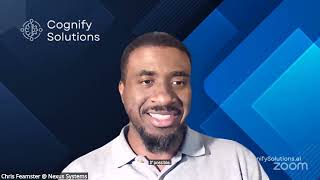
Recorded Cognify Solutions webinar presenting a keynote and discussion on ‘AI and Faith’ led by Chris and Richard Schreiber with guests Mary Kay McNamara and Brittany. Speakers frame AI stewardship as a faith-informed responsibility (using a ‘Daniel model’ and a ‘mirror’ metaphor), offering practical guardrails: discern, seed, verify, and serve; and tactical guidance on prompts, custom instructions, projects/containers, and verifying sources. The session includes personal examples (recipes, bereavement notes, dream-symbol study), Q&A about cross-faith applicability, and community/next-steps information (Cognify Insight Network).
Chapters
Oh, fantastic, Fantastic. All right, Mary, welcome, welcome, welcome. All right, we usually take a couple. First off, this is recorded so we. We can have playback ability. So that's. That's fine. Second off, we usually give folks a couple minutes ago and arrive, so that's fine too. I see we got a couple extra note takers, so I think some folks were eager to try to be here, but if their bots are here, that's fine. All right. Meanwhile, they'll give me a chance to get my screen share set up. See here? Okay. All right, we are four after. Richard, how's it hanging? Anybody else in the lobby?
Let me check. Well, the good news is we have a bunch of People's readme, read AIs and. And fathom notetakers. So.
I'm that bad.
They're here in spirit, but not unfortunately, in reality. Hello, Mary, how are you?
Mary is a dear friend and a little bit of the inspiration, although, thanks be to God, a little bit of inspiration for some of the text. But this has come up several times in recent weeks. Mary, I think, as with a lot of things, think the Lord may have told you what was up first. So, Richard, please meet Mary. Mary, please. Richard. Mary is driving, so she may not be able to participate, but she was very eager to. To hop on and listen. Yeah.
Then we. Ready to go. Sorry.
All right, cool.
Like your new haircut, by the way.
Oh, thank you.
My devices while we're doing this, but. Hello. Hello. Hello.
Hello.
Indeed. No, like I said, no worries. You one, you don't have to be on. On camera. You are driving. I'm far more interested that you get to where you are safely and soundly, so no worries at all. But if you are ever stopped or you want to jump in with a question or statement, was it questions, comments, statements, remarks, please feel free to. To. To hop in.
All right, I appreciate that.
Indeed. All right. Yeah. Six after. Without further ado, thank you. Thank you. Thank you. Thank you everyone for taking the time to join us. To join us on this Wednesday afternoon for this Cognify Insight Network presentation. Cognif this presentation is brought to you by Cognify Solutions. Cognify Solutions is a brand of Nexus systems dedicated to the intentional and ethical usage of AI and autonomous systems in the enterprise. One of the things we strongly believe in is that generative AI is not new, nor is it going away. It is important and it is helpful. However, it's important that we steward this technology well, that we ensure that this technology is used with intentionality and, and in tandem. With human agency and not as an abject replacement for it. As such. We love to be able to sit down with potential clients who are thinking about implementing AI solutions, who are thinking about designing them, deploying them, developing them and coming alongside them and helping them really see what are the potential pitfalls here. What are some of the ways we can make sure a human expert is involved in this? What are some of the ways we can make sure that this system is explainable? Not so that any type of innovation is stifled, but to make sure that it is done with intentionality? Our agenda today is going to be to cover our topic of the day, which is AI and faith. We're going to have a presentation, a little bit of a keynote and then we'll open the floor to questions afterwards. This is recorded and the presentation will be available. We'll also give you an opportunity to be able to click on links of people to get in touch with us. So that covers a little bit of what we're going to do. Why are we here? We are here because as part of our activities in this brand, as part of what we are moving for and the services that we are offering, we strongly believe that we should have an opportunity to give this knowledge back, to be able to create a space for other people in the community, other persons in the community, other stakeholders where AI systems are implemented, to be able to discuss some of these topics, to be able to ask reasonable questions about these topics and share expertise with one another. We want to be intentional about building a community and that's what the Cognify Insight Network is. The Cognify Insight Network is the community aspect of Cognify Solutions. So without further ado, I'm going to switch gears here and we're going to begin our presentation. And then share.
Did we want to introduce ourselves and our guest?
Actually, yes. Wow, that's an excellent idea. Feel free to take about 15 seconds and give a brief introduction. I think introduce myself and my company as where we're coming from. Richard, please feel free to take that away.
Well, thank you Chris. Along with yourself. Yes. I am a member of the Cognify Solutions space. I am also an AI strategist and work particularly with female led lawyers. I have a company called Law Firm AI Expert. I've been dealing with AI for years and like you, as, as a faith based individual, feel we may be missing out if we're not using AI with integrity, with, with compassion and with an ethical manner. And I bring that approach to providing AI solutions or agentic solutions or even just Basically automations to women led law firms to give them their time back so that they can perhaps use that to go to their kids soccer game or spend a night out at the movies or whatever that may constitute. 2. So as a stay at home dad, I kind of know some of the challenges they're up to outside of running a business and practicing law and managing a family. So happy to be here as always.
Fantastic.
No fun facts today.
Sure. Give us a fun fact.
Oh, geez, probably. I'm a big sports enthusiast. So I was at Game 7 of the 1986 World Series with the bats and that remains arguably, along with Larry Johnson's four point play in 1999, two of my most impactful sports memories. That kind of anchor in why sports? I know that most many people are not interested in sports, but yeah, those, those two moments crystallize it.
Oh, fair enough. No, that, that's, that's, that makes a lot of sense indeed. All right, I give a second for our guest. Mary, would you like to just take a moment, introduce yourself if possible.
Hi, my name is Mary Kay McNamara. I met Chris through a faith based prophetic nest group and we just connected on a, on a really spirit to spirit level. And I'm not a programmer in AI at all, but the Holy Spirit gave me some insight about using it and the ability to explain that at a level for my mother. And she is very reluctant to deal with anything technology. And you're still on phone with, you know, very little a smartphone, much less trying to go out into the Internet. So it really, you know, the Holy Spirit taught me a lot through that experience. So that's a little bit about me.
Bless God. Yeah. Mary, thank you so much for being here. You are absolutely right. I am looking forward to seeing how we can continue to collaborate on this and that right there. Being able to, to help give people the verbiage, the understanding, the comfort of what the intentionality here is and how to share that and communicate with users, with clients, with family. Because ultimately that's one of the things that we have to remember is that a lot of this software doesn't exist in the vacuum. Nothing really exists in the vacuum. You know, if you implement a mortgage software, if you happen to implement an AI system in your mortgage company and you think it's going to help you go and be more efficient in approvals and denials. All right, great. But if you're not careful of the biases in that system and if you're not careful to understand how that system made his choice when Somebody with a very real time, tangible need is walking through your door trying to understand why you didn't approve their mortgage. You have to understand that. You have to explain that. You have to make sure that you have some intentionality behind the rationale of that system. And if you weren't diligent in training it, if you weren't diligent in setting it up, configuring it, if you weren't diligent in your stewardship of that system, that may end up in a very bad time indeed. So, and that's just one secular example. The same thing can be brought into the faith space. The same type of conversations, the same type of questions are being had with folks who are leading churches, leading ministries, leading community groups, even just figuring out how to integrate this maybe in their so called secular business, but with a faith guiding, wondering, what does this technology mean for me? So let me begin my presentation because I think I'm kind of like pre selling it, as it were. And we will jump right on in. All right, so AI and faith Stewarding Babylon's tool without bowing a keynote on digital stewardship. So the digital exile, why withdraw? Forfeits influence.
You're still on the first slide, by the way.
All right, let me see here. Are you able to see the slide in the full screen?
No, we're still seeing the sidebar with the individual slides. So the slideshow doesn't seem to be functioning.
Let me reshare my screen. One moment, please. Yeah, share that whole screen.
All right, there you go.
All right, fantastic. So, friends, we are living in a moment that feels like a digital exile. Every few decades, a technology arrives that doesn't just change how we work, but how we think about being human. Today, that technology is artificial intelligence. For many in the room, AI feels like a marvel, a personal assistant that never sleeps. For others, it feels like a threat, a black box that might eventually replace our jobs, our creativity, even our sense of truth. When faced with this kind of seismic shift, the natural instinct for many believers is to withdraw. We see the bias, we hear the warnings about super intelligence, and we decide to opt out. We build walls around our families and our churches, hoping the wave will pass us by. But here's the danger. When we withdraw from the tools of our time, we forfeit our influence, our stewardship over those tools and how they are used. If we leave the Digital Babylon entirely, we leave no one there to speak the truth. We're not called to hide. We're called to stewardship. So let's define stewardship. Stewardship is, is, is a synonym sometimes for governance and regulation. But really stewardship is much deeper. It's a much more personal concept. Governance is. What about governance due to control systems, what businesses sometimes do to control systems, ways of which to, to navigate that. However, stewardship is what a servant does not with their master's resources. Stewardship is really a posture defined by four responsibility, restraint, purpose, and accountability. It begins with the recognition that even the silicon and the code belong to the creator. If AI is a tool made of the materials of this world, then we are responsible for how it is deployed. We exercise restraint by knowing when not to use it. We find purpose by aligning its output with the kingdom. And we maintain accountability by never letting the machine become our master. All right, I want to take a moment there to just reflect on this question right here. Are you a mindless consumer or a conscious steward of the technology in your pocket? And that indeed that applies to much more than just AI. The way that applies to how you may have used technology before becomes even more important to consider now. And we'll get to that in actually the slide after the next one. So I want to look through this through a particular model, the Daniel model. All right, let's take a look at a historical precedent, as it were. All right, so when we think about living in this digital Babylon, we can look to the prophet Daniel. In Daniel, we find young men taken to into a culture and that wanted to rebrand them. They were forced to learn the language and literature of the Chaldeans. This was the cutting edge tech of the Babylon empire. Their science, their astrology, their logic. Daniel didn't refuse to learn. He became a master of their systems. He was found to be 10 times better than all the magicians and enchantress in the kingdom. But here's the key. Daniel learned the tools without adapting the gods. He mastered the Babylonian code, but didn't bow to the Babylonian idols. He drew a line at the king's table because he knew that while he could use their language, he could not let their values consume his soul. Stewardship means being the most proficient person in the room with the tool while being the most committed person in the room to the truth. So what does that mean? Today? Let's consider the mirror principle. One of the greatest mistakes we make is treating AI as a prophet, an independent source of wisdom, or an oracle of truth.
Oh boy.
It is not, and I cannot say that more emphatically, however, what it is is a mirror. And that can be similarly weighty because here's the Thing. Large language models are trained on the sum total of human digital output. That means when you look into an AI, you're looking at a reflection of us. It reflects the imago dei, our incredible, our incredible capacity for logic, for creativity and language. But it also reflects the fall. It reflects our biases, our prejudices, and our capacity for deception. If the AI hallucinates or produces something biased, it isn't because the machine is evil. I want to say that again. It's not because the machine is evil. It's because the mirror is reflecting a broken world. We must remember to stop asking AI to tell us what is true and start using it to reflect what we have already seeded into it.
That's true. And a lot of the bias you spoke of is basically how these large language models were trained in the first place. I remember when OpenAI first started with ChatGPT, there was a, apparently there was a bias against African Americans. So a lot of its positioning and, and, and content and data had a bias in that direction. So they had to correct it. You know, of course they have. We have these things called ra. Rad. I think it is Rag.
Rag people, Augmented generation.
Yeah, yeah. Which in, in some ways can kind of cut through a lot of the bias and misinformation. Because you mentioned a very key thing and that is don't go to AI necessarily for the source of truth.
Yeah.
You can go for facts and, and you know, if, particularly if you use a rag like Perplexity and there are.
Others, there's certainly different ways to action this leading. But it's important that as we do that, we come through a practical framework of how we start to interact with some of these systems. Which brings me to our next slide. So as a practical matter, knowing that these things hallucinate, knowing that they're really just a mirror of what we're putting into it, what do we do? First, we discern. Before you open an app, ask, what is the spirit of this tool? Is it designed to make me more present or more distracted? Is it built on data that honors human dignity? Second, we seed stewardship involves what we put into the system. If AI is a mirror, we should seed it with high quality value aligned prompts. Instead of asking for a generic response, ask it to analyze this through the lens of Christian ethics or provide historical context from a biblical worldview. Third, we verify this is the do not bow part of the equation. Never outsource your discernment to an algorithm. If the AI gives you a scripture reference, go look it up. If it gives You a fact cross reference it, we verify because we are the ones held accountable, not the software. And fourth, we serve. Use the efficiency gained from AI to love your neighbor better. If AI serves you, saves you three hours of administrative work, don't just fill that time with more busyness. Use those three hours to sit across the table from someone who needs a human touch. All my slides are behind a little bit. All right, so what does that look like for training this, what does this look like as we interact with that, that AI specifically? Well, let's look at a couple of these things, such as that scripture first. All right. The details of this stewardship can really be found in how we're prompting this system. Okay, so when you interact with these AIs, you're training this reflection. So here's three specific practices. Before you ask an AI for advice on a difficult conversation, go to the word. Let that primary data set of your mind be the Bible so you can recognize the AI's advice when it deviates from the truth. Two, ask for cost references. Get those sources. When using AI for study, include the instruction. Provide primary sources and biblical cross references for those claims. And I would encourage you to try that across the board. Say you're, you're doing something for. You're studying a topic for a business assignment, for your, for work, for a career, for something that seems like this isn't just Bible study. Not just this, that. The other thing. We all know how rich and full and fruitful the word is. As for some biblical cross references and look them up. Three, set language preferences. Set those rules. Most tools allow custom instructions. Use them. Tell the AI I value integrity. I value accuracy, I value a respectful tone. You're the steward. You set the rules of the house. So as you're, as you're working more on this, as you start to really explore and press in a little bit, let's talk about some guardrails because you may start to see some things here that we touched on before. Let's give you some practical ways to recognize the limits of this machine. Okay? So we really have to be honest about the hallucinations that can come from these things. It can confidently state these, these hallucinations as well. Even though they may be patently false, it can create deep fakes that violate our commandment against bearing false witness. The ultimate guardrail in these is humility. All right? We must recognize that while a machine can process information, it cannot possess wisdom. Wisdom is a gift of the Holy Spirit and it requires a soul. You can use AI to draft A letter, but you cannot use it to discern the will of God for your life. Don't outsource your soul to a processor. So with that said, what's the real posture we should here? Let's look at Joshua and Joshua 1:9. God tells him, be strong and courageous. Do not be afraid, do not be discouraged. This is our posture. AI is not just a Babylonian tool to do not fear this. It is a messenger to the masses to be harnessed. Think of the mission field for example. AI is currently accelerating biblical translation at a rate we've never seen before. It's helping pastors in resource poor areas access theological libraries they could never afford. It's a tool for the Great Commission. We don't just use AI to get by. We should be using it to take ground for the kingdom. We are the Joshua's of the digital age, stepping into new territory with the confidence that God is already there. So these commitments, some actionable things to take away here. One, let's commit to one, engaging, not withdrawing in fear, but engaging with stewardship with that high level of intentionality. Two, to master these tools without bowing to the values of the age and three, to use every efficiently efficiency, excuse me, gained to serve people more deeply. All right, so I would say as we start to come to our close, a bit of a call to action here. Pick one task that you would normally do, perhaps administrative, but maybe even, maybe even a more fun task, I don't know, use it to decide on a book or something like that. But try that with your AI tool at home for a community affair, in your ministry, in your business, if you aren't already, try to use that task that you weren't already using with AI. Try with an AI tool but do that task with some of the prompting, some of the intentionality, some of the integrity that we've discussed today and share that. Go forth and share some of that lesson here, Share some of that wisdom, some of that insight and intentionality. The help them understand that this is not to be feared, not to be ignored. But this is something that can be stewardship. It can be a tool good and grounded in this Daniel model that we've discussed today. That being said, I'd like to bring this to that close this particular presentation and open the floor to questions.
Great presentation, Chris. But to our audience members who might not be Christian but still in some way faith based, how can we is the message in a similar vein and how can we really impress upon them that you know, faith, faith is a matter of, of connecting with Whoever your higher power is, whoever your, whoever you choose to call that. But the concepts that you represented here, irrespective of the, of the specific biblical references which some of the audience may not understand or get or even participate in, the bottom line is the concepts that stem from these references are definitely viable. And you know, I'd like to point out today, you know, without being political, but I believe that there's, there's a grassroots movement going on right now where people of faith are beginning to see through the veneer of a lot of the corruption and the misbehaving, certainly that we see in government and, and capitalism and in the corporate American world and are looking for a better way. So, you know, here in New York, there are actually faith based AI groups. I know, I belong to one. And more and more people are, more and more people are kind of understanding that yes, AI is a powerful tool, but if used ethically, responsibly, compassionately and with integrity, it will change the world for the better.
Indeed.
And those who choose to go in a different course, well, you know, God be with you. Those, those of us who choose the right path or a different path, I don't want to say right or wrong because that's judgmental, but a path that infuses faith. And however we use AI in our business, our life, you know, I, I feel without getting, you know, overly religious or biblical, I feel that that is the just way, the righteous way that we need to really seriously embrace. Whether you're religious or not, whether you believe in God or not, you know, if Allah is your, is your God or if you believe in Judaism, it doesn't matter. You know, the message is the same. Use the values that come out of that and apply that to our use of AI.
That's an excellent discussion topic right there and perhaps worthy of a roundtable. But, but to, to try to give that a little bit of honor briefly, that I would say this message, if you're coming, if you happen to come across this message, and we welcome everyone to review this, and the background isn't Christian, that's fine. That is absolutely fine. The way of which the position that we've recommended here, especially for those in the faith space are going to make some sense if you have some faith around this. One of the things here that, by the way, our personal teachings is hard to ignore or put down the great credible examples that we have like that of Daniel, because even if you take the, the theology out of it, you can still see how this is an excellent, perfect example of Somebody who had core beliefs thrust into a system that seemed like that would be overwhelming, but did not reject, but figured out how to adapt and really be able to honor those core deeply held beliefs. And ultimately, this is one of the things we truly have to be careful about when we are using some of these generative AI systems, whereas we're using a great many technologies. This is one of the things that we have to be aware of that is that there is a hand that made the tool, and there's always an intentionality in that hand of the one who made the tool. If, however, we have no intentionality in how we wield it, whatever we use that tool for will be similarly aimless or may only reflect that intentionality of its own creator. So if there is something that we value deeply, perhaps the leadings of Christ, that we need to be careful, that we remain as if not more intentional and not seed that ground, not ignore the tool, but we simply become more intentional, more filled with wisdom, now filled with the spirit as we wield these tools. All right, see, there's another question from Mary.
Let me ask or offer something. I don't know the background of the people you invited to this, and I wasn't a very creative user of it. So when you say try using AI for something, let me just throw out a couple of examples.
Yes.
One of them was, I grew up with a neighbor who had had migrated from Mexico, and when we were young, she would make these enchiladas that were awesome. And I cannot find those enchiladas, you know, to save my soul, so to speak. And so I asked AI, is there a recipe for enchiladas, an authentic recipe for enchiladas that uses peas and potatoes? Because those were the two ingredients I could remember and never see in any commercially made enchiladas. Today, in a matter of about 30 seconds, AI comes back with several suggestions, telling me some background about where they may have come from and whether you want to use the green sauce or the red sauce for your enchilada sauce. And it really helped me, you know, in a matter of I could have spent hours and hours and hours looking for recipes and reading through, and AI just brought it through. Another example that's more faith based would be, I need to write a little bereavement card. Someone has passed, and I want to, you know, include something with my flowers that I'm sending and giving them a little background about how I knew that person. And in a matter of seconds, and I'm telling you seconds that I could Sit there for hours, seconds. It comes back with some, you know, some verbiage that then I can edit to be more in my voice. But at least, you know, I didn't spend hours rolling my wheels trying to even figure out how to start.
Yeah.
So those are a couple of suggestions that might help people start thinking about, oh, I never thought to use AI for that. But then it lets you understand what the tool is doing and where it's coming from. And then the other thing I want to share with people is that AI has a natural bias towards all opinions are equal, meaning it thinks that's neutrality. And I constantly am putting it against my guardrails of, well, what does scripture say about that? Yeah, what does scripture say about that? And then ask it, you know, to tell me. And then I. I point out you're biased in that. And I don't want that kind of answer coming back to me through you. I want you to stick to what scripture has to say about it. And then it sorts through all those answers and then focuses me. And as Chris said, look for, you know, if it references a specific Bible verse, then you want to go look at that verse, make sure that it pulled up one that's, you know, relevant. So just some thoughts.
No, that's perfect. That's wonderful. That's the really great way to action some of what we've discussed here. And I would say you might be the authority on that. Indeed, I see another raised hand. Britney, go ahead, speak up. What? Share some of your thoughts or questions.
I had a couple thoughts. One of the things you were mentioning was like, that AI has the ability to be customized. Some of these platforms that you customize, you know, the, the bots or whatever that you're using. And so when it comes to scripture study, one of the things I did was I kind of had a little conversation with my AI about my views, about my stance, my faith, you know, things of that nature, letting it get to know me, get to know my thought process and views, and telling it, like, hey, when I'm researching things, these are the sources that I want you to pull from. You know, I want, you know, references. It gives me Hebrew definitions, like, all these things. I put a lot in there so that when I get information back, it's only pulling from what I asked it to pull from, which are things that I went and researched to make sure this is a credible source of information. So I think that is, I think what. The more we learn how to even customize, like, I think off the strength of conversation is Certain things that when I have conversations with different AI on whatever platform because we've had certain conversations and certain things they won't do. For example, if I ask it to help me flesh out an idea, ask me questions one at a time. If it asks me more than one question, it'll go, I made a mistake. I should have asked you this. One thing at a time. Let's start over. You know what I mean? Because that's the way I have trained it. And so I think in that way learning how to customize our bots so that they align with our faith and so that they align with scripture, you can kind of step around that bias. I would definitely agree with Mary because I'm good for that. I will absolutely call it out if I see it, you know, because it's not going to know not to do that if you don't say anything.
Yeah.
You know what I mean? Because it's adapting to what you're teaching it. So just my, just my two cents.
No, those are beautiful, beautiful scents. They are. That makes a lot of sense. Pardon the pun. That makes a lot of sense.
Yeah. Mary had, Mary had a comment which I think was definitely worth, which was pretty brilliant. Definitely worth looking at. And that, and that is, you know, depending on which gen AI model you use in your general chats, it will kind of build on that and create. I'm told that particular OpenAI ChatGPT is now in the process of beta testing a second type of memory, kind of an internal memory that it creates based on its long exposure and long access to, you know, the memory that it writes to our custom instructions. So it's even more necessary to be wary today. But the, the point is those, those Christian values, those faith based values, whatever you want to call them, yeah, they should be definitely in your custom instructions. And you know, one point to just to know is if you're using Gemini Claude chatgpt, all three of them now have essentially the equivalent of custom instructions. They may not call it the same thing, but this way you can get uniformity in a sense in representing your values and your beliefs in the different gen AI models. Doesn't mean that, you know, if you put in the same prompt, you're going to get three different output outcomes. There's, you know, there's something to be said for that because each of the three products have their strengths and weaknesses, which is why the, the term multimodal was coined. But moreover, the point is, is, yeah, it, it's is necessary to build this into the custom instructions of the Gen products you have and monitor it. You know, one of the things I've also learned about Gen AI is, is particularly with Claude is you have to kind of remind it from time to time. So what I created in Claude was something I call a prime directive and that is a series of values and beliefs that is within. And sometimes I have to do it on a project by project basis because I don't believe in memory. You can add an attachment, hopefully that's the next thing coming along where you can actually insert attachments of files, what you can do and. Or put in a link to a Google Drive for a document there so that it kind of reads your custom instructions, you know, if you happen to. Or the documents that you align with your custom instructions, if they should change dynamically. So I think, I think where AI is leading is to really enhancing its ability to understand our belief systems and our values. Yeah. And you know, where we started, it was very Compartmentalized, very limited. ChatGPT5 showed us, when you throw that out, essentially our custom instructions and our memory for an entirely linear, rational kind of interpretation of our custom instructions, that's a significant problem. And the legions of people, including myself, pointed that out to OpenAI. But you know, the good news is, yeah, we're moving in a direction where in parallel to doing things on the engineering side, to do things like reduce the advent or the onset of hallucinations. And again, using a rag like Perplexity can be instrumental in doing that because a rag by definition narrows down the, the pool of data and information for the LLM to access to respond to a question. Whereas we all know, you know it. Even if you have a significant contextual conversation in a gen, in a Gen AI chat window, it still is essentially accessing this ocean or this diplomatic. I don't. Data ocean. I don't, I don't think. I think that's a new IT term. We've talked about data lakes.
Yeah.
You know, maybe Chat GPT is the Lake Superior of data lakes in that it's.
Especially as you consider what is necessary to effectively train a model light Chat GPT that.
Well, here's the other thing.
The ocean.
Yeah, here's the other thing is some of these in particular with OpenAI, they, because they don't have direct access to any data, unlike Gemini, which is owned by Google and they have YouTube, they have Gmail, they have all these sources and Grok obviously has X and access to all the satellite data that Elon Musk pulls down from outer space. And it's Basically reached it's, it's reached its max in terms of what available information that data is out there. So all it's adding to its, its universe if you will, of data is just homogenized derivation of people already using this information. So it's kind of like imagine wikipedia but like 10 concurrent websites with the same content all being accessed and spun together. So it's more and more necessary to ensure that we train the AI, the gen AI products through vigilant use of our custom instructions particularly to uphold our faith based values and beliefs and corner our biases through this now more than ever. Because to not do so, you know, we're surfing in a polluted lake. That's essentially what, what, what it's coming down to.
Well that goes, that, that's not a bad analogy. That goes back to as we were discussing, as I was mentioning during our, the presentation, that at the end of the day you really have to remember what it's a reflection reflection of that it is a mirror in far more ways than one. And just like a mirror, if you look real close, you might get a little bit uncomfortable with just how real you may look. But at the same time that the honesty that a mirror gives you, gives you a place to start. If you walk as it says in the word what, what. Actually I may be paraphrasing a little bit. I'm going to say how wise or what good is a is a, A, A person who walks by a mirror immediately forgets what they look like. So when using Chat GBT, how good or how wise is it to use ChatGPT and then immediately forget, oh wait, no, that's telling me what's already out there. It's not telling me anything truly new, truly novel that doesn't have any real discernment. It is a mirror of the state, the fallenness of the world. You know, so once we take that, once we start to realize that then not saying sit down there with some, some, some blush or some makeup, Lord knows that'll only make it worse. But if you happen to know like oh yeah, that scar is right there, that's probably not going to look right. Let me not act as if it will. Oh well, no, there's, that's, there's some trauma right there showing up on, on in, in that, that, that discourse. Let me, let me see how I can be more intentional about that right there. It's really important to, to, to keep that in mind, to take that to heart when, when really when digging down to anything from these elements again they, they are mirrors of a world that is not perfect. A world and a people.
Indeed. Yeah. We just had a question from the audience on what are projects in chat GPT. And, and Brittany provided a really good response. So, you know, she said projects is where you can keep chats for a particular project, which is true. It's, it's a container, it allows you to upload a number of project documents. But it's typically projects are reserved for a particular task, particular project. You know, perhaps you're preparing a document or request for a proposal or a business plan or, or a pitch deck. So what you would do is create a project. You would insert, you would upload all the information relative to that output that you're trying to get. Could be transcripts of, of webinars, of speeches of, you know, documents around about your financials, about your products, of course, your beliefs, your values, all of that information. Populate that into a single container. And, and the good thing is that container does not share outside of your general memory and custom instructions. It does not share from any other chat or any other project in that large language model. So the container effectively walls off the pollution, you know, which is why I.
Might give a suggestion on even pressing into that in the same vein as some of the recommendations that we've discussed, because different projects can have different custom instructions. Use that to experiment as you start to get a couple different sets of customers.
That's a great point, Chris, because yes, individual projects have their own separate instructions that will supersede your general instructions, your general custom instructions. So, yes, and Claude works the same way. You create a project, you can create a different set of custom instructions that are germane to the outcome of that project and it will function in that way. I mean, you still may want to invoke some of your more general custom instructions. Again, if you're talking about your, your belief systems, your values and things like that, those are probably consistent across, you know, the, the spectrum of what project projects, custom GPTs, chats, chat sessions, whatever. But yeah, in a project it allows you to more narrowly focus on instructions that are germane to the output of that project. But anyway, I just wanted to chime in and address Mary's question on that. Projects are great for that reason because they are a container and you can also move. What's nice about a project too is you can take standalone chats that you may have utilized in the past and bring them into the project and now they become part of that project. So let's say you started with the chat and you liked where it was going, but you're realizing it's not quite what, what you want. You want to, you know, chats have limitations, obviously, for the number of documents you can upload. And also what I found is you can upload a document once in a chat session, but you know, further on down the line, if you refer to that uploaded document, it may not remember that, but in a project it will. So you might get, you might get in, you know, kind of heavily into a chat session and realize, no, I need to convert this to a project. And then you can just simply move that chat into the project, upload all the other related documents, and then have a much more narrowly focused chat session on the content.
Indeed. All right, there's an ex. There are a couple excellent questions and discussions going on in the, in the chat. I hate to cut it short and actually I won't. What I will do is close out a recording and then we'll try to hang on the line to answer any other questions. So again, I thank you so much, everybody who's taking the time and the attention that you've allowed us to have today for this particular type of conversation. It is a more unique conversation, but it's a uncommon conversation. We welcome all aspects, all, all feedback on that. And if you are wondering how to make this more real for you, how to make this more applicable to you or really just want to engage deeper on this level, we are glad and welcome, we are glad to have that conversation and welcome that feedback, welcome those opportunities to connect. You should find more information about how to connect with us, how to set up a one on one, how to join our community, either in the chat of this meeting right now or down in the description, wherever this video will be posted next. Again, we want to thank you for taking the time for joining us today. And if you. All right, here we go. All right. So, yes, and if you are a, if you are not a member of our community, the Cognify Insight Network is currently free to join. We have presentations like this on a regular basis. We have round tables like this on a regular basis. We'll be changing up our schedule for this soon, so we strongly encourage you to join the community. Jump in and see more details on that. But we have some interesting things in store. We have some interesting shifts in store and we gladly welcome you to come alongside and be part of that. Without any further ado with it being the top of the hour, I thank you again for your attention. I thank you again for your time for, for joining us today for this webinar for this presentation. Take care and God bless. Bye bye.
Have a blessed day.
That's the recording me pause my fathom. All right. Yeah. If there are any other questions in the chat. I know Mary, you were asking some good theoretical and practical strategic and tactical questions. That's fantastic. That's exactly the type of discussion we love having. So if you have anything, please give, keep going.
And it's funny you mentioned that Chris, because I have used ChatGPT and for the group that I used to belong to, Bible study group and I would use it to access Bible verses and I could recognize that they were accurate because I've dog eared my Bible quite a bit. So when they're good, you know, when, when, when a recognizable, when a recognizable memory verse, you know, comes up, if I'm doing kind of a search on something biblical, but not to say that, yeah, definitely curate it and, and you know, obviously the Bible was uploaded to most of the Gen AI's knowledge base, so it should know.
Yeah, you know, yeah, some encouragement in that way. And generally while this isn't necessarily on the recording, I use it regularly. Ish. And there's a technique I generally use Bless the Lord as I have been led to use, which is to again, even how I started to approach it because I had to overcome a little bit bias and that, that of like that's just a tool, whatever. I'm gonna sit over here, you know, and just be sure in my, my, my, my study, my, my, my intentionality, the, the faith operations and the Lord kind of checked me in that way. It's like first off, if this is a tool put in the earth, why are you not exercising dominion over this? Oh yes, Jesus, I'm sorry. Second, there are a great many things of which I have set you to be an example and a teacher of. If you are learning and sharing and teaching the, the, the subjugation of this tool. What, What? Okay. I was like yes, yes, I, I stand also corrected, Jesus. And there are certain ways I started begin to try to incorporate that in my, my own studies and my own teachings. And one of the things which I do is to be careful about that first seed. That first like all right, Lord, what do you want me to do? What do you want me to speak? How do you want me to move? Let me hear on that. And then once I have that seed and say okay, let me spend some time with my servant and go through that. Let me spend some time with the, my tool and then walk that out because that, that honors that hierarchy, that honors that intentionality, that honors that flow and be able to say, all right, this is the, the, the unction of which I have been led, as if I were speaking to my servants. All right, come, let us, come, let us reason together. You know, how do we action this? All right, let me, let me pass the mic along. Mary, go ahead.
I'm sorry, I forgot what, what my question was my fault.
I'm sorry. Oh, you went off. You, you're on mute now. You're on mute now. Oh, Mary, come, come off mute.
Okay, sorry. I had kind of forgotten my question because I loved what you were saying and I was starting to comment on it in the, in the comments. Now I've got to think back what I was, I was thinking of. The Lord has started working with me in dreams and you know, symbolism and where to go with that and you know, to try and understand what he's trying to say to me, instructing me in the night. And I could spend days trying to take all the symbols and pull that, you know, to try and pull understanding out of them. And then he challenged me to use chat GPT or an AI and limit it. So say, what symbolism can you find from scripture using the N A nasb because that's the version I like to work with when he's asked me to work with using only that symbolism. And then if it introduces something that is new age or is, you know, other philosophies of life, Taoism or Buddhism or whatever, I can say I asked you to stay within these guardrails.
Yeah.
And it will come back and pull it out of what it told me the symbols were. But in a matter of, you know, 30 seconds, it's lined up for me scripture after scripture after scripture that supports support those dream symbolisms only from the perspective of scripture. And so now I'm able to work much faster to get to, you know, search out a matter instead of days, it's now minutes. And I think that's a place where we in the faith based community can start really maximizing because you can build a sermon that way. When you've restricted it to only scripture, when you've restricted your symbolism only to scripture.
Yep.
You've now got a much better groundwork framework for your sermon.
Yeah, that makes sure sense in the world for sure. You know, there's, I suspect maybe it's under continuous improvement, but I know there's a, a GPT out made by somebody I know that's not too bad as a great study aid that is well trained and heavily prompt. Is great example of a lot of the the topics we have here. I think it's called so for Concord. That's one of the things that I'd love to be able to share but I gotta go check with the the author of that. It's, it's a great tool. I'm gonna and draws on a lot of the examples we've mentioned here today. Being intentional about where you're coming from in scripture. Being intentional about making sure that that's all well cited. You know, being intentional about well cited versus versions and translations. Absolutely. And you know I, I, I did not maybe on purpose I did not necessarily know of a great way to to say this at the end of the presentation. But I'm even thinking now that as we discuss the practicalities of using this for studying as Christians, none of this really hurts anybody who does not yet does not yet understand the faith because this helps you to become more intentional and diligent on core beliefs. And honestly if you don't yet have a faith this is going to get you more grounded. And if you do have a faith you'll start to understand why we are so compelled to pull on things like the Bible. To pull on things that have that are well cited. To pull on things that are so applicable like Daniel's journey. Indeed. Mary, is your hand up again or did it not go down?
It didn't go down.
Oh, fair enough.
Sorry.
No, you're good. Indeed. Oh, I see another question in the chat. What we got here? Yes. I use not by might, not by power, not by algorithms, but by your spirit. Amen. Amen. I was amen to that. Indeed.
I walk, I walk by faith, not by AI.
Yes.
Amen.
Indeed. Oh bless God.
That sounds like a T shirt opportunity.
I think you're right. Go for it.
Might indeed.
I'll have to use Nano Banano to come up with the image. Right. Haha.
Yeah.
All right. Great time today folks.
Indeed. So for what it's worth, I also didn't mention this in the recording. This is part of what I believe will be a series I guess married for for your edification anyhow so normally we take this my my absolute pleasure honestly. Thank you for dating to come for finding a not robbery in your schedule to attend. Hallelujah. That the this, this is something that's going to come up again and I love for you to just continue to participate in your schedule permitting. I don't know 100% yet. There's some things on the schedule. It's not going to look. Look like what it did last year and also give you some background. This is something we were doing every single week. We were doing webinars or roundtables around some topic, some conversation in AI. And we had been doing this. Richard, we did this since April. May, was it?
May. What's that? This webinar series?
Yeah.
Yeah. Pretty much dating back to the spring.
Indeed.
A good run.
Indeed. So we now have a content library. We're probably going to be slowing down that a little bit, but we want to make sure we preserve the accessibility. So this is while at the same time giving room for some of these topics to breathe. So this is not going to be the last time we're going to talk about AI and faith, how that venue looks like it'll still be up in there a little bit. But if you can hop in the community, if you like, I will continue to spam you over WhatsApp about what we have going on. And yeah, we'd love to have you in the future.
Alrighty.
Indeed.
Good to see everyone.
Yes. All right, I need to go check on a heater that a repair guy was working on. It is kind of warm in here now, which is.
Oh, nice.
Hallelujah. Yes. Read all of that right now, but I'm going to go check on that. Everybody, again, thank you for your time. Your attention, this fantastic conversation. All right, go ahead, hop off. I'm going to save this chat, just in case, and we'll see you all out there either in the space or the cyberspace. God bless.
We'll see you. Take care. All right, bye.
More from Richard

How Small Law Firms Can Use AI Safely, Ethically, and Without the Overwhelm Webinar