Episode 2 The Bedrock of Reality from our Perspective
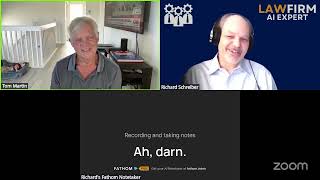
In this episode of the True Journalism Broadcast, Richard Schreiber and Tom Martin explore the growing threat of AI‑generated synthetic media—deepfakes—to truth, trust, and democracy. They begin with a vivid illustration of a fabricated presidential speech that could instantly wreck markets, underscoring how cheap, high‑quality fake content can manipulate public perception. The hosts discuss the economic engine behind deepfakes, noting that clicks, ad revenue, and algorithmic amplification reward deceptive content. They trace the evolution of disinformation from the 2016 Cambridge Analytica scandal to today’s viral AI‑generated clips, highlighting how platforms like YouTube have become primary news sources while also serving as vectors for manipulation. The conversation shifts to policy, describing a fragmented regulatory landscape: state‑level AI governance experiments, federal executive orders, and the historical analogy to the creation of the SEC. Both hosts question whether a coherent national framework is feasible and critique the slow response of major tech companies. They also examine sector‑specific impacts, especially on the legal profession, where AI adoption is framed as a survival imperative, reshaping billing models and project management. Practical advice follows: listeners are taught how to spot deepfakes by checking source credibility, looking for red‑flag language, and leveraging tools such as LLMs with internet access or media‑bias aggregators like AllSides. The hosts lament the erosion of the Fairness Doctrine and illustrate media polarization through recent examples, including Stephen Colbert’s interview with a Texas Senate candidate and the partisan dynamics of Fox News and MSNBC. Looking ahead, they warn that autonomous AI agents (AI 2.0) will further outpace governance, potentially executing tasks without human oversight. The episode concludes with a call for personal responsibility—cultivating discernment, reporting false content, and using common sense as a civic safeguard against the digital mask. Overall, the episode blends personal anecdotes, industry expertise, and policy analysis to provide listeners with a comprehensive view of the deepfake economy, its societal ramifications, and actionable steps to protect the bedrock of reality.
Chapters
Foreign.
Secretary of State. He's at a podium. He looks tired. The lightning's harsh. And he's announcing a sudden, massive shift in nuclear posture. The markets tank in seconds. Gold spikes. Your retirement account drops 4% before you've even finished your morning coffee. But here's the reality. That man was never at the podium. That speech never happened. And that news was generated by a server in a basement 3,000 miles away for less than $50. I'm Richard Schreiber along with Tom Martin, and we are living in an era of the digital mask, where our eyes are no longer reliable witnesses to the truth based on what we're seeing on social media and the news media. And if you can't tell the difference between a person and a program, you aren't just being misled. You're being controlled. I'm Richard Shriver, and this is the True Journalism Broadcast. Along with my partner, Tom Martin, we're cutting through all the synthetic noise of the digital age to bring you back to the bedrock of reality from our perspective. And how are you today, Tom? Yeah.
Hey, Richard. Great to see you. Yeah. No, I think I'm excited about our mission here. It's.
It's. We.
We have entered an era where it's, like, hard to sift fact from fiction, and it's very confusing. And so if we can provide, you know, some help and perspective from our own respective backgrounds. I love that we're doing this. I'm eager to be in service. Yeah.
Awesome. So just as a precursor or a qualifier, I am an AI consultant and have been for a number of years. I assist law firms in identifying areas of their business that might be bottleneck because of excessive manual process and just inefficient ways of doing things. And we had some automation and some process around that. Having been in the legal tech space for 25 years, Tom, you have a distinguished career in media, what we're calling the true media back in the day.
Remember that? Yeah, Exactly. Yeah. Thank you. Yeah. No, exactly. I think of myself as a media journalist slash media strategist. And I have 40 years of media experience. I started out as a television news producer and worked with, you know, CBS News, cnn, and seems Today show, even covered the White House for PBS Television. Then I pivoted midway through those 40 years into PR, first doing some corporate PR work with some firms, but mostly working with authors and speakers and coaches. And I love kind of bringing a journalist's eye to getting anybody's story and message out there. So. Yeah, but it's great with You, Richard. Thank you.
Yes, great to have you, too. I have a background in journalism as well, getting a degree from Emerson College and back in the day, and a survivor of the Watergate era. And really that influenced me in so many ways is why I became a journalist, to seek the truth, to report the facts, because I believe that that's what the American people want to hear and see. And to your point, in the meetings that we talked offline a little bit about when you were with Good Morning America, that how do these stories resonate with people? How do they really capture their curiosity and their interest? And that's what we're going to try to do here and not play the political backgammon of point counterpoint or adopt any particular line and sinker, but just talk to you about, again, true journalism.
Exactly. I think, I think polarization can take a toll, you know, not just on our economy, but on how we feel about one another, how we get along with our own relatives in some cases. And if you think back, I don't know, five, 10 years, even some of our intelligence agencies detected that, you know, the Russians were planting social media posts. Not, you know, they weren't, you know, spying in a devious way, but simply planting stories. They might have a racist tone or something like that, or undercut one political leader or another or candidate. It's just to kind of like, you know, change this so they're, no, we're no longer standing on a, you know, bedrock of certainty. It's like, what's going on here? And if we can pull that back, I, I'd love to play a role in that.
Yeah, that's exactly true. And we saw that the 2016 election, through Cambridge analytics, you know, there was a specific targeted ads, Facebook ads and content that were targeted at Americans that living in swing states to try to influence or manipulate voters one way or the other. And, you know, today, now, 10 years later, that was 2016, we're beginning to see a world of viral clips, an algorithm, outrage using the traditional discipline of verification. That's what we will try to do when we speak about this, because we don't care about the click. We care about the consequence.
Well,
today is February 20th, and this week, the wires, social news, we're flooded with sophisticated financial traps and deep fake headlines designed to exploit our trust. You know, we're going to talk about this deepfake economy and look at some new AI labeling laws that really are not keeping up with the speed of lies and, you know, talk about what you can do as an individual to recognize whether a piece on social media, YouTube or wherever it may be is really real or not. Because in the end, losing the truth is the first step in losing our freedom. You know, there's been a lot of talk about that, and certainly in. In authoritarian regimes where freedom of. Of the press, First Amendment, et cetera, seem to be sacrificed. So without any further ado, let's head to the wire. So, Tom, we talked about last week a little bit about, you know, an abundance of deep fake stuff coming out now on particularly, I would say, YouTube, because YouTube, I think, is doing a great job in supplementing or even replacing people that used to watch cable news. Because now instead of watching cable news for hours and hours, you can just simply thumb through the clips and see what you want to see. But then the problem is some of those clips may not be truthful. They may be generated, they may be fabricated. And we saw some of that in recent weeks. A couple of posts from that were startlingly good. Rachel Maddow of other political figures and, you know, it's. It's becoming a real issue.
Exactly, exactly. I. I don't know you. You know, you. And I can't speak totally for you, of course, but it's like, I get a sense we both have embraced AI. There's amazing things that we can do with this technology and the different platforms and apps and so on, but we need kind of have a core of integrity and, you know, stay true to our mission, our strong values, and not just get carried away with creating anything for its own sake. But it can be very distracting. You know, I'm. I'm a big rock and roll fan, so I've been seeing so many of these deep fake graphics. Hey, Led Zeppelin is reuniting. Or, you know, something. It's like, wow, that sounds amazing.
Or Ringo and Pearl.
Yeah, exactly. It's like, what's going on here? And when it's applied in the political arena, it's like, what. What are we to make of this? So it. It is quite a challenge, I agree.
Yeah. And as we talked about, the. The main purpose behind this isn't to sway political theater. It isn't to really capitalize on, you know, trying to change people's beliefs or accentuate existing beliefs. It's about clicks, it's about fooling algorithms on these social media platforms to get listeners to repost, to comment, to, like, because that gets swept up into an economic engine. You know, people get paid when things are posted on YouTube or reposted on. On social media. And certainly if it goes viral on any of the social media platforms, there are serious dollars at play. So, you know, that that's kind of.
I found myself. I found myself, or I find myself getting angry at the creators of these things. I mean, I enjoy, you know, tapping into the latest app or what have you, and like, wow, look, you know, there's talk in the news right now or in popular culture about a video clip of Tom Cruise fighting Brad Pitt. It looks so requested. It did not actually happen. It's like you, part of us, these brand name actors who get paid millions of dollars of like, where will this lead? You know, who knows? But you know, again, when, you know, some of these rock and roll fake memes, I find myself getting angry because there's someone out there, they're enjoying the creativity that now we can tap into and they're deceiving somebody. Certainly when it's a political message, the stakes are a bit higher. But it's like it bothers me that someone would deceive others again, harnessing it just for clicks so they can make money. And it's just like, we're, let's, let's treat one another with a little more respect and appreciation, I would say.
Yeah. And it's also capitalizing on topical stuff. Like a couple of weeks ago, I know on Apple TV, they debuted the 1994 or 95 Beatles anthology, which I still have on videotape somewhere. And, you know, it was just an extraordinary expose on the Beatles 30 years after they broke up. And, you know, it was really a fantastically done series, kind of a Ken Burns quality documentary. But then after it was over, I noticed on social media all of these fake posts about Paul McCartney. One was he was critical of the President about something or another and refused to go to the White House. Another was, oddly enough, that he and Ringo were doing a national tour this year, both of which were fake. And, you know, I can kind of felt violated a little bit, you know. You know, I was, I grew up in the 60s. The, the Beatles were the 60s, you know, for me, you know, waiting for their albums to come out. And then when they stopped touring, of course, you know, then it was those, those albums coming out were just, you know, incredible anticipation. And here it is. Oh, darn. But, but some of these deep fakes obviously have more severe consequences as, as we've talked about. And many of them focus on, you know, some, some of the discrepancies and some of the challenges in the current legal system where, you know, let's, let's face it, there Our legal system is designed to favor those innocent before guilty. And you know, there are ways to delay and deceive and so forth within the judicial system. And we've seen a bit of that play out without mentioning names, but. And I know you, you saw something this morning kind of in, in that space. Yeah, so. So where does this all play out? You know, I'm someone who's involved not only in AI solutioning, but AI governance. And you know, in America, you know, the Biden administration did have some laws that were repealed by the Trump administration. And basically the initial communications was the states will have to come up with their own governance laws and rules, not unlike what happened in this country back in the 1920s when the securities and Exchange Commission was being formed, because states had some of the same challenges, lack of standardization in financial processing and financial trading, that really needed a central federal authority. Hence the SEC was created. And we're waiting. Is that something the government, the federal government is looking to play a role in and we just haven't seen that. You know, there was a law that, an executive order that was passed, I believe in December by the Trump administration. However, executive laws are not necessarily germane to the states. And we expected some lawsuits from the various states that have their own AI governance rules. Texas, Colorado, Massachusetts, et cetera, haven't really heard much about that. But there really hasn't been a lot of activity and in AI governance space and certainly social media is doing a poor job. Google, Facebook, all of the, all of the big players in detecting and eliminating importing these deep fakes.
So it's interesting. I mean, one question that comes to my mind is can states, I mean, I see the value of states rights obviously in our democracy, but for something of a global nature, or certainly at least of a national nature, you know, literally national nature can state, you know, can there be varying regulations and restrictions? You know, is that really feasible? And then the other thing is, I mean, again, earlier this week, Mark Zuckerberg appeared in court about, on the topic of whether social media is intentionally addictive. I'm certainly a lover of social media and I spend a lot of time on it, the different platforms. But you know, families who've lost a child, you know, because they're a young teenager, got caught up in, you know, self esteem issues or, you know, again, again, it's kind of, kind of like those people that create the deep fake images to prey on others, like, wow, I feel so disappointed. You know, maybe there's no long term harm on something like that, that when we're talking about young people, it can have real serious impact and there's a financial interest, it's, you know, up against that. So.
Absolutely. Yeah, I know it's kind of akin to, you know, when, when smokeless with, when the new types of cigarettes came out 10 years ago, vapor vapor cigarettes, they were targeted to young people and because they were able to get around a loophole that they weren't initially treated or handled the same way cigarettes were, even though they're, you know, they have potential carcinogens and so forth. It took a while for the laws to catch up to that, but they, they were able to get a toehold in that. And I think that's also what we're seeing and have seen in social media. You know, you have states like Florida who have now banned, I think, social media accounts to kids 14 and under. And we're seeing there are other countries around the world that have done that. Of course, someone like Mark Zuckerberg will intensely push back against that because, you know, he's in the business of selling our information and our clicks and our data for profit, you know, and controlling the algorithm and whatnot. Let's, let's be clear about, about that. But you're right. At what point do we identify when something is being harmful to our children and should there be laws against that? I mean, you know, Zuckerberg is in and out of court all the time now testifying, because these are real issues. But your point that you're making that is so important is, you know, and we've seen a lot of dismantling of the federal government, particularly with this administration. Not unique to this administration. It started really with the Reagan administration, deregulation of the airline industry, the banks, et cetera. And you know, part of that is the government isn't particularly adept at enforcing policy anyway and may be good at making policy.
I was going to mention that point. I'm sorry to interrupt, but I was going to mention that point also again. I remember various moments when this time it was Mark Zuckerberg in a court. But many times I've seen him in an open congressional hearing or something. I mean, I'm getting up there in years myself. B.C. legislators were 70 or 80 years old trying to get a handle on social media. It's like sometimes I kind of cringe like this, this well respected legislator, well intentioned legislator, does not get it. You know,
and even more so with AI which is, which is much more nuanced, complicated and they don't call it the black box for something there's not a lot of visibility and I think that's social media has that similarity. But yeah, the real question is what does the federal government, when does it step in and legislate to protect the rights of its people, particularly our children? And it hasn't done that. There have been some lawsuits against Zuckerberg and social media platforms, very high profile cases that haven't really produced any changes in the federal law. It has raised the consciousness which, which is important but.
Well, I, I, I don't know if this is a random thought here, but on, on this topic, but again, I, I'm thinking back to a time in recent history when gun manufacturers could be held legally and financially responsible for a long time because of the second amendment to the power of the nra. That was not permitted. It was like, why isn't that permitted? Maybe it should be permitted. And so then there's, you know, evolution in the law to like, oh, now it's permitted. I wonder if the same kind of thing could happen in social media. You know, again, I listened to some of the news reporting about Mark Zuckerberg of Puring and testifying in this courtroom and they said there's a lot on the line here. There's billions of dollars on the line. Because if they find that these founders of these companies are responsible to some degree, they're could open the door to massive financial liability.
Right. Plus the fact that most of these organizations, Facebook has laid off thousands and thousands of programmers. So yeah, they're enjoying I think right now record profits. Maybe not the AI companies we all know that they've been burning through venture capitalist cash left and right. And you know, Google's profitable, Microsoft is profitable. But Anthropic and OpenAI are not anthropic, I think indicates they'll achieve a profit this year. But yeah, that's a burgundy question really. When does the federal government step in? And to your point, yeah, I look around Congress and you see do they really understand the nuances of AI governance and what it means and what the risks are? You know, people in that space like myself recognize that similar to cybersecurity, that's how I kind of look at it.
You know, even, even things that you might say are not, not cleverly deceptive than just somebody frozen up on the Internet, such as that recent image of Barack and Michelle Obama as apes. I thought that was rather offensive and not want to see that.
Right. And everybody indicated as such. But interestingly enough, the president has not denied that it came from him and has not denied that it was inappropriate. I mean, that you can draw your own conclusions from that. But yeah, it was offensive. And even members of his own party were offended by that, and rightfully so. But, you know, back to your point, you know, that this, this whole notion of, you know, where does, where does governance come in to protect us? And we all know that 2026 is, if 2025 was a year of incredible acceleration in AI in terms of capabilities. You know, agents were introduced, autonomous capabilities at the end of the year. You know, most of your large language models now have projects, custom GPTs, you know, MCP integration, you know, so that space, we're. We're now in AI 2.0, you know, which is where autonomous agents, you know, through products like Open Claw and, you know, Anthropic, just released several capabilities, skills and one other that really are game changers. But it's going to make it that much more difficult, I think, for governance and oversight, because 2026 is headed towards, by the end of this year, we'll see autonomous agents that can learn, that can instruct, that can not only accomplish a set of tasks, but also anticipate what the next task would logically be, and they will execute it without asking for permission. So, you know, that's this dystopian term. That was it. Ray Kurzweil came up with that. Not synchronicity, but singularity. That has been obviously talked about in science fiction movies ad infinitum. But that's where we're really headed, right? And if we are asleep at the wheel from an AI governance standpoint,
boy,
we need to stand up and pay attention to that. Tom.
Yeah, timing is important. And putting the very important topic of deception aside, and that's kind of what our podcast is all about, of course. But putting that aside for a moment, I've enjoyed my conversations with you about how these tools and apps and technology is changing the whole legal profession. Before I pivot into journalism, you know, and my son's in law school right now, I knew my many friends who are lawyers, and it's really, it's. It's a whole new world. I mean, it's not. They're not sitting there working with a quill pen, pen, keeping, you know, track of flowers. It's like a whole new world, right?
It is a whole new world. Yeah, you're right. In the legal space, which is an area that I'm particularly fond of and spent 25 odd years as legal, legal tech space, helping law firms procure outsourcing services, solutions, technology and equipment and now looking to deploy AI solutions in that space. Law firms are at a. They're really at a crossroads. If they don't adopt AI, they're going to be surpassed by those that do. Their clients are expecting that their law firm is going to adopt AI for the efficiencies and cost savings that they're expecting as clients. So they talked about in the legal profession Anyway, that 2026 may be the year that alternative pricing, you know, that most law firms adhere to a strict hourly rate, time and materials rate, which traditionally has been basically billing. How long is a piece of string.
Right.
You know, clients always complain that they had difficulty budgeting for what their legal expenses would be. Well, in practicality, other than litigation and trial law, in most cases, like corporate law, transactions, contracts, wills and estates, real estate, all of these types of law matters are more predictable and more susceptible to fixed pricing. Because if a law firm, you know, did Deploy, and again, 25 years as a project manager, if they did deploy what's called legal project management, you know, they could manage the matter, you know, end to end, using project management skills combined with obviously, the legal knowledge and aspects, and probably be more profitable than if they simply use time and materials. But. But it's such a quantum shift, a paradigm shift in their business model that many of them are still struggling, you know, 20 years after legal project management, still struggling to come to terms with what is a. Basically a blatantly inefficient but highly profitable business model.
Yeah, you know, good point. I. I was kind of along the same lines, maybe with less at stake, shall we say, But I. I just heard a sound bite. Apparently the actors, Matthew McConaughey and. And what's his name? Timothy Chalamet. Odella biopic, which I loved, did a town on stage in front of, I think, an audience of college students and one student that ran a little sound bite. One young lady was saying, what does AI mean for the whole acting profession? And I think I do enjoy Matthew McConaughey kind of his. His swagger or whatever. And he said, you know, look, you know, there's no. We can act outraged and so on, but there's no turning back. It's like in the legal profession, these things are moving forward and we can like, pound our chest and get upset about it, but I don't know, the whole cliche, the genie is out of the bottle, so what?
And she ain't going back. She's not going back in, Tom. So I wanted to talk about something, you know, kind of shifting gears in something in your, your space journalism. And that is, you know, recently, I believe Stephen Colbert was to interview James Talarico, who is Texas senatorial candidate. And he got pressure from cbs, CBS News, or the owners of cbs, now owned by Larry Ellison, who's a known Trump confidant. And, you know, you had decades at cbs, so I'll let you tell the story. But essentially they barred Stephen Colbert initially from interviewing him on his Tonight Show. And he talked about it. He was told not to and he talked about it. I mean, he's basically ending his term in May anyway, so he has nothing to lose. And as we saw with the Jimmy Kimmel episode, probably not going to do anything with him no matter what he says or does. But ultimately, after discussing it on air, he ended up doing the interview on YouTube and promoing it on the Tonight show and got millions and millions of viewers. His YouTube channel gets 7 or 8 million views anyway. But it just kind of struck me as really interesting. Number one, it's a cautionary tale, obviously about First Amendment and, and the authoritarian aspects of control of the media. But secondly, ultimately it was ineffective because he has so many viewers on YouTube. And as I mentioned earlier, many of us now go to YouTube for our news because we don't want to sit there and watch, you know, whatever the news channel is all day. And, and we really just kind of seek what the stories are not, not what the surrounding demagoguery at times is. So I just love to hear your thoughts on that whole new story and again, hearkening back to your distinguished career as journalist.
Sure, I appreciate that.
Yeah.
No, this is another example. It's kind of like those memes, whether they are, you know, fake ray format commentary or announcement. The Beatles are, you know, the two Beatles are getting back together. It's like harnessing our natural curiosity, our thought process with a financial interest. And how can we exert, you know, if somebody wants to exert some power and manipulation. And again, it has to do with, you know, the Fairness Doctrine. At one point the federal government said, okay, newscasters, if you're going to put one candidate on the Democratic, you know, a Democratic candidate in the, on the prime level, you need to put all the others on. And all the Republicans, like, you know, how do you manage this? And we've kind of shifted away from that. That, that is no longer required. And his Stephen Colbert show, really a news show anyway, certainly I know that for, you know, 10 plus years.
Yeah. And we know from the past couple of elections, Donald Trump had unfettered access to Fox News. And we all, we also know that the network did not extend the same accessibility to its Democratic equivalents.
Right.
And, you know, hence some of the criticism of Fox News as essentially becoming a leg of the party, which certainly both of us as journalists, when we remember what the FCC really stood for, and we remember the Pentagon Papers, we remember Watergate, we remember all those things where what the press did had true value and responsibility. And now we've obviously pivoted to a place where the news media is complicit in endorsing and on both sides, this is now a political statement. We know MSNBC does the same thing on its side. And you're right. What's lost in the balance here is the Fairness Doctrine, which to your point, somebody used to watch every time a candidate got on the air and made sure that that station gave equivalent time to the up to the opposing side. Now, that could have easily been remedied if Stephen Colbert was mandated just to interview the opponent. In this particular case, I was actually running against Jasmine Crockett, another very popular Democratic candidate, in the primary for the senatorial race in Texas opposite the opposite Ted Cruz. But I don't think Colbert would have any objection to interviewing the Republican candidate. But why wasn't that put on the table instead of trying to basically silence him from doing an interview? And to your point, yeah, he's a talk show host. The problem is the guy at the top of the Food Channel. That's all he watches.
Right, right, right.
Because he's very influenced by Bottom line, unfortunately.
And it's not going to be. This isn't going to be easy, let me say. But I think, I think what this all means is that every one of us needs to be more discerning. You know, it's like, I'm not, I happen not to be a big fan of Robert Kennedy Jr. And so on, but I like that there's more scrutiny on what are these additives? It's like even the former FDA deposed commissioner said, I think I'm on the same page as Robert Kennedy Jr. It's like, what are, what are these chemical things that like, what's going on here? So we need to be the same way about the information that we take in. It's like, what's, is there an agenda behind all of this? You know, because public pressure can make a difference. And I give Stephen Colbert a lot of credit for not caving. I mean, again, as suppression down from the Trump administration on universities, on different, you know, well, we might not, you know, ICC Chairman is in my pocket, so to speak. And you might not get that lucrative merger approved if you don't keep me happy. It's like, it's like manipulation. And the only way that I think we can really fight that or stand up against it is by being more discerning. Like, are we hearing the full. The full truth? And that has become harder. Not even, you know, again, going back many years, this isn't a totally new development, but in. In Fox News, maybe we can throw some bl. Blame Fox News this way. Also, it's like we. Thanks to digital technology, we can pick and choose what we really want to hear and therefore, like, what are we not hearing? And again, I tend to, you know, I don't mind saying I tend to listen to more liberal news sources, but I think even there, there's certain stories they're not covering. Like, I need to keep reminding myself of that. I'm not necessarily hearing everything that's going on in the world. So. But, but we all need to be more discerning, and that's not necessarily easy.
No. And, you know, you and I are trained journalists, so, you know, our, our spidey sense goes up when someone says something that seems, you know, perhaps questionable. And our skills are to go back and look at the facts. You know, as Jack. Jack Webb would say in. In Dragnet. Just the facts, ma'. Am.
Exactly. When I see something posted, whether it's a rock and roll reunion or a commentator, you know, announcing something politically significant, it's like, wow, this is the first time I've come across this information. I will go, I'll search. Like, was this reported by any other news? Like, no, it was. It's like, we'll see 600 comments like, oh, that's amazing. Or I was so glad you shared this news. Like, what's going on here?
Yeah. And yeah, back to. Back to your point, because I did want to circle back on our, you know, our. The main topic of today, which is. Which is the source of these defects. And to me, you know, as, as a consumer, I'll put myself in that boat. Recognizing what is a deep fake post on social media or YouTube is not too dissimilar from what we've all done in training on cybersecurity, especially with email traffic that contains viruses, Trojan horses, ransomware, all those horrible things that 10 or 15 years ago drove a number of companies to their needs and continues to do on a lesser scale today. But it's a lot of. It is just common sense, you know, in cybersecurity they say, look at the sending email address. If it's not an official address, chances are it's not. Look at the content. You know, look at, look for keywords that seem out of place. Certainly look for, if it's asking for money, that should be red flag right off the top. And, you know, really become discerning about looking at phishing emails. I think deepfake news is the same. You know, look at the news story. There's a lot of it, A lot of it's coming out. It is about bogus Supreme Court rulings that essentially give the Democrats some authority to prosecute Donald Trump. There was even one story that said Jack Smith was coming out of retirement, hitting a dog prosecution and all the old cases, all the gang is back together. And you say to yourself, you know, a, that's not possible since he doesn't work for the DOJ anymore. B, you know, the, the Trump administration basically right now controls the doj, so that's not going to happen. So it's, take a little bit of care and a little bit of common sense. And the other thing is, look at the channel like in YouTube.
Let me throw one thing in there. I totally agree with everything you're saying. Of course, I would say look for red flags. You know, fear and anxiety is like, yep. I'm like, oh, my God. You know, these people are domestic terrorists. Like, they're, they're, they're, they're trying to destroy law and justice in America. It's like, is that really what's going on? It's like, you know, people that create these messages know how to press our buttons through fear and anxiety, I would say.
Right. And if it sounds too good to be true, it is. Particularly, you know, when there's financial matters at stake. So question it. A good thing to do is just copy and paste the news story I do into Gemini or any of the large language models that have Internet access and just ask it, is this news story truth? Whether it is truth or. Or not. There's also some websites out there, like allsides.com which are, which you can also do the same thing. They report on the news, basically categorize the news reporting by left wing, left leaning center, right leaning, right wing. So that's, you know, those, those types of sites are, are a good source to kind of wave between the partisan aspects of the news.
Yeah, excellent. Great, great advice there. Thank you.
Yeah. All right, so we're about to wrap up, so I will turn it over to you, Tom, after just basically saying, folks, you know, Keep. Keep your head on and. And just be mindful of the stuff you watch on social and in particular, YouTube, where there's a lot of these deep fakes. It's only going to get worse. Just be careful. Before you. I made the mistake on a couple of these early instances where I retweeted or reposted or commented only to realize, and you actually helped me through one of those, that it was a deep fake. And now I just call it out and report it. So I think that something that we all should do. Call it out and report it.
Perfect. Perfect.
Yeah.
And I would just encourage people to, again, trust your own. Like you said, common sense. Trust your own judgment, your own wisdom. It's easy to feel kind of off center by this pressure, you know, these. These messages that we. We see, that we come across. But again, this can also be a great time of opportunity. There are times in society when there's a shift going on again. You know, we lost Reverend Jesse Jackson recently, so I think back to the civil rights movement. There was a lot of upheaval and turmoil and confusion and uncertainty going on, but it was also an opportunity for progress in America. I'd like to think that they're in the midst of all this chaos and uncertainty right now. For those. For those who have the courage and the determination to speak out and raise their voices, we appreciate that it doesn't have to be one political extreme or another. In fact, it's better if it's just from. From the heart and from that personal experience. And I love, love supporting people in all of that, you know, you. You know, the work that I do in the PR sphere. And so I love supporting authors and speakers, like, who want to speak out. And I think this really can be a time of opportunity. So I'm very glad we're doing this podcast series. So thank you very much.
Yeah, so am I. So thanks, everybody again for tuning in this week. And in the words of Edward R. Murrow, good night, good luck, and we'll see you next time. That's probably not correct, but it's good.
You see? It is good. Good night and good luck. Exactly. In the tradition.
Yeah, really, really.
Enjoy.
All right, take care, everyone. See you next week. All right, great.
Thank you. Yeah.
Yeah.
Enjoyed how that went.
Yeah, me too. Did you post yours on the Substack channel?
I. I have. I haven't yet. I was. I. I guess last couple days have been a little chaotic for me.
Where.
Where, where can I find it?
Oh, I have it on. Do you. You would need the. Probably the MP4, right? Uh, yeah. Yeah. Okay. So, yeah, I'll have my VA send it to you. Probably a link, because. Yeah, it's too big a file, and so I think she's already thrown it up on a Google Drive or someplace where you can just upload the. It has to be an MP4. I'm not sure if you can upload a YouTube video.
Okay. Okay.
Sound press. I'll ever send you the link.
Very good. Okay, well, thanks again. Okay, talk to you again soon. Have a nice weekend.
You too, my friend. God bless a lot. Bye.
More from Richard

How Small Law Firms Can Use AI Safely, Ethically, and Without the Overwhelm Webinar