Breaking Generational Cycles with Margarita Kellermeyer
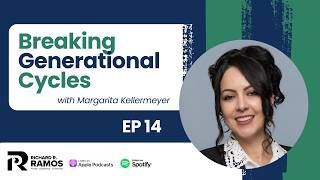
Margarita Kellermeyer, a former foster youth turned Parents on a Mission mentor, shares how the program's six parenting principles broke cycles in her own family. A father chose conversation over hitting his daughter after one session; a single mother enrolled in college while her son returned to school. Garden Pathways delivers these classes in Bakersfield jails and the community.
Chapters
¡Hola a todos! Welcome to the Parent Whisperer podcast. I'm Richard R Ramos, your host, and today I have a special guest that I want to introduce to you, and her name is Margarita Kellermeyer. She's a grants coordinator at a nonprofit organization Garden Pathways that is located in Bakersfield, California, which is about 100 miles north of where I'm at in Santa Barbara. So I'm really excited to hear her. And the reason I want Margarita to be on the podcast is that she has reached a lot of people. She has been trained and she's a certified Parents on a Mission mentor. and she's actively teaching classes, and she has a great story, and she's impacted a lot of people. So, Margarita, welcome to the program.
Thank you, thank you, Richard R Ramos, for having me. It's an honor, it's a blessing to be a part of a movement that creates change and transformation in those that are looking for transformation. As you mentioned, I am a coordinator here at Garden Pathways. I received the grants that take care of clients ages from 18 to 24. Some of those clients have been just as impacted, some of them have not, but have other barriers like being in foster care at some point, maybe having parents that were incarcerated, having a disability growing up in school, having not completed their high school diploma. So research shows that these barriers eventually does create that path to become incarcerated at some point in their lives. So through this grant, we try to also prevent it, right? And for those that have been incarcerated at a young age, how do we help them change their lives? How do we help them become better parents if they are parents? If they're not parents and one day will be parents, how do we help them become the best version of themselves so that their lives are the successful life that was intended to be for them. Every human being has a purpose. Every human being is born with intention. It's a miracle to be in this world, to have a soul, to be alive. And so within that purpose, unfortunately, life happens, pain happens. It takes away the purpose. The darkness of trauma and pain darkens the ability to see what the purpose was of that being. So our mission is to help them find that purpose that they were born and intended to live.
Yeah, you know, Garden Pathways, for those of you who are listening, they do great work and they have been a partner of mine at least 10 or more years. So I really admire the work at Garden Pathways and all that they're doing. Not only with incarcerated, formerly incarcerated people, but just also people in the community, as Margarita mentioned, 18 to 24 in the particular grant that she's managing, but just other people in the community, single moms, people that are struggling maybe with gangs or violence or drugs, things like that. So, but Garden Pathways has been probably one of my most faithful partners in Parents on a Mission. And they were one of the first organizations that I trained their staff. And as I trained their staff, their staff then takes the Parents on a Mission curriculum and they teach it to parents in the community. But the unique thing about our partnership is it was through Garden Pathways that allowed me to go into the jail in Bakersfield and implement Parents on Mission in the jail. And it's kind of been off and on, but over— that was in 2015. So for at least 11 years, off and on, that's the partnership we've had. But Margarita, what I wanted you to first touch on, a couple of things. Number one is how parents— you went through the training, How did it impact you personally in your personal life? And then secondly, what's been your experience now that you've taken it out to the community and you are teaching what you learned to other people in the Bakersfield community?
Sure, I will answer those questions. And before I answer the questions, I just want to say thank you. The grant that I oversee is a grant that is funded through Latino Coalition, and you are the founder. Of Latino Coalition. You are the founder of the grant that I oversee, and so that is a blessing full circle for me to be able to talk to someone that I had not met in person until the training, but I always heard of this hero to our community, this hero that represented an opportunity for me and so many others. You have changed the lives of so many and continue to do so now through planting the seeds in us. So that we can carry the torch and continue to do what your legacy is about. So thank you for that honor, and thank you for thinking of the need that was there. For me personally, when I received the training, Parents on a Mission, it was very impactful. I myself was in foster care along with my other 4 siblings, and so to understand what a parent should be, not from the perspective of what I lived growing up, but from the perspective of the curriculum that you created, uh, educational-wise. Um, the idea that we have as human beings of what a parent is usually is whatever you live growing up, and then we tend to repeat those cycles because it's what you learn, right? And so, uh, when I received that training, I was able to understand a lot of the brokenness that was in my parents that I could not see before, a lot of the times you don't understand what happened to them, right? Or you don't even give thought to what happened to them. And so the curriculum is about, you know, creating better parents, creating, um, better gardeners, as you say it, so that the flowers, that the kids can blossom and have fruits. And so I was able to see that if it did not happen in my upbringing because the brokenness that was there, I could not understand it then, but there has to have been brokenness in their lives before they had us.
Right.
And so that's something that you're not aware of, but it also had an impact in the way they raised us and the way their fears were embedded into them about life. And so how they ended up also, you know, through that fear, unfortunately creating traps that they not— they did not see were creating traps for their kids, right? So it was very impactful from that standpoint. And then it made me realize, hey, um, I can help with this curriculum, uh, facilitate it and help others so that the children that are born into this world don't have to go through what I went through.
Yes.
And if I can— and if I can help that happen, then a part of me when I was a kid is being helped. A part of me when I was a child is healing, and as an adult, to see that our world can be better through our collaboration, right, then it's motivating to keep moving forward, right?
So now, as you know, in the curriculum, for— we talk about the parental personal growth, then we talk about earning respect for your authority, the proper use of discipline. Community building or citizenship, reconciliation, and loyalty. Of those 6 principles that we teach, was any one of them— we also talk about the home field advantage— was any one of them, or is it, was any one lesson that you, now that you've been teaching it, that you feel kind of stands out to you?
I feel that there's 2 lessons that stand out for me the most. One is discipline, because it's the one topic that a lot of the times our society does not want to talk about. So I'm like, I get to be the cycle breaker. I get to be like, hey, we're going to talk about this because it's important.
Yeah.
Because I went through it myself and I know what it— how it damages kids. I saw how it damaged my siblings. And so how can I prevent that from happening? And the— and you have to talk about the elephant in the room. right? So that's an opportunity for growth. And the other session is— the other lesson is loyalty. When, you know, parents believe that through discipline— and then also, what is discipline? I have seen that when we're teaching the curriculum, when we're teaching the lessons and talking about the lessons, the word discipline for a lot of the clients mean, means punishment, right? But it's, it's distorted. Uh, the word discipline comes from the word learning. That's you, as you, as you teach, right? And so how, how do you help a child understand and learn why things happen, what consequences are, uh, rather than just go straight to physical abuse, 'cause that's what we were talking about in one of our classes, right? And so you can see the light bulbs in our classes going on in the clients that are attending the facilitation of the class. And when you see that, and when you see them tearing up, and when you see them saying, "Well, I understand that I do it because it's what was done to me." Because we've had some clients say, Like you also have said in your curriculum, it was good enough for me, it's gonna be good enough for my kids. And so what I've told young parents that we have is, was it really good enough for you?
Right, that's right.
Tell me that, because, um, if it was good enough for you, is this outcome, which is probably being incarcerated, which is probably being in juvenile hall at some point, Is that the outcome that you want for your child, right? That's what was good enough for you is what's gonna then cause those consequences for your kid as well. And so that's when, you know, light bulbs go on, and they, they love their kids. I mean, I know my parents love us. I know my parents loved us dearly. Um, I know my parents had a love, but that love was coming from a place of brokenness, right? It was coming from a place of uncertainty, a lot of a lot of issues. And so it was not a love that heals, it's a love that breaks. And when you're not understanding of that, you don't realize that while you're trying, trying to teach or discipline, you're actually breaking the spirit of the child. And when you're breaking the spirit of the child, I believe that then connects to where can they go to feel that their spirit is not being broken That's right. Even if it's another distorted reality and it's another reality that is very broken, whether it be gangs, whether it be drugs, whether it be, uh, cults, whatever it may be, it's distorted. But they make you feel through that distortion that you are special, right? Something that's not being felt and at home. And so loyalty then is being given to those outside of the household. Right, that's what I feel. Those two are very, very highly important. Everything is important, but those two are just like the aha moments for the class when we speak about those two.
It's a, a misguided loyalty. Now, you had shared with me— let me see if I can find it. I'm not going to read the whole thing, but you, you had a powerful testimony when you sent it to me. I was so happy I want you to talk about it. And you said in here that for the one of the, one of the fathers in your class, for the first time he sat down and spoke with his daughter, telling her he believed she could understand and have a real conversation rather than punishing her physically. So tell, tell that story.
What was that? It was a very magical moment for me. I mean, I cried, the father was crying, people in the classroom teared up because first of all, it's not easy for them to speak up of the truth of what's happening behind the doors, right? So it takes a lot of courage to say, "This is what's happening in my household," first of all, and accept it. So to see the father come to terms and accept the truth and to speak the truth even though it was showcasing him as a father that was violent, right? Right. And so, um, he said, you know what, I just want to share something that happened, uh, yesterday. He said, because he was talking about what had happened the day before at home, he said, um, I had a call from school and I had to go because my kid was saying— my, my little girl was saying bad words in class. And so It was upsetting to me that my little girl was disrespecting another girl without any reason, just went off on another little girl. And for him, he said that it was very humiliating that the teacher had to call him, right? He said, but then I had been, we had been taking this class already for about 2 days. And this was the, no, 3 days. This was the 4th day, the last day. He said, but then I thought, oh, this is one I can put into practice what I've learned. I've been going to class saying that I want to be a better father. Um, I've been hearing about talking and having a conversation rather than just going for beatings, right?
Right.
And so I thought— and he said, and so I thought, rather than strangling my daughter, I'm going to talk to her.
I mean, when I was hearing this, I was like, oh my God, that's a good option.
Let me not even—
I'm strangling to talking.
Oh my God, it was really triggering for me to hear that. I mean, I was like, let me go where you're at and living in, you know, like your child needs me, but this is what I can do. I have no space in the household. It's not my household, right? The same thing with everybody else's household. Um, it's not my responsibility, and I have to accept that. As painful as it is sometimes to see the reality of some children's lives this is the moment where I get to help that kid. Yeah. Even though I'm not in that household.
Yeah.
And so that father said, you know what, um, I had to take a timeout. I actually had to go get some groceries because I couldn't even talk when I got back from school and talking to the teacher. Um, I came back and I told my daughter, I want to have a conversation with you. I want you to write 100 times, I will never cuss in class again. And after that, um, and I spoke to her and I said, look, I'm going to talk to you. You're not an animal. You can understand me. I don't need to physically hit you for you to understand what I want to convey to you.
Wow.
When you misbehave, when you mistreat other people, that's disrespectful, it's rude, it makes me look like a bad father. And he went on and on and on of why she should be a better kid at school. He said, after the girl was, um, I went to the living room and I had the little girl over, um, writing the 100 times I will not cuss again. The little girl suddenly, he said, came to me. My daughter came to me to the living room and said, Daddy, I want to say I'm sorry for misbehaving. Oh God, she had never done that before, you know. She had never— in the times that I've hit her, she'd never come to me to say I'm sorry. So this Tells us that children are willing to listen if we take the time to instruct them, if we take the time to explain to them. And like the father said, he said, you know, it took a lot for me to talk because I go straight from 1 to 10. He said, I cannot talk. It was not done for me. He said, growing up in my household, I did not have anyone that came to talk to me. It was just beats. 'You did this wrong,' and a beat here. Sometimes, he said, my father would line us all up and beat us up for the mistake that one had done. That's how we were raised. He said, if someone misbehaved, my father would say, 'All of you get here in line, and I'm gonna beat all of you because your brother misbehaved.' His father, he said, was an alcoholic. And so he said, I have been raising my children the way I was raised.
Correct.
But I love them so much, I don't want them to have to end up the way I have.
Yes.
And so, because he also has substance use disorder, so for him to be able to— that one day that girl was saved, that one day the child did not get, you know, a beating, right? And so then in that moment, I felt like, well, if, um, Mr. Ramos could hear this, he'd be like, oh, my life is worth living because of a child that was saved today.
Oh, you, you hit the nail on the head right there. I mean, this story, first of all, is not uncommon. It's not uncommon at all. I hear these stories all the time. But what I have not been able to do, because I didn't have a podcast before, you know, I would receive these letters or people would text, like you sent me a text, and I'm like crying. I'm like, just, oh my God, you know, this is Fantastic. And, um, but other people need to hear the hope, you know. And then this story also reinforces what you talked about as far as discipline, how because you talked about discipline and he heard, or maybe whatever else he heard in the lessons that you were teaching, something happened in him. And, and then in return, his daughter ends up saying Dad, I'm sorry, which is what our mission statement is about— turning the hearts of parents to their children and the hearts of children to their parents as the best method for preventing children from joining negative lifestyles. And this is a perfect example, number one. Number two, you are creating— you the facilitator, you the teacher, you the mentor— you are creating And this is so important, and those of you that are listening to me or watching this video, you, you need to really understand this and why these support groups, these classes, whatever you want to call them, are so important. People like Margarita are providing an environment, they're providing a safe space, they're providing a place where people who are hurt, broken vulnerable, vulnerable to share, to open up and feel safe to share their story, to share their heart, not be shamed, not be made fun of, not judged, but to be accepted, heard, and helped. And what she just explained— and, and this is real stuff that's going on— but the key is that we have these groups, and Margarita is one of our mentors. But I want you also, Margarita, if there's other dynamics that you've seen or other— well, let me ask you this. How many classes have you, since you were trained, and that was what, 2 years ago, a year ago, I don't even remember.
No, you've been training staff at Garden Pathways for a while now, but for us, I think it was like 5, uh, 6 months ago or so.
Okay, 6 months.
Okay.
And how many opportunities have you had to teach?
I have had the opportunity to facilitate 3 sessions in 3 different months.
Oh my God, see, uh, look at— well, anyway, you, you— what else can you— what else do you want to share?
It's been transformational. I mean Parents on a Mission is a life source, a life source for the parents, for the ones that are not parents. I have had clients that are about to have a baby and they want to learn how to be a good parent to the baby that's on the way.
Yes.
But more than anything, it's a life source to those children that are yet to come into this world, to those children that are living within the shadows of the upbringing of the parents. Of the brokenness of the parents, right? It's creating that ripple effect. And so what I've seen in our clients is that aha moment where they understand, how can I— like the father said, what he said, when you guys talk about how can I expect for the flowers to be blossomed in a way that I'm not as a gardening, attending to my garden?
Yes, right.
As it's a, you know, metaphor to be able to understand that you use, and that makes a lot of sense to our clients when we're talking about it. When you're attending to the garden and the garden is, you know, like not blossoming and it's not doing well, who do you address? Do you go to the flowers and ask why they're not blooming, or do you go to the gardener?
Right.
You go to the gardener, right? And so that father actually also said, I was so upset at her, you know, cussing and saying bad words, but it's what I do.
Right, right.
That's what I do at home, and so I'm expecting my— something from my kid that I'm not teaching. And so those aha moments, you know, when another, another client shared, I'm going to be having a baby soon and I want to make sure that I don't beat my kid just for dropping a glass of milk, just for dropping a glass of water, right? Because those are some of the scenarios that we have in class. What would you do, right?
Right.
You have a kid that accidentally drops a glass of water, even though you've told them before, make sure you're careful, make sure that you put the cup in the right place so that you don't drop it.
Right.
We as adults drop things all the time.
That's right.
All right. I mean, I shared with them because in one of those sessions, we had just gone to eat, and my husband had grabbed the iced tea from the top. To move it. And so when we— when he picked it up, the lid came off and the whole thing, you know. Yeah. So who's gonna tell us anything? That's no one, because we're adults and we have the, you know, the, the right to say what we want and as we please. Well, children have their rights also. And so, um, those moments of, um— there's another father that said, you know, I, I can see how I need to grow in patience. Because the lack of patience makes me just go from 1 to 10 without even thinking of the process of correcting my child. That's right. And so the correlation of one session to the next to the next to the next is what creates the aha moments. And it's not just one session. I mean, those are the two that I love to talk about because One, nobody likes to talk about discipline. It's like almost like a taboo, um, but we have to talk about it. It's the reality. And I said, as I tell the fathers that are there, um, you know, what does— what is really being a courageous man? What is really being a courageous mother? Because we have mothers in the class too. Um, one of the mothers was very lenient, the type of lenient father, very, um, you know uh, the, the kind of mother that, because there was no father in the household, because there is guilt, uh, for the child to not have a father, she was always letting her kid go and be as he pleased, right? And so, um, there was two times where we actually had to stop the class because she broke down in a way that she couldn't control herself because the topics are very emotional topics. Yes, they are, especially for parents. For parents, when they have their kids and they realize the damage through the, through the kind of teachings that they received in the household. And so that mother was very, you know, triggered with these topics. So for her, she said, I cannot be that, you know, I cannot give the discipline, the corrective discipline to my child to teach him what I need to teach him, how I know he should be, because I feel like he hasn't had a father. And if he hasn't had a father, at least he should feel like happy to do whatever he wants. But now, she said, I see him hanging out with people that I don't want him hanging out with. Now, um, he's hanging out with people that use drugs. He's hanging out with people that I won't, I don't want my child to be around those people because not because they're bad people, they're also broken. They're also kids that grew up in households that are broken, but they're not gonna make him any better.
Right.
And so I don't want him introduced to these drugs and he tells me he's not gonna use them, but they're very strong drugs, she said, and our family has a lot of addictions. And so it's very easy for him to go down that path. She said, because I suffered from addiction myself while I was pregnant, and so it's kind of like easy for the kid to have those tendencies already. Yep, yep. And so, um, she said, but I want to become, uh, even though I wanna, I wanna love him and let him do whatever he wants to do so that at least I feel less guilty about him feeling the pain of being abandoned by our, his father, which was her husband. I'm trying to make up for that, she said, but I'm gonna try to be a little bit more, um, strict with him. And it's hard because he always tells me, I love you, Mom, and he wants to fix everything with that, and it makes me feel so good when he says, I love you, Mom. But I know he says, I love you and I'll be back, and I know what that means. He's out on the streets with his friends, right? So she said she would say, I'm gonna try today to go home and say, hey, can we cook food together? Can we have an activity where we spend time? Because we're not used to talking. A lot of times communication is a huge issue because communication was never implemented in households growing up for a lot of our fathers and mothers, or those that are still young adults that haven't become fathers or mothers. And so communicating, talking about it is something, it's a taboo. Like, it's something that even in my culture, like, you don't talk about things. You just figure it out, right? And you go along with whatever is happening, because if you talk or you say something, you're most likely going to get a beating for that.
So you're just afraid.
You're just afraid.
That's so, that's so true. You know, again, um, those of you who might be listening, Parents on a Mission is designed on purpose to be challenging, not because we want to shame anybody or be mean or anything like that, but we want you to be the best. You have to look at it this way. It's like a coach who has an Olympic star, and if they're an Olympic athlete, the best in the world, why would they need a coach? Well, that should tell us something. If an Olympic athlete needs a coach, you know, maybe we need a coach. But that coach is there to push them to be their best, to push them to excel to their peak potential. And that's what Parents on a Mission is about. So it is very emotional, but we don't just raise issues, we also show you how to fix those things. And the other thing I want to say is I've always been asked, um, if, if Parents on a Mission is for only parents. And I said, no, that, that's the whole thing about it, is shouldn't we learn something about being a parent before we become a parent? And so we welcome people who are not parents to come to these classes and learn. And second— third, um, I've always had the single mom in my mind and heart when I developed this because I was raised by a single mother. And growing up in the barrio in Northeast Los Angeles, you know, my brother and I You know, we got, got involved in stuff that, you know, my mom didn't like, but she was very the opposite of what Margarita just described. She was very strict, not permissive. And because of that, I, my brother and I always credit her with that. We all— I have 3 sisters too, and we all turned out, you know, we're all doing okay. So for the single mothers, you're going to find a lot of support because we know, we understand, it's, it's, it's not easy to be— it's not easy to be a parent, period. But to be a single mom raising kids, especially in areas where there's a lot of, you know, violence, drugs, gangs, temptation, things, you know, that I grew up in. But now today, adding on top of that social media and the social influencers So I just want to encourage you in that. And any other, Margarita, any other insights?
I'll share that a lot of the fathers and mothers that have gone through the class have shared, you know, their little miracles that happen while the class is going on. For this mother, she did share also. She came back the next day and said, hey, I practiced communication with my kid, and I said, hey, can we sit down and talk? And he was looking at me like something was weird. Uh, what do you mean, Mom? She said, yes, I want to have a meal with you. Can we cook together? Can we do something together? Um, can we engage in something? What do you want to do? He's like, well, I would want you to watch me play basketball. That's what I would want you to do. So she said, okay, how about we prepare a meal together? We cook together. We have, we sit down and eat as a family because they don't usually do that, she said, because he's always out with the friends.
Right.
And so, and I'll go watch your game. So he agreed to sit down and they cooked together, both of them. I'll tell you what, it was a blessing to meet her son about 3 weeks ago because now that mother is being enrolled into Cal State Bakersfield. To get a bachelor's degree.
Wow, wow.
The son, the son was here because they came to meet, um, uh, with, with one of the mentors that they have, and the mentor, um, took also the kid along with them so that he can experience the campus and get exposed to that. And so the mom was sharing with me that everything has changed for them in their household after Parents on a Mission. She's now enrolling in a university to change her life, and her major is going to be psychology. And her kid is now planning to go back to school to finish high school because he was— he's 16, but he dropped out. So now the kid is trying to get back into school to complete a high school degree at the age of 16. And he also wants to go to college now. So the kid— I mean, beautiful transformational. And so these kind of trainings, Parents on a Mission, helps us understand, even those that don't have parents, I mean, that don't have kids. I don't have kids myself, but I was— I'm a daughter, right? And when you can understand your parents, all the, the confusion that, that was there dissipates, and then you get to be a part of the solution for those that are going to be bringing kids into this world. And so it's, it's beautiful. It's a blessing to see people transforming because that's what it is. Transformation happens from the inside out. And so when people understand what's happening in their mind, and that connects to what's happening in their heart, then the actions become different. And that's how transformation happens. And that's what Parents in a Mission is about. And that's what Garden Palace is about.
Wow, thank you so much, Margarita. I really appreciate your time. And I know you got to get back to work, but I just really encourage you to keep on doing what you're doing. I mean, you guys over there are making such a great impact. And for those of you listening, maybe for the first time, or maybe you've subscribed, I want to encourage you to share these, um, podcasts with any family or friends that you know. Maybe they don't know about the podcast or they don't know about me. It's not about me, it's about the information and the stories that you just heard. People's lives really are being changed. So I want to encourage you, um, you can— if you want some more information, I have a lot of free resources on my website, Richard RichardRamos.com. Uh, if you like to read, you can read all about, uh, Parents on a Mission in my books. They're, they're there, uh, on my website as well. And if there's not a Parents on a Mission class offered wherever you're listening to this, you can go on my— again, on my website, RichardRamos.com, and I have an online course that you can take at your own leisure It's 15 videos. They're very short videos, maybe 15 minutes, and you can just stop and start, listen to them at your leisure. You can download them and listen to them in your car, whatever. And that way you'll get the full— everything that we teach and everything that Margarita talked about are in that online course. So I want to encourage you on that. And also, if you would mind write a review. This is what helps me reach more people. If you felt that this, uh, podcast, this episode was very helpful to you, if you would write a review, uh, like it, subscribe to the podcast, and then share it, that helps me reach more people. And that's what we're all about. We're trying to reach as many homes, people, because as you heard, many children are being raised in broken homes. With parents who love them, but at the same time, they're practicing things that are not always helpful, and then the cycle just keeps going. Uh, but we are breaking that cycle through this program. So thank you so much for listening. I'm Richard R Ramos. You've been listening to the Parent Whisperer podcast. And don't forget, as I always tell you, Parents on a Mission is not for bad parents. It's for good parents like you who want to get better. See you next time.
More from Richard

Juan's story is a powerful reminder that where you come from does not have to determine....







Why Parenting Is the Ultimate Solution to Youth Violence and Community Safety!


