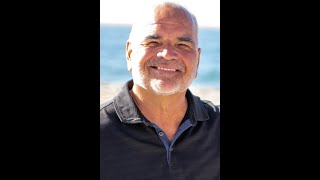
Richard Ramos explains Parents on a Mission, a program that mentors parents through self-growth rather than child management. He contrasts authoritarian parenting with authoritative parenting, which is firm but loving and includes dialogue. Ramos shifted from youth mentoring to parent mentoring after realizing youth problems stem from family dynamics.
Chapters
Hi, I'm Jack Canfield, author of the Success Principles and co author of the Chicken Soup for the Soul series. And I'm here today at the Author's Success retreat that I do with Steve Harrison. And I want to introduce you to one of our attendees, Richard Ramos. Now, Richard is a former youth mentor who is the author of Parents on a How Parents Can Win the Competition for the Heart, Mind and Loyalty of Their Children. Richard's been developing and training mentors for parents for well over two decades now. Richard, what would you say is the most helpful thing you tell parents about why they need mentors?
Well, what I try to do is help them view it in a different way that Parents on a Mission is not for bad parents. Parents on a mission is for good parents who want to get better. For them to think of it, it's like any professional, a teacher, a principal, a pastor, a doctor who goes to a conference, they go there because they want to get better. They're good at what they do, they're professionals, but they want to get better. They want to be updated, they want to stay relevant. And I try to help parents. It's the same thing. If you come to Parents on a Mission or any parenting class, it's not because you're bad. You just want to get better. And we expect professionals to be good at what they do. And why should our children expect anything different? And what distinguishes parents on Admission from other parenting classes? Most parenting classes teach parents to focus and deal with their children. Parents on a Mission teaches parents to deal with themselves, to focus on their own self. And one of the things that parents love coming out of Parents on a Mission is the personal growth that they experience. And that helps them to be that better parent for their children.
That's great. I'm just going to ask you a follow up question. In your book, you talk about what is it? Authoritative and authoritation or something like that.
Could you. Authoritarian versus authoritative.
Yeah, I like that distinction. Could you talk about that for a second?
Authoritarian parenting really is like being a dictator. Do what I say. Don't talk bad. I don't want to hear your opinion. You have nothing to say. I'm dad, you're my son, that's it, over. And there's no culture there of hearing from our children. Authoritative parenting is I'm in charge, but I love you and here's why. I'm bringing this discipline in your life and you want to talk about it, we can talk about it, but we're always affirming them, even though we might Be disciplining them. But there's a culture of a diet, a dialogue versus just do what I say. Go away, be quiet. That's it.
Yeah. There's a quality of mutual respect in there that I really like. My father was the former, you know, former military officer and treated all the kids like we were in his boot.
Camp, you know, so, yeah, I think a lot of us had that kind of upbringing.
Yeah, it took me years to recover. And I think, unfortunately, most parents parent the way they were parented. And so I think the work you're doing really helps people learn some new distinctions, some new concepts, and then has the models of how to actually bring that into being so. So they can, as you said, win the hearts and the loyalty and all of that of their children. So I just think the work you're doing is really important. And just tell one more thing. You use a metaphor about the people falling in the river and why it's so important to not just be pulling people out of the river. And why you went from working with youth to working with parents.
Well, when I was working with youth, I realized I needed to go and talk to the parents to get their perspective. And that's when I realized I was fighting a losing battle because I wasn't dealing with the root of the problem. I was dealing with symptoms, which their kids are symptoms of what's really going on at home. And when I went to their home and I saw that dynamic, that, to me, was really where the root of the problem was. And that's why I said to myself, well, if I really want to help these youth, I need to help mom and dad. And so I put youth mentoring on the shelf so I could start focusing on mentoring parents. And then I started developing parent mentors because one guy could only do so much by myself.
Well, I really think your work's important. I'm glad you're continuing to expand it out into the world by training other mentors, writing a book about it, and so forth. So thanks for what you do. Really appreciate it.
Thank you for having me, Jack.
And thanks all you for watching us today here. And here's where you can go to get in touch with Richard and get more information about him, his book, and his work.