How Mentorship Changes the Lives of At Risk Youth with Juan Avila
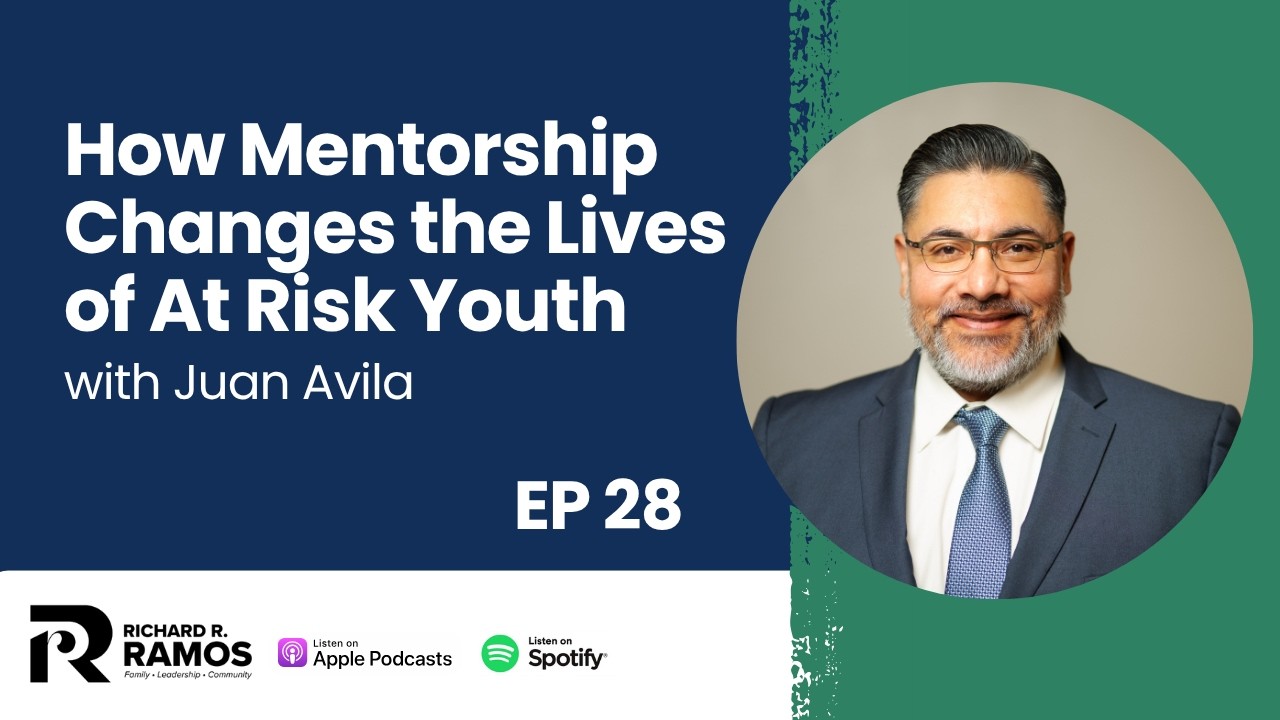
In this episode of the Parent Whisperer podcast, host Richard R. Ramos interviews Juan Avila, COO of the Bakersfield nonprofit Garden Pathways. Juan shares his personal journey from a low‑income immigrant farm‑worker family to a community leader, describing how his upbringing motivated him to give back to his hometown. He explains Garden Pathways’ mission to transform lives through loving mentorship for justice‑impacted youth and adults, detailing its growth from a small preschool staff to a 60‑person organization that also runs a robust mentoring program. The conversation centers on the partnership with Richard’s Parents on a Mission (PoM) curriculum, which was first introduced inside Kern County jails (Lerdo facility) in 2012‑2013. Juan describes how PoM’s focus on self‑awareness, purpose, and parent identity helps incarcerated parents reconnect with their children, build hope, and reduce recidivism. He recounts personal anecdotes—such as using PoM principles to navigate foster‑parenting challenges and a powerful story of a father named José who chose fatherhood over violence—illustrating the program’s transformative impact. The interview also covers the expansion of PoM into Youth on a Mission for juvenile‑hall settings, the training of staff as certified mentors, and the synergy between the two curricula. Toward the end, Richard outlines how listeners can access PoM resources: the book, an online video course, mentor certification, and free downloadable materials, while emphasizing the broader goal of equipping parents and caregivers to become better leaders.
Chapters
Hello everybody, welcome back to the Parent Whisperer podcast. I'm Richard R Ramos, your host. Uh, as you know, um, we always are talking about parenting issues. Uh, Parents on a Mission is really about leadership. Hopefully throughout these episodes that we've been doing now in season 2, we've been on YouTube, so now all of you are able to watch and not only listen. Season 1 was all listening, but now with these videos, I'm able to invite guests on, which part of the reason for that is I don't want you guys, uh, just to hear me talking about Parents on a Mission, parenting, step-parenting, blended families, you know, all of the things that we talk about. Because I have been doing this a long time. I've mentioned that many times. I've trained, I could say, thousands of people. I mean, I've been doing this since 2007. Actually, I've been teaching Parents on a Mission since 1996, uh, but I started doing the Train the Trainer program in 2007, and since that time, um, You know, it's, it's been a great, um, transformational, um, period. And what I want you to hear today, I have a guest, a special guest, a good friend of mine who I wanted him to tell his story, but he was part of an early training I did, um, actually the first training I did inside of a jail facility. And so he's going to talk about that and also his own personal experience, because again, I want you to hear how— what kind of impact is Parents on a Mission making out there in the field. So I want to introduce you to my friend Juan Avila. He is the Chief Operating Officer in Bakersfield, California for the nonprofit Garden Pathways. They do great work. They do mentoring work. They provide services to the community there in Bakersfield. Juan has been with the organization, I think, close to 10 years or longer. I'm not sure, but anyway, Juan, thank you so much for your time. Welcome to the program.
Yeah, thank you so much for inviting me, Richard. I'm really excited to be here with everyone and talk a little bit about Garden Pathways' experience with Parents on a Mission and even my own personal experience in my own life journey with, with Parents on a Mission in developing proper parent leadership skills.
Yeah, so before we get into that, Juan, talk a little bit about your own journey, just kind of your background, your journey, and then how you came to Parent— not Parents on a Mission— Garden Pathways. And talk about Garden Pathways, you know, who— what do you guys do?
Yeah, no, absolutely. So, yeah, born and raised in Bakersfield, California. Proud son of immigrant farm working parents, both of them campesinos, both of them farm workers here in the Central Valley from grapes to citrus. My dad had a 6th grade education, my mom had a 3rd grade education. So for them, education was really important, how to break the cycle of poverty. But we also grew up in challenges. I grew up in a neighborhood that is, you know, high crime, high violence. High poverty, super disinvested. And with that, you know, even the challenges in a family that, that was impacted by domestic violence and alcoholism. And so growing up seeing those things within the family, but by the grace of God, I was able to just be able to, you know, go through high school knowing that I had to get good grades, not knowing how to get to college. But ended up getting some support even outside of the school to finally get myself to move to Cal State Northridge and get my bachelor's degree there. The ultimate goal—
that's where my brother, my brother and one of my daughters, two of my sons, one of my two sons My daughter and my brother graduated from Northridge.
Okay, right on. Go, go Matadors!
Yeah, go Matadors!
Um, but yeah, so I ended up going to Cal State Northridge, and the ultimate goal for me, I wanted to go into corporate America. I wanted to go into the entertainment industry.
Oh, I didn't know.
Yeah, that's— I wanted to go and, uh, make money, uh, become successful. And, uh, and I even told myself I will never go back to Bakersfield. And so for graduate school, to save a little bit of money, I decided to move back with my parents here in Bakersfield. And, and I worked for a nonprofit that was not a great experience. So I told myself, I will never work nonprofit. And I will— I can't wait to get out of—
Wow, do you really? You say, oh, yeah, go ahead. Things have happened with you. Oh, yeah.
And so, you know, in the 2 years and a half that I was going to graduate school here at Cal State Bakersfield, My parents still live in the same neighborhood that I grew up in, and every morning that I was walking out of that house, I would look at my neighborhood and I'd look at the people there and my heart would just break. And I would say, you know, like, man, like, from the time that I left to now, it's really sad and heartbreaking. So then I just really felt compelled and I just, you know, really felt a calling that I needed to stay in Bakersfield and help rebuild my home before going anywhere else and rebuilding somebody else's home.
Wow.
And so, uh, I'm like, oh man, I'm gonna get stuck, you know, doing service, and I'm gonna get stuck here in Bakersfield. And I had an opportunity to work at a nonprofit organization called Parents on a— Parents on a Mission. It's a Parent Institute for Quality Education, also known as Pique. Oh yeah, I've heard of it. Yeah, and so it's how to teach parents how the education system functions in order for them to be the educational advocates for their children. And so that kind of connected with like my own journey as well. I did that for 4 and a half years, then had the opportunity to work at Kern Community Foundation for about a year and a half and learn about grant writing, philanthropy, best practices for nonprofits, donor development and engagement. Then Karen Goh, then supervisor, recruited me to be her field rep. I was still— I had a desire to do direct service. Then she didn't get reelected and she knew kind of my own purpose wanting to transform the types of neighborhoods I grew up with.
Karen Goh, who is the mayor of Bakersfield.
She's the mayor of Bakersfield now. She told me, "Go to Garden Pathways. I think your purpose and their mission align." Met with the then executive director Kim Elvers, who also flood ministries. And the mission of Garden Pathways is to transform lives from the inside out through loving mentoring relationships, and primarily mentoring youth and adults that have been justice impacted or coming out of incarceration.
Yes.
And those that are the most impacted by community violence, so our gang members, usually those that are the most underserved. And definitely, this was back in 2013, And I've been with the organization ever since.
Wow. Wow. What a journey. And, um, and for those of you, again, now I don't even know if I've ever mentioned this before, maybe I have. I lived in Bakersfield for 9 years. Um, and that's again where I met Karen Go, uh, as the executive director. I think she was at the time. I'm not, I don't remember, but I remember when I did meet her, she was, uh, working for Garden Pathways, if not the executive director. So I know Bakersfield, I know the Bakersfield community, I know what Juan is talking about, and that's why the services that they're providing are so important and they are reaching a lot of people. I mean, Juan, when I met you, how many employees did you guys have and where are you today?
Yeah, so we have a preschool that's always been consistent with about 25 employees working with 96 children. But on the mentoring side, we had 8.
Wow.
And now we're at about 60. So, yeah, yeah.
So talk about then how we met and how you went to my first Parents on a Mission training for the Lerdo jail. And the staff that I was training were the staff at Garden Pathways, and you were part of that training.
Yeah, no, absolutely. And never— and don't say that you will never come back to Bakersfield, Richard, because it'll end up happening. I'm not going to say it.
Thank you for telling me that. I love visiting though.
I love Bakersfield.
It's a great community. I love visiting.
No, yeah, so back in— it was like 2012 and you were the executive director of the Latino Coalition for Community Leadership. And I remember reaching out to figuring out how we can collaborate. And it was during the same time that California was going through the prison realignment process with Assembly Bill 109 because it was overcrowding in the state prisons. That's right. And so they were transferring all, they were having everybody that had 1 or 2 more years in their sentence go back to their county jails. And then those county jails were getting impacted. And I remember, and it's funny how things just work out. 'cause I remember we applied for an AB 109 grant during that time and we submitted a few seconds late past the deadline. And so they didn't wanna give any wiggle room on that. They said, yeah, you're— I wanna say it was like 29 seconds. And they said, yeah, you went 29 seconds over. It's supposed to be 11 o'clock in the morning on the dot. And so that's when we started connecting and and we ended up becoming partners with the Latino Coalition and started really thinking innovative ways to work with those that are about to get released. And in the conversation was, you know, why don't we train sheriff staff and Garden Pathways staff on Parents on a Mission, one, so that everybody's on the same page and everybody has that same focus. And let's utilize Parents on a Mission to go inside of the jails, deliver it, and start building relationships because it's deep conversations. And we do have a lot of individuals that are incarcerated that are, are dads and moms. But even those that are not, I think it still helps them have conversations with themselves and have a better understanding of their own upbringing so that when they do become dads and moms, they can avoid some of the errors that some of our parents made.
Yeah, I'll never forget that, that first cohort. I don't know if you went that day when we actually went inside the prison, the prison, the jail there in Bakersfield, and the women that were with me, or were you there? And they were terrified. They were, oh my God, we're going to go inside the jail. You know, they'd never been inside the jail and in a jail. And I, and I was like, hey, you know, it's going to be okay. And, and I was just there to start teaching the curriculum and they were there to observe. Um, so there was a number of you, again, I don't remember if you were part of that, but what happened was that the— they brought me to teach. It was about 9 or 10 inmates and they were inside like a cage And I was outside, we were all outside, but I'm the teacher and I'm standing on this side of the fence and they're in there. And I just said, this isn't going to work. And the people that— the officers that were there, I said, this isn't going to work. I, I need to be inside there. And they're like, oh, we don't normally do that. I said, well, then this isn't going to work. I can't stand out here and have this, you know, anyway. But I'll never forget, they were, you know, they were like— but later on they told me they were like terrified, like, oh my God, you were gonna go inside there? Well, you know, actually it's like, hey, these are just people, man. You know, they're just people. Now of course I had already worked in two prisons and juvenile hall years prior, so I, you know, kind of knew the way it goes. Anyway, I'll never forget that, but that's how it got started. And I don't know if you, did you ever facilitate classes in the jail there in Lerdo?
Oh no, absolutely. And, you know, part of for us, and we learned this from you too, Richard, is that, you know, as leaders, we need to also have that experience. We need to go through the process so that we have a full understanding and be able to support our staff when, through the process as well, whenever they find some barriers or some challenges. But no, I had the opportunity to go inside and, and teach these classes. Sometimes when we would have new staff, they are nervous and scared to go inside of the jail, but we've been in every part of the Kern County Jail. In the area that's, you know, low risk, you know, a minimum security called the Farm, to maximum security, to the women's jail. And now they have the new facility called Justice. And now we're delivering Parents on a Mission in that facility.
So, so let it— we'll start there and then I want you to talk about your personal experience. So what have you seen over the years? What have you seen the impact of Parents on a Mission inside the jail?
Yeah, on so many different, so many different levels. I think where Garden Pathways and Parents on a Mission align is that we strongly believe that everybody is born with innate greatness and unlimited potential. That's right. And even in Parents on a Mission, it says that everybody is born with a purpose, on purpose. And we train our staff to believe that, that if these individuals cannot come out into the communities inspired to reconnect with that intended purpose, then that purpose is gonna get lost because it's unique to them. And the world is who's gonna really suffer the consequences of that experience. And so then we become passionate about having these conversations. And like I said, some of them are dads and some of them are moms. And it's interesting to see us go through each session, and little by little, they're connecting with that father spirit, they're connecting with that mother spirit, with that identity that was already in there. And then what they want to do is be the best version of themselves so that when they get out, they want to restart that relationship building with their children. But even those that don't have kids, as we're having these conversations, they realize, they start to understand, oh, my parents, they had challenges. Oh my goodness, they were broken. Now I can have some grace and I can actually forgive them and start, you know, fresh. And so they don't carry that big, huge burden on their shoulders.
Yeah, I don't think a lot of people understand about a prison that 68 to 70% of those that are incarcerated are parents. And most of the time when we think about reentry, you know, right away, okay, well, they need a job. So, you know, there's a lot of work around that. You guys help with that as well. And they need housing. Obviously they need a place to stay because, you know, they may have been locked up for, you know, a long time. But there wasn't a lot of thinking about what about reconnecting with family. And a lot of times we think, oh yeah, the mom and dad, but what if they're a mom and dad? And what if they haven't been around? Maybe they've talked to their kids on the phone, maybe not. Maybe they've written letters, maybe not. I mean, but nevertheless, there had to be that connection. And that was the thing I really appreciated about you guys and also the Lerdo jail personnel that they were willing to take a chance and try this program for the purpose of that reunification with family once inmates got out of jail. That was the whole purpose of providing not only jobs and housing but also a component to help them be that mom and that dad.
No, absolutely. And it's, it's how to start having that self-awareness. And at the different levels, right? Mind, spirit, soul, and physical body, and your physical being, and having a greater connection to that. Because if we don't transform that mindset, they can get a job, but that doesn't mean that the criminal thinking is not still there, or that the self-doubt is still, is no longer there. So we want to do things like Parents on a Mission, the cognitive behavioral conversations, We want to do those things before we start because that brings hope. And so, you know, most of these individuals are living lives of despair. And so why talk about a job and a house when, you know, they don't even have the hope of ever having that? And so let's bring that hope to these conversations.
Yeah. And, you know, I've had so many letters and testimonies from people that took the course and, you know, I didn't teach it, obviously, but You know, we had it in every prison in Colorado until COVID. When COVID came, that changed everything. There's still people teaching it over there, but not like it was. And then you guys have been pretty consistent. And I've had so many testimonies. Now I wish I could say, you know, everybody that goes through Parents on a Mission is transformed. I wish I could say that. That's not true. We know there's recidivism and things like that. But what we can say is that we do know there were parents that came out there and they got it together and their families are reconciled and things are going well for them. And when I receive those kinds of testimonies, you know, it's a really a, a big encouragement. So what I want to say to all of you listening and watching, if you want to see Parents on a Mission in the Lerdo facility in Bakersfield and throughout prisons in Colorado, there's a video on my website, richardrramos.com. Richard R, don't forget the middle initial, R Ramos dot com. Go there and I think if there's a tab, I think it says media and video, the dropdown menu will drop down and you just click on video. And there's a couple of videos there. One is a 5-minute trailer and the other one is a 39-minute documentary of the work that we did with Parents on a Mission. And Garden Pathways is included in that, in that video. So Juan, now talk about how did Parents on a Mission impact you? What's been your journey since you took that training? I think it was in 2015.
Yeah, so around that time. Again, it's just crazy how things align. And I'm always fascinated now looking back, and it's probably because I just turned 50. And so I'm like thinking back like, oh my goodness, that had to happen, that had to happen, and that had to happen in order for us to be where we're currently at. We were in the process of taking in 4 foster kids and they were all siblings. And so my wife and I were not able to have biological children, but the youngest of these siblings was my wife's nephew, blood nephew. And at first we were just gonna take that, that the relative. But when we went to go visit, because we knew the other siblings, we went to go visit them at the, at the Department of Human Services, and they had already been separated. They were 3, 5, 6, and 11, and they had already been separated. We asked the social worker, what is Are they already separated? She's like, yes. I'm like, what's the likelihood that they will, that they can all be put in the same home? And her response was, that's very unlikely. More than likely, the youngest will get placed immediately. The 5-year-old has some emotional issues, so he probably won't be placed right away, or he'll go from home to home. And then she said, and the oldest may end up just going into a group home.
Group home.
So yeah, and so our hearts broke and my wife looked at me, I was like, we're taking them all. And so, but again, it's like going from no kids to kids overnight. And it's during the time that we were doing the training of Parents on a Mission. And I'm so glad because I'm like, I don't know how to raise kids. And I'm like, and these kids are already with certain habits and behaviors. I don't know how to manage that. And Parents on a Mission really said, no, learn how to manage yourself. Learn how to be aware and learn how to communicate emotionally and spiritually and mentally. Learn how to communicate right with these children. And that's really, I mean, you have other parenting programs that teach you how to manage the behavior of the kids. If your kid does this, then if your kid does A, then you need to do B. If it does C, then you need to do D. And you know, you're trying to constantly manage behaviors. But I really love Parents on a Mission saying you manage yourself and you're going to inspire the behavior that you desire.
That's right. Yeah, no, that's right. And, um, Hats off to you, man. You and your wife, you know, of course I've known your story for many years, and when you first told me that, I think we were having lunch somewhere, and I was like, wow, like, you know, that's, that's so huge. But, um, I'm also happy to know that the lessons that we teach made an impact on you. And, um, how is it now? I don't know if I've ever met your wife, and how has she been learning those principles from you?
We have the conversations, especially when times got rough. When times got really, really rough, it's like we would have to kind of do a reset and then just have a conversation about, and it's funny 'cause we would kind of like role play. All right, like, you know, how should we approach this? And then I'd give her some input from some of the stuff that we read in Parents on a Mission. One particular example I remember, is the thing on forgiveness. And then also for us to put our pride aside. And I remember the second oldest, his name is Angel. We thought he did something. And so we're yelling at him and we're telling him, "Hey, this isn't right. You shouldn't have done that." And he's like looking at us like, "I didn't do that. That wasn't me." I was like, "Don't lie to us." go to your room, you know, and think about what you did. And so we're like, we're so disappointed. And so he goes to the room and then like we end up having a conversation with some of his other siblings and it turns out that he was right. It wasn't him. We were wrong. And so my wife's like, well, what are we going to do? And so we're having this conversation about forgiveness and pride. And at first it's like, ah, he'll get over it, you know, like, because I don't want to go out there and say I'm wrong. And so we're like, oh, he'll get over it. But then I'm having the conversation, it's like, no, like we just wounded him and he's probably thinking, you know, I didn't do anything and these are the consequences that they're giving me. And so I had a conversation with my wife and I said, you know what, I think let me go upstairs. And again, with parents, it's like going to him, not calling him to come down to talk to me. It's now I'm going to him. And I went in there and I said, hey Angel, you know what? I just want to come in and I want to apologize. I was wrong. The moment I said I was wrong, it's like all the issues went away. He had the biggest smile on his face when I said, you know, and when I told him, I said, you were right, you know, you didn't do this. And I just want to apologize. I'm extremely sorry. I didn't mean to, you know, hurt your feelings. That's never my intent. And I could have probably approached this differently. And I, and I gave him the right. I said, you don't have to, you don't have to forgive me, you know, and you can forgive me in your own time, but I just want you to know that I am sorry and I'm gonna try not to jump to conclusions in the future. Game changer. Like, the, the atmosphere and the relationship with my kid, like that, I mean, I'm telling you, it— so those are kind of— so that's an example of how we approached a lot of the situations.
Okay, mom and dad out there, I hope you're listening. And stepmom, stepdads, I hope you're listening. Foster parents, uh, that is what part of— only part of what Parents on a Mission is about. But of course, if you've been listening to this podcast for any amount of time, you know we've talked about that and so many other things. Uh, Juan, how old is your— that your son, how old is he? Yeah.
So now he's 20 and he's been 2 years in the Navy.
Okay, so I know I could go to him today and ask him if he remembers that situation, and I guarantee you he will remember it because kids never forget those kinds of things. And it's so important. And I've been in the same situation. I've had to apologize to all of my kids. Now I'm a blended family of 8. I've had to apologize to all of them more than I want to admit over all the years. But, um, that, that is one of the things that if more in general in society, if more people witnessed people in authority like the president and on down, superintendents of schools, counselors, police officers, teachers Parents, if kids saw us admit when we are wrong, apologize like that, it goes so far. It's so powerful. So, you know, you had that experience, and I appreciate you sharing that. Um, now I have trained— Garden Pathways has been probably, I think, over the years, our most faithful partner. I've trained and still train the staff at Garden Pathways because they, they've taken it on as one of their tools on their tool belt of all the services they provide. And now they are not only in the jail, but they also do a Youth on a Mission in the juvenile hall. So they, you know, I've trained I don't even know how many staff at Bakersfield. But, Juan, talk about how that's going, how it's gone, and the impact that you've seen your staff members using that curriculum in the community, in the jail, in the juvenile hall, et cetera.
Yeah, and if you were to speak with my staff, you'd hear similar stories to mine. It's not only that they ended up taking a tool, and we've incorporated into the Garden Pathways process because the spirit of Parents on a Mission and the spirit of Garden Pathways are in such good synergy that it's now, it's part of the Garden Pathways process. Anybody that's a new hire will, that's one of the trainings that they will have is Parents on a Mission. But you'll hear stories where they didn't only acquire a tool to work with individuals and help individuals develop their parenting and their self as parents, but also how, I mean, the impact that it has on their own lives. And you'll hear constant stories about that. Because of the work that's happened in the county jail, you're absolutely right. Kern County Probation contacted us and said, can you replicate that inside of the juvenile institutions? And we said, we can definitely try, and we would love to. And that's when we reached out to you and said, oh, you know, what do you think about Youth on a Mission being used inside of the juvenile institutions? And you're like, well, let's do it. You know, let's, let's give it a shot. And it's been working really well because then from there that developed into now turning kids inside of the institutions into Youth on a Mission mentors.
Yes.
And so, um, I mean, you know, we were getting super creative and innovative in how we can connect with the hearts of each individual that's in custody, build relationships so that when they get out, they feel very comfortable coming through our doors and knowing that they're not gonna be judged because we've already seen them, you know, several times. But it's good to see the impact. And yes, there's recidivism, but Richard R Ramos, we'll have people that took Parents on a Mission, when you delivered it, and finally, the last couple of years, they've decided, you know what, I think I do want to change my life. And because of that seed that was planted, they remember, okay, let's go to Garden Pathways. And so they come to Garden Pathways and they're like, I was in Parents on a Mission, you know, is so-and-so still working here? Is so-and-so still working here? And they still remember those names. But there's an individual, like, you know, we just did the conference and we talked about how Parents on a Mission can also help out with, um, in developing parent, you know, parents' leadership, how can that, how that it could positively impact the reduction of community violence, right? And I shared with you the story of Jose.
Yes.
And Jose's from, from northern Kern County, and he has two little kids. I want to say one, and it was two and three, and then, um, and his partner was still struggling with addiction and hanging out with the wrong crowds. And he made the decision that he wanted to change his life for his children. She wasn't there yet. And because, because she was so unhealthy, she would try to set him up and he would realize like, oh, she's inviting me to get assaulted. And it's like, that's not cool. So he's like, I'm going to take my kids and I'm moving out. And so he moved in with an uncle, and the uncle said, "Yeah, you can stay with your two kids in that bedroom." The bedroom had a window that faced the streets. And then one day— so he was staying there, and then one day somebody did a drive-by and started shooting through the window, and he decided— he grabbed his kids, you know, fell to the floor covering his children. And José looked out the blinds, and he said he recognized the car And he, at that point, he knew who it was. And so he said, I'm right there on the floor with my two kids. I saw the car, Juan, and I knew who it was. And so at that point I'm thinking, I need to get myself a piece or a gun and I need to go and take care of that individual before he takes care of me and/or my children. And so he was talking to me in the office, so I knew he didn't do it. And I'm like, well, Jose, well, what happened? He goes, man, you guys messed me up. You know, he goes, He goes, "I remember, you know, the Parents on a Mission lessons, and I'm looking at my children, and I'm thinking about getting a gun, and I'm looking at my children, and I finally made the decision. I said, 'No, you know what? I'd rather be a dad.'" Wow. Wow. So in that process, he got connected with that identity. Yeah. That was powerful. He got connected with the identity as a father, as opposed to the gang member, as opposed to the violent individual.. And he fell in love with that identity and that prevented him from ongoing violence. And so he came to us and said, "I need you to move me from my city so that me and my children can be safe and I need you guys to help me with a job." Wow.
That is such a powerful story. And, you know, we could tell stories like that on and on and on, not only through Garden Pathways, but through so many of the organizations throughout the country where we have trained people in Guatemala, El Salvador, in Canada, Montana, same story, uh, and it's, it's, you know, it's just powerful. So let me break down for those of you that are listening, listening, what, what we have. Okay, so Parents on a Mission, if you're a mom or a dad and you just want to learn the curriculum or read the book, because you might say, you know, hey, I live in Montana and there's, there are no Parents on a Mission classes out here. Okay, so that's the reason I wrote the book. So on my website, again, richardrramos.com, or Amazon— you go to Amazon, but you could buy the book if you like to read. Not everybody likes to read, but if you want to read, everything we teach is in that book, Parents on a Mission: How Parents Can Win the Competition for the Heart, Mind, and Loyalty of Their Children. If you don't like to read but you're willing to take the course online, I have the course on my website. Uh, all you got to do, go to the website richardrramos.com. At the top there's a tab that says Courses. Click on that and you can take the— all the classes by yourself. 15 videos. Um, I explained everything I I teach. It's only $97, and I'm going to say only $97 because programs like that, if you could find a program like that for less than that, you're not going to find it. And the reason that I made it $97 was because I wanted to reach more people and not make it so, you know, so expensive that it just doesn't fit in your budget. So the benefit of that is you could watch it at your own leisure. You could watch one video. I don't think any video is longer than 15 or 20 minutes. Most of them are 12 to 15 minutes. So you could watch the first 3 videos and then say, ah, you know, let's watch the rest tomorrow, next week. You can invite friends over. Maybe you have kids that are parents. That's the benefit of the online program. So those are 2 options you have. Of course, this podcast is another way. Now, if you say, well, Richard, what is Juan talking about? What are you talking about when you train people? What I call them is Parents on a Mission mentors. So these are people that attend a 3-day training like Juan's staff that he mentioned. They get certified in that training, and now they become teachers or mentors or facilitators of the curriculum. So they set up a class in their neighborhood or in their school or in their organization in their city, and they meet once a week for 2 hours. Or, I mean, that's up to you, whatever. I don't want to get into too much detail here. But anyway, it's a 3-day training. If you wanted to do that, again, go to my website and you'll find a waiting list And you could put your name on the waitlist, and then that way, the next time I do a training, which will probably be in the next month or so, then you'll get notified. And that training, usually organizations send their staff— school districts, nonprofits, churches, jails, and prisons. They're the ones usually that send the staff. It's $699 per person, and the organization usually sponsors 1, 2, 3, 4, whatever. So that's another way if you, if you wanted to do that. And then lastly, I just want to mention Youth on a Mission. I don't talk about that too much, but it's the same idea. It's a curriculum I developed for young people who want to learn how to be a leader in the community ultimately. So Juan, they're teaching that right now in the juvenile hall there in Bakersfield, and other organizations are teaching it to their youth. So that's again, you could go to my website, click on the tab, join the waitlist, and you'll learn when the next training is. And finally, sorry, I said finally twice here. I have a bunch of free resources on my website. All you just click on the tab resources, all kinds of free resources. You can download a free chapter from my book. Youth on a Mission— I'm not Youth on a Mission— Parents on a Mission. Parents, uh, um, From the Margins to the Mainstream, which is a book I wrote that the Youth on a Mission curriculum is based on that book. Uh, you could get a free chapter of that just to check it out. And I also recently wrote a book called The Art of Step Parenting: How to Blend Families Without Tearing Them Apart. Sorry for the long commercial. But I want all of you to understand what we're trying to do here. We're trying to serve as many families as we can. That book, The Art of Step Parenting, again, you can get a free chapter. All of it's on my website, and I just want to share that with you. So, um, Juan, I can't thank you enough for your time. I, I really appreciate you coming on, sharing your own personal story. And I really thank you for the partnership with Garden Pathways.
Yeah, same here, Richard. We appreciate your partnership. We appreciate everything you've done for not only Garden Pathways, but hundreds of nonprofits out across the country and what you continue to do for families that need to heal.
All right, everybody, listen, this is the Parent Whisperer podcast. I'm Richard R Ramos. Thank you for listening. Do me a favor, if you would leave a review, that would really help my podcast reach more people. Uh, you can subscribe, just click on the button there. Uh, if you have any questions, happy to answer those questions. And remember this, as always, Parents on a Mission is not for bad parents, it's for good parents who want to get better. Thanks for listening. See you next time.
Oh!
More from Richard

Juan's story is a powerful reminder that where you come from does not have to determine....







Why Parenting Is the Ultimate Solution to Youth Violence and Community Safety!


