The 6 C's to Leadership | Richard R. Ramos
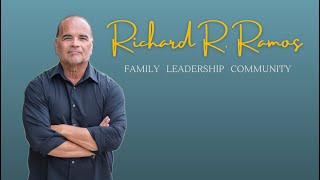
A short YouTube talk by Richard R. Ramos outlining his "six C's of leadership": commitment, competence, confidence, clarity, courage, and coaching. Ramos explains each C in sequence (commitment fuels competence; competence builds confidence; confidence enables clarity; clarity enables courage; coaching sustains growth), illustrates them with personal anecdotes and mentor references, and encourages leaders and parents to adopt them.
Chapters
Foreign it's Richard Ramos. And welcome to Family, leadership and Community. Today I want to share with you what I call the six C's of leadership. Now, let me give credit where credit's due. The first four of these I learned from one of my mentors by a gentleman by the name of Brendan Burchard, and he instilled in me when I was part of his leadership Academy. He called it the Experts Academy. And he shared these first four with me at that time. That was years ago, but as I've developed as a leader and grown in my own role and through my own organization and different experiences that I've had, I've added a couple of more. So I call it the six Cs of leadership. And I want to share those with you today. So the first one is commitment. And the reason this is important is because the sooner that you can find your passion, the sooner that you can discover not only who you are, which is a process in itself, but what you're really passionate about, what you're really good at, too, but what you're passionate about, something that just really fires you up, something that just, you know, when you're always thinking about it and it just really turns you on and you love it. You could study it for hours, you know, whether it's reading a book or going to some, you know, seminar or something, and you're just totally into it, that kind of thing, the sooner you could find that you can make that passion, you can make that commitment. And, you know, sometimes it takes a while. You know, it's like kind of when you go to college, a lot of times, you know, we don't know what we, you know, what should we major in? You know, a lot of people don't know right away. They're not sure, you know, what do I want to be? You know, it's like that question, you know, what do you want to be when you grow up? Well, you know, not everybody knows exactly what they want to be or you think you do, and. And so you go down a certain path and you spend time and, you know, and maybe money, and then you kind of discover, you know, I really don't care that much about it. But there's something else that you just keep coming back to or something else you hear, see, or watch or read, and that fire gets lit in you. And now you can make a commitment. And that commitment is important because, for example, Malcolm Gladwell, he's an author of many books, but one of the things I read in one of his books, he Said that if you wanted to be world class at anything, like, you know, the best of the best, it took like 10,000 hours of practice basically, or 10,000 hours of commitment. And, and 10,000 hours of commitment or practice is basically like a 10 year period. So the sooner you can find that passion, and this is what I have tried to instill in my own children. I always teach youth, man. As soon as you can find, what are you passionate about, what is it that you really are turned on by? And it just really fires you up. That's great because now you can be committed. And the reason that's important is because it leads to the next thing, the second C of leadership, which is competence. Because you want to be good at what you do, you want to be great at what you do. You want a reputation that what you do, people know you for it, people refer others to you. When people have an experience with your seminar, when they read your book, when they get a haircut from you, when you hire them to construct something at your house, when you take your car to their shop, it's excellent, they are so pleased. Because you are so good at what you do, you're just so competent, you know what to do, you see what needs to take place, and you have a reputation for being that expert, for being excellent. In other words, you are very competent. And that competence comes from the commitment that you made all those years ago. So they go hand in hand. When you know what you're passionate about, you can be committed to it. And then the next thing, over the time, you know, you may fail. You may, you know, you try things, you learn. You know, that's just part of the learning process. You fail, you fall down, you get up and you just keep trying. But sooner or later you get it. And you are just very, very good at what you do. You're known for your competence as a leader. And that's important because competence then leads to the third C, which is confidence. You need to be confident in yourself. You need to have the confidence. And the people that are following you as if you're a leader, like I am a leader of an organization. The people that are following you are part of your organization. The people that are attending your leadership classes, the people that are attending your workshops or your seminars or whatever it is that you do, they want to see their confidence in you. They want to see that you know what you're doing, you know what you're talking about, and you should feel that way. You should feel comfortable in your own skin and that you know what you're talking about. Yeah, you may make mistakes here and there, you know, we all do. But you know what you're doing, you know what you're talking about. And when you show that kind of confidence to the people that are with you, that are following you, that are working with you, that gives them permission to be confident in themselves. Now, you know, I've been working with a lot of people over many years. You know, youth, families, you know, professionals building organizations. And I gotta tell you, I run into a lot of people that are not very confident in themselves. You can hear it in their self talk. You know, they put themselves down or they belittle themselves, or they're just afraid to, you know, step outside their comfort zone. And you try and tell them, you know, no, you got this. You know, you're good at this. And they don't have that confidence. See, but when you've made that commitment, you're committed, and you're staying in your lane, and you have become very good at it. You're competent in what you do. You have that confidence. And when you show that confidence, people want to be part of what you're doing. People want to follow people that are confident. You know, I know there's a. You could be overconfident. I know that. I get that. I'm not talking about that. I'm talking about the kind of confidence that just shows people, hey, we got this. You know, you can trust me. You can follow me. You know, I know what I. You may not say that like I know what I'm talking about, but everything about what you're doing shows that you know what you're doing, you know what you're talking about. And so that leads to the next thing, which is clarity. See, you have clarity. I mean, this is again, so vital for a leader to be clear about who you are, who you are, to have clarity about your mission, your passion. You're not, you know, here, over here one day and then over here the next day, and then up here the next day. And now you're doing this over here. No, you're not doing that. You're all over the place. No, you are clear. You know who you are, you know what you're about, you know what you're doing, you know what your purpose is. I like what Napoleon Hill calls it. Another one of my book mentors that I've learned from, you know, many years reading all his stuff. He calls it having a definite chief aim in life. A definite chief aim. What is your definite chief aim in life? See? And you should have that. And when you have a definite chief aim, another word for it is purpose. You know what your purpose is. You're passionate about it. Now, you can create your life, you can create your future. As somebody said, once said, the best way to predict the future is to create it. And when you're clear, you're in your lane, and you're staying in your lane, you have clarity. You can begin to write out what you want to happen in your life. Just like a blueprint. You can create your blueprint. You can write your script for your life, for the mission of your life, and you could write it out. And that's having clarity, okay? And then clarity leads to another C, which I call courage. Now, I gotta tell you, being a leader takes courage for a number of reasons. It takes courage to stick your neck out there and take a risk. It takes courage to speak up. It takes courage when not to speak up. It takes courage when people are opposing you, when they don't see the vision. They don't see what you see, they don't hear what you're hearing, they don't feel what you feel. And so they're opposing you. But you have the courage to stand your ground. Like I said, you know what you're doing, you know what you're talking about. You're competent, you have clarity, and yet you're being opposed. Maybe, like myself, I've been sabotaged. Maybe you're being sabotaged. I've been sabotaged several times, and that's not a good feeling. And maybe I'll talk about that another time, why that's important in overcoming that. But it takes courage to be in that position of leadership. But it also takes courage to change your mind. It also takes courage to recognize when maybe you need to change things. Maybe you're becoming irrelevant, you're staying in the old way. That takes courage also to have that perspective, to be open for a paradigm shift for now. Whereas at one time you were very strong in one thing or one way, doing it a certain way, and all of a sudden you have a revelation or a paradigm shift or a change in perspective through an experience you had, or maybe somebody a teaching somebody gave or a book you read, and all of a sudden you realize, oh, man, you know, wow, I'm going to have to change. What are people going to think? What are they going to say? See, that takes courage to be able to say, you know what? To own up and just say, you know what? I've had a change of mind. I've had A change of heart. I see things in a different way and now I'm going to go in this direction. That takes courage too. So all of these things as a leader, to be committed, to gain competence, that gives me the confidence, that gives me that clarity. And then to have the courage to live it out regardless of all the bumps and in the road. And the last C I want to share with you is coaching. Coaching has been a big part of my life now. You know, I love sports and I use sports metaphors all the time. So when I think about coaching, I think about Olympic athletes. Now just think about these are people that are the best in the world, these are world class athletes and yet all of them have coaches. All of them. So if world class athletes need coaching, I need coaching. I mean, I want to be, you know, as good as I can be. I want to be reach that level of excellence and greatness and all of that. So if they need a coach, I need a coach. As a matter of fact, if you think about all professional sports, I mean, these are the best of the best. You know, to be in the NFL, to be in the major league baseball, to be in the NBA, to be NHL hockey, to be on the Olympic volleyball team, to be playing in the masters golf tournament, in the tennis, all mean these are the best of the best. But what do they all have? They all have coaches. Now the thing about coaching is this. Not all good teachers are good coaches, but all good coaches are good teachers. See, because coaching is different than just teaching. Teaching is important. It's good. But see, you could have a teacher or a coach who knows all the X's and O's. They know how to draw up a strategy and they understand how to, you know, know, put it all together on the board and teach it and give you the information about the game and the strategy and how it's going to go. And that's important, that's information. But see, coaching is different. Coaching is taking a player and working with them to improve their level of performance. That's great coaching. I mean, when they get around you as a coach, you and after you're done with them, their performance is at a higher level, a different level. See, and that takes teaching too. But that's not something that all teachers have, you know, and I know this because I played for coaches that were great at teaching the game, but they didn't help me as an individual become a better player. But then luckily later on in my career I did come across coaches who taught me to do things and to Practice things. And they gave me certain insights, and it took my game to another level. I became a better player. They took me to another level. They're good teachers, too, obviously. See, that's what we want and that's what we need. I mean, I coach people, I coach executives, I coach staff. I coach professionals like that as well. But see, I'm being coached, too. I need a coach. I need somebody who can speak into my life. See, because a coach, they're on the outside looking and they're watching you, and they can pick out things. They can see things that you don't see about yourself, when maybe your performance is not as good as it was or it's going down a little bit, you're in a slump, so to speak. And they can say, hey, that come aside, let's watch this video. Or let me tell you what I'm seeing that you're doing that you hadn't been doing before, and you're developing this habit, you know, bad habit of you're opening up too soon on your swing or, you know, whatever it is, they're able to do that for you. That's what the benefit of having that person in your life now. You know, it's nice. Like, I have people that I speak into their life. You know, I'm basically coaching them. And then I also have my peers, colleagues who are, you know, people like myself who we share all the time, and we go back and forth and we help each other, encourage each other and things like that. But then I also have those people that I listen to who can speak into my life, who can help me see things that I didn't see and realize things I didn't realize. They're coaching me and they're helping me get to a different level. I mean, I love doing that when I help somebody in that way, because that's part of what I do as a leader. But I know what it feels like when somebody's doing it with me. And so I want to encourage you as a leader, as a parent, even. This applies to parenting, too. But all of these six Cs are vital in your growth and your path as a leader. To be committed, to know what is it that your definite chief aim in life. And then when you're committed, you become competent. And then that gives you that confidence, that gives your followers confidence. And people need that confidence. And then you have that clarity, that clarity that you know what you know, and you're. You're on the path and nobody's going to get you off it. But you also have courage. You have courage to keep going when others are saying, don't go. And you have courage to maybe stop and say, okay, you know, maybe I need to change directions. That all takes courage. And then having coaching in your life, that person who's able to take your performance to take your leadership to a better, higher level. Okay, I hope that helps you. Those are the six Cs of leadership that I teach. I'm Richard Ramos. Thanks for watching Family Leadership, Community.
More from Richard

Juan's story is a powerful reminder that where you come from does not have to determine....







Why Parenting Is the Ultimate Solution to Youth Violence and Community Safety!


