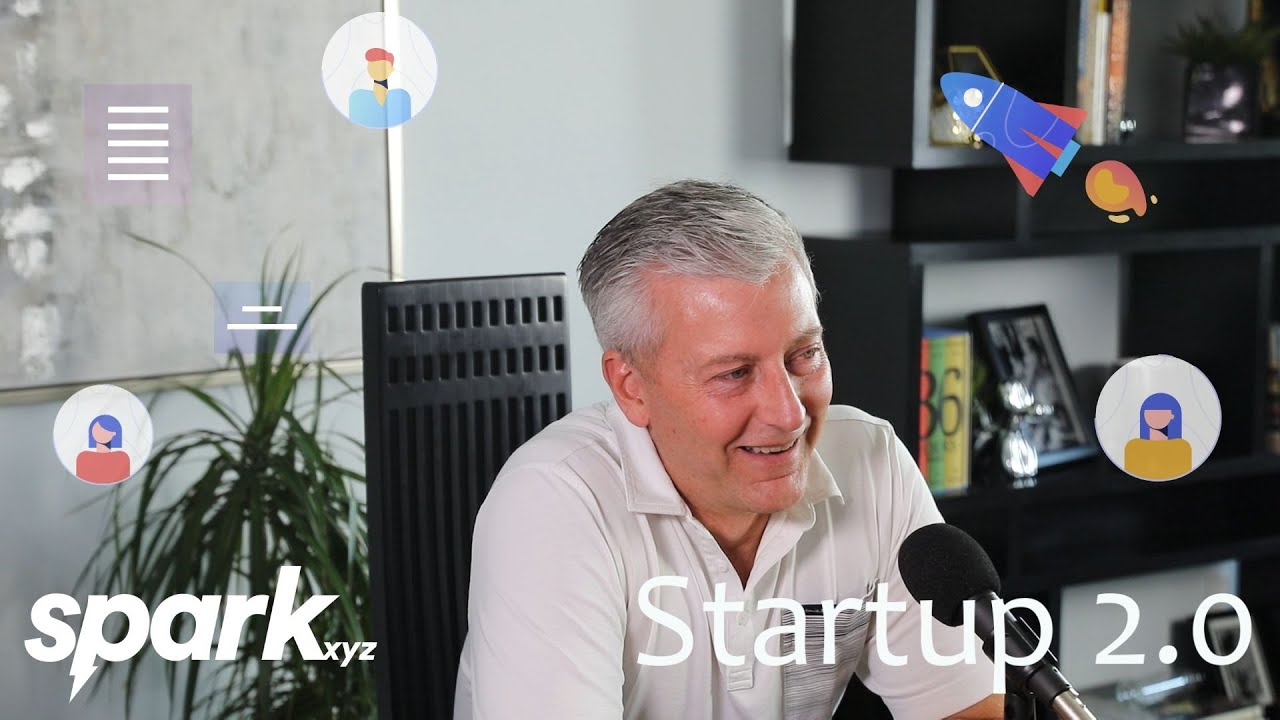
Drinks w/ a VC: Episode 6 | Rick Smith, Crosscut Ventures

Rick Smith, co-founder of Crosscut Ventures, talks about the LA startup scene, consumer brands like ShoeDazzle and Fabletics, and shares a personal story about finding his birth family through 23andMe. He reflects on how COVID changed deal-making and praises the city's collaborative spirit and risk-taking entrepreneurs.
Chapters
And so I decided to— I found him on my own. And of the many ways to tell an 81-year-old guy that you're their son, including showing up at the door with a set of balloons that says— blue balloons that say, it's a man, which I didn't do. I didn't do.
Okay.
But I could have. I could have sent him a letter. I could have called him, whatever. I just, you know, knocked on his door.
Wow.
And it was, it was emotional, certainly emotional for me.
Guests and hosts drink on this show, and we ask that if you join us, you be of legal age and you drink responsibly. Number 2, If you want to know about check size, stage, similar questions, this is the wrong podcast for you. On Drinks with a VC, we're all about digging a little bit deeper and getting to know the person behind the investment decisions.
Hello and welcome everyone to Drinks with a VC, episode 6. My name is Vikram Lakwara and I'm the co-founder and managing director of GreenCow Venture Capital. I'm joined by my lovely co-hostess, with the mostest, Bri Hansen, who heads up business development for Berklin and Associates, a wonderful firm that provides accounting, finance, and tax services to startups. Bri, before you start to introduce our guest, uh, I, I would like to raise a glass in honor of you and all of the women out there for the start of Women's History Month. Uh, I have been very blessed to have amazing women surround me, from my wife to my sister to my mom. My venture partner, and now my co-host on this podcast, you. So cheers to you. Cheers to all the women out there.
Cheers.
Cheers. Thank you. And we'd like to celebrate Women's History Month on this podcast with another white guy. Um, I had the pleasure of meeting our next guest back in LA when I was at TriNet. He's always been the most down-to-earth, interesting, and relatable VC, and most importantly, humble. And maybe it's because he came from humble beginnings. He grew up adopted with a blue-collar family and worked his way up to a Harvard Law degree. He spent years in finance and private equity and moved into venture in the late '90s, starting his own fund, Crosscut Ventures, in the mid-2000s with a modest first $6 million raise. After you— what, you were managing, I think, $500 million before that? Yeah.
Yeah.
So, his ride at Crosscut has been exhilarating with investments such as ShoeDazzle, Dollar Shave Club, showing he has a knack for consumer with a bit of entertainment flair. He's also invested in a lot of female founders and women-focused products, which I find to be incredibly interesting. So, a lot of men I've found in venture shy away from female products and consumer products, but Rick has leaned in. And so, it's my pleasure that I finally get to introduce one of my favorite people, Rick from Crosscut.
Thank you, Bri.
Cheers. Welcome, Rick. Uh, so Rick, what are we drinking tonight?
Hmm. Um, volume is what we're drinking tonight. If I, if I had to put a name to it, Monkey Shoulder, um, which, uh, you guys were nice enough to send to me. And I, as I mentioned, I did, uh, just to test it out last night with a friend, uh, to confirm it was okay. Uh, it is fantastic. So thank you for that.
Excellent.
Love it.
Good Scotch blend there.
Good Scotch blend.
So we did an inventory of all the drinks requested by VCs and we're 6 for 6 on whiskey. We had to change to Aperol Spritz on our Christmas episode, which was weird. What's up with VC and whiskey?
I think whiskey's just having its moment. But I got, I got kind of turned on to it probably 10 years ago sitting on a plane porch in Park City. And someone, you know, I was a beer guy my whole life.
Beer.
I mean, not even wine, you know, I was a beer guy. And someone gave it to me and I drank it. And it literally was like, you know, jet fuel. You could feel every inch going down.
Yeah.
And I'm like, this is weird. And we were sitting about 50 yards from High West Distillery.
I love High West.
And so we literally, we just walked down there and I still remember, I'm like, I finally have, after a few decades of drinking, I finally have my go-to kind of drink. So I don't know, but I think, you know, there's just a lot of variety. I know, Vic, you're drinking something Japanese.
Yes.
I love the Japanese whiskey.
Yeah, I was lucky enough to find a couple of fingers of Yamazaki hidden away from everything else. And so this is the last of a large portion of it, which I'm thankful for, and I'm celebrating with both of you today, the last of the Yamazaki. It's funny, the law firm that I worked at prior to jumping back into venture, Wilson Sonsini, represented High West. And so they They had High West bottles literally every happy hour on a Friday with attorneys. So it was something that I was regularly around. So it's a fun little memory that was jotted. We might as well just start naming this Whiskey with a VC rather than Drinks with a VC. I mean, I don't even know.
Look, I like tequila. I mean, there's a lot of things I like, but I appreciate the whiskey.
We haven't had a tequila yet on here, so that, you know, I'm hoping maybe we make margaritas one time. Maybe. There you go. We gotta open it up a little bit. So we have started to stem the tide a little bit. There were 2.9 million vaccinations that were announced in one day yesterday, I believe. And yet we were talking a little bit earlier before recording, you know, Bree and I are in San Francisco and you're in LA. We've really seen a mass exodus east, right? And south, whether it's Austin or Miami. You know, the infrastructure has clearly eroded and people are moving out. What is the experience like for you in LA? What are you seeing?
Yeah, you know, during COVID Yeah, you know, we, we are seeing some of the same things. We're seeing, um, certainly a lot of people looking at and some people moving to places like Austin and Nashville. Um, a lot of people going to Miami. Um, and people going to Miami aren't really pretending like there's VC in Miami. There's not. They tell me. I do not know. They tell me that. Um, but there's a lot of VCs in Miami. And so, you know, who knows what's going to come in the next 5, 10 years down there. So I think, you know, we're seeing some of that. But, you know, at the same time, we're seeing a big influx of people from San Francisco and from New York.
Hmm.
That's a trend we've been seeing for 5 or 6 years. We have an event every year, at least we had an event every year, for people who moved here from New York or San Francisco to welcome them to Los Angeles and say, you know, isn't it great? Certainly one of the great things about Los Angeles over, you know, I've been investing here in venture now for over 2 decades. It's now become acceptable to be a VC in Southern California and to do a startup down here. Like, there's a bunch of engineers and former, you know, executives where we used to have to like go and recruit people from all over the country. We now have that base here. I don't think there's a more exciting place to be doing venture than than LA. It's, you know, Northern California is still the center of the universe. I think still going to be, but the COVID effect has made it such that it's, you know, at least available now to, to do deals in further away places because we're doing Zoom calls, Zoom, you know, video conferences.
Yeah.
The meeting. So, um, there's been a flattening of the earth in some ways, an old book that sort of said, look, you know, we're all kind of getting closer together. I think that's what COVID's done to a lot of places, including tech.
You've doubled down. You've bought a new spot in LA, even though you're a self-described mountain man and you love Telluride and you love New York even. What is it about LA's ecosystem that keeps you there? Because a lot of people, they'll have their primary residence in LA, but they'll have a second home out wherever it might be. What keeps you kind of centered and grounded in LA and wanting to be there?
Yeah, I mean, I just, I love Los Angeles. I grew up in a small town in Illinois. And when you're from a small town, you're then looking to, you know, where can I go? Can I go to, you know, my, I always go New York, Chicago, LA were sort of the 3 areas I dreamt of going to. when I could. And so, you know, to be in LA and to have some kind of, you know, grounding in LA and success in LA has been, you know, really a dream come true for me. But, you know, the creative people in LA, the diversity of industry down here, the diversity of people down here makes it a very vibrant city. It's just, you know, there's downsides to that. There's, you know, we have a homeless population. We gotta—
Yeah.
We have to, you know, figure out how to help. We have a lot of, you know, it's ugly at times. There's, you know, the strip malls and all that stuff. But it's also just a fantastic— there's a spirit of innovation here, I think. You know, most people came from somewhere else and they came here for, whether it's Hollywood or music or now tech, they came for something else, came from somewhere else and I think all of that together has just been a great— it's a great melting pot of the US.
Fantastic. So, you know, speaking of the melting pot, Maggie and I, my partner at Greencow Venture Capital, we really leverage our different perspectives and our different backgrounds in order to understand different markets better, right? And as Bri mentioned in her introduction, it is really wonderful to see someone of your background that has been such a big proponent of and has leaned in so heavily into investing in female founders. Can you talk a little bit about that with us?
Sure. Yeah, I mean, we have been, I think, at the forefront of that. You know, we were having female founder events before it was cool. We started off actually not too far from where I am right now in Venice with one that now is Takaya. I think there's 2 or 3 reasons for that, but one is there's just the, you know, it's been unfair for a long time and there needs to be a leveling of the playing field there. So there's an altruistic component to it for sure, but there's also just a component of, look, if people are going that way, we want to go this way. And if there's a class that's being ignored for whatever reason, right, unconscious bias, may not be conscious, but unconscious bias, whatever, that means there's opportunity.
Sure.
And as venture capitalists, we're looking for opportunity, we're looking for a leg up, and, you know, we'll go where others don't want to go. And historically, that's been, you know, backing female founders. So There's a strategy to it. There's a bent to it, economic bent to it as well. We think that's just the way to create returns for our investors.
Yeah. And that's such an important point. I mean, I think a lot of what we lean on is that minorities and teams with female co-leads and founding team members just perform better and they're more likely to provide outsized returns for LPs. So we place a heavy emphasis on having a team with a diverse perspective. It's different though. I mean, what is your special sauce for evaluating people with different backgrounds and in markets that, you know, you might not be the target demographic for?
Yeah, that's a good point. So I remember we made the ShoeDazzle investment. So this is selling shoes to women on a monthly subscription basis. Certainly, I didn't have much, much, much experience in that, but, but I think a lot of what we do is just evaluate entrepreneurs, right? I mean, it is— if someone comes in, they're passionate and they're, and they're driven and they're saying, look, we think there's an opportunity here, and we listen to that. It may be one that we can't personally relate to, which is always, you know, it's been a kind of a problem, right? It's sort of a—
Yeah.
Investment in things that we can relate to. We always try, I guess I'm always trying to stretch the boundaries of that and say, look, I don't necessarily relate to this, but I see a passion here, I understand it, and then just try to research the heck out of it and say, it may be personally, but hey, does this make sense to you? Would you pay for this? And so for us, it's sort of going where others aren't as part of that same theme. And if most VCs still are male, Maybe there's opportunities in some areas that they wouldn't necessarily think to invest in.
With ShoeDazzle, that was like one of the first subscription boxes really. What was it like being kind of on the forefront of that?
I mean, I still remember Bri sitting in a room full of VCs, happened to be all men, and saying, hey, we're investing in this company. anyone interested in? What do they do? Oh, you know, shoes to women every month. And just the idea of subscription was a new thing and shoes and how's that going to work? But it, again, that was driven by the entrepreneur there. In that case, it was Brian Lee, who is, you know, one of LA's, you know, landmarks of entrepreneurs.
He's genius.
Yeah, just a genius at companies. And but that was born out of a shopping experience that his wife had on Robertson here in Los Angeles, of getting the personalized treatment that she got on those stores and saying, why can't we, you know, create this to the masses, bring it out to the masses? And, and so, you know, ShoeDazzle was trying to do that for, for, you know, mid— you know, the most of America. And I think growing up in mid— middle America, I am infused with a different view of sort of what sells. I'm not— some of my Republican friends would say I've become a West Coast elitist, maybe, but I don't think I have. I mean, I'm still, you know, at the core a Midwestern guy who grew up in a blue-collar town. And so, you know, if it plays in— so there used to be a saying, if it plays in Peoria, it will play anywhere. I grew up about an hour and a half from Peoria. So If it'll play indicator, okay, I can maybe see this being of some widespread appeal. And so investment like that anyway, and most of our investments are not consumer-facing, but we've had luck with that. We've had luck with Fabletics.
We—
Ipsy was an early investment we made. We've been fortunate to be able to tap into some vein of, you know, what Middle America may buy. If Middle America buys it, hopefully the coasts are buying it as well.
It's a good way of thinking about it, thinking ahead of the curve. Really cool. Tell us about the work you're doing with Pledge and your thoughts on how to support more diversity and inclusion initiatives.
So Pledge LA, the Annenberg Foundation came to me about 3 years ago and said, you know, we we think there's an issue out there, can we work with you and try to solve it? And we didn't know which way it was gonna go, but I'm really happy the way that, you know, where it's gone the last 3 years. But Plug LA is trying to, you know, increase, measure first, diversity and inclusion in LA, in both venture funds and tech companies. And then, you know, try to do something about that. And the first part, what we've been doing are surveys. We now have over 200 companies taking the survey. We have, you know, just raising the awareness of, you know, this is what the landscape looks like. Now, the good news is LA does better than most cities, and so we're more diverse, but, you know, our population is more diverse.
Right.
So I think we have a higher standard down here, and we should. And so I think we've been doing better. We just had a meeting this week, Pledge LA, and trying to figure out how to turbocharge some of the initiatives we want to do. We started a fund where we're investing directly into companies in South LA. We have an internship program where we place interns of underrepresented minorities and female interns into venture funds in LA. We are just trying to leverage the community here, which is very receptive to this. And saying, you know, how can we help? How can we make a difference? Um, and so that's what, um, you know, we're trying to figure out how to turbocharge what we've done the last 3 years for the next 3 years. Well, Annenberg Foundation is fantastic. We also have, we also have the support of the mayor's office here in LA. Um, and so between that, um, those 2, we have a lot of support for this going forward.
So one of our surprises for the VC unboxing has been spoiled. Would you like to present the Yeti cooler to yourself?
Really?
And, and, and this, we hope that, you know, you, you utilize this because you're, you're an LA guy and you do go to the beach. But, you know, whether you're, whether you're at the beach or in the mountains, hopefully you can utilize the, the cooler. For that purpose.
I specifically picked out the backpack so it was versatile for you to be able to take both to the beach and go hiking.
Yeah, it is, it is fantastic. Thank you for that. Um, I have an 8-week-old puppy sitting on my feet right now, or I'd go and pick it up and show, show it to you guys. Um, it's not the puppy, the Yeti.
Yes, yes, yes, it is.
Uh, it's great. So thank you for that. Uh, it's gonna get used a lot, I can tell you that.
We feel like we'd get more traffic if we showcased our pets more often. Uh, we had Mac Conwell in our previous episode and he had a little corgi named Zeus. Um, but—
Love corgis.
Yeah, we— Bree and I have, have been lucky enough to get that first glimpse of Hank and he is an adorable, uh, golden retriever puppy.
Oh, stop.
No, no, he's, he's really— he should be on commercials or something.
Uh, I got, I got very fortunate to get Hank. I was informed on, on Wednesday of this week that a puppy was available, and on Friday picked him up. So it's— I did not have a lot of advance warning on this little guy, but he is a fantastic companion so far, and he will not leave me alone. So he's— trust me, he's very happy, happily sleeping right now.
Well, I just— I mean, Bree and I were talking about this earlier. It takes a special person to be in the middle of a transition of homes To then adopt a dog and take on all of the responsibility in the house training and everything that goes with it. So you're a brave man.
Oh no, that's that's easy to. I just didn't know. I see my friends' dogs all the time. I play with them for five minutes. I leave. Like this is easy. I'd love to have one of those. The little bugger peed on my couch about an hour ago. Fortunately, I have slipcover couch, so I washed that. You know, and now I'm on MasterClass trying to figure out how to train a dog. So it's all good. This guy is pure love, pure goodness. It's, you know, it's a great reminder that, you know, there's great— this has been a really tough year, right? March 11th, was a seminal date for a lot of us. You know, last year on March 11th, the World Health Organization declared a pandemic. The NBA said we're shutting down.
Yeah.
Tom Hanks and his wife said they had COVID. It was just a really kind of momentous day. You know, now we have the experience of looking back for a year. Oh yeah, we've been in a pandemic. That was a, that was a big deal. And yeah, the world has suffered a lot. The United States has suffered disproportionately a lot during that time. And I think we could have done a better job of preparing, but we are where we are. We're going to get out of this. But, you know, to have, you know, the challenges of the last year in our lives and to have someone like Hank, the 8-year-old— 8-week-old puppy come in my life, you know, it's just— I'm very lucky. and recognize that, you know, it hasn't been that easy for people the last year. And I think we in tech have gotten particularly, you know, been particularly fortunate we can keep doing our job. In fact, potentially doing our job with higher productivity during the last year.
Yeah.
Maybe not higher creativity, right? And that's, I think, you know, we'll be able to look back at some point and say, you know, should we have You know, overall, was it better? But as far as processing deals and turning, you know, our companies and all this stuff, you know, we've been lucky to be in this business the last year. It hasn't been that way for most, for many people.
From your perspective, has the year gone by really, really fast or really, really slowly?
Fast. Yeah. Yeah. It didn't seem that way. I mean, I started when this whole thing started, I got a puzzle. I started doing a puzzle. Like, I have not one second for a puzzle now, but at the start it was, okay, we're not gonna do new deals, we're not gonna raise our next fund, you know, we're just gonna wait. And I'm like, and we were doing a triage on our companies, you know, who needs help.
Mm-hmm.
And, you know, created a couple hours and I wasn't driving into work. I wasn't, you know, working out even. I'm like, okay, I got time for a couple hours a day on a puzzle. It, in many ways, the year seems to have flown by. I do think there's a silver lining in this year. I think it's a forced recognition of where we've been, you know, where are we now, where are we going. It's kind of stuff we should be doing all the time, but we don't. Even in LA, where we're supposed to be doing stuff like, known for doing stuff like that, you know, taking stock of where we are.
Yeah.
But I, you know, COVID's forced that recognition on a lot of people. And they said, you know, where am I in life? Am I happy living where I am? 500,000 people left New York. They weren't happy. I love New York, but a lot of people didn't and moved somewhere else. I have a friend who moved to Colorado who said, damn, I wish I had moved sooner.
Yeah.
Right? But so in many ways, you know, there's been a silver lining to this. Again, not worth the cost, but there's been a silver lining nonetheless.
So Rick, it sounds like a lot of people have become introspective during COVID I know you told me you got your 23andMe results. You want to tell us a little bit about what you found out about yourself during COVID Yeah, I mean, it's been a whirlwind couple of years, I guess.
So I was adopted early. My birth mother gave me up at birth. And I had the greatest parents that adopted me, a couple, couple high school dropouts, but my dad was a plumber and we never were hungry. We didn't have a lot of things, but we were never hungry. And so I was very— and he taught me love and respect, and my mom was an angel. They were older. They both have passed away now, but— And so I was always happy with you know, how I grew up, there's no stigma to me as an adopted person. It's just, you know, that's how I grew up. It's like, and I didn't know who I was. Like, well, what are you, Rick? I'm— I don't know what I am. I'm the adopted guy, right? It's just I didn't have the identity of that, but I had the love of these parents. And, um, I didn't have, uh, you know, some of the basis a lot of people have of of identity necessarily, but that was just how I grew up and that was fine. I found my birth mom in 2006 through some old-time sleuthing on the internet, and it was relatively easy, to be honest. But it turns out I was a product of a one-night stand. She walked into a party and met a guy and they had fun, and she never knew what happened to him, didn't know his name. And so, um, I just knew I would never find him, and, and that was fine. But I found her, and we're very close. I know her 3 sons, which are my half-brothers, and it's been a great, you know, you know, at, at, uh, you know, late in life, I added 3 brothers to the mix. Uh, and then a couple years ago, I just got the hankering to do 23andMe to find out my ancestry, to find out, am I Because every time I met someone from England or from Europe, I go, what do I look like? Am I Irish? Am I— and I hear everything, Slavic or this, that, and the other thing.
Yeah.
And I did 23andMe to find out, you know, just my ancestry. And it turns out, shockingly, I'm just a white guy. I'm 70s, nothing interesting whatsoever. 70, 80% English, Irish, and some French and some German. And, um, and so that— but, but still, at least I knew, okay, now England. I can see an English flag and feel some of that sense that I felt like other people felt, you know. And, and I had read a book called A Short History of Nearly Everything.
Yes.
Does a great job of just distilling down the universe. I— it's not a— it's not supposed to be a theological book, but it's just a— it really had an effect on me. And I combine that with Guns, Germs, and Steel, which is another great book, I think. Um, a holistic view of the world and why, you know, why some areas in society succeeded and others didn't. Contrary to what you may think, you know, a lot of it is, hey, you know, we had metal, they didn't. We had, you know, they had disease, we didn't. Um, and, and so it— those 2 things together just got me thinking about sort of the You know, I don't know what's going to happen when we die, but before we get to that point, there's a whole, you know, tens of thousands of years of lineage that got us to this point right here, right now. Someone turned a corner and didn't get eaten by a saber-toothed tiger. I hope they're around when humans are around, but whatever, some animal.
But we all—
we—
everyone here, the, the key, you know, um, relative survived the 1918 Spanish flu, which happened to be the same year my dad was born. So 1918. So my adopted dad. So, you know, we're all just sort of lucky to have gotten to this point at some point. And that— but that sort of makes me think, well, well, who am I? And, you know, I, I know who I am, but who am I? You know, where'd I come from? So all that sort of led to that 23andMe, and I found out my ancestry. 2 weeks later, I get an email and they say, oh, you know, here are 1,100 people who have taken 23andMe that you're related to. And I'm like, whoa, I didn't really think about that. Okay, yeah, I get it. And you read through and it says, you know, you share 1.2% of your DNA with this person, that's your 4th or 5th cousin. You share 4.6% of your DNA with this person, that's your 2nd cousin. You share 25% of your DNA with this person. That's your half-brother. I'm like, whoa, another one. That's, that's wild, right? And so I called up my birth mom and talked to them. They're like, no, it's not us, we didn't do it.
And so—
It wasn't me.
It wasn't me. And so we, um, but I was going through a, a separation at the time with my ex-wife and I'm like, I can't deal with this. I don't want to deal with it. So I didn't do anything on that for about 9 months. And one day I just sent an email through 23andMe that said, to this guy, and said, you know, I think we should talk. And turns out, so we talked the next day and I started asking him questions and tell me about your birth father. Because I knew my birth father was in central Illinois and would have been there and, you know, about the time I was conceived. And he's like, Yep, he would have been there. That's the guy.
Wow.
I said, I think you're, you know, I think you are my half-brother. And, um, and so I ended up, I have a great relationship with him. He's in tech. In fact, I was supposed to be in San Francisco that day. I talked to him, but the trip was canceled and I would have been about a block from where he was talking to me from. And, um, you know, he, he's a super sweet guy. I love the guy. And, and, uh, he went to, um, School in California undergrad, and then went to Stanford, got a PhD, and he's in tech.
So wait, you got— you went to Harvard and got your JD, he went to Stanford and got his PhD, and both of you— wow.
And both ended up in tech and both had the same birth father, right? Wow, that's crazy. And he was very He does. He was not talking to his father at the time, and he was very respectful and saying, look, Rick, um, uh, if you want to find him, I, I can help you, but I'd rather not be involved in the process. I said, I get it, whatever it is. I sense you're holding back, and that's great. And so I, um, decided to, to— I found him on my own. And of the many ways to tell an 81-year-old guy that you're their son, including showing up at the door with a set of balloons that says— blue balloons that say, it's a man, which I didn't do.
I didn't do.
Oh, okay. But I could have. Gender reveal.
Right.
And then it starts to fire. Sorry, reference to an LA thing, gender reveal started a fire. Um, so, uh, I, I, I could have sent him a letter, I could have called him, whatever. I just, you know, knocked on his door.
Wow.
And, uh, it was, it was emotional, certainly emotional for me. And, um, it went great. Uh, he denied it, said he was in Germany, says he was in the Army. But, uh, I was very respectful and, uh, but I said, look, if you are my birth father, I just want to say, um, which I knew he was, but, um, I said, uh, you know, just thank you for walking in that party and, and, uh, meeting my birth mom. You know, if it hadn't been for you, my kids wouldn't be here. I wouldn't be here. Crossco wouldn't be here. This would be a different kind of podcast because I wouldn't be sitting here. It'd be, it'd be this, you know. Yeah. There wouldn't be anyone here. So It was It's a Wonderful Life kind of moment. Um, and that went, you know, it went great. And they said, this is the day before Thanksgiving, and they said, let's, let's get together after the holidays. And I sent him a nice email and a picture that I took with him, uh, he and I, him and me. And, um, and then 5 days later, I get an email from him that was not nice. And, uh, it was essentially, uh, this is we're done, you know, no more of this, and, you know, you're not my real son. And so I'm like, well, I get it, you know, and, and I, and I, and I do get it. Like, he's 81. It was like, he, he didn't walk out on anybody. He didn't know. He didn't know. And, you know, to come back into his life, it's like, um, I choose not to pursue this. And, and I, I respect that opinion. Um, it would have been fun to have for me to have some relationship with him. The funny thing is, so I was conceived in— I don't know if it's funny— conceived in Central Illinois, raised in Central Illinois, went to school back there. So I knew he was probably back there. Turns out he's been in LA the whole time I've been in LA.
Unbelievable.
Won 4 Emmys for Law and Order, nominated for an Oscar for Raging Bull. As a sound editor. And it's like, wow, you know, this, this guy— I've been running around LA with, with my birth father in the midst, you know.
Wow.
Typical story. Typical 23andMe story. By the way, that is a relatively typical 23andMe story.
I, I have a similar story with some cousins who were adopted, and I held a Zoom call during COVID where they were reunited. 2 sisters were reunited, half-sisters, had no idea The father got 2 women pregnant at the same time, um, went with the one, abandoned the other. They didn't even know about each other. And of course he ended up abandoning the other and neither one had a relationship with him. So similar to your story, Rick. Like, wow. Yeah, it's kind of—
wow.
Yeah.
And sometimes people want to hear it, sometimes they don't. Um, but you know, it's my— and my parents were told, my, my adopted— the parents adopted me were told my Birth mother was a nurse, my birth father was a doctor. They told that to a lot of adopted parents back then, you know, try and make them feel better. And like, that's my origin story. Don't, don't be lying about that stuff. Um, you know, there's a lot of stigma around that. There's a lot of stigma around even what you said, Bree, you know, oh, you know, the, the, the, you know, someone who has siblings they didn't know. Um, and it is part of life and, you know, the technology that's available. And I think that's I love technology because it has a way to radically transform human behavior and human trajectory. And by the way, the development of this vaccine in 50, in 40 weeks, in 30 weeks, whatever it was—
Yeah.
We don't do a lot of biotech investing, but my appreciation from what I've read of the massive success that the world has achieved in creating these vaccines because of technology. I mean, it's, it's absolutely—
So, man, uh, that was an amazing story. I, you know, cheers. Thank you for sharing that, your origin story. I really appreciate that. Um, man, I, I'm still kind of speechless because it's— there's a lot going on there, and I definitely want to do my own 23andMe now.
Well, some people don't because of that story. Some people do because of that, right?
Right.
Oh man, you know what?
I'd rather just, uh, you know, yeah, I heard this story on the radio. I was like, God, my mom was always really friendly with the neighbor, and, uh, then I did 23andMe and found out my neighbor's my birth father. And it's like, yeah, you know, it— I happen to think it's better because to me it's like, give me the facts and we can all deal with it.
Yeah.
People would rather sort of keep things hidden or, you know, whatever they think it is. And I don't disagree. I mean, if people want to have that view, I'm fine with that, but that's just not the way I view it.
Well, it's so interesting. Bri and I, we've done now 6 of these, and I'm absolutely convinced of 2 things. Number one, the best VCs are naturally inquisitive about everything. And the second piece is that Somehow they are all history nerds in some way or fashion, right? They're all concerned and thoughtful about the way things happened and evolved. And I think there's something to that in terms of on the other side of that, which is spotting trends and seeing what the future might hold, right? not necessarily knowing, because if we did, we'd have Nostradamus powers and we wouldn't be on this podcast. But it's more like just being able to spot that thing.
That's really interesting. I've never thought about that. And I certainly don't consider myself a great VC, but I think to be in this business, you have to be naturally inquisitive. I mean, that has to be the dominant gene, which is, you know, intellectual curiosity, Chris.
Yeah.
It's like, you know, we see something different every day and we're diving into it. Um, and maybe a, a kissing cousin to that is, is a love for history. I love history. I mean, I— my bookshelf over there is filled with— I see Lincoln and I see Roosevelt and I see all these like, um, um, biographies and stuff of, uh, of people that, you know, had some impact on our world. And maybe it is that sort of— and maybe for me, because being adopted kind of led me to that— of just a sense of— and history is always hard to tell when you're in it, right?
Mm-hmm.
I mean, we're a spot in time, but there is that kind of, you know, let's see where we've been, and then, you know, based on that, where are we going? And I mean, I hadn't thought about that before, but that's an interesting thought. I need to dig into that a little bit.
Speaking of the future, right, you know, the pandemic has been, has, has been so hard for so many people, right? But as you mentioned, there have been some silver linings. As a fellow VC, you know, we are always spotting new use cases now, from remote work and remote health to education, etc. There's, there's just new opportunities for technology to enable what the remote of whatever looks like. What trends, forward-looking, are you seeing that you're really excited about right now?
Yeah, I mean, I think some of them are just the obvious ones. I think we have an e-commerce business actually delivering alcohol to people in their homes. It's called Winc. It's delivering wine, but you know, their business doubled overnight with the pandemic. So I think, you know, that continues on. I do think what we've seen the last year has been an acceleration of what we would have seen in the next 10 or 20 years.
Yeah.
I think a lot of it will stick. I think a lot of it will be there. You know, I wouldn't want to be holding a big commercial real estate portfolio right now. I think I mean, certainly from our companies telling me, they're like, Rick, we're not— some are saying we're not ever going back to an office. I think it's too early to make that call, but I mean, to know if that's the right call. But some are saying, no, we're not. And most of them are saying— and one CEO told me, if we said we're back in the office tomorrow, we'd get about 20% of the people. The other 80% are like, you know what, I like this lifestyle too much.
Yeah.
And it's not like they're working any less, but they're— but it's, wow, you know, you can actually do a job and not be in the same office. I still don't know the long-term effect. I think, you know, we'll know more in the next year or two of whether, you know, what does this look like. And a podcast like this may look completely out of date at some point. It's like, oh yeah, he thought we weren't going back to work. We're all back in the little treadmills and, you know, the little hamster wheels in our cubicles. And we might, we might. Um, but I, I do think there's a, you know, I think some of the, I think some of the, you know, first-order effects are obvious of it's going to be more remote work and stuff. But it's like, you know, is that going to have an impact? And what I don't— what I'm thinking about is, does that have impact on big cities, right?
Mm-hmm.
I mean, if you don't need to be in Los Angeles, New York, San Francisco to do those kinds of jobs, and you can actually be in Telluride or Atlanta or Bangladesh, then it's like, okay, that's going to have a big, big, big impact on the world and labor prices and availability of capital. Is capital going to be able to be distributed more around the world in a more quicker fashion? So I think those are some of the things that I am wondering about. And Um, and, and there's also just a human psyche. I know my, my dad was a product of the Depression, Great Depression, and, um, he never got over that. He, he, he would, he would unscrew 2 of the 4 light bulbs in, in the vanity, and my mom would try to put makeup on, she couldn't see. And every time I go home, I screw those 2 light bulbs in. I go, Dad, I know you're saving electricity. How much do you think you're saving? I don't know, but I know I'm saving money. That had a big impact on them. And now Hank makes his appearance.
Aw.
He's adorable. I think, what impact is this going to have— is COVID going to have on people, on how we think about life? Are we going to save more? Are we going to spend more? It could be the, wow, the rainy day's actually coming. It came, and thank God that the United States had enough— the United States anyway had enough resources to keep people afloat. But, you know, it's here.
Sure.
Or the opposite, and it's going to be the Roaring '20s again because, wow, you know, life is short and you need to live it. And people are going to be traveling more and people are going to be, you know, spending more on, on, you know, dogs or houses or anything else. That part I think is going to be interesting to watch.
I hope we become more experiential, that we get out and we experience things. I'm so worried having watched basically everything on Netflix and now communicated with people, the majority through laptops and cell phones, I really worry about kind of next generation of young kids that are growing up right now, like their ability to communicate with one another and bond with one another. It's gonna look so different, right? I mean, this is a formative year for a lot of people.
It is. And I think, you know, I think people are, you know, the kids are more connected than ever right now. And lonelier than ever right now. So, um, and, and that was before the pandemic hit, and now we got the pandemic. So, um, you know, I think we're going to be unraveling the impact of this for years to come.
You know, having a moment of, okay, when we're all vaccinated, we're gonna go out there and live it up, uh, it's kind of analogous to your life going from Decatur, Illinois To LA and like the bright lights of LA. And, you know, by the way, in between there, you went to Harvard, etc. But I mean, that's, that's a glaring difference, right? And I—
Yeah, but I am very much a Midwestern kid in LA, man. I still work way too hard. Yeah, I don't enjoy things enough. Like, it's still, it's just hard. You don't— I mean, it's hard to change, at least for me anyway, it's hard to change stripes, right? You We, uh, and being adopted, back to our earlier conversation of nurture versus nature, at one point I might have said, well, maybe 50% nurture, nature. Oh, whoa, you okay?
All right, you just fell.
Um, I, I, uh, you know, having seen what I've seen now with my own kids and my own self, myself, and, and, uh, you know, we're pretty much hardwired at birth for, for most of who we're going to be. I mean, I think parents certainly have an impact.
Yeah.
On that, um, without a doubt. But a lot of, you know, what— who we are has been imprinted in our DNA, you know, handed down over the years. So, uh, that's why, you know, LA has been great for me, but I, I, I, I'm the same. I think I'm the same. Well, at the core, I think we're all the same person that we were, you know, growing up.
Well, you're hardwired to move to California because your brother and your dad did, so Right, who knew?
But yeah, I don't know. I mean, I, I, I, I do— I think that part of, you know, seeing my kids and, you know, seeing how they develop and, you know, their personalities were clear at birth. At birth, it was clear.
Yeah.
And that's who they've been. That's who they've become, you know, both very— doing very well in their own career, but very different than, than That's fantastic.
So Rick, you and I both play golf, though admittedly I have not been on the course nearly as much during the pandemic as I'd like. And so I'm pretty rusty. What about golf just had you hooked?
So I mean, golf is the ultimate social sport. is the hardest thing you'll ever do in your life. I, I, well, I mean, in sports anyway. Um, raising kids is tough, and this puppy stuff. Um, golf is just— it reveals, you know, they say challenges don't make character, they reveal it. Golf reveals it.
Yeah.
It is time on task. Yeah, kind of important, but, you know, not relevant. The more time you spend, you're not necessarily better. It's just a, it's just a, uh, You know, every day is different. The wind is different. The greens are different. It is a challenge. It is the most challenging sport to me. And that just gets me hooked. And there's some, you know, there's something about sending the little white ball flying far away, you know, to a hole that's a quarter mile away. And you're supposed to get there, you know, the rules, you know, or the guidelines say you're supposed to get there in 4 strokes. There's something about that entire thing. And then this social aspect, right? It's just a great— it's a great way to spend time. All that's great. It dawned on me a few years ago, wait a minute, this is actually— you know, I have a lot of friends who are— who go elk hunting, or, or they— or they are— they hate hunting, but they go, you know, birding or whatever. This is my time in nature, right?
Yeah.
6 or 7 mile walk over 4 or 5 hours. Um, and that's pretty, you know, that's pretty special. And there's— I just read an article about, um, the benefits, uh, of being in nature. And, you know, 2 hours a week in nature has all these enormous psychological and physiological benefits. Uh, Japanese call it forest bathing.
Mm-hmm.
there's a name for it. And, and so there's a very real— there's a very real impact to this. So, you know, now that I have the science behind me, I, you know, I need to play more golf, you know, for just this, for my psyche.
Oh, absolutely. Uh, so it is absolutely not a place for you to do business. It's, it's purely escape.
I, I, you know, in the venture business, there are, there are more and more VCs, venture capitalists, that are golfing, and more and more of my our CEOs are golfing. I think that's somewhat a pandemic impact. I mean, I played tennis for the first time in 10 years because of the pandemic. You know, outdoor activity, um, and golf has been a beneficiary of that. Um, it's a COVID-safe sport, um, and it's a little bit, you know, at a higher level, just back to, back to nature. I mean, I, I remember early on in the pandemic, I found Some site that just had cameras of puppies, cameras of wilderness, and there's something I think innate in mankind about that. And I realized, I think my puppy may have peed on my sock, but I don't think my toes are sweating. I think he just— that's okay. You know, it's warm at first. That's good. So I think that's part of the allure of golf. I think it's back to the, you know, mankind, whatever you call the right person, kind wasn't intended to be sitting at a desk, we're intended to be walking around. And yeah, somewhat an example of that. I understand the elitist part of it, but you know.
No, I mean, I think it's often really misunderstood. I think, you know, honestly, VCs, you're more likely to find a VC that's going elk hunting or birding or windsurfing than you are to find a VC going golfing, to be honest with you.
I agree with that. It's not a, it's not a popular sport, but becoming more so.
Let's open box G.
Yes, let's do it. Open— opening up box G, if you can get it without disturbing Hank. Last time Hank got up, he peed on your sock.
So yeah, no, well, Hank, he probably peed or pooed somewhere else too, but I mean, to be fair, the guy's 8 weeks and 2 days old, so he needs diapers.
And for all of those joining on YouTube, uh, you're looking at the cuteness that is Hank right now sitting next to Rick.
Yes. And those that are listening, Hank is an adorable 8-week-old golden retriever puppy with his head resting on Rick's lap, just watching him open up this present. So let's see what you got in the box.
This is like, you know, milk to a baby. Titleist golf balls. There you go. Pro V golf hacks.
Yep.
I mean, I don't know who doesn't get excited about this. I guess everyone other than golfers doesn't get excited. This is unbelievable. This is exactly what I need.
That also measures your golf swing and how the yardage.
That's amazing.
I know you're a numbers guy, Rick.
I'm a numbers guy, and this is the the last gift.
Delightful. The the Caddyshack gopher head cover.
Nobody worry about me.
Also, I'm pretty sure Hank has a new puppet that he's gonna play with.
This will be this is up in about.
It's a chew toy.
Absolutely, a chew toy.
It's not a clubhead cover. It's a chew toy. He's so excited about this right now. It's amazing.
Oh, man.
He's like, this podcast thing is really fun, Dad. Let's do this again.
Yeah, you got to do more of these. All right. So let's move on. You mentioned that you were a big fan of Malcolm Gladwell's podcast. It's called Revisionist History. And I had the chance to listen to a few of them. They're great. It's really about, for all of our listeners, it's about kind of going back to the overlooked or misunderstood.
Yeah.
And, you know, sometimes those things deserve a second chance or another look at them, right? In that spirit, going back to your life, what is it about yourself that's deserving of a second look, or do you think that's misunderstood about you?
Damn.
Um, well, we save these for the last parts because you're presumably drinking and—
yeah, absolutely. We've lubricated you.
Yeah. Um, I would say, I mean, I, I, I, I guess the surprising thing that people have said about me over the years, I like, wow, I didn't know you were funny, or, you know, you seem, you know, because I have very dry, I think I have very dry sense of humor, you know, we thought you didn't care about things. It turns out I'm extremely empathetic, and maybe the dryness is just a way to kind of, you know, cut the edge a little bit, but like I cry at other people's weddings. I don't even know them, you know, or whatever. And so I think there's probably that aspect in there somewhere.
Yeah.
So that— but I hear that from people, I'm like, you thought— or they think I'm serious. I'm like, I am not. I'm actually not a serious person. I take my job seriously and I take a lot of things seriously, but I'm not generally a serious person. So there's clearly something I'm missing in my self-analysis that causes people to think I'm one way when I, when I know I'm not.
So if we had to go back and you had to sell something from your past as a non-fungible token, would it be your, your bathing suit from your time as a lifeguard? Like the virtual image of it?
Yeah, I, I, I lived, I lived on a, uh, on a highway in Decatur. In fact, the eminent domain took like 15 feet of my parents' backyard when they widened the freeway.
Wow.
But across that freeway was a community pool and it was just the highlight of the summer. You know, Decatur, Illinois gets 90 degrees, 95 degrees and 95% humidity. It's just you know, it's tough in the summer. And we'd live at that pool. And I, you know, my first job was $2 an hour, um, lifeguarding at that pool. And I would sit there on, on, on the high horse and the, the, you know, up and up in the chair, swinging my, my whistle back and forth with my glasses that were mirrored so you couldn't see my eyes.
Yeah.
And these little, little kids would, would try to You couldn't go under the rope. They had that, you had that, they had the small section and the 12-foot section, and you couldn't go under the rope because that was— and, and they knew that was— and so I, I sort of look away like this and they go under the rope, and I immediately whistle because I knew what they're doing. I immediately whistle them. I give them— I, I create, um, punishments for them, including crab walking around the pool. I go, you can either sit out for 10 minutes or you can crab walk around. I gave them the option, um, or I tell them, you know, you see the, the chain-link fence over there between the 2 poles, like 8-foot chain-link fence between 2 poles that were probably 8 feet apart? Count the number of, of holes in the chain-link fence. I had no idea to this day until this broadcast. I had no idea how many holes there were, but whatever they come up with, I'm like, uh, just, just a little off, count again. And they like, 1, 2, you know, there's probably 400, but But that job was great. I love dealing with people. It was a fun environment. It was summer. It was a great job. So yes, those swim trunks, that red with the white piping, probably what they were.
Yeah. So SPACs are on everyone's mind, much like NFTs right now. And just for listeners' reference, A SPAC or a special purpose acquisition company is also known as a blank check company. And you basically raise money via public offerings and then use the proceeds to acquire or merge with an existing operating business. And they've been around for quite some time, but just for reference, in 2019, that was a banner year for SPACs. There were 59 IPOs. Then 2020 came along and just blew that out of the water, and there were 248 SPACs in 2020. 2021 is basically going to dwarf that because there have already been 228 SPACs as of this show's taping. Speaking of SPACs, and in conjunction with Malcolm Gladwell and Revisionist History, Are we going to look back to this time, this 2021, as venture capitalists, as a turning point in our industry with what's happening with SPACs? Or is this just a hiccup and then we go back to the way things were?
Well, I don't know if you ever go back to the way things were. I've been doing this long enough. I lived through the 2000 up, Late '90s, 2000, up and down, 2008, up and down. SPACs are a reflection on the one hand of just a desire for liquidity. You got long-term fixed income rates, bond rates at very low rates. And people are just trying to fit a lot of capital, trying to find ways to get more capital. and over a longer period of time. So in some respects, the SPACs are a reflection of that, of, hey, you know, is there a way that we can get, you know, invest in some of these companies? And, you know, it's— there's sort of a big leap between private and public, and they're public. So there's sort of a, certainly a light on them that is that is brighter. And we know it. We can see it. We can see what they do. You can't see what, you know, companies that are investing— firms that are investing in Series D or E are doing. But because it's become, you know, it was relatively hard to go public last few years, SPACs come along and sort of fill and fulfill a need of, I can take you public now, um, and we can provide liquidity and we can help you grow. So that part of it sort of sounds like nice and whatever. I think the number of SPACs is, is gonna be something that we'll talk about over, over, over time.
Yeah.
You know, uh, it, it's probably not gonna end well for some of them, um, but that's true for most, um, you know, most sort of bubbles. And I think there's a little bit of a inflated bubble right now of just, uh, uh, you know, people just trying to get money out and, and, and bidding up assets. And that's obviously good for people like us that are investing early. Um, but I've also called 5 of the last 2 recessions.
Yeah.
Meaning I missed, you know, I I thought 2015 we're going to see a bigger correction. I thought 2017 we're— and we haven't. And so, you know, as a value investor, I consider myself a value venture investor, you know, looking at fundamentals and that kind of stuff, even in the venture world, which is possible. So, you know, these markets are challenging in many ways, but they're certainly a great benefit to our companies and liquidity and stuff. I think some of the economics around the SPACs will get looked at, and time will tell, but it is a very active market right now.
It occurs to me just in hearing you talk, particularly as you're in LA, and you've got a tremendous amount of wealth in LA that doesn't really like to participate in venture. They're just kind of hands-off of that. But as you start to move up in private equity in different stages, there's certainly people that aren't risk-averse. They just, they don't like venture. And it occurs to me that you've got companies that can now bypass the Series C and D and go to those folks that love what you're doing from a business perspective, weren't into venture in the first place, and you could use the SPAC as the vehicle to fundraise, right?
Yep.
So for an LA, you don't need all the bits of the ecosystem then from the growth perspective, you can just jump straight to that next level. I hadn't thought about it that way.
Again, from our company's perspective, it's fantastic. And I can tell you, we have several companies right now being courted by SPACs. It would be mind-blowing returns for our investors if these held. Coming from Midwest, I'm like, show me. And if it happens, it happens. And if we're able to get out at those valuations, that's great. I'm not so sure that there's not— we're not leaving money on the table, but for us, if we can make a 30x, 40x and get out, that's fine. Someone else wants to ride it up from there, that's fine too. It's just a different layer of the capital markets.
Yeah. Look, we are getting towards the tail end of this episode, and along the lines of SPACs, We've envisioned and created a new bit that we would like to call the SPAC Smackdown.
Okay.
If you like to call it that, just call it that. Yeah, we just went with it. We went with it. It's been 7 years since you were on Silicon Valley and you made your debut acting You know, on Silicon Valley, episode 1, episode—
You should have got an Emmy too.
Season 1.
You should have had an Emmy as well.
You know what? It was a fantastic 30 seconds.
It's not fair. The award shows are not fair.
By the way, how often does that come up still? Does it come up a lot?
So, you know, on a semi-serious note, the— I don't know why we'd be serious at this point of the alcohol. But the way we consume content these days, okay, when I grew up, you either saw it when it came on or you didn't. There was no DVRs and all this stuff. So, but if I could have tracked like the number of mentions I get from my friends and colleagues, it'd be like spike, but then it like, it goes like that. So, I mean, I had someone last week say, Wait, weren't you in Silicon Valley? I mean, and it drives my colleagues crazy because I'm the guy from Crosscut they featured, not them. I'm like—
They were in it, but you were the one whose name they used.
Rick Smith, Crosscut Ventures. I don't remember what episode or season it was. I think it was season 1, episode 7, about 10 minutes in. I don't know. I don't know what it was. But, you know, it was— we didn't know if that show was even going to be picked up or whatever. Yeah, before it was Silicon Valley, and it became this iconic show that is a great parody of our, of our effed up industry in which we all work.
So yeah. Okay. So with that in mind, do you have a full drink next to you? Okay, perfect. Wonderful. And if you want to, you know, we wouldn't say no if you wanted to pour another finger of whiskey into that glass.
Do you have to drink if he's right?
Yes.
Oh, okay. I'll pour myself some.
So this is how SPAC Smackdown is gonna work.
Okay.
All right, I am going to give you 2 names. One of them is going to be a name of a company that was, uh, mentioned in Silicon Valley the show, and the other name is going to be a SPAC target or a SPAC holding company, and you have to tell us which is the real SPAC target/SPAC holding company, uh, and which one is Silicon Valley.
You know, I don't really watch Silicon Valley that much, so this is gonna be really hard for me, but let's, let's go for it.
This is gonna be fun.
Um, Hank is sitting right here. I may enlist, I may enlist his support.
And it's good because I feel like he's a very willing participant. Bear passed out on the couch.
All right. By the way, this is just foreshadowing me in about 2 hours.
So yes, that's exactly, that's exactly right. Um, so as an example, if I said Pied Piper or Virgin Galactic, you would say—
Pied Piper is the Silicon Valley one.
There you go. Perfect. And we would drink. So here we go. Um, are you ready, Bri?
Yep, I'm ready.
Okay, this is gonna make me look really stupid. Let's go.
No, no, this is gonna be amazing. Okay, Hooli or DMI?
And which one you want me to— Hooli is—
Whichever you can, you can, you know.
The, uh, Silicon Valley.
Great, Hooli is the Silicon Valley. We have to drink. Way to go, you're up a point. No, I'm just I'm telling you, this is when it gets harder.
We're all going to have fun with this.
Yes, this is going to get harder. All right. Sliced line or red ball?
It got hard real quick. I'm going to say red ball is Silicon Valley.
Red ball is the SPAC. They are looking to acquire the Fenway Sports Group, which includes Boston and Boston Red Sox and Liverpool Football Club. LFC, you'll never walk alone.
Wait, you don't drink? I drink.
No, but you know, he's so excited.
LFC's had a tough run right now, so I'm gonna drink. All right, number 3, smush IT or blink charging?
Well, smush IT, I would say, is the Silicon Valley.
You are correct, Bri.
2 Teslas, so I, I follow the charging stuff.
Fantastic, wonderful. And they are a target, uh, no doubt, of New Genesis SPAC. All right, here we go. Uh, Contractor or Skillz with a Z? Contractor or Skillz with a Z?
Skillz with a Z sounds like a SPAC to me.
You're correct. It is a SPAC, and Flying Eagle is their SPAC target. So that's fantastic. All right, here we go.
Wait, I'm sorry, I didn't see you drink there, Vic.
Oh, yes, sorry.
I'm not a stickler for rules.
Thank you. No, thank you for keeping me honest. You're absolutely right in doing so. Thank you. Bream Hall or Helion?
Helion just sounds like Silicon Valley 100%, so I'm 100% sure that is Silicon Valley.
So Bream Hall is Silicon Valley.
Damn, damn it.
And is actually the management company behind it. Cheers, cheers.
All right, often, often wrong, never in doubt.
No, you know, honestly So I thought I'd be able to get a couple of these SPAC names that were pretty outrageous because there are 248 of them, right, right, in 2020. There was a lot to choose from. Here we go. Aviato or Jaws?
Well, Aviato is definitely Silicon Valley. I know that for a fact.
You are correct. Jaws is a SPAC. Uh, Bree and I will cheers to that.
Hmm, there's really no loser in this whole game. That's the great thing about it.
There isn't a loser. And in fact, you are double the winner because not only did you get to drink, but, uh, you get to open up Box V. Oh, and that's our final VC unboxing of the night.
Okay.
And this is how we like to wrap up our shows.
This is how we like to wrap it up.
Every VC gets the same thing— well, not the same thing, Something you are about to find out. Our, our regulars who are watching can, or listening, can probably guess what this is gonna be.
Yeah.
But, um, for Rick and newbies who have—
oh, he's Rick and Hank.
Hank is— oh, Hank's awake. Hank knows his name. That's pretty good for 8 weeks.
Well, 2 days, by the way. Well, to be honest, I named him 2 hours ago. Um, Oh, this is great, by the way. This is so good.
Yeah, we got you a special gift. Now, we had to get you a Silicon Valley vest since you're in LAVC, of course.
We got you a Hooli logo engraved Patagonia vest.
I can't in words explain how great this is. That is so good.
First of all, you have to have your own vest and you have to have a vest no one else is going to be wearing but you. That is a bespoke Rick Smith vest. Smith special.
Yeah, there's a great article Onion or someone sent me that said that— I don't know if you guys saw it a few years ago. It's like, you know, 5 white guys standing around in puffy vests raised $300 million without trying. It's just like—
Well, gosh, you know, we are so thankful that this came together and that you were able to join us for, for this episode. And, you know, as is customary for us to do at the end of an episode, we like to have our guest give a last toast. So this is your moment to talk about an NFT that you're selling or a portfolio company or a cause or, or just something that's on your mind. We'd love for you to, to toast us out. And again, Bree, We're just, we're just so excited, uh, and so, so thankful that you joined us today.
Well, thank you guys for this. I, I mean, I, I would just toast, I, I, you know, the LA ecosystem. I'm, I'm fortunate to be in LA. Um, I, I've been able to watch it develop over the years. Um, it is, it is vibrant. It is, um, you know, we don't have the sharp elbows here. It is, uh, it's been fortunate that we've been able to be part of it. I'm, I'm, um, and really a toast to our entrepreneurs who by definition have a screw loose missing somewhere, right? They're, they're, they're at a startup. They are convincing people to come work for them when they make less money, they can work somewhere else. And, and then, and for an uncertain upside, and they allow us as VCs, as venture capitalists, to invest in them and go for the ride with them. And I'm just very fortunate to have this job, and I certainly appreciate you guys doing this. And thank you for the great gifts. And so thank you for everything you guys do too. And Brie, we miss you down in LA. Come back to us at some point, please.
I am. I'm coming back a lot, and especially now that it's starting to open up, I will be back.
It's open. Cheers.
Cheers. Cheers.
Thank you so much.