Alexi Panos discusses breast implants and breast implant illness with Dr. Robert Whitfield
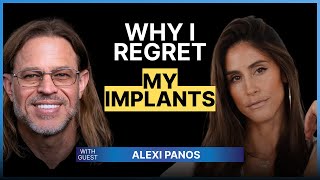
A March 6, 2025 YouTube interview where Dr. Robert Whitfield speaks with entrepreneur and embodiment coach Alexi Panos about her history with breast implants, why she chose to explant, and the broader physical, emotional and cultural factors that influenced her decision. Topics include social pressures and body-image norms from modeling and social media, trauma-related disassociation contributing to the original augmentation, the physical/energetic relief after explanting, low-toxicity lifestyle changes (clean products, diet), clinical options (explant, fat transfer), and the importance of pre/postoperative holistic care and social support.
Questions this video answers
March 6, 2025.
325 cc (per implant).
Austin, Texas.
Instagram: @alexipanos; Website: alexipanos.com.
Four children.
Chapters
Alexi Panos was named as one of Forbes top 11 entrepreneurs inc. Magazine's top 10 entrepreneurs changing the world, one of origin magazines top 100 creative changers. I'm sorry, top 100 creatives changing the World. She is featured expert in documented films, the Abundance Factor, Rise up and Age of the Entrepreneur. We've been in her expertise of somatics, the nervous system and trauma and everything she does. Alexia has been one of the top female embodiment coaches for 15 years. Whether she's supporting students, expanding what's possible through embodiment and retaining the nervous system in the Bridge Experience workshops, or liberating women all over the world, helping them reclaim their body, embodied feminine essence and unleash their aliveness in her program Awaken the Muse, Alexi is a force to be reckoned with. She has authored the bestselling books 50 Ways to Yay and now or Never, is the host of the Top Shelf Improvement podcast, the Alexis Panels Podcast, and is the founder of the nonprofit DPIC Bringing Clean Water to those in developing world since 2005. Alexi is a proud mama to four kids and a wife of the fellow master coach Preston Smiles. She currently lives in Austin, Texas. You can follow her on Instagram @alexipanos or look into her website www.alexipanos.com. thanks for joining the show, Alexi. All right, everyone, I have a special guest. I already introduced her, but Alexi Panos is on today. She's a patient and more importantly, she holds the record for the least amount of toxicity found on a tox test.
Hey, I love that.
Offline talking about that and but it's important for a host of reasons. But welcome to the show. It's been a while to get you scheduled, but I'm glad we were able to get you.
Yeah, it has. But I'm so happy to be here. There's been so many questions for my audience as well and just really excited to kind of explore and expand on this.
Well, we were, you know, for everybody, we've had a series of patients come on and share their stories and I got criticized the other day for not having older patients on and I was like, okay, I just have, you know, folks come on who are interested in sharing because not everybody wants to go through a discussion regarding maybe why they first got interested in implants and then what led them to ultimately make that, you know, decision and then now after the fact, you know, go through the process of an explant and I mean, there's a lot of things to unpack Depending on, you know, how you got there in the first place. So maybe. Maybe we can start there.
Yeah. Yeah. Well, it's interesting because there's. There's the obvious that women, since I. I'll speak for myself. Since I was about seven or eight years old, I was looking at fashion magazines and, you know, teen bot magazines and watching all of the standards of what's considered beautiful and starting to look at myself and going, okay, how do I compare to this as a woman? You know? And granted, I was a young girl at the time, but I'm looking at these older fig, and it just becomes inundated in the culture, and it becomes normalized of, like, okay, women, if you're. If you want to look beautiful, you're supposed to look like this. And that was kind of in the background. That being said, I loved my body, loved my small boobs pre surgery, and I had, right before my surgery, have been getting pressured quite a bit from my modeling agency to get implants. And again, I'm now a part of an industry that is pushing this is what the standard of beauty is. And all the girls I worked with had implants. I was at the time using, like, the little chicken cutlets in my bra to make it look like I fit the mold. And prior to getting the surgery, because I was kind of like, no, I'm good. I'll just stick with the cutlets. I'll stick with the cutlets. Prior to getting my surgery, I had gone through a pretty severe sexual assault. And that made me disassociate from my body so much that when my. My agent and my clients were asking me to get it and pressuring me, I didn't have that resolve anymore. I didn't have that connection to my body anymore. And so for me, I remember it was like, maybe even three to four months after that assault where I was like, you know what? Maybe I'll get it. Because I was so disconnected from my body, so, like, not even thinking about the severity of surgery and, like, undergoing what it would take and the repair on my body, I didn't even think about that. And so I got it from a place of disassociation, Truthfully, and almost instantly when I got it, I regretted it. And that was an interesting thing for me. And I know that's a rare thing for most women. I know a lot of people who get the explant surgery, they often think, like, oh, I'm. I'm really sad about my new body. I've got to get used to this new body. And I loved my boobs, and I love what they look like. But for me, I had so much shame around them and almost hated my implants and the choice to get them.
Or the size of them or, like, what. The whole.
The whole thing. It just didn't feel like me. And what was interesting is, you know, most girls get implants and then they're showing them off, and they wear, like, the bikinis and the dresses. And I dressed very conservative. I was always wearing things that, like, hid them because I had so much shame around it. And I think it just never felt in alignment with who I was. And yet I didn't heal that sexual trauma for about six or seven years. So I. For six or seven years, was just kind of hiding this part of myself. And then when I finally went through the work of healing that trauma and reconnecting to my body, I started to love my body again and really started to get the gravity of, oh, my gosh, I've got foreign objects in my body that are causing havoc. And what do I do about that now? And at the time, I was working a lot. I was on a television show and traveling a lot, so it was never a good time to get them explanted. And truthfully, explanting wasn't really a thing back then. And then when it started to become a thing, that's when I started having babies, and I basically had four kids back to back. And, you know, that's not a great time to explant either. So it's never a good time. But I'm glad I finally did it, and it was long overdue for me.
Well, that is a. Well, thank you for sharing that, because that is a whole. I mean, that's a lot to unpack. Obviously, from the surgical side, when I. I hear that people were unhappy right away, which I hear a lot.
Yeah.
Because I'm seeing the. It's a very biased sample now because I'm having the people come who. It doesn't align with them personally anymore.
Right, right.
It's never the right choice from the jump. That is a pretty good swath of what I see.
Yeah. Yeah. And it's interesting because, you know, you get used to it, and it becomes a part of your body and your shape and your figure. And again, like, it became so normal. Like, I look around now, especially after ex planning, and I look at all the advertisements, and I know because I worked in the industry, I know that most of the girls are augmented. I know all the work that's getting done behind the scenes. Behind the scenes. And it's like, it's so interesting how we've created this view of normal. And if we are placing our value as women outside of ourselves on our youth, on our beauty, on our body, then we're going to start to go, oh, I need to change. And that was a really big part of my coming home journey to myself was recognizing like, who I am is my value, not what I look like. And obviously I come in a package and I like to make the package, package look pretty, but I get to accept who I am. And that was really. It was almost like this huge graduation to come and do my explant with you. It's like I have graduated from being a slave to this idea of what I'm supposed to look like and playing the game.
You know, that's a lot. I listened to your show and you're very plain about the, the whole game, if you will, like the game everybody's playing with social media, etc, because that's only gotten quite a bit. Like, I grew up at a time where those things didn't exist and they started to exist when you were working. It really, I'm sure, took off.
Yeah. Yep.
So I, I've heard you discuss, like, do you, you know, what are you. Or how did you put it in your show? Like, do you really need all those things for yourself and your, your, your job and your, your business and all the things that's even become more, you know, it used to be magazines, like you were saying, but that seems like we're old. We're talking about magazine.
We're definitely older for sure. When you cross the 40s threshold, you're talking about magazines and newspapers, you know, but yeah, it is, it's a game that, that has us convinced that if we don't play it, we become irrelevant. You know, whether it's social media or, you know, the latest, greatest laser treatment for your face or body treatment or, you know, right now we're into the big lips and the skinny waist and the big butts and everything kind of has its run. You know, I think about when I was young, it was the Pam Anderson big boobs. That was the thing. That was the thing. And it was almost over the top. You know, it was like the bigger the better in the 90s and the early 2000s. And now we're coming back to a more natural look. I think people are kind of done with a cartoonized version. And thank God, you know, thank God that's getting normalized.
Yeah, that has always been a very odd It's a very unnatural aesthetic. And we were talking this about this earlier. I have a patient from Europe who was, gosh, I don't know if I can say this, but influenced by Baywatch and Pam Anderson and Barbie.
Yep, yep. I played with Barbies and Barbie had the perfect figure. She had the perfect figure and Pam Anderson had the perfect figure. That's what we were told.
Right?
And I think about that. Yeah. And you think about that and you're literally playing with these dolls every single day. And they're perfectly proportioned. And so if you're a woman who has any shape other than a Barbie figure, who are you? Who are you in society? How do you fit in? Where do you see yourself? And obviously advertisements have gotten more body positive and we're seeing different shapes, which is great. And Instagram is, is pervasive with the filtering and, you know, getting rid of all flaws.
Yeah, that is, that's a very odd thing. Like these. Yeah, that is something that's. Obviously I get asked all the time you know, specific questions about, you know, like you mentioned the treatment, like whatever it is, it's, is it an injectable or a laser or. And you know, what can I do to help with the appearance of aging, which is, you know, the function of many, many things. And maybe that's, you know, where we'll go is I always say you can't pick your parents and you can't outrun a bad diet. So the things that influence, you know, aging from, from what we can control, like the foods we eat and the fluids we drink and what we drink them out of and the air we breathe and how we manage our, our stress and for women especially that. Because obviously I've been asked my entire career about products like product is the best for this and what's product is the best for that. But more importantly, and we'll let you talk about it because you have such a good or such a very low toxicity burden that has to do with a lot of choices that you make on a, on a day to day basis versus what you're coming to an office like mine to have done.
Yeah, yeah. And that's, that's so huge, I think the benefit of having four kids all within four years. I got really serious about toxicity in my house and started looking at cleaning products and laundry detergent and air fresheners and shampoos. I mean, I looked at everything and educated myself and really got how toxic my environment was at the time. And over the course of the last 10 years, I have slowly replaced all of my toxic products with natural ones. And it's crazy now because I'll go into a place that has, like, let's say, an air freshener, and I instantly get a headache. Now it's like my body's like, no, we can't handle that. That's too toxic. I'll eat something that has an artificial sweetener in it, and I can taste it, you know, so there's. There's this interesting thing, like, at first, it's really hard to change your diet. At first, it's really hard to change the products you use and to shift your household and your lifestyle. But then it becomes hard not to live that way because your body is so sensitive and. Right. I believe the more we live in tune with nature in that way and the way we're supposed to live, we actually can hear the messages from our body a lot louder of like, hey, this doesn't feel good for us, or, hey, let's try something else, or, let's get out of this environment, or, something's off in the air. We're meant to be able to. To feel that. And yet, as you know, most of us live in this modern world, we're so disconnected from our sensory body that we're just stuffing and, you know, putting band aids on symptoms that are trying to get our attention for something deeper going on. And so I felt really blessed when we got our tox test back, and. And it was like, okay. What I've been doing has been working. This is good. This is good.
Absolutely. We were. We were talking about that, you know, offline before, and it's something that's really an eye opener for most of my patients. As you know, I go over that with them. And I used to do all of this myself, but now the program has gotten big, and we have a detox team that helps with it, and they're great. That's a real shock for most. Most people. And honestly, Alexi, I assume that people in your position are going to have a bad test result because of the environment. Like, it's not, you know, as many as we've seen over and over again, especially, you know, you don't live far from where I'm speaking. There's a lot of mold and cedar and oak, and the groundwater is not great. And, you know, there's a lot of reasons to have some problems on your testing. So it's just that you had breast implants or there was a problem with those. There's just all these different environmental forces that are always applying Pressure. And just like you, I mean, 10 years ago, that's actually very forward thinking. If we go back, you know, in 2014, yeah, that was way ahead of the curve in terms of looking at that and being more and more careful for yourself and your, your family in, in general. So what did, I guess, what resource or resources did you go to to identify, like, to make those changes?
Yeah, there was, there was an app I used. I forget the name of it because it's so long ago, but you could scan the products in and it would give you like a talks list on it while waiting. But truthfully, how I got into all of this was the start was veganism. I was a vegan at first. I'm no longer a vegan, but that kind of opened the world for me and I started learning about juicing and how you could heal yourself with food and really thought about like using food as thy medicine and started to really dive deep into, okay, what is processed food? What is natural food? What are preservatives? Why do we have those? What does a preservative do to our body long term? And I really just started looking at it from a nutritional aspect and quite honestly, I. On the vegan diet, I didn't feel great. On the vegan diet, I. And you know, I've learned a lot since then about my body, my blood type and all.
Tough diet.
Yeah. And I've, I've learned, I've learned. And now I eat meat and I eat ethically sourced meat and all the things. But I felt really good when I was doing juice cleanses and like doing elimination diet. So I had taken all sugar out of my diet, I'd taken all gluten and yeast out of my diet. It's like, oh, okay. I feel a marked difference from who I was while I was eating those things to how I feel now. And it was energy, clarity of mind. Just, I felt more like myself. I would wake up and be like, let's get the day versus wake up. And you know, dread the day ahead of me. And so that's really how it started. And then it's a rabbit hole, right? Then you start going down all the things, looking at all the YouTube videos at the time and reading all the books and I was reading about people, you know, curing themselves of all these ailments and illnesses that I probably can't say here, but with food, you know.
With food, Food is medicine.
Food is medicine. And. And you know, it really had me start to question our system of medicine, how we treat one specific thing. And we're usually treating this symptom which creates a whole other host of symptoms within that treatment. And so that's one of the reasons why I found you and was so excited to find you for the explant journey because you really take this holistic approach to healing and get that it's not just the implants. Yes, the implants have their own havoc that they wreak on our system, but it's everything, everything, touches everything. And to treat that, to treat inflammation as the root cause and to treat it on a holistic level, for me, I'm like, ah, he gets it. Like, it's not just let's take these things out, it's let's take these things out and set up an environment that's conducive for repair. Yeah.
I will say the. I've had a lot of influences over the last eight years, certainly that have been more and we can say non western. There's a lot of influences, most of them really bear out to understanding nutrition better. And that's from. Honestly, I was trained a specific way in surgery. And then all the things that provide context around it, as you mentioned, with inflammation, those are the things that you're not taught. Those are the things you have to just work on. And that's. Those are the differences in our program where we're trying to just make sure that like we talked about earlier, your genetics, you get from your parents. Right, okay. So my daughter doesn't detox things well. And right now she's having a little bit of a skin issue. And so of course that's very stressful. She's a young girl and, and I tell her like, okay, these are the basic things for skin health. You need to have vitamin D, you need to have enough glutathione in your system, you need to have enough vitamin C. You need to have, if you don't methylate well, a methylated B complex vitamin. And so those are just like the non negotiables for everybody listening. Those are the. You have to get. And you always get those through your diet. And to Lexi's point, if she was doing a very strict vegan diet, there was no chance she got those things in her diet. So the other things that we don't talk about a lot are just trace minerals. Those can make a huge difference. Things like selenium and copper and manganese. So there's all sorts of things that if you just don't pay attention to them because you don't know any better, you will not ever actually Feel very good. And me doing an explant is not going to solve that problem.
And that's so important for people to hear because I think there's a lot of, you know, I didn't come to you with symptoms of bii, right. A lot of women, they have the symptoms of breast implant illness. They're feeling the fatigue, the brain fog, they're feeling all of those things. For me, it was, hey, I know I need to get these out. It's time. But I felt great, you know, and, and there are people that have those symptoms. And while the implants are a part of it, potentially most likely, it's also all these other things. And so the fact that you take a client through that process is, to me, non negotiable. I don't know how a surgeon does anything other than that. Like, it's almost shocking that. That other doctors don't do that and don't do the healing protocol in the back end.
It is, I will say, we're taught a certain way and there's, you know, um, it's. It's a challenge. But, you know, we wrote the book and we started the opening up our programming to both doctors and other clients because I do understand, you know, actually Alexi's close to me in Austin. Most people are not. Most of my clients come from out of state or out of the country now, and they're traveling for the program, which obviously creates a problem because I can't see or take care of all those folks. And in the process of opening it up so that our practitioners can run the program that we have established that Alexi's talking about just the sharp method that's scalable to help patients have access to what we're talking about. There's going to be a lot of folks who, I said this the other day, I think explant surgery. If the numbers are actually reported accurately, which I know they won't be, it's going to eclipse things very quickly as the fastest growing cosmetic procedure done.
Wow.
Because the, the kind of, you know, shift in mindset, I guess, is the easiest way to say about, you know, people are just not in alignment with that now. And they didn't understand that a fat transfer was even a practical or possible alternative. Because if you. From a surgical perspective, I did hundreds of them every year for breast cancer patients.
Right.
And that is not a common path. So you wouldn't have that level of experience or repetition. And surgery for everybody listening is you get better at surgery with time. And, you know, your first 10 or 15 years after you finish, you're constantly improving and getting better because you're, you're doing and repeating a set of skills and steps and you get better at it. It's one of the few things where that happens.
Yeah.
And so like when people say fat transfers that work, I'm like, really? Okay, interesting. Those are usually the folks who say that they tried hormonal therapy and it's, it didn't work and I'm psycho, man. So if we take someone like Alexi and she has, she's a low BMI patient, but we take enough fat and we transfer it, whether it's, we'll say it's 100 to 200 cc's per side, that's, you know, roughly, you know, close to a cup size if it's 200 and then half if it's. And for her body type, maybe that's all she wants. And then that's, that's great. And then people ask me, was that a one and done? Well, the, that's the patient's prerogative, not mine. Like that decision. That's a visual thing that the patient wants. And then they used to have this discussion, Lexi, with patients who came from cosmetic breast augmentation. And if they asked me for a big implant, I would just simply tell them no, because I didn't really, it didn't align with me personally because I thought it looked bad, so I wouldn't do it.
Yeah.
And if they wanted a super small implant, I'd say, well, a fat transfer is better than that for a longevity standpoint, meaning that your exposure risk over time is going to be more risky if you have an implant that's small versus a fat transfer because it's your own tissue. And so there's this juxtaposition that people either a full explanation is what everybody wants to get an informed decision to make an informed decision. That's basically it. And I hear that they don't or never even knew those options existed.
Most people don't. Most people don't. I think again, when I got my implants, I mean, that would have been almost 20 years ago. And so at that time you just heard about implants. And, you know, I probably would have opted for something that was my body tissue, something more natural, but. But I didn't even know that was possible. And so I got it for work to be able to, to fit in and make more money in the modeling world. And again, like instantly hated them. And I, I have my implants here. When I got these back from you like, I can't believe how big they are. And I didn't even get, you know, they, they didn't look huge on my body.
And what's the size on there?
Do they have it listed? 325.
325. Pretty average size is a 325. A cup size would be like 200.
Yeah, yeah. So 300. So I was, I was a full C for my measurements for modeling. And before that I was basically a B. And so they wanted me to be a full C for modeling. And when I saw these, I just couldn't believe one, how heavy they were. Like, I'm like, they've got some weight to them.
Right.
And just thinking about, for me, what was really clear even before the explant is I had this, this is going to sound a little woo woo, but I had this like visual dream of the energetics, like the line of energetics in our bodies. Right. And I do nervous system and somatic work now. So I'm really clear about all the energy that's flowing. And I just kept seeing this energy getting stopped at my chest because these bad boys were right here in the middle. Right. So it's this barrier of the flow of energy, of life force energy and getting them out the next day. You know, you feel what you feel post surgery. But I felt amazing in the sense of I could feel my energy body again, like fully. And it made so much sense when I actually looked at these and felt these. I'm like, wow, what a hindrance to all of that life force in my body and how heavy they were. And I was carrying the weight of that and the shoulders and the neck and all like how that shapes reshapes your body, your whole body, not just your breasts. And I think it's important for women to really consider, like what getting these in your body actually does. You know, how it actually blocks your fullness, blocks your ability to access the fullness of your heart and the energy in your heart. And you know, the pressure I used to feel on my heart and my rib cage from these, that's gone.
Yeah.
And I thought I had heart problems.
I have heard, you know, that remark about now the weight thing is just standard. Like you said, like these weigh and they're heavy.
Yes.
And then the scarring and things is, you know, obviously a physical burden. But you're talking about the energetic burden that's, that's relieved by not having them. I don't think that's, you know, it's not obviously something that you Know, we can, you know, like, I understand it for sure, but trying to report it obviously is, you know, a challenge, but it makes a lot of sense in the context, certainly, like you described. And for many of the patients I've. I've had. I mean, they just. They have that. That relief. And I think you. You definitely have characterized it, you know, perfectly in your situation. It is a big burden that goes away.
It's huge. It's huge. And I couldn't. I. It's like, I. I knew it. I knew it was coming, but I couldn't believe the level of relief I felt energetically in my body. Like, oh, my body can finally move energetically how it's meant to move. I could breathe deeper. I could expand my lungs further. It was like, oh, there it is. Okay. This is the fullness of my body, not this kind of adjusted state that's adjusting for weight and size and all these different things. And so that's been one of those byproducts that have been something I wasn't necessarily looking for, but I got it, and I'm so grateful for it because I can feel the repercussions of that in everything now. I can feel me just feeling more grounded in my body and not as. I don't have as much energy stuck up here, it's more here. So it's harder. Harder to quantify that. But yeah.
And Alexi was never an anxious. I mean, I have a lot of clients that come in that have a lot of tension, a lot of anxiety, a lot of pain, a lot of this. The. The. The. Just all the things additively, you know, that drove them to eventually come to see me. Like, nobody wants to come see me. I know that. I get it.
For me, I really did. I was like, I'm so excited for this. It was my. It was my birthday present to myself.
When you get to that point, like Alexi did, then it's like a coming to. To peace, making peace with it and that decision. But, you know, that decision is not easy. You didn't arrive at that, you know, very. You know, some people do do it suddenly, and I. I get a little bit of that shock and awe, like, okay, we're gonna do this now I finally come to that conclusion. I'm gonna. I'm gonna come see Dr. Rob in Austin and get this done. And they're dragging, you know, sisters and aunts and husbands and kids, and everybody's rolling in. There's a lot of energy in the room.
Yeah, it's a lot. It's A lot. It's. It's interesting. I sent a friend to you who has had her surgery now, but she had tried everything. You know, she had done all the things, all the cleanses, all the hormone therapy. She'd done all the things to try and get to the root cause of these ailments. And she's like, this is the final frontier. She's like, it's something that I didn't want to do because she's one of the ones that loved her body with implants. She. She's had them for a long time. And, you know, so for her, it was scary. And it was for me, too, because obviously, I don't know what I'm going to look like after. Right. But for her, there was such an identity around. This is what my body looks like, and my body is who I am. And yet, speaking to her on the other side, like, she's so glad she did it because she finally got to the root of those issues.
I'm glad you said that because I, you know, do. You obviously have a lot of strength and understand it very well. You have a super supportive spouse. And I think that's a really underappreciated component to this. And I've had a lot of. I always get worried if I don't hear from or see the spouses either on calls or in person at meetings, because what, you know, it's a very difficult journey in general, but to do it without support. And I'll let you talk about this. And, you know, should have snuck your husband on, but that's a big component.
It's huge. It's huge. And. And, you know, I am blessed to have a husband that obviously loves me for so many reasons, but my boobs are not one of them. And he's like, listen, I want you to be happy. I want you to be in alignment with who you are. I want you to feel amazing. And if this is the route to get there, I'm 100% behind you. And he is, you know, and the best part is, I mean, I love my breasts post surgery. I love them so much. I'm so happy with them. I'm wearing all the things I felt like I couldn't wear when I had, you know, big plastic boobs on my body. And he's like, wow. He's like, I really. He's like, I feel like I see all of you now. And I'm like, oh, yes.
Well, that's the right person then.
Yeah. Yeah. And, you know, he's. He really gets. And I Get too. It's like the value of a woman is so much more than our looks, and yet so many of us fall victim to that idea in society that our value comes from our looks and comes from our youth and comes from our body. And obviously those can be amazing bonuses on top of everything else that we bring. But we bring so much more than that. And we are so much more than that. And I have a husband who gets that, which is amazing.
Yeah, he's great. He's done a lot of work on himself, you know, but that's typically the guys, you know, obviously guys. I'm a guy. We can be obviously a little difficult. A little bit, you know, from a maturity standpoint, difficult to handle. And I get a lot of different vibes from people. Some of them are quite unusual that I get from males involved in this process. And then I have the super supportive people like your husband and others who are great. I wish I had and could say that about every single partner I encounter, but that's not actually the case.
Yeah. And it's a sad thing. I actually have a friend who went through explanting not with you, but through another doctor. And her partner left her after, and it was a big thing. I mean, there were a lot of other issues in the relationship. And you know, she's going through a really messy situation right now with him to divorce. They have kids together. And it's one of those things I was sharing with her. I said, you know, thank God. Thank God that he's out because, like, you don't want that type of partner with you anyways. And it's the wrong partner. And if you. If this instigated it and if. If the relationship was that fragile and built upon that holding it together, it's not a real relationship that you want for the long haul. And so what a blessing it is for any of you listening who may have a partner like that. You get to just trust that when you're coming into whatever's in the highest and deepest alignment for you, if your partner doesn't fit that, then that partner is not in the highest and deepest alignment for you. And whatever is not will. Will easily move away. And whatever is will come in.
Yeah. As messy as that is, that is not the right situation for her or her family.
Right.
Moving forward, that's infinitely toxic for all.
Yeah. And for so many reasons. And I think, again, it comes down to, you know, women. I think we're waking up, which is beautiful. Which is why I love what you said about explants. Becoming trending towards one of the highest surgeries. I think women everywhere are starting to wake up to the fact that we have placed our value so far outside of ourselves, and we have played the game unconsciously of, like, who do I need to be in order for you to love me? And we're just waking up to that. We're waking up to our power. We're waking up to our sense of ownership and, like, who we actually are, what we bring to the table. And we're getting that we don't need all of these external things as much as we used to think we needed them. And it's forcing a lot of men to wake up too, you know. Yeah.
I think, you know, the concept of you're enough, you know, and as you do work on yourself, and that's the most, you know, probably complicated, unappreciated process in this. And, you know, Lexi's great. She's very obviously very grounded. You can hear her, you know, in her, you know, tone and how she's presenting everything. And my team, I have a great team around me, and we've worked extremely hard over the past eight years to have the team we have. And we have over 25 employees, and I'm one surgeon.
Yeah, yeah, your team's amazing. Amazing.
But we couldn't. You know, I got asked the other day why I don't have a psychologist on staff. And I have, you know, reached out and. And tried to have that go to Resource. Because this, what you're not saying is like, the self work that you always have to do for each of us is really, really important. And that has to start before you ever come see somebody like me that.
Well, it's so big, because I think a lot of women underestimate the identity shift that occurs and how much they maybe unconsciously put their value in their body. And we don't realize it. Like, we don't know what we don't know until we know it. And once we know it, it's hard to unsee it. And I think a lot of women that I spoke to, you know, while I was making my decision, that was a lot of the through line I heard was like, I didn't know how hard it was going to be for me after to go through, like, re loving myself and like, falling back in love with my body and getting to know this body that doesn't look the way that I've been used to looking for 10, 15, 20 years. And so I think the amount of work you can do to really fall in love with who you are prior to the surgery will exponentially help your healing journey because you won't be so self identified around my breasts being a source of value and yeah, who I am, like they're not who you are. Right. And so I do think that is really important. I think environment is really important for patients as well. Like anyone considering this, to really have a powerful support system. If you don't have a spouse, friends that really are there for you and celebrate who you are and you know, not the vanity aspect of who you are, but the deeper aspect of who you are, it's huge. And again, it's. It's just like, you know, it's. I've given, you know, I've got four kids, I've given birth multiple times. And it's the same thing that happens in motherhood. It's like there's an identity crisis after each baby is born because you're now this new person with a new person and a new body and new healing that has to happen. And so for anyone who has gone through the birthing process, it's much like that on the other side of the surgery is you kind of wake up and you go, okay, there's some work here to get to know who I am now outside of being a woman who has implants. And it's liberating if you, if you look at it that way. It is a liberating and beautiful initiation into a deeper understanding of who you are. And I think it can really be that powerful initiation for people if they choose to take it and see it that way.
And then what would you. Because that's a lot of self work. And I always say this, but you know, I give, you know, I'm referring folks to Amanda Savage Brown's book Busting Free, which is about explant. And we talk about it. Are there some resources that you think would be good to mention and recommend?
Yeah, I mean, anything that has you coming back into connection with your highest self. I mean, I do, I offer things as well. So just look up my stuff. You can find my stuff. But if you don't want to work with me, just really coming back into who you are as a woman, what your value is as a woman. And. And it's not your body, it's not your looks, it's not your youth, it's your power, your innate power. And a lot of women don't even know where to start when we think about that, because society tells us it's our youth, it's our beauty, it's Our body. And so we go, okay, well, who am I outside of that? Who am I outside of the role I play as a wife, as a mother, as a partner, who am I? And so, for women, answering that question looks different for everybody. But for me, in my journey and all the clients I work with, I always say it starts with the body. Your body as a woman is. It's your litmus test for everything. It's your access point to your wisdom. It's your access point to your aliveness and your life force. And the more we come into communion with our body, meaning we have to get out of the objectification of our body, the more we come into that communion, the more we find our answer there. And so embodiment work is huge. Nervous system regulation is huge. I think so many women, unfortunately, live in a state of disregulation most of the time. And, you know, we're in the survival mode, and we're making decisions from survival mode, so we're not actually making decisions from our fullness. And so nervous system regulation, embodiment work, self love work. And for me, the biggest one, all women get to reclaim their relationship with their feminine, like, their true feminine, not the performative feminine of, like, look how I look, but the. The true feminine of feel my power. And so there's a whole bunch of stuff that goes into that. But that's. That's the work I lead and I love. And to me, it's the most transformative for women.
Well, I really appreciate having you on, Lexi. I. I always want our patients to be able to share their experiences. And I. I learned so much every time I listen to one of my patients share kind of the whole gambit, because obviously, that's not necessarily what I get initially, but this has been great. And if you want to work with Alexi, you know, I don't. And we didn't line this up to do this, but I want her to make sure that she gives you an opportunity to go find her on her social or her website. So I'll let her go ahead and. And let you have those handles and things so that she gets those for you.
Yeah. @Alexipanos on Instagram. And then alexipanos.com will lead you to all the places. So definitely look me up if this is resonating.
All right. Thanks for coming on, Lexi.







